- Purchasing Process Duration: 3 months
- Transaction Costs: 12-19% of the property value
- Golden Visa Status: €500,000+
Buying a second home in Spain can be a straightforward process with the right professional guidance. There are no restrictions on non-nationals buying property in Spain and the process usually takes around 3 months. Costs involved are incurred throughout the process and should be understood at the outset, with registration costs up to 19% of the property value including a foreign exchange fee (up to 4-6%), advisors and notary fees.
As of 2024, Spain’s Golden Visa program remains active, offering non-EU investors a pathway to residency through substantial investments, including real estate purchases valued at €500,000 or more. However, proposed reforms from the Spanish government seek to remove the real estate investment option to mitigate housing market speculation. These changes are currently under legislative review and have not yet been implemented.
Discover options for securing a second home in Spain by following the steps below.
Online Search Data: Top Property Destinations
Searching for the ideal property online is the first step to finding your perfect second home. You can explore a wide range of different destinations in a short time and narrow your search down to a shortlist of ideal properties to consider in more depth.

JamesEdition data identifies eight primary regions favored by affluent second-home buyers in Spain. Most platform users are looking to buy a property in Costa del Sol (and Marbella in particular), the Balearic Islands, or Costa Blanca (with Valencia being the most popular spot). Barcelona and Madrid remain the most popular metropolitan cities, and Seville is a leading location in Andalucia featuring country homes and fincas.
- Top Tips For Success: According to brokers, there are four key factors to consider when searching for the ideal location for your second home: Do you prefer a traditional or expat community? What kind of environment suits you best? Which amenities or leisure activities would you like nearby? And if you have children, consider the proximity and quality of local schools to ensure a smooth transition.
- Professional Help: Real estate agent, online
Selecting a Property Type
Spain is a country that offers a full scope of home types, from a brand-new or off-plan property (which can often be designed with your specification in mind) to something with a bit of character and history behind it.
Considering sustainable properties with solar paneling can help reduce property taxes in Spain. Since 2020, property owners have been eligible to deduct 26% of the solar system installation cost from their taxes.

The concepts of freehold and leasehold are not applicable to Spain. When you buy real estate, you own it outright. If you buy a house in Spain, the land the house is on is also included while buying an apartment means you own the walls, ceiling, floor, and any balconies.
- Top Tips For Success: Buying off-plan is popular but we recommend working with a professional local company who can regularly visit the site on your behalf and provide updates on the progress of the build. The renovation or restoration of historic constructions may require approval from the regional authorities, the culture, and environment departments, as well as special licensing from the side of an architectural company.
- Professional Help: Real estate agent / A wealth management advisor offering real estate service
Applying for NIE number
How to buy a property in Spain as a foreigner? There are no restrictions on non-nationals, including US and EU citizens, buying property in Spain. But a buyer has to apply for an NIE, a taxpayer identification number, essential for all financial and legal activity in Spain. You can obtain your NIE via the Spanish consulate in your home country or at an appointment at a Spanish police department.

- Top Tips For Success: You will need to provide your completed EX15 application, passport, and passport copy fee receipt.
- Professional Help: Solicitor specializing in conveyancing for expats and international clients.
Opening Spanish Bank Account
All non-nationals need a Spanish bank account to carry out property-related transactions and cover costs throughout the buying process. You will need your Passport or Foreign Identity Card (TIE) and a Foreign Identity Number (NIE).

- Top Tips For Success: If you are depositing more than €10,000 into your Spanish bank account, it must be declared at customs if brought from abroad. Your specialist solicitor can support this process and ensure everything is carried out correctly.
- Professional help: Solicitor specializing in conveyancing for expats and international clients.
Due Diligence Checks
Once you’ve selected your ideal second home, your professional advisor should ensure everything is correct with the property. This includes ensuring it is legally built and whether there are any urban planning records on the property.

- Top Tips For Success: It’s important to find out if there are any building licenses to allow for modifications or if there are any restrictions on this, as you may want to extend or remodel the property over time.
- Professional Help: A wealth management advisor / Specialist property survey and valuation company
Home Surveys to Consider
There are five survey types available for homeowners: mortgage, snagging, building, structural and valuation surveys. But there is no legal requirement to commission any surveys on a Spanish property except for a mortgage survey carried out on behalf of a lender.
A snagging survey identifies and addresses issues in newly built Spanish properties immediately after delivery. A building survey, often combined with a valuation, provides a comprehensive assessment of the property’s condition, which can impact the buyer’s offer. Structural surveys, on the other hand, are typically conducted to investigate specific issues when problems arise.

- Top Tips For Success: Property buyers have 15 days after signing the deeds for a new property to report differences between what they thought they were buying ‘off plan’ and what they find when they receive the keys.
- Professional Help: A property survey and valuation company
Financing Options & Mortgage
The biggest difference between residential and non-residential loans in Spain is the maximum loan-to-value (LTV) that banks will allow.
Residents can generally borrow up to 80% of the property’s assessed value. Non-residents are limited to 60–70% LTV, depending on the mortgage type. Spanish mortgages are up to 30 years long at 2.5% per annum or higher.
Your wealth management advisor should guide this process and ensure the right mortgage options are available to you. Like any mortgage, those in Spain differ from lender to lender and will appraise the affordability of the loan for your desired property.

- Top Tips For Success: It is important to note that UK expats in Spain cannot rely upon their UK-based financial advisor if they move to the EU due to insufficient professional indemnity insurance.
Your Spanish mortgage lender may require a mortgage survey, where they instruct a professional inspector to visit the property and determine whether the valuation is in line with the amount you are requesting to mortgage. - Professional Help: A financial advisor in a EU-based wealth management company or a local mortgage advisor
Money Transfer Options
High-value purchases mean transferring significant amounts of money from your regular bank account to your Spanish one, and this involves paying fees. Banks often mark up to the exchange rate, which is up to 6% more than the mid-market rate, which is worth keeping in mind if you plan to transfer your funds via the Society for Worldwide Interbank Financial Telecommunication (SWIFT) network.

- Top Tips For Success: Alternatively, you can use a foreign exchange broker but there are also fees attached here, which will differ from broker to broker. The fees to transfer the funds to make your purchase should not be more than 1-4% of the total property price.
- Professional Help: Foreign Exchange service provided by a local wealth management company
Signing Preliminary Agreement
Once you have agreed terms with the buyer, sign your preliminary agreement including deposit.

- Top Tips For Success: Deposits have no minimum in Spain but are usually around 10% of the overall property value. If you change your mind, you lose the deposit. However, if the seller cancels, you will receive a double deposit refund.
- Professional Help: A real estate agent / A wealth management advisor offering real estate services
Signing the Final Contract
The final sales agreement must be signed with both parties present in the presence of a notary. The notary will certify and issue copies of all documentations. The remaining balance is transferred to the seller’s account, and you receive the original copy of the sales agreement within no more than 3 months of the transaction.

- Top Tips For Success: The property contract should be read by an independent lawyer not connected to the seller in any way. They should check it fully to ensure it’s 100% correct.
- Professional Help: A lawyer and a real estate agent / A wealth management advisor offering real estate services
Full Cost of Buying a Property in Spain
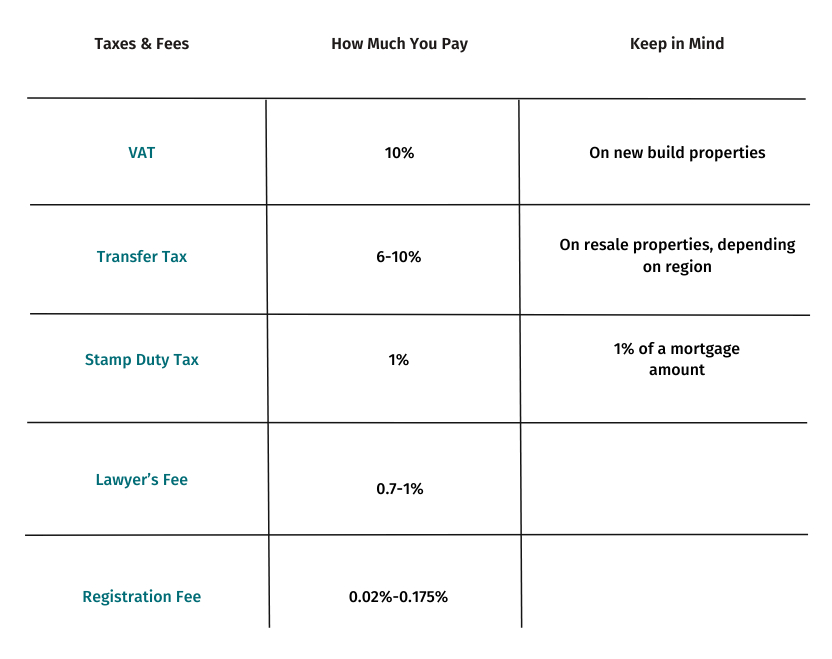
The registration procedure in Spain takes approximately 3 months and you then receive the registry extract. The costs to consider include:

Is it a Good Time to Buy a Property in Spain?
Having reviewed the previous steps, you’re likely ready to take the next step in property investment in Spain. The question now is timing: When is the optimal moment to buy? Striking a balance between securing the best value for your investment and aligning with your personal needs is essential. Market trends, economic forecasts, and long-term property appreciation should all be part of your decision-making process to maximize the potential of your property investment in Spain.
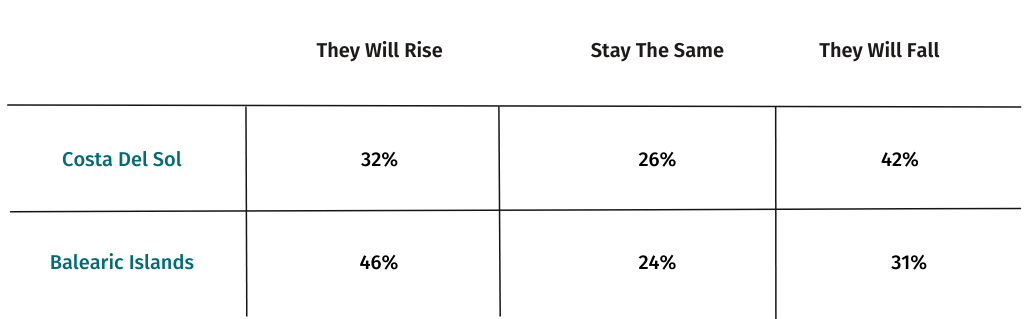
As a response to this, JamesEdition launched the Luxury Property Buyer Index, or LPBI, one of the simple ways to uncover market sentiment.
Housing Market in SpainThe real estate market in Spain showcases an average listing price of $1,200,000, with a price range spanning from $490,000 to $70,000,000. The average price per square meter stands at $4,015/sqm.
The regions of Andalusia, Catalonia, the Valencian Community, the Community of Madrid, and the Balearic Islands emerge as highly sought-after destinations among second-home buyers.
What do buyers think will happen to prices in the next 6 months in Spain
How many plan to buy a property in the next 6 months in Spain
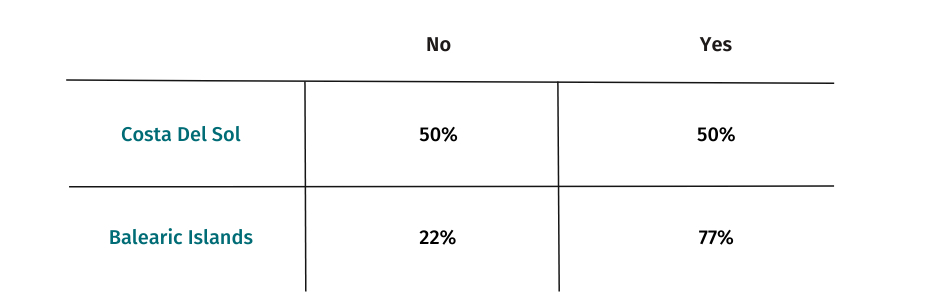
The LBPI shows how confidence in the luxury real estate market as an investment changes over time. At the beginning of each month, it automatically surveys a selection of hundreds of global high-intent browsers on JamesEdition. They’re asked about their thoughts on property prices in the locations they’re browsing, this helps to create a picture of the market as a whole. By aggregating the data and segmenting it per region, we are able to create a picture of how potential buyers believe real estate prices will develop during the next six months.