Ca' Dario
- 10,764 Sqft
- Aktualisiert: Juni 18
- 70
Über die Immobilie
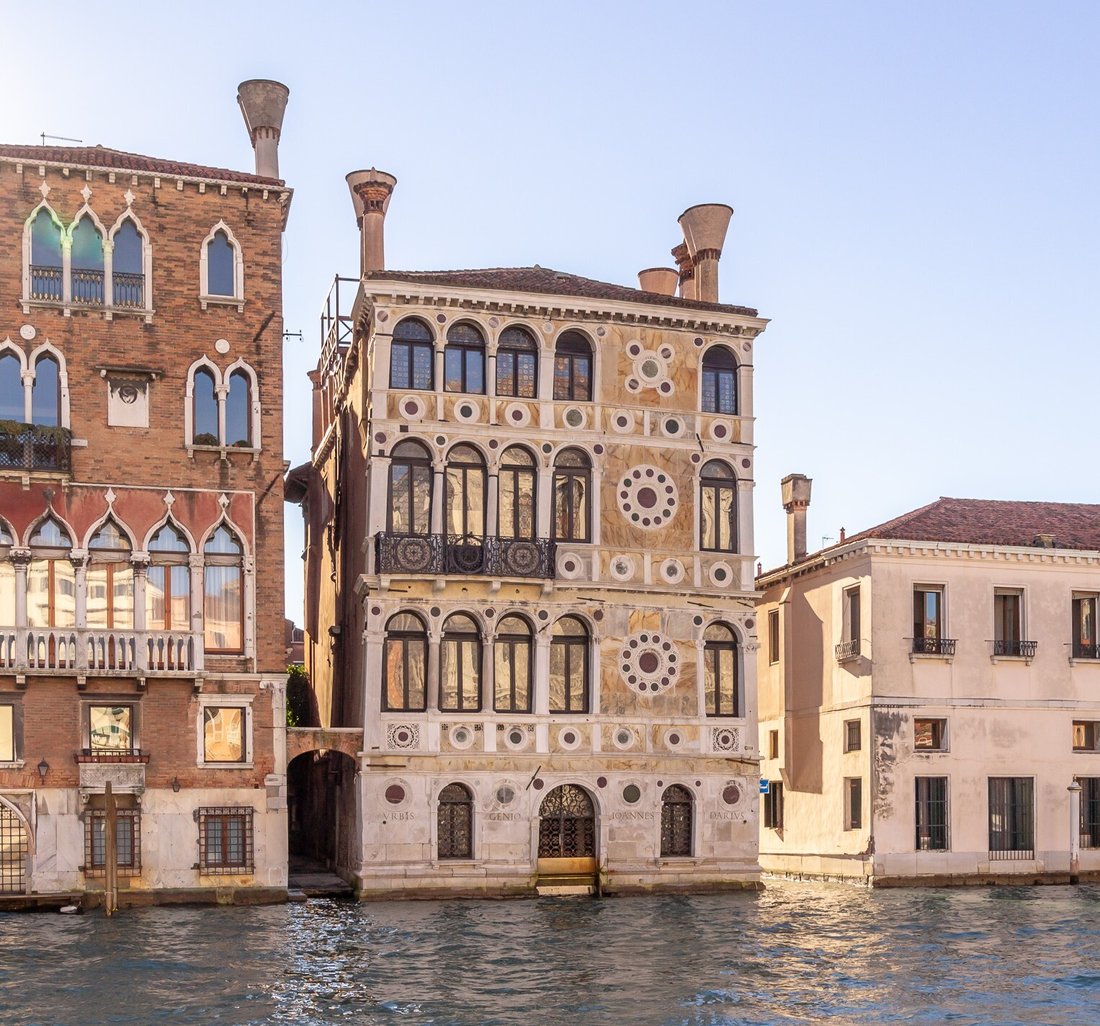
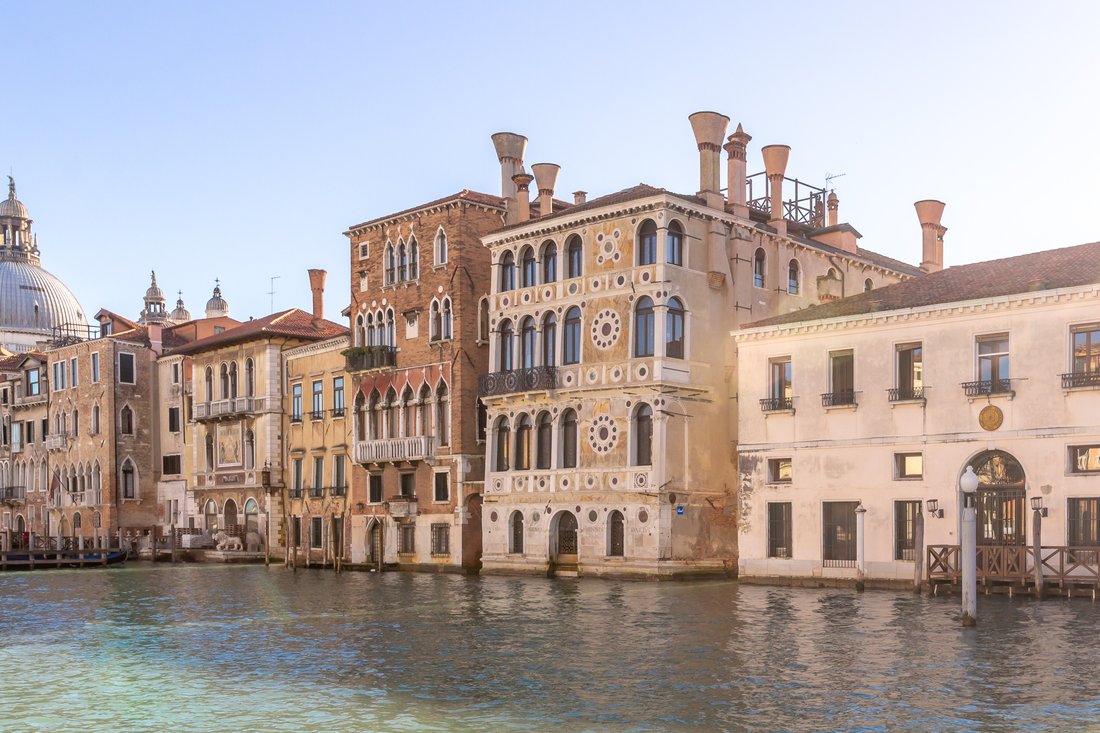
Der Palazzo Dario ist ein architektonisches Juwel am prestigeträchtigsten Teil des Canal Grande, der sich von der Accademia-Brücke über die Salute-Kirche bis zum Bacino di San Marco erstreckt.
Ende des 15. Jahrhunderts wurde der Palast von Pietro Lombardo für den Patrizier Giovanni Dario, Sekretär des venezianischen Senats, Diplomat und Kaufmann, umgebaut, dem es gelang, ein sehr be
Palazzo Dario is an architectural gem on the most prestigious part of the Grand Canal stretching from the Accademia Bridge to the Salute Church and the Bacino di San Marco.
At the end of the 15th century the palace was remodelled by Pietro Lombardo for the patrician Giovanni Dario, Secretary to the Venetian Senate, diplomat, and merchant, who managed to negotiate a very convenie
Der Palazzo Dario ist ein architektonisches Juwel am prestigeträchtigsten Teil des Canal Grande, der sich von der Accademia-Brücke über die Salute-Kirche bis zum Bacino di San Marco erstreckt.
Ende des 15. Jahrhunderts wurde der Palast von Pietro Lombardo für den Patrizier Giovanni Dario, Sekretär des venezianischen Senats, Diplomat und Kaufmann, umgebaut, dem es gelang, ein sehr bequemes Friedensabkommen mit den Osmanen (Türken) auszuhandeln. Für diese Aufgaben hatte die Serenissima Dario
eine große Geldsumme als Belohnung gegeben,und er gab den Bau eines Hauses auf einem bereits existierenden gotischen Palast in Auftrag.
Die prächtige Fassade, die mit kreisförmigen polychromen Marmorintarsien verziert ist, besteht aus Pietra d’Istria und spiegelt den orientalischen Einfluss wider, den Dario auf seinen langen Reisen in Ägypten und im Nahen Osten erworben und dann mit Hilfe des Architekten in den venezianischen Geschmack umgesetzt hat.
Anders als die Renaissancefassade am Canal Grande weist die hintere Fassade des Palastes auf dem Campiello Barbaro gotische Dreiblattbögen, Kamine und eine Loggia-Terrasse auf.
Im Jahr 2025 wurde eine umfassende Begutachtung des Grundstücks durchgeführt und der Palast wird mit einer vollständigen Konformitätsbescheinigung verkauft.
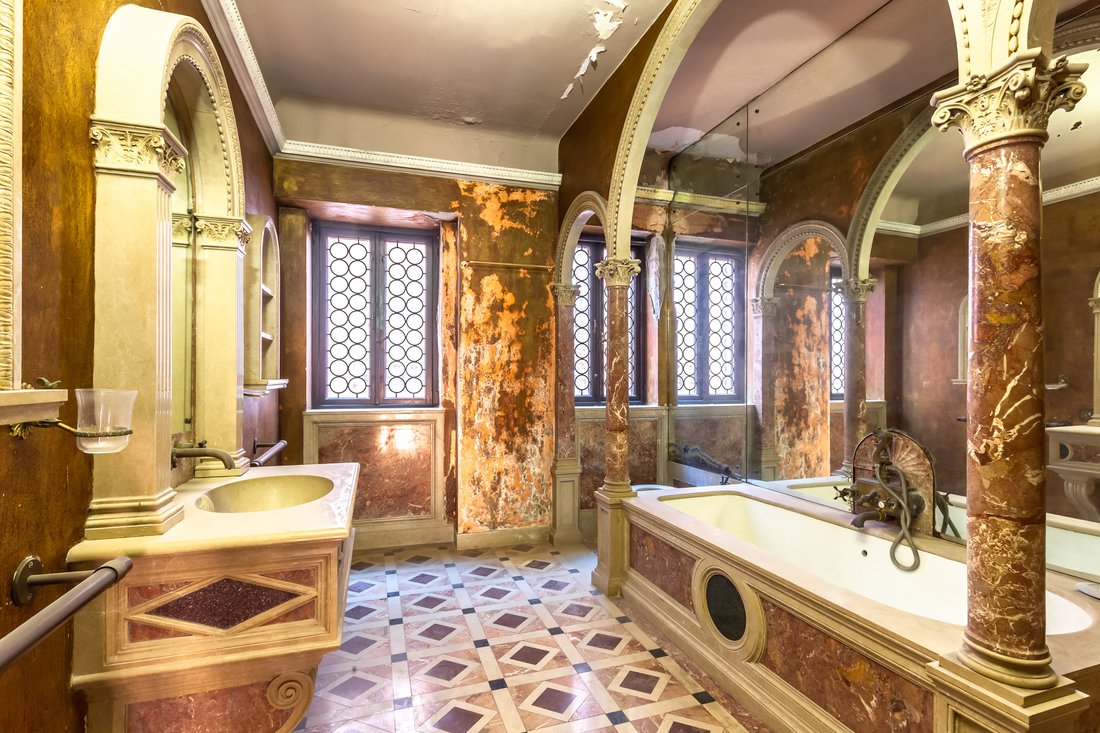
Ende des 19. Jahrhunderts wurde ein großes Renovierungsprojekt durchgeführt, bei dem die Fassade nicht verändert wurde, sondern das Innere im Renaissance-Stil komplett erneuert wurde.
Der Palast erstreckt sich über vier Stockwerke mit einem Erdgeschoss, zwei edlen Stockwerken und einem dritten mit Schlafzimmern.
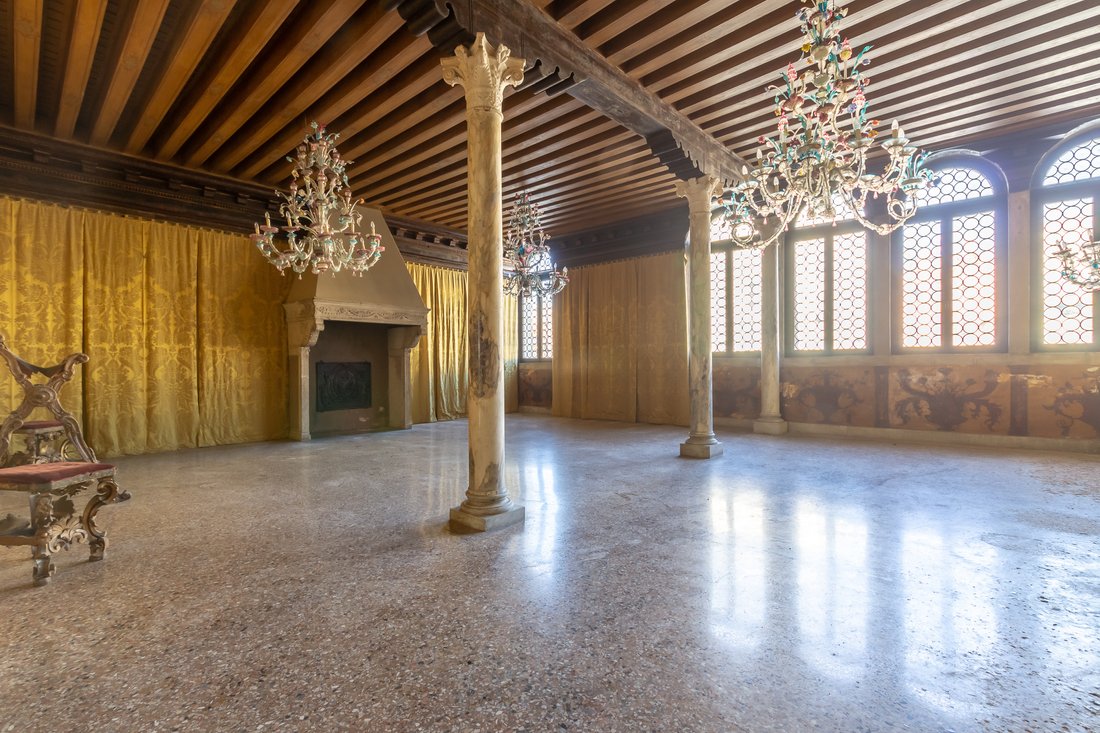
Das Erdgeschoss, das sowohl vom Canal Grande als auch von der Straße aus zugänglich ist, ist auf der Rückseite zum Garten hin geöffnet und verfügt über einen großen Saal mit Säulen mit einem roten Marmorbrunnen, einem großen Kamin und einer eleganten Marmortreppe, die in die erste edle Etage mit einem von Dario installierten maurischen Springbrunnen führt.
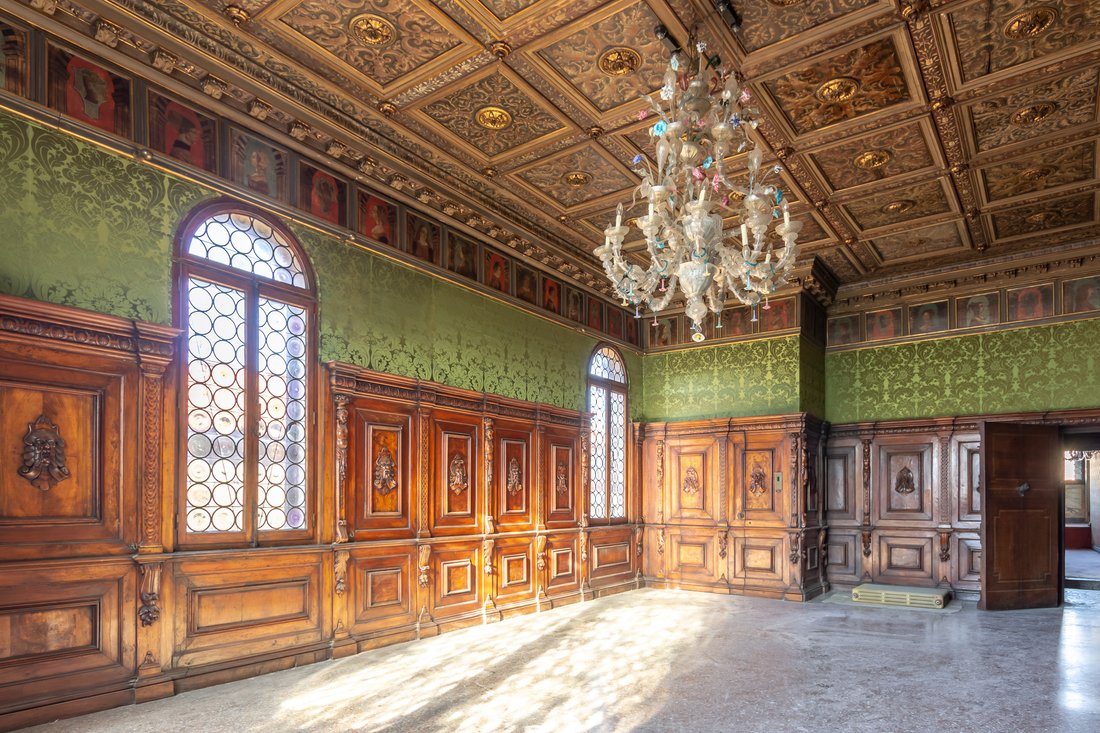
Die zweite edle Etage verfügt über elegante Säle mit Bevilacqua-Stoffen und antiken Murano-Kronleuchtern.
Im dritten Stock befinden sich die mit Täfelungen verzierten Schlafzimmer und eine wunderschöne Loggia-Terrasse mit herrlichem Blick auf den Garten.
1494 ging der Palast an Darios Tochter über. Er wurde mit kostbaren Stoffen und Teppichen dekoriert und im Laufe der Zeit von seinen Besitzern renoviert.
Der englische Kunstkritiker John Ruskin, ein guter Freund eines der Vorbesitzer, war besonders fasziniert von den gotischen, marmorverkrusteten Oculi des Palastes und schrieb über sie. Der Palast gehörte auch einer Gräfin, die sich freute, sich mit französischen und venezianischen Schriftstellern zu umgeben, darunter Henri de Régnier.
Ein großes Renovierungsprojekt Ende des 19. Jahrhunderts umfasste die Treppe, die Außenkamine, die Majolikaöfen und die feinen Schnitzereien im Speisesaal des zweiten Piano Nobile sowie eine umfangreiche Stabilisierung und den Ersatz von Marmor an der Fassade.
Das Palace befindet sich in einer eleganten und ruhigen venezianischen Wohngegend zwischen der Salute-Kirche und der Peggy Guggenheim Collection sowie in der Nähe von Francois Pinaults Museum für zeitgenössische Kunst Punta Della Dogana und der Uferpromenade von Zattere. In der Nähe befinden sich die Vaporetto-Haltestellen von Accademia, Salute und Zattere Spirito Santo, eine Reihe von Geschäften und erstklassigen Restaurants.
Palazzo Dario is an architectural gem on the most prestigious part of the Grand Canal stretching from the Accademia Bridge to the Salute Church and the Bacino di San Marco.
At the end of the 15th century the palace was remodelled by Pietro Lombardo for the patrician Giovanni Dario, Secretary to the Venetian Senate, diplomat, and merchant, who managed to negotiate a very convenient peace agreement with the Ottomans (Turks). For these tasks the Serenissima had given Dario a large sum of money as a reward,
and he commissioned a house to be built on a pre-existing gothic palace.
The magnificent façade, decorated with circular polychrome marbles inlays, is made of Pietra d’Istria, and reflects the oriental influence, acquired by Dario during his long travels in Egypt and Middle East, then translated in the Veneto taste with the help of the architect.
Differently from the Renaissance façade on the Grand Canal, the rear facade of the palace on the Campiello Barbaro has Gothic trefoil arches, chimneys, and loggia terrace.
In 2025 a full expertise on the property has been carried out and the Palace is sold with a full certificate of compliance.
A large project of renovation was undertaken at the end of the 19th century, and it didn’t change the façade but completely renewed the interior with a renaissance taste.
The Palace splits over four floors with a ground floor, two noble floors and a third one with bedrooms.
The ground floor, with access both from the Grand Canal and the street, on the rear is opened onto the garden, and has a large hall with columns featuring a red marble well, a large fireplace and an elegant marble staircase that leads to the first noble floor boasting a Moorish fountain installed by Dario.
The second noble floor features elegant halls with Bevilacqua fabrics and antique Murano chandeliers.
On the third floor there are the bedrooms enriched with wainscoting and a wonderful loggia terrace enjoying the charming view of the garden.
In 1494, the palace passed to Dario’s daughter, and it was decorated with precious fabrics and carpets and refurbished during the time by its owners.
The English art critic John Ruskin, great friend of one of the previous owners, was particularly entranced with and wrote about the palace’s Gothic marble-encrusted oculi. The palace belonged also to a Countess who was pleased to surround herself with French and Venetian writers, one of whom — Henri de Régnier.
A large project of renovation at the end of the 19th century included; the staircase, the external chimneys, the majolica stoves, and the fine carvings in the dining room on the second piano nobile, as well as a great deal of stabilization and replacement of marble on the facade.
The Palace is in a refined and peaceful residential Venetian neighbourhood between the Salute Church and the Peggy Guggenheim Collection, and close to Francois Pinault’s Punta Della Dogana Museum of Contemporary Art and the Zattere waterfront. Close to the vaporetto stops of Accademia, Salute and Zattere Spirito Santo, to a number of shops, and the high-quality restaurants.
-
Art der Immobilie
Villa
-
Etagen
4
Erkunden Sie die Gegend

Der Agent wird sich in Kürze mit Ihnen in Verbindung setzen
Gelistet von
Besichtigung mit Arnaldo Fusello buchen
Wählen Sie ein Datum und ob Sie eine virtuelle oder persönliche Besichtigung mit dem Makler wünschen.

Leading the way to your dream property in Venice Dimora Italia Real Estate is a leading real estate agent based
Leading the way to your dream property in Venice Dimora Italia Real Estate is a leading real estate agent based at Palazzo Querini alla Carità beside the Accademia Bridge in Venice, in the sestiere of Dorsoduro.
The sestiere of Dorsoduro is a delightful area in the southern part of Venice, favoured by many artist, writer, academic drawn and Venice-lower drawn to the world-famous museums (Punta Della Dogana, the Accademia Galleries, Peggy Guggenheim Collection…), fine restaurants and quintessentially Venetian scenes which characterize this much-loved part of the city. Home to a number of University departments along with the popular Campo San Barnaba and Campo Santa Margherita, the sestiere also encompasses the island of Giudecca seen from the ‘Zattere’ - the wide promenade on Dorsoduro’s southern embankment offering exceptional views across the boat-filled waters of the Giudecca Canal.
The area is close to many of the city’s major attractions and only a short walk to the district of San Marco via the Accademia Bridge with its spectacular views of the Grand Canal.
Their knowledgeable and multilingual Venice-born team are skilled at assisting and guiding clients throughout the sales and purchasing processes and will be delighted to supervise and coordinate the professional, efficient and reliable network of lawyers, notaries and bankers they’ve established in order to make your property sale or purchase go smoothly. Over the years, they have completed a great many successful property transactions involving overseas buyers and sellers from most of continental Europe, the UK, the US, Australia and Russia thanks to their in-depth knowledge of the city and the process of buying and selling in Italy. Notable sales have covered both residential and commercial properties.
Dimora Italia Real Estate’s reliable after-sales services include guidance and assistance with property restoration issues such as obtaining approvals and permissions and the engagement of architects, building contractors, interior designers and decorators, while their optional management, maintenance and concierge services are an invaluable resource to second/third home-owners and those purchasing property as a buy-to-let investment.
Ähnliche Immobilien in der Nähe
Neue Angebote in Dorsoduro





Entdecken Sie mehr Häuser zum Verkauf
Dorsoduro, Venedig, Italien Immobilienarten
Dorsoduro, Venedig, Italien beliebte Suchanfragen
- Panorama Immobilien in Dorsoduro, Venedig, Italien
- Immobilien mit Terrasse in Dorsoduro, Venedig, Italien
- Immobilien mit Bar in Dorsoduro, Venedig, Italien
- Immobilien mit Office in Dorsoduro, Venedig, Italien
- Immobilien mit Flussblick in Dorsoduro, Venedig, Italien
- Immobilien mit Aufzug in Dorsoduro, Venedig, Italien
- Blick auf die Stadt Immobilien in Dorsoduro, Venedig, Italien
- Immobilien mit Garten in Dorsoduro, Venedig, Italien
- Duplex Immobilien in Dorsoduro, Venedig, Italien
- am Wasser Immobilien in Dorsoduro, Venedig, Italien
- Anlageimmobilie Immobilien in Dorsoduro, Venedig, Italien
- Moderne Immobilien in Dorsoduro, Venedig, Italien
- Immobilien mit Bibliothek in Dorsoduro, Venedig, Italien
- Immobilien mit Klimaanlage in Dorsoduro, Venedig, Italien
- Immobilien mit Kamin in Dorsoduro, Venedig, Italien
- Immobilien mit Pool in Dorsoduro, Venedig, Italien
- Immobilien mit Balkon in Dorsoduro, Venedig, Italien
- Luxusvilla Immobilien in Dorsoduro, Venedig, Italien
- Immobilien mit Offene Küche in Dorsoduro, Venedig, Italien
- Renoviert Immobilien in Dorsoduro, Venedig, Italien
- Immobilien mit Wasserblick in Dorsoduro, Venedig, Italien
Verwandte Leitfäden & Geschichten
Das Vertrauen der führenden Makler der Welt
Die Makler hinter den außergewöhnlichsten Immobilien der Welt inserieren bei JamesEdition.
- Angebote von Sotheby's, Christie's, BARNES und Engel & Völkers
- Jedes Angebot wird vor der Veröffentlichung geprüft
- Verbinden Sie sich direkt mit verifizierten Maklern
Indem Sie fortfahren, akzeptieren Sie unsere Nutzungsbedingungen und Datenschutzrichtlinie.