$4,277,848
Prächtige Liberty Residence
- 8 Schlafz.
- 7 Bäder
- 12,573 Sqft
- 81
Über die Immobilie
Beschreibung wurde automatisch übersetzt.
Die Beschreibung wird in der Originalsprache angezeigt.
Villa Virginia, erbaut zwischen 1906 und 1908 nach einem Entwurf des Architekten Filippo La Porta, ist eines der faszinierendsten Beispiele des frühen Jugendstils in Palermo. Sie wurde vom Unternehmer Vincenzo Caruso in Auftrag gegeben, der mit der Familie Florio verbunden war, und verkörpert den Geschmack und die Eleganz einer einzigartigen Epoche.
Mit einer Fläche von etwa 1.168 m² erst
Mit einer Fläche von etwa 1.168 m² erst
Villa Virginia, built between 1906 and 1908 to a design by architect Filippo La Porta, is one of the most fascinating examples of early Art Nouveau architecture in Palermo. Commissioned by the entrepreneur Vincenzo Caruso, who had ties to the Florio family, it embodies the taste and elegance of a bygone era.
Covering approximately 12,573 sq ft, the property is arranged over two floors plu
Covering approximately 12,573 sq ft, the property is arranged over two floors plu
Villa Virginia, erbaut zwischen 1906 und 1908 nach einem Entwurf des Architekten Filippo La Porta, ist eines der faszinierendsten Beispiele des frühen Jugendstils in Palermo. Sie wurde vom Unternehmer Vincenzo Caruso in Auftrag gegeben, der mit der Familie Florio verbunden war, und verkörpert den Geschmack und die Eleganz einer einzigartigen Epoche.
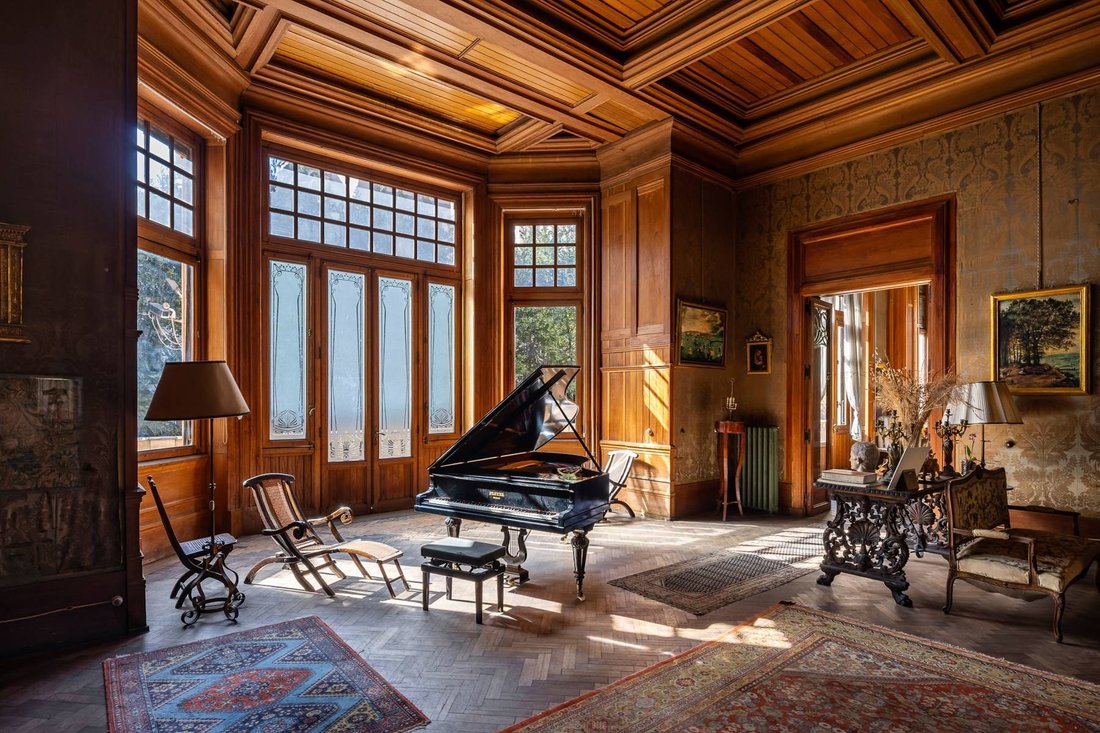
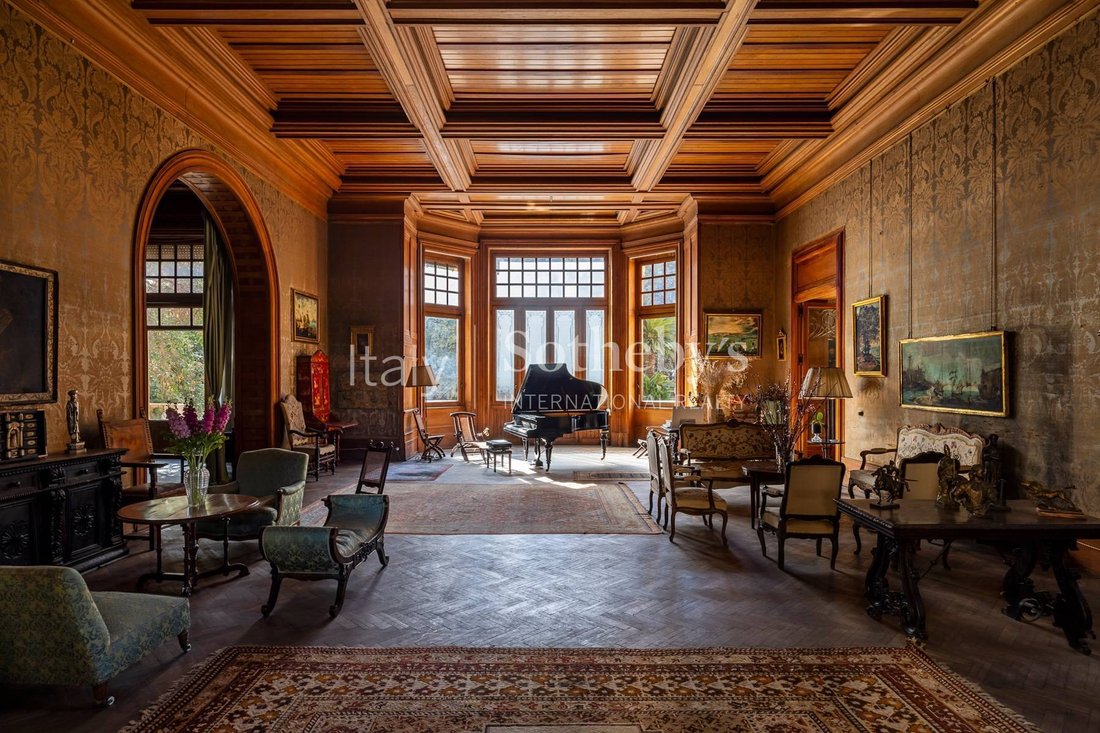
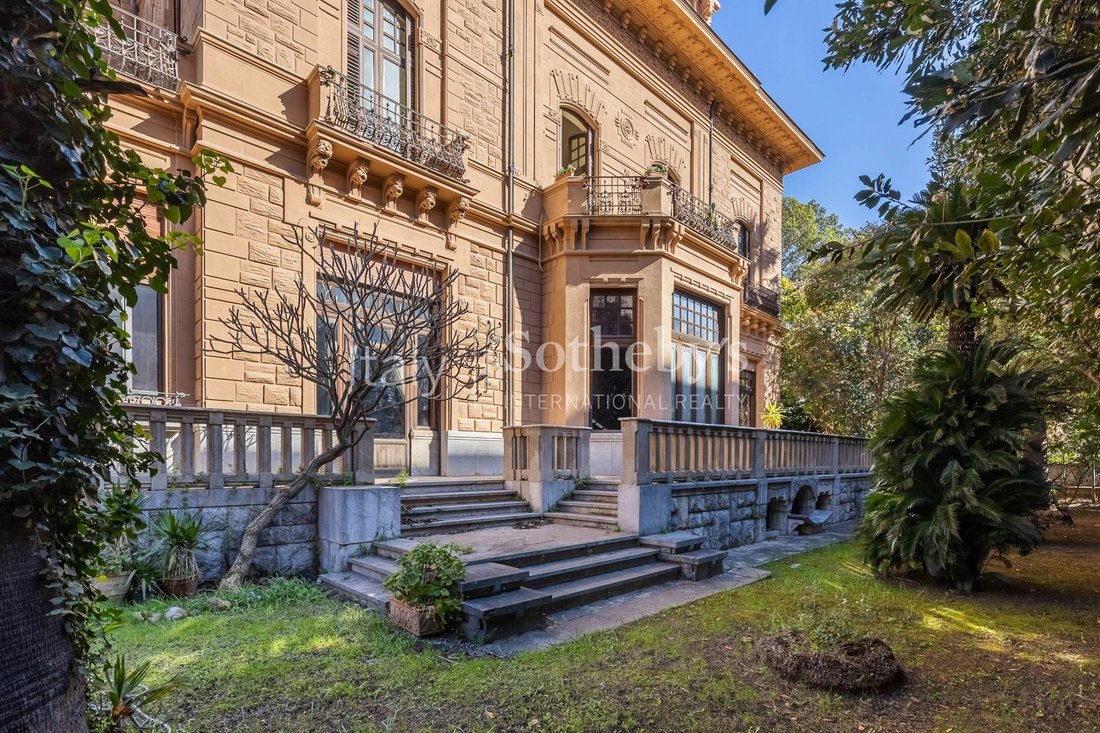
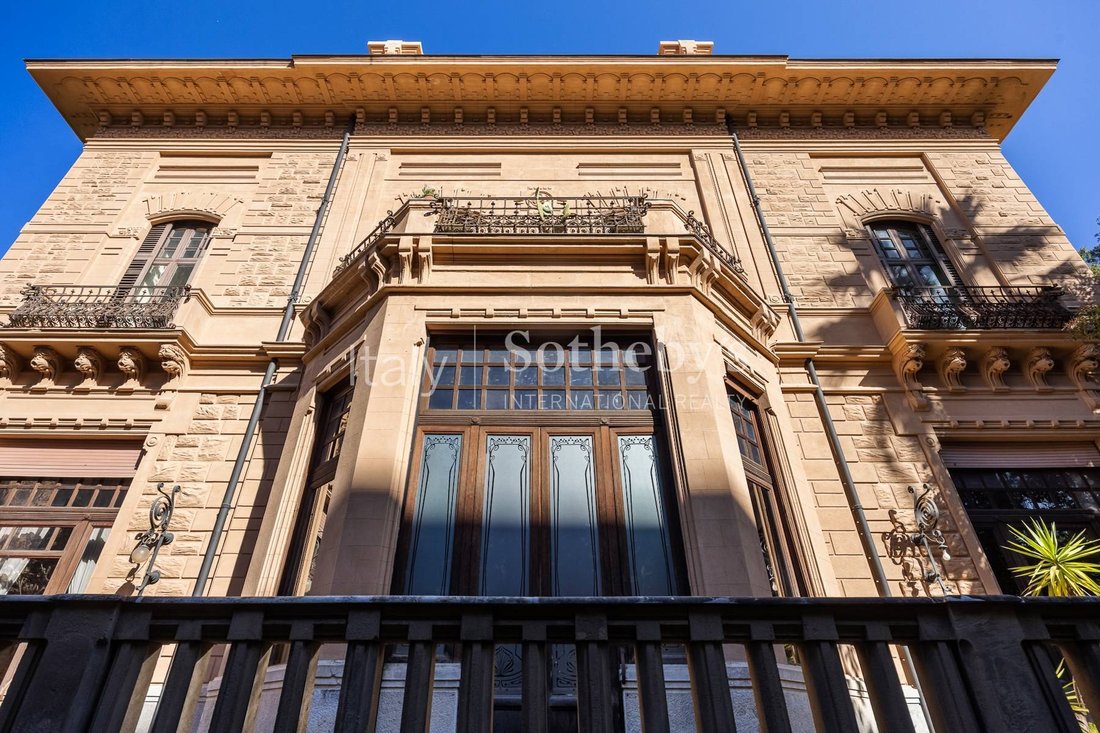
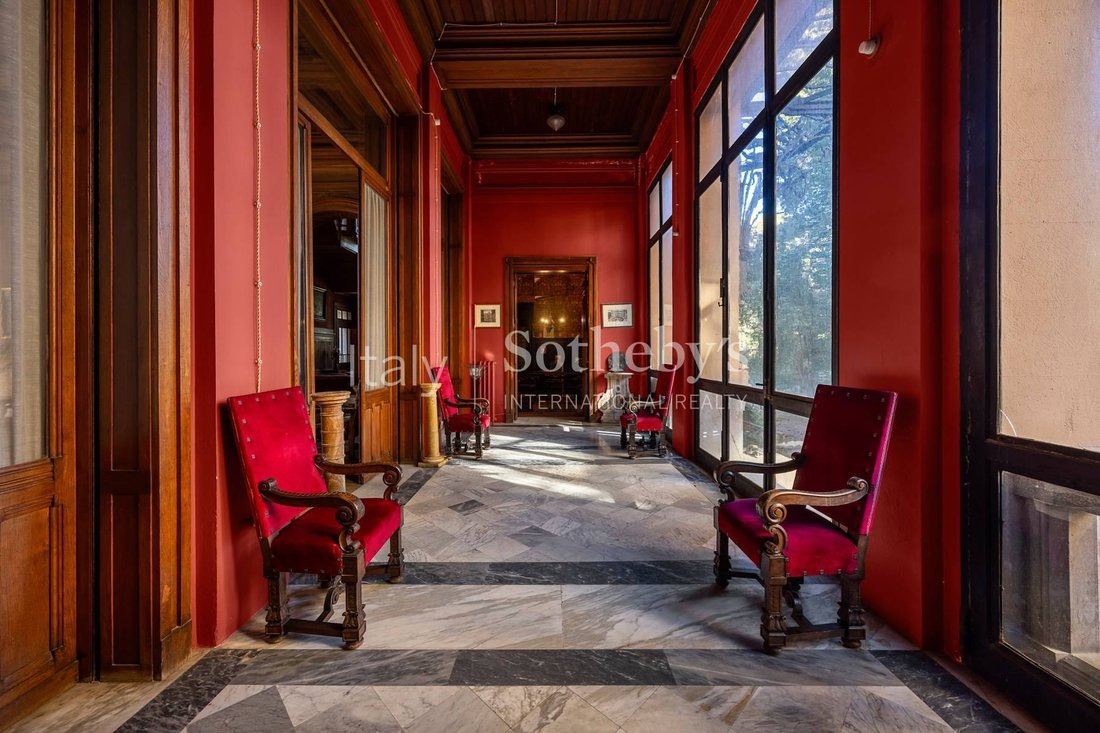
Mit einer Fläche von etwa 1.168 m² erstreckt sich die Immobilie über zwei Ebenen sowie ein Souterrain und zeichnet sich durch Ecktürme sowie einen eindrucksvollen achteckigen Turm aus, der ihr architektonisches Profil prägt. Der Eingang im Erdgeschoss führt in einen großzügigen repräsentativen Salon mit Kassettendecke. Die Räume sind harmonisch zwischen Esszimmern, Salons und einem Arbeitszimmer mit Seidenverkleidungen und Blattgold gestaltet. Einer der Räume ist mit Gemälden der japanischen Künstlerin Otama Kyohara dekoriert. Ergänzt wird die Etage durch Küche, Nebenräume und eine Diensttreppe.
Besonders hervorzuheben ist die eindrucksvolle Jugendstil Treppe aus Nussbaumholz, begleitet von einem künstlerischen Glasfenster des Meisters Bevilacqua. Die gesamte Residenz ist mit Bleiglasfenstern sowie Möbeln der historischen Unternehmen Ducrot und Mucoli ausgestattet. Im ersten Obergeschoss befinden sich fünf Schlafzimmer mit Zugang zu Terrassen, von denen einige zu den Türmen führen, die besonders helle Räume bieten. Innerhalb der Liegenschaft befindet sich zudem eine Dependance im Jugendstil auf zwei Ebenen mit etwa 82 m².
Die Villa ist von einem privaten Garten mit Parkplatz umgeben und befindet sich in zentraler Lage, nur wenige Schritte von der Villa Whitaker und der Piazza Politeama entfernt.
Mit einer Fläche von etwa 1.168 m² erstreckt sich die Immobilie über zwei Ebenen sowie ein Souterrain und zeichnet sich durch Ecktürme sowie einen eindrucksvollen achteckigen Turm aus, der ihr architektonisches Profil prägt. Der Eingang im Erdgeschoss führt in einen großzügigen repräsentativen Salon mit Kassettendecke. Die Räume sind harmonisch zwischen Esszimmern, Salons und einem Arbeitszimmer mit Seidenverkleidungen und Blattgold gestaltet. Einer der Räume ist mit Gemälden der japanischen Künstlerin Otama Kyohara dekoriert. Ergänzt wird die Etage durch Küche, Nebenräume und eine Diensttreppe.
Besonders hervorzuheben ist die eindrucksvolle Jugendstil Treppe aus Nussbaumholz, begleitet von einem künstlerischen Glasfenster des Meisters Bevilacqua. Die gesamte Residenz ist mit Bleiglasfenstern sowie Möbeln der historischen Unternehmen Ducrot und Mucoli ausgestattet. Im ersten Obergeschoss befinden sich fünf Schlafzimmer mit Zugang zu Terrassen, von denen einige zu den Türmen führen, die besonders helle Räume bieten. Innerhalb der Liegenschaft befindet sich zudem eine Dependance im Jugendstil auf zwei Ebenen mit etwa 82 m².
Die Villa ist von einem privaten Garten mit Parkplatz umgeben und befindet sich in zentraler Lage, nur wenige Schritte von der Villa Whitaker und der Piazza Politeama entfernt.
Villa Virginia, built between 1906 and 1908 to a design by architect Filippo La Porta, is one of the most fascinating examples of early Art Nouveau architecture in Palermo. Commissioned by the entrepreneur Vincenzo Caruso, who had ties to the Florio family, it embodies the taste and elegance of a bygone era.
Covering approximately 12,573 sq ft, the property is arranged over two floors plus a semi-basement level, and is distinguished by corner turrets and a striking octagonal tower that defines its architectural profile. The entrance on the ground floor opens into a spacious reception hall with a coffered ceiling. The rooms flow harmoniously between dining rooms, salons, and a study featuring silk and gold-leaf panelling. One of the rooms is decorated with paintings by the Japanese artist Otama Kiyohara. The floor is completed by a kitchen, bathrooms, and a service staircase.
Of particular note is the spectacular Art Nouveau walnut staircase, flanked by an artistic stained-glass window by Maestro Bevilacqua. The entire residence is enhanced by leaded windows and furnishings from the historic firms Ducrot and Mucoli. The first floor comprises five bedrooms with access to terraces, some of which lead to the towers, creating particularly bright and airy spaces. The property also includes a two-storey Art Nouveau annexe (approximately 882 sq ft).
The villa is surrounded by a private garden with parking and enjoys a central location, just a short walk from Villa Whitaker and Piazza Politeama.
Covering approximately 12,573 sq ft, the property is arranged over two floors plus a semi-basement level, and is distinguished by corner turrets and a striking octagonal tower that defines its architectural profile. The entrance on the ground floor opens into a spacious reception hall with a coffered ceiling. The rooms flow harmoniously between dining rooms, salons, and a study featuring silk and gold-leaf panelling. One of the rooms is decorated with paintings by the Japanese artist Otama Kiyohara. The floor is completed by a kitchen, bathrooms, and a service staircase.
Of particular note is the spectacular Art Nouveau walnut staircase, flanked by an artistic stained-glass window by Maestro Bevilacqua. The entire residence is enhanced by leaded windows and furnishings from the historic firms Ducrot and Mucoli. The first floor comprises five bedrooms with access to terraces, some of which lead to the towers, creating particularly bright and airy spaces. The property also includes a two-storey Art Nouveau annexe (approximately 882 sq ft).
The villa is surrounded by a private garden with parking and enjoys a central location, just a short walk from Villa Whitaker and Piazza Politeama.
-
Art der Immobilie
Haus
-
Baujahr
1900
-
Preis/Quadratfuß
$340
Funktionen
Funktionen
Lot
Innenbereich
- Hohe Decke
- Office
- Kamin
- Klimaanlage
- Bibliothek
- Keller
- Begehbarer Kleiderschrank
Outdoor
Erkunden Sie die Gegend
Via Dante, Palermo, PA 90141, Malaspina - Palagonia, Italien
Auf Google Maps anzeigen
Preis pro sqft
Niedrig
Hoch
Im Herzen von Palermo gelegen, bietet die Via Dante einfachen Zugang zur lebendigen Kultur und Geschichte der Stadt. In der Nähe von gastronomischen Hotspots und Einkaufszentren ist sie ideal für diejenigen, die einen kosmopolitischen Lebensstil suchen. Der nahegelegene Flughafen Falcone Borsellino sorgt für eine nahtlose internationale Anbindung. Kulturelle Wahrzeichen wie das Teatro Massimo sind nur wenige Minuten entfernt und bereichern das Wohngefühl mit Kunst und Erbe.
In der Nähe anzeigen
Sehenswürdigkeiten
Schulen
Flughafen Falcone Borsellino
Flughafen
35 Min.
Teatro Massimo
Kultur und Erbe
6 Min.
Kathedrale von Palermo
Kultur und Erbe
5 Min.
Internationale Schule Palermo
Internationale Schule
10 Min.

Vor 2 Jahren beigetreten
Sie haben sich nach diesem Objekt erkundigt
Der Agent wird sich in Kürze mit Ihnen in Verbindung setzen
Gelistet von
6
Angebote
2025
Beigetreten
Besichtigung mit Franca Tasca d'Almerita buchen
Wählen Sie ein Datum und ob Sie eine virtuelle oder persönliche Besichtigung mit dem Makler wünschen.
Bevorzugtes Datum
Art der Tour

An extraordinary historical and cultural heritage. As the capital of the island,
Palermo is a crossroads of civ
Palermo is a crossroads of civ
An extraordinary historical and cultural heritage. As the capital of the island,
Palermo is a crossroads of civilizations that have left an indelible mark over
the centuries, from the magnificent Arab-Norman architecture recognized as a
UNESCO World Heritage Site to the opulent Baroque palaces and vibrant popular
traditions. Its authentic beauty, combined with a rich culinary and wine
tradition and lively city life, attracts visitors from all over the world every
year, captivated by its unique atmosphere and millennia-old history. Italy
Sotheby’s International Realty has chosen Palermo as the location for its
twelfth office in Italy, further strengthening its presence in Southern Italy
and offering comprehensive coverage of the Sicilian territory. This includes
iconic destinations such as Taormina, Ragusa, the enchanting Egadi Islands with
their crystal-clear waters, Trapani with its ancient salt pans and charming
historic center, Marsala renowned for its wines and traditions, Sciacca with its
picturesque harbor and thermal baths, Agrigento and the extraordinary Valley of
the Temples, and Pantelleria, a volcanic island with a wild and unique charm.
Palermo is a crossroads of civilizations that have left an indelible mark over
the centuries, from the magnificent Arab-Norman architecture recognized as a
UNESCO World Heritage Site to the opulent Baroque palaces and vibrant popular
traditions. Its authentic beauty, combined with a rich culinary and wine
tradition and lively city life, attracts visitors from all over the world every
year, captivated by its unique atmosphere and millennia-old history. Italy
Sotheby’s International Realty has chosen Palermo as the location for its
twelfth office in Italy, further strengthening its presence in Southern Italy
and offering comprehensive coverage of the Sicilian territory. This includes
iconic destinations such as Taormina, Ragusa, the enchanting Egadi Islands with
their crystal-clear waters, Trapani with its ancient salt pans and charming
historic center, Marsala renowned for its wines and traditions, Sciacca with its
picturesque harbor and thermal baths, Agrigento and the extraordinary Valley of
the Temples, and Pantelleria, a volcanic island with a wild and unique charm.
Zuletzt aktualisiert
April 25
Erstmalig gelistet
März 27
Angebotslink
Angebotsreferenz
322PVN
Das Vertrauen der führenden Makler der Welt
Die Makler hinter den außergewöhnlichsten Immobilien der Welt inserieren bei JamesEdition.
- Angebote von Sotheby's, Christie's, BARNES und Engel & Völkers
- Jedes Angebot wird vor der Veröffentlichung geprüft
- Verbinden Sie sich direkt mit verifizierten Maklern
Indem Sie fortfahren, akzeptieren Sie unsere Nutzungsbedingungen und Datenschutzrichtlinie.