$1,846,569
Isola Delle Femmine, Privatinsel Zum Verkauf Auf Sizilien, Mittelmeer
- 5,318 Sqft
- 32.13 Ac lot
- Aktualisiert: August 7
- 14
Über die Immobilie
Beschreibung wurde automatisch übersetzt.
Die Beschreibung wird in der Originalsprache angezeigt.
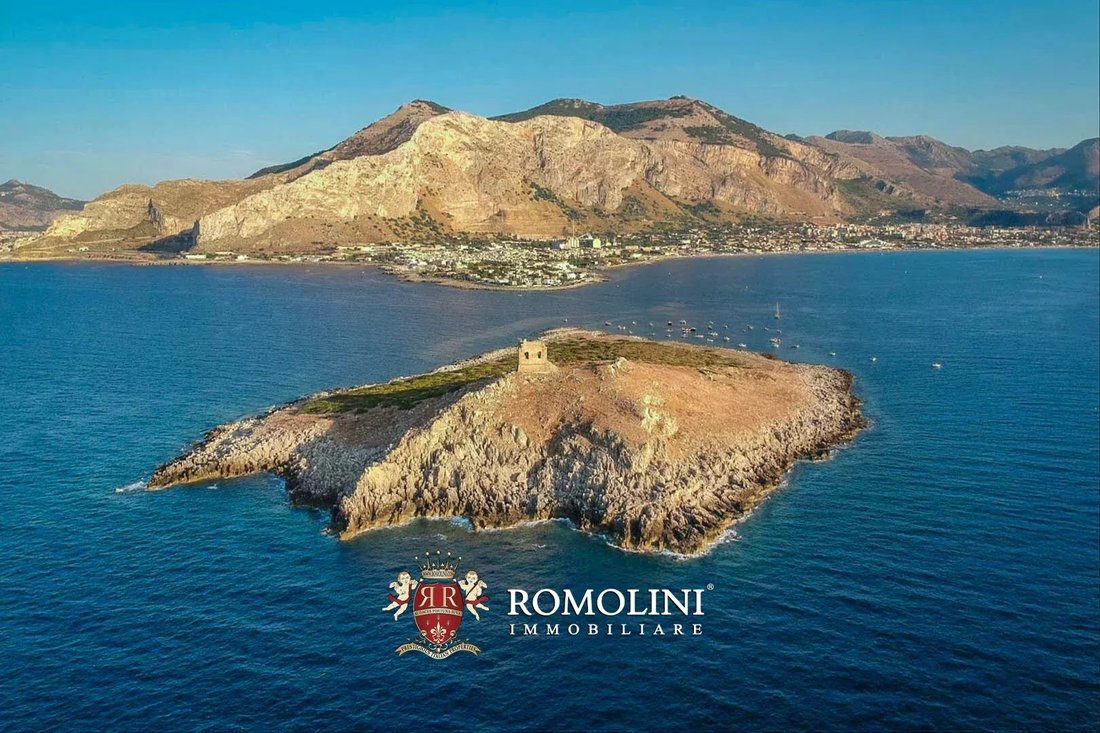
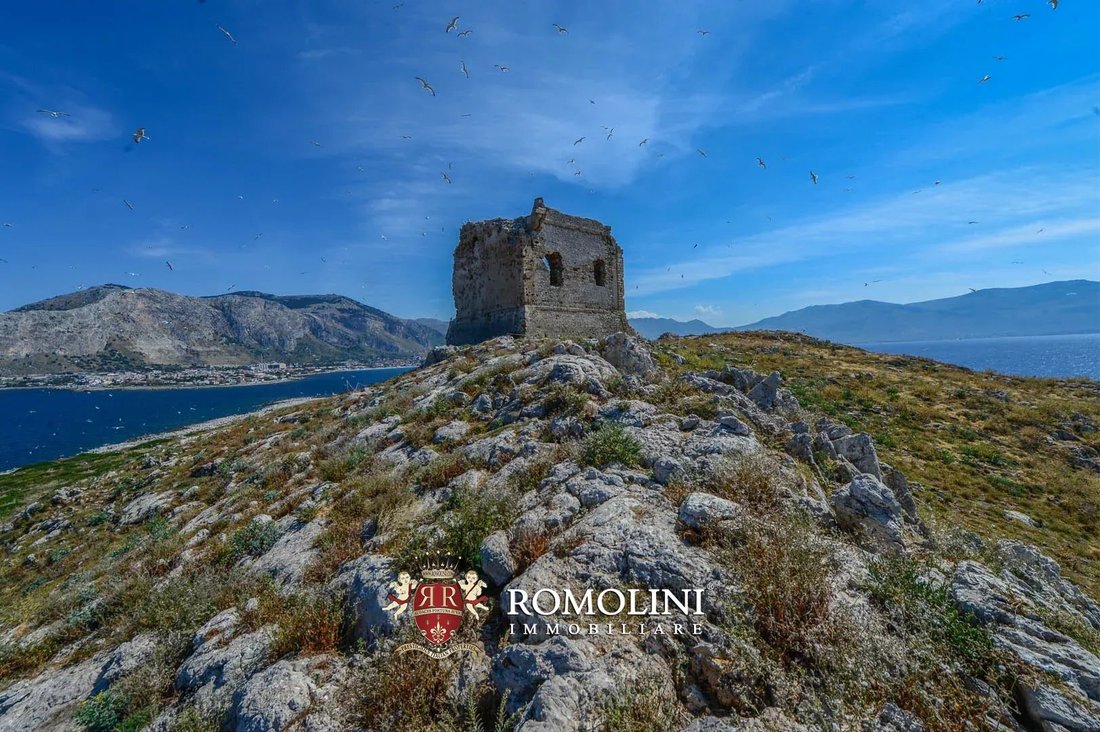
Die Isola delle Femmine (wörtlich: Insel der Frauen) liegt nicht weit von Palermo und dem Festland (300 m) entfernt. Sie hat eine Fläche von 13,9 Hektar mit einer maximalen Höhe von 35 m über dem Meeresspiegel, wo wir die Überreste eines alten Wachturms entdecken können.
Einmal auf dem Festland gelandet, sind verschiedene Städte Siziliens leicht zu erreichen: Palermo (19 km; 40 Minuten), Monre
Einmal auf dem Festland gelandet, sind verschiedene Städte Siziliens leicht zu erreichen: Palermo (19 km; 40 Minuten), Monre
Located a short distance from Palermo and the mainland (300 m), the Isola delle Femmine (literally, Island of the Women) is 13.9 hectares in surface with a maximum height of 35 m above sea level, where we can spot the remains of an ancient watchtower.
Once landed on the mainland, various cities in Sicily are easily reached: Palermo (19km; 40’), Monreale (21km; 40’), Trapani (92km; 1h 5’), Mars
Once landed on the mainland, various cities in Sicily are easily reached: Palermo (19km; 40’), Monreale (21km; 40’), Trapani (92km; 1h 5’), Mars
Die Isola delle Femmine (wörtlich: Insel der Frauen) liegt nicht weit von Palermo und dem Festland (300 m) entfernt. Sie hat eine Fläche von 13,9 Hektar mit einer maximalen Höhe von 35 m über dem Meeresspiegel, wo wir die Überreste eines alten Wachturms entdecken können.
Einmal auf dem Festland gelandet, sind verschiedene Städte Siziliens leicht zu erreichen: Palermo (19 km; 40 Minuten), Monreale (21 km; 40 Minuten), Trapani (92 km; 1 Stunde 5 Minuten), Marsala (110 km; 1 Stunde 25 Minuten) und Agrigento (189 km; 2 Stunden 25 Minuten). Die nächstgelegenen Flughäfen sind Palermo Falcone-Borsellino (16 km; 15 Minuten), Palermo Boccadifalco (16 km; 15 Minuten), Trapani Birgi (97 km; 1 Stunde 5 Minuten) und Catania Fontanarossa (223 km; 1 Stunde 30 Minuten).
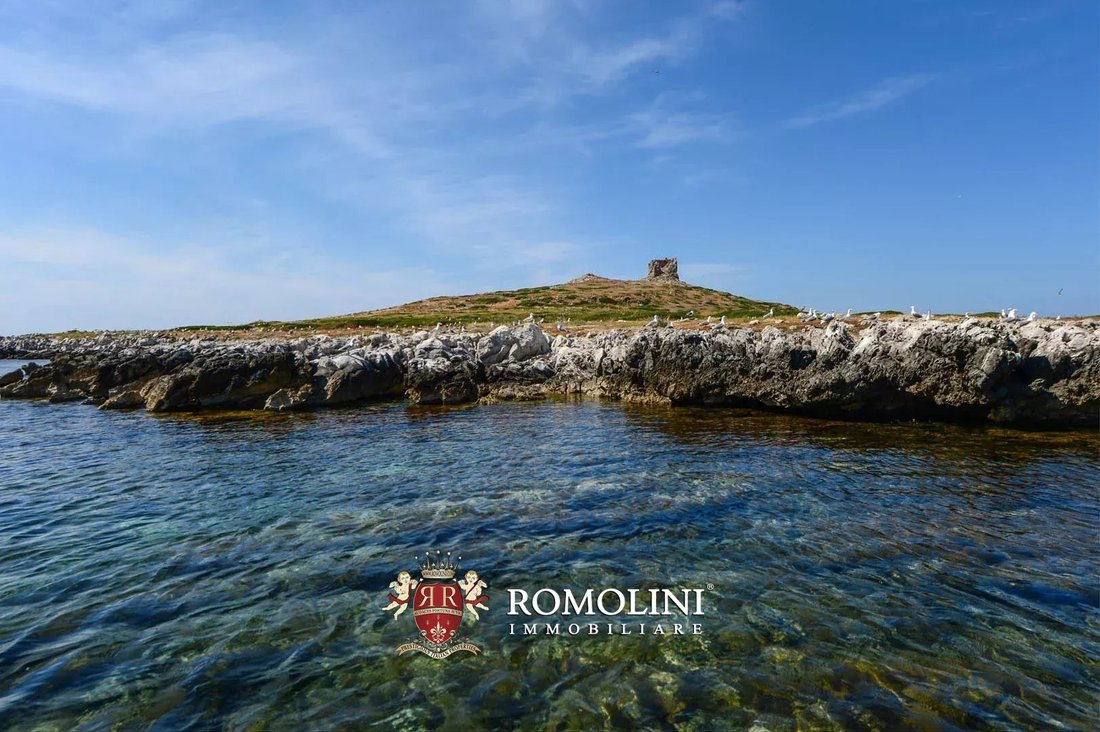
Der Meeresboden rund um die Insel ist auch für nicht professionelle Taucher leicht zu erreichen, was vor allem der unglaublichen Klarheit des Wassers zu verdanken ist. Und dieser Klarheit ist es zu verdanken, dass man die schönen, für die Insel typischen Lebensformen und einige Überreste aus der griechischen und römischen Zeit bewundern kann.
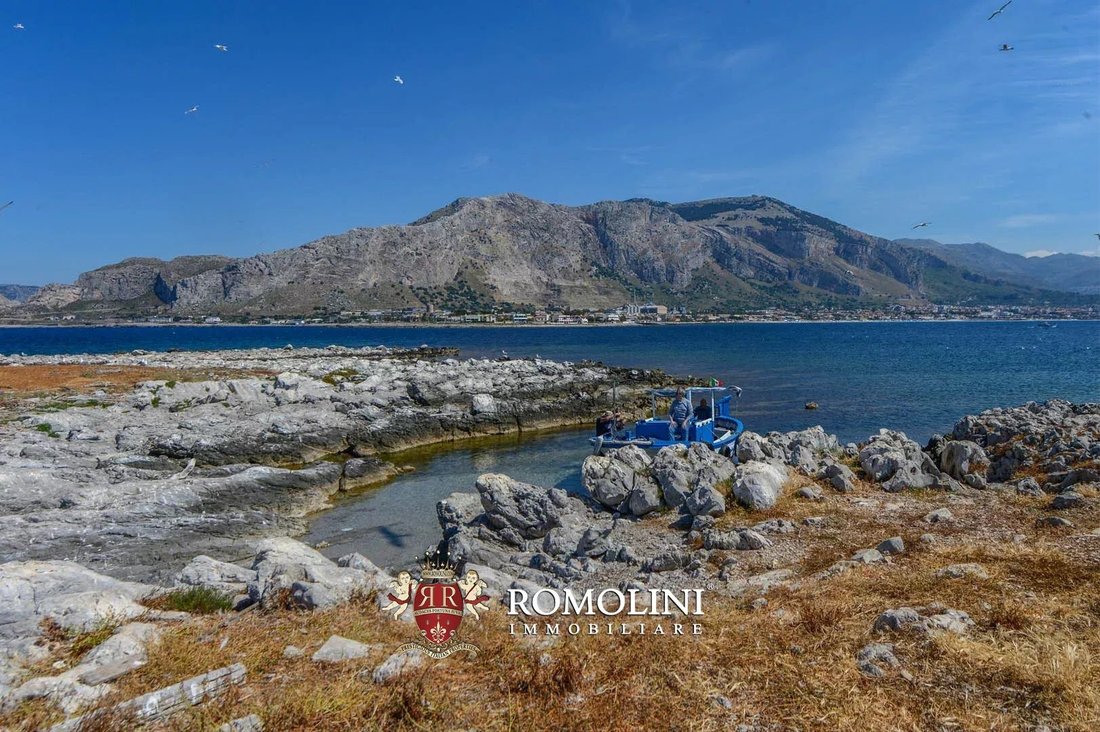
Die Insel zeichnet sich durch die typische Steppe des Mittelmeers aus, die hauptsächlich mit Malven, Alraunen und Staudengras bewachsen ist. Auf den Klippen, die zur Küste führen, ist Platz für Glaswurz und Kleeblatt. Wunderschöne Iris- und Romulea-Blüten bereichern die Landschaft zusätzlich. Die Fauna besteht hauptsächlich aus Echsen, aber es gibt auch einige schöne und ungewöhnliche Schmetterlingsarten.
HERKUNFT DES NAMENS: LEGENDEN UND PHILOLOGIE
Die Legenden erzählen von dreizehn türkischen Mädchen, die wegen schwerer Verbrechen verurteilt wurden, von ihren Verwandten auf ein Schiff eingeschifft und mitten im Meer treiben gelassen wurden. Ein Sturm zerstörte das Schiff auf einer kleinen Felseninsel, auf der die Mädchen sieben lange Jahre allein lebten. Als es ihren Familien gelang, ihre schrecklichen Taten zu finden, beschlossen die Mädchen, nicht in ihre Heimat zurückzukehren, sondern eine neue Stadt auf dem Festland zu gründen. Sie nannten sie Capaci (CCA-Paci, hier wörtlich der Frieden), während die Insel in Isola delle Femmine (wörtlich übersetzt Insel der Frauen) umbenannt wurde.
Wenn wir die Legende beiseite lassen und nur die Geschichte betrachten, ist die Herkunft des Namens höchst ungewiss. Sicher ist, dass es das Ergebnis eines langen Prozesses der Italianisierung ist. In der Volkstradition wird das Toponym Insula Fimi verwendet, wahrscheinlich eine falsche Schreibweise einer älteren Insula Euphemi (wobei Euphemius der Name des byzantinischen Gouverneurs von Sizilien im 9. Jahrhundert n. Chr. ist). Ein anderer möglicher Ursprung ist der Begriff Fimis, eine lateinische Übersetzung des arabischen Wortes fim (wörtlich Bucht, Meerenge), das den Meeresabschnitt bezeichnet, der die Insel vom Festland trennt.
GESCHICHTE DER INSEL: RÖMISCHE BECKEN UND CAMILLIANI-TURM
Auf der Insel finden wir einige Spuren aus der Römerzeit, wahrscheinlich nach dem zweiten Punischen Krieg, in Form von Becken aus Stein und Beton, die einst für die Zubereitung eines typischen Fischtellers verwendet wurden.
Der Brunnen und andere Regenwasserbecken stammen stattdessen aus dem Mittelalter.
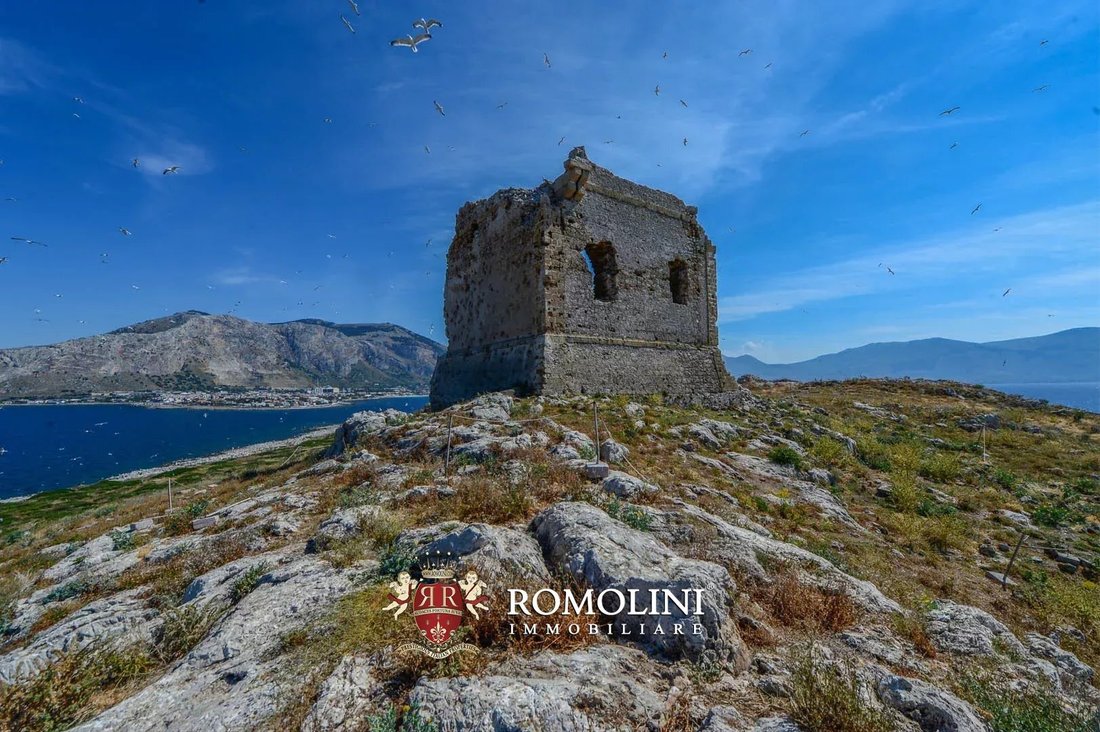
Der Turm auf der Spitze der Insel wurde im 16. Jahrhundert als Teil eines riesigen Verteidigungssystems erbaut, das Sizilien gegen die Angriffe von Korsarenschiffen umgab (dieses Verteidigungsprojekt stammt aus dem 14. Jahrhundert und wurde aufgrund der Notwendigkeit mehrere Jahre lang fortgesetzt). Wie bei vielen anderen Türmen gleichen Alters ist das Projekt stark vom florentinischen Architekten Camillo Camilliani beeinflusst, der vor allem für seine Arbeiten an der Fontana Pretoria in Palermo bekannt ist. Camilliani selbst erklärt in seinem Buch der Seetürme den Standort und unterstreicht die Bedeutung des Turms: „[...] wo der Turm, den wir besprochen haben, gebaut werden sollte, und das wäre eine großartige Sache; dieser (Turm) bietet Seeleuten und Wanderern Sicherheit, die diesen Meeresabschnitt überqueren“.
Der Turm, der ursprünglich auf zwei Stockwerke aufgeteilt war und sich heute auf einer einzigen Etage befindet, hat eine quadratische Grundfläche (247 m2 — 2.658 Quadratfuß). Das Erdgeschoss war in drei Räume aufgeteilt, die mit Tonnengewölben bedeckt waren und für eine Wasserzisterne (zwei von drei) und eine Waffenkammer vorgesehen waren. Von diesem letzten Lokal aus war es möglich, durch ein Loch im Dach zum Gardistenviertel zu klettern, und von dort aus war es wiederum leicht, das Dach über eine Holzleiter zu erreichen. Hier befanden sich die Artilleriegeschütze, um feindliche Schiffe abzuschießen.
Der Turm befindet sich derzeit in einem sehr schlechten Zustand, hauptsächlich aufgrund der schweren Schäden, die er 1943 bei der Landung der Alliierten auf Sizilien im Rahmen der Operation Husky erlitten hatte. Nach dem Zweiten Weltkrieg wurde der Turm weder wieder aufgebaut noch instand gehalten, und diese Aufgabe trug zu seiner endgültigen Dekadenz bei.
Das Gebäude kann vollständig wiederaufgebaut werden, wobei das ursprüngliche Volumen des Bauwerks erhalten wird. Es besteht die Möglichkeit, von der Europäischen Union oder dem Ministerium für Kulturerbe, Aktivitäten und Tourismus eine Finanzierung für ein mögliches kulturelles und touristisches Entwicklungsprogramm für die Insel zu erhalten, das alle naturalistischen Auflagen erfüllt.
Tatsächlich gehört die Insel seit 1997 zum Naturschutzgebiet Isola delle Femmine, für das die italienische Liga für Vogelschutz (LIPU) die Verwaltungsbehörde ist. Die Europäische Union erkannte die Bedeutung des Ortes an, der zuerstKlassifiziert als SCI (Site of Community Importance) und dann als SAC (Special Area of Conservation).
NUTZUNG UND NUTZUNGSMÖGLICHKEITEN
Der Kauf der Insel ist eine einzigartige Gelegenheit für einige, die nach einer „Trophäe“ suchen: eine private Nutzung oder einfach eine Aktivität zur Erhaltung von etwas wirklich Einzigartigem.
Die konservative Restaurierung des Turms würde es ermöglichen, das Gebäude als private Residenz, repräsentatives Gebäude, Unternehmensimage oder die Realisierung eines Museums nutzbar zu machen, sodass Touristen nicht nur den naturalistischen Wert der Insel, sondern auch die historischen, künstlerischen und archäologischen Schätze schätzen können.
NÄCHSTGELEGENE STÄDTE UND GEMEINDEN
Alle Entfernungen werden von der Festlandstadt Isola delle Femmine aus berechnet: Palermo (19 km; 40 Minuten), Monreale (21 km; 40 Minuten), Trapani (92 km; 1 Stunde 5 Minuten), Marsala (110 km; 1 Stunde 25 Minuten), Agrigento (189 km; 2 Stunden 25 Minuten)
NÄCHSTE FLUGHÄFEN
Palermo Falcone-Borsellino (16 km; 15 Minuten), Palermo Boccadifalco (16 km; 15 Minuten), Trapani Birgi (97 km; 1 Stunde 5 Minuten), Catania Fontanarossa (223 km; 1 Stunde 30 Minuten)
Einmal auf dem Festland gelandet, sind verschiedene Städte Siziliens leicht zu erreichen: Palermo (19 km; 40 Minuten), Monreale (21 km; 40 Minuten), Trapani (92 km; 1 Stunde 5 Minuten), Marsala (110 km; 1 Stunde 25 Minuten) und Agrigento (189 km; 2 Stunden 25 Minuten). Die nächstgelegenen Flughäfen sind Palermo Falcone-Borsellino (16 km; 15 Minuten), Palermo Boccadifalco (16 km; 15 Minuten), Trapani Birgi (97 km; 1 Stunde 5 Minuten) und Catania Fontanarossa (223 km; 1 Stunde 30 Minuten).
Der Meeresboden rund um die Insel ist auch für nicht professionelle Taucher leicht zu erreichen, was vor allem der unglaublichen Klarheit des Wassers zu verdanken ist. Und dieser Klarheit ist es zu verdanken, dass man die schönen, für die Insel typischen Lebensformen und einige Überreste aus der griechischen und römischen Zeit bewundern kann.
Die Insel zeichnet sich durch die typische Steppe des Mittelmeers aus, die hauptsächlich mit Malven, Alraunen und Staudengras bewachsen ist. Auf den Klippen, die zur Küste führen, ist Platz für Glaswurz und Kleeblatt. Wunderschöne Iris- und Romulea-Blüten bereichern die Landschaft zusätzlich. Die Fauna besteht hauptsächlich aus Echsen, aber es gibt auch einige schöne und ungewöhnliche Schmetterlingsarten.
HERKUNFT DES NAMENS: LEGENDEN UND PHILOLOGIE
Die Legenden erzählen von dreizehn türkischen Mädchen, die wegen schwerer Verbrechen verurteilt wurden, von ihren Verwandten auf ein Schiff eingeschifft und mitten im Meer treiben gelassen wurden. Ein Sturm zerstörte das Schiff auf einer kleinen Felseninsel, auf der die Mädchen sieben lange Jahre allein lebten. Als es ihren Familien gelang, ihre schrecklichen Taten zu finden, beschlossen die Mädchen, nicht in ihre Heimat zurückzukehren, sondern eine neue Stadt auf dem Festland zu gründen. Sie nannten sie Capaci (CCA-Paci, hier wörtlich der Frieden), während die Insel in Isola delle Femmine (wörtlich übersetzt Insel der Frauen) umbenannt wurde.
Wenn wir die Legende beiseite lassen und nur die Geschichte betrachten, ist die Herkunft des Namens höchst ungewiss. Sicher ist, dass es das Ergebnis eines langen Prozesses der Italianisierung ist. In der Volkstradition wird das Toponym Insula Fimi verwendet, wahrscheinlich eine falsche Schreibweise einer älteren Insula Euphemi (wobei Euphemius der Name des byzantinischen Gouverneurs von Sizilien im 9. Jahrhundert n. Chr. ist). Ein anderer möglicher Ursprung ist der Begriff Fimis, eine lateinische Übersetzung des arabischen Wortes fim (wörtlich Bucht, Meerenge), das den Meeresabschnitt bezeichnet, der die Insel vom Festland trennt.
GESCHICHTE DER INSEL: RÖMISCHE BECKEN UND CAMILLIANI-TURM
Auf der Insel finden wir einige Spuren aus der Römerzeit, wahrscheinlich nach dem zweiten Punischen Krieg, in Form von Becken aus Stein und Beton, die einst für die Zubereitung eines typischen Fischtellers verwendet wurden.
Der Brunnen und andere Regenwasserbecken stammen stattdessen aus dem Mittelalter.
Der Turm auf der Spitze der Insel wurde im 16. Jahrhundert als Teil eines riesigen Verteidigungssystems erbaut, das Sizilien gegen die Angriffe von Korsarenschiffen umgab (dieses Verteidigungsprojekt stammt aus dem 14. Jahrhundert und wurde aufgrund der Notwendigkeit mehrere Jahre lang fortgesetzt). Wie bei vielen anderen Türmen gleichen Alters ist das Projekt stark vom florentinischen Architekten Camillo Camilliani beeinflusst, der vor allem für seine Arbeiten an der Fontana Pretoria in Palermo bekannt ist. Camilliani selbst erklärt in seinem Buch der Seetürme den Standort und unterstreicht die Bedeutung des Turms: „[...] wo der Turm, den wir besprochen haben, gebaut werden sollte, und das wäre eine großartige Sache; dieser (Turm) bietet Seeleuten und Wanderern Sicherheit, die diesen Meeresabschnitt überqueren“.
Der Turm, der ursprünglich auf zwei Stockwerke aufgeteilt war und sich heute auf einer einzigen Etage befindet, hat eine quadratische Grundfläche (247 m2 — 2.658 Quadratfuß). Das Erdgeschoss war in drei Räume aufgeteilt, die mit Tonnengewölben bedeckt waren und für eine Wasserzisterne (zwei von drei) und eine Waffenkammer vorgesehen waren. Von diesem letzten Lokal aus war es möglich, durch ein Loch im Dach zum Gardistenviertel zu klettern, und von dort aus war es wiederum leicht, das Dach über eine Holzleiter zu erreichen. Hier befanden sich die Artilleriegeschütze, um feindliche Schiffe abzuschießen.
Der Turm befindet sich derzeit in einem sehr schlechten Zustand, hauptsächlich aufgrund der schweren Schäden, die er 1943 bei der Landung der Alliierten auf Sizilien im Rahmen der Operation Husky erlitten hatte. Nach dem Zweiten Weltkrieg wurde der Turm weder wieder aufgebaut noch instand gehalten, und diese Aufgabe trug zu seiner endgültigen Dekadenz bei.
Das Gebäude kann vollständig wiederaufgebaut werden, wobei das ursprüngliche Volumen des Bauwerks erhalten wird. Es besteht die Möglichkeit, von der Europäischen Union oder dem Ministerium für Kulturerbe, Aktivitäten und Tourismus eine Finanzierung für ein mögliches kulturelles und touristisches Entwicklungsprogramm für die Insel zu erhalten, das alle naturalistischen Auflagen erfüllt.
Tatsächlich gehört die Insel seit 1997 zum Naturschutzgebiet Isola delle Femmine, für das die italienische Liga für Vogelschutz (LIPU) die Verwaltungsbehörde ist. Die Europäische Union erkannte die Bedeutung des Ortes an, der zuerstKlassifiziert als SCI (Site of Community Importance) und dann als SAC (Special Area of Conservation).
NUTZUNG UND NUTZUNGSMÖGLICHKEITEN
Der Kauf der Insel ist eine einzigartige Gelegenheit für einige, die nach einer „Trophäe“ suchen: eine private Nutzung oder einfach eine Aktivität zur Erhaltung von etwas wirklich Einzigartigem.
Die konservative Restaurierung des Turms würde es ermöglichen, das Gebäude als private Residenz, repräsentatives Gebäude, Unternehmensimage oder die Realisierung eines Museums nutzbar zu machen, sodass Touristen nicht nur den naturalistischen Wert der Insel, sondern auch die historischen, künstlerischen und archäologischen Schätze schätzen können.
NÄCHSTGELEGENE STÄDTE UND GEMEINDEN
Alle Entfernungen werden von der Festlandstadt Isola delle Femmine aus berechnet: Palermo (19 km; 40 Minuten), Monreale (21 km; 40 Minuten), Trapani (92 km; 1 Stunde 5 Minuten), Marsala (110 km; 1 Stunde 25 Minuten), Agrigento (189 km; 2 Stunden 25 Minuten)
NÄCHSTE FLUGHÄFEN
Palermo Falcone-Borsellino (16 km; 15 Minuten), Palermo Boccadifalco (16 km; 15 Minuten), Trapani Birgi (97 km; 1 Stunde 5 Minuten), Catania Fontanarossa (223 km; 1 Stunde 30 Minuten)
Located a short distance from Palermo and the mainland (300 m), the Isola delle Femmine (literally, Island of the Women) is 13.9 hectares in surface with a maximum height of 35 m above sea level, where we can spot the remains of an ancient watchtower.
Once landed on the mainland, various cities in Sicily are easily reached: Palermo (19km; 40’), Monreale (21km; 40’), Trapani (92km; 1h 5’), Marsala (110km; 1h 25’) and Agrigento (189km; 2h 25’). Closest airports are Palermo Falcone-Borsellino (16km; 15’), Palermo Boccadifalco (16km; 15’), Trapani Birgi (97km; 1h 5’) and Catania Fontanarossa (223km; 1h 30’).
The seabed around the island is easily reachable, even by non-professional scuba-divers, thanks mainly to the incredible clearness of the water. And it is thanks to this clearness that one can admire the beautiful life forms typical of the island and several remaining of Greek and Roman age.
The island is characterized by the typical Mediterranean steppe, mainly covered in mallow, mandrake and erba stella on the higher ground which leave space to glasswort and bird’s-foot trefoil on the cliffs going toward the coastline. Further enriching the landscape we find beautiful Iris and Romulea flowers. Fauna is mainly composed of lizards, but there are also some beautiful and uncommon species of butterflies.
ORIGIN OF THE NAME: LEGENDS AND PHILOLOGY
The legend tales of thirteen Turkish maidens who, condemned for serious crimes, were embarked by their relatives on a ship and left adrift in the middle of the sea. A storm wrecked the ship on a small rocky island, where the girls lived alone for seven long years. When their families, having realized their horrible doings, managed to find the girls decided not to return to their homeland but to found a new town on the mainland. They named it Capaci (Cca-paci, literally here the peace) while the island was renamed Isola delle Femmine (literally Island of the Women).
If we take aside the legend and only consider history, the origin of the name is highly uncertain. What’s sure is that it is the result of a long process of Italianization. Popular tradition uses the toponym Insula Fimi, probably a misspelling of an older Insula Euphemi (where Euphemius is the name of the Byzantine governor of Sicily in the 9th century AD). Other possible origin is the term Fimis, latinization of the Arab word fim (literally bay, strait) indicating the stretch of sea dividing the island from the mainland.
HISTORY OF THE ISLAND: ROMAN BASINS AND CAMILLIANI’S TOWER
On the island we can find some traces dating back to the Roman age, probably after the second Punic War, in the form of stone and concrete basins once used in the preparation of a typical fish plate.
The well and other rainwater basins date back to the Middle Age instead.
The tower at the top of the island was built in the 16th century as part of a huge defense system entouring Sicily against the attacks of Corsair ships (this defensive project dated back to the 14th century and was continued based on necessity for several years). As for many other towers of the same age, the project is highly influenced by the Florentine architect Camillo Camilliani, who is better known for its work on the Fontana Pretoria in Palermo. Camilliani himself, in its Book of Maritime Towers, explains the location and underline the importance of the tower: “[…] where the tower we discussed should be built, and that would be a great thing; this (tower) grants security to sailors and wanderers crossing that stretch of sea”.
Originally structured onto two floors and now on a single floor, the tower has a squared base (247 sqm – 2,658 sqft). The ground floor was split into three rooms covered with barrel vaults and earmarked to water cistern (two out of three) and armory. From this last local it was possible to climb up to the guardsmen quarter through a hole in the roof, and from the quarters it was in turn easy to reach the rooftop through a wooden ladder. Here there were the artillery pieces to gun down enemy ships.
The tower is currently in a very bad shape, mainly because of the heavy damage it suffered during the Allied landing in Sicily as part of the Operation Husky in 1943. After World War II, the tower was neither rebuilt nor maintained and this abandonment contributed to its final decadence.
The building can be fully rebuilt, respecting the original volume of the structure, and it is possible to obtain a financing from the European Union or the Ministry of Cultural Heritage and Activities and Tourism for a possible cultural and touristic development program for the isle, all complying with the naturalistic constraint.
As a matter of fact, since 1997 the island has been included in the Natural reserve of Isola delle Femmine for which the Italian League for Bird Protection (LIPU) is managing authority. The European Union recognized the importance of the location which was first classified as SCI (Site of Community Importance) and then as SAC (Special Area of Conservation).
USE AND POTENTIAL USES
The purchase of the island is a unique opportunity for some looking for a “trophy asset”: a private use or simply an activity of preservation of something really unique.
The conservative restoration of the tower would allow making the building usable as a private residence, representative building, corporate image or the realization of a museum allowing tourists to appreciate not just the naturalistic value of the island but also the historical, artistic and archaeological ones.
CLOSEST CITIES AND TOWNS
All the distances are calculated from the mainland town of Isola delle Femmine: Palermo (19km; 40’), Monreale (21km; 40’), Trapani (92km; 1h 5’), Marsala (110km; 1h 25’), Agrigento (189km; 2h 25’)
CLOSEST AIRPORTS
Palermo Falcone-Borsellino (16km; 15’), Palermo Boccadifalco (16km; 15’), Trapani Birgi (97km; 1h 5’), Catania Fontanarossa (223km; 1h 30’)
Once landed on the mainland, various cities in Sicily are easily reached: Palermo (19km; 40’), Monreale (21km; 40’), Trapani (92km; 1h 5’), Marsala (110km; 1h 25’) and Agrigento (189km; 2h 25’). Closest airports are Palermo Falcone-Borsellino (16km; 15’), Palermo Boccadifalco (16km; 15’), Trapani Birgi (97km; 1h 5’) and Catania Fontanarossa (223km; 1h 30’).
The seabed around the island is easily reachable, even by non-professional scuba-divers, thanks mainly to the incredible clearness of the water. And it is thanks to this clearness that one can admire the beautiful life forms typical of the island and several remaining of Greek and Roman age.
The island is characterized by the typical Mediterranean steppe, mainly covered in mallow, mandrake and erba stella on the higher ground which leave space to glasswort and bird’s-foot trefoil on the cliffs going toward the coastline. Further enriching the landscape we find beautiful Iris and Romulea flowers. Fauna is mainly composed of lizards, but there are also some beautiful and uncommon species of butterflies.
ORIGIN OF THE NAME: LEGENDS AND PHILOLOGY
The legend tales of thirteen Turkish maidens who, condemned for serious crimes, were embarked by their relatives on a ship and left adrift in the middle of the sea. A storm wrecked the ship on a small rocky island, where the girls lived alone for seven long years. When their families, having realized their horrible doings, managed to find the girls decided not to return to their homeland but to found a new town on the mainland. They named it Capaci (Cca-paci, literally here the peace) while the island was renamed Isola delle Femmine (literally Island of the Women).
If we take aside the legend and only consider history, the origin of the name is highly uncertain. What’s sure is that it is the result of a long process of Italianization. Popular tradition uses the toponym Insula Fimi, probably a misspelling of an older Insula Euphemi (where Euphemius is the name of the Byzantine governor of Sicily in the 9th century AD). Other possible origin is the term Fimis, latinization of the Arab word fim (literally bay, strait) indicating the stretch of sea dividing the island from the mainland.
HISTORY OF THE ISLAND: ROMAN BASINS AND CAMILLIANI’S TOWER
On the island we can find some traces dating back to the Roman age, probably after the second Punic War, in the form of stone and concrete basins once used in the preparation of a typical fish plate.
The well and other rainwater basins date back to the Middle Age instead.
The tower at the top of the island was built in the 16th century as part of a huge defense system entouring Sicily against the attacks of Corsair ships (this defensive project dated back to the 14th century and was continued based on necessity for several years). As for many other towers of the same age, the project is highly influenced by the Florentine architect Camillo Camilliani, who is better known for its work on the Fontana Pretoria in Palermo. Camilliani himself, in its Book of Maritime Towers, explains the location and underline the importance of the tower: “[…] where the tower we discussed should be built, and that would be a great thing; this (tower) grants security to sailors and wanderers crossing that stretch of sea”.
Originally structured onto two floors and now on a single floor, the tower has a squared base (247 sqm – 2,658 sqft). The ground floor was split into three rooms covered with barrel vaults and earmarked to water cistern (two out of three) and armory. From this last local it was possible to climb up to the guardsmen quarter through a hole in the roof, and from the quarters it was in turn easy to reach the rooftop through a wooden ladder. Here there were the artillery pieces to gun down enemy ships.
The tower is currently in a very bad shape, mainly because of the heavy damage it suffered during the Allied landing in Sicily as part of the Operation Husky in 1943. After World War II, the tower was neither rebuilt nor maintained and this abandonment contributed to its final decadence.
The building can be fully rebuilt, respecting the original volume of the structure, and it is possible to obtain a financing from the European Union or the Ministry of Cultural Heritage and Activities and Tourism for a possible cultural and touristic development program for the isle, all complying with the naturalistic constraint.
As a matter of fact, since 1997 the island has been included in the Natural reserve of Isola delle Femmine for which the Italian League for Bird Protection (LIPU) is managing authority. The European Union recognized the importance of the location which was first classified as SCI (Site of Community Importance) and then as SAC (Special Area of Conservation).
USE AND POTENTIAL USES
The purchase of the island is a unique opportunity for some looking for a “trophy asset”: a private use or simply an activity of preservation of something really unique.
The conservative restoration of the tower would allow making the building usable as a private residence, representative building, corporate image or the realization of a museum allowing tourists to appreciate not just the naturalistic value of the island but also the historical, artistic and archaeological ones.
CLOSEST CITIES AND TOWNS
All the distances are calculated from the mainland town of Isola delle Femmine: Palermo (19km; 40’), Monreale (21km; 40’), Trapani (92km; 1h 5’), Marsala (110km; 1h 25’), Agrigento (189km; 2h 25’)
CLOSEST AIRPORTS
Palermo Falcone-Borsellino (16km; 15’), Palermo Boccadifalco (16km; 15’), Trapani Birgi (97km; 1h 5’), Catania Fontanarossa (223km; 1h 30’)
-
Art der Immobilie
Anwesen
-
Preis/Quadratfuß
$347
Funktionen
Erkunden Sie die Gegend
Isola delle Femmine, Sizilien, Italien
Auf Google Maps anzeigen
Preis pro sqft
Niedrig
Hoch
Das Anwesen liegt in der charmanten Küstenstadt Isola delle Femmine, mit einfachem Zugang zum Flughafen Palermo (23 Min.) und dem Stadtzentrum von Palermo (28 Min.). Bekannt für seine Strände und die Marina, bietet die Gegend einen ruhigen, aber verbundenen Lebensstil. In der Nähe finden Sie eine Vielzahl von Restaurants, kulturellen Attraktionen und Outdoor-Aktivitäten wie Schwimmen, Segeln und Wandern.
In der Nähe anzeigen
Sehenswürdigkeiten
Schulen
Flughafen Falcone Borsellino
Flughafen
23 Min.
Capaci Strand
Natur & Natur
5 Min.
Isola delle Femmine Marina
Hafen / Marina
3 Min.
Internationale Schule von Palermo
Internationale Schule
20 Min.
Vor 4 Jahren beigetreten
Sie haben sich nach diesem Objekt erkundigt
Der Agent wird sich in Kürze mit Ihnen in Verbindung setzen
Gelistet von
223
Angebote
2022
Beigetreten
Besichtigung mit Danilo Romolini buchen
Wählen Sie ein Datum und ob Sie eine virtuelle oder persönliche Besichtigung mit dem Makler wünschen.
Bevorzugtes Datum
Art der Tour

Romolini Immobiliare
Piazza Torre di Berta 4, Tuscany, 52037, Sansepolcro, Italy
Agenturprofil anzeigen
Riccardo and Marta met during their high school years. Since then, their paths have never parted. United by shared
Riccardo and Marta met during their high school years. Since then, their paths have never parted. United by shared dreams and aspirations, they married in 1999 and are today parents of three children. In 2004, driven by their passion for their native land, art, and beauty, they chose the historic heart of Tuscany – the charming village of Anghiari – as the birthplace of a project that already carried the warmth of home: Romolini Immobiliare. A story founded on courage, dedication, and profound values that, paired with their vision, quickly earned them recognition within both the national and international real estate markets. In 2008, an important achievement further strengthened their reputation: Romolini Immobiliare was appointed exclusive affiliate of Christie’s International Real Estate, the world’s most prestigious name in luxury real estate – a testament to their authenticity and unwavering commitment. Romolini, however, is more than a business: it is a family. Those who have joined Riccardo and Marta in this endeavor were welcomed for their human qualities, integrity, and outstanding professionalism, becoming not just exceptional team members, but part of a greater family. Each brings a unique approach, a personal style, and a shared dedication to the values that have always defined Romolini. In 2020, Danilo, their eldest son, chose to join the company. Having grown up amid the dreams and challenges of the family business, he brought a visionary spirit and a profound love for beauty. Danilo pioneered a new way of presenting properties in Italy, creating emotional and engaging video narratives that captivate and inspire. With his contribution, Romolini Immobiliare embraced a new chapter. A refined approach to communication, an even greater attention to detail, and a client-centered philosophy have established the company as a leading figure in the luxury real estate sector. Romolini is not just a name. It is a legacy. It is a family dream brought to life. It is a journey that moves forward with passion and purpose.
Zuletzt aktualisiert
August 7
Erstmalig gelistet
Mai 21, 2025
Angebotsreferenz
1523
Das Vertrauen der führenden Makler der Welt
Die Makler hinter den außergewöhnlichsten Immobilien der Welt inserieren bei JamesEdition.
- Angebote von Sotheby's, Christie's, BARNES und Engel & Völkers
- Jedes Angebot wird vor der Veröffentlichung geprüft
- Verbinden Sie sich direkt mit verifizierten Maklern
Indem Sie fortfahren, akzeptieren Sie unsere Nutzungsbedingungen und Datenschutzrichtlinie.