

$4,612,029
Renaissance Palast Im Herzen Von Catania
- 10 Schlafz.
- 6 Bäder
- 21,528 Sqft
-
47
Ansichten der letzten 30 Tage
- 45
Über die Immobilie
Beschreibung wurde automatisch übersetzt.
Die Beschreibung wird in der Originalsprache angezeigt.
Im Herzen der Altstadt von Catania, entlang der Via Etnea, erhebt sich ein exklusiver Palast, der an den Stil der florentinischen Renaissance erinnert. Er wurde 1875 vom ersten Eigentümer beim Mailänder Architekten Carlo Sada in Auftrag gegeben. Das Gebäude verfügt über drei Fassaden, von denen insbesondere die Hauptfassade an der Via Etnea hervorsticht - reich verziert mit Statuen, Terrassen und
In the heart of Catania’s historic centre, along Via Etnea, stands an exclusive building reminiscent of the Florentine Renaissance style. Commissioned in 1875 by the first owner to the Milanese architect Carlo Sada, the building has three façades, among which the main one stands out, overlooking Via Etnea and enriched with statues, terraces and an enchanting garden, and the internal one, character
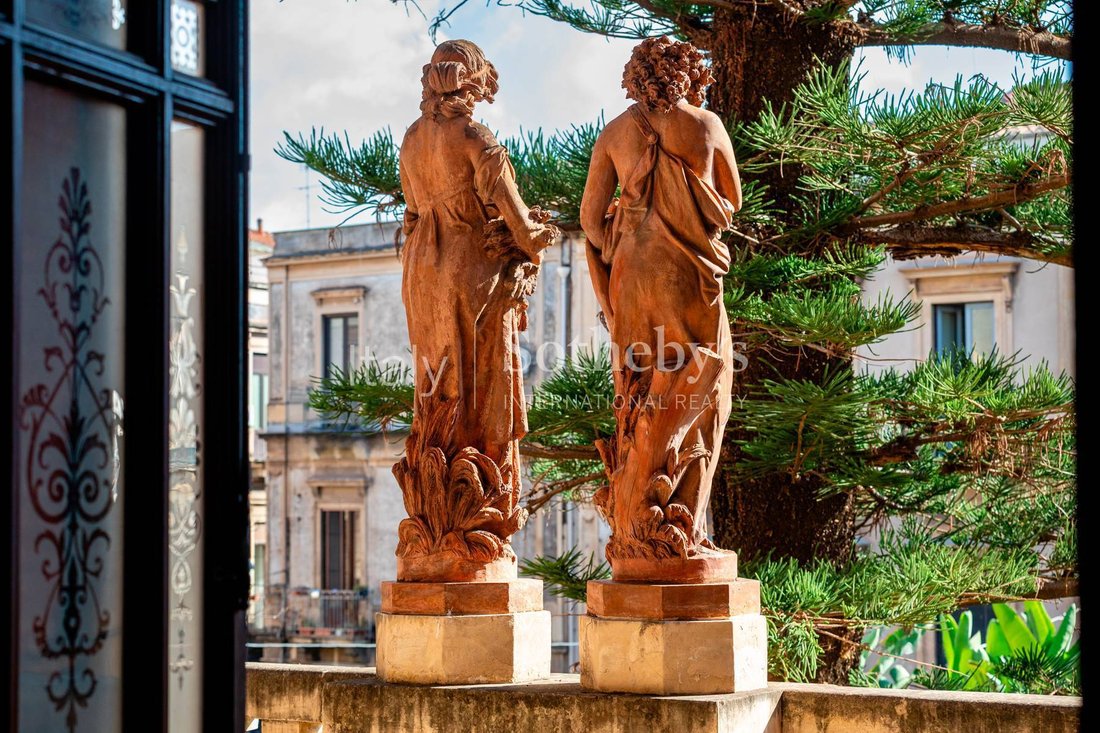
Im Herzen der Altstadt von Catania, entlang der Via Etnea, erhebt sich ein exklusiver Palast, der an den Stil der florentinischen Renaissance erinnert. Er wurde 1875 vom ersten Eigentümer beim Mailänder Architekten Carlo Sada in Auftrag gegeben. Das Gebäude verfügt über drei Fassaden, von denen insbesondere die Hauptfassade an der Via Etnea hervorsticht - reich verziert mit Statuen, Terrassen und einem bezaubernden Garten - sowie die Innenfassade, die sich durch eine Loggia mit weiten Arkaden auszeichnet.
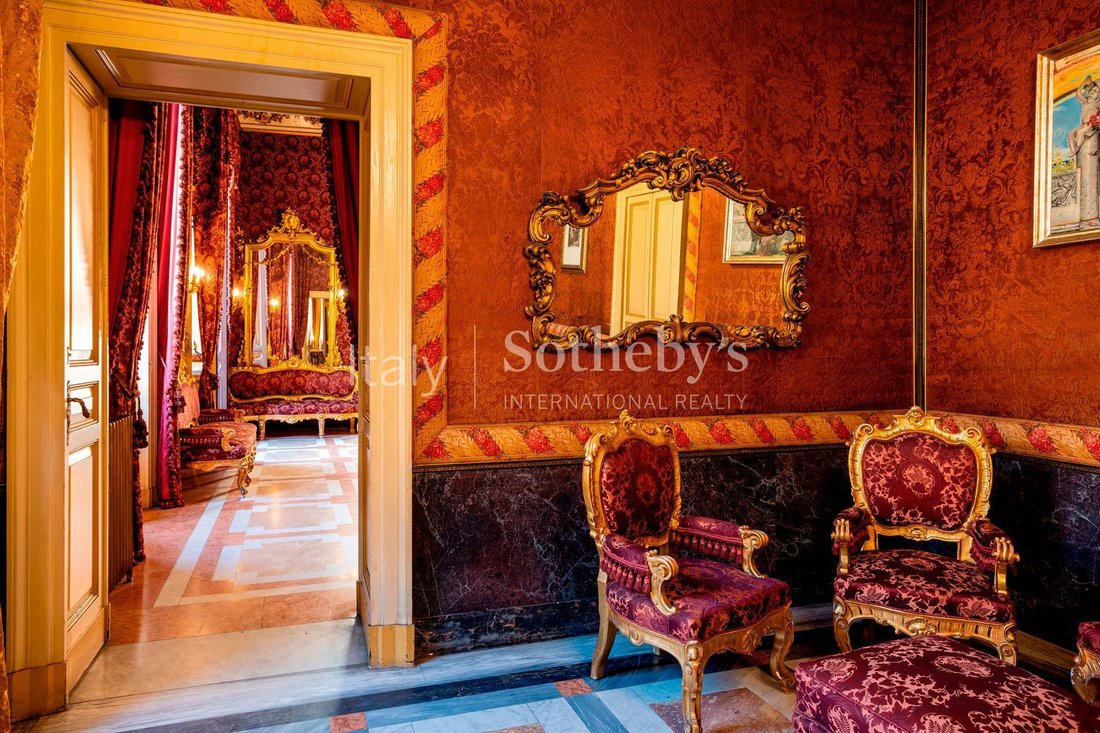
An der Hauptfassade fällt die Verwendung von Rustika hervor, die der Front Würde und Harmonie verleiht. Im Inneren hat das Piano Nobile seine ursprüngliche Raumaufteilung bewahrt und beherbergt noch heute Fresken, Stuckarbeiten, Vergoldungen, Wandbespannungen und Möbel aus der Epoche. Das Gebäude erstreckt sich über mehrere Ebenen, die durch eine repräsentative dreiläufige Prunktreppe miteinander verbunden sind. Diese ist reich im neoklassizistisch-renaissancezeitlichen Stil dekoriert und wurde konzipiert, um den Reichtum der Familie zu betonen und die Gäste zu beeindrucken.
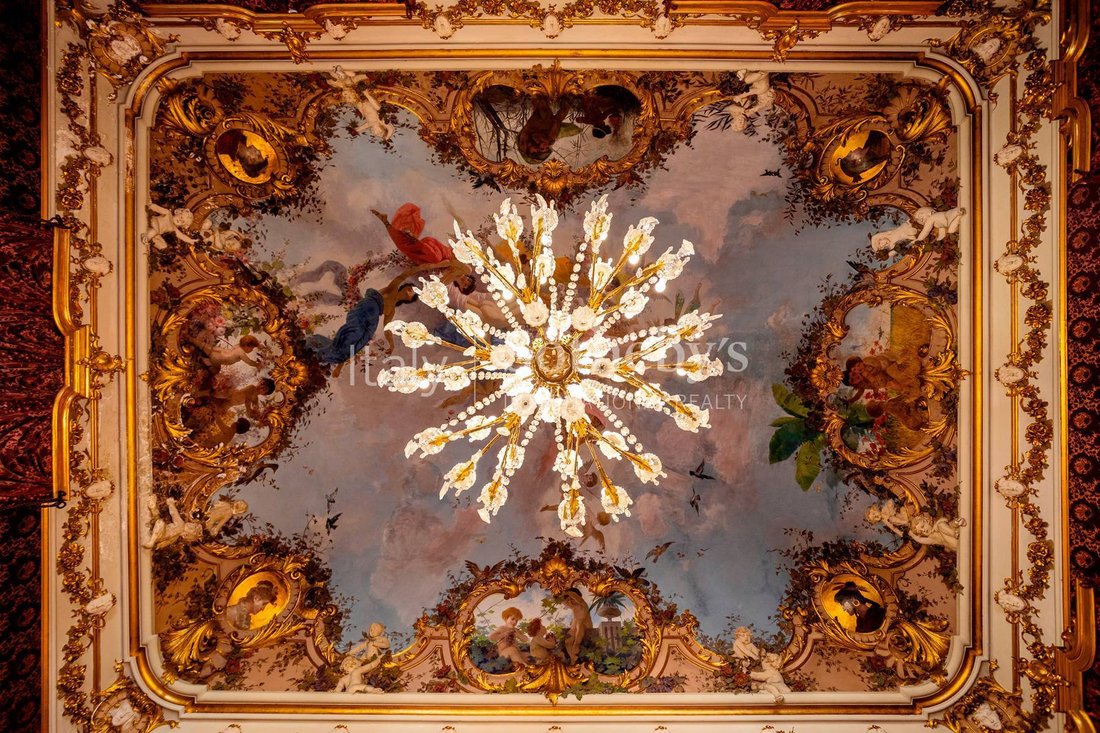
Die Räumlichkeiten umfassen zahlreiche Zimmer, Lagerräume, einen Weinkeller und im Piano Nobile vier besonders wertvolle Säle: den Spiegelsaal oder Festsaal mit Dekorationen aus Blattgold und Bronzefarbe, einer Decke im Jugendstil und Rokokomotiven, die die Geburt und den Triumph der Venus oder Flora darstellen; den Saal der Künste; den Musiksaal; und das Speisezimmer. Alle Räume sind in derselben dekorativen Technik ausgeführt, jedoch mit unterschiedlichen, von der klassischen Mythologie inspirierten Themen. Im Schlafzimmer sticht zudem ein wertvolles Deckenfresko hervor, das die Allegorie des Schlafes zeigt.
Das Piano Nobile ist bereits renoviert und bewohnbar; das Erdgeschoss erfordert nur wenige Eingriffe, während das Untergeschoss und das zweite Obergeschoss umfassendere Arbeiten benötigen - eine Gelegenheit, die Immobilie in eine prestigeträchtige Beherbergungsstätte umzuwandeln.
Hell und sowohl zu Fuß als auch mit dem Auto zugänglich, verfügt der Palast über einen Aufzug, Stellplätze und eine Garage. Seine Lage ist strategisch günstig - nur 15 Minuten vom Flughafen Catania und etwa 10 Minuten von den Stränden und der Küste entfernt.
An der Hauptfassade fällt die Verwendung von Rustika hervor, die der Front Würde und Harmonie verleiht. Im Inneren hat das Piano Nobile seine ursprüngliche Raumaufteilung bewahrt und beherbergt noch heute Fresken, Stuckarbeiten, Vergoldungen, Wandbespannungen und Möbel aus der Epoche. Das Gebäude erstreckt sich über mehrere Ebenen, die durch eine repräsentative dreiläufige Prunktreppe miteinander verbunden sind. Diese ist reich im neoklassizistisch-renaissancezeitlichen Stil dekoriert und wurde konzipiert, um den Reichtum der Familie zu betonen und die Gäste zu beeindrucken.
Die Räumlichkeiten umfassen zahlreiche Zimmer, Lagerräume, einen Weinkeller und im Piano Nobile vier besonders wertvolle Säle: den Spiegelsaal oder Festsaal mit Dekorationen aus Blattgold und Bronzefarbe, einer Decke im Jugendstil und Rokokomotiven, die die Geburt und den Triumph der Venus oder Flora darstellen; den Saal der Künste; den Musiksaal; und das Speisezimmer. Alle Räume sind in derselben dekorativen Technik ausgeführt, jedoch mit unterschiedlichen, von der klassischen Mythologie inspirierten Themen. Im Schlafzimmer sticht zudem ein wertvolles Deckenfresko hervor, das die Allegorie des Schlafes zeigt.
Das Piano Nobile ist bereits renoviert und bewohnbar; das Erdgeschoss erfordert nur wenige Eingriffe, während das Untergeschoss und das zweite Obergeschoss umfassendere Arbeiten benötigen - eine Gelegenheit, die Immobilie in eine prestigeträchtige Beherbergungsstätte umzuwandeln.
Hell und sowohl zu Fuß als auch mit dem Auto zugänglich, verfügt der Palast über einen Aufzug, Stellplätze und eine Garage. Seine Lage ist strategisch günstig - nur 15 Minuten vom Flughafen Catania und etwa 10 Minuten von den Stränden und der Küste entfernt.
In the heart of Catania’s historic centre, along Via Etnea, stands an exclusive building reminiscent of the Florentine Renaissance style. Commissioned in 1875 by the first owner to the Milanese architect Carlo Sada, the building has three façades, among which the main one stands out, overlooking Via Etnea and enriched with statues, terraces and an enchanting garden, and the internal one, characterised by a loggia with large arches.
The main façade is distinguished by the use of rustication, which lends solemnity and harmony to the façade. Inside, the main floor has retained its original layout, with frescoes, stuccoes, gilding, tapestries and period furnishings. The building is spread over several levels connected by a spectacular three-flight staircase, richly decorated in neoclassical-Renaissance style and designed to highlight the family’s wealth and impress guests. The rooms include numerous bedrooms, storage rooms, a cellar and, on the main floor, four particularly prestigious rooms: the Hall of Mirrors or Ballroom, with decorations in pure gold and glitter, an Art Nouveau ceiling and Rococo motifs depicting the birth and triumph of Venus or Flora; the Hall of Arts; the Music Room; and the Dining Room. All are decorated using the same technique, but with different subjects inspired by classical mythology. The bedroom also features a precious fresco on the ceiling depicting the allegory of sleep. The main floor has already been renovated and is ready to move into, the ground floor only needs some work, while the basement and second floor require more substantial work, offering the possibility of transforming the property into a prestigious accommodation facility.
Bright and with both pedestrian and vehicular access, the building has a lift, parking space and garage, and enjoys a strategic location just 15 minutes from Catania airport and about 10 minutes from the beaches and coast.
The main façade is distinguished by the use of rustication, which lends solemnity and harmony to the façade. Inside, the main floor has retained its original layout, with frescoes, stuccoes, gilding, tapestries and period furnishings. The building is spread over several levels connected by a spectacular three-flight staircase, richly decorated in neoclassical-Renaissance style and designed to highlight the family’s wealth and impress guests. The rooms include numerous bedrooms, storage rooms, a cellar and, on the main floor, four particularly prestigious rooms: the Hall of Mirrors or Ballroom, with decorations in pure gold and glitter, an Art Nouveau ceiling and Rococo motifs depicting the birth and triumph of Venus or Flora; the Hall of Arts; the Music Room; and the Dining Room. All are decorated using the same technique, but with different subjects inspired by classical mythology. The bedroom also features a precious fresco on the ceiling depicting the allegory of sleep. The main floor has already been renovated and is ready to move into, the ground floor only needs some work, while the basement and second floor require more substantial work, offering the possibility of transforming the property into a prestigious accommodation facility.
Bright and with both pedestrian and vehicular access, the building has a lift, parking space and garage, and enjoys a strategic location just 15 minutes from Catania airport and about 10 minutes from the beaches and coast.
-
Art der Immobilie
Haus
-
Preis/Quadratfuß
$214
Funktionen
Erkunden Sie die Gegend
Via Etnea, Catania, CT 95100, Villa Bellini-Ospedale Garibaldi, Italien
Auf Google Maps anzeigen
Preis pro sqft
Niedrig
Hoch
Diese luxuriöse Immobilie an der Via Etnea liegt im lebhaften kulturellen Zentrum von Catania. Nur eine kurze Fahrt vom Flughafen Catania Fontanarossa und den zentralen Bahnhöfen entfernt bietet sie eine hervorragende Erreichbarkeit. Entdecken Sie in der Nähe historische Attraktionen wie das Teatro Massimo Bellini und genießen Sie die exquisite sizilianische Küche. Mit dem nahen Ätna und dem Ionischen Meer spricht sie diejenigen an, die sowohl städtischen Lebensstil als auch natürliche Schönheit suchen.
In der Nähe anzeigen
Sehenswürdigkeiten
Schulen
Flughafen Catania Fontanarossa
Flughafen
13 Min.
Catania Centrale Bahnhof
Bahnhof
9 Min.
Teatro Massimo Bellini
Kultur & Erbe
4 Min.
Parco dell'Etna
Natur & Outdoor
45 Min.
Internationale Schule von Catania
Internationale Schule
20 Min.
6 weitere Einträge in Villa Bellini-Ospedale Garibaldi anzeigen

Vor 6 Jahren beigetreten
Sie haben sich nach diesem Objekt erkundigt
Der Agent wird sich in Kürze mit Ihnen in Verbindung setzen
Gelistet von
18
Angebote
2024
Beigetreten
Besichtigung mit Silvia Gallo buchen
Wählen Sie ein Datum und ob Sie eine virtuelle oder persönliche Besichtigung mit dem Makler wünschen.
Bevorzugtes Datum
Art der Tour

Italy Sotheby's International Realty
Piazza Municipio 4, 96017, Noto, Siracusa, Italy
Agenturprofil anzeigen
Noto is a small gem of Sicilian Baroque architecture and, since 2002, has been
part of the UNESCO World Heritag
part of the UNESCO World Heritag
Noto is a small gem of Sicilian Baroque architecture and, since 2002, has been
part of the UNESCO World Heritage list along with eight other destinations on
the island. The extraordinary beauty of Noto characterizes the entire Val di
Noto and has made this city famous worldwide, attracting both Italian tourists
and international visitors. Italy Sotheby’s International Realty has opened its
tenth office here to further expand its presence in Italy and ensure
comprehensive coverage from north to south, reaching Sicily. This includes not
only major cities such as Catania, Taormina, and Syracuse but also the Val di
Noto with its Baroque towns of Ragusa, Modica, and Scicli.
part of the UNESCO World Heritage list along with eight other destinations on
the island. The extraordinary beauty of Noto characterizes the entire Val di
Noto and has made this city famous worldwide, attracting both Italian tourists
and international visitors. Italy Sotheby’s International Realty has opened its
tenth office here to further expand its presence in Italy and ensure
comprehensive coverage from north to south, reaching Sicily. This includes not
only major cities such as Catania, Taormina, and Syracuse but also the Val di
Noto with its Baroque towns of Ragusa, Modica, and Scicli.
Zuletzt aktualisiert
Juni 20
Erstmalig gelistet
Oct 1, 2025
Angebotslink
Angebotsreferenz
MS25QL
Das Vertrauen der führenden Makler der Welt
Die Makler hinter den außergewöhnlichsten Immobilien der Welt inserieren bei JamesEdition.
- Angebote von Sotheby's, Christie's, BARNES und Engel & Völkers
- Jedes Angebot wird vor der Veröffentlichung geprüft
- Verbinden Sie sich direkt mit verifizierten Maklern
Indem Sie fortfahren, akzeptieren Sie unsere Nutzungsbedingungen und Datenschutzrichtlinie.