Preis auf Anfrage
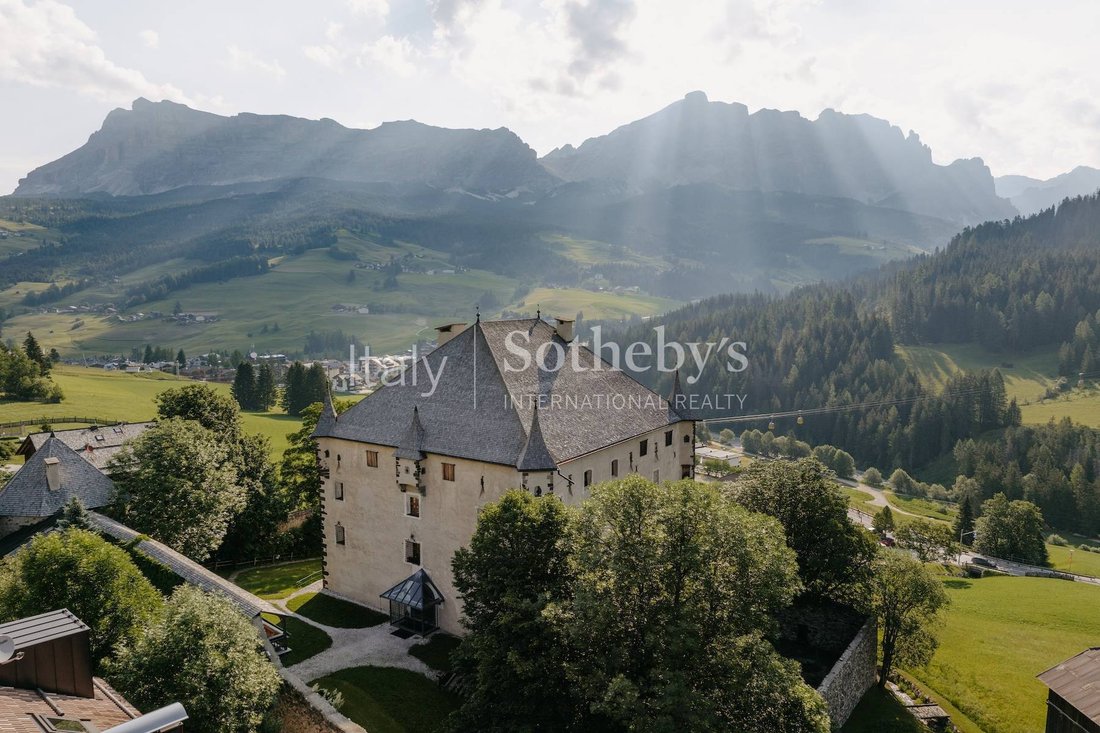
Ein Zeitloses Schloss Im Herzen Der Dolomiten
- 8 Schlafz.
- 12 Bäder
- 22,282 Sqft
- 62
Über die Immobilie
Beschreibung wurde automatisch übersetzt.
Die Beschreibung wird in der Originalsprache angezeigt.
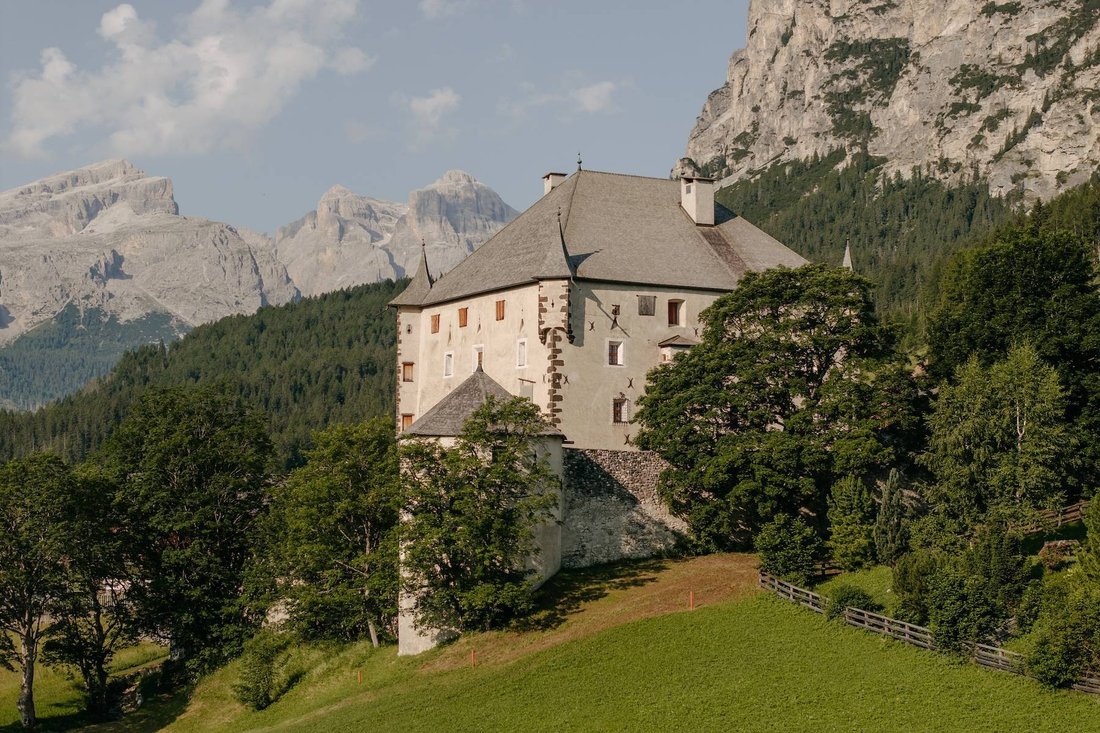
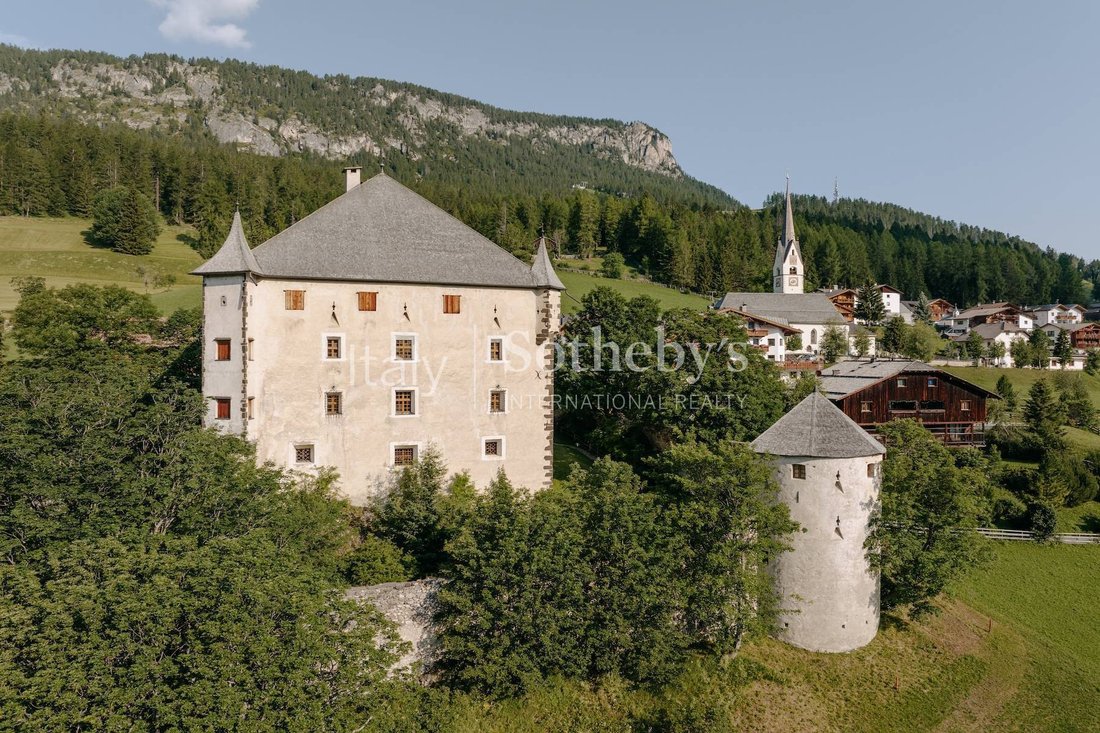
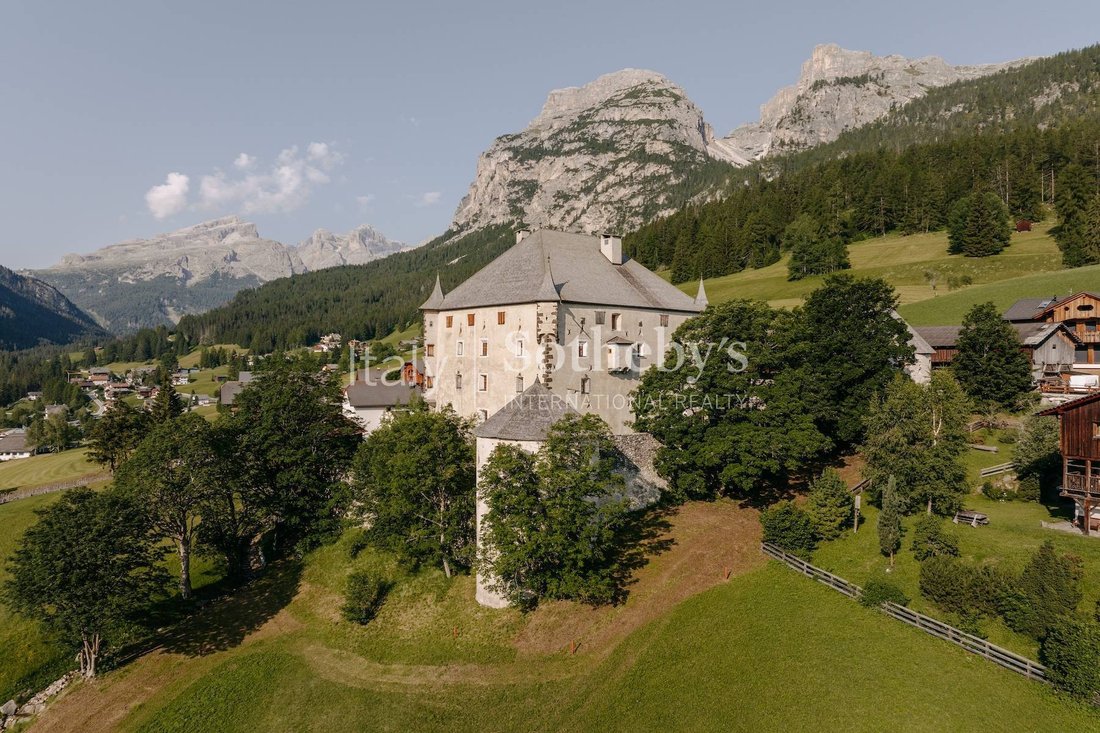
Im Herzen von Alta Badia, auf einem Felsvorsprung aus Dolomitgestein gelegen, erhebt sich Schloss Colz - ein architektonisches Juwel aus dem 16. Jahrhundert und ein seltenes Beispiel für einen adeligen Wohnsitz im gotisch-renaissancistischen Stil in den Dolomiten.
Errichtet im Jahr 1536 von Hans von Rubatsch mit der Genehmigung von Kaiser Ferdinand I., wurde das Schloss in nur zwölf Mona
Errichtet im Jahr 1536 von Hans von Rubatsch mit der Genehmigung von Kaiser Ferdinand I., wurde das Schloss in nur zwölf Mona
In the heart of Alta Badia, perched on a rocky dolomitic outcrop, stands Castel Colz - a 16th-century architectural gem and a rare example of noble Gothic-Renaissance residence in the Italian Dolomites.
Commissioned in 1536 by Hans von Rubatsch with the approval of Emperor Ferdinand I, the castle was completed in just twelve months and later passed to the Colz family, from whom it takes
Commissioned in 1536 by Hans von Rubatsch with the approval of Emperor Ferdinand I, the castle was completed in just twelve months and later passed to the Colz family, from whom it takes
Im Herzen von Alta Badia, auf einem Felsvorsprung aus Dolomitgestein gelegen, erhebt sich Schloss Colz - ein architektonisches Juwel aus dem 16. Jahrhundert und ein seltenes Beispiel für einen adeligen Wohnsitz im gotisch-renaissancistischen Stil in den Dolomiten.
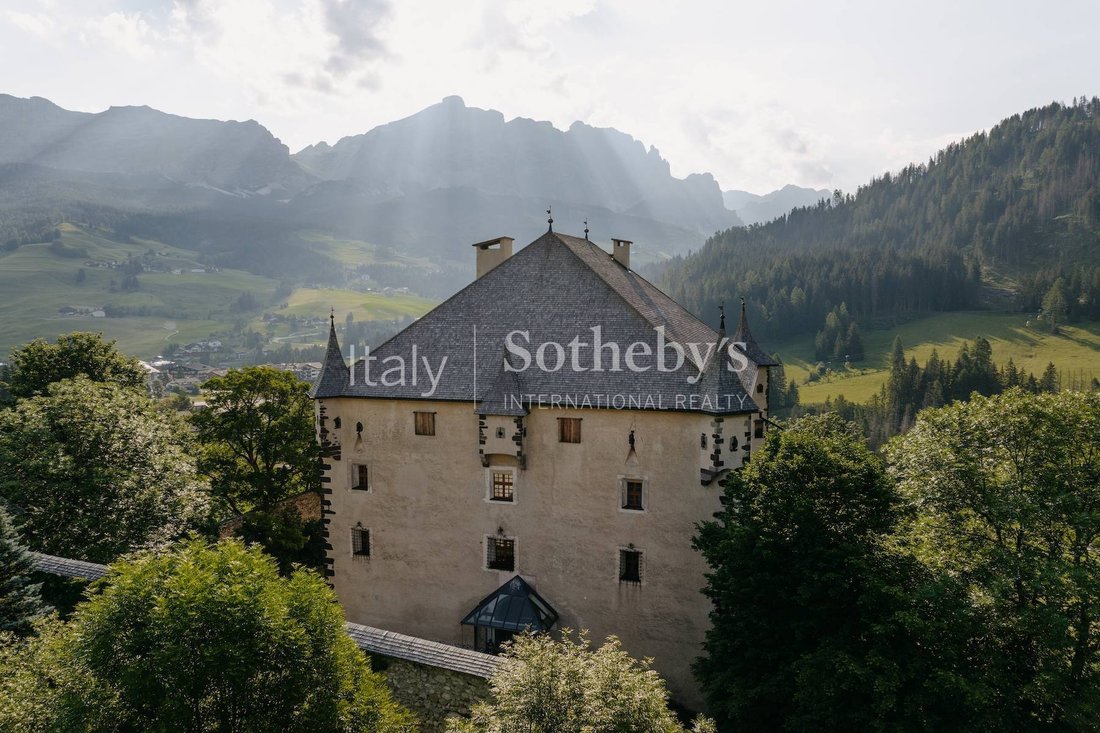
Errichtet im Jahr 1536 von Hans von Rubatsch mit der Genehmigung von Kaiser Ferdinand I., wurde das Schloss in nur zwölf Monaten vollendet und ging später in den Besitz der Familie Colz über, von der es seinen Namen trägt. Die imposante und zugleich harmonische Struktur, geprägt von Türmen und kompakten Baukörpern, fügt sich nahtlos in die umliegende Landschaft der Dolomiten ein.
Die Innenräume bewahren den ursprünglichen Charme des Schlosses: mit Gewölbedecken, antiken Holzvertäfelungen, historischen Möbeln und dekorativen Details, die an die adelige Wohnkultur der Dolomiten erinnern. Jeder Raum erzählt eine Geschichte - in einem stilvollen Gleichgewicht zwischen historischer Authentizität und zeitloser Gastlichkeit.
Im lokalen Ladinisch als Gran Ciasa bekannt, ist das Schloss seit jeher ein kulturelles und identitätsstiftendes Wahrzeichen des Tals - ein Ort voller Geschichte, Eleganz und natürlicher Schönheit. Heute, nach einer sorgfältigen konservativen Restaurierung, bietet die Liegenschaft eine außergewöhnliche Gelegenheit für all jene, die ein einzigartiges architektonisches Erbe bewohnen oder aufwerten möchten - eingebettet in die Authentizität der UNESCO-geschützten Dolomiten.
Errichtet im Jahr 1536 von Hans von Rubatsch mit der Genehmigung von Kaiser Ferdinand I., wurde das Schloss in nur zwölf Monaten vollendet und ging später in den Besitz der Familie Colz über, von der es seinen Namen trägt. Die imposante und zugleich harmonische Struktur, geprägt von Türmen und kompakten Baukörpern, fügt sich nahtlos in die umliegende Landschaft der Dolomiten ein.
Die Innenräume bewahren den ursprünglichen Charme des Schlosses: mit Gewölbedecken, antiken Holzvertäfelungen, historischen Möbeln und dekorativen Details, die an die adelige Wohnkultur der Dolomiten erinnern. Jeder Raum erzählt eine Geschichte - in einem stilvollen Gleichgewicht zwischen historischer Authentizität und zeitloser Gastlichkeit.
Im lokalen Ladinisch als Gran Ciasa bekannt, ist das Schloss seit jeher ein kulturelles und identitätsstiftendes Wahrzeichen des Tals - ein Ort voller Geschichte, Eleganz und natürlicher Schönheit. Heute, nach einer sorgfältigen konservativen Restaurierung, bietet die Liegenschaft eine außergewöhnliche Gelegenheit für all jene, die ein einzigartiges architektonisches Erbe bewohnen oder aufwerten möchten - eingebettet in die Authentizität der UNESCO-geschützten Dolomiten.
In the heart of Alta Badia, perched on a rocky dolomitic outcrop, stands Castel Colz - a 16th-century architectural gem and a rare example of noble Gothic-Renaissance residence in the Italian Dolomites.
Commissioned in 1536 by Hans von Rubatsch with the approval of Emperor Ferdinand I, the castle was completed in just twelve months and later passed to the Colz family, from whom it takes its name. It’s imposing yet harmonious structure, punctuated by towers and compact volumes, blends seamlessly into the surrounding Dolomite landscape.
The interiors preserve the original charm of the castle, with vaulted ceilings, antique wood paneling, period furnishings and decorative details that echo the noble Alpine tradition. Each room tells a story, offering a refined balance between historical authenticity and timeless hospitality.
Known in the local Ladin language as Gran Ciasa, the castle has long been a cultural and symbolic landmark of the valley - a place steeped in history, elegance and natural beauty. Today, thanks to a careful conservative restoration, the property offers a rare opportunity for those wishing to inhabit or enhance a truly unique architectural heritage, immersed in the authenticity of the UNESCO-listed Dolomites.
Commissioned in 1536 by Hans von Rubatsch with the approval of Emperor Ferdinand I, the castle was completed in just twelve months and later passed to the Colz family, from whom it takes its name. It’s imposing yet harmonious structure, punctuated by towers and compact volumes, blends seamlessly into the surrounding Dolomite landscape.
The interiors preserve the original charm of the castle, with vaulted ceilings, antique wood paneling, period furnishings and decorative details that echo the noble Alpine tradition. Each room tells a story, offering a refined balance between historical authenticity and timeless hospitality.
Known in the local Ladin language as Gran Ciasa, the castle has long been a cultural and symbolic landmark of the valley - a place steeped in history, elegance and natural beauty. Today, thanks to a careful conservative restoration, the property offers a rare opportunity for those wishing to inhabit or enhance a truly unique architectural heritage, immersed in the authenticity of the UNESCO-listed Dolomites.
-
Art der Immobilie
Andere
-
Baujahr
1536
Funktionen
- Garten
- Terrasse
- Kamin
- Bergblick
- Weinkeller
- Whirlpool
- Fitnessstudio
- Waschküche
- Privatsphäre
Funktionen
Lot
- Bergblick
- Privatsphäre
Innenbereich
- Hohe Decke
- Kamin
- Whirlpool
- Waschküche
- Weinkeller
- Fitnessstudio
Outdoor
- Terrasse
- Balkon
- Garten
Erkunden Sie die Gegend
Str. Marin, La Villa BZ, Badia - Abtei, BZ 39030, Trentino-Südtirol, Italien
Auf Google Maps anzeigen
Preis pro sqft
Niedrig
Hoch
Das Dorf La Villa in Badia bietet, umgeben von den Dolomiten, ideale Natur- und Luxusmöglichkeiten. Mit Zugang zu Skigebieten, Wanderwegen und atemberaubender Landschaft bietet es Abenteuer und Entspannung. In der Nähe gibt es Gourmetrestaurants und Wellnessangebote. Der nächste internationale Flughafen ist etwa 2 Stunden mit dem Auto entfernt.
In der Nähe anzeigen
Sehenswürdigkeiten
Schulen
Flughafen Bozen
Flughafen
92 Min.
Skigebiet Alta Badia
Natur & Erholung
8 Min.
Sassongher
Natur & Erholung
20 Min.
Internationale Schule Bozen
Internationale Schule
95 Min.

Vor 2 Jahren beigetreten
Sie haben sich nach diesem Objekt erkundigt
Der Agent wird sich in Kürze mit Ihnen in Verbindung setzen
Gelistet von
4
Angebote
2024
Beigetreten
Besichtigung mit Davide Borgo buchen
Wählen Sie ein Datum und ob Sie eine virtuelle oder persönliche Besichtigung mit dem Makler wünschen.
Bevorzugtes Datum
Art der Tour

Italy Sotheby's International Realty
Corso Castelvecchio, 25, 37122, Verona, Verona, Italy
Agenturprofil anzeigen
With the opening of the Verona office, inside Palazzo Castellani di Sermeti, one of the most iconic cities not only
With the opening of the Verona office, inside Palazzo Castellani di Sermeti, one of the most iconic cities not only of Veneto but of the whole of Italy, we aim to consolidate our presence in the North-East, to assist an international clientele that is increasingly interested in the city. The historic center is undoubtedly full of characteristic places that are worth visiting, at any time of the year, first of all Piazza Bra: here it is possible to see the ancient walls of the Verona Arena, symbol of the city and headquarters of one of the most famous opera festivals in Europe, and the Portoni della Bra. This position allows our experts to develop areas of great appeal such as Lake Garda, the cities of Padua and Treviso, passing through the prestigious area of the ”Venetian Villas” and the Prosecco Hills, up to the Dolomites.
Zuletzt aktualisiert
März 6
Erstmalig gelistet
November 7, 2025
Angebotslink
Angebotsreferenz
CLG5XP
Das Vertrauen der führenden Makler der Welt
Die Makler hinter den außergewöhnlichsten Immobilien der Welt inserieren bei JamesEdition.
- Angebote von Sotheby's, Christie's, BARNES und Engel & Völkers
- Jedes Angebot wird vor der Veröffentlichung geprüft
- Verbinden Sie sich direkt mit verifizierten Maklern
Indem Sie fortfahren, akzeptieren Sie unsere Nutzungsbedingungen und Datenschutzrichtlinie.