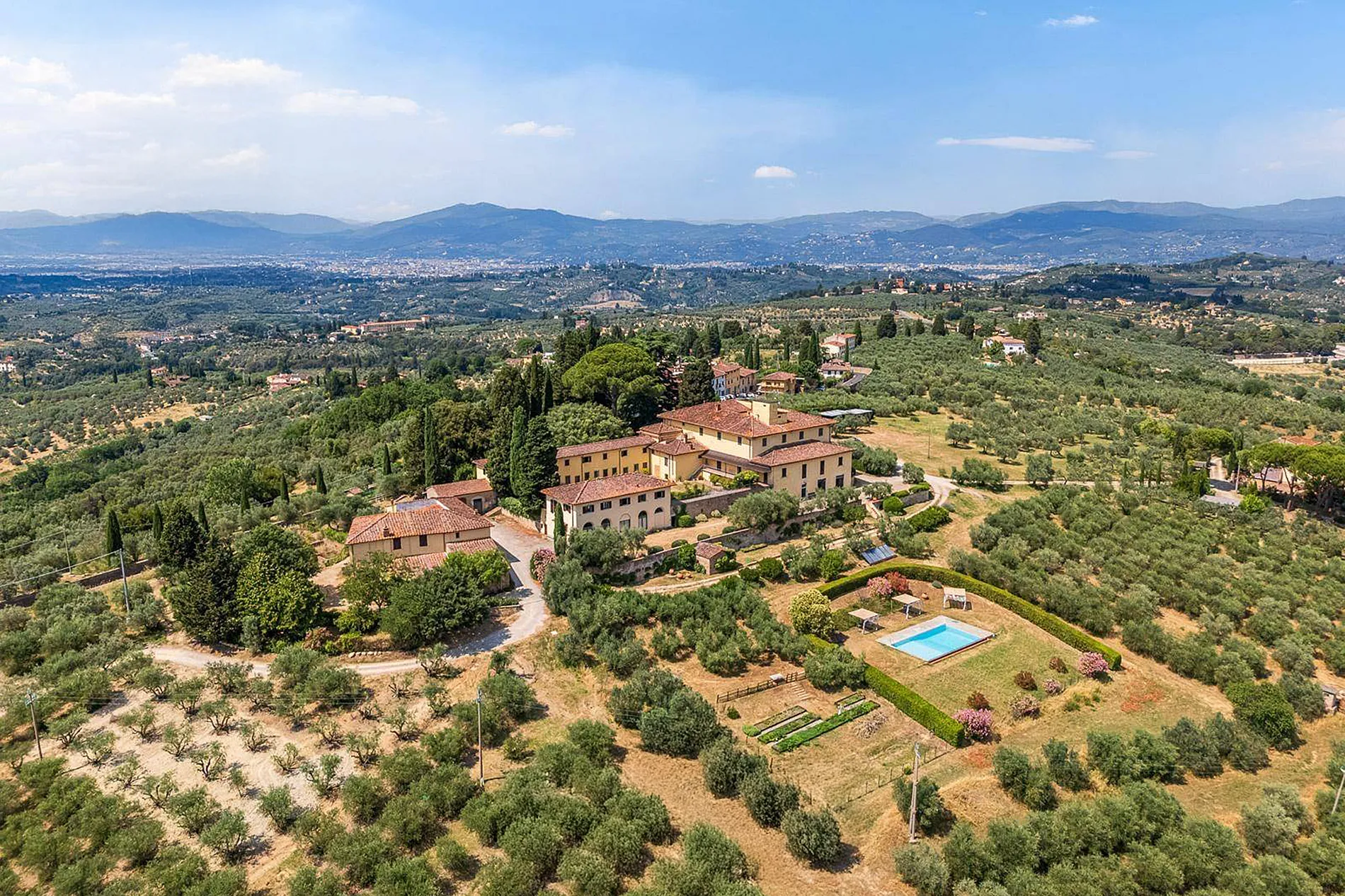
Few names are as closely tied to Italy’s high-end property market as Lionard Luxury Real Estate. Founded and led by Dimitri Corti, the firm has built a national presence spanning Tuscany, the Italian lakes, Milan, Rome, the Dolomites and the country’s most coveted coastlines, with a portfolio defined by historic villas, Renaissance palazzi and waterfront estates.
International buyers now account for more than 60% of Lionard’s demand, with the United States as its largest foreign market. That global reach, combined with deep local knowledge of each Italian micro-market, places Corti in a privileged position to observe how the priorities of high-net-worth buyers are evolving.
In this conversation, he shares what defines value at the top of the Italian market today, how Lionard’s recent figures reflect a more selective landscape, and how technology and speed of execution are reshaping the advisory relationship.
 Dimitri CortiCEO and Founder, Lionard Luxury Real Estate“We also value the editorial environment around the listings, because at this level a property is rarely understood through specifications alone - architecture, history, location and lifestyle all contribute to the decision.”
What International Buyers Want in Italy Today
Italy’s appeal to international buyers has never been in question. What has changed, according to Corti, is the way buyers approach their search and the criteria that ultimately drive their decisions.
From Destination-Led to Asset-Led
Lifestyle, culture and quality of life continue to draw international buyers to Italy. At the very top of the market, however, Corti observes a clear shift: buyers are increasingly willing to reconsider geography, property type and even budget when they encounter a property that is genuinely irreplaceable.
The common thread, he explains, is rarity. Architecture, provenance, privacy and landscape combine to create the sense that a property simply cannot be replicated elsewhere, and that quality increasingly outweighs a buyer’s initial brief.
Heritage, Privacy and the Long View
Asked how lifestyle, heritage, privacy and long-term value weigh against one another, Corti points to long-term value, understood through rarity, as the factor gaining the most ground.
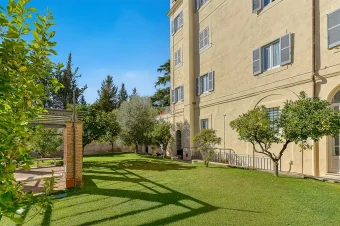
This perspective often extends beyond the buyer. At this level, many are choosing a home that will become part of their family story, to be preserved and eventually passed on. Heritage itself has taken on a richer meaning: it may lie in the frescoes and proportions of a historic palazzo, such as Palazzo Serristori in Florence, but also in the people who lived there and the memories built within its walls.
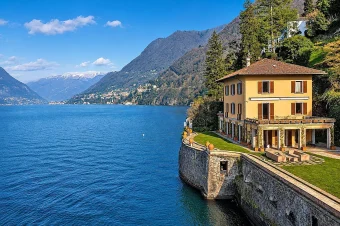
Buyers still expect contemporary comfort, and the challenge lies in introducing modern functionality without stripping a residence of its character. Privacy, meanwhile, has broadened in definition. It now encompasses control over access, space around the residence and discretion in the transaction itself. Waterfront estates, large country properties and palazzi with independent access or internal courtyards deliver it best, and for many ultra-high-net-worth buyers, privacy begins before the purchase, through access to off-market opportunities.
The Italian Market Through Lionard’s Lens
Behind these evolving priorities lies a market that remains robust, though increasingly discerning. Lionard’s recent activity offers a clear view of where demand is concentrating.
A Strong but Selective Market
In the first nine months of 2026, inquiries from new buyers to Lionard increased by 14.23% year on year, while total purchase inquiries rose by 28.1%. The firm is therefore growing at almost twice the rate of its organic new-buyer demand, a gap Corti attributes to long-term relationships with qualified clients and the ability to reactivate demand when the right opportunity emerges. Notably, 32% of transactions completed over the same period involved properties that were never publicly available online.
Established destinations continue to attract the strongest international demand, from Tuscany and the Italian lakes to Milan, Rome, the most desirable coastal locations and Sardinia’s Costa Smeralda. Yet buyers are showing greater flexibility, considering secondary locations when a property offers the same fundamentals: privacy, landscape, architectural quality, connectivity and authenticity. In terms of long-term resilience, Corti singles out assets with the least possibility of substitution, such as Renaissance palazzi, important historic villas, waterfront residences with direct sea access and estates in protected landscapes, while cautioning that not every high-end property is automatically a safe investment.
Local Expertise, Speed and Technology
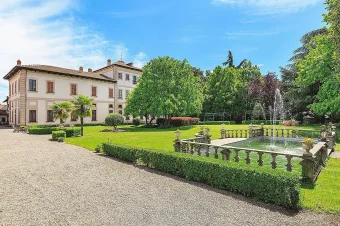
For Corti, Italy is not a single market but a collection of distinct micro-markets, each with its own dynamics. Value is created differently in Florence than in Milan, Venice, Sardinia or the lakes, and many of the most compelling opportunities are relationship-driven rather than publicly visible. Lionard’s role is to translate a buyer’s broad ambition into the realities of each territory, from ownership histories and planning restrictions to restoration issues.
This knowledge underpins what Corti considers a key currency for today’s buyers: speed of execution. He recalls an international client Lionard had worked with for three years, whose original brief centered on a substantial Tuscan country estate. When the right property appeared on the Italian coast, well outside that brief, the team recognized the fit immediately. Having already examined renovation and alteration issues before the viewing, Lionard organized the information, the viewing and the follow-up within 48 hours, allowing the client to move quickly without feeling rushed.
Technology plays a growing role in building that picture. Lionard uses it to collect, verify and cross-reference information, interpreting a brief as a set of underlying desires rather than a list of filters. The firm is also developing AI tools, including LAIA (Lionard Artificial Intelligence Advisor), designed to make its accumulated knowledge easier to access, identify affinities between buyers and properties that traditional filters may miss, and give sellers a more precise view of where credible demand already exists.
Yet Corti remains clear on the role of the advisor, whom he describes as part analyst, part psychologist, part anthropologist and a strong negotiator.
The Future of Italy’s Top-Tier Market
Italy’s high-end market is entering a phase where rarity defines value. International buyers are following the quality of the asset rather than a fixed destination, and they increasingly view their acquisitions as long-term family legacies. In this environment, off-market access, local expertise and the ability to act decisively have become as important as the properties themselves.
With a national footprint, a predominantly international clientele and a growing technological edge, Lionard is well positioned to connect discerning buyers with the country’s most irreplaceable residences. To learn more about Italy’s finest properties, contact Lionard Luxury Real Estate via the form below: