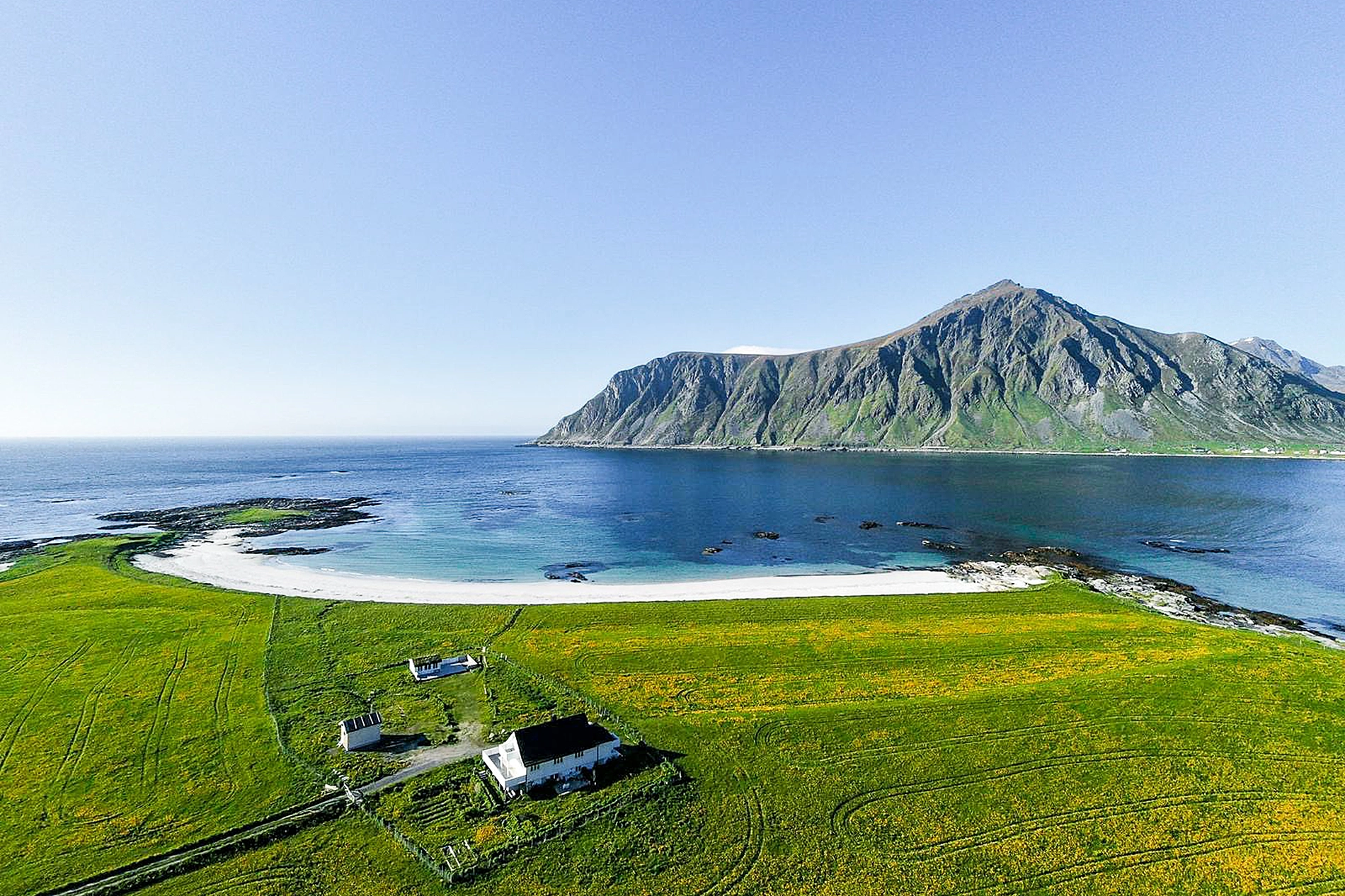
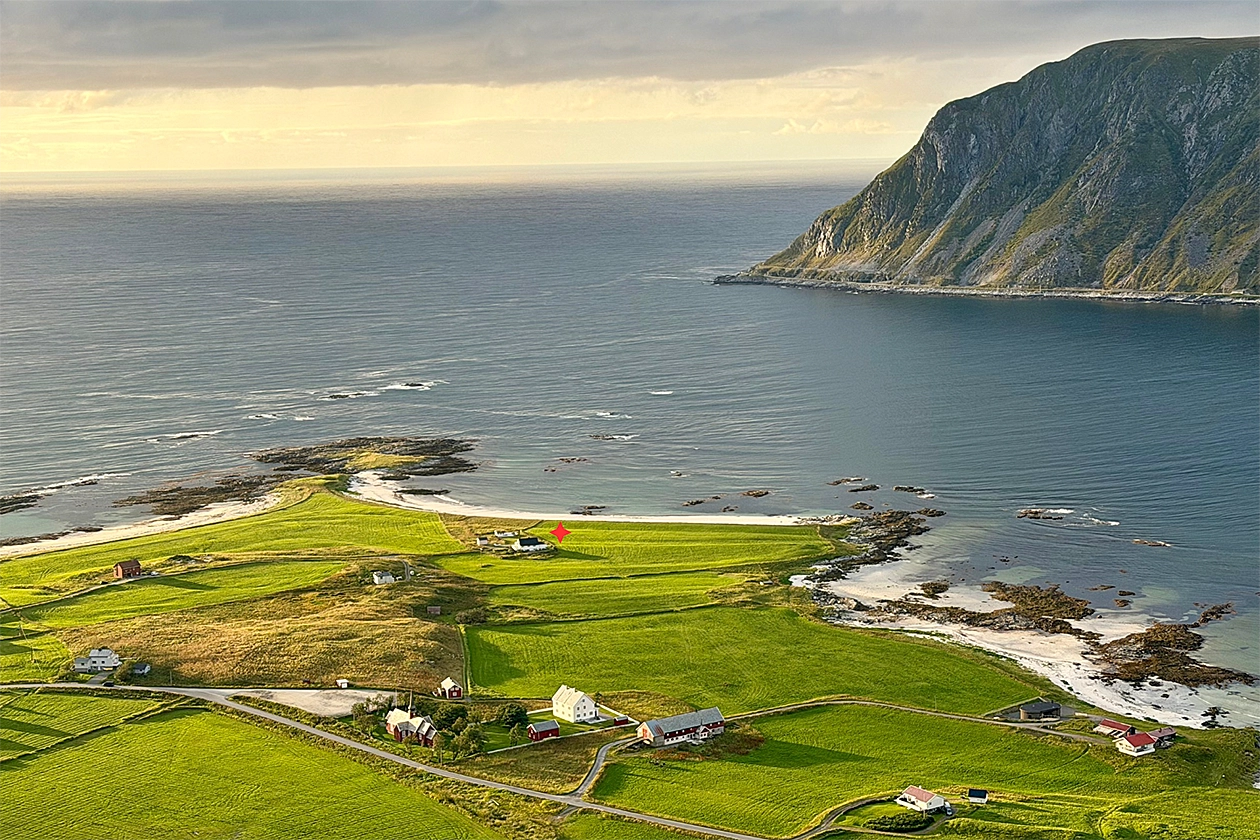
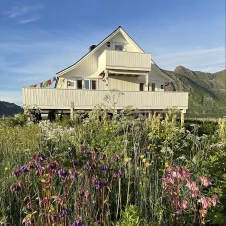
The house sits at the very end of a quiet road in Ramberg, about 20 meters from a white-sand beach. It is the only home with direct access to the shore, and every window faces the sea or the mountains of Flakstadøya.
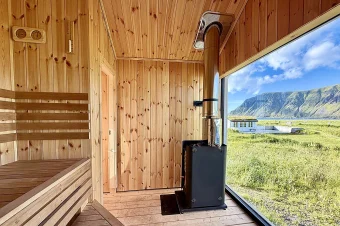
At this house or in the sauna, Charles Post can watch the Northern Lights through the window.“You’re cooking dinner, and you look out the window,” he says. “It’s just beautiful Northern Lights.”
Flakstad is a small village of around 18 residents in Nordland county, surrounded by the scenic Arctic landscapes of the Lofoten Islands. Despite its remote setting, the village is far from isolated: 10 minutes away is the town of Ramberg, with schools and shopping, Leknes – with an airport – is just 30 minutes away, and the European route E10 runs connects Flakstad to the rest of the archipelago and mainland Norway.
Charles and his wife, Rachel Pohl, are Americans who built a following of more than 660,000 people on Instagram around life at the edge of the Arctic. Their house is where much of that life was filmed. It is now listed on JamesEdition through PrivatMegleren Park at a listing price of NOK 9.5 million.
 Charles Post and Rachel Pohl“Our homes are an expression of us as people, and unique properties tend to be expressions of unique people. There’s all the history, all the memories and just the passion. As somebody who has a home on JamesEdition, I feel a bit of pride to be amongst so many exceptional homes.”
How JamesEdition Connects a Rare Arctic Home with International Buyers
JamesEdition contacted the couple after seeing their post announcing the sale. The house is the kind of property our editors look for: unusual, rooted in its landscape and shaped by the people who lived in it.
Charles is clear about why he values the platform. “I think you guys do a really good job of curating really thoughtfully picked homes and properties,” he says. “Our homes are an expression of us as people, and unique properties tend to be expressions of unique people. As somebody who has a home on JamesEdition, I feel a bit of pride to be amongst so many exceptional homes.”
He hopes that reach will bring the right buyer: someone who sees the potential and the magic, and sees the home as a canvas they are ready to contribute to. “It’s just been so nice for you guys to reach out,” he says. “How can we find the person to continue loving our home? That’s the biggest thing on my mind right now.”
Buyers from the United States are increasingly active in Europe’s prime markets, and the couple’s story speaks directly to them. JamesEdition’s international audience is how this home reaches the people most likely to understand it.
Inside the Arctic Beach House: How Two Americans Fell in Love with Lofoten
Charles and Rachel, whose great-grandparents were Norwegian, first came to Lofoten for work in 2019. They spent the next two years setting up a company and securing residency through Norway’s skilled worker visa program.
While they lived in a nearby village, they often walked past this house and watched the former owners in the garden. When it came on the market, Charles drove over and introduced himself at the gate. They bought it that afternoon.
The property stands on a plot of about 2,900 square meters, with 173 square meters of living space over three floors, an architect designed, wood-fired sauna and a small cabin with a grass roof used for outdoor gear like bikes, paddleboards and surfboards. There are four bedrooms, two bathrooms, an open kitchen, a fireplace, a home office, a terrace and a balcony, with parking on site.
Much of the original character has been kept, and the couple have updated what matters for daily life: a new Miele fridge and freezer, washer and dryer, a new heat pump, new electrics and outdoor lighting. The exterior is repainted every year.
The garden is planted with flowers, ornamental shrubs, berries and vegetables. Charles counts it among the best in Lofoten.
In 2026 the couple added a wood-fired sauna that cost around €60,000. It seats six to eight people, looks across the mountains and sits a short walk from the sea. “And you have a natural white-sand beach to go cold swim,” Charles says.
The Beauty of Remote Living: Northern Lights, Safe Streets, and a Close-Knit Community
The location gives a sense of isolation without the inconvenience. A café is a ten-minute walk away, as is a bus stop. A church down the road holds Christmas and summer concerts. School, a market and a doctor are ten minutes by car, and the airport is 25.
The neighbors are young families who live there year-round. Farmers plow the road in winter, and dog walks are a group activity. “You could put your passport on the ground in our village, and nobody would touch it,” Charles says.
Just steps out the front door is one of Lofoten’s best surfing beaches, which lies beside a crystal clear fjord with white sand beaches, perfect for stand up paddleboards, kayaking, cold swims or simply watching the sun drift by.
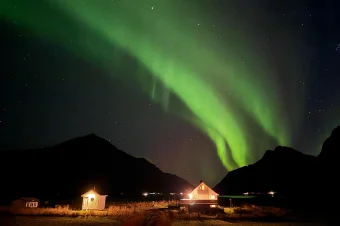
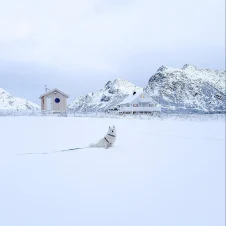
The seasons are sharply drawn at this latitude. Summer brings six weeks of midnight sun. Autumn has long, crisp days and the first auroras. In winter, the couple ski along the beach and the mountains behind it. In spring, the Arctic fills with flowers and birds.
The pace is part of the appeal. “Time just feels slow out here,” Charles says. What draws people here, he adds, is the landscape itself: “We’re all here because we love the surroundings.”
Why They’re Leaving Their Arctic Dream Behind
The couple are not leaving because Lofoten disappointed them. “We had a dream. The dream was to move to Norway,” Charles says. “All dreams have a beginning and ending, and we feel like we did everything we could have ever dreamed of here.” For him, the decision is about ending on a high note and chasing the next dream.
The couple are now moving to Montana, near Yellowstone National Park, where Rachel grew up. They hope to start a family there, close to relatives. The couple has already bought a new home in Montana.
Buying a Home in Norway as a Foreigner: What International Buyers Should Know
Buyers do not need Norwegian citizenship, residency or an address in Norway. To register ownership, a foreign buyer needs a D-number, a Norwegian identification number for non-residents. It is not required to make an offer: it is arranged during registration, usually with a notarized copy of the buyer’s passport. A D-number does not give the right to live or work in Norway.
Two points often surprise international buyers. An offer becomes legally binding once the seller accepts it, so financing should be in place before bidding. And buyers normally pay a document duty of 2.5% of the property’s market value.
PrivatMegleren Park guides foreign buyers through the whole purchase, from virtual viewings to registration, and can recommend Norwegian lawyers who work with international clients.
The house is registered as a primary residence rather than a holiday home. This means the next owner can live in it full time, use it seasonally or rent it out. Buyers should confirm the tax implications with an adviser.
 Lars Jakob AarakPartner & Real Estate Agent, PrivatMegleren PARK“Norway has a safe, transparent and well-regulated real estate market, where foreign buyers generally have the same opportunities to purchase and own residential property as Norwegian citizens,” says Lars Jakob Aarak, Partner at PrivatMegleren PARK. “Purchasing property here is often much more straightforward than many international buyers initially imagine.”
The Next Chapter
For Charles and Rachel, the sale ends one story. For JamesEdition, it is the kind of story the platform exists to tell: a remarkable house, owners who care who comes next, and an international audience that might include its next caretaker.
View the listing on JamesEdition