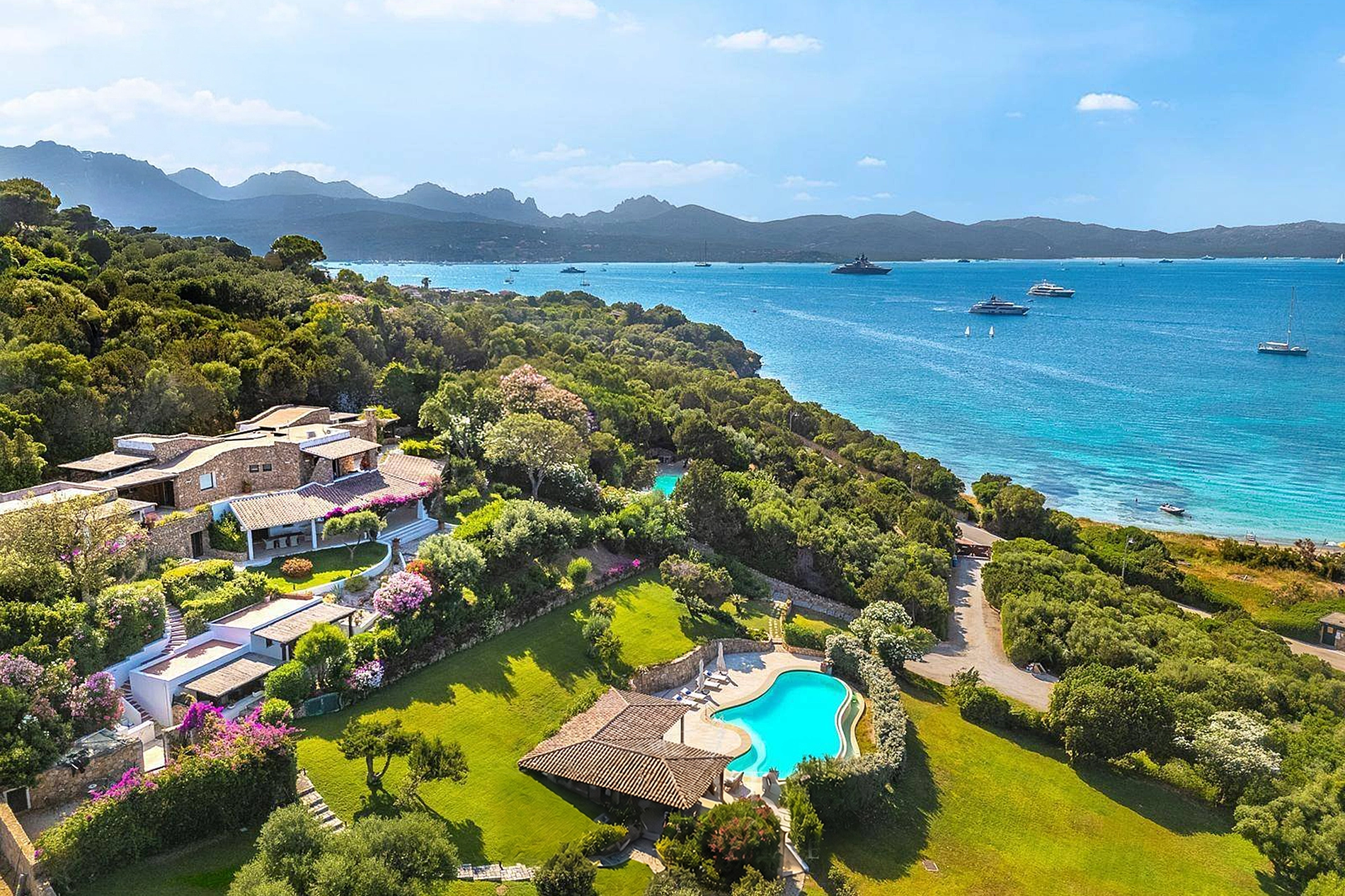
Few figures understand the transformation of Italy’s luxury market as intimately as Dimitri Corti. As founder and CEO of Lionard Luxury Real Estate, he has built one of the country’s leading firms by handling transactions of significant cultural and financial weight, from coastal trophy assets in Sardinia to historic residences in Florence and Rome. His perspective is shaped by a market that, in his view, has moved past the point of seasonal aspiration and into something far more permanent.
Lionard operates across Italy’s most significant locations through seven offices, combining regional expertise with international standards of service and transaction management. The firm positions itself as a single point of reference for global buyers navigating a market defined by scarcity, heritage protections, and structural complexity.
 Dimitri CortiFounder and CEO, Lionard Luxury Real Estate"Italy is not simply a destination, it's a decision. The Italian luxury property market has crossed a threshold that most markets never reach: it has moved from aspiration to conviction."
A Market That Moved From Cycle to Transformation
Corti argues that the shift underway in Italy is structural rather than cyclical, driven by forces that no fiscal incentive could manufacture on its own.
The End of the Second — Choice Era
For two decades, Italy occupied a familiar role in the portfolios of the wealthy: the summer villa, the heritage estate, the romantic palazzo. Corti contends that this framing no longer applies. Beauty and emotional depth remain essential, but they have become the baseline rather than the differentiator. What now drives decisions, in his assessment, is long-term asset integrity, structural scarcity, privacy architecture, and speed of execution.
Why Taxation Opens the Conversation But Does Not Close It
Italy’s revised flat tax framework, with the annual substitute tax set at €300,000 for foreign-source income from 2026, has drawn considerable attention. Corti reads it as a deliberate signal that Italy is calibrating its position for ultra-high-net-worth profiles. Yet he is emphatic that fiscal policy is never the deciding factor. The real driver, he argues, is cultural and generational, rooted in fundamental questions about where to live and what legacy to build.
Where Scarcity and Recognition Converge
The strongest international demand, Corti notes, concentrates in regions where scarcity, identity, and global recognition align at once. These are markets that, by his account, cannot be replicated.
The Arithmetic of Irreplaceable Assets
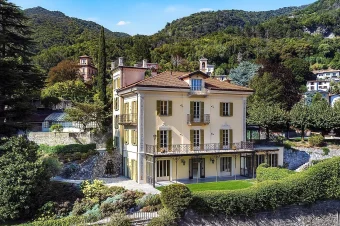
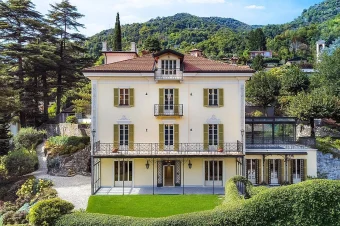
Tuscany, Lake Como, and the Italian coastlines have shown remarkable durability, and Corti attributes this not to mystery but to arithmetic. The number of buyers capable of acquiring at this level grows with global wealth creation, while the supply of genuinely prime assets remains fixed. Lake Como, in particular, operates on a register of elegance and discretion with extraordinarily limited true waterfront supply, a combination he describes as unavailable elsewhere in Europe at this level.
Florence and Rome: Ownership Within Living History
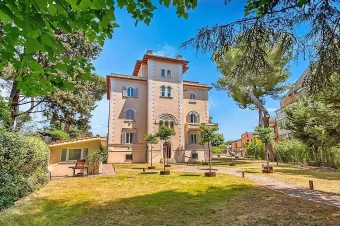
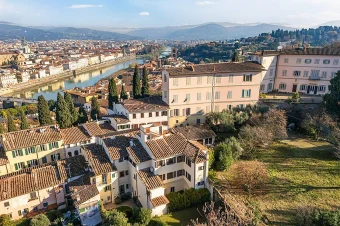
Historic cities hold a distinct appeal in Corti’s framework. A palazzo in Florence or a principal residence overlooking the monuments of Rome carries a symbolic weight that no new development can approach. The daily urban experience reinforces this, where art, architecture, and craftsmanship are not amenities but the environment itself. A residence on Florence’s historic Costa San Giorgio, set in the Oltrarno hills moments from the Ponte Vecchio, exemplifies the kind of asset that places a buyer within the city’s cultural heart.
Technology, the Changing Buyer, and a More Demanding Market
Corti is clear that technology has not displaced the human relationship at the center of luxury transactions. Instead, it has created the conditions for trust to form before a client ever arrives, while sharpening the precision and speed of service.
AI as an Operational Market Sensor
Lionard has integrated artificial intelligence directly into its sales and acquisition matchmaking through its proprietary LAIA (Lionard Artificial Intelligence Advisor) system. For buyers, supervised AI assistants analyze language, cultural sensitivity, and priorities to deliver a tailored selection of properties. For sellers, the system draws on historical data and global buyer behavior to provide predictive insight on timing. Corti frames this as an operational sensor that reads signals as they happen, while keeping negotiation and strategy deeply human.
From Status to Substance
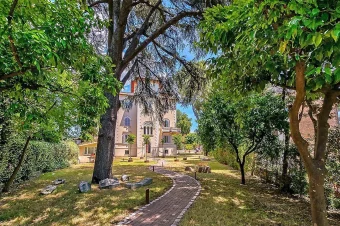
The profile of the international buyer has shifted decisively, Corti observes. Today’s client is more informed, more mobile, and more strategic, comparing Italy against France, Switzerland, Dubai, and the United States with analytical rigor. The psychological shift, as he describes it, has moved from status to substance, toward quality of life, family utility, and considered patrimonial planning. Remote work and global mobility have only accelerated this, dissolving the old trade-off between a life of quality and one of professional relevance. A renovated historical palace in Rome’s tranquil Aventino district, with each floor usable as an independent unit, speaks directly to this more committed, multi-generational engagement with Italy.
The Next Chapter: From Buying a Property to Building a Life
Looking ahead, Corti expects the market to grow in quality rather than volume, with demand concentrated on irreplaceable assets that command an increasing premium as global wealth concentrates. The defining shift, in his view, is a move from acquisition to belonging, from buying a property in Italy to building a life there.
For Lionard, that evolution places interpretation, strategy, and protection at the center of every transaction, supporting global buyers across the full lifecycle of an acquisition in a market where the finest assets cannot be replaced.
For more information, contact Lionard Luxury Real Estate via the form below: