$6,596,188
Majestic Historic Mansion On The Hills Of Pistoia
- 10 Beds
- 10 Baths
- 16,146 Sqft
- 12.36 Ac lot
- 67
About the Property
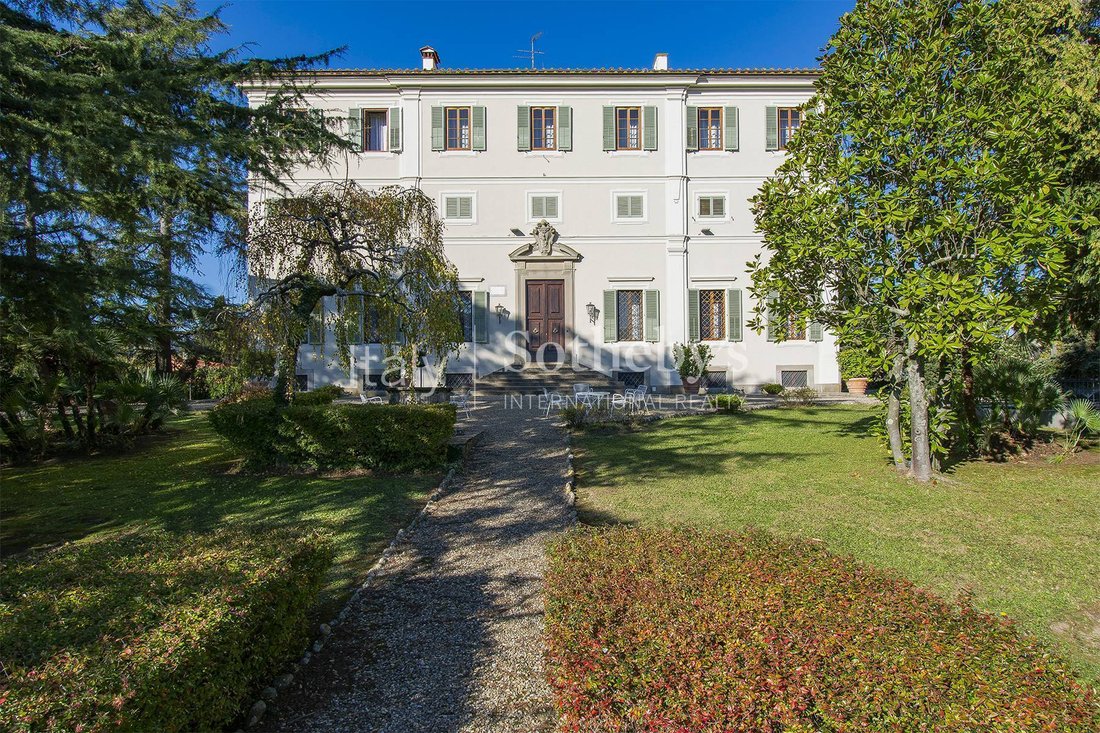
Villa il Merlo is a historic residence whose construction was completed around 1750. It lies nestled among the hills of Pistoia, surrounded by 5 hectares of woodland, rows of cypress trees, and olive groves.
The light-colored façade, the pietra serena pediment, and the framed stringcourses convey a refined, harmonious, and almost austere taste. With its panoramic gardens, the villa overlo
The light-colored façade, the pietra serena pediment, and the framed stringcourses convey a refined, harmonious, and almost austere taste. With its panoramic gardens, the villa overlo
Villa il Merlo is a historic residence whose construction was completed around 1750. It lies nestled among the hills of Pistoia, surrounded by 5 hectares of woodland, rows of cypress trees, and olive groves.
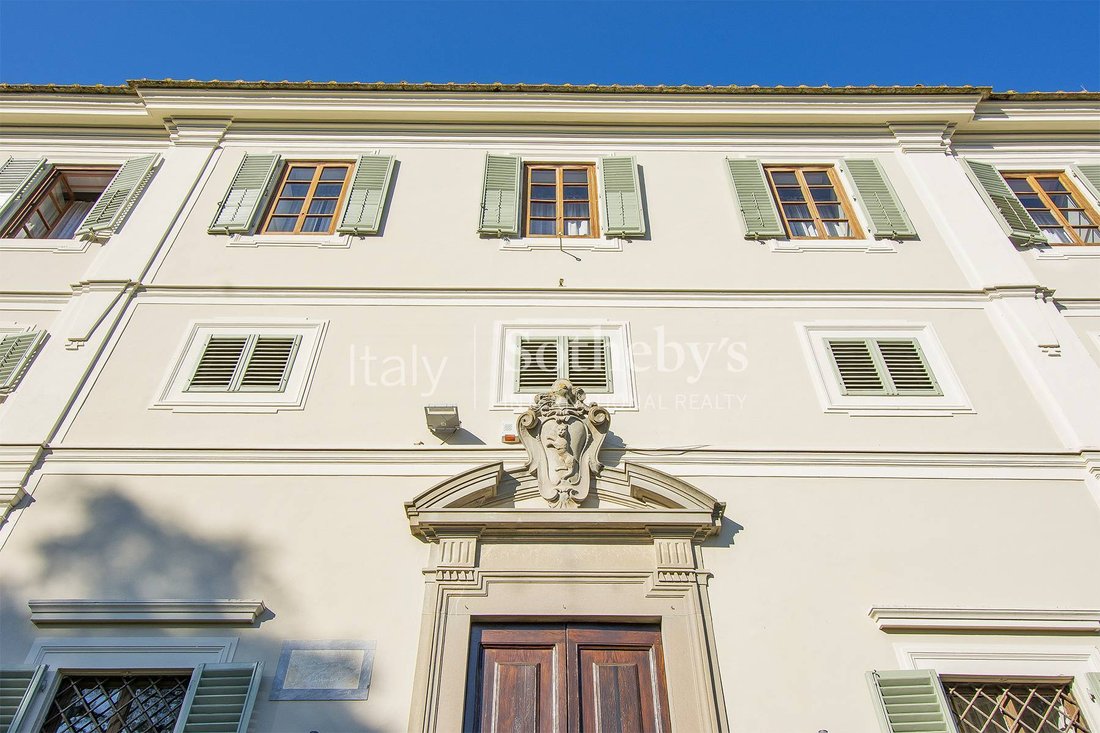
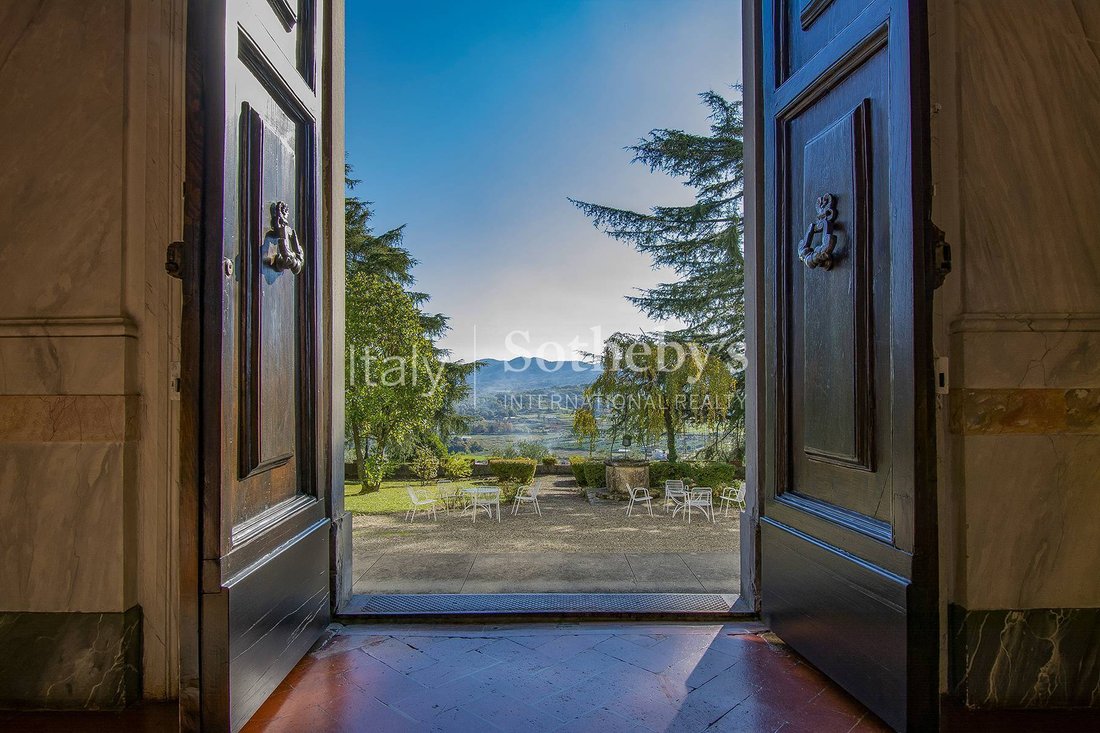
The light-colored façade, the pietra serena pediment, and the framed stringcourses convey a refined, harmonious, and almost austere taste. With its panoramic gardens, the villa overlooks a stunning landscape that offers views of the dome of Florence Cathedral and the entire plain stretching westward to the towers of Serravalle Pistoiese.
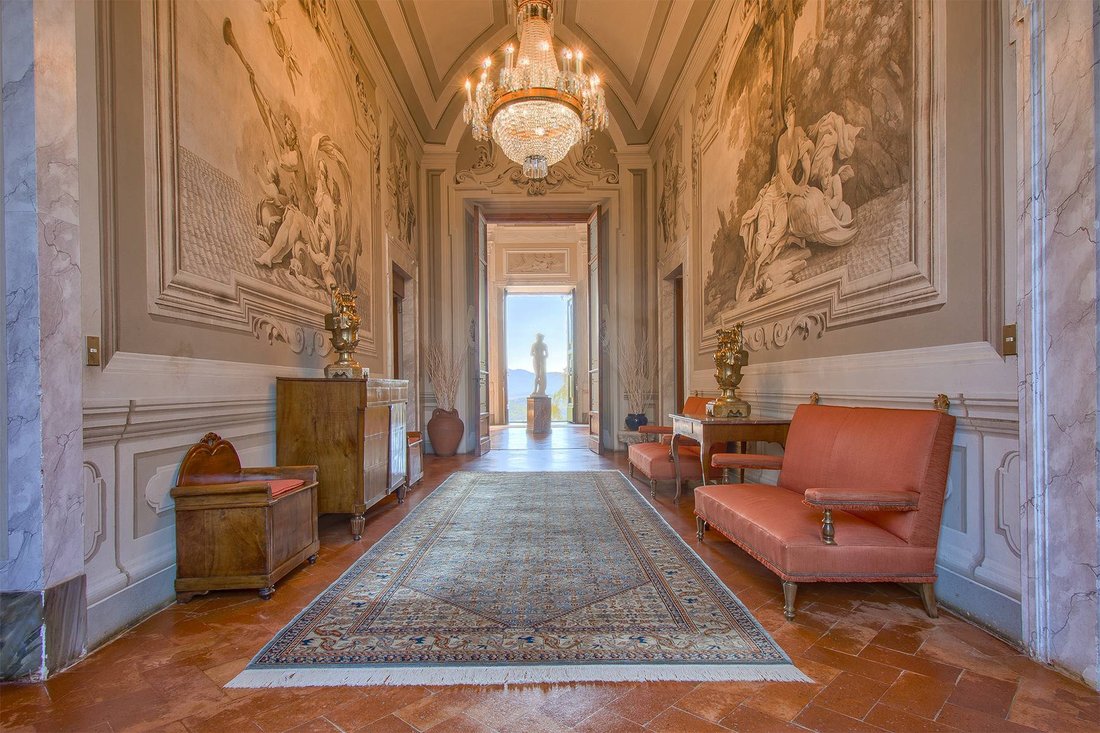
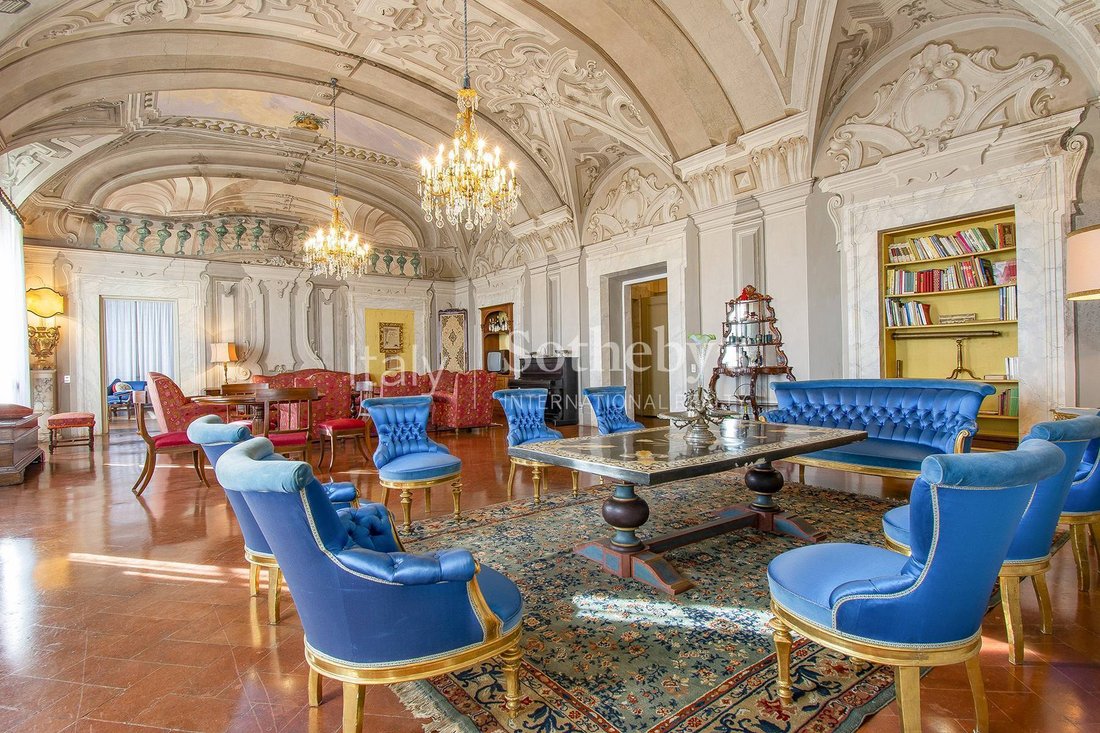
The villa has an internal surface area of approximately 1,500 square meters, comprising 25 rooms plus service areas and hallways. Inside, it is entirely frescoed with mythological scenes and landscapes, interspersed with architectural decorative elements, also in fresco, which enhance the structural features. The villa rises over three levels, two principal floors and one mezzanine plus a semi-basement level housing the kitchens and cellars. The four floors are connected by a grand staircase and an elevator. Adjacent to the villa, about 100 meters away, stands a large restored farmhouse that has always served as a support building to the main residence.
A small chapel commemorates the vows of Giuseppe Ippoliti, promoter of the villa’s construction, who was appointed Bishop of Cortona and later of Prato and Pistoia. The villa subsequently passed by inheritance to the Settimanni family and was later sold, in the last century, to the Bini family. In the mid-1960s, the current owning family carried out a complete restoration, respecting its architectural and decorative values, and furnished it with refined period antiques.
The light-colored façade, the pietra serena pediment, and the framed stringcourses convey a refined, harmonious, and almost austere taste. With its panoramic gardens, the villa overlooks a stunning landscape that offers views of the dome of Florence Cathedral and the entire plain stretching westward to the towers of Serravalle Pistoiese.
The villa has an internal surface area of approximately 1,500 square meters, comprising 25 rooms plus service areas and hallways. Inside, it is entirely frescoed with mythological scenes and landscapes, interspersed with architectural decorative elements, also in fresco, which enhance the structural features. The villa rises over three levels, two principal floors and one mezzanine plus a semi-basement level housing the kitchens and cellars. The four floors are connected by a grand staircase and an elevator. Adjacent to the villa, about 100 meters away, stands a large restored farmhouse that has always served as a support building to the main residence.
A small chapel commemorates the vows of Giuseppe Ippoliti, promoter of the villa’s construction, who was appointed Bishop of Cortona and later of Prato and Pistoia. The villa subsequently passed by inheritance to the Settimanni family and was later sold, in the last century, to the Bini family. In the mid-1960s, the current owning family carried out a complete restoration, respecting its architectural and decorative values, and furnished it with refined period antiques.
-
Property type
House
-
Year built
1700
-
Price/sqft
$408
Features
Features
Lot
Indoor
Outdoor
Explore the Area
Viale Macallè, Pistoia, PT 55100, Centro, Tuscany
View on Google Maps
Price per sqft
Low
High
Nestled in the charming city of Pistoia, this location offers seamless access to Tuscany’s splendors. Enjoy a sophisticated lifestyle with proximity to exquisite dining, historic attractions, and abundant nature. The property is well-connected with Florence and Pisa airports, ideal for international travel, and invites leisurely explorations to renowned vineyards and countryside vistas. Pistoia embodies the serene yet vibrant spirit of Tuscany.
Get nearby
Attractions
Schools
Florence Airport
Airport
47 min
Pisa Airport
Airport
54 min
Pistoia Zoo
Outdoor & Nature
10 min
Pistoia Cathedral
Culture & Heritage
6 min
International School of Florence
International School
49 min
Liceo Scientifico Amedeo Di Savoia
Public School
8 min

Joined 7 years ago
You have inquired about this property
The agent will contact you soon by
Listed by
47
Listings
2019
Joined
Book home tour with Francesco Assennato
Choose a date and whether you'd like a virtual or in-person tour with the agent.
Preferred date
Tour type

Italy Sotheby's International Realty
Via Vittorio Emanuele II, 14, 55100, Lucca, Lucca, Italy
View agency profile
Lucca, a fortified town rising amidst vineyards and olive trees in the hills of Tuscany, is one of the main art cit
Lucca, a fortified town rising amidst vineyards and olive trees in the hills of Tuscany, is one of the main art cities in Italy. The most important European textile center since the Middle Ages, it keeps track of a rich history in the elegant and majestic villas with magnificent parks outside the walls, that once were the residences of the wealthy families active in the silk trade. What amazes most the visitors, however, are the Renaissance walls of the XV century surrounding the historic core of the city. The works promoted in the XIX century by Elisa Bonaparte Baciocchi, in honor of her brother Napoleon, led to the current structure of the central square Piazza Napoleone. The city also boasts many medieval churches of great architectural impact which make it gain the nickname of “the City of 100 Churches”. Lucca is one of the prides of Tuscany for its beauty and enchanting atmosphere and, thanks to this, many foreign visitors, after visiting the city and admiring its culture, choose it as a place to establish their second residence.
Last updated
February 26
First listed
December 15, 2021
Listing link
Listing reference
37G5B8
Similar Properties Nearby
New Listings in Centro



Explore More Homes for Sale
Centro property types
Centro popular searches
- Panoramic / Scenic View properties in Centro
- Properties with Terrace in Centro
- Properties with Game Room in Centro
- Properties with Office in Centro
- Properties with Elevator in Centro
- Mountain View properties in Centro
- Properties with Garden in Centro
- Privacy properties in Centro
- Hilltop properties in Centro
- Investment Property properties in Centro
- Modern properties in Centro
- Properties with Library in Centro
- Properties with Air Conditioning in Centro
- Properties with Wine Cellar in Centro
- Properties with Fireplace in Centro
- Properties with Pool in Centro
- Properties with Tennis Court in Centro
- Properties with Vineyard / Winery in Centro
- Mansion properties in Centro
- Properties with Open Kitchen in Centro
- Renovated properties in Centro
Related Guides & Stories
Trusted by the World's Leading Brokers
The agents behind the world's most exceptional properties list with JamesEdition.
- Listings from Sotheby's, Christie's, BARNES, and Engel & Völkers
- Every listing reviewed before it goes live
- Connect directly with verified listing agents
By continuing you agree to our Terms and Privacy Policy.