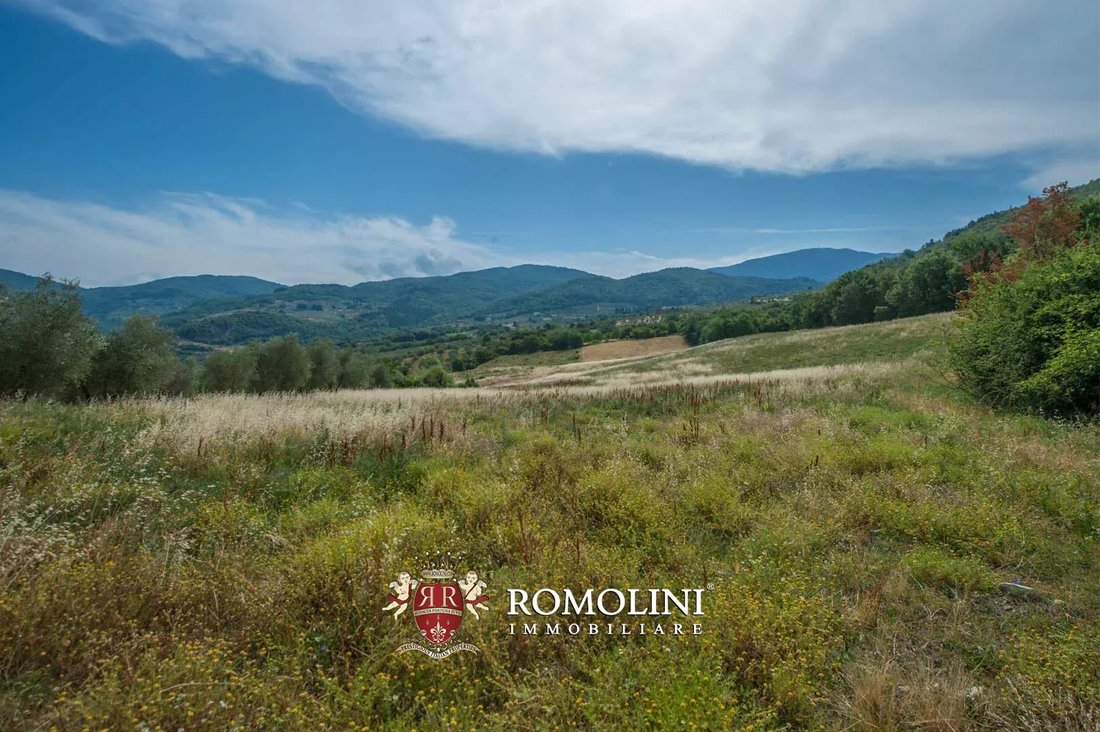
Prezzo su richiesta
Tenuta Storica In Vendita A Firenze Chianti
- 50 Camere
- 30 Bagni
- 175,226 Sqft
- 44.73 Ac lot
- Aggiornato: Agosto 7
- 10
Informazioni sulla proprietà
La descrizione è stata tradotta automaticamente.
La descrizione viene visualizzata nella lingua originale.
In provincia di Firenze, sulle colline del Chianti, prestigiosa tenuta storica con villa padronale e cantina vinicola.
In una posizione facilmente raggiungibile, non lontano da un centro con tutti i servizi (6km; 10’), la proprietà garantisce un accesso rapido ed eccellente a tutta la Toscana: la bellissima Firenze (25km; 40’), la turrita San Gimignano (76km; 1h 20’), Siena (84km; 1h 25’), la
In una posizione facilmente raggiungibile, non lontano da un centro con tutti i servizi (6km; 10’), la proprietà garantisce un accesso rapido ed eccellente a tutta la Toscana: la bellissima Firenze (25km; 40’), la turrita San Gimignano (76km; 1h 20’), Siena (84km; 1h 25’), la
In the province of Florence, on the Chianti Hills, prestigious historical estate with manor villa and winery.
In an easily accessed location, not far from a center with all the services (6km; 10’), the property grants a quick and excellent access to the whole Tuscany: the beautiful Florence (25km; 40’), the turreted San Gimignano (76km; 1h 20’), Siena (84km; 1h 25’), the renowned Montepul
In an easily accessed location, not far from a center with all the services (6km; 10’), the property grants a quick and excellent access to the whole Tuscany: the beautiful Florence (25km; 40’), the turreted San Gimignano (76km; 1h 20’), Siena (84km; 1h 25’), the renowned Montepul
In provincia di Firenze, sulle colline del Chianti, prestigiosa tenuta storica con villa padronale e cantina vinicola.
In una posizione facilmente raggiungibile, non lontano da un centro con tutti i servizi (6km; 10’), la proprietà garantisce un accesso rapido ed eccellente a tutta la Toscana: la bellissima Firenze (25km; 40’), la turrita San Gimignano (76km; 1h 20’), Siena (84km; 1h 25’), la rinomata Montepulciano (95km; 1h 15’) e Montalcino (122 km; 1h 45’) e la Pienza papale (102 km; 1h 25’).
Gli aeroporti per raggiungere la struttura in tempi ragionevoli sono Firenze Peretola (49km; 45’), Pisa Galilei (109km; 1h 25’), Bologna Marconi (130km; 1h 35’), Perugia Sant’Egidio (145km; 1h 40’), Roma Ciampino (273km; 2h 45’) e Roma Fiumicino (288km; 2h 50’).
DESCRIZIONE DEGLI EDIFICI
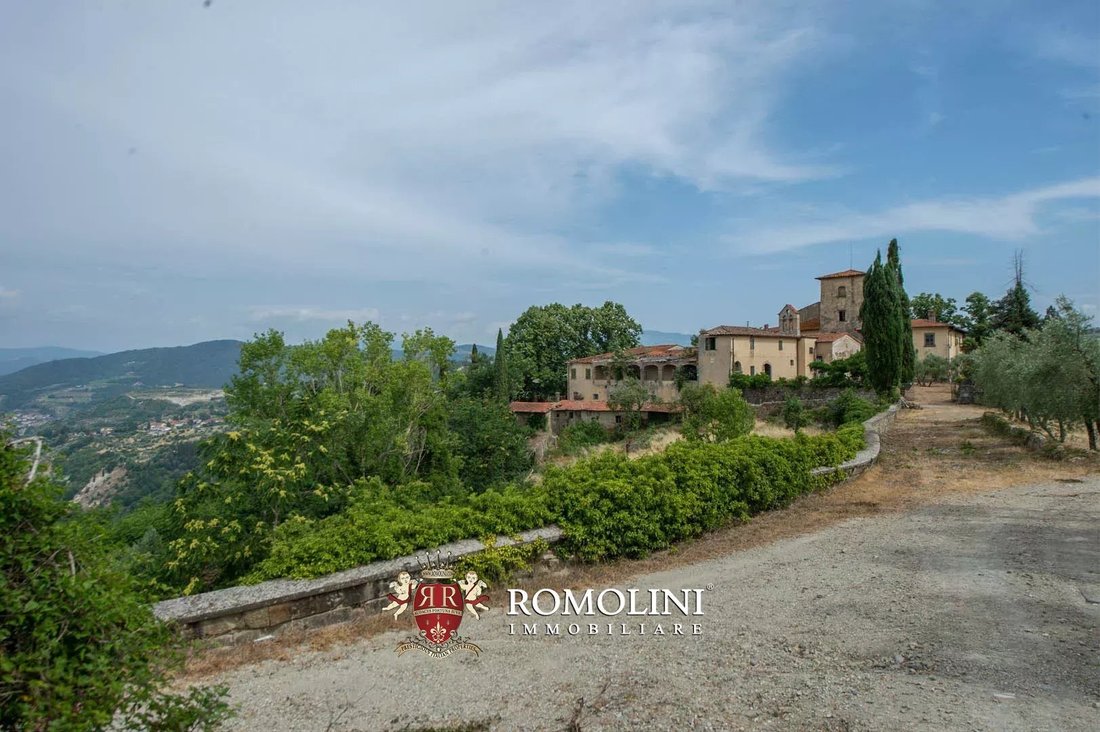
La proprietà è composta da numerosi edifici (17 per una superficie totale di 15.500 mq) suddivisi tra i vari poderi. La ciliegina sulla torta è la storica villa padronale, che costituisce il nucleo più antico della proprietà risalente all’XI e XIV secolo. Questo borgo, oltre la villa, comprende una chiesa del tardo medioevo, un frantoio, diverse cantine, un ufficio per l’azienda, un laboratorio e una delle fattorie.
Le altre cinque masserie comprendono diversi edifici destinati ad uso agricolo e residenziale, in parte da ristrutturare in parte già restaurati e quasi vivibili.
Riassumendo, la proprietà vanta 11.000 mq (118.360 piedi quadrati) di edifici residenziali, 3.000 mq (32.280 piedi quadrati) di capannoni agricoli e 1.500 mq (16.140 piedi quadrati) di edifici rurali.
STORIA, STATO E FINITURE
La tenuta si trova su un territorio abitato sin dalla Preistoria, ma la prima vera civiltà a costruire e utilizzare la regione furono gli Etruschi a partire dal VII secolo a.C. I romani avrebbero poi raccolto l’eredità del popolo etrusco costruendo imponenti ville e fattorie nella regione. Fu un’epoca prospera per gli abitanti, ai quali fu concesso un buon grado di autonomia. Tuttavia questo periodo non era destinato a durare: l’arrivo dei popoli germanici dal nord Europa dopo la caduta di Roma nel V secolo d.C. cambiò radicalmente la situazione.
L’organizzazione feudale imposta dai Longobardi ridusse fortemente l’indipendenza delle popolazioni della zona e le costrinse a piegarsi ai nuovi conquistatori.
Dopo la fine del regno longobardo, la Toscana fu conquistata e amministrata dai Franchi (e poi dai tedeschi con il Sacro Romano Impero) e nel X secolo iniziò un processo di incastellamento su larga scala nella zona di Firenze, dove oggi si trova la villa.
Il castello appare per la prima volta in un documento del 1080 d.C. e poi in diversi altri documenti del 1102, 1123 e 1171 d.C. I proprietari del castello decisero di abbandonarlo quando Firenze iniziò a emergere come superpotenza nell’Italia centrale tra il 1140 e il 1153. Quel che è certo è che il popolo del feudo prese parte alla Seconda Crociata nel 1145 sotto la bandiera di Guido Guerra II. Nel secondo decennio del XIII secolo la famiglia decise di rinunciare definitivamente al castello donandolo alla vicina Abbazia di Vallombrosa. Successivamente, il castello fu probabilmente distrutto (o almeno gravemente danneggiato) dagli eserciti ghibellini in seguito alla vittoria nella battaglia di Montaperti nel 1260 d.C. (ricordata da Dante nei famosi versi «[...] la strage e la grande carneficina/che hanno macchiato di cremisi l’Arbia»).
Come attesta un documento del 1427, in quell’anno il castello era già stato completamente demolito e i resti usati come base per un nuovo edificio (oggi una fattoria) che fu costruito tra il 1260 e il 1420. Tuttavia, l’edificio era già in avanzato stato di rovina e nel corso del XVII secolo i nuovi proprietari decisero di restaurare la parte nord del complesso che comprendeva la vecchia torre (unica rimasta del castello), ricavandone una villa. Quando nel XIX secolo la proprietà passò nuovamente di mano, la canonica della chiesa fu ampliata e ciò permise la congiunzione della villa con la fattoria. L’ultima modifica (che è quella che ha dato al complesso l’aspetto attuale) è stata lo spostamento del campanile dal lato sinistro a quello destro della chiesa.
La proprietà è attualmente in gran parte abbandonata e solo alcuni edifici sono stati rinforzati e restaurati strutturalmente. La villa in particolare è un vero gioiello, ricoperta com’è da affreschi e decorazioni; tuttavia necessita di molti lavori per essere riportata al suo splendore originale. Anche la chiesa è in cattive condizioni, con il tetto parzialmente crollato.
Le altre masserie sono costituite principalmente da edifici rurali e agricoli (più facili da recuperare e restaurare seguendo le linee guida per gli edifici storici).
La cantina è attualmente funzionante, così come il frantoio, ed entrambi garantiscono la produzione regolare di olio d’oliva e vini.
ESTERNO
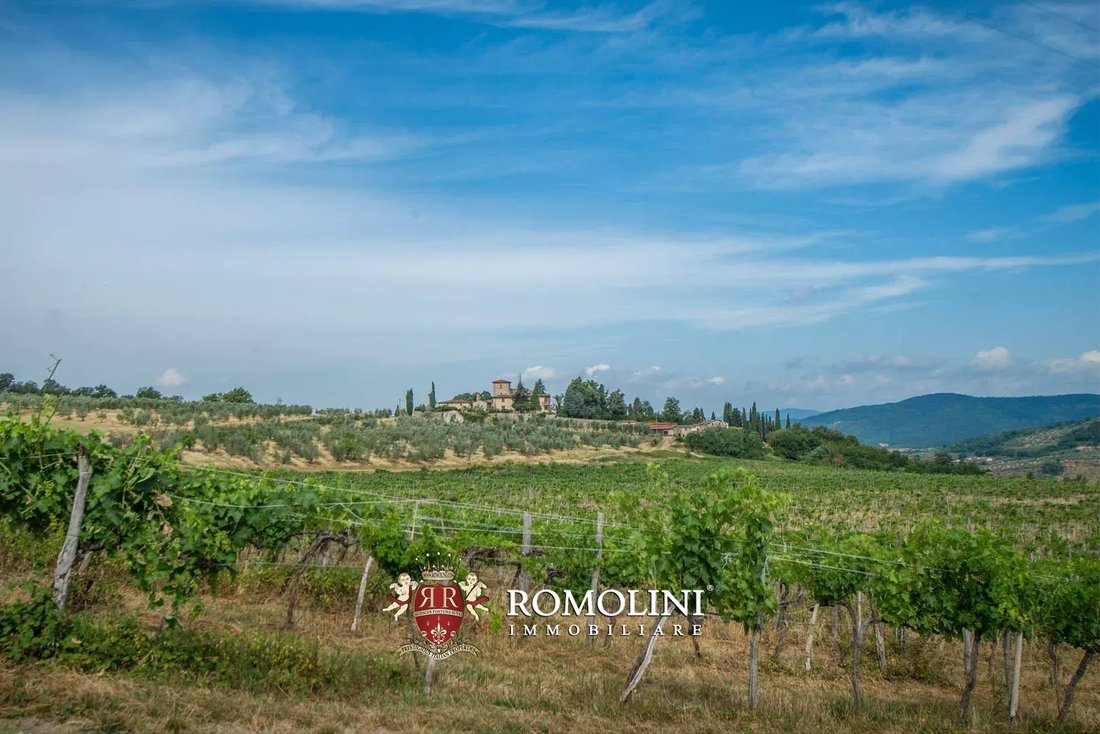
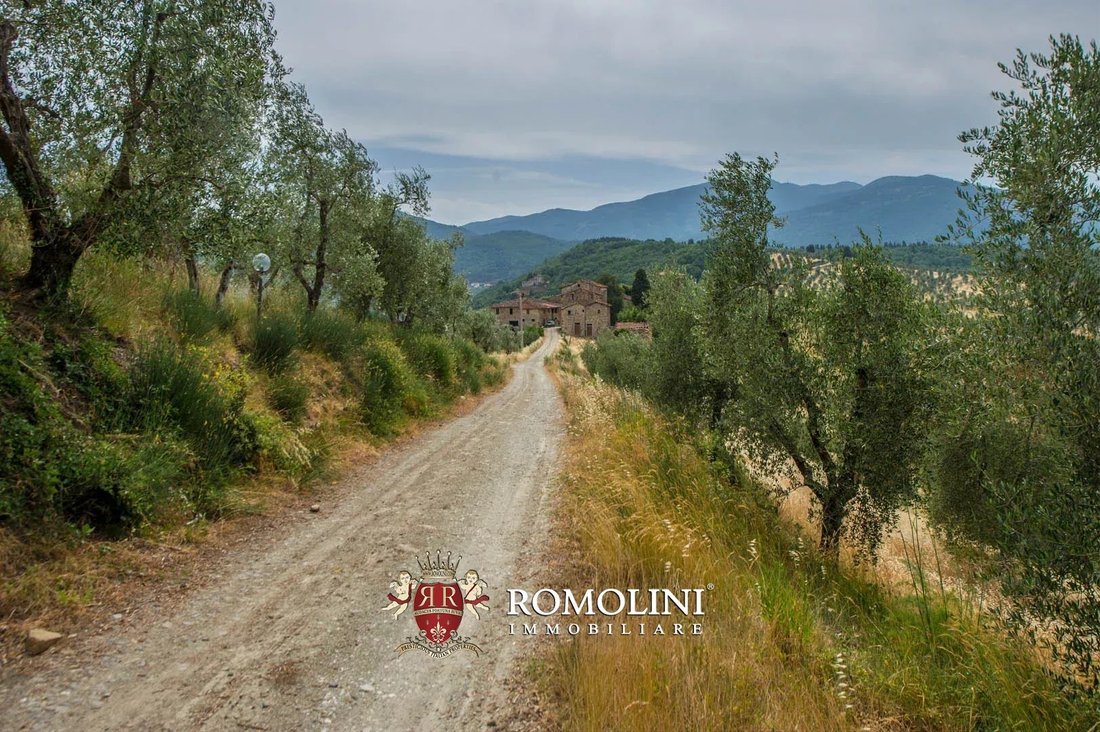
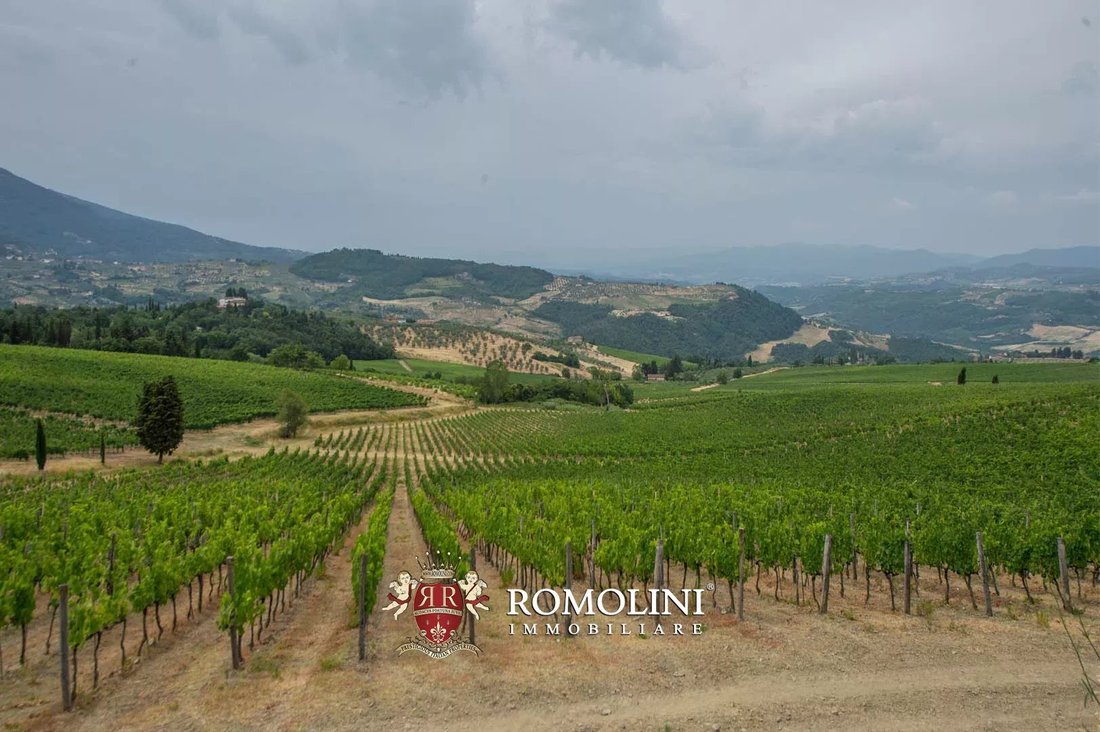
La proprietà è composta da un terreno di 236,2 ettari, suddiviso tra vigneto (18,1 ha), oliveto (47,7 ha), seminativo (82,2 ha), pascolo (7,8 ha), frutteto (2,6 ha) e misto bosco (77,8 ha).
Il vigneto è potenzialmente espandibile per ulteriori 27 ettari, sottraendo parte dei terreni ai seminativi (di cui 12 ettari erano stati utilizzati come vigneto in passato). Lo stesso vale per l’oliveto, che dovrebbe essere ampliato con altri 8 ettari grazie al Programma di Sviluppo Rurale che potrebbe coprire fino all’80% del costo totale.
La produzione delle olive è totalmente biologica (con certificazione), senza l’uso di pesticidi e fertilizzanti chimici, mentre il vigneto non ha ancora ottenuto la certificazione, anche se la raccolta viene effettuata senza l’uso di sostanze chimiche. La raccolta e la cernita manuale delle uve contribuiscono all’eccellente qualità del vino.
DETTAGLI SULLA PRODUZIONE DEL VINO
- Superficie del vigneto: 18,1 ettari (+ 27,0 ha disponibili per la piantagione)
- Varietà: Sangiovese, Cabernet Sauvignon, Canaiolo, Syrah, Malvasia e Trebbiano
- Anno di impianto: 1957 — 2011
- Altitudine: 280 - 330 m
- Esposizione: sud, sud-est, sud-ovest
- Densità: 3.500 — 5.000 viti/ha
- Resa media: 4,5 — 7,0 tonnellate/ha
- Allevamento: viti potate e allevate a cordone speronato
- Raccolta: manuale
- Composizione del terreno: calcareo, marnoso, argilloso
- Produzione annua: 350,0 hl (46.700 bottiglie)
- Produzioni potenziali massime: 1.425,0 hl (190.000 bottiglie)
- Capacità massima di vino: 1.870,0 hl
VINI PRODOTTI
- Chianti Colli Fiorentini DOCG: 100% Sangiovese
- Chianti Colli Fiorentini DOCG Riserva: 90% Sangiovese, 10% Cabernet Sauvignon
- Rosso Toscano IGT: 40% Sangiovese, 30% Canaiolo, 20% Malvasia, 10% Trebbiano
- Rosso Toscano IGT: 50% Cabernet Sauvignon, 25% Merlot, 25% Syrah
- Bianco Toscano IGT: 50% Cabernet Sauvignon, 50% Chardonnay
DETTAGLI SULLA PRODUZIONE DI OLIO
- Superficie: 47,7 ettari (+ 8,0 ha disponibili per la piantagione)
- Varietà: Frantoio, Moraiolo, Leccino, Pendolino e Peranzana
- Altitudine: 300 — 350 m
- Composizione del terreno: calcareo, marnoso, argilloso
- Produzione annua: 90,0 hl (12.000 bottiglie)
USO E USI POTENZIALI
La proprietà è attualmente utilizzata esclusivamente come azienda produttrice di vino e olio, con una produzione annua di circa 46.700 bottiglie di vino (350 hl) e 12.000 bottiglie di olio (90 hl). Gli edifici sono parzialmente restaurati e utilizzabili senza bisogno di alcun lavoro.
La tenuta è perfetta per chi cerca qualcosa da sviluppare parallelamente al business dell’olio e del vino. Con una ristrutturazione completa si potrebbe, infatti, pensare di avviare un’attività ricettiva di alta qualità, soprattutto grazie alle numerose camere disponibili e alla posizione panoramica.
Un progetto di conversione è già stato approvato e prevede la realizzazione di un hotel con ristorante, sala conferenze, museo dell’olio, centro benessere, negozio di prodotti locali, impianti sportivi e la conversione di alcune fattorie in appartamenti.
Per quanto riguarda gli impianti sportivi, c’è la possibilità di costruire piscine e campi da tennis con un limite di uno per gruppo di edifici, ad eccezione della villa principale che è abbastanza ampia da consentire la costruzione sia di una piscina che di un campo da tennis nelle vicinanze.
CITTÀ E PAESI PIÙ VICINI†S
Città con servizi (6km; 10’), Figline e Incisa Valdarno (14km; 20’), Firenze (25km; 40’), San Gimignano (76km; 1h 20’), Siena (84km; 1h 25’), Montepulciano (95km; 1h 15’), Pienza (102km; 1h 20’), Montalcino (122km; 1h 15’), Montalcino (122km; 1h 15’) ore 45’)
AEROPORTI PIÙ VICINI
Firenze Peretola (49km; 45’), Pisa Galilei (109km; 1h 25’), Bologna Marconi (130km; 1h 35’), Perugia Sant’Egidio (145km; 1h 40’), Roma Ciampino (273km; 2h 45’), Roma Fiumicino (288km; 2h 50’)
In una posizione facilmente raggiungibile, non lontano da un centro con tutti i servizi (6km; 10’), la proprietà garantisce un accesso rapido ed eccellente a tutta la Toscana: la bellissima Firenze (25km; 40’), la turrita San Gimignano (76km; 1h 20’), Siena (84km; 1h 25’), la rinomata Montepulciano (95km; 1h 15’) e Montalcino (122 km; 1h 45’) e la Pienza papale (102 km; 1h 25’).
Gli aeroporti per raggiungere la struttura in tempi ragionevoli sono Firenze Peretola (49km; 45’), Pisa Galilei (109km; 1h 25’), Bologna Marconi (130km; 1h 35’), Perugia Sant’Egidio (145km; 1h 40’), Roma Ciampino (273km; 2h 45’) e Roma Fiumicino (288km; 2h 50’).
DESCRIZIONE DEGLI EDIFICI
La proprietà è composta da numerosi edifici (17 per una superficie totale di 15.500 mq) suddivisi tra i vari poderi. La ciliegina sulla torta è la storica villa padronale, che costituisce il nucleo più antico della proprietà risalente all’XI e XIV secolo. Questo borgo, oltre la villa, comprende una chiesa del tardo medioevo, un frantoio, diverse cantine, un ufficio per l’azienda, un laboratorio e una delle fattorie.
Le altre cinque masserie comprendono diversi edifici destinati ad uso agricolo e residenziale, in parte da ristrutturare in parte già restaurati e quasi vivibili.
Riassumendo, la proprietà vanta 11.000 mq (118.360 piedi quadrati) di edifici residenziali, 3.000 mq (32.280 piedi quadrati) di capannoni agricoli e 1.500 mq (16.140 piedi quadrati) di edifici rurali.
STORIA, STATO E FINITURE
La tenuta si trova su un territorio abitato sin dalla Preistoria, ma la prima vera civiltà a costruire e utilizzare la regione furono gli Etruschi a partire dal VII secolo a.C. I romani avrebbero poi raccolto l’eredità del popolo etrusco costruendo imponenti ville e fattorie nella regione. Fu un’epoca prospera per gli abitanti, ai quali fu concesso un buon grado di autonomia. Tuttavia questo periodo non era destinato a durare: l’arrivo dei popoli germanici dal nord Europa dopo la caduta di Roma nel V secolo d.C. cambiò radicalmente la situazione.
L’organizzazione feudale imposta dai Longobardi ridusse fortemente l’indipendenza delle popolazioni della zona e le costrinse a piegarsi ai nuovi conquistatori.
Dopo la fine del regno longobardo, la Toscana fu conquistata e amministrata dai Franchi (e poi dai tedeschi con il Sacro Romano Impero) e nel X secolo iniziò un processo di incastellamento su larga scala nella zona di Firenze, dove oggi si trova la villa.
Il castello appare per la prima volta in un documento del 1080 d.C. e poi in diversi altri documenti del 1102, 1123 e 1171 d.C. I proprietari del castello decisero di abbandonarlo quando Firenze iniziò a emergere come superpotenza nell’Italia centrale tra il 1140 e il 1153. Quel che è certo è che il popolo del feudo prese parte alla Seconda Crociata nel 1145 sotto la bandiera di Guido Guerra II. Nel secondo decennio del XIII secolo la famiglia decise di rinunciare definitivamente al castello donandolo alla vicina Abbazia di Vallombrosa. Successivamente, il castello fu probabilmente distrutto (o almeno gravemente danneggiato) dagli eserciti ghibellini in seguito alla vittoria nella battaglia di Montaperti nel 1260 d.C. (ricordata da Dante nei famosi versi «[...] la strage e la grande carneficina/che hanno macchiato di cremisi l’Arbia»).
Come attesta un documento del 1427, in quell’anno il castello era già stato completamente demolito e i resti usati come base per un nuovo edificio (oggi una fattoria) che fu costruito tra il 1260 e il 1420. Tuttavia, l’edificio era già in avanzato stato di rovina e nel corso del XVII secolo i nuovi proprietari decisero di restaurare la parte nord del complesso che comprendeva la vecchia torre (unica rimasta del castello), ricavandone una villa. Quando nel XIX secolo la proprietà passò nuovamente di mano, la canonica della chiesa fu ampliata e ciò permise la congiunzione della villa con la fattoria. L’ultima modifica (che è quella che ha dato al complesso l’aspetto attuale) è stata lo spostamento del campanile dal lato sinistro a quello destro della chiesa.
La proprietà è attualmente in gran parte abbandonata e solo alcuni edifici sono stati rinforzati e restaurati strutturalmente. La villa in particolare è un vero gioiello, ricoperta com’è da affreschi e decorazioni; tuttavia necessita di molti lavori per essere riportata al suo splendore originale. Anche la chiesa è in cattive condizioni, con il tetto parzialmente crollato.
Le altre masserie sono costituite principalmente da edifici rurali e agricoli (più facili da recuperare e restaurare seguendo le linee guida per gli edifici storici).
La cantina è attualmente funzionante, così come il frantoio, ed entrambi garantiscono la produzione regolare di olio d’oliva e vini.
ESTERNO
La proprietà è composta da un terreno di 236,2 ettari, suddiviso tra vigneto (18,1 ha), oliveto (47,7 ha), seminativo (82,2 ha), pascolo (7,8 ha), frutteto (2,6 ha) e misto bosco (77,8 ha).
Il vigneto è potenzialmente espandibile per ulteriori 27 ettari, sottraendo parte dei terreni ai seminativi (di cui 12 ettari erano stati utilizzati come vigneto in passato). Lo stesso vale per l’oliveto, che dovrebbe essere ampliato con altri 8 ettari grazie al Programma di Sviluppo Rurale che potrebbe coprire fino all’80% del costo totale.
La produzione delle olive è totalmente biologica (con certificazione), senza l’uso di pesticidi e fertilizzanti chimici, mentre il vigneto non ha ancora ottenuto la certificazione, anche se la raccolta viene effettuata senza l’uso di sostanze chimiche. La raccolta e la cernita manuale delle uve contribuiscono all’eccellente qualità del vino.
DETTAGLI SULLA PRODUZIONE DEL VINO
- Superficie del vigneto: 18,1 ettari (+ 27,0 ha disponibili per la piantagione)
- Varietà: Sangiovese, Cabernet Sauvignon, Canaiolo, Syrah, Malvasia e Trebbiano
- Anno di impianto: 1957 — 2011
- Altitudine: 280 - 330 m
- Esposizione: sud, sud-est, sud-ovest
- Densità: 3.500 — 5.000 viti/ha
- Resa media: 4,5 — 7,0 tonnellate/ha
- Allevamento: viti potate e allevate a cordone speronato
- Raccolta: manuale
- Composizione del terreno: calcareo, marnoso, argilloso
- Produzione annua: 350,0 hl (46.700 bottiglie)
- Produzioni potenziali massime: 1.425,0 hl (190.000 bottiglie)
- Capacità massima di vino: 1.870,0 hl
VINI PRODOTTI
- Chianti Colli Fiorentini DOCG: 100% Sangiovese
- Chianti Colli Fiorentini DOCG Riserva: 90% Sangiovese, 10% Cabernet Sauvignon
- Rosso Toscano IGT: 40% Sangiovese, 30% Canaiolo, 20% Malvasia, 10% Trebbiano
- Rosso Toscano IGT: 50% Cabernet Sauvignon, 25% Merlot, 25% Syrah
- Bianco Toscano IGT: 50% Cabernet Sauvignon, 50% Chardonnay
DETTAGLI SULLA PRODUZIONE DI OLIO
- Superficie: 47,7 ettari (+ 8,0 ha disponibili per la piantagione)
- Varietà: Frantoio, Moraiolo, Leccino, Pendolino e Peranzana
- Altitudine: 300 — 350 m
- Composizione del terreno: calcareo, marnoso, argilloso
- Produzione annua: 90,0 hl (12.000 bottiglie)
USO E USI POTENZIALI
La proprietà è attualmente utilizzata esclusivamente come azienda produttrice di vino e olio, con una produzione annua di circa 46.700 bottiglie di vino (350 hl) e 12.000 bottiglie di olio (90 hl). Gli edifici sono parzialmente restaurati e utilizzabili senza bisogno di alcun lavoro.
La tenuta è perfetta per chi cerca qualcosa da sviluppare parallelamente al business dell’olio e del vino. Con una ristrutturazione completa si potrebbe, infatti, pensare di avviare un’attività ricettiva di alta qualità, soprattutto grazie alle numerose camere disponibili e alla posizione panoramica.
Un progetto di conversione è già stato approvato e prevede la realizzazione di un hotel con ristorante, sala conferenze, museo dell’olio, centro benessere, negozio di prodotti locali, impianti sportivi e la conversione di alcune fattorie in appartamenti.
Per quanto riguarda gli impianti sportivi, c’è la possibilità di costruire piscine e campi da tennis con un limite di uno per gruppo di edifici, ad eccezione della villa principale che è abbastanza ampia da consentire la costruzione sia di una piscina che di un campo da tennis nelle vicinanze.
CITTÀ E PAESI PIÙ VICINI†S
Città con servizi (6km; 10’), Figline e Incisa Valdarno (14km; 20’), Firenze (25km; 40’), San Gimignano (76km; 1h 20’), Siena (84km; 1h 25’), Montepulciano (95km; 1h 15’), Pienza (102km; 1h 20’), Montalcino (122km; 1h 15’), Montalcino (122km; 1h 15’) ore 45’)
AEROPORTI PIÙ VICINI
Firenze Peretola (49km; 45’), Pisa Galilei (109km; 1h 25’), Bologna Marconi (130km; 1h 35’), Perugia Sant’Egidio (145km; 1h 40’), Roma Ciampino (273km; 2h 45’), Roma Fiumicino (288km; 2h 50’)
In the province of Florence, on the Chianti Hills, prestigious historical estate with manor villa and winery.
In an easily accessed location, not far from a center with all the services (6km; 10’), the property grants a quick and excellent access to the whole Tuscany: the beautiful Florence (25km; 40’), the turreted San Gimignano (76km; 1h 20’), Siena (84km; 1h 25’), the renowned Montepulciano (95km; 1h 15’) and Montalcino (122km; 1h 45’) and the papal Pienza (102km; 1h 25’).
The airports to reach the property in reasonable time are Firenze Peretola (49km; 45’), Pisa Galilei (109km; 1h 25’), Bologna Marconi (130km; 1h 35’), Perugia Sant’Egidio (145km; 1h 40’), Roma Ciampino (273km; 2h 45’) e Roma Fiumicino (288km; 2h 50’).
DESCRIPTION OF THE BUILDINGS
The property is made up of numerous buildings (17 for a total surface of 15,500 sqm) split among the various farms. Icing on the cake is the historical manor villa, constituting the older core of the property dating back to the 11th and 14th century. This hamlet, beyond the villa, includes a late Middle Ages church, an olive mill, several cellar rooms, office for the business, a workshop and one of the farms.
The other five farms include several buildings intended for agricultural and residential use, partially to be restored partially already restored and almost livable.
To summarize, the property boasts 11,000 sqm (118,360 sqft) of residential buildings, 3,000 sqm (32,280 sqft) of agricultural sheds and 1,500 sqm (16,140 sqft) of rural buildings.
HISTORY, STATE AND FINISHES
The estate lies on a land inhabited since Prehistory, but the first real civilization to build and use the region was the Etruscans starting from the 7th century BC. Romans would then pick up the legacy of the Etruscan people by building impressive villas and farms in the region. It was a prosperous age for the inhabitants, which were granted a good degree of autonomy. However this wasn’t bound to last: the arrival of Germanic people from northern Europe after the fall of Rome in the 5th century AD dramatically changed the situation.
The feudal organization imposed by the Longobards severely reduced the independence for the people in the area and forced them to bow to the new conquerors.
After the end of the Langobardic reign, Tuscany was conquered and administered by Franks (and then Germans with the Holy Roman Empire) and in the 10th century a process of encastellation began on a large scale in the area of Florence and where the villa is sitting today.
The castle appears for the first time in a document dated 1080 AD and then in several other papers from 1102, 1123 and 1171 AD. The owners of the castle decided to abandon it when Florence started emerging as a superpower in Central Italy between 1140 and 1153. What is sure is that the people of the fiefdom took part in the Second Crusade in 1145 under the flag of Guido Guerra II. In the second decade of the 13th century the family decided to finally give up the castle by donating it to the nearby Abbey of Vallombrosa. After that, the castle was probably destroyed (or at least heavily damaged) by the Ghibellines armies following their victory in the battle of Montaperti in 1260 AD (recalled by Dante in the famous verses “[…] the slaughter and great carnage / which have with crimson stained the Arbia”).
As testified by a document from 1427, by that year the castle had already been totally demolished and the remains used as a base for a new building (nowadays a farm) which was built between 1260 and 1420. However, the building was already in an advanced state of ruin and during the 17th century the new owners decided to restore the northern part of the complex which included the old tower (the only remain of the castle), obtaining a villa. When in the 19th century the property changed hands again, the rectory of the church was expanded and this allowed the conjunction of the villa with the farm. The last change (which is the one that made the complex look what it is today) was the relocation of the bell tower from the left to the right side of the church.
The property is currently abandoned for the most part and just a few of the buildings have been structurally reinforced and restored. The villa in particular is a real gem, covered as it is in frescoes and decorations; however it needs lots of work to be brought back to its original splendor. The church is also in bad shape, with the roof partially collapsed.
The other farms are mainly made up of rural and agricultural buildings (which are easier to recover and restore following the guidelines for historical buildings).
The cellar is currently working, as well as the olive mill, and both grant the regular production of olive oil and wines.
EXTERIOR
The property consists of a 236.2 hectares piece of land, split among vineyard (18.1 ha), olive grove (47.7 ha), arable land (82.2 ha), grazing land (7.8 ha), fruit orchard (2.6 ha) and mixed woodland (77.8 ha).
The vineyard is potentially expandable for further 27 hectares, taking some land from the arable plots (12 hectares of which had been used as a vineyard in the past). Same goes for the olive grove, which should be expanded with 8 more hectares thanks to the Rural Development Program which could cover up to 80% of the total cost.
The production of olives is totally organic (with certification), without the use of pesticides and chemical fertilizers, while vineyard hasn’t got the certification yet, even if harvesting is carried out without using chemical substances. Manual harvesting and sorting of grapes contribute to the excellent quality of the wine.
DETAILS ON WINE PRODUCTION
- Vineyard surface: 18.1 hectares (+ 27.0 ha available for plantation)
- Varieties: Sangiovese, Cabernet Sauvignon, Canaiolo, Syrah, Malvasia and Trebbiano
- Year of planting: 1957 – 2011
- Altitude: 280 – 330 m
- Exposure: south, south-east, south-west
- Density: 3,500 – 5,000 vines / ha
- Average yield: 4.5 – 7.0 tons / ha
- Training: pruned-spur cordon-trained vines
- Harvesting: manual
- Soil composition: calcareous, marlstone, clayish
- Yearly production: 350.0 hl (46,700 bottles)
- Maximum potential productions: 1,425.0 hl (190,000 bottles)
- Maximum wine capacity: 1,870.0 hl
PRODUCED WINES
- Chianti Colli Fiorentini DOCG: 100% Sangiovese
- Chianti Colli Fiorentini DOCG Riserva: 90% Sangiovese, 10% Cabernet Sauvignon
- Rosso Toscano IGT: 40% Sangiovese, 30% Canaiolo, 20% Malvasia, 10% Trebbiano
- Rosso Toscano IGT: 50% Cabernet Sauvignon, 25% Merlot, 25% Syrah
- Bianco Toscano IGT: 50% Cabernet Sauvignon, 50% Chardonnay
DETAILS ON OIL PRODUCTION
- Surface: 47.7 hectares (+ 8.0 ha available for plantation)
- Varieties: Frantoio, Moraiolo, Leccino, Pendolino and Peranzana
- Altitude: 300 – 350 m
- Soil composition: calcareous, marlstone, clayish
- Yearly production: 90.0 hl (12,000 bottles)
USE AND POTENTIAL USES
The property is currently used exclusively as a wine and oil producing business, with a yearly production ranging around 46,700 bottles of wine (350 hl) and 12,000 bottles of oil (90 hl). Buildings are partially restored and usable without any work needed.
The estate is perfect for someone looking for something to develop in parallel with the oil and wine business. With a full restoration one could, as a matter of fact, think about starting a high quality hosting business, mainly thanks to the numerous available bedrooms and the panoramic position.
A conversion project has already been approved and envisages the realization of a hotel with restaurant, conference hall, oil museum, wellness centre, shop for local products, sporting facilities and the conversion of some of the farms into apartments.
As far as sporting facilities are concerned, there is the possibility of building pools and tennis courts with a limitation of one per group of buildings, with the exception of the main villa which is ample enough to allow the construction of both a pool and a tennis court in the vicinity.
CLOSEST CITIES AND TOWN†S
Town with services (6km; 10’), Figline e Incisa Valdarno (14km; 20’), Florence (25km; 40’), San Gimignano (76km; 1h 20’), Siena (84km; 1h 25’), Montepulciano (95km; 1h 15’), Pienza (102km; 1h 25’), Montalcino (122km; 1h 45’)
CLOSEST AIRPORTS
Firenze Peretola (49km; 45’), Pisa Galilei (109km; 1h 25’), Bologna Marconi (130km; 1h 35’), Perugia Sant’Egidio (145km; 1h 40’), Roma Ciampino (273km; 2h 45’), Roma Fiumicino (288km; 2h 50’)
In an easily accessed location, not far from a center with all the services (6km; 10’), the property grants a quick and excellent access to the whole Tuscany: the beautiful Florence (25km; 40’), the turreted San Gimignano (76km; 1h 20’), Siena (84km; 1h 25’), the renowned Montepulciano (95km; 1h 15’) and Montalcino (122km; 1h 45’) and the papal Pienza (102km; 1h 25’).
The airports to reach the property in reasonable time are Firenze Peretola (49km; 45’), Pisa Galilei (109km; 1h 25’), Bologna Marconi (130km; 1h 35’), Perugia Sant’Egidio (145km; 1h 40’), Roma Ciampino (273km; 2h 45’) e Roma Fiumicino (288km; 2h 50’).
DESCRIPTION OF THE BUILDINGS
The property is made up of numerous buildings (17 for a total surface of 15,500 sqm) split among the various farms. Icing on the cake is the historical manor villa, constituting the older core of the property dating back to the 11th and 14th century. This hamlet, beyond the villa, includes a late Middle Ages church, an olive mill, several cellar rooms, office for the business, a workshop and one of the farms.
The other five farms include several buildings intended for agricultural and residential use, partially to be restored partially already restored and almost livable.
To summarize, the property boasts 11,000 sqm (118,360 sqft) of residential buildings, 3,000 sqm (32,280 sqft) of agricultural sheds and 1,500 sqm (16,140 sqft) of rural buildings.
HISTORY, STATE AND FINISHES
The estate lies on a land inhabited since Prehistory, but the first real civilization to build and use the region was the Etruscans starting from the 7th century BC. Romans would then pick up the legacy of the Etruscan people by building impressive villas and farms in the region. It was a prosperous age for the inhabitants, which were granted a good degree of autonomy. However this wasn’t bound to last: the arrival of Germanic people from northern Europe after the fall of Rome in the 5th century AD dramatically changed the situation.
The feudal organization imposed by the Longobards severely reduced the independence for the people in the area and forced them to bow to the new conquerors.
After the end of the Langobardic reign, Tuscany was conquered and administered by Franks (and then Germans with the Holy Roman Empire) and in the 10th century a process of encastellation began on a large scale in the area of Florence and where the villa is sitting today.
The castle appears for the first time in a document dated 1080 AD and then in several other papers from 1102, 1123 and 1171 AD. The owners of the castle decided to abandon it when Florence started emerging as a superpower in Central Italy between 1140 and 1153. What is sure is that the people of the fiefdom took part in the Second Crusade in 1145 under the flag of Guido Guerra II. In the second decade of the 13th century the family decided to finally give up the castle by donating it to the nearby Abbey of Vallombrosa. After that, the castle was probably destroyed (or at least heavily damaged) by the Ghibellines armies following their victory in the battle of Montaperti in 1260 AD (recalled by Dante in the famous verses “[…] the slaughter and great carnage / which have with crimson stained the Arbia”).
As testified by a document from 1427, by that year the castle had already been totally demolished and the remains used as a base for a new building (nowadays a farm) which was built between 1260 and 1420. However, the building was already in an advanced state of ruin and during the 17th century the new owners decided to restore the northern part of the complex which included the old tower (the only remain of the castle), obtaining a villa. When in the 19th century the property changed hands again, the rectory of the church was expanded and this allowed the conjunction of the villa with the farm. The last change (which is the one that made the complex look what it is today) was the relocation of the bell tower from the left to the right side of the church.
The property is currently abandoned for the most part and just a few of the buildings have been structurally reinforced and restored. The villa in particular is a real gem, covered as it is in frescoes and decorations; however it needs lots of work to be brought back to its original splendor. The church is also in bad shape, with the roof partially collapsed.
The other farms are mainly made up of rural and agricultural buildings (which are easier to recover and restore following the guidelines for historical buildings).
The cellar is currently working, as well as the olive mill, and both grant the regular production of olive oil and wines.
EXTERIOR
The property consists of a 236.2 hectares piece of land, split among vineyard (18.1 ha), olive grove (47.7 ha), arable land (82.2 ha), grazing land (7.8 ha), fruit orchard (2.6 ha) and mixed woodland (77.8 ha).
The vineyard is potentially expandable for further 27 hectares, taking some land from the arable plots (12 hectares of which had been used as a vineyard in the past). Same goes for the olive grove, which should be expanded with 8 more hectares thanks to the Rural Development Program which could cover up to 80% of the total cost.
The production of olives is totally organic (with certification), without the use of pesticides and chemical fertilizers, while vineyard hasn’t got the certification yet, even if harvesting is carried out without using chemical substances. Manual harvesting and sorting of grapes contribute to the excellent quality of the wine.
DETAILS ON WINE PRODUCTION
- Vineyard surface: 18.1 hectares (+ 27.0 ha available for plantation)
- Varieties: Sangiovese, Cabernet Sauvignon, Canaiolo, Syrah, Malvasia and Trebbiano
- Year of planting: 1957 – 2011
- Altitude: 280 – 330 m
- Exposure: south, south-east, south-west
- Density: 3,500 – 5,000 vines / ha
- Average yield: 4.5 – 7.0 tons / ha
- Training: pruned-spur cordon-trained vines
- Harvesting: manual
- Soil composition: calcareous, marlstone, clayish
- Yearly production: 350.0 hl (46,700 bottles)
- Maximum potential productions: 1,425.0 hl (190,000 bottles)
- Maximum wine capacity: 1,870.0 hl
PRODUCED WINES
- Chianti Colli Fiorentini DOCG: 100% Sangiovese
- Chianti Colli Fiorentini DOCG Riserva: 90% Sangiovese, 10% Cabernet Sauvignon
- Rosso Toscano IGT: 40% Sangiovese, 30% Canaiolo, 20% Malvasia, 10% Trebbiano
- Rosso Toscano IGT: 50% Cabernet Sauvignon, 25% Merlot, 25% Syrah
- Bianco Toscano IGT: 50% Cabernet Sauvignon, 50% Chardonnay
DETAILS ON OIL PRODUCTION
- Surface: 47.7 hectares (+ 8.0 ha available for plantation)
- Varieties: Frantoio, Moraiolo, Leccino, Pendolino and Peranzana
- Altitude: 300 – 350 m
- Soil composition: calcareous, marlstone, clayish
- Yearly production: 90.0 hl (12,000 bottles)
USE AND POTENTIAL USES
The property is currently used exclusively as a wine and oil producing business, with a yearly production ranging around 46,700 bottles of wine (350 hl) and 12,000 bottles of oil (90 hl). Buildings are partially restored and usable without any work needed.
The estate is perfect for someone looking for something to develop in parallel with the oil and wine business. With a full restoration one could, as a matter of fact, think about starting a high quality hosting business, mainly thanks to the numerous available bedrooms and the panoramic position.
A conversion project has already been approved and envisages the realization of a hotel with restaurant, conference hall, oil museum, wellness centre, shop for local products, sporting facilities and the conversion of some of the farms into apartments.
As far as sporting facilities are concerned, there is the possibility of building pools and tennis courts with a limitation of one per group of buildings, with the exception of the main villa which is ample enough to allow the construction of both a pool and a tennis court in the vicinity.
CLOSEST CITIES AND TOWN†S
Town with services (6km; 10’), Figline e Incisa Valdarno (14km; 20’), Florence (25km; 40’), San Gimignano (76km; 1h 20’), Siena (84km; 1h 25’), Montepulciano (95km; 1h 15’), Pienza (102km; 1h 25’), Montalcino (122km; 1h 45’)
CLOSEST AIRPORTS
Firenze Peretola (49km; 45’), Pisa Galilei (109km; 1h 25’), Bologna Marconi (130km; 1h 35’), Perugia Sant’Egidio (145km; 1h 40’), Roma Ciampino (273km; 2h 45’), Roma Fiumicino (288km; 2h 50’)
-
Tipo di proprietà
Azienda agricola
-
Piani
3
Caratteristiche
Caratteristiche
Lot
Interni
Outdoor
- Terrazza
- Parcheggio
- Piscina
- Garage
- Campo da tennis
- Spazio di vita all'aperto
- Giardino
- Vigneto / Azienda vinicola
Esplora la zona
Pontassieve, Toscana, Italia
Visualizza su Google Maps
Prezzo per sqft
Basso
Alto
Immersa nelle colline toscane, Pontassieve offre un mix di tranquillità e accessibilità. Godete della vicinanza a Firenze, cuore dell’arte e cultura rinascimentale, a soli 25 minuti. Esplorate i vigneti locali e gustate la cucina italiana autentica. La zona offre accesso comodo allo shopping di lusso e benessere di Firenze, mentre la campagna pittoresca invita ad avventure all’aperto. Ideale per chi cerca uno stile di vita raffinato immerso nel ricco patrimonio dell’Italia.
Ottieni luoghi vicini
Attrazioni
Scuole
Aeroporto di Firenze Peretola
Aeroporto
36 min
Stazione di Pontassieve
Snodo di trasporto pubblico
5 min
Gli outlet di lusso del Mall
Shopping & Lifestyle
19 min
Galleria degli Uffizi
Cultura e Patrimonio
25 min
Ponte Vecchio
Cultura e Patrimonio
27 min
Regione vinicola del Chianti
Natura & Natura
32 min
Scuola Internazionale di Firenze
Scuola Internazionale
27 min
Università degli Studi di Firenze
Università / Istruzione superiore
28 min
Liceo Scientifico Piero Gobetti
Scuola pubblica
10 min

Iscritto da 4 anni
Hai chiesto informazioni su questa proprietà
L'agente La contatterà al più presto
Pubblicato da
223
Annunci
2022
Iscritto
Prenota una visita con Danilo Romolini
Scegli una data e indica se preferisci un tour virtuale o di persona con l’agente.
Data preferita
Tipo di tour

Romolini Immobiliare
Piazza Torre di Berta 4, Tuscany, 52037, Sansepolcro, Italy
Visualizza profilo agenzia
Riccardo and Marta met during their high school years. Since then, their paths have never parted. United by shared
Riccardo and Marta met during their high school years. Since then, their paths have never parted. United by shared dreams and aspirations, they married in 1999 and are today parents of three children. In 2004, driven by their passion for their native land, art, and beauty, they chose the historic heart of Tuscany – the charming village of Anghiari – as the birthplace of a project that already carried the warmth of home: Romolini Immobiliare. A story founded on courage, dedication, and profound values that, paired with their vision, quickly earned them recognition within both the national and international real estate markets. In 2008, an important achievement further strengthened their reputation: Romolini Immobiliare was appointed exclusive affiliate of Christie’s International Real Estate, the world’s most prestigious name in luxury real estate – a testament to their authenticity and unwavering commitment. Romolini, however, is more than a business: it is a family. Those who have joined Riccardo and Marta in this endeavor were welcomed for their human qualities, integrity, and outstanding professionalism, becoming not just exceptional team members, but part of a greater family. Each brings a unique approach, a personal style, and a shared dedication to the values that have always defined Romolini. In 2020, Danilo, their eldest son, chose to join the company. Having grown up amid the dreams and challenges of the family business, he brought a visionary spirit and a profound love for beauty. Danilo pioneered a new way of presenting properties in Italy, creating emotional and engaging video narratives that captivate and inspire. With his contribution, Romolini Immobiliare embraced a new chapter. A refined approach to communication, an even greater attention to detail, and a client-centered philosophy have established the company as a leading figure in the luxury real estate sector. Romolini is not just a name. It is a legacy. It is a family dream brought to life. It is a journey that moves forward with passion and purpose.
Ultimo aggiornamento
Agosto 7
Prima pubblicazione
Maggio 21, 2025
Riferimento annuncio
1561
Proprietà simili nelle vicinanze
Nuovi annunci a Pontassieve





Esplora più immobili in vendita
tipi di proprietà Pontassieve, Toscana, Italia
Pontassieve, Toscana, Italia ricerche popolari
- Proprietà immobiliari Vista sul lago a Pontassieve, Toscana, Italia
- Proprietà immobiliari Vista sul fiume a Pontassieve, Toscana, Italia
- Proprietà immobiliari Alta quota a Pontassieve, Toscana, Italia
- Proprietà immobiliari Moderno a Pontassieve, Toscana, Italia
- Proprietà immobiliari con Eliporto a Pontassieve, Toscana, Italia
- Proprietà immobiliari Lungolago a Pontassieve, Toscana, Italia
Guide e storie correlate
La fiducia dei migliori broker del mondo
Gli agenti dietro le proprietà più straordinarie del mondo pubblicano su JamesEdition.
- Annunci di Sotheby's, Christie's, BARNES ed Engel & Völkers
- Ogni annuncio è verificato prima della pubblicazione
- Si metta in contatto diretto con agenti verificati
Continuando, accetta i nostri Termini e la nostra Informativa sulla privacy.