$6,753,243
Castello Medievale Restaurato In Vendita Nel Monferrato, A Un'ora Da Asti
- 23 Camere
- 23 Bagni
- 45,521 Sqft
- Aggiornato: Agosto 7
- 87
Informazioni sulla proprietà
La descrizione è stata tradotta automaticamente.
La descrizione viene visualizzata nella lingua originale.
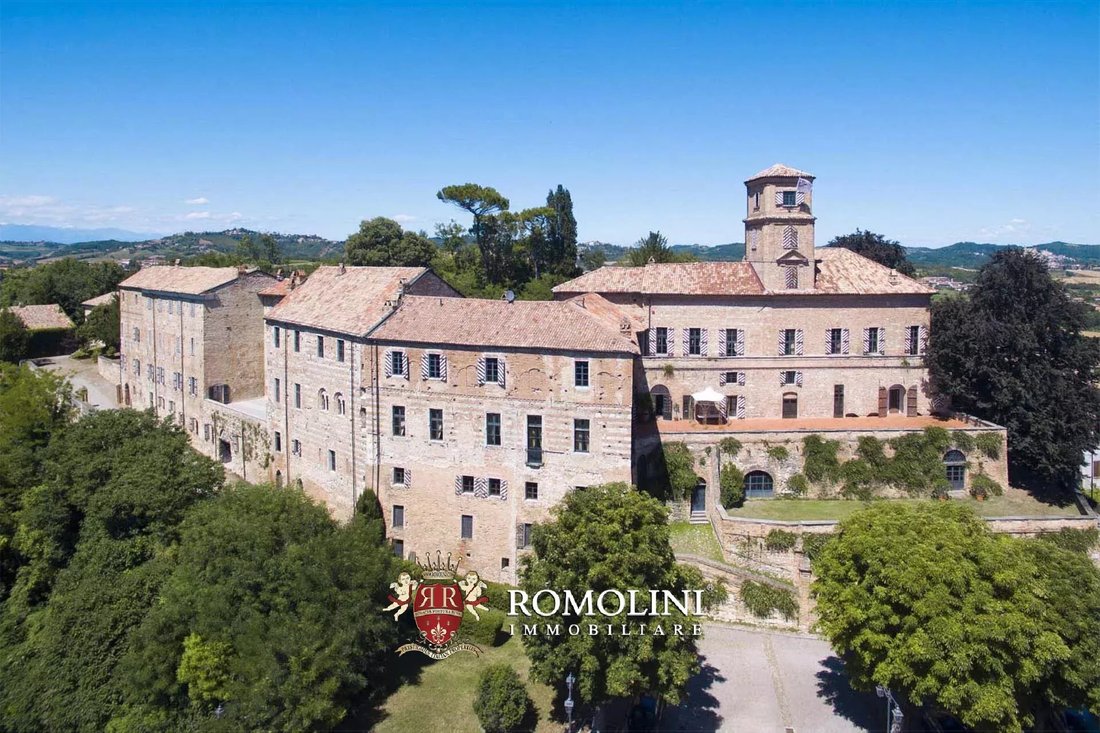
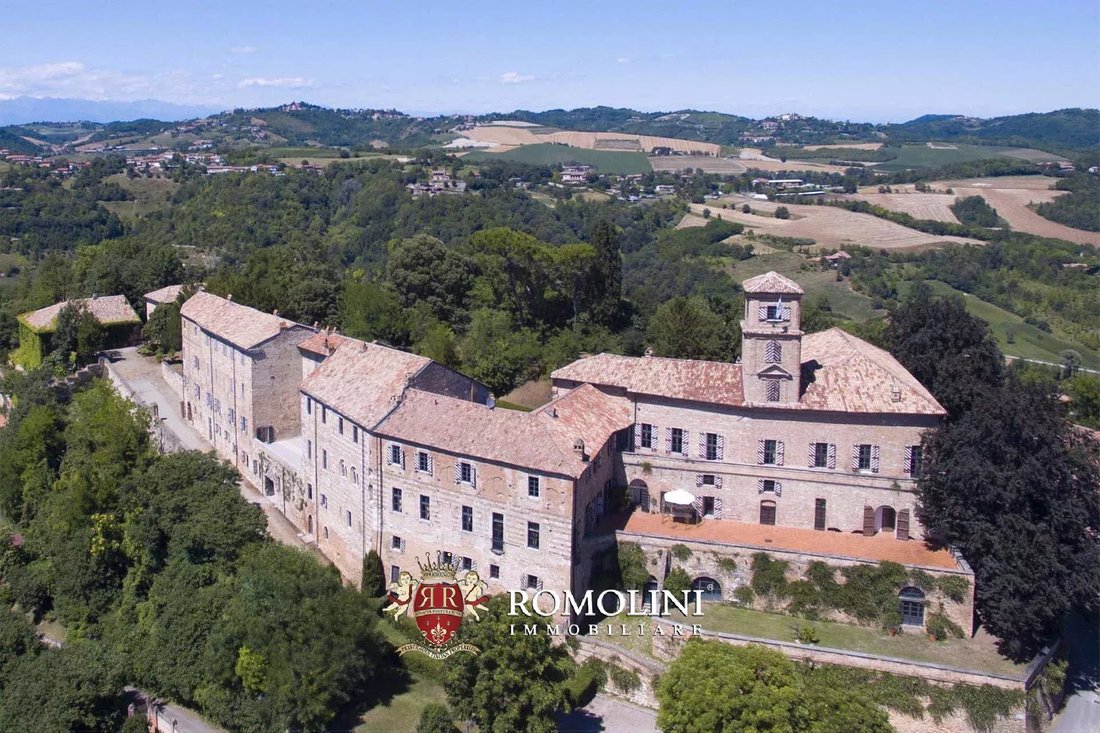
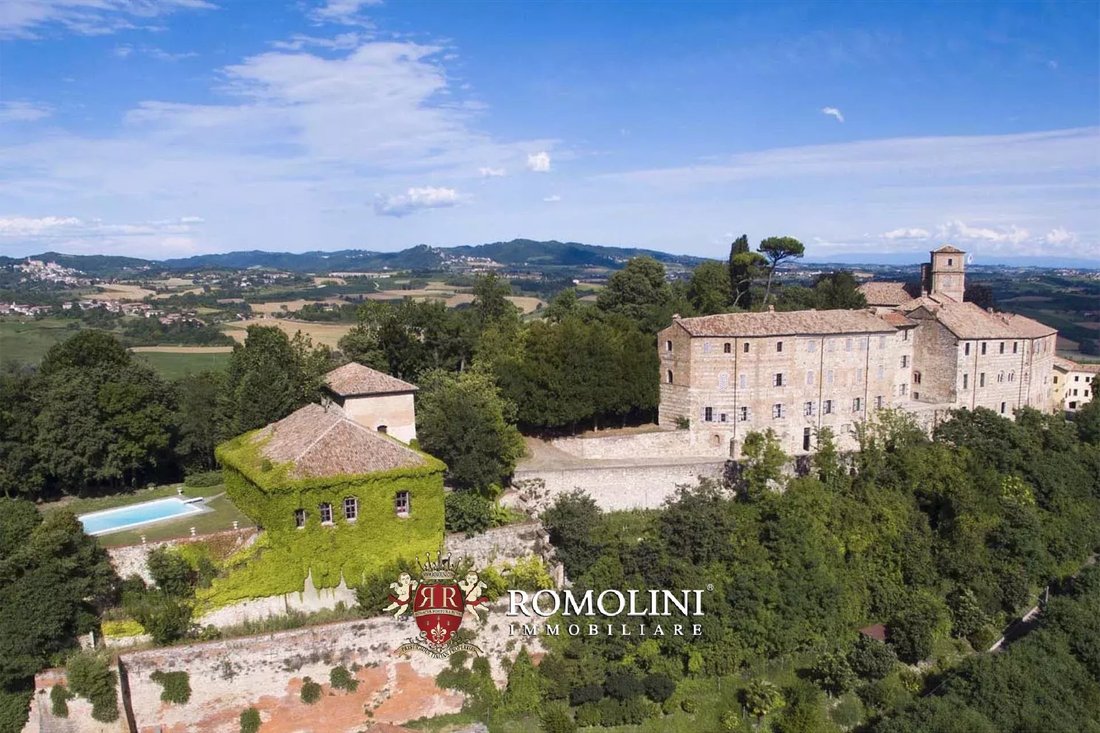
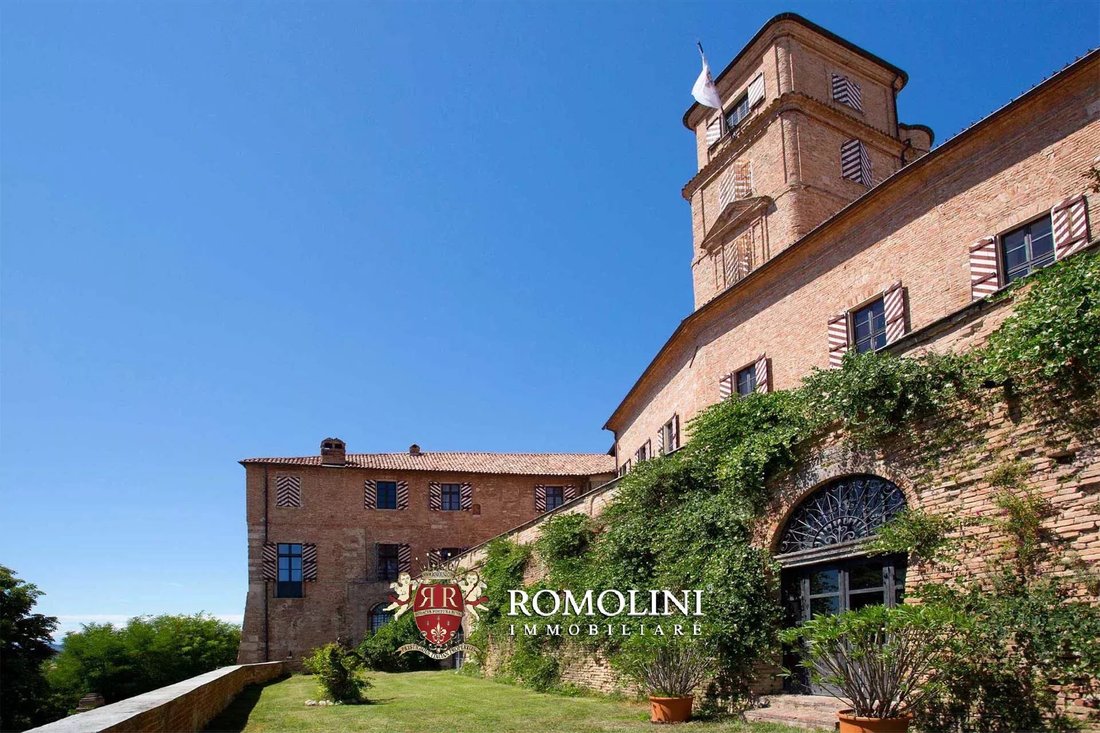
In cima a una collina del Monferrato, in posizione dominante su una bellissima città medievale, questo castello di oltre 4.000 m² è l’ideale per iniziare un boutique hotel di lusso. Il progetto è già stato approvato per aumentare il numero di camere da letto a 23. È inoltre possibile ampliare ulteriormente l’edificio con altre 16 camere da letto. La proprietà è completata da una chiesa affrescata,
On top of a hill in Monferrato, in dominating position above a beautiful medieval town, this castle of over 4,000 m² is ideal to start a luxury boutique hotel. The project has already been approved to increase the number of bedrooms to 23. It is also possible to further expand the building with other 16 bedrooms. The property is completed by a frescoed church, the old convent and the 12 × 6 m swim
In cima a una collina del Monferrato, in posizione dominante su una bellissima città medievale, questo castello di oltre 4.000 m² è l’ideale per iniziare un boutique hotel di lusso. Il progetto è già stato approvato per aumentare il numero di camere da letto a 23. È inoltre possibile ampliare ulteriormente l’edificio con altre 16 camere da letto. La proprietà è completata da una chiesa affrescata, dall’antico convento e dalla piscina 12 × 6 m.
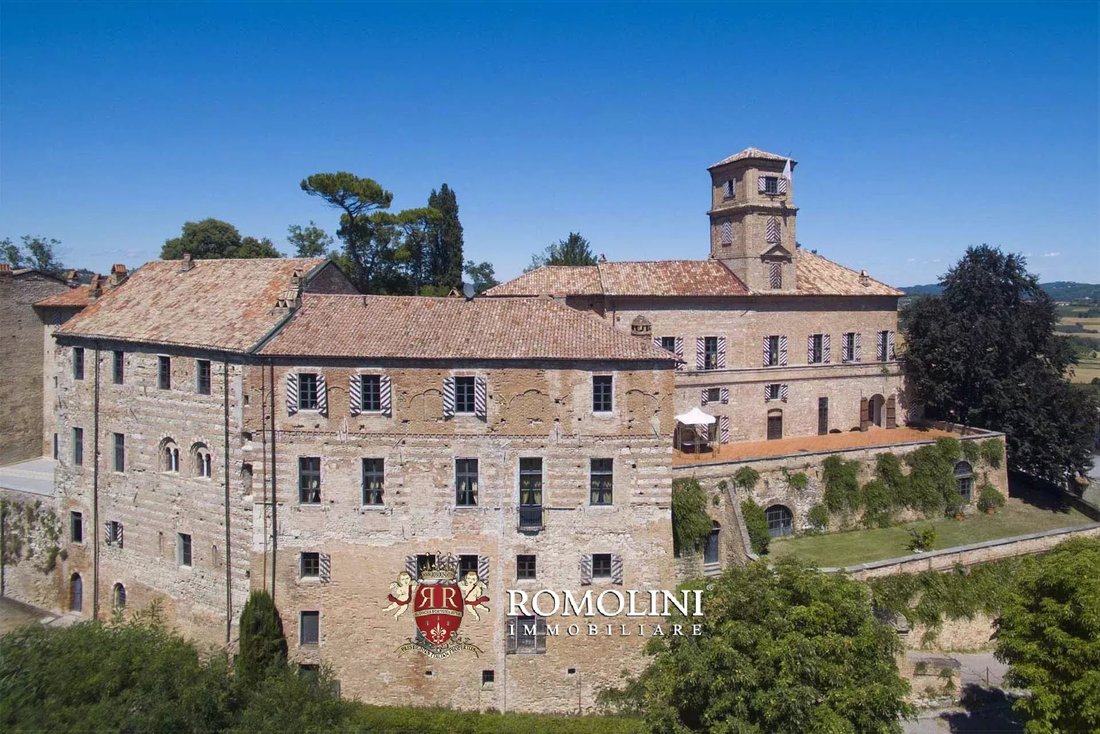
Il castello (3.976 m² - 42.782 piedi quadrati, fino a 23 camere da letto) ospita nella parte centrale un’area residenziale composta da dodici ampie sale di ricevimento più nove suite/appartamenti per gli ospiti, l’appartamento del direttore e due ampie sale nell’ala sud che potrebbero essere utilizzate come ristorante, sala colazione o sale per eventi. Sul lato nord-est sono attualmente in costruzione quattordici nuovi appartamenti per gli ospiti (ognuno con accesso indipendente). Il progetto prevede anche la realizzazione di un’area fitness nei sotterranei del castello.
All’esterno, il castello è dotato di due ampie terrazze (oltre 300 m² - 3.228 piedi quadrati) che offrono una vista unica sulla città sottostante.
Distaccati dal castello si trovano la vecchia canonica (dieci stanze per un totale di circa 141 m² - 1.517 ft²) e la chiesa (112 m² - 1.205 ft²).
STORIA, STATO E FINITURE
Il castello fu originariamente costruito nell’alto medioevo e dal 1164 la fortezza, insieme al suo borgo, fu teatro di violenti scontri tra Asti e il vicino Marchesato del Monferrato. All’inizio del XIV secolo il castello e il borgo furono interamente demoliti e ricostruiti solo nel secolo successivo.
Durante la ricostruzione si decise di continuare con un semplice mastio difensivo, ma nel corso degli anni l’edificio fu ampliato e finì per inglobare una serie di altri edifici (ancora visibili ad un occhio attento) precedentemente costruiti dai nobili locali, la cui famiglia si riunì per formare un consorzio nel tentativo di ottenere una migliore influenza politica nel paese.
Nel XVIII secolo il castello subì un enorme processo di ristrutturazione e ricostruzione che portò alla realizzazione delle eleganti sale che possiamo vedere oggi.
L’edificio ha ora una forma a L irregolare, ma è chiaro che questa è solo una parte dell’edificio originale che aveva una forma a U per aumentarne la difendibilità. La seconda ala del castello non esiste più ma la sua esistenza è confermata dalla conformazione del giardino (leggermente rialzato in questo punto) e dalle mura che sostengono il fianco della collina. Inoltre, molte buche sul fianco delle colline permettono di accedere a diversi ambienti sotterranei che un tempo erano i sotterranei dell’ala demolita.
Il castello è oggi per lo più in buone condizioni, con restauri effettuati per preservare ed evidenziare le decorazioni. Le sale sono tutte affrescate e/o dipinte con motivi floreali che richiamano le grottesche della Domus Aurea di Nerone. Il piano interrato è stato parzialmente restaurato lasciando visibili i muri in pietra a sottolineare l’origine medievale dell’edificio.
Non lontano dal castello si trova una bellissima chiesa con affreschi risalenti alla metà del XIV secolo. Apparentemente poco interessante se vista dall’esterno, la chiesa offre affreschi unici. Di forma rettangolare, l’edificio presenta solo due piccole finestre nell’abside mentre l’arco sulla parete destra, ora chiuso da una vetrata, indicherebbe un antico collegamento tra la chiesa e il castello, non più esistente. La porta d’ingresso è probabilmente un ripensamento che però ha danneggiato irreparabilmente gli affreschi all’interno della chiesa.
I dipinti rappresentano l’intera vita di Gesù, a partire dall’Annunciazione e termina con il Noli me tangere con Maria Maddalena. Le condizioni degli affreschi sono tuttavia piuttosto precarie a causa di uno strato di intonaco che è stato applicato sui dipinti durante le epidemie di peste del XVII secolo che hanno colpito il Piemonte (le stesse epidemie riscontrate nei Promessi Sposi di Manzoni): le superfici sono state raschiate e martellate per favorire l’adesione dell’intonaco, danneggiando gravemente i dipinti sottostanti. Le immagini sono riemerse solo negli anni Trenta.
ESTERNO
Il castello è impreziosito da un giardino all’italiana di 18.405 m² ben curato situato dove un tempo sorgeva l’altra ala del castello, ora demolita. Il giardino ospita un piccolo labirinto di siepi al cui centro si trovano tre edicole che ospitano altrettante statue: la Vergine con il bambino a sinistra, il Cristo Salvatore al centro e un Papa a destra.
L’intera proprietà era attraversata nel sottosuolo da gallerie e tunnel che in passato venivano utilizzati come pozzi e cisterne per fornire acqua agli abitanti del castello.
CITTÀ E PAESI PIÙ VICINI
Servizi più vicini (300m; 2’), Asti (26km; 30’), Casale Monferrato (38km; 40’), Alba (57km; 50’), Alessandria (60km; 50’), Torino (61km; 1h 5’), Ivrea (62km; 1h 5’), Barolo (69km; 55’), Acqui Terme (69km; 1h 10’) ’), Pavia (132 km; 1h 35’), Genova (142 km; 1h 45’), Milano (145 km; 1h 50’)
AEROPORTI PIÙ VICINI
Torino S. Pertini (62km; 50’), Genova C. Colombo (132km; 1h 30’), Milano Mappaensa (138 km; 1h 30’), Milano Linate (158km; 1h 45’), Bergamo M. Caravaggio (186 km; 2h), Bologna G. Marconi (296 km; 3h)
Il castello (3.976 m² - 42.782 piedi quadrati, fino a 23 camere da letto) ospita nella parte centrale un’area residenziale composta da dodici ampie sale di ricevimento più nove suite/appartamenti per gli ospiti, l’appartamento del direttore e due ampie sale nell’ala sud che potrebbero essere utilizzate come ristorante, sala colazione o sale per eventi. Sul lato nord-est sono attualmente in costruzione quattordici nuovi appartamenti per gli ospiti (ognuno con accesso indipendente). Il progetto prevede anche la realizzazione di un’area fitness nei sotterranei del castello.
All’esterno, il castello è dotato di due ampie terrazze (oltre 300 m² - 3.228 piedi quadrati) che offrono una vista unica sulla città sottostante.
Distaccati dal castello si trovano la vecchia canonica (dieci stanze per un totale di circa 141 m² - 1.517 ft²) e la chiesa (112 m² - 1.205 ft²).
STORIA, STATO E FINITURE
Il castello fu originariamente costruito nell’alto medioevo e dal 1164 la fortezza, insieme al suo borgo, fu teatro di violenti scontri tra Asti e il vicino Marchesato del Monferrato. All’inizio del XIV secolo il castello e il borgo furono interamente demoliti e ricostruiti solo nel secolo successivo.
Durante la ricostruzione si decise di continuare con un semplice mastio difensivo, ma nel corso degli anni l’edificio fu ampliato e finì per inglobare una serie di altri edifici (ancora visibili ad un occhio attento) precedentemente costruiti dai nobili locali, la cui famiglia si riunì per formare un consorzio nel tentativo di ottenere una migliore influenza politica nel paese.
Nel XVIII secolo il castello subì un enorme processo di ristrutturazione e ricostruzione che portò alla realizzazione delle eleganti sale che possiamo vedere oggi.
L’edificio ha ora una forma a L irregolare, ma è chiaro che questa è solo una parte dell’edificio originale che aveva una forma a U per aumentarne la difendibilità. La seconda ala del castello non esiste più ma la sua esistenza è confermata dalla conformazione del giardino (leggermente rialzato in questo punto) e dalle mura che sostengono il fianco della collina. Inoltre, molte buche sul fianco delle colline permettono di accedere a diversi ambienti sotterranei che un tempo erano i sotterranei dell’ala demolita.
Il castello è oggi per lo più in buone condizioni, con restauri effettuati per preservare ed evidenziare le decorazioni. Le sale sono tutte affrescate e/o dipinte con motivi floreali che richiamano le grottesche della Domus Aurea di Nerone. Il piano interrato è stato parzialmente restaurato lasciando visibili i muri in pietra a sottolineare l’origine medievale dell’edificio.
Non lontano dal castello si trova una bellissima chiesa con affreschi risalenti alla metà del XIV secolo. Apparentemente poco interessante se vista dall’esterno, la chiesa offre affreschi unici. Di forma rettangolare, l’edificio presenta solo due piccole finestre nell’abside mentre l’arco sulla parete destra, ora chiuso da una vetrata, indicherebbe un antico collegamento tra la chiesa e il castello, non più esistente. La porta d’ingresso è probabilmente un ripensamento che però ha danneggiato irreparabilmente gli affreschi all’interno della chiesa.
I dipinti rappresentano l’intera vita di Gesù, a partire dall’Annunciazione e termina con il Noli me tangere con Maria Maddalena. Le condizioni degli affreschi sono tuttavia piuttosto precarie a causa di uno strato di intonaco che è stato applicato sui dipinti durante le epidemie di peste del XVII secolo che hanno colpito il Piemonte (le stesse epidemie riscontrate nei Promessi Sposi di Manzoni): le superfici sono state raschiate e martellate per favorire l’adesione dell’intonaco, danneggiando gravemente i dipinti sottostanti. Le immagini sono riemerse solo negli anni Trenta.
ESTERNO
Il castello è impreziosito da un giardino all’italiana di 18.405 m² ben curato situato dove un tempo sorgeva l’altra ala del castello, ora demolita. Il giardino ospita un piccolo labirinto di siepi al cui centro si trovano tre edicole che ospitano altrettante statue: la Vergine con il bambino a sinistra, il Cristo Salvatore al centro e un Papa a destra.
L’intera proprietà era attraversata nel sottosuolo da gallerie e tunnel che in passato venivano utilizzati come pozzi e cisterne per fornire acqua agli abitanti del castello.
CITTÀ E PAESI PIÙ VICINI
Servizi più vicini (300m; 2’), Asti (26km; 30’), Casale Monferrato (38km; 40’), Alba (57km; 50’), Alessandria (60km; 50’), Torino (61km; 1h 5’), Ivrea (62km; 1h 5’), Barolo (69km; 55’), Acqui Terme (69km; 1h 10’) ’), Pavia (132 km; 1h 35’), Genova (142 km; 1h 45’), Milano (145 km; 1h 50’)
AEROPORTI PIÙ VICINI
Torino S. Pertini (62km; 50’), Genova C. Colombo (132km; 1h 30’), Milano Mappaensa (138 km; 1h 30’), Milano Linate (158km; 1h 45’), Bergamo M. Caravaggio (186 km; 2h), Bologna G. Marconi (296 km; 3h)
On top of a hill in Monferrato, in dominating position above a beautiful medieval town, this castle of over 4,000 m² is ideal to start a luxury boutique hotel. The project has already been approved to increase the number of bedrooms to 23. It is also possible to further expand the building with other 16 bedrooms. The property is completed by a frescoed church, the old convent and the 12 × 6 m swimming pool.
The castle (3,976 m² – 42,782 ft², up to 23 bedrooms) houses in the central portion a residential area made of twelve ample reception halls plus nine suite/apartments for the guests, the warden’s apartment and to ample halls in the southern wing which could be used as restaurant, breakfast rooms or event halls. On the north-eastern side fourteen new apartments for the guests are currently being built (each with independent access). The project also includes the realization of a fitness area in the basement of the castle.
Outside, the castle is fitted with two ample terraces (over 300 m² – 3,228 ft²) which offer a unique view over the underlying town.
Detached from the castle are located the old rectory (ten rooms for a total of approximately 141 m² – 1,517 ft²) and the church (112 m² – 1,205 ft²).
HISTORY, STATE AND FINISHES
The castle was originally built in the early Middle Ages and since 1164 the fortress, together with its hamlet, was the theater of violent fights between Asti and the nearby Marquisate of Monferrato. At the beginning of the 14th century the castle and the hamlet were entirely demolished and not rebuilt until the next century.
When rebuilding it was decided to go on with a simple defensive keep but over the years the building was expanded and ended up embedding a series of other buildings (still visible to an attentive eye) previously built by the local noblemen, whose family gathered up to form a consortile in the attempt of gaining a better political influence in the country.
In the 18th century the castle underwent a huge process of renovation and rebuilding which led to the realization of the elegant halls we can see nowadays.
The building has now an irregular L shape, but it is clear that this is only part of the original building which had a U shape to increase its defensibility. The second wing of the castle doesn’t exist anymore but its existence is confirmed by the conformation of the garden (slightly raised in this point) and the walls supporting the side of the hill. What’s more, many holes on the side of the hills allow entering several underground rooms which were once the basement of the demolished wing.
The castle is nowadays mostly in good conditions, with restorations carried out to preserve and highlight the decorations. The halls are all frescoed and/or painted with floral motives recalling the grotesque found in Nero’s Domus Aurea. The basement has been partially restored leaving stone walls visible so to underline the medieval origin of the building.
Not far from the castle is located a beautiful church with frescoes dated to the mid-14th century. Apparently uninteresting when looked upon from outside, the church offers unique frescoes. With a rectangular shape, the building has only two small windows in the apsis while the arch on the right wall, now closed by a glass window, would point to an ancient linking between the church and the castle, no longer existing. The entrance door is probably an after-thought which however irreparably damaged the frescoes inside the church.
The paintings represent the whole life of Jesus, starting with the Annunciation and ending with the Noli me tangere featuring Mary Magdalene. The conditions of the frescoes are however pretty bad because of a layer of plaster which was put over the paintings during the 17th-century plague epidemics which struck Piedmont (the same epidemics found in Manzoni’s I Promessi Sposi): the surfaces were scraped and hammered to favor plaster sticking, severely damaging the paintings underneath. The images have only resurfaced in the 1930s.
EXTERIOR
The castle is embellished by a well-maintained 18,405-m² Italian garden located where once stood the other wing of the castle, now demolished. The garden hosts a small hedge maze in whose center are located three shrines housing as many statues: the Virgin with the baby on the left, the Christ Savior at the center and a Pope on the right.
The entire property crossed underground by galleries and tunnels which were in the past used as wells and cisterns to supply water to the inhabitants of the castle.
CLOSEST CITIES AND TOWNS
Closest services (300m; 2’), Asti (26km; 30’), Casale Monferrato (38km; 40’), Alba (57km; 50’), Alessandria (60km; 50’), Turin (61km; 1h 5’), Ivrea (62km; 1h 5’), Barolo (69km; 55’), Acqui Terme (69km; 1h 10’), Pavia (132km; 1h 35’), Genoa (142km; 1h 45’), Milan (145km; 1h 50’)
CLOSEST AIRPORTS
Torino S. Pertini (62km; 50’), Genova C. Colombo (132km; 1h 30’), Milano Malpensa (138km; 1h 30’), Milano Linate (158km; 1h 45’), Bergamo M. Caravaggio (186km; 2h), Bologna G. Marconi (296km; 3h)
The castle (3,976 m² – 42,782 ft², up to 23 bedrooms) houses in the central portion a residential area made of twelve ample reception halls plus nine suite/apartments for the guests, the warden’s apartment and to ample halls in the southern wing which could be used as restaurant, breakfast rooms or event halls. On the north-eastern side fourteen new apartments for the guests are currently being built (each with independent access). The project also includes the realization of a fitness area in the basement of the castle.
Outside, the castle is fitted with two ample terraces (over 300 m² – 3,228 ft²) which offer a unique view over the underlying town.
Detached from the castle are located the old rectory (ten rooms for a total of approximately 141 m² – 1,517 ft²) and the church (112 m² – 1,205 ft²).
HISTORY, STATE AND FINISHES
The castle was originally built in the early Middle Ages and since 1164 the fortress, together with its hamlet, was the theater of violent fights between Asti and the nearby Marquisate of Monferrato. At the beginning of the 14th century the castle and the hamlet were entirely demolished and not rebuilt until the next century.
When rebuilding it was decided to go on with a simple defensive keep but over the years the building was expanded and ended up embedding a series of other buildings (still visible to an attentive eye) previously built by the local noblemen, whose family gathered up to form a consortile in the attempt of gaining a better political influence in the country.
In the 18th century the castle underwent a huge process of renovation and rebuilding which led to the realization of the elegant halls we can see nowadays.
The building has now an irregular L shape, but it is clear that this is only part of the original building which had a U shape to increase its defensibility. The second wing of the castle doesn’t exist anymore but its existence is confirmed by the conformation of the garden (slightly raised in this point) and the walls supporting the side of the hill. What’s more, many holes on the side of the hills allow entering several underground rooms which were once the basement of the demolished wing.
The castle is nowadays mostly in good conditions, with restorations carried out to preserve and highlight the decorations. The halls are all frescoed and/or painted with floral motives recalling the grotesque found in Nero’s Domus Aurea. The basement has been partially restored leaving stone walls visible so to underline the medieval origin of the building.
Not far from the castle is located a beautiful church with frescoes dated to the mid-14th century. Apparently uninteresting when looked upon from outside, the church offers unique frescoes. With a rectangular shape, the building has only two small windows in the apsis while the arch on the right wall, now closed by a glass window, would point to an ancient linking between the church and the castle, no longer existing. The entrance door is probably an after-thought which however irreparably damaged the frescoes inside the church.
The paintings represent the whole life of Jesus, starting with the Annunciation and ending with the Noli me tangere featuring Mary Magdalene. The conditions of the frescoes are however pretty bad because of a layer of plaster which was put over the paintings during the 17th-century plague epidemics which struck Piedmont (the same epidemics found in Manzoni’s I Promessi Sposi): the surfaces were scraped and hammered to favor plaster sticking, severely damaging the paintings underneath. The images have only resurfaced in the 1930s.
EXTERIOR
The castle is embellished by a well-maintained 18,405-m² Italian garden located where once stood the other wing of the castle, now demolished. The garden hosts a small hedge maze in whose center are located three shrines housing as many statues: the Virgin with the baby on the left, the Christ Savior at the center and a Pope on the right.
The entire property crossed underground by galleries and tunnels which were in the past used as wells and cisterns to supply water to the inhabitants of the castle.
CLOSEST CITIES AND TOWNS
Closest services (300m; 2’), Asti (26km; 30’), Casale Monferrato (38km; 40’), Alba (57km; 50’), Alessandria (60km; 50’), Turin (61km; 1h 5’), Ivrea (62km; 1h 5’), Barolo (69km; 55’), Acqui Terme (69km; 1h 10’), Pavia (132km; 1h 35’), Genoa (142km; 1h 45’), Milan (145km; 1h 50’)
CLOSEST AIRPORTS
Torino S. Pertini (62km; 50’), Genova C. Colombo (132km; 1h 30’), Milano Malpensa (138km; 1h 30’), Milano Linate (158km; 1h 45’), Bergamo M. Caravaggio (186km; 2h), Bologna G. Marconi (296km; 3h)
-
Tipo di proprietà
Castello
-
Piani
5
-
Prezzo/piede²
$148
Caratteristiche
Caratteristiche
Lot
Interni
- Soffitto alto
- Ufficio
- Camino
- Cantina
- Seminterrato
- Centro Fitness / Palestra
Outdoor
Esplora la zona
Centro, Asti, Piemonte
Visualizza su Google Maps
Prezzo per sqft
Basso
Alto
Situato nel cuore del Piemonte, questa posizione offre uno stile di vita tranquillo ma accessibile. Con collegamenti all’Aeroporto di Torino in meno di un’ora, l’area è circondata da rigogliosi vigneti e architettura storica. Godetevi la cucina raffinata nelle trattorie locali, esplorate luoghi culturali come la Cattedrale di Asti e visitate le rinomate cantine nei dintorni. La comodità di scuole di qualità e una breve distanza in auto per Torino ne aumentano l’attrattiva per le famiglie.
Ottieni luoghi vicini
Attrazioni
Scuole
Aeroporto di Torino
Aeroporto
55 min
Stazione Ferroviaria di Asti
Stazione ferroviaria
5 min
Cattedrale di Asti
Cultura e Patrimonio
5 min
Cantina La Spinetta
Ristorazione & Vino
15 min
Scuola Internazionale di Torino
Scuola Internazionale
60 min
Liceo Scientifico Vercelli
Scuola Pubblica
10 min

Iscritto da 4 anni
Hai chiesto informazioni su questa proprietà
L'agente La contatterà al più presto
Pubblicato da
221
Annunci
2022
Iscritto
Prenota una visita con Danilo Romolini
Scegli una data e indica se preferisci un tour virtuale o di persona con l’agente.
Data preferita
Tipo di tour

Romolini Immobiliare
Piazza Torre di Berta 4, Tuscany, 52037, Sansepolcro, Italy
Visualizza profilo agenzia
Riccardo and Marta met during their high school years. Since then, their paths have never parted. United by shared
Riccardo and Marta met during their high school years. Since then, their paths have never parted. United by shared dreams and aspirations, they married in 1999 and are today parents of three children. In 2004, driven by their passion for their native land, art, and beauty, they chose the historic heart of Tuscany – the charming village of Anghiari – as the birthplace of a project that already carried the warmth of home: Romolini Immobiliare. A story founded on courage, dedication, and profound values that, paired with their vision, quickly earned them recognition within both the national and international real estate markets. In 2008, an important achievement further strengthened their reputation: Romolini Immobiliare was appointed exclusive affiliate of Christie’s International Real Estate, the world’s most prestigious name in luxury real estate – a testament to their authenticity and unwavering commitment. Romolini, however, is more than a business: it is a family. Those who have joined Riccardo and Marta in this endeavor were welcomed for their human qualities, integrity, and outstanding professionalism, becoming not just exceptional team members, but part of a greater family. Each brings a unique approach, a personal style, and a shared dedication to the values that have always defined Romolini. In 2020, Danilo, their eldest son, chose to join the company. Having grown up amid the dreams and challenges of the family business, he brought a visionary spirit and a profound love for beauty. Danilo pioneered a new way of presenting properties in Italy, creating emotional and engaging video narratives that captivate and inspire. With his contribution, Romolini Immobiliare embraced a new chapter. A refined approach to communication, an even greater attention to detail, and a client-centered philosophy have established the company as a leading figure in the luxury real estate sector. Romolini is not just a name. It is a legacy. It is a family dream brought to life. It is a journey that moves forward with passion and purpose.
Ultimo aggiornamento
Agosto 7
Prima pubblicazione
Ottobre 31, 2025
Riferimento annuncio
2893
Proprietà simili nelle vicinanze
Nuovi annunci a Centro



Esplora più immobili in vendita
tipi di proprietà Centro, Asti, Piemonte
Centro, Asti, Piemonte ricerche popolari
- Proprietà immobiliari Vista panoramica / Scenica a Centro, Asti, Piemonte
- Proprietà immobiliari con Terrazza a Centro, Asti, Piemonte
- Proprietà immobiliari con Bar a Centro, Asti, Piemonte
- Proprietà immobiliari con Sala giochi a Centro, Asti, Piemonte
- Proprietà immobiliari con Ufficio a Centro, Asti, Piemonte
- Proprietà immobiliari con Ascensore a Centro, Asti, Piemonte
- Proprietà immobiliari Vista Città a Centro, Asti, Piemonte
- Proprietà immobiliari Vista sulle montagne a Centro, Asti, Piemonte
- Proprietà immobiliari con Giardino a Centro, Asti, Piemonte
- Proprietà immobiliari Privacy a Centro, Asti, Piemonte
- Proprietà immobiliari Alta quota a Centro, Asti, Piemonte
- Proprietà immobiliari Moderno a Centro, Asti, Piemonte
- Proprietà immobiliari con Centro Fitness / Palestra a Centro, Asti, Piemonte
- Proprietà immobiliari con Sauna a Centro, Asti, Piemonte
- Proprietà immobiliari con Libreria a Centro, Asti, Piemonte
- Proprietà immobiliari con Aria condizionata a Centro, Asti, Piemonte
- Proprietà immobiliari con Cantina a Centro, Asti, Piemonte
- Proprietà immobiliari con Camino a Centro, Asti, Piemonte
- Proprietà immobiliari con Piscina a Centro, Asti, Piemonte
- Proprietà immobiliari con Garage a Centro, Asti, Piemonte
- Proprietà immobiliari con Balcone a Centro, Asti, Piemonte
- Proprietà immobiliari con Vigneto / Azienda vinicola a Centro, Asti, Piemonte
- Proprietà immobiliari Residenza a Centro, Asti, Piemonte
- Proprietà immobiliari Rinnovato a Centro, Asti, Piemonte
- Proprietà immobiliari Vista sull'acqua a Centro, Asti, Piemonte
Guide e storie correlate
La fiducia dei migliori broker del mondo
Gli agenti dietro le proprietà più straordinarie del mondo pubblicano su JamesEdition.
- Annunci di Sotheby's, Christie's, BARNES ed Engel & Völkers
- Ogni annuncio è verificato prima della pubblicazione
- Si metta in contatto diretto con agenti verificati
Continuando, accetta i nostri Termini e la nostra Informativa sulla privacy.