$6,601,494
Majestueux Manoir Historique Sur Les Collines De Pistoia
- 10 Chambres
- 10 SdB
- 16,146 Sqft
- 12.36 Ac lot
- 67
À propos de la propriété
La description a été traduite automatiquement.
La description est affichée dans la langue d'origine.
Villa Il Merlo est une demeure historique dont la construction fut achevée vers 1750, nichée sur les collines de Pistoia et entourée de 5 hectares de bois, de rangées de cyprès et d’oliveraies.
La façade claire, le fronton en pietra serena et les encadrements des bandeaux d’étage révèlent un goût raffiné, harmonieux et presque austère. La villa, avec ses jardins panoramiques, domine un ma
La façade claire, le fronton en pietra serena et les encadrements des bandeaux d’étage révèlent un goût raffiné, harmonieux et presque austère. La villa, avec ses jardins panoramiques, domine un ma
Villa il Merlo is a historic residence whose construction was completed around 1750. It lies nestled among the hills of Pistoia, surrounded by 5 hectares of woodland, rows of cypress trees, and olive groves.
The light-colored façade, the pietra serena pediment, and the framed stringcourses convey a refined, harmonious, and almost austere taste. With its panoramic gardens, the villa overlo
The light-colored façade, the pietra serena pediment, and the framed stringcourses convey a refined, harmonious, and almost austere taste. With its panoramic gardens, the villa overlo
Villa Il Merlo est une demeure historique dont la construction fut achevée vers 1750, nichée sur les collines de Pistoia et entourée de 5 hectares de bois, de rangées de cyprès et d’oliveraies.
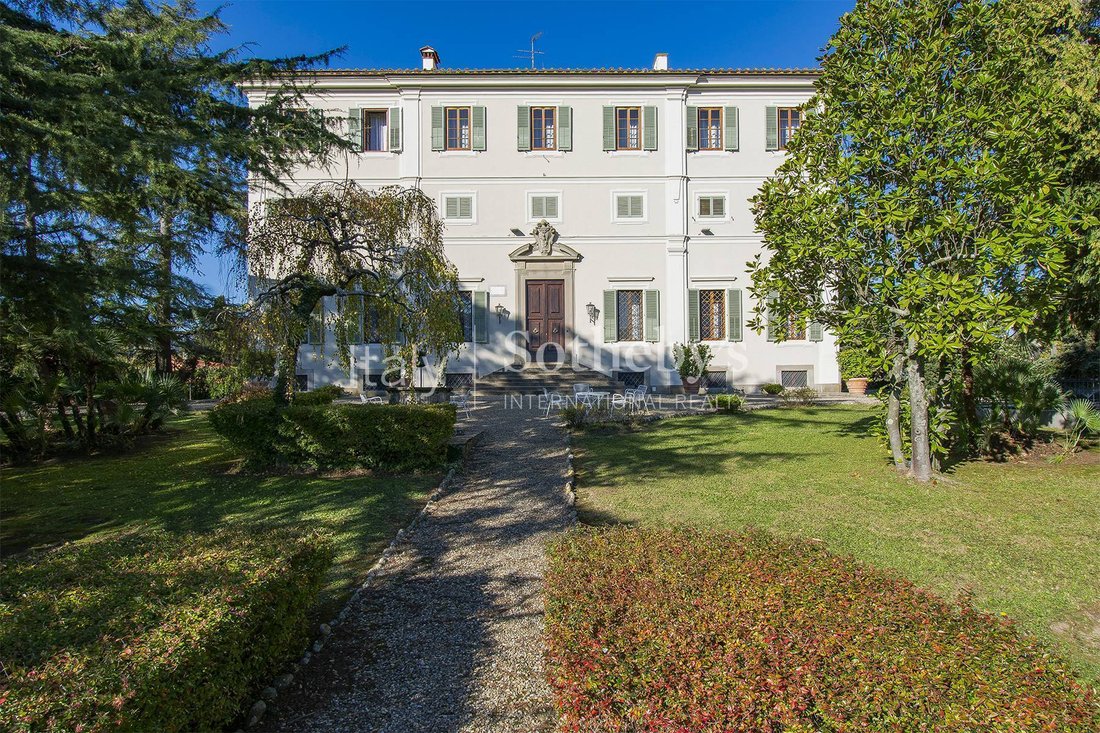
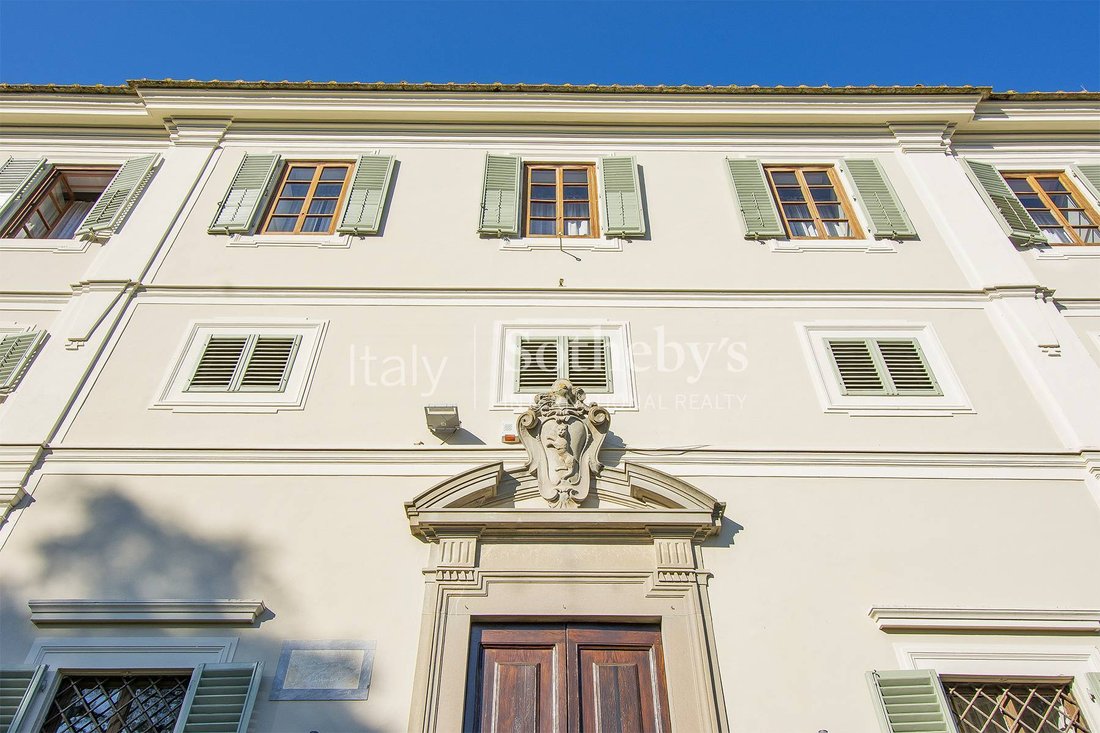
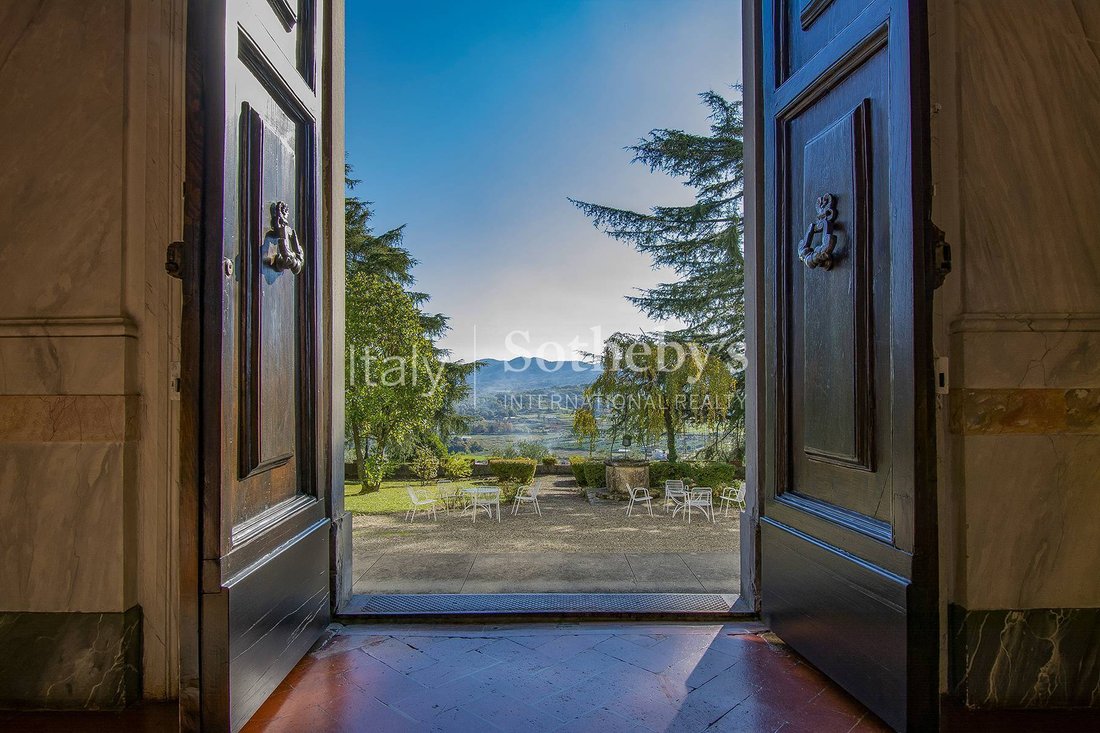
La façade claire, le fronton en pietra serena et les encadrements des bandeaux d’étage révèlent un goût raffiné, harmonieux et presque austère. La villa, avec ses jardins panoramiques, domine un magnifique paysage offrant une vue sur la coupole du Duomo de Florence ainsi que sur toute la plaine, qui se ferme à l’ouest par les tours de Serravalle.
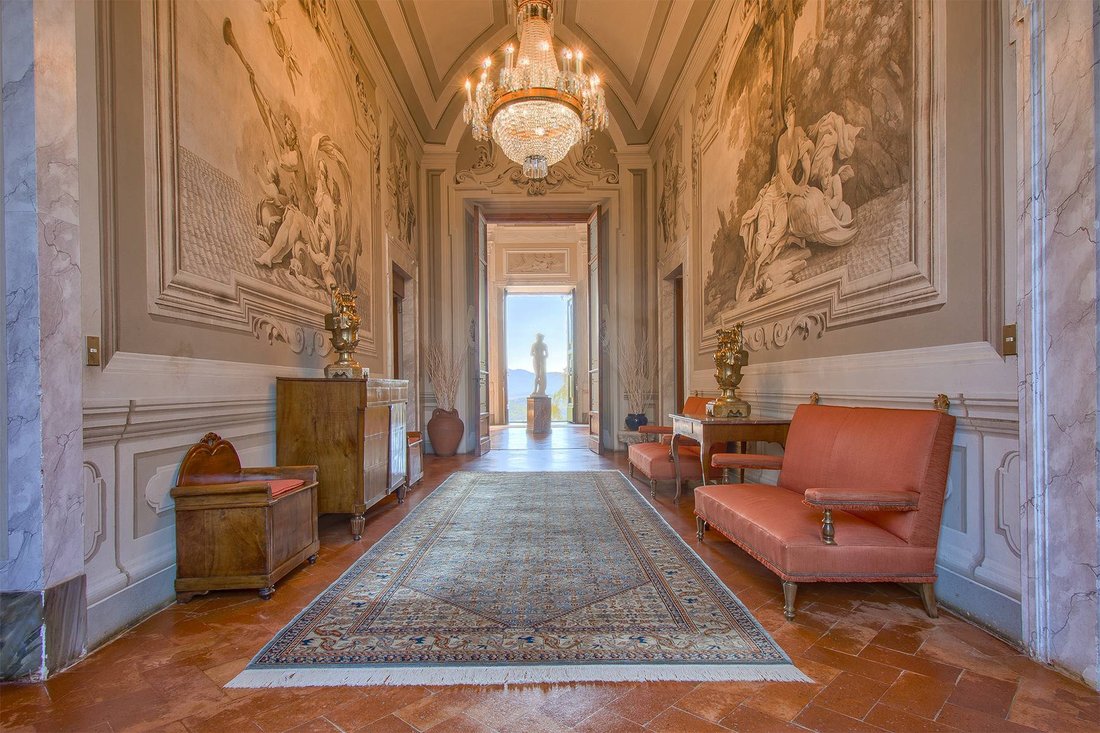
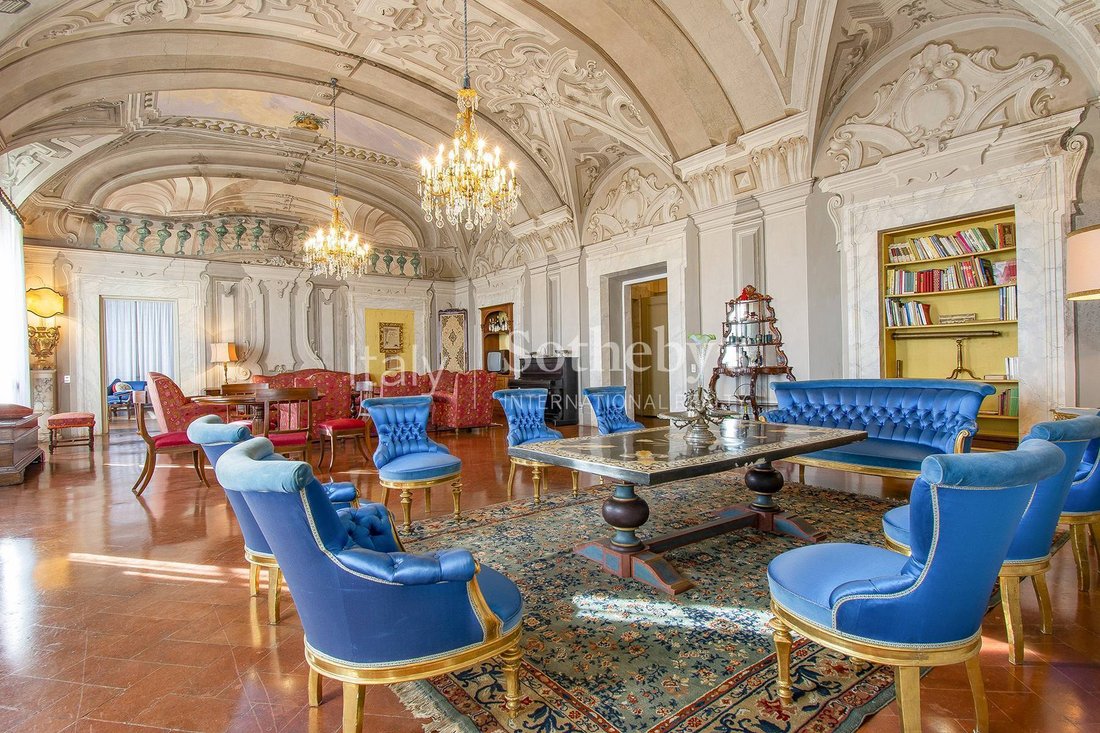
La propriété développe une surface intérieure d’environ 1 500 m², répartie en 25 pièces principales, ainsi que des espaces de service et de dégagement. À l’intérieur, elle est entièrement décorée de fresques représentant des scènes mythologiques et des paysages, alternées avec des motifs architecturaux peints en trompe-l’œil qui mettent en valeur les structures. La villa s’élève sur trois niveaux, deux étages nobles et un entresol, auxquels s’ajoute un sous-sol abritant les cuisines et les caves. Les quatre niveaux sont reliés par un grand escalier d’honneur ainsi que par un ascenseur. À environ 100 mètres de la villa se trouve une vaste dépendance restaurée, qui a toujours servi de bâtiment d’appui à la demeure principale.
Une petite chapelle rappelle les vœux de Giuseppe Ippoliti, promoteur de la construction de la villa, nommé évêque de Cortone puis de Prato et Pistoia. La propriété passa ensuite par héritage à la famille Settimanni, puis fut vendue, au siècle dernier, à la famille Bini. Au milieu des années 1960, l’actuelle famille propriétaire entreprit une restauration complète dans le respect de ses valeurs architecturales et décoratives, l’agrémentant d’un mobilier ancien raffiné.
La façade claire, le fronton en pietra serena et les encadrements des bandeaux d’étage révèlent un goût raffiné, harmonieux et presque austère. La villa, avec ses jardins panoramiques, domine un magnifique paysage offrant une vue sur la coupole du Duomo de Florence ainsi que sur toute la plaine, qui se ferme à l’ouest par les tours de Serravalle.
La propriété développe une surface intérieure d’environ 1 500 m², répartie en 25 pièces principales, ainsi que des espaces de service et de dégagement. À l’intérieur, elle est entièrement décorée de fresques représentant des scènes mythologiques et des paysages, alternées avec des motifs architecturaux peints en trompe-l’œil qui mettent en valeur les structures. La villa s’élève sur trois niveaux, deux étages nobles et un entresol, auxquels s’ajoute un sous-sol abritant les cuisines et les caves. Les quatre niveaux sont reliés par un grand escalier d’honneur ainsi que par un ascenseur. À environ 100 mètres de la villa se trouve une vaste dépendance restaurée, qui a toujours servi de bâtiment d’appui à la demeure principale.
Une petite chapelle rappelle les vœux de Giuseppe Ippoliti, promoteur de la construction de la villa, nommé évêque de Cortone puis de Prato et Pistoia. La propriété passa ensuite par héritage à la famille Settimanni, puis fut vendue, au siècle dernier, à la famille Bini. Au milieu des années 1960, l’actuelle famille propriétaire entreprit une restauration complète dans le respect de ses valeurs architecturales et décoratives, l’agrémentant d’un mobilier ancien raffiné.
Villa il Merlo is a historic residence whose construction was completed around 1750. It lies nestled among the hills of Pistoia, surrounded by 5 hectares of woodland, rows of cypress trees, and olive groves.
The light-colored façade, the pietra serena pediment, and the framed stringcourses convey a refined, harmonious, and almost austere taste. With its panoramic gardens, the villa overlooks a stunning landscape that offers views of the dome of Florence Cathedral and the entire plain stretching westward to the towers of Serravalle Pistoiese.
The villa has an internal surface area of approximately 1,500 square meters, comprising 25 rooms plus service areas and hallways. Inside, it is entirely frescoed with mythological scenes and landscapes, interspersed with architectural decorative elements, also in fresco, which enhance the structural features. The villa rises over three levels, two principal floors and one mezzanine plus a semi-basement level housing the kitchens and cellars. The four floors are connected by a grand staircase and an elevator. Adjacent to the villa, about 100 meters away, stands a large restored farmhouse that has always served as a support building to the main residence.
A small chapel commemorates the vows of Giuseppe Ippoliti, promoter of the villa’s construction, who was appointed Bishop of Cortona and later of Prato and Pistoia. The villa subsequently passed by inheritance to the Settimanni family and was later sold, in the last century, to the Bini family. In the mid-1960s, the current owning family carried out a complete restoration, respecting its architectural and decorative values, and furnished it with refined period antiques.
The light-colored façade, the pietra serena pediment, and the framed stringcourses convey a refined, harmonious, and almost austere taste. With its panoramic gardens, the villa overlooks a stunning landscape that offers views of the dome of Florence Cathedral and the entire plain stretching westward to the towers of Serravalle Pistoiese.
The villa has an internal surface area of approximately 1,500 square meters, comprising 25 rooms plus service areas and hallways. Inside, it is entirely frescoed with mythological scenes and landscapes, interspersed with architectural decorative elements, also in fresco, which enhance the structural features. The villa rises over three levels, two principal floors and one mezzanine plus a semi-basement level housing the kitchens and cellars. The four floors are connected by a grand staircase and an elevator. Adjacent to the villa, about 100 meters away, stands a large restored farmhouse that has always served as a support building to the main residence.
A small chapel commemorates the vows of Giuseppe Ippoliti, promoter of the villa’s construction, who was appointed Bishop of Cortona and later of Prato and Pistoia. The villa subsequently passed by inheritance to the Settimanni family and was later sold, in the last century, to the Bini family. In the mid-1960s, the current owning family carried out a complete restoration, respecting its architectural and decorative values, and furnished it with refined period antiques.
-
Type de propriété
Maison
-
Année de construction
1700
-
Prix/pied²
$408
Caractéristiques
Explorez le secteur
Viale Macallè, Pistoia, PT 55100, Centro, Toscane
Voir sur Google Maps
Prix par sqft
Faible
Élevé
Nichée dans la charmante ville de Pistoia, cette propriété offre un accès aisé aux splendeurs de la Toscane. Profitez d’un mode de vie sophistiqué avec une proximité à une gastronomie exquise, des attractions historiques et une nature abondante. La propriété est bien connectée aux aéroports de Florence et de Pise, idéale pour les voyages internationaux, et invite à des explorations de vignobles renommés et de panoramas champêtres. Pistoia incarne l’esprit serein et vibrant de la Toscane.
Voir à proximité
Attractions
Écoles
Aéroport de Florence
Aéroport
47 min
Aéroport de Pise
Aéroport
54 min
Zoo de Pistoia
Nature & Plein air
10 min
Cathédrale de Pistoia
Culture & Patrimoine
6 min
École Internationale de Florence
École internationale
49 min
Lycée Scientifique Amedeo Di Savoia
École publique
8 min

Inscrit il y a 7 ans
Vous vous êtes renseigné sur ce bien
L'agent vous contactera bientôt par
Publié par
47
Annonces
2019
Inscrit
Réserver une visite avec Francesco Assennato
Choisissez une date et si vous souhaitez une visite virtuelle ou en personne avec l’agent.
Date préférée
Type de visite

Italy Sotheby's International Realty
Via Vittorio Emanuele II, 14, 55100, Lucca, Lucca, Italy
Voir le profil de l’agence
Lucca, a fortified town rising amidst vineyards and olive trees in the hills of Tuscany, is one of the main art cit
Lucca, a fortified town rising amidst vineyards and olive trees in the hills of Tuscany, is one of the main art cities in Italy. The most important European textile center since the Middle Ages, it keeps track of a rich history in the elegant and majestic villas with magnificent parks outside the walls, that once were the residences of the wealthy families active in the silk trade. What amazes most the visitors, however, are the Renaissance walls of the XV century surrounding the historic core of the city. The works promoted in the XIX century by Elisa Bonaparte Baciocchi, in honor of her brother Napoleon, led to the current structure of the central square Piazza Napoleone. The city also boasts many medieval churches of great architectural impact which make it gain the nickname of “the City of 100 Churches”. Lucca is one of the prides of Tuscany for its beauty and enchanting atmosphere and, thanks to this, many foreign visitors, after visiting the city and admiring its culture, choose it as a place to establish their second residence.
Dernière mise à jour
Février 26
Première mise en ligne
Décembre 15, 2021
Lien de l’annonce
Référence de l’annonce
37G5B8
Propriétés similaires à proximité
Nouvelles annonces à Centro



Explorez plus de biens à vendre
Centro, Pistoia, Toscane types de propriétés
Centro, Pistoia, Toscane Recherches populaires
- Vue panoramique / panoramique propriétés à Centro, Pistoia, Toscane
- Propriétés avec Terrasse à Centro, Pistoia, Toscane
- Propriétés avec Salle de jeux à Centro, Pistoia, Toscane
- Propriétés avec Bureau à Centro, Pistoia, Toscane
- Propriétés avec Ascenseur à Centro, Pistoia, Toscane
- Vue sur la montagne propriétés à Centro, Pistoia, Toscane
- Propriétés avec Jardin à Centro, Pistoia, Toscane
- Vie privée propriétés à Centro, Pistoia, Toscane
- Colline propriétés à Centro, Pistoia, Toscane
- Immobilier d’investissement propriétés à Centro, Pistoia, Toscane
- Moderne propriétés à Centro, Pistoia, Toscane
- Propriétés avec Bibliothèque à Centro, Pistoia, Toscane
- Propriétés avec Climatisation à Centro, Pistoia, Toscane
- Propriétés avec Cave à vins à Centro, Pistoia, Toscane
- Propriétés avec Cheminée à Centro, Pistoia, Toscane
- Propriétés avec Piscine à Centro, Pistoia, Toscane
- Propriétés avec Terrain de tennis à Centro, Pistoia, Toscane
- Propriétés avec Vignoble / Cave à Centro, Pistoia, Toscane
- Manoir propriétés à Centro, Pistoia, Toscane
- Propriétés avec Cuisine ouverte à Centro, Pistoia, Toscane
- Rénové propriétés à Centro, Pistoia, Toscane
Guides et histoires connexes
La confiance des plus grands courtiers du monde
Les agents des propriétés les plus exceptionnelles du monde publient sur JamesEdition.
- Des annonces de Sotheby's, Christie's, BARNES et Engel & Völkers
- Chaque annonce est vérifiée avant sa mise en ligne
- Contactez directement des agents vérifiés
En continuant, vous acceptez nos Conditions et notre Politique de confidentialité.