$5,845,382
Un Château Néo Gothique, Classé Monument Historique Et Vendu Meublé, Avec Ses Dépendances
- 6 Chambres
- 3 SdB
- 8,719 Sqft
- 32.92 Ac lot
- Mis à jour: Août 7
-
92
Vues des 30 derniers jours
- 126
À propos de la propriété
La description a été traduite automatiquement.
La description est affichée dans la langue d'origine.
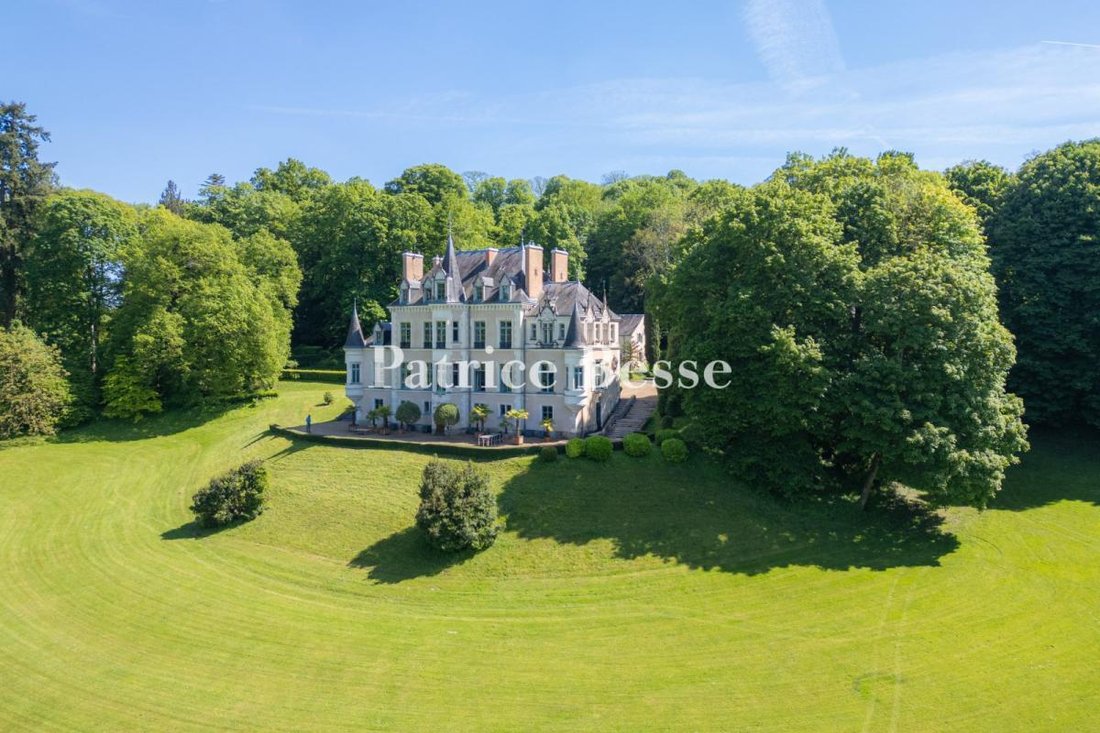
À 15 kilomètres du Mans, sur un peu moins de 15 hectares, un château néo-gothique, ses dépendances et son parc de style anglais, inscrits aux Monuments historiques. Edifié sur le versant d’une colline, Le Mans s’étend au nord de la propriété, au-delà des bois. Derrière de hauts piliers, la propriété est accessible par une allée goudronnée bordée de grands arbres et flanquée d’un pavillon d’entrée,
A Neo-Gothic chateau, listed as a Historical Monument et sold furnished, with its outbuildings et grounds, on nearly 15 ha, 15 km from Le Mans. Edified on the slope of a hill, Le Mans extends to the north of the property, past the woods, while behind tall pillars, the property is accessible via a tarmac driveway bordered by tall trees and flanked by an entrance pavilion, which houses the caretaker
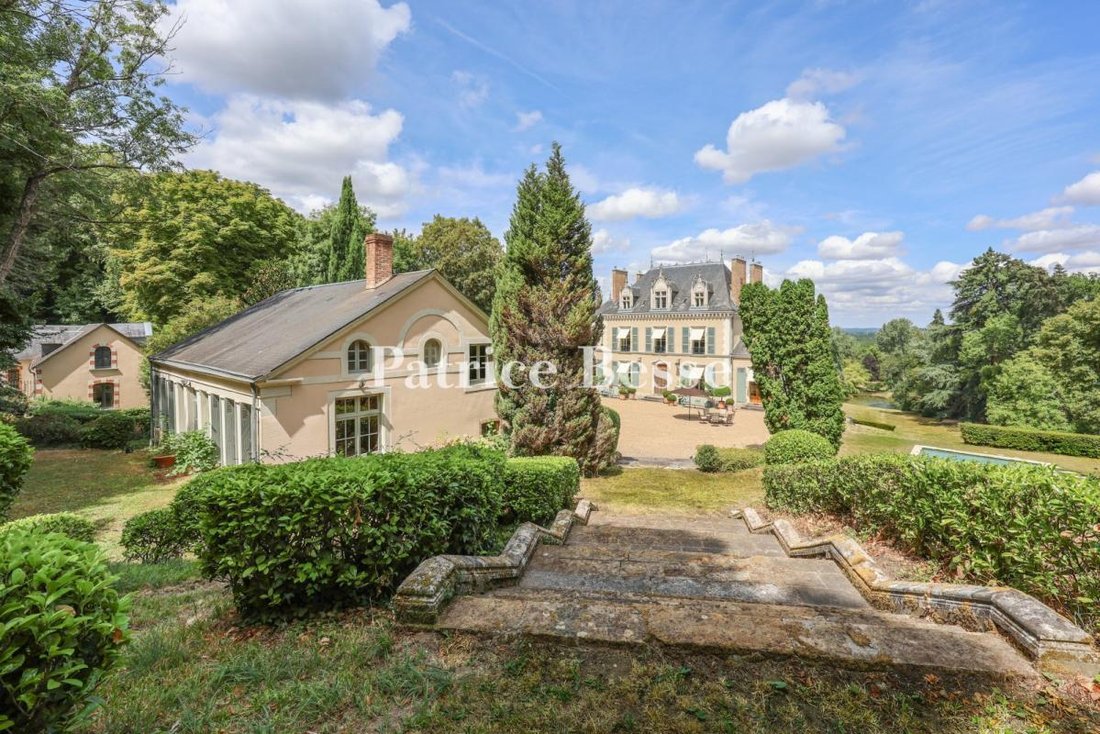
À 15 kilomètres du Mans, sur un peu moins de 15 hectares, un château néo-gothique, ses dépendances et son parc de style anglais, inscrits aux Monuments historiques. Edifié sur le versant d’une colline, Le Mans s’étend au nord de la propriété, au-delà des bois. Derrière de hauts piliers, la propriété est accessible par une allée goudronnée bordée de grands arbres et flanquée d’un pavillon d’entrée, qui abrite la résidence du gardien. En progressant à travers le parc paysager, vous pourrez admirer, d’un côté, la façade nord symétrique du château. En arrivant au sommet de la colline, vous pourrez admirer plusieurs dépendances construites au XIXe siècle en retrait du château. Il s’agit notamment de l’orangerie, aujourd’hui transformée en maison d’hôtes, qui fait face à la façade sud du château, de l’autre côté de la cour. À l’ouest, à distance des bâtiments, le terrain gazonné mène à un étang en contrebas, qui reflète le feuillage des grands arbres.
À partir de là, les murs de l’ancien potager ferment la propriété de l’extérieur.
Le château, classé monument historique, a été édifié en 1844 dans un style néo-gothique. Quant au parc, il est également classé monument historique et a été conçu en 1877. Leur composition paysagère, emblématique de la passion pour la botanique au XIXe siècle, est le fruit de l’étroite collaboration entre un industriel de la Sarthe et Edouard André, architecte paysagiste de renommée internationale, qui a conçu le parc des Buttes-Chaumont à Paris. L’intérieur de l’habitation présente une décoration inspirée du XVIIIe siècle, complétée par des détails Art déco.
Des informations sur les risques auxquels est exposé ce bien sont disponibles sur le site Géorisques : https://www.georisques.gouv.fr/
À partir de là, les murs de l’ancien potager ferment la propriété de l’extérieur.
Le château, classé monument historique, a été édifié en 1844 dans un style néo-gothique. Quant au parc, il est également classé monument historique et a été conçu en 1877. Leur composition paysagère, emblématique de la passion pour la botanique au XIXe siècle, est le fruit de l’étroite collaboration entre un industriel de la Sarthe et Edouard André, architecte paysagiste de renommée internationale, qui a conçu le parc des Buttes-Chaumont à Paris. L’intérieur de l’habitation présente une décoration inspirée du XVIIIe siècle, complétée par des détails Art déco.
Des informations sur les risques auxquels est exposé ce bien sont disponibles sur le site Géorisques : https://www.georisques.gouv.fr/
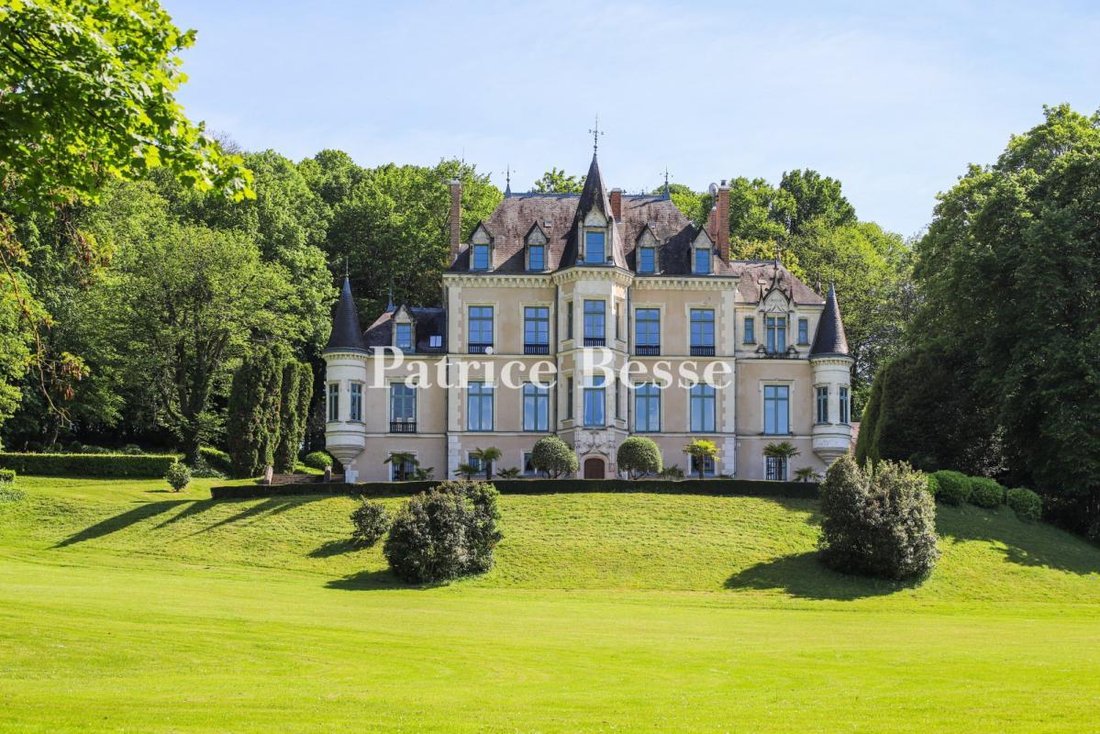
A Neo-Gothic chateau, listed as a Historical Monument et sold furnished, with its outbuildings et grounds, on nearly 15 ha, 15 km from Le Mans. Edified on the slope of a hill, Le Mans extends to the north of the property, past the woods, while behind tall pillars, the property is accessible via a tarmac driveway bordered by tall trees and flanked by an entrance pavilion, which houses the caretaker’s residence. Advancing through the landscaped grounds provides views, on one side, of the chateau’s symmetrical northern façade, whereas, arriving at the top of the hill, several outbuildings constructed in the 19th century can be seen set back from the chateau.
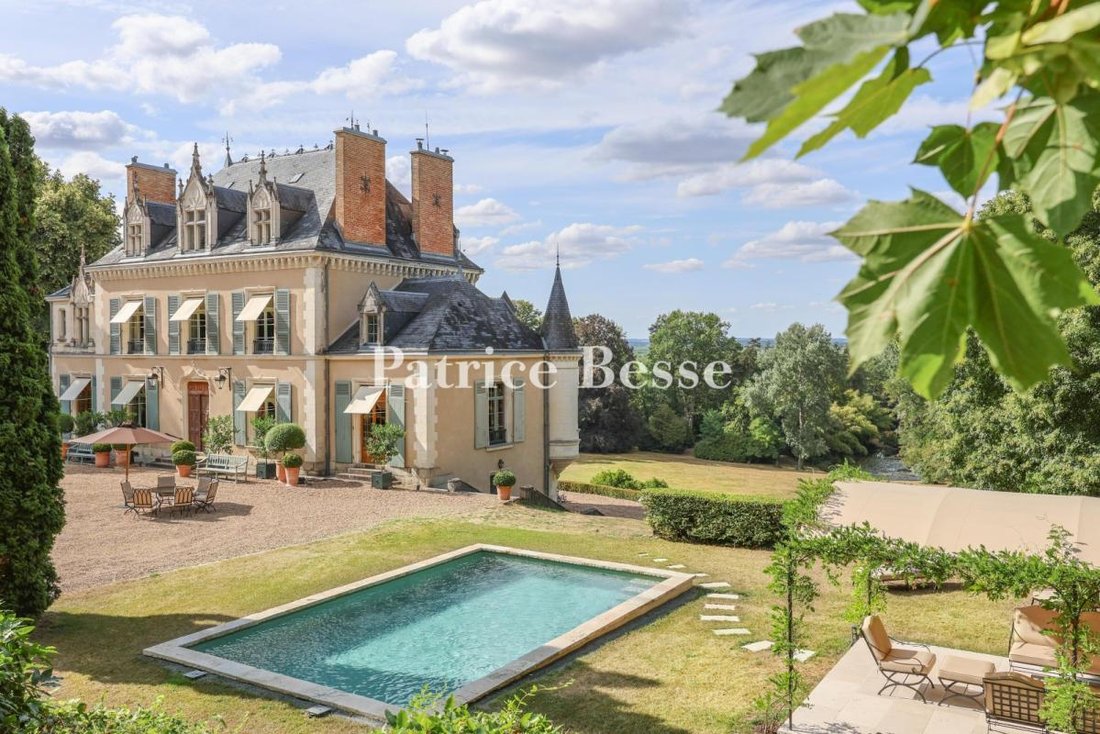
They specifically include the orangery, today converted into a guesthouse, which faces the chateau’s southern façade on the other side of the courtyard, while, to the west, at a distance from the buildings -- on the site of the rose garden and its pools as shown in Edouard André’s original plans -- a swimming pool has been added.
As for the grassy grounds, they lead to a pond below, which reflects the tall trees’ foliage, whereas, following on from there, the walls of the former vegetable garden, where a tennis court has been created, close the property off from the outside.
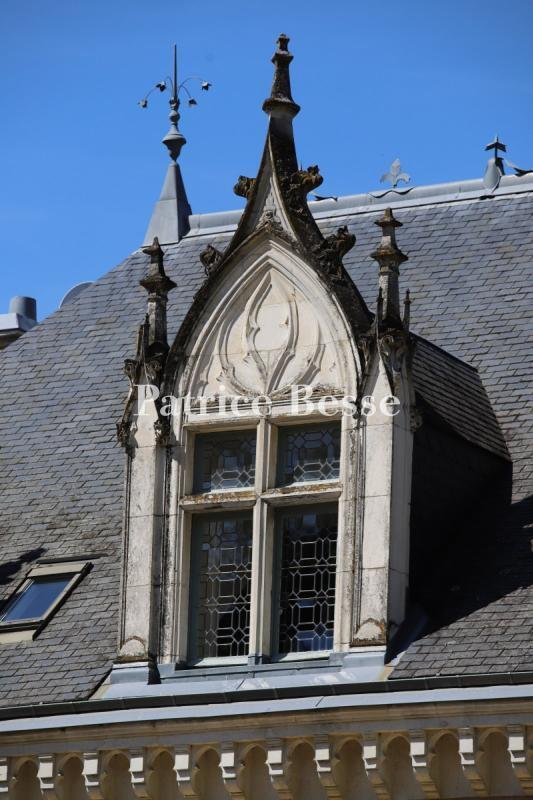
The chateau, listed as a regional Historical Monument, was edified in 1844 in a Neo-Gothic style, while its plaster-coated exteriors, mostly symmetrical and rather distinct to the north and south, are topped with pedimented dormers decorated with moulded stone and, specifically, coats of arms. With slate roofs, punctuated with finials, the chateau’s interiors feature 18th-century inspired décor, which is, in turn, supplemented with Art Deco details.
In addition, the grounds, designed in 1877, are also listed as a national Historical Monument, whereas their landscaped composition, emblematic of the passion for botany in the 19th century, is the result of the close collaboration between an industrialist from Sarthe and Edouard André, an internationally renowned landscape architect, who designed Paris’s Buttes-Chaumont Park.
Des informations sur les risques auxquels est exposé ce bien sont disponibles sur le site Géorisques : https://www.georisques.gouv.fr/
They specifically include the orangery, today converted into a guesthouse, which faces the chateau’s southern façade on the other side of the courtyard, while, to the west, at a distance from the buildings -- on the site of the rose garden and its pools as shown in Edouard André’s original plans -- a swimming pool has been added.
As for the grassy grounds, they lead to a pond below, which reflects the tall trees’ foliage, whereas, following on from there, the walls of the former vegetable garden, where a tennis court has been created, close the property off from the outside.
The chateau, listed as a regional Historical Monument, was edified in 1844 in a Neo-Gothic style, while its plaster-coated exteriors, mostly symmetrical and rather distinct to the north and south, are topped with pedimented dormers decorated with moulded stone and, specifically, coats of arms. With slate roofs, punctuated with finials, the chateau’s interiors feature 18th-century inspired décor, which is, in turn, supplemented with Art Deco details.
In addition, the grounds, designed in 1877, are also listed as a national Historical Monument, whereas their landscaped composition, emblematic of the passion for botany in the 19th century, is the result of the close collaboration between an industrialist from Sarthe and Edouard André, an internationally renowned landscape architect, who designed Paris’s Buttes-Chaumont Park.
Des informations sur les risques auxquels est exposé ce bien sont disponibles sur le site Géorisques : https://www.georisques.gouv.fr/
-
Type de propriété
Château
-
Prix/pied²
$670
Caractéristiques
- Jardin
- Piscine
- Cheminée
- Vue sur la mer
- Terrain de tennis
- Haut plafond
Explorez le secteur
Le Mans, Pays de la Loire, France
Voir sur Google Maps
Prix par sqft
Faible
Élevé
Inscrit il y a 3 ans
Vous vous êtes renseigné sur ce bien
L'agent vous contactera bientôt par
Publié par
668
Annonces
2023
Inscrit
Réserver une visite avec the agent
Choisissez une date et si vous souhaitez une visite virtuelle ou en personne avec l’agent.
Date préférée
Type de visite
Dernière mise à jour
Août 7
Première mise en ligne
Jul 5, 2024
Référence de l’annonce
350663_JE
La confiance des plus grands courtiers du monde
Les agents des propriétés les plus exceptionnelles du monde publient sur JamesEdition.
- Des annonces de Sotheby's, Christie's, BARNES et Engel & Völkers
- Chaque annonce est vérifiée avant sa mise en ligne
- Contactez directement des agents vérifiés
En continuant, vous acceptez nos Conditions et notre Politique de confidentialité.