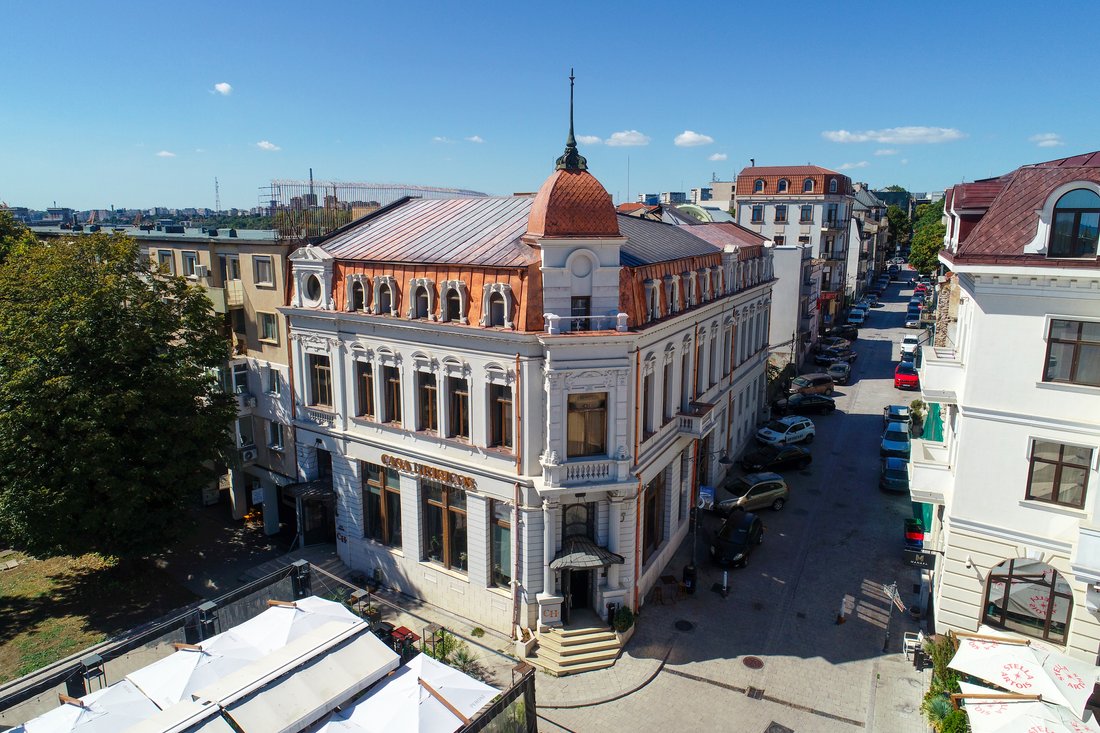
« Maison Hrisicos », Architecte Louis Givért, Monument Emblématique Du Bord De Mer
- 27 SdB
- 19,612 Sqft
-
116
Vues des 30 derniers jours
- 22
À propos de la propriété
“When Ioan N. Roman with master Caragiale and Barbu Delavrancea emptied jars of amber Samos and Tenedos wine, in the small corner room at Hrisicos they modestly devised not only Romanian Poetry and Prose - but Romania itself...” - Constantin N. Sarry
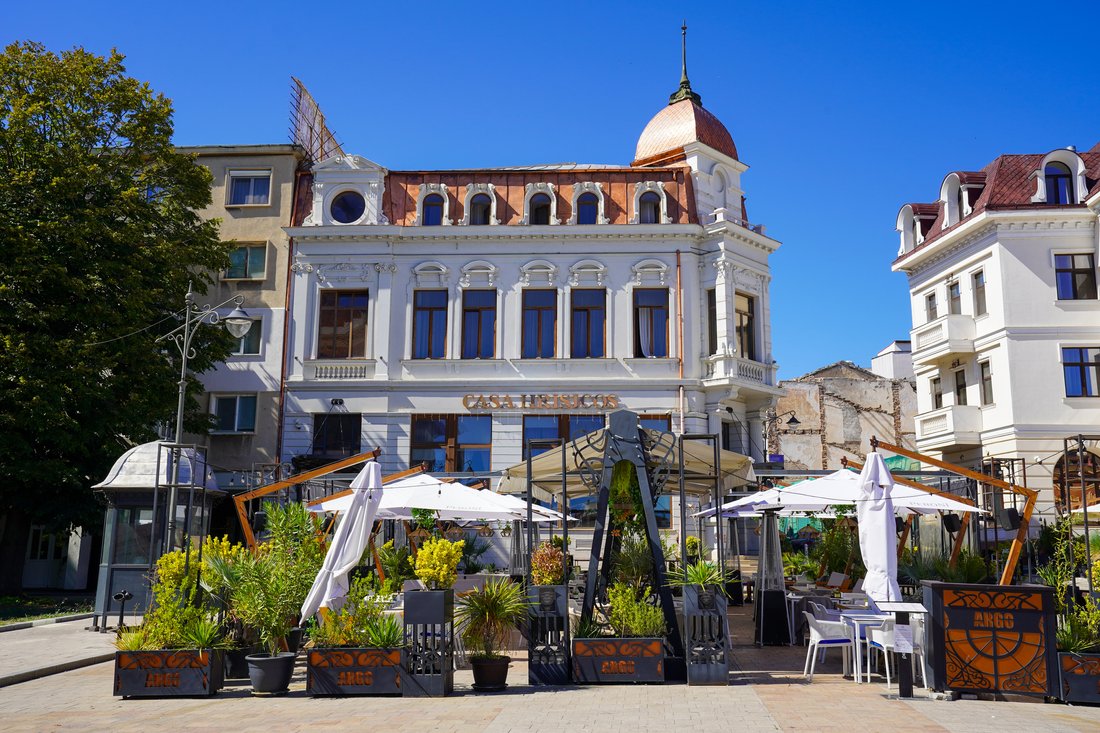
A landmark in the city’s history, Hrisicos House was built in 1900 to the plans of French architect Louis Givért. The building st
“When Ioan N. Roman with master Caragiale and Barbu Delavrancea emptied jars of amber Samos and Tenedos wine, in the small corner room at Hrisicos they modestly devised not only Romanian Poetry and Prose - but Romania itself...” - Constantin N. Sarry
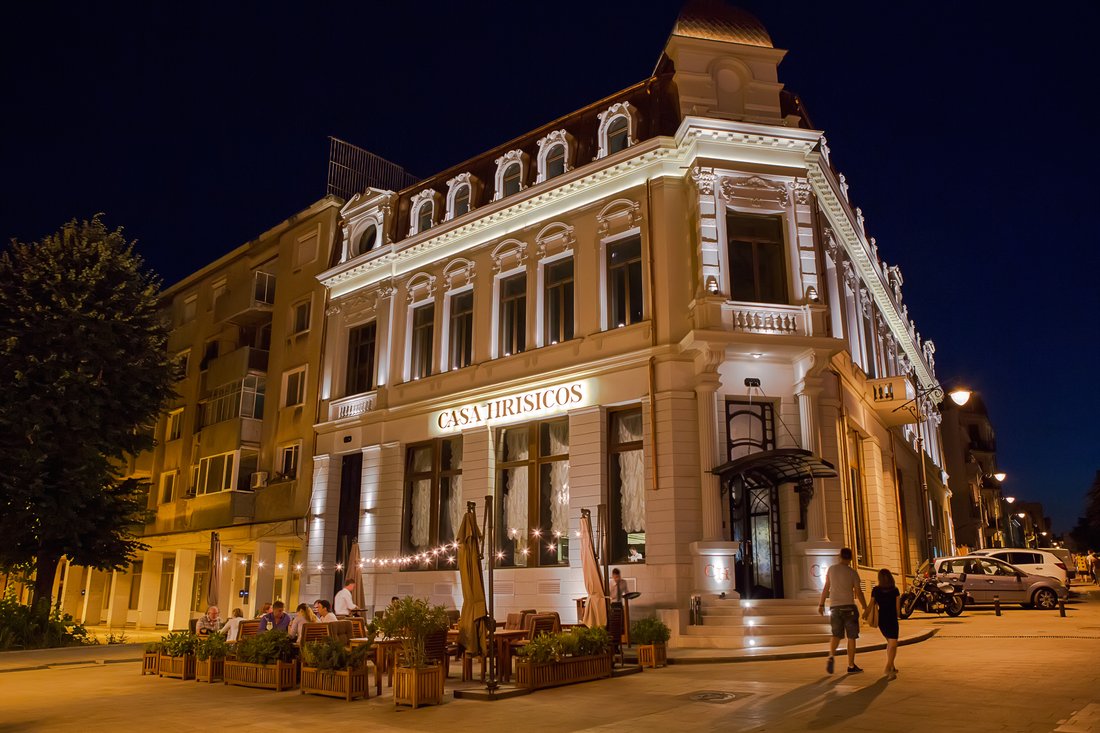
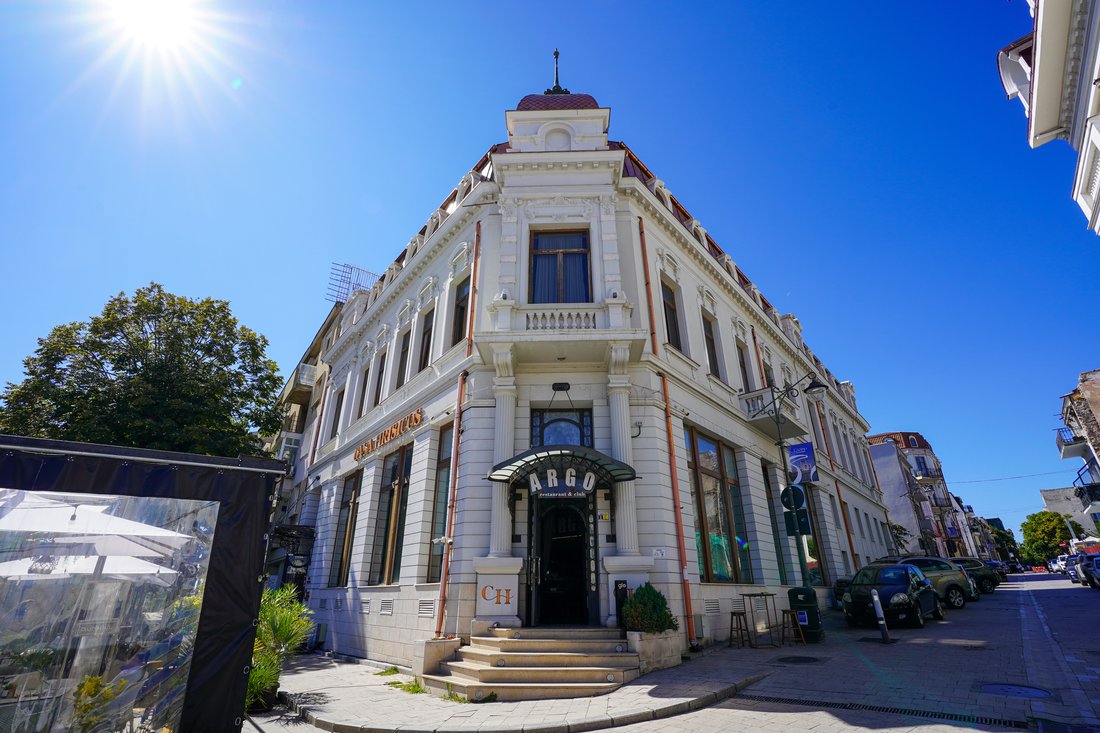
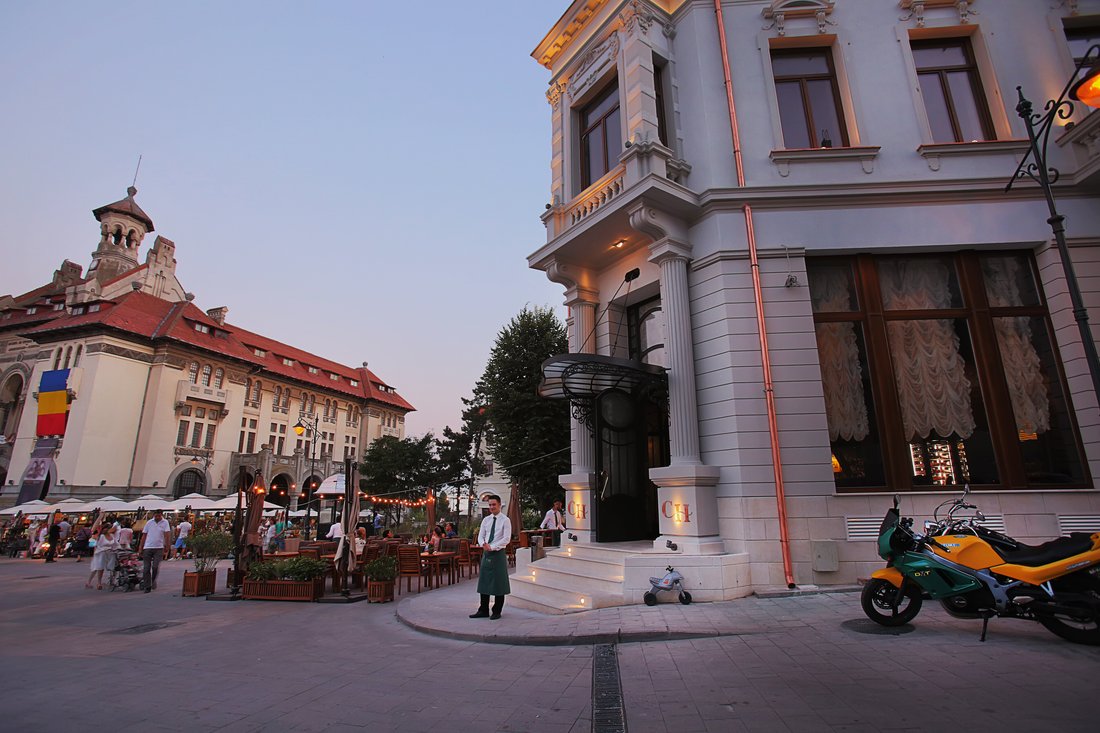
A landmark in the city’s history, Hrisicos House was built in 1900 to the plans of French architect Louis Givért. The building stands out through its eclectic style, dominated by neoclassical features with Art Nouveau details characteristic of the early 20th century. It served as a reference point for later developments in Ovidiu Square, designed mainly by architect Adolf Lintz in Viennese style. Hrisicos House is one of the oldest surviving buildings from the area’s original layout, marking the corner of Traian and Pescarilor Streets (the latter having since disappeared).
Commissioned by Gheorghe Hrisicos, once a “simple shop boy” who quickly became a well-known wine merchant and central property owner, the house was inaugurated with great pomp in the autumn of 1903. Conceived as a luxury hotel, with a restaurant offering both seafood and international cuisine on the ground floor, it soon became a landmark of Constanța. Bucharest’s elites, accustomed to the “Carol” or “Regina” hotels, now flocked to “Hrisicos.” Yet the owner’s success was short-lived: sued by defrauded banks and merchants, he was branded by the press as “Constanța’s swindler banker.” Hrisicos fled to Russia, was extradited, and sentenced to two years in prison. The scandal and widely publicized trial gave Hrisicos House unmatched notoriety, while its restaurant and hotel were frequented by notable figures such as Ion Luca Caragiale, Barbu Ștefănescu Delavrancea, Alexandru Vlahuță, and Take Ionescu.
The building was devastated during the First World War and reopened only in October 1924 as the headquarters of the Popular Bank Steagul Dobrogei. During the Second World War, it became the favored residence of German military commanders overseeing the city and coastal operations. Immediately after August 23, 1944, the balcony apartment was occupied by the Soviet military commander of Constanța. Under the communist regime, the property was nationalized, converted into a military barracks and command post, and, following major renovations in 1974, functioned as a restaurant, wine cellar, and guesthouse under the name “Pelican.”
After the fall of communism, the building hosted various banks but suffered significant interior degradation. In 2006, it was purchased by its current owners, who initiated an extensive process of restoration and rehabilitation. It has since been converted into a modern high-end bistro and a four-star hotel with 23 rooms.
Regaining the stature and function of its beginnings, Hrisicos House, which has retained its original name in collective memory despite all transformations, has once again become a vibrant symbol of Constanța, a silent witness to major secrets and political decisions of the turbulent 20th century.
Sources:
Doina Păuleanu, Constanţa: spectacolul modernității târzii: (1878–1928), Arcade Publishing, Bucharest, 2006
Doina Păuleanu, Historical Memoir
Viorel Ovidiu Lipovan, Gabriel-Octavian Nicolae, Constanța Remember 1895–1945, Constanța: Ovidius University Press, 2010
[hidden information]
[hidden information]
[hidden information]
-
Type de propriété
Autres
-
Année de construction
1900
-
Prix/pied²
$209
Caractéristiques
- Vue sur la mer
- Terrasse
- Cave à vins
- Espace de vie extérieur
- Balcon
- Côtières
Explorez le secteur
L'agent vous contactera bientôt par
Publié par
Réserver une visite avec Constantin Prisecaru
Choisissez une date et si vous souhaitez une visite virtuelle ou en personne avec l’agent.

Propriétés similaires à proximité
Nouvelles annonces à Constanța

Explorez plus de biens à vendre
Constanța, Roumanie types de propriétés
Constanța, Roumanie Recherches populaires
- Côtières propriétés à Constanța, Roumanie
- Bord de Mer propriétés à Constanța, Roumanie
- Vue sur le lac propriétés à Constanța, Roumanie
- Propriétés avec Cuisine ouverte à Constanța, Roumanie
- Propriétés avec Plage privée à Constanța, Roumanie
- Plage propriétés à Constanța, Roumanie
- Propriétés avec Cave à vins à Constanța, Roumanie
- Rénové propriétés à Constanța, Roumanie
- Au bord du lac propriétés à Constanța, Roumanie
- Propriétés avec Jacuzzi à Constanța, Roumanie
Constanța, Roumanie Quartiers
Guides et histoires connexes
La confiance des plus grands courtiers du monde
Les agents des propriétés les plus exceptionnelles du monde publient sur JamesEdition.
- Des annonces de Sotheby's, Christie's, BARNES et Engel & Völkers
- Chaque annonce est vérifiée avant sa mise en ligne
- Contactez directement des agents vérifiés
En continuant, vous acceptez nos Conditions et notre Politique de confidentialité.