$11,297,841
Vignobles De 500 Ha Avec Oliviers, Forêt De Truffes Dans Le Chianti
- Mis à jour: Août 11
- 22
À propos de la propriété
La description a été traduite automatiquement.
La description est affichée dans la langue d'origine.
La propriété est située au sud de Sienne, dans la région la plus noble du Chianti/Chianti Classico. Il se trouve à seulement 20 km de Sienne, à 90 km de Florence (train à grande vitesse/aéroport international) et est très bien relié à l’entrée de l’autoroute, à seulement 3 km.Il est difficile de trouver un environnement aussi beau avec une connectivité aussi excellente en Toscane.La propriété se c
Property is located in the south of Siena in the noblest region of Chianti/Chianti Classico. It’s only 20 km from Siena, 90 km from Florence (high-speed train/international airport), and very well connected to the highway entrance, just 3 km away.
It’s difficult to find such a beautiful environment with such excellent connectivity in Tuscany.
The property consists of two separate
It’s difficult to find such a beautiful environment with such excellent connectivity in Tuscany.
The property consists of two separate
La propriété est située au sud de Sienne, dans la région la plus noble du Chianti/Chianti Classico. Il se trouve à seulement 20 km de Sienne, à 90 km de Florence (train à grande vitesse/aéroport international) et est très bien relié à l’entrée de l’autoroute, à seulement 3 km.Il est difficile de trouver un environnement aussi beau avec une connectivité aussi excellente en Toscane.La propriété se compose de deux vignobles séparés, distants de quelques kilomètres, qui ont été fusionnés pour créer un domaine vaste et complexe. La superficie totale est d’environ 500 hectares. Les deux propriétés comprennent des bâtiments et des structures en plus des vignobles, tels que des bois et des terres cultivables, etc. Le propriétaire actuel a centralisé la plupart des activités de production de vin et a organisé les deux caves comme si elles n’en formaient qu’une pour le moment. Certaines fonctions sont situées dans la cave principale, tandis que d’autres se trouvent dans d’autres bâtiments.Unité OneVignobles : Chianti Superiore D. O. C. G. : 23,00 ha Vignobles : Chianti Superiore D. O. C. G. - non productive : 7,30 havines Vignobles : IGT - non productive : 3,70 ha Oliveraies : 18,00 ha Terres arables : 55,00 ha Truffières : 140,00 haBois : 198,00 ha - fait partie d’une réserve de chasse à la faune sauvage Les vignobles La composition variétale est la suivante : Sangiovese, Cabernet Sauvignon, Merlot, Syrah, Petit Verdot, Chardonnay ; Sangiovese enregistré sous le nom de Chianti Superiore D. O. C. G. Culture Système : cordon à aiguillons, avec une densité de plantation d’environ 5 000/5 500 plants/ha pour les nouvelles plantes et de 2 500/3 000 plants/ha pour les systèmes plus anciens.Âge moyen des vignes : Les vignes ont entre 10 et 20 ans.Actuellement, la capacité de production moyenne des plants est de 3 800/4 000 quintaux de raisins, soit une production totale d’environ 3 200/3 500 hectolitres, correspondant à environ 400 000/480 000 bouteilles par an. Le coût de gestion moyen de la culture de la vigne est de 2 500/3 500 euros par hectare. Développement avec de nouveaux vignobles : en cultivant le « non cultivé » vignobles, la production pourrait passer des 200 000/250 000 bouteilles actuellement à 300 000/350 000 bouteilles par an. Grâce à une rotation de la replantation de la vigne et à l’introduction de masses dans les zones plus sèches, une augmentation supplémentaire de 20 % de la production est possible, soit une augmentation significative de la production. La cave peut être rapidement convertie au bio, grâce à l’utilisation très limitée de produits chimiques pendant la saison/la culture. L’environnement est très sain et, statistiquement, l’impact des maladies sur la culture n’est pas significative. AUTRES CULTURES ET ACTIVITÉS- Oliveraies : Actuellement, l’entreprise vend de l’huile d’olive en vrac. Le potentiel est d’obtenir 2 000/2 500 bouteilles d’huile d’olive qui pourraient être étiquetées et commercialisées comme un produit toscan de haute qualité, en complément de la marque des caves.- Terres arables (dédiées à la culture biologique) La société a un contrat de location pour la culture biologique de terres arables. Les revenus de l’année se composent du loyer + des contributions de l’UE.Actuellement, la société étudie la possibilité d’utiliser 40/60 hectares de terres arables des terres cultivables près de la rivière pour la culture des peupliers, qui sont fortement soutenues par l’UE financement.- Bois (avec terres de chasse) L’extension des bois permet à l’entreprise d’appliquer une gestion rotative de la forêt.Un plan de coupe approuvé d’une superficie de 10 à 20 hectares est mis en œuvre chaque année.Le revenu moyen est de 1 300/1 500 euros/ha pour la vente de bois. Les bois cachent dans certaines zones une vaste truffière naturelle.TRUFFES, BOIS ET TERRES CULTIVABLESUne grande partie des bois et des terres cultivables représente un truffe moulue, divisée par le type de truffe obtenue.Tuber uncinatum pour environ 84 ha - actuellement avec une moyenne présence d’environ 10 kg de produitTuber aestivum sur environ 51 ha - actuellement avec une présence moyenne d’environ 15 kg de produitTuber Stud sur environ 7 ha - actuellement avec une présence moyenne d’environ 4 kg de produitTuber magnatum sur environ 4 ha - actuellement avec une présence moyenne d’environ 5 kg de produitAvec des investissements appropriés et faibles, les quantités estimées de produit peuvent être portées à 30 kg de produit total par produit cycle pour Tuber Uncinatum : 40 kg de produit total par cycle de production pour Tuber Aestivum10 kg de produit total par production cycle pour Tuber Stud 10 kg de produit total par cycle de production pour Tuber Magnatum (truffe blanche précieuse). CLUB DE CHASSE PRIVÉ Environ 300 hectares font partie de la « Wildlife Hunting Consortium Company », où la chasse est autorisée uniquement aux membres. L’entreprise peut inviter ses invités à la chasse. L’entreprise est l’un des membres les plus importants de cette association privée. La chasse est strictement réglementée pour la conservation de la région.La faune typique comprend des sangliers, des cerfs, des faisans, des lièvres, etc. LES CAVESLa vinification et le vieillissement des raisins ont lieu dans la plus grande cave. Le vieillissement a lieu dans des cuves en acier et des fûts de chêne. La chaîne de mise en bouteille complète, la zone de stockage centralisée des bouteilles, le conditionnement la ligne et la zone d’expédition sont très bien organisées dans divers départements. Une grande zone est dédiée aux matériaux, produits chimiques, etc.c., permettant une organisation très rationnelle de chaque processus. La zone de vinification est entièrement équipée de cuves en acier inoxydable conditionnées pour la fermentation et le stockage, de pompes automatiques, d’un pressoir doux, d’un concentrateur pour les millésimes difficiles et de fûts de chêne pour le vieillissement.Une ancienne cave en pierre pittoresque couronne le vieillissement des meilleurs vins, où l’humidité naturelle et la température sont parfaitement équilibrées tout au long de l’année. L’une des zones, avec une grande zone de chargement et un espace de stockage à température contrôlée, est dédiée à la logistique, pour la livraison de conteneurs et les petits Packages.Bâtiments Bâtiment principal : caves et immeuble de bureaux : salle de vinification, salle de stockage et de vieillissement, salle des tonneaux, zone de mise en bouteille, zone de stockage, diverses annexes, moulin, bureaux avec boutique et salle de dégustation.Environ 1750 m2 avec tous les départements.Bâtiment secondaire : à environ 1 km du bâtiment principal, bâtiment climatisé pour le vieillissement, la réfrigération ou le stockage, avec services et zones résidentielles : deux appartements pour invités ou travailleurs, atelier local, zone de récupération des machines, des zones de chargement et des installations destinées aux employés, couvrant environ 750 m2. CAPACITÉ DE LA CAVE ET Équipement La cave a une capacité d’environ 4500 HL dans des cuves en acier inoxydable à température contrôlée (capacités de 150/100/200/400 HL) et des cuves plus petites pour le mélange et le transit du vin de 50/80/70 HL. La cave de vieillissement en pierre naturelle dispose d’un espace de stockage pour 700 barils.Les plus grands fûts sont placés dans le bâtiment secondaire principal (zone à température contrôlée) ou dans le bâtiment principal. En 2022, les grands fûts de chêne étaient de 300 HL, utilisés pour le mélange après le mélange vieillissement en barriques, en transit pour la mise en bouteille. La plupart des cuves coniques en acier inoxydable à température contrôlée de 150 HL sont équipés d’un système de pompage automatique. La cave est équipée de concentrateurs de moût modernes, d’un pressoir doux et d’un système de réfrigération à basse température.La cave dispose d’une ligne complète d’embouteillage et de remplissage. La cave dispose d’une ligne d’étiquetage complète.
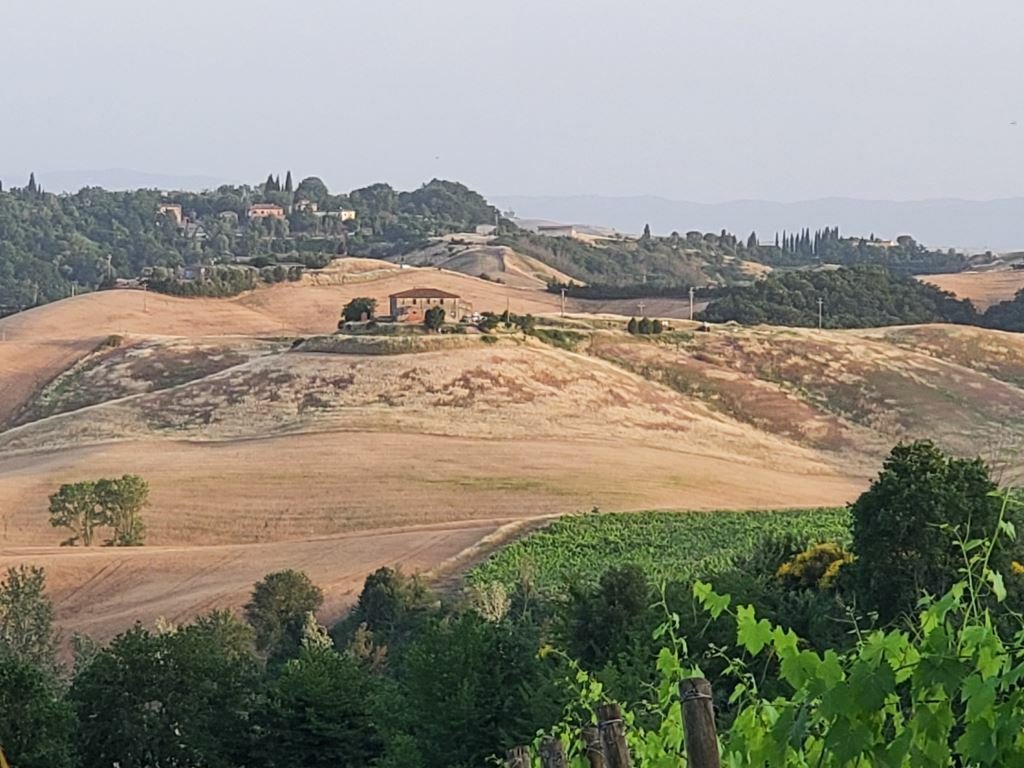
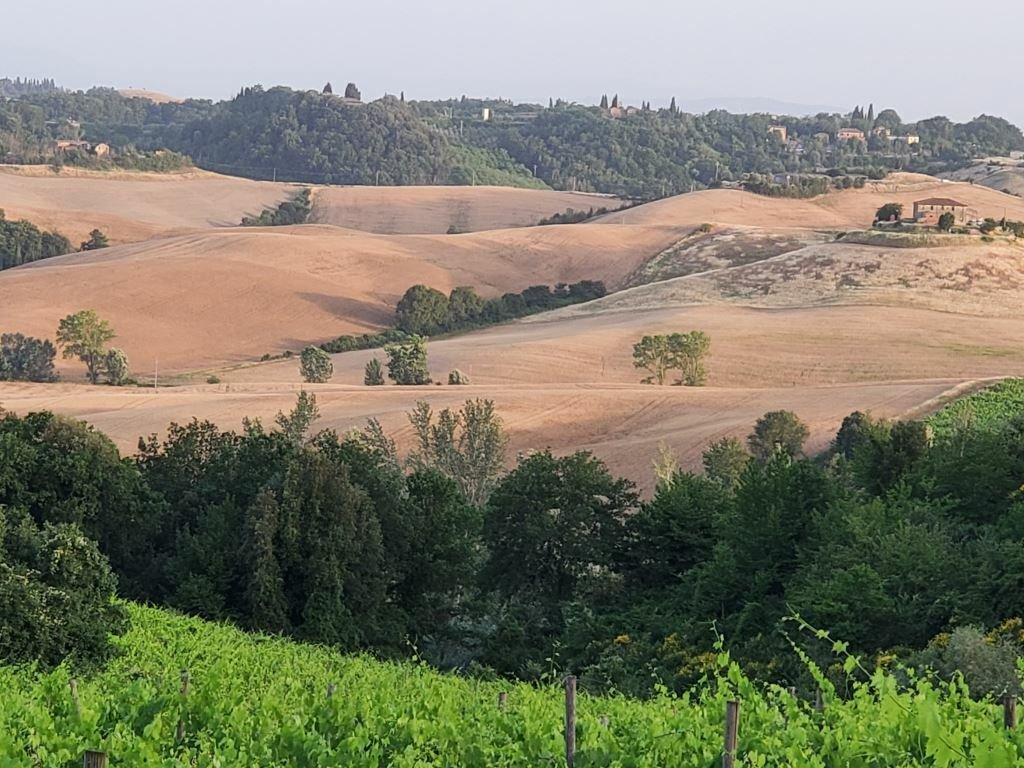
Property is located in the south of Siena in the noblest region of Chianti/Chianti Classico. It’s only 20 km from Siena, 90 km from Florence (high-speed train/international airport), and very well connected to the highway entrance, just 3 km away.
It’s difficult to find such a beautiful environment with such excellent connectivity in Tuscany.
The property consists of two separate vineyards, a few kilometers apart, which have been merged to create a large and complex estate. The total area is about 500 hectares.
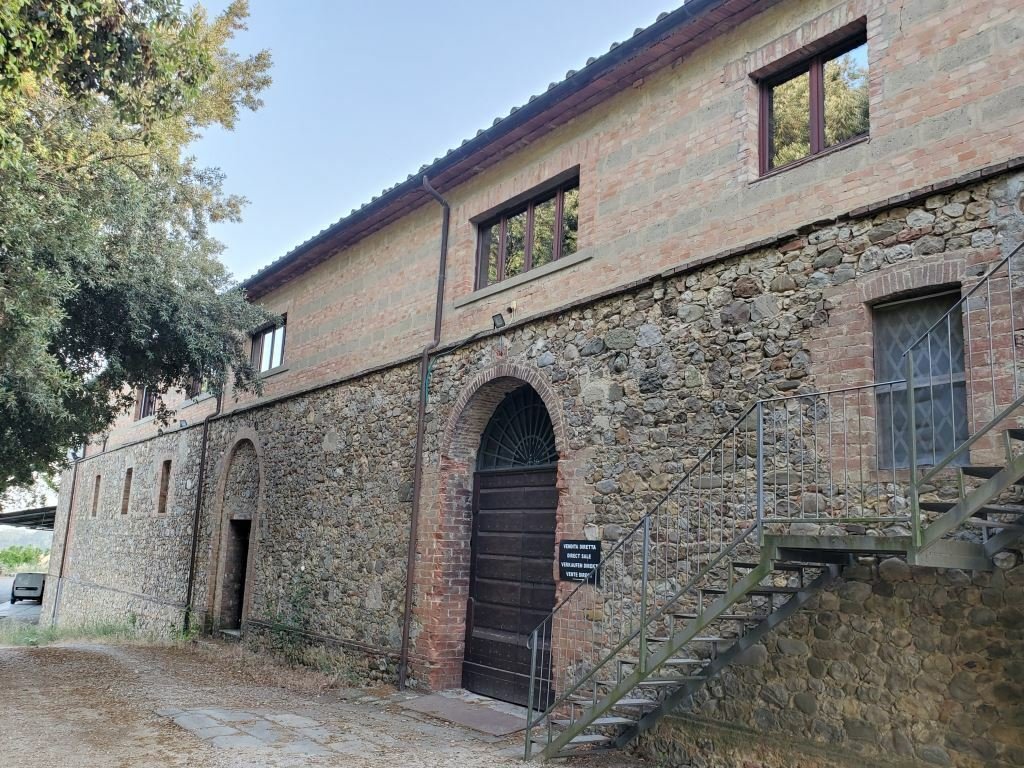
Both properties include buildings and structures in addition to vineyards, such as woods and cultivable lands, etc.
The current owner has centralized most of the wine production activities and has organized the two cellars as if they were one for the time being. Some functions are located in the main cellar, while others are in other buildings.
Unit One
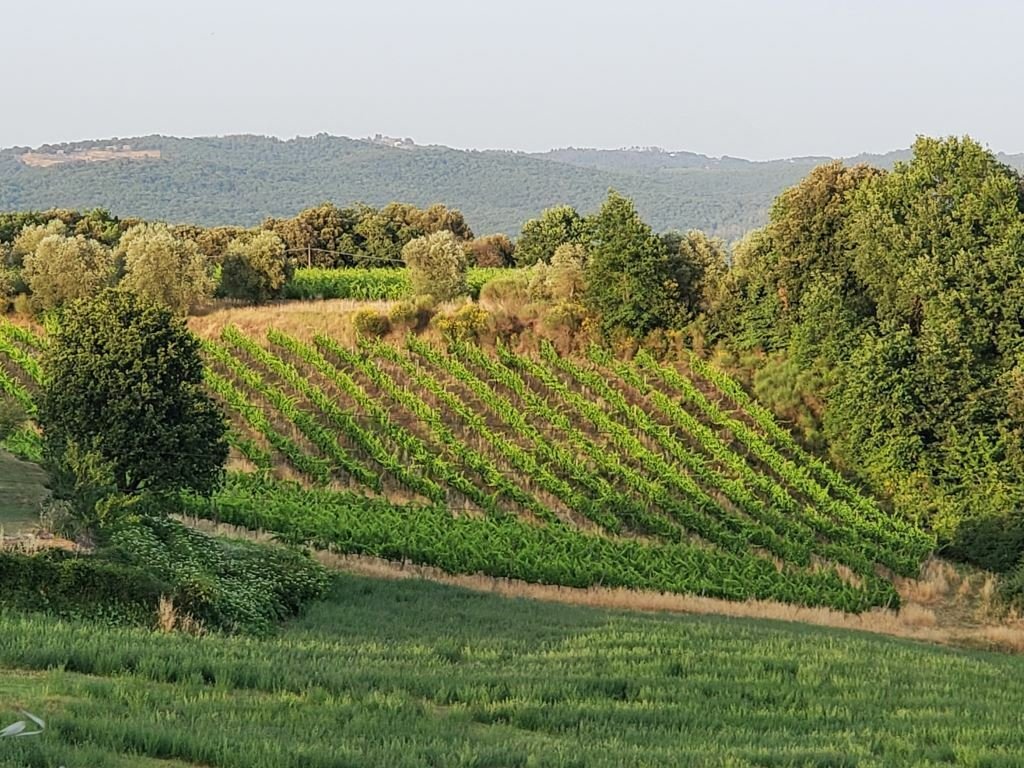
Vineyards: Chianti Superiore D. O. C. G.: 23.00 Ha
Vineyards: Chianti Superiore D. O. C. G. - non-productive: 7.30 Ha
Vineyards: IGT - non-productive: 3.70 Ha
Olive groves: 18.00 Ha
Arable land: 55.00 Ha
Truffle woods: 140.00 Ha
Woods: 198.00 Ha
290 Ha - part of a wild fauna hunting reserve
THE VINEYARDS
The varietal composition is as follows:
Sangiovese, Cabernet Sauvignon, Merlot, Syrah, Petit Verdot, Chardonnay; Sangiovese registered as Chianti Superiore D. O. C. G.
Cultivation system:
Spurred cordon, with a planting density of about 5,000/5,500 plants/ha for new plants and 2,500/3,000 plants/ha for older systems.
Average age of the vines:
The vines are between 10 and 20 years old.
Currently, the average production capacity of the plants is 3,800/4,000 quintals of grapes, equivalent to a total production of about 3,200/3,500 hectoliters, corresponding to about 400,000/480,000 bottles per year.
The average management cost for vine cultivation is 2,500/3,500 Euros per hectare.
Development with new vineyards:
By cultivating the ”uncultivated” vineyards, the production could increase from the current 200,000/250,000 bottles to 300,000/350,000 bottles per year.
With a rotation in vine replanting and the introduction of masses in drier areas, a further 20% increase in production is possible, achieving a significant production increase.
The cellar can be quickly converted to organic, thanks to the very limited use of chemicals during the season/cultivation.
The environment is very healthy, and statistically, the impact of diseases on cultivation is not significant.
OTHER CROPS AND ACTIVITIES
- Olive groves:
Currently, the company sells bulk olive oil.
The potential is to obtain 2,000/2,500 bottles of olive oil that could be branded and marketed as a high-quality Tuscan product, complementing the brand of the cellars.
- Arable land (dedicated to organic cultivation)
The company has a lease contract for the organic cultivation of arable land.
The income for the year consists of rent + EU contributions.
Currently, the company is studying the possibility of using 40/60 hectares of arable land near the river for the cultivation of poplars, which is strongly supported by EU funding.
- Woods (with hunting land)
The extension of the woods allows the company to apply a rotational management of the forest.
An approved cutting plan with an area of 10-20 hectares is implemented every year.
The average income is 1,300/1,500 euros/ha for the sale of timber.
The woods hide in some areas an extensive natural truffle ground.
TRUFFLES, WOODS, AND CULTIVABLE LANDS
A large part of the woods and cultivable lands represents a natural truffle ground, divided by the type of obtained truffle.
Tuber uncinatum for approx. 84 ha - currently with an average presence of about 10 kg of product
Tuber aestivum for approx. 51 ha - currently with an average presence of about 15 kg of product
Tuber stud for approx. 7 ha - currently with an average presence of about 4 kg of product
Tuber magnatum for approx. 4 ha - currently with an average presence of about 5 kg of product
With appropriate and low investments, the estimated quantities of product can be increased to:
30 kg of total product per production cycle for Tuber Uncinatum
40 kg of total product per production cycle for Tuber Aestivum
10 kg of total product per production cycle for Tuber Stud
10 kg of total product per production cycle for Tuber Magnatum (precious white truffle).
PRIVATE HUNTING CLUB
About 300 hectares are part of the ”Wildlife Hunting Consortium Company,” where hunting is allowed only to members. The company can invite its guests for hunting.
The company is one of the members with the largest extension in this private association.
Hunting is strictly regulated for the conservation of the area.
Typical fauna includes wild boars, deer, pheasants, hares, etc...
THE CELLARS
Vinification and aging of the grapes take place in the largest cellar.
Aging occurs in steel tanks and oak barrels.
The complete bottling line, centralized bottle storage area, packaging line, and shipping area are very well organized in various departments.
A large area is dedicated to materials, chemicals, etc., allowing a very rational organization of every process.
The vinification area is fully equipped with stainless steel tanks conditioned for fermentation and storage, automatic pumps, gentle press, concentrator to be used in difficult vintages, and oak barrels for aging.
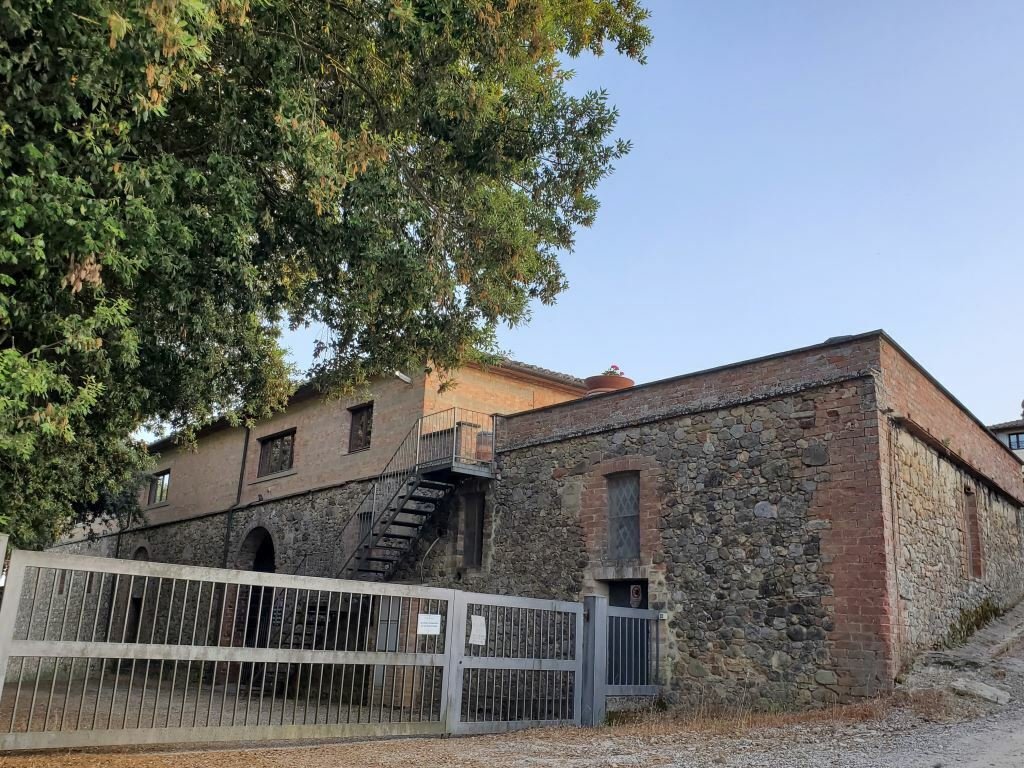
A picturesque old stone cellar crowns the aging of the finest wines, where natural humidity and temperature are perfectly balanced throughout the year.
One of the areas, with a large loading area and temperature-controlled storage space, is dedicated to logistics, for container delivery and small packages.
BUILDINGS
Main Building:
Cellars and Office Building: winemaking room, storage and aging room, barrel room, bottling area, storage area, various annexes, mill, offices with a shop and tasting room.
Approximately 1750 m2 with all departments.
Secondary Building: about 1 km from the main building, air-conditioned building for aging, refrigeration, or storage, with services and residential areas:
two apartments for guests or workers,
local workshop,
machine recovery area, loading areas, and employee facilities, covering approximately 750 m2.
CELLAR CAPACITY AND EQUIPMENT
The cellar has a capacity of approximately 4500 HL in temperature-controlled stainless steel tanks (capacities of 150/100/200/400 HL) and smaller tanks for wine blending and transit of 50/80/70 HL.
The natural stone aging cellar has a storage area for 700 barrels.
The larger barrels are placed in the main secondary building (temperature-controlled area) or in the main building.
In 2022, the large oak barrels were of 300 HL, used for blending after aging in barriques, in transit for bottling.
Most of the temperature-controlled conical stainless steel tanks of 150 HL are equipped with an automatic pumping system.
The cellar is equipped with modern must concentrators, gentle press, and low-temperature refrigeration system.
The cellar has a complete bottling and filling line.
The cellar has a complete labeling line.
It’s difficult to find such a beautiful environment with such excellent connectivity in Tuscany.
The property consists of two separate vineyards, a few kilometers apart, which have been merged to create a large and complex estate. The total area is about 500 hectares.
Both properties include buildings and structures in addition to vineyards, such as woods and cultivable lands, etc.
The current owner has centralized most of the wine production activities and has organized the two cellars as if they were one for the time being. Some functions are located in the main cellar, while others are in other buildings.
Unit One
Vineyards: Chianti Superiore D. O. C. G.: 23.00 Ha
Vineyards: Chianti Superiore D. O. C. G. - non-productive: 7.30 Ha
Vineyards: IGT - non-productive: 3.70 Ha
Olive groves: 18.00 Ha
Arable land: 55.00 Ha
Truffle woods: 140.00 Ha
Woods: 198.00 Ha
290 Ha - part of a wild fauna hunting reserve
THE VINEYARDS
The varietal composition is as follows:
Sangiovese, Cabernet Sauvignon, Merlot, Syrah, Petit Verdot, Chardonnay; Sangiovese registered as Chianti Superiore D. O. C. G.
Cultivation system:
Spurred cordon, with a planting density of about 5,000/5,500 plants/ha for new plants and 2,500/3,000 plants/ha for older systems.
Average age of the vines:
The vines are between 10 and 20 years old.
Currently, the average production capacity of the plants is 3,800/4,000 quintals of grapes, equivalent to a total production of about 3,200/3,500 hectoliters, corresponding to about 400,000/480,000 bottles per year.
The average management cost for vine cultivation is 2,500/3,500 Euros per hectare.
Development with new vineyards:
By cultivating the ”uncultivated” vineyards, the production could increase from the current 200,000/250,000 bottles to 300,000/350,000 bottles per year.
With a rotation in vine replanting and the introduction of masses in drier areas, a further 20% increase in production is possible, achieving a significant production increase.
The cellar can be quickly converted to organic, thanks to the very limited use of chemicals during the season/cultivation.
The environment is very healthy, and statistically, the impact of diseases on cultivation is not significant.
OTHER CROPS AND ACTIVITIES
- Olive groves:
Currently, the company sells bulk olive oil.
The potential is to obtain 2,000/2,500 bottles of olive oil that could be branded and marketed as a high-quality Tuscan product, complementing the brand of the cellars.
- Arable land (dedicated to organic cultivation)
The company has a lease contract for the organic cultivation of arable land.
The income for the year consists of rent + EU contributions.
Currently, the company is studying the possibility of using 40/60 hectares of arable land near the river for the cultivation of poplars, which is strongly supported by EU funding.
- Woods (with hunting land)
The extension of the woods allows the company to apply a rotational management of the forest.
An approved cutting plan with an area of 10-20 hectares is implemented every year.
The average income is 1,300/1,500 euros/ha for the sale of timber.
The woods hide in some areas an extensive natural truffle ground.
TRUFFLES, WOODS, AND CULTIVABLE LANDS
A large part of the woods and cultivable lands represents a natural truffle ground, divided by the type of obtained truffle.
Tuber uncinatum for approx. 84 ha - currently with an average presence of about 10 kg of product
Tuber aestivum for approx. 51 ha - currently with an average presence of about 15 kg of product
Tuber stud for approx. 7 ha - currently with an average presence of about 4 kg of product
Tuber magnatum for approx. 4 ha - currently with an average presence of about 5 kg of product
With appropriate and low investments, the estimated quantities of product can be increased to:
30 kg of total product per production cycle for Tuber Uncinatum
40 kg of total product per production cycle for Tuber Aestivum
10 kg of total product per production cycle for Tuber Stud
10 kg of total product per production cycle for Tuber Magnatum (precious white truffle).
PRIVATE HUNTING CLUB
About 300 hectares are part of the ”Wildlife Hunting Consortium Company,” where hunting is allowed only to members. The company can invite its guests for hunting.
The company is one of the members with the largest extension in this private association.
Hunting is strictly regulated for the conservation of the area.
Typical fauna includes wild boars, deer, pheasants, hares, etc...
THE CELLARS
Vinification and aging of the grapes take place in the largest cellar.
Aging occurs in steel tanks and oak barrels.
The complete bottling line, centralized bottle storage area, packaging line, and shipping area are very well organized in various departments.
A large area is dedicated to materials, chemicals, etc., allowing a very rational organization of every process.
The vinification area is fully equipped with stainless steel tanks conditioned for fermentation and storage, automatic pumps, gentle press, concentrator to be used in difficult vintages, and oak barrels for aging.
A picturesque old stone cellar crowns the aging of the finest wines, where natural humidity and temperature are perfectly balanced throughout the year.
One of the areas, with a large loading area and temperature-controlled storage space, is dedicated to logistics, for container delivery and small packages.
BUILDINGS
Main Building:
Cellars and Office Building: winemaking room, storage and aging room, barrel room, bottling area, storage area, various annexes, mill, offices with a shop and tasting room.
Approximately 1750 m2 with all departments.
Secondary Building: about 1 km from the main building, air-conditioned building for aging, refrigeration, or storage, with services and residential areas:
two apartments for guests or workers,
local workshop,
machine recovery area, loading areas, and employee facilities, covering approximately 750 m2.
CELLAR CAPACITY AND EQUIPMENT
The cellar has a capacity of approximately 4500 HL in temperature-controlled stainless steel tanks (capacities of 150/100/200/400 HL) and smaller tanks for wine blending and transit of 50/80/70 HL.
The natural stone aging cellar has a storage area for 700 barrels.
The larger barrels are placed in the main secondary building (temperature-controlled area) or in the main building.
In 2022, the large oak barrels were of 300 HL, used for blending after aging in barriques, in transit for bottling.
Most of the temperature-controlled conical stainless steel tanks of 150 HL are equipped with an automatic pumping system.
The cellar is equipped with modern must concentrators, gentle press, and low-temperature refrigeration system.
The cellar has a complete bottling and filling line.
The cellar has a complete labeling line.
-
Type de propriété
Terrain
Caractéristiques
- Jardin
- Terrasse
- Cheminée
- Vue sur la montagne
- Centre de remise en forme / Fitness
- Bureau
Explorez le secteur
Castelnuovo Berardenga, Toscane, Italie
Voir sur Google Maps
Prix par sqft
Faible
Élevé
Situé dans la charmante région de Toscane, Castelnuovo Berardenga offre un environnement paisible et riche culturellement. Facilement accessible par les routes principales, il est bien relié à Sienne, à seulement 20 minutes en voiture. La région est connue pour ses vignobles, offrant d’excellentes options de restauration et la possibilité d’explorer la fameuse culture viticole italienne. À proximité, le parc de sculptures de Chianti et les thermes San Giovanni offrent des retraites artistiques et de bien-être.
Voir à proximité
Attractions
Écoles
Aéroport de Sienne-Ampugnano
Aéroport
40 min
Parc de Sculptures Chianti
Culture & Patrimoine
15 min
Thermes San Giovanni
Bien-être & Spas de Luxe
10 min
École Internationale de Sienne
École Internationale
25 min
Inscrit il y a 11 mois
Vous vous êtes renseigné sur ce bien
L'agent vous contactera bientôt par
Publié par
Ferrari Fabio
Voir le profil de l'agent
47
Annonces
2025
Inscrit
Réserver une visite avec Ferrari Fabio
Choisissez une date et si vous souhaitez une visite virtuelle ou en personne avec l’agent.
Date préférée
Type de visite

Sequoia Consulting Sagl is a distinguished luxury real estate agency focused on premium residential and commercial
Sequoia Consulting Sagl is a distinguished luxury real estate agency focused on premium residential and commercial properties in the Lugano Lake region, Canton Ticino, Switzerland.
Since its establishment in 2009, Sequoia Consulting Sagl has become a trusted name in the region’s high-end real estate market. Its success is driven by a combination of professional expertise, deep market knowledge, and a client-centred approach that prioritises discretion, reliability, and tailored solutions.
Thanks to its longstanding presence in the sector, the company has cultivated strong partnerships with leading local professionals — including lawyers, tax advisors and banks. This network, together with years of experience, has allowed Sequoia Consulting Sagl to build a refined property portfolio and an excellent database of qualified buyers and investors.
Since its establishment in 2009, Sequoia Consulting Sagl has become a trusted name in the region’s high-end real estate market. Its success is driven by a combination of professional expertise, deep market knowledge, and a client-centred approach that prioritises discretion, reliability, and tailored solutions.
Thanks to its longstanding presence in the sector, the company has cultivated strong partnerships with leading local professionals — including lawyers, tax advisors and banks. This network, together with years of experience, has allowed Sequoia Consulting Sagl to build a refined property portfolio and an excellent database of qualified buyers and investors.
Dernière mise à jour
Août 11
Première mise en ligne
Novembre 7, 2025
Référence de l’annonce
4049
Propriétés similaires à proximité
Nouvelles annonces à Castelnuovo Berardenga









Explorez plus de biens à vendre
Castelnuovo Berardenga, Toscane, Italie types de propriétés
Castelnuovo Berardenga, Toscane, Italie Recherches populaires
- Duplex propriétés à Castelnuovo Berardenga, Toscane, Italie
- Constructions neuves propriétés à Castelnuovo Berardenga, Toscane, Italie
- Propriétés avec Sauna à Castelnuovo Berardenga, Toscane, Italie
- Propriétés avec Hammam à Castelnuovo Berardenga, Toscane, Italie
- Propriétés avec Terrain de tennis à Castelnuovo Berardenga, Toscane, Italie
- Propriétés avec Héliport à Castelnuovo Berardenga, Toscane, Italie
- Propriétés avec Vignoble / Cave à Castelnuovo Berardenga, Toscane, Italie
Guides et histoires connexes
La confiance des plus grands courtiers du monde
Les agents des propriétés les plus exceptionnelles du monde publient sur JamesEdition.
- Des annonces de Sotheby's, Christie's, BARNES et Engel & Völkers
- Chaque annonce est vérifiée avant sa mise en ligne
- Contactez directement des agents vérifiés
En continuant, vous acceptez nos Conditions et notre Politique de confidentialité.