

Preis auf Anfrage
Palast In Haz Zebbug
- Aktualisiert: August 7
- 17
Über die Immobilie
Beschreibung wurde automatisch übersetzt.
Die Beschreibung wird in der Originalsprache angezeigt.
Dieser am Stadtrand von Haz-Zebbug gelegene Palazzo ist ein großartiges Beispiel für die spätbarocke Typologie der großen Residenzen des maltesischen Adels. Es wurde Mitte des 18. Jahrhunderts erbaut und diente bis zum Ende des 20. Jahrhunderts als Patrizierresidenz. Der aufwändige Komplex besteht aus dem großen Palazzo und seinen imposanten Gärten auf der einen Seite.
Der Palast ist in einer
Der Palast ist in einer
Set in the outskirts of Haz-Zebbug, this Palazzo is a magnificent example of the late Baroque typology of grand residences owned by the Maltese nobility. Built in the mid 18th Century it continued to serve as a patrician residence right-up to the end of the 20th Century. The elaborate complex consists of the grand Palazzo and its imposing gardens on one side.
The Palace is articulated in an ar
The Palace is articulated in an ar
Dieser am Stadtrand von Haz-Zebbug gelegene Palazzo ist ein großartiges Beispiel für die spätbarocke Typologie der großen Residenzen des maltesischen Adels. Es wurde Mitte des 18. Jahrhunderts erbaut und diente bis zum Ende des 20. Jahrhunderts als Patrizierresidenz. Der aufwändige Komplex besteht aus dem großen Palazzo und seinen imposanten Gärten auf der einen Seite.
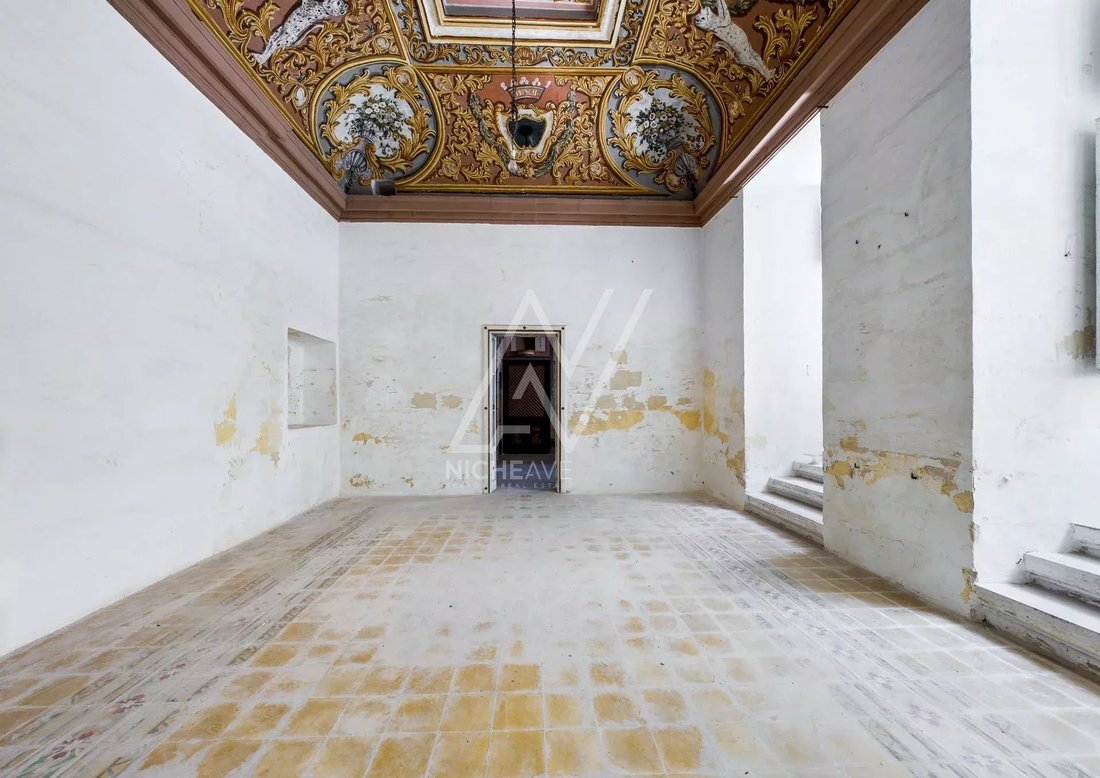
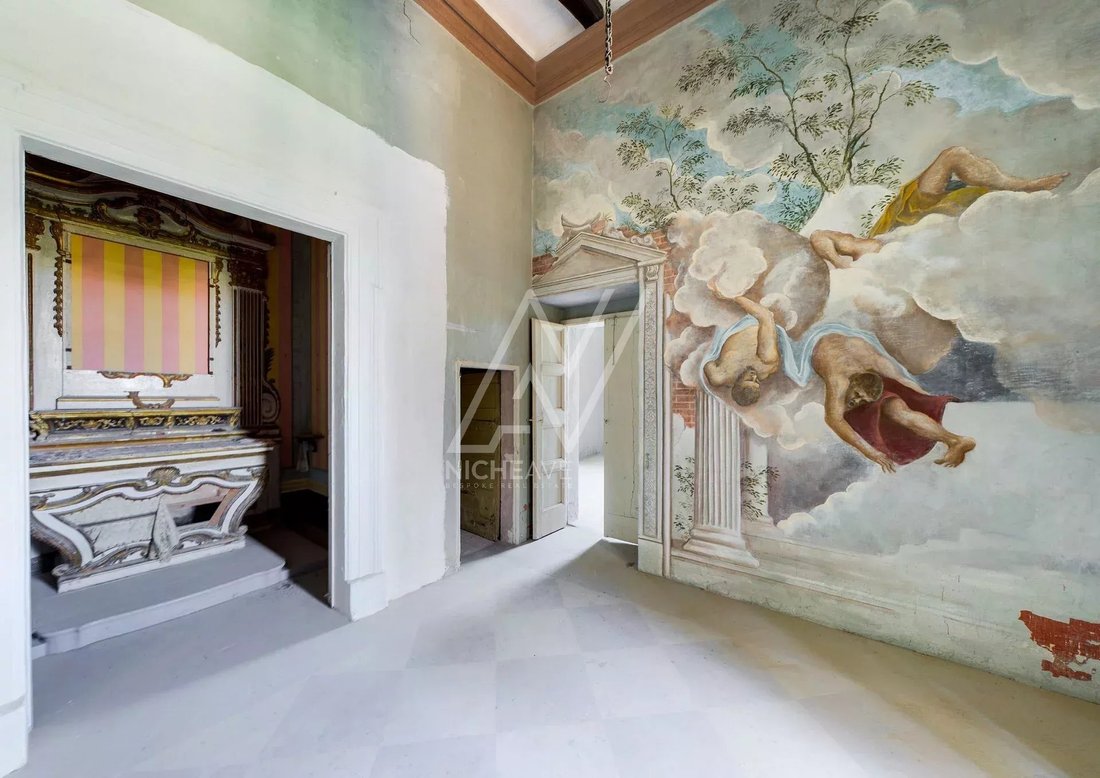
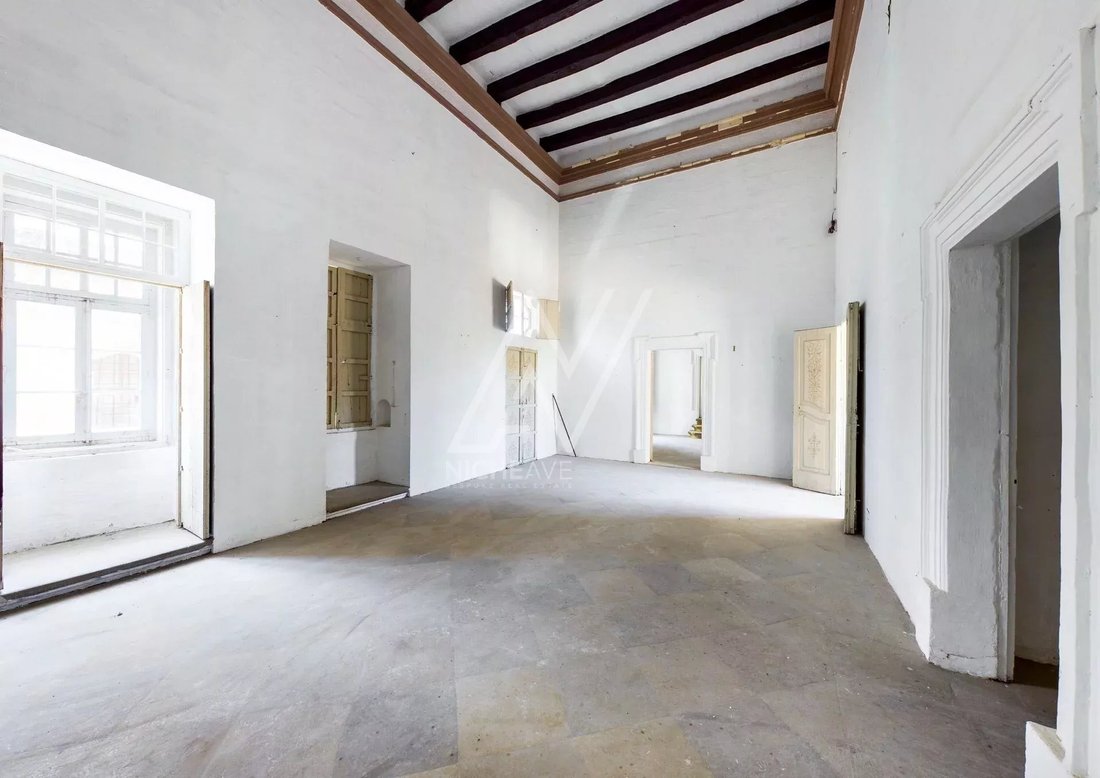
Der Palast ist in einer für diese Zeit typischen architektonischen Grammatik artikuliert. Es erstreckt sich über zwei Stockwerke und hat einen imposanten zentralen Eingang, der von Serviceräumen auf beiden Seiten des Erdgeschosses flankiert wird. Der Hauptwohnsitz der Familie befand sich in den weitläufigen Hallen des Piano Nobile im ersten Stock mit hohen Decken. Einzigartig für den Palast war die Einrichtung eines privaten Theaters in seinem Erdgeschoss zur literarischen und musikalischen Unterhaltung der Bewohner und ihrer Gäste. Dies ist ein außergewöhnliches Merkmal, das noch viele seiner ursprünglichen Wandmalereien und dekorativen Elemente enthält.
Die Finesse und Raffinesse des gesamten Komplexes zeigt sich auch in den Details, wie den dekorativen Steinschnitzereien und den schmiedeeisernen Arbeiten. In einigen der Hallen sind die Gewölbe mit Trompe-l’Oeil-Dekoration aus fiktiven architektonischen Motiven dargestellt, die dazu dienen, die Illusion eines perspektivisch platzierten dekorativen Raums zu vermitteln. Solche dekorativen Ensembles gehörten zum Spätbarock und wurden oft in prunkvollen Residenzen verwendet. Die Größe des Piano Nobile mit seinen Relationen von Höhe zu Breite widerlegt die Absicht, die Residenz zu einer der schönsten der Insel zu machen.
Der Zugang zum Garten erfolgt über einen breiten bewachten Eingang, der ursprünglich den Kutschen diente. Der Garten ist in Abschnitten angelegt, die Wege haben, die einen Teil mit dem anderen verbinden. Seine formalen Elemente verbinden sich mit rustikalen Elementen, die die Pracht des ursprünglich schönsten Gartens in diesem Teil der Insel prägen. Der Palazzo steht in seiner Pracht und Pracht als Zeugnis für die Eleganz des maltesischen Erbes und Kulturerbes.
Der Palast ist in einer für diese Zeit typischen architektonischen Grammatik artikuliert. Es erstreckt sich über zwei Stockwerke und hat einen imposanten zentralen Eingang, der von Serviceräumen auf beiden Seiten des Erdgeschosses flankiert wird. Der Hauptwohnsitz der Familie befand sich in den weitläufigen Hallen des Piano Nobile im ersten Stock mit hohen Decken. Einzigartig für den Palast war die Einrichtung eines privaten Theaters in seinem Erdgeschoss zur literarischen und musikalischen Unterhaltung der Bewohner und ihrer Gäste. Dies ist ein außergewöhnliches Merkmal, das noch viele seiner ursprünglichen Wandmalereien und dekorativen Elemente enthält.
Die Finesse und Raffinesse des gesamten Komplexes zeigt sich auch in den Details, wie den dekorativen Steinschnitzereien und den schmiedeeisernen Arbeiten. In einigen der Hallen sind die Gewölbe mit Trompe-l’Oeil-Dekoration aus fiktiven architektonischen Motiven dargestellt, die dazu dienen, die Illusion eines perspektivisch platzierten dekorativen Raums zu vermitteln. Solche dekorativen Ensembles gehörten zum Spätbarock und wurden oft in prunkvollen Residenzen verwendet. Die Größe des Piano Nobile mit seinen Relationen von Höhe zu Breite widerlegt die Absicht, die Residenz zu einer der schönsten der Insel zu machen.
Der Zugang zum Garten erfolgt über einen breiten bewachten Eingang, der ursprünglich den Kutschen diente. Der Garten ist in Abschnitten angelegt, die Wege haben, die einen Teil mit dem anderen verbinden. Seine formalen Elemente verbinden sich mit rustikalen Elementen, die die Pracht des ursprünglich schönsten Gartens in diesem Teil der Insel prägen. Der Palazzo steht in seiner Pracht und Pracht als Zeugnis für die Eleganz des maltesischen Erbes und Kulturerbes.
Set in the outskirts of Haz-Zebbug, this Palazzo is a magnificent example of the late Baroque typology of grand residences owned by the Maltese nobility. Built in the mid 18th Century it continued to serve as a patrician residence right-up to the end of the 20th Century. The elaborate complex consists of the grand Palazzo and its imposing gardens on one side.
The Palace is articulated in an architectural grammar, typical of the period. It is built on two floors, has an imposing central doorway flanked by service rooms on either side of the ground floor. The main residence of the family was in the expansive high-ceiling halls of the piano nobile on the first floor. Unique to the palace, was the incorporation in its ground floor of a private theatre for the literary and musical entertainment of the residents and their guests. This is an extraordinary feature that still contains much of its original wall paintings and decorative elements.
The finesse and sophistication of the entire complex is also found in the detailing, such as the decorative stone carvings and wrought iron work. Some of the halls have their vaults depicted with Trompe-l’oeil decoration of fictive architectural motives that serve to give the illusion of decorative space placed in perspective. Such decorative ensembles belonged to the late baroque period and were often used in grand residences. The scale of the piano nobile with its height to width relationships belies the intent to make the residence one of the finest on the island.
Access to the garden is from a wide gated entrance, that originally served the carriages. The garden is laid out in sections that have paths joining one part to the other. Its formal elements combine with rustic features that shape the splendour of what originally was one of the finest garden in this part of the island. The Palazzo stands in its magnificence and grandeur as testimony of the elegance of Maltese heritage and cultural patrimony.
The Palace is articulated in an architectural grammar, typical of the period. It is built on two floors, has an imposing central doorway flanked by service rooms on either side of the ground floor. The main residence of the family was in the expansive high-ceiling halls of the piano nobile on the first floor. Unique to the palace, was the incorporation in its ground floor of a private theatre for the literary and musical entertainment of the residents and their guests. This is an extraordinary feature that still contains much of its original wall paintings and decorative elements.
The finesse and sophistication of the entire complex is also found in the detailing, such as the decorative stone carvings and wrought iron work. Some of the halls have their vaults depicted with Trompe-l’oeil decoration of fictive architectural motives that serve to give the illusion of decorative space placed in perspective. Such decorative ensembles belonged to the late baroque period and were often used in grand residences. The scale of the piano nobile with its height to width relationships belies the intent to make the residence one of the finest on the island.
Access to the garden is from a wide gated entrance, that originally served the carriages. The garden is laid out in sections that have paths joining one part to the other. Its formal elements combine with rustic features that shape the splendour of what originally was one of the finest garden in this part of the island. The Palazzo stands in its magnificence and grandeur as testimony of the elegance of Maltese heritage and cultural patrimony.
-
Art der Immobilie
Haus
-
Etagen
2
Funktionen
- Garten
- Kamin
- Hohe Decke
- Balkon
Erkunden Sie die Gegend
Żebbuġ, Malta
Auf Google Maps anzeigen
Preis pro sqft
Niedrig
Hoch
Vor 4 Jahren beigetreten
Sie haben sich nach diesem Objekt erkundigt
Der Agent wird sich in Kürze mit Ihnen in Verbindung setzen
Gelistet von
56
Angebote
2022
Beigetreten
Besichtigung mit the agent buchen
Wählen Sie ein Datum und ob Sie eine virtuelle oder persönliche Besichtigung mit dem Makler wünschen.
Bevorzugtes Datum
Art der Tour
Zuletzt aktualisiert
August 7
Erstmalig gelistet
März 17, 2023
Angebotsreferenz
82265809
Das Vertrauen der führenden Makler der Welt
Die Makler hinter den außergewöhnlichsten Immobilien der Welt inserieren bei JamesEdition.
- Angebote von Sotheby's, Christie's, BARNES und Engel & Völkers
- Jedes Angebot wird vor der Veröffentlichung geprüft
- Verbinden Sie sich direkt mit verifizierten Maklern
Indem Sie fortfahren, akzeptieren Sie unsere Nutzungsbedingungen und Datenschutzrichtlinie.