
$23,947,156
Der Berg, London
- 6 Schlafz.
- 4 Bäder
- 6,559 Sqft
- Aktualisiert: September 15
- 194
Über die Immobilie
Beschreibung wurde automatisch übersetzt.
Die Beschreibung wird in der Originalsprache angezeigt.
EIN HERRLICHES KÖNIGIN-ANNE-HAUS, DENKMALGESCHÜTZTES GEBÄUDE DER KLASSE II*, IN ERHÖHTER LAGE INMITTEN AUSSERGEWÖHNLICHER UMMAUERTER GÄRTEN IM HERZEN VON HAMPSTEAD VILLAGE
Cloth Hill stammt aus dem späten 17. Jahrhundert und gilt nach dem nahe gelegenen Fenton House (National Trust) als das zweitälteste Wohnhaus in Hampstead. 1694 kaufte William Beech, ein Quäker-Tuchhändler aus London, e
Cloth Hill stammt aus dem späten 17. Jahrhundert und gilt nach dem nahe gelegenen Fenton House (National Trust) als das zweitälteste Wohnhaus in Hampstead. 1694 kaufte William Beech, ein Quäker-Tuchhändler aus London, e
A MAGNIFICENT QUEEN ANNE HOUSE, LISTED GRADE II*, IN AN ELEVATED POSITION SET IN EXCEPTIONAL WALLED GARDENS WITHIN THE HEART OF HAMPSTEAD VILLAGE.
Cloth Hill dates from the late 17th century and is thought to be the second oldest residence in Hampstead, after nearby Fenton House (National Trust). In 1694 Mr William Beech, a Quaker cloth merchant of London, bought a house and some land ’at
Cloth Hill dates from the late 17th century and is thought to be the second oldest residence in Hampstead, after nearby Fenton House (National Trust). In 1694 Mr William Beech, a Quaker cloth merchant of London, bought a house and some land ’at
EIN HERRLICHES KÖNIGIN-ANNE-HAUS, DENKMALGESCHÜTZTES GEBÄUDE DER KLASSE II*, IN ERHÖHTER LAGE INMITTEN AUSSERGEWÖHNLICHER UMMAUERTER GÄRTEN IM HERZEN VON HAMPSTEAD VILLAGE
Cloth Hill stammt aus dem späten 17. Jahrhundert und gilt nach dem nahe gelegenen Fenton House (National Trust) als das zweitälteste Wohnhaus in Hampstead. 1694 kaufte William Beech, ein Quäker-Tuchhändler aus London, ein Haus und etwas Land „an einem Ort namens Cloth Hill“ (so heißt es, weil zu Tudor-Zeiten die Wäscherinnen in Hampstead, die mit dem sauberen Quellwasser der Gegend wuschen, ihre Wäsche dort zum Trocknen ausbreiteten) und 1699 kaufte er ein weiteres Haus und ein Grundstück in der Nähe. Sehr bald darauf integrierte er Teile der beiden älteren Häuser in die
Haus, das jetzt steht.
Cloth Hill steht unter Denkmalschutz II* und ist in traditioneller Backsteinbauweise gebaut. Das Haus erstreckt sich über ein Untergeschoss, ein Erdgeschoss und zwei Obergeschosse mit Nebengebäuden und einer Doppelgarage mit Blick auf The Mount. Das Anwesen besteht aus einer geräumigen Familie
Unterkunft in wunderschön proportionierten Zimmern. Von seiner erhöhten Lage ganz in der Nähe des höchsten Punktes der Stadt aus bietet es aus seinen vielen Fenstern einen durchweg schönen Blick auf die weitläufigen Gärten, Hampstead Village und das Zentrum Londons. Das Haus hatte in den letzten 140 Jahren nur drei Besitzer und hatte daher das Glück, viele originale Stilelemente wie die beiden originalen Treppen, Wandverkleidungen und Kamine beizubehalten. Außerdem wurde Mitte der 1990er Jahre eine umfangreiche Erweiterung der Küche im Erdgeschoss auf der Rückseite des Hauses vorgenommen. Die wunderschön gepflegten, ummauerten, sicheren Gärten umgeben das Haus fast mit Rasenflächen, Spazierwegen, einer Terrasse, einem Sommerhaus und einem historischen Brunnen sowie vielen alten Bäumen und Sträuchern.
Das Haus hat viele interessante Assoziationen. Hier kam Voltaire 1728 zu seinen Gesprächen mit dem Quäker Andrew Pitt (der die Tochter von William Beech geheiratet hatte). 1796 wurde das Haus von George gekauft
Romney, der Maler, der gegen Ende seines Aufenthalts die Ställe und das Kutschenhaus abbaute und an ihrer Stelle ein Haus mit Gemälderaum und Galerie errichtete, das heute als „Romney’s House“ bekannt ist. Nach Romneys Tod im Jahr 1802 wurde das Anwesen von Mitgliedern der Familie Rundell of Rundell and Bridge, den Hofgoldschmieden, bewohnt. Zu diesem Zeitpunkt veröffentlichte Maria Rundell 1806 „A New System of Domestic Cookery“, einen Bestseller des berühmten Kochbuches von Frau Beeton (die sich viel von Frau Rundell geliehen hatte), das 67 Auflagen erreichte und dazu führte, dass sie als „die ursprüngliche Hausgöttin“ bezeichnet wurde. Im Zeitraum 1852-1865 malte Ford Madox Brown eines der Meisterwerke der viktorianischen Kunst, „Work“, dessen Kulisse deutlich als The Mount mit dem Tor von Cloth Hill auf der linken Seite erkennbar ist. Das Bild zeigt ein Schild an der Gartenmauer von Cloth Hill, auf dem die Vermietung eines „vornehmen Familienwohnsitzes“ angepriesen wird.
Cloth Hill stammt aus dem späten 17. Jahrhundert und gilt nach dem nahe gelegenen Fenton House (National Trust) als das zweitälteste Wohnhaus in Hampstead. 1694 kaufte William Beech, ein Quäker-Tuchhändler aus London, ein Haus und etwas Land „an einem Ort namens Cloth Hill“ (so heißt es, weil zu Tudor-Zeiten die Wäscherinnen in Hampstead, die mit dem sauberen Quellwasser der Gegend wuschen, ihre Wäsche dort zum Trocknen ausbreiteten) und 1699 kaufte er ein weiteres Haus und ein Grundstück in der Nähe. Sehr bald darauf integrierte er Teile der beiden älteren Häuser in die
Haus, das jetzt steht.
Cloth Hill steht unter Denkmalschutz II* und ist in traditioneller Backsteinbauweise gebaut. Das Haus erstreckt sich über ein Untergeschoss, ein Erdgeschoss und zwei Obergeschosse mit Nebengebäuden und einer Doppelgarage mit Blick auf The Mount. Das Anwesen besteht aus einer geräumigen Familie
Unterkunft in wunderschön proportionierten Zimmern. Von seiner erhöhten Lage ganz in der Nähe des höchsten Punktes der Stadt aus bietet es aus seinen vielen Fenstern einen durchweg schönen Blick auf die weitläufigen Gärten, Hampstead Village und das Zentrum Londons. Das Haus hatte in den letzten 140 Jahren nur drei Besitzer und hatte daher das Glück, viele originale Stilelemente wie die beiden originalen Treppen, Wandverkleidungen und Kamine beizubehalten. Außerdem wurde Mitte der 1990er Jahre eine umfangreiche Erweiterung der Küche im Erdgeschoss auf der Rückseite des Hauses vorgenommen. Die wunderschön gepflegten, ummauerten, sicheren Gärten umgeben das Haus fast mit Rasenflächen, Spazierwegen, einer Terrasse, einem Sommerhaus und einem historischen Brunnen sowie vielen alten Bäumen und Sträuchern.
Das Haus hat viele interessante Assoziationen. Hier kam Voltaire 1728 zu seinen Gesprächen mit dem Quäker Andrew Pitt (der die Tochter von William Beech geheiratet hatte). 1796 wurde das Haus von George gekauft
Romney, der Maler, der gegen Ende seines Aufenthalts die Ställe und das Kutschenhaus abbaute und an ihrer Stelle ein Haus mit Gemälderaum und Galerie errichtete, das heute als „Romney’s House“ bekannt ist. Nach Romneys Tod im Jahr 1802 wurde das Anwesen von Mitgliedern der Familie Rundell of Rundell and Bridge, den Hofgoldschmieden, bewohnt. Zu diesem Zeitpunkt veröffentlichte Maria Rundell 1806 „A New System of Domestic Cookery“, einen Bestseller des berühmten Kochbuches von Frau Beeton (die sich viel von Frau Rundell geliehen hatte), das 67 Auflagen erreichte und dazu führte, dass sie als „die ursprüngliche Hausgöttin“ bezeichnet wurde. Im Zeitraum 1852-1865 malte Ford Madox Brown eines der Meisterwerke der viktorianischen Kunst, „Work“, dessen Kulisse deutlich als The Mount mit dem Tor von Cloth Hill auf der linken Seite erkennbar ist. Das Bild zeigt ein Schild an der Gartenmauer von Cloth Hill, auf dem die Vermietung eines „vornehmen Familienwohnsitzes“ angepriesen wird.
A MAGNIFICENT QUEEN ANNE HOUSE, LISTED GRADE II*, IN AN ELEVATED POSITION SET IN EXCEPTIONAL WALLED GARDENS WITHIN THE HEART OF HAMPSTEAD VILLAGE.
Cloth Hill dates from the late 17th century and is thought to be the second oldest residence in Hampstead, after nearby Fenton House (National Trust). In 1694 Mr William Beech, a Quaker cloth merchant of London, bought a house and some land ’at a place called Cloth Hill’ (so called, it is said, because in Tudor times Hampstead laundresses, who washed using the clean, spring-fed water available in the area, spread out their washing to dry there) and in 1699 bought another house and land close by. Very soon after this he incorporated parts of the two older houses into the house which now stands.
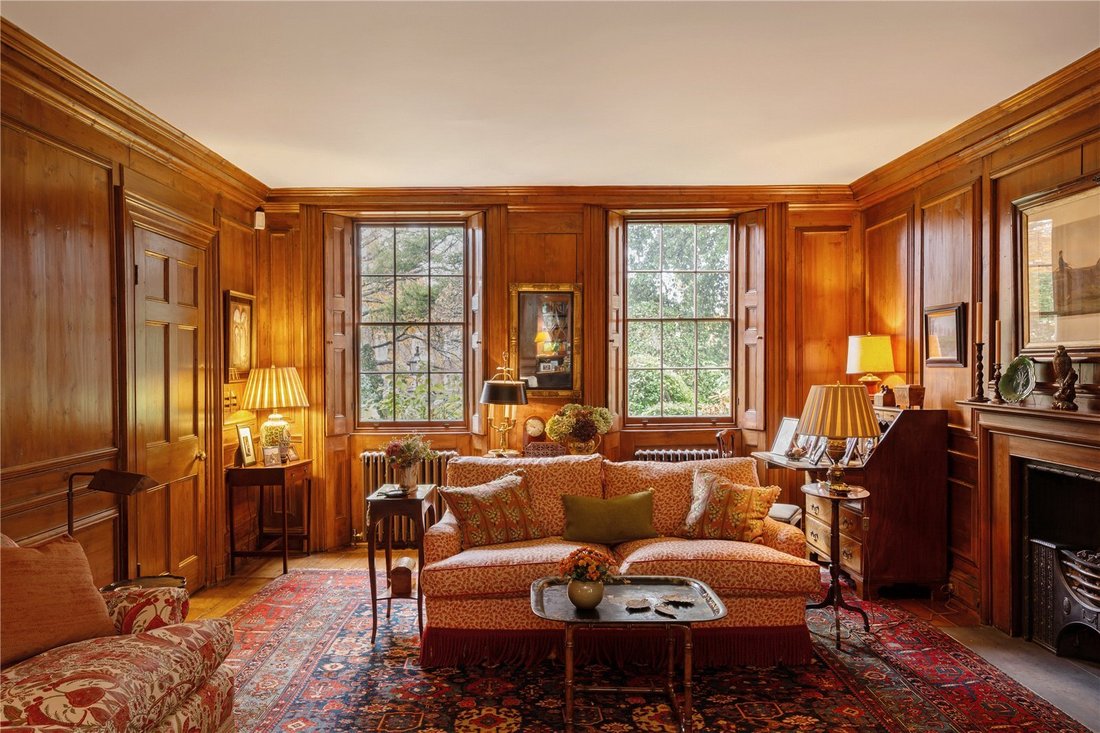
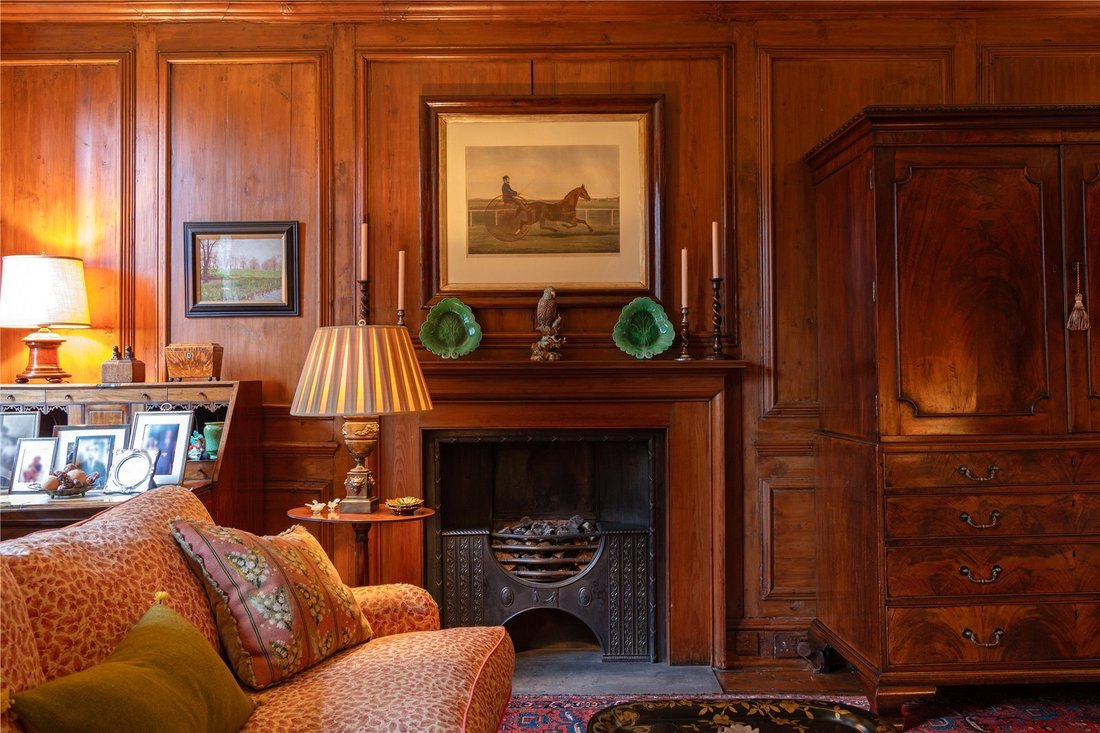
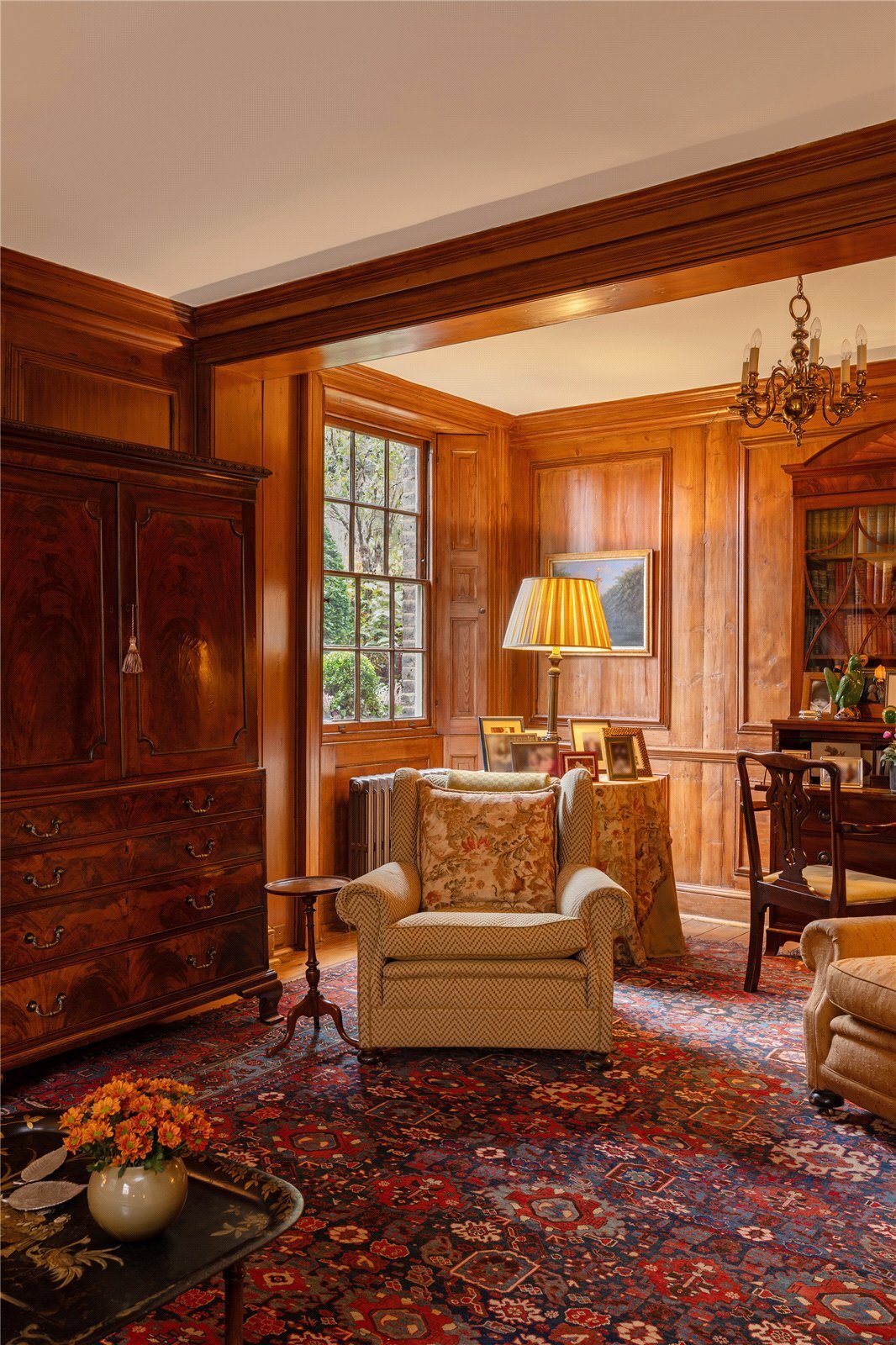
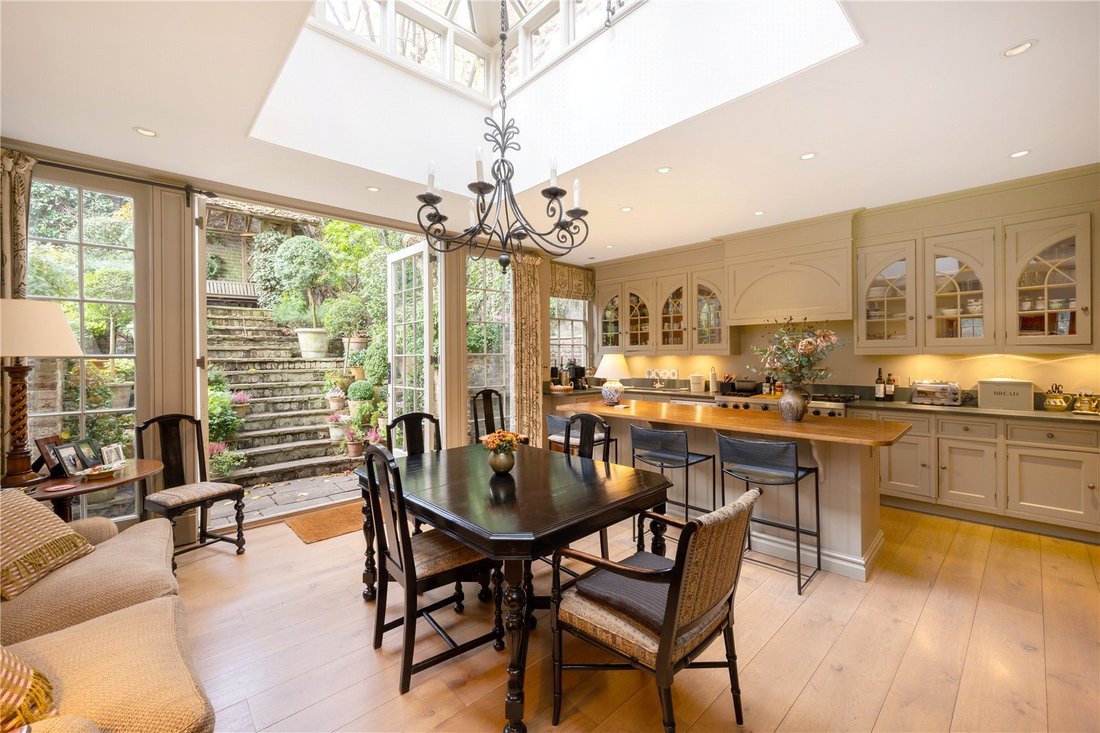
Cloth Hill is listed II* and is of traditional brick construction. The house is arranged over lower ground, ground and two upper storeys with ancillary outbuildings and a double garage fronting The Mount. The property comprises spacious family accommodation in beautifully proportioned rooms. It features uniformly lovely views from its many windows over its extensive gardens, Hampstead Village and central London, from its elevated position very near to the highest point in the city. The house has only had three owners in the last 140 years and has thus been fortunate in retaining many original period features including the two original staircases, panelling and fireplaces as well as benefiting from a substantial ground floor kitchen extension at the rear of the house in the mid 1990s. The beautifully maintained walled, secure gardens almost surround the house with lawns, walks, a patio, summer house and historic fountain, many mature trees and shrubs.
The house has many interesting associations. It was here that Voltaire came in 1728 for his conversations with the Quaker Andrew Pitt (who had married the daughter of William Beech). In 1796, the house was bought by George Romney, the painter, who near the end of his residency, took down the stables and coach-house and built in their place a house with painting room and gallery, now known as ’Romney’s House’. After Romney’s death in 1802, the property was occupied by members of the Rundell family of Rundell and Bridge, the court goldsmiths. It was then that Maria Rundell published in 1806 ’A New System of Domestic Cookery’, a best-selling precursor to the famous cookbook written by Mrs Beeton (who borrowed heavily from Mrs Rundell), which ran to 67 editions and led to her being referred to as ’the original domestic goddess.’ Over the period 1852-1865, Ford Madox Brown painted one of the masterpieces of Victorian art, ’Work’, the setting of which is clearly recognisable as The Mount with the gate of Cloth Hill on the left. The picture includes a sign on the garden wall of Cloth Hill advertising the letting of ’a genteel family residence.
Cloth Hill is located in the centre of Hampstead Village, on The Mount, a narrow single track road which runs at an incline from Heath Street to The Mount Square and ultimately Hampstead Grove.
The excellent shopping facilities of Hampstead Village are immediately to hand, as is Hampstead underground station (Northern Line). Hampstead Heath, with its open parkland of 800 acres and the Iveagh Bequest Kenwood House (English Heritage) are within easy walking distance of the property.
Kitchen with breakfast Room and Pantry
Guest Cloakroom
Principle Bedroom With En-Suite Dressing Room and Toilet
4 additional Bedrooms, one with an En-Suite
A Family Bathroom
Kids Play Room on the second floor
A Lower Ground Self Contained Guest / Staff Flat Comprising of a Double Bedroom, Bathroom, Kitchenette, Living / Games Room, Utility / Laundry Room, Wine Cellar, Garden Access, Secluded Patio and Double Garage
Cloth Hill dates from the late 17th century and is thought to be the second oldest residence in Hampstead, after nearby Fenton House (National Trust). In 1694 Mr William Beech, a Quaker cloth merchant of London, bought a house and some land ’at a place called Cloth Hill’ (so called, it is said, because in Tudor times Hampstead laundresses, who washed using the clean, spring-fed water available in the area, spread out their washing to dry there) and in 1699 bought another house and land close by. Very soon after this he incorporated parts of the two older houses into the house which now stands.
Cloth Hill is listed II* and is of traditional brick construction. The house is arranged over lower ground, ground and two upper storeys with ancillary outbuildings and a double garage fronting The Mount. The property comprises spacious family accommodation in beautifully proportioned rooms. It features uniformly lovely views from its many windows over its extensive gardens, Hampstead Village and central London, from its elevated position very near to the highest point in the city. The house has only had three owners in the last 140 years and has thus been fortunate in retaining many original period features including the two original staircases, panelling and fireplaces as well as benefiting from a substantial ground floor kitchen extension at the rear of the house in the mid 1990s. The beautifully maintained walled, secure gardens almost surround the house with lawns, walks, a patio, summer house and historic fountain, many mature trees and shrubs.
The house has many interesting associations. It was here that Voltaire came in 1728 for his conversations with the Quaker Andrew Pitt (who had married the daughter of William Beech). In 1796, the house was bought by George Romney, the painter, who near the end of his residency, took down the stables and coach-house and built in their place a house with painting room and gallery, now known as ’Romney’s House’. After Romney’s death in 1802, the property was occupied by members of the Rundell family of Rundell and Bridge, the court goldsmiths. It was then that Maria Rundell published in 1806 ’A New System of Domestic Cookery’, a best-selling precursor to the famous cookbook written by Mrs Beeton (who borrowed heavily from Mrs Rundell), which ran to 67 editions and led to her being referred to as ’the original domestic goddess.’ Over the period 1852-1865, Ford Madox Brown painted one of the masterpieces of Victorian art, ’Work’, the setting of which is clearly recognisable as The Mount with the gate of Cloth Hill on the left. The picture includes a sign on the garden wall of Cloth Hill advertising the letting of ’a genteel family residence.
Cloth Hill is located in the centre of Hampstead Village, on The Mount, a narrow single track road which runs at an incline from Heath Street to The Mount Square and ultimately Hampstead Grove.
The excellent shopping facilities of Hampstead Village are immediately to hand, as is Hampstead underground station (Northern Line). Hampstead Heath, with its open parkland of 800 acres and the Iveagh Bequest Kenwood House (English Heritage) are within easy walking distance of the property.
Kitchen with breakfast Room and Pantry
Guest Cloakroom
Principle Bedroom With En-Suite Dressing Room and Toilet
4 additional Bedrooms, one with an En-Suite
A Family Bathroom
Kids Play Room on the second floor
A Lower Ground Self Contained Guest / Staff Flat Comprising of a Double Bedroom, Bathroom, Kitchenette, Living / Games Room, Utility / Laundry Room, Wine Cellar, Garden Access, Secluded Patio and Double Garage
-
Art der Immobilie
Haus
-
Preis/Quadratfuß
$3,651
-
Verbrauch
E
Funktionen
- Garten
- Garage
- Kamin
- Pferdesport
- 2D Grundriss
- Tor
Erkunden Sie die Gegend
The Mount, London, Hampstead, Camden, England
Auf Google Maps anzeigen
Preis pro sqft
Niedrig
Hoch

Vor 2 Jahren beigetreten
Sie haben sich nach diesem Objekt erkundigt
Der Agent wird sich in Kürze mit Ihnen in Verbindung setzen
Gelistet von
31
Angebote
2024
Beigetreten
Besichtigung mit Neir Gigi buchen
Wählen Sie ein Datum und ob Sie eine virtuelle oder persönliche Besichtigung mit dem Makler wünschen.
Bevorzugtes Datum
Art der Tour

Savills - Hampstead
7 Perrin's Court, Hampstead, London, NW3 1QS, United Kingdom
Agenturprofil anzeigen
Zuletzt aktualisiert
September 15
Erstmalig gelistet
Januar 25, 2025
Angebotsreferenz
HAH240303
Das Vertrauen der führenden Makler der Welt
Die Makler hinter den außergewöhnlichsten Immobilien der Welt inserieren bei JamesEdition.
- Angebote von Sotheby's, Christie's, BARNES und Engel & Völkers
- Jedes Angebot wird vor der Veröffentlichung geprüft
- Verbinden Sie sich direkt mit verifizierten Maklern
Indem Sie fortfahren, akzeptieren Sie unsere Nutzungsbedingungen und Datenschutzrichtlinie.