$1,910,436
Cortijo Mit Olivenhainen Zum Verkauf Im Guadalcobacín Flusstal
- 10 Schlafz.
- 3 Bäder
- 3,757 Sqft
-
32
Ansichten der letzten 30 Tage
- 14
Über die Immobilie
Beschreibung wurde automatisch übersetzt.
Die Beschreibung wird in der Originalsprache angezeigt.
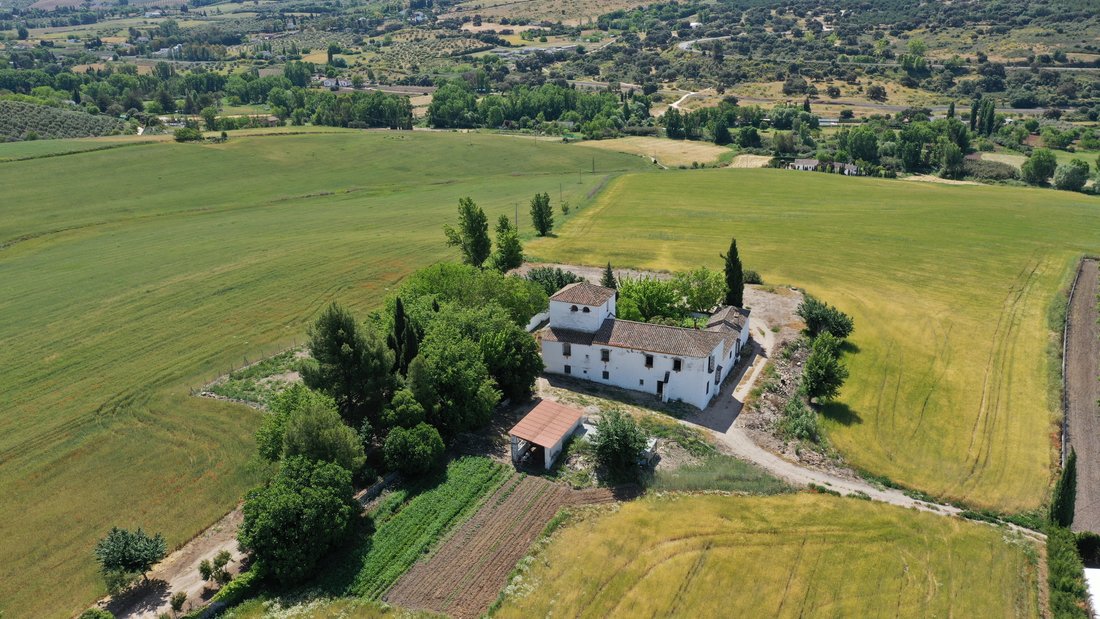
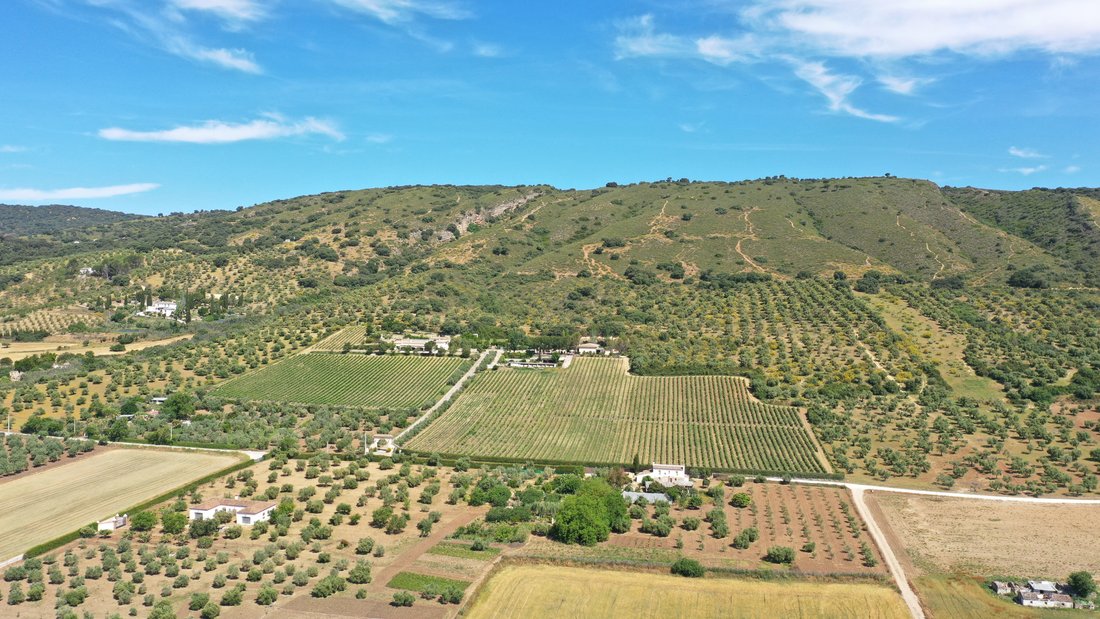
8 km von Ronda entfernt, zwischen Feldern und Olivenhainen im Tal des Flusses Guadalcobacín, befindet sich ein Cortijo mit Tradition und Geschichte, das sogenannte Cortijo de La Vizcondesa. Der Name leitet sich von den ehemaligen Besitzern ab, den Vizegrafen von Torres de Luzón, ein Titel, der von Karl II. im Jahr 1674 an Don Juan Bernardino de Ahumada y Céspedes verliehen wurde.
Das Cort
Das Cort
8km from Ronda, amidst farmland and olive groves in the valley of the Guadalcobacín River, we find a farmhouse with tradition and history, the so-called Cortijo de La Vizcondesa. Its name derives from the former owners, the Viscounts of Torres de Luzón, a title granted by Carlos II in the year 1674 to Don Juan Bernardino de Ahumada y Céspedes.
The farmhouse, located on a plot of almost 62
The farmhouse, located on a plot of almost 62
8 km von Ronda entfernt, zwischen Feldern und Olivenhainen im Tal des Flusses Guadalcobacín, befindet sich ein Cortijo mit Tradition und Geschichte, das sogenannte Cortijo de La Vizcondesa. Der Name leitet sich von den ehemaligen Besitzern ab, den Vizegrafen von Torres de Luzón, ein Titel, der von Karl II. im Jahr 1674 an Don Juan Bernardino de Ahumada y Céspedes verliehen wurde.
Das Cortijo liegt auf einem fast 62 Hektar großen Grundstück, mit 46 Hektar Ackerland und dem Rest Olivenhainen, und es besteht die Möglichkeit, sie separat zu verkaufen. Das Anwesen ist voll funktionsfähig und verfügt über Ackerland von sehr guter Qualität, mit einer über 2 Meter dicken Vegetationsschicht, reichlich Wasser und Entwässerungssystemen, die im Süden an den Fluss Guadalcobacín grenzen.
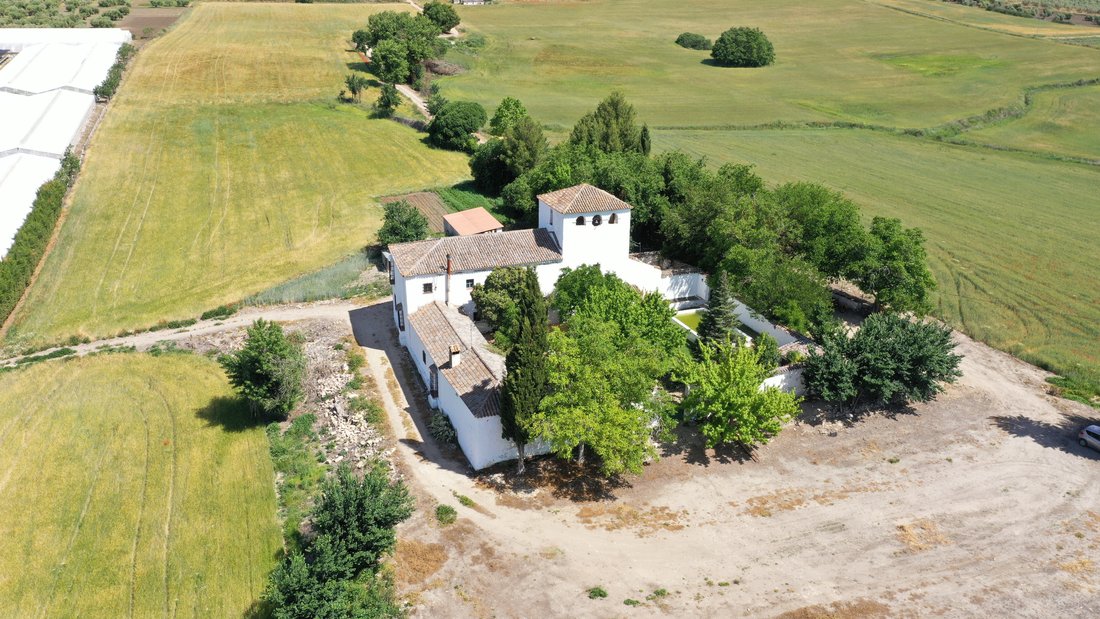
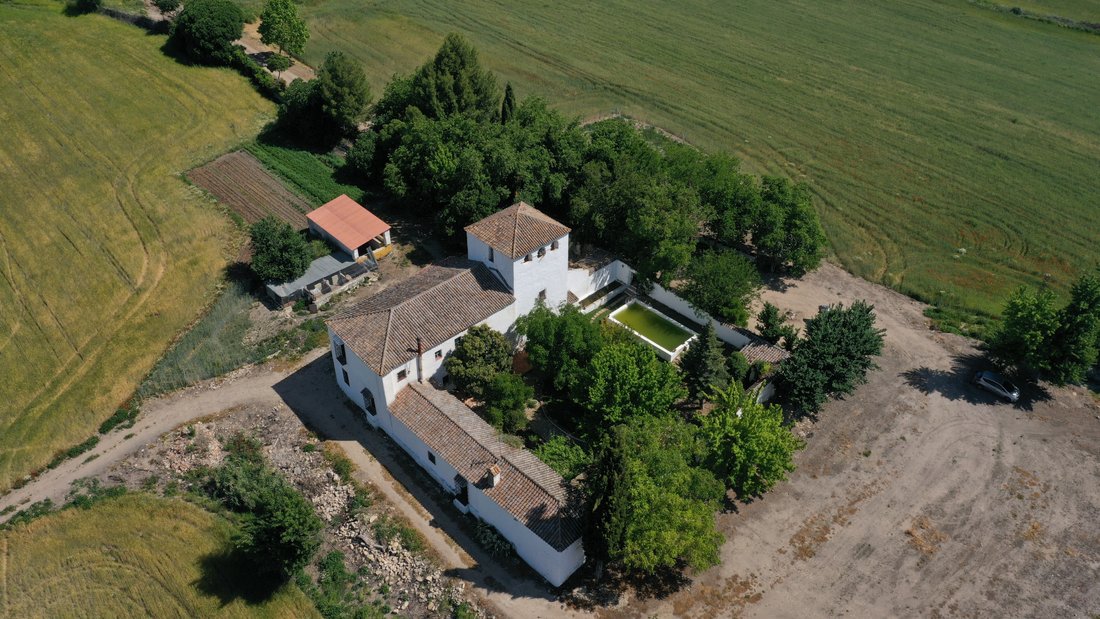
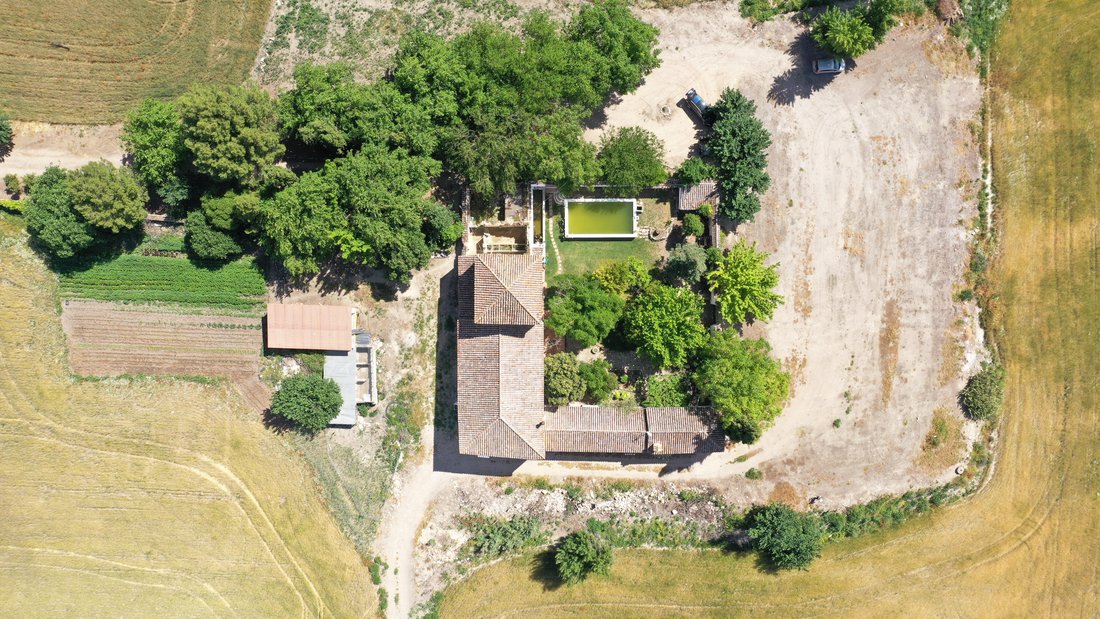
Das Cortijo besteht aus dem Haupthaus, dem Haus für die Hausmeister, einer Kapelle, einem markanten Turm mit Glockenturm und Aussichtsplattform mit Blick auf die Bergkette von Ronda, einem Stall für das Vieh, zwei Werkzeugschuppen und einem Garten mit Pool.
Der Zugang zum Cortijo führt über einen weiten Vorplatz, teilweise gepflastert und teilweise nicht, der durch einen einfachen Eingang, flankiert von zwei Säulen, zu einem zentralen Hof mit einem runden Teich, Blumentöpfen und Palmen führt. Am Ende des Hofes sehen wir das Gebäude, das aus einem massiv wirkenden und soliden Turm besteht, der von einer Aussichtsplattform mit einer Galerie von Kreisbögen abgeschlossen wird, in der eine Glocke hängt.
Angrenzend an den Turm befindet sich ein Herrenhaus, die Wohnstätte der Besitzer mit zwei Etagen. Im Erdgeschoss gibt es ein Wohnzimmer mit Kamin, ein Esszimmer, ein Schlafzimmer, ein Wohnzimmer, eine Küche und ein Badezimmer. Im oberen Stockwerk gibt es 7 Schlafzimmer und ein Badezimmer. Hinter diesem Gebäude befinden sich Ställe und einige Arbeitsräume. Neben diesem Gebäude befindet sich ein weiteres, rechteckiges Gebäude mit einer ebenerdigen Wohnung für Hausmeister, bestehend aus zwei Schlafzimmern, einem Wohnzimmer mit Kamin, einer Küche und einem Badezimmer.
Das geschlossene Erscheinungsbild der Gebäude dieses Cortijos sowie der Turm mit seinen Galerien lassen vermuten, dass der ursprüngliche Teil des Gebäudes Ende des 17. Jahrhunderts oder Anfang des 18. Jahrhunderts erbaut wurde, auf den im Laufe der Jahre weitere Erweiterungen und Umbauten erfolgten.
Dieser Cortijo ist voll funktionsfähig mit seinen landwirtschaftlichen Flächen und Olivenhainen und eignet sich auch ideal für die Freizeitnutzung.
Das Cortijo liegt auf einem fast 62 Hektar großen Grundstück, mit 46 Hektar Ackerland und dem Rest Olivenhainen, und es besteht die Möglichkeit, sie separat zu verkaufen. Das Anwesen ist voll funktionsfähig und verfügt über Ackerland von sehr guter Qualität, mit einer über 2 Meter dicken Vegetationsschicht, reichlich Wasser und Entwässerungssystemen, die im Süden an den Fluss Guadalcobacín grenzen.
Das Cortijo besteht aus dem Haupthaus, dem Haus für die Hausmeister, einer Kapelle, einem markanten Turm mit Glockenturm und Aussichtsplattform mit Blick auf die Bergkette von Ronda, einem Stall für das Vieh, zwei Werkzeugschuppen und einem Garten mit Pool.
Der Zugang zum Cortijo führt über einen weiten Vorplatz, teilweise gepflastert und teilweise nicht, der durch einen einfachen Eingang, flankiert von zwei Säulen, zu einem zentralen Hof mit einem runden Teich, Blumentöpfen und Palmen führt. Am Ende des Hofes sehen wir das Gebäude, das aus einem massiv wirkenden und soliden Turm besteht, der von einer Aussichtsplattform mit einer Galerie von Kreisbögen abgeschlossen wird, in der eine Glocke hängt.
Angrenzend an den Turm befindet sich ein Herrenhaus, die Wohnstätte der Besitzer mit zwei Etagen. Im Erdgeschoss gibt es ein Wohnzimmer mit Kamin, ein Esszimmer, ein Schlafzimmer, ein Wohnzimmer, eine Küche und ein Badezimmer. Im oberen Stockwerk gibt es 7 Schlafzimmer und ein Badezimmer. Hinter diesem Gebäude befinden sich Ställe und einige Arbeitsräume. Neben diesem Gebäude befindet sich ein weiteres, rechteckiges Gebäude mit einer ebenerdigen Wohnung für Hausmeister, bestehend aus zwei Schlafzimmern, einem Wohnzimmer mit Kamin, einer Küche und einem Badezimmer.
Das geschlossene Erscheinungsbild der Gebäude dieses Cortijos sowie der Turm mit seinen Galerien lassen vermuten, dass der ursprüngliche Teil des Gebäudes Ende des 17. Jahrhunderts oder Anfang des 18. Jahrhunderts erbaut wurde, auf den im Laufe der Jahre weitere Erweiterungen und Umbauten erfolgten.
Dieser Cortijo ist voll funktionsfähig mit seinen landwirtschaftlichen Flächen und Olivenhainen und eignet sich auch ideal für die Freizeitnutzung.
8km from Ronda, amidst farmland and olive groves in the valley of the Guadalcobacín River, we find a farmhouse with tradition and history, the so-called Cortijo de La Vizcondesa. Its name derives from the former owners, the Viscounts of Torres de Luzón, a title granted by Carlos II in the year 1674 to Don Juan Bernardino de Ahumada y Céspedes.
The farmhouse, located on a plot of almost 62 hectares, with 46 hectares of farmland and the rest olive groves, with the possibility of being sold separately, is in perfect working order. It has very good quality land for farming, with a vegetation cover of over 2 meters thick, abundant water, and drainage systems, bordering to the south with the Guadalcobacín River.
The farmhouse itself consists of the main house and a caretaker’s house, a chapel, an emblematic tower with a belfry and a viewpoint overlooking the Ronda mountain range, a livestock shed, two utility rooms, and a garden with a swimming pool.
The entrance to the farmhouse is preceded by a large square, partly paved and partly not, which leads through a simple entrance, flanked by two pillars, to a central courtyard with a round pond, pots and palm trees. At the back of the courtyard, we can see the building, consisting of a tower with a solid, sturdy appearance topped by a lookout with a gallery of lowered round arches, where a bell is housed.
Attached to the tower is a mansion, the owners’ residence on two floors. On the main floor, there is a living room with a fireplace, dining room, bedroom, sitting room, kitchen, and bathroom. Upstairs, there are 7 bedrooms and a bathroom. Behind this building, there are stables and some agricultural outbuildings. Linked to this building is another rectangular one-story structure, the caretaker’s residence, with two bedrooms, a living room with a fireplace, kitchen, and bathroom.
The closed-off appearance of the buildings of this farmhouse, as well as the tower with its galleries, lead us to believe that the original structure of the building was constructed in the late 17th or early 18th century, with subsequent expansions and renovations carried out over the years.
This farmhouse is fully functional with its farmland and olive groves, making it ideal for both agricultural and recreational exploitation.
The farmhouse, located on a plot of almost 62 hectares, with 46 hectares of farmland and the rest olive groves, with the possibility of being sold separately, is in perfect working order. It has very good quality land for farming, with a vegetation cover of over 2 meters thick, abundant water, and drainage systems, bordering to the south with the Guadalcobacín River.
The farmhouse itself consists of the main house and a caretaker’s house, a chapel, an emblematic tower with a belfry and a viewpoint overlooking the Ronda mountain range, a livestock shed, two utility rooms, and a garden with a swimming pool.
The entrance to the farmhouse is preceded by a large square, partly paved and partly not, which leads through a simple entrance, flanked by two pillars, to a central courtyard with a round pond, pots and palm trees. At the back of the courtyard, we can see the building, consisting of a tower with a solid, sturdy appearance topped by a lookout with a gallery of lowered round arches, where a bell is housed.
Attached to the tower is a mansion, the owners’ residence on two floors. On the main floor, there is a living room with a fireplace, dining room, bedroom, sitting room, kitchen, and bathroom. Upstairs, there are 7 bedrooms and a bathroom. Behind this building, there are stables and some agricultural outbuildings. Linked to this building is another rectangular one-story structure, the caretaker’s residence, with two bedrooms, a living room with a fireplace, kitchen, and bathroom.
The closed-off appearance of the buildings of this farmhouse, as well as the tower with its galleries, lead us to believe that the original structure of the building was constructed in the late 17th or early 18th century, with subsequent expansions and renovations carried out over the years.
This farmhouse is fully functional with its farmland and olive groves, making it ideal for both agricultural and recreational exploitation.
-
Art der Immobilie
Finca
-
Preis/Quadratfuß
$508
Funktionen
- Garten
- Pool
- Terrasse
- Garage
- Pferdesport
- Bergblick
- Kamin
- Luxusvilla
- Gasherd
Funktionen
Lot
- Bergblick
- Pferdesport
- Luxusvilla
Innenbereich
- Kamin
- Klimaanlage
- Gasherd
Outdoor
- Terrasse
- Pool
- Garage
- Garten
Erkunden Sie die Gegend
Ronda, 29400, Andalusien, Spanien
Auf Google Maps anzeigen
Preis pro sqft
Niedrig
Hoch
Ronda is one of the most historically significant cities in Andalusia, set dramatically on a plateau divided by the El Tajo gorge, with sheer cliffs dropping nearly 100 metres to the Guadalevín River below. The city’s old town, La Ciudad, retains its Moorish street plan and is home to one of Spain’s oldest bullrings, the Plaza de Toros de Ronda, built in 1785. The surrounding Serranía de Ronda provides a landscape of exceptional scale and character that defines life here.
Daily life in Ronda centres on the Alameda del Tajo gardens, the market on Calle Virgen de la Paz, and restaurants such as Bardal, which holds two Michelin stars, and Tragatá, its more casual sibling. The Puente Nuevo bridge and the Arab Baths are within the city itself. The surrounding countryside offers direct access to the Sierra de las Nieves National Park.
Ronda is served by its own train station with direct connections to Málaga, a journey of approximately two hours, and to Algeciras. By road, Málaga is roughly 100 kilometres via the A-367, taking around one hour and fifteen minutes. Málaga-Costa del Sol Airport is the primary international gateway, handling routes across Europe and beyond, and is reachable in under ninety minutes by car.
Daily life in Ronda centres on the Alameda del Tajo gardens, the market on Calle Virgen de la Paz, and restaurants such as Bardal, which holds two Michelin stars, and Tragatá, its more casual sibling. The Puente Nuevo bridge and the Arab Baths are within the city itself. The surrounding countryside offers direct access to the Sierra de las Nieves National Park.
Ronda is served by its own train station with direct connections to Málaga, a journey of approximately two hours, and to Algeciras. By road, Málaga is roughly 100 kilometres via the A-367, taking around one hour and fifteen minutes. Málaga-Costa del Sol Airport is the primary international gateway, handling routes across Europe and beyond, and is reachable in under ninety minutes by car.
In der Nähe anzeigen
Sehenswürdigkeiten
Schulen
Málaga-Costa del Sol Airport
Airport
94 Min.
Ronda Train Station
Train Station
5 Min.
Puente Nuevo
Culture & Heritage
3 Min.
Restaurante Bardal
Dining & Wine
3 Min.
La Casa del Rey Moro
Culture & Heritage
4 Min.
Colegio Juan de la Rosa
Public School
6 Min.
Sagrado Corazón de Jesús
Private School
7 Min.
Vor 2 Jahren beigetreten
Sie haben sich nach diesem Objekt erkundigt
Der Agent wird sich in Kürze mit Ihnen in Verbindung setzen
Gelistet von
6
Angebote
2024
Beigetreten
Besichtigung mit Marta Amann buchen
Wählen Sie ein Datum und ob Sie eine virtuelle oder persönliche Besichtigung mit dem Makler wünschen.
Bevorzugtes Datum
Art der Tour

Spain Sotheby's International Realty
Plaza Nueva, 3, 41001, Sevilla, Sevilla, Spain
Agenturprofil anzeigen
Zuletzt aktualisiert
August 7
Erstmalig gelistet
Jun 13, 2024
Angebotslink
Angebotsreferenz
FE2HX3
Ähnliche Immobilien in der Nähe
Neue Angebote in Ronda

Entdecken Sie mehr Häuser zum Verkauf
Ronda, Andalusien, Spanien Immobilienarten
- Farm Ranches zum Verkauf in Ronda, Andalusien, Spanien
- Villen zum Verkauf in Ronda, Andalusien, Spanien
- Landhaus zum Verkauf in Ronda, Andalusien, Spanien
- Fincas zum Verkauf in Ronda, Andalusien, Spanien
- Häuser zum Verkauf in Ronda, Andalusien, Spanien
- Land zum Verkauf in Ronda, Andalusien, Spanien
- Chalets zum Verkauf in Ronda, Andalusien, Spanien
Ronda, Andalusien, Spanien beliebte Suchanfragen
- Immobilien mit Flussblick in Ronda, Andalusien, Spanien
- Immobilien mit Aufzug in Ronda, Andalusien, Spanien
- Pferdesport Immobilien in Ronda, Andalusien, Spanien
- Immobilien mit Pool in Ronda, Andalusien, Spanien
- Immobilien mit Weinberg in Ronda, Andalusien, Spanien
- am See Immobilien in Ronda, Andalusien, Spanien
- am Fluss Immobilien in Ronda, Andalusien, Spanien
Verwandte Leitfäden & Geschichten
Das Vertrauen der führenden Makler der Welt
Die Makler hinter den außergewöhnlichsten Immobilien der Welt inserieren bei JamesEdition.
- Angebote von Sotheby's, Christie's, BARNES und Engel & Völkers
- Jedes Angebot wird vor der Veröffentlichung geprüft
- Verbinden Sie sich direkt mit verifizierten Maklern
Indem Sie fortfahren, akzeptieren Sie unsere Nutzungsbedingungen und Datenschutzrichtlinie.