Preis auf Anfrage
Das Schloss Von San Martín In Oviedo, Asturien
- 24 Schlafz.
- 12 Bäder
- 26,910 Sqft
- 86
Über die Immobilie
Beschreibung wurde automatisch übersetzt.
Die Beschreibung wird in der Originalsprache angezeigt.
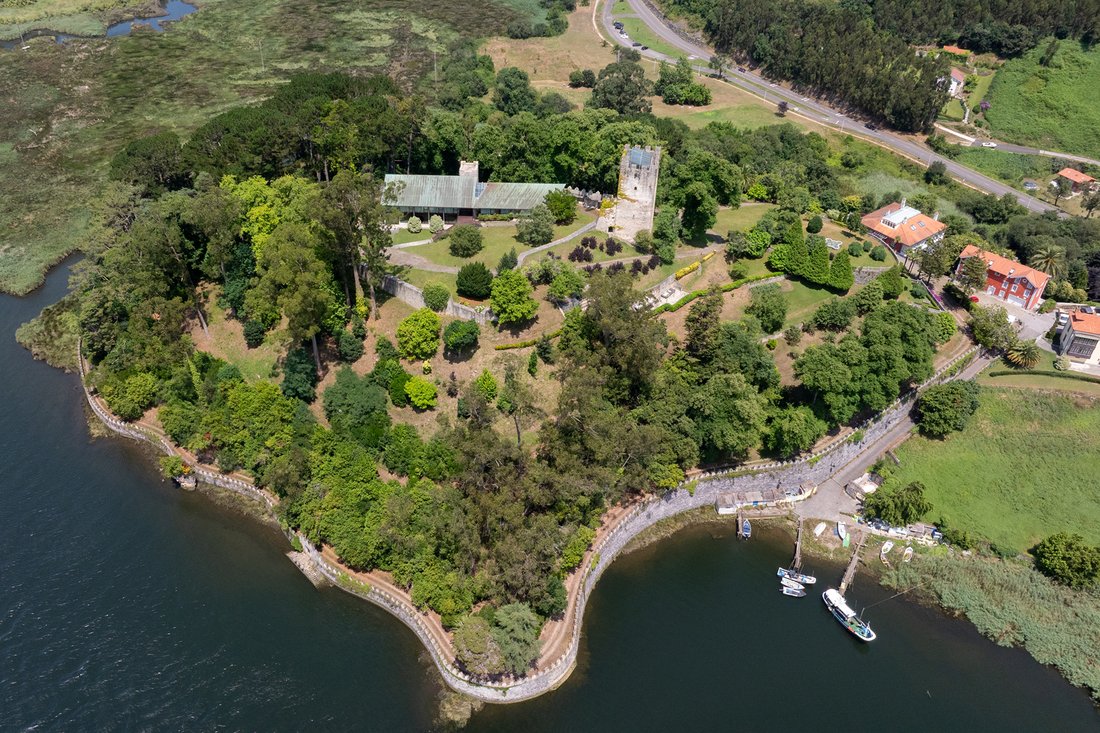
Die Burg von San Martín, die in Soto del Barco, Asturien, liegt, befindet sich an der Mündung des Flusses Nalón. Es wird angenommen, dass Alfonso III den Bau dieser Festung über den Überresten einer früheren Siedlung vorangetrieben hat. Während des Mittelalters spielte es eine entscheidende Rolle in verschiedenen Adelsauseinandersetzungen und wurde in den neunziger Jahren restauriert.
Die
Die
San Martín Castle, located in Soto del Barco, Asturias, is situated at the mouth of the Nalón River. It is believed that Alfonso III promoted the construction of this fortress on the remains of a previous settlement. During the Middle Ages, it played a crucial role in various noble conflicts and was restored in the nineties.
This castle enjoys a privileged position, being only 7 kilometer
This castle enjoys a privileged position, being only 7 kilometer
Die Burg von San Martín, die in Soto del Barco, Asturien, liegt, befindet sich an der Mündung des Flusses Nalón. Es wird angenommen, dass Alfonso III den Bau dieser Festung über den Überresten einer früheren Siedlung vorangetrieben hat. Während des Mittelalters spielte es eine entscheidende Rolle in verschiedenen Adelsauseinandersetzungen und wurde in den neunziger Jahren restauriert.
Diese Burg genießt eine privilegierte Lage, nur 7 Kilometer vom Flughafen Asturien entfernt und mit hervorragenden Verkehrsverbindungen.
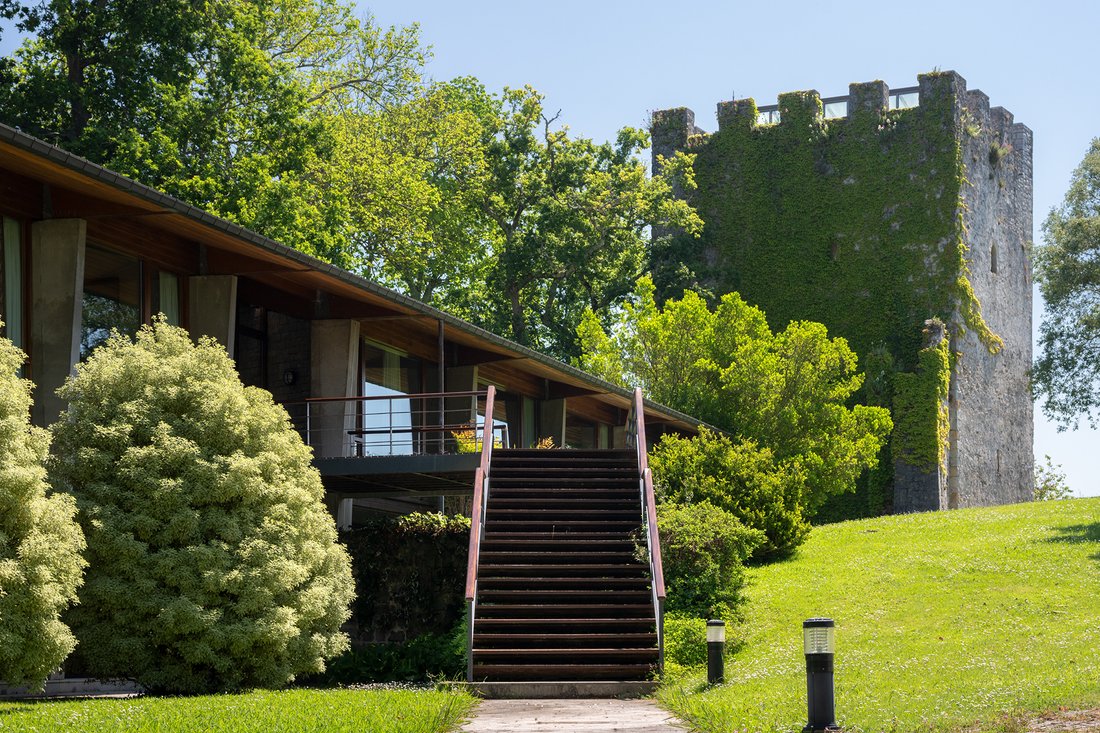
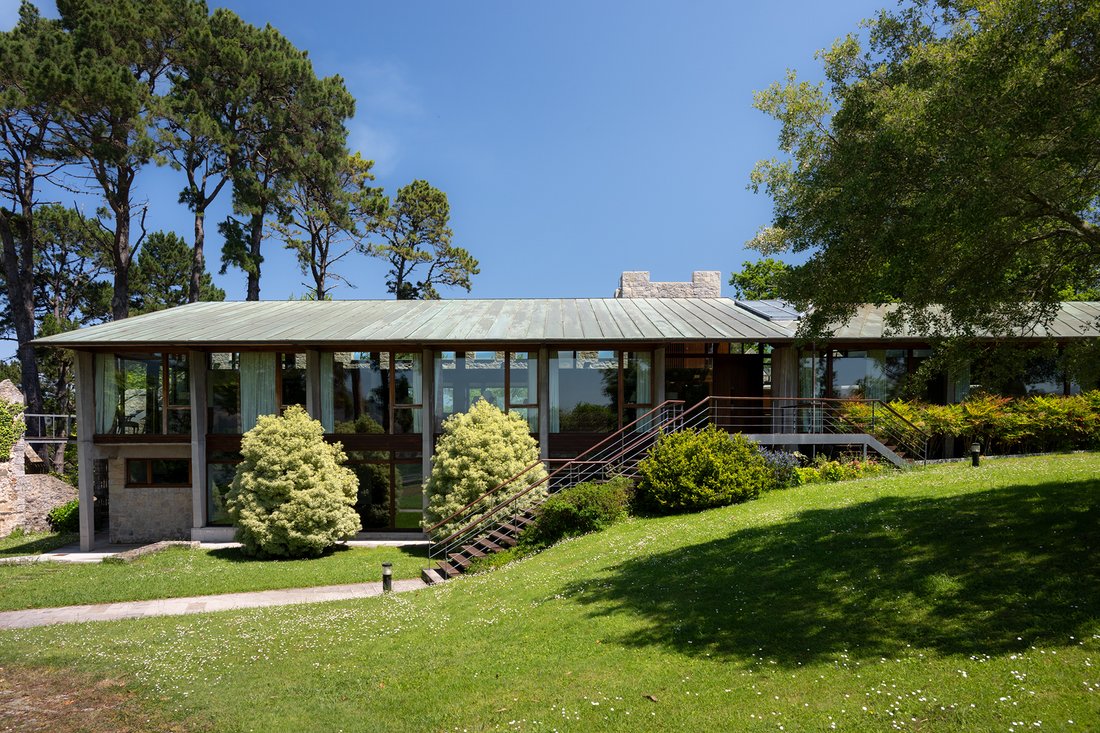
Das Anwesen des Castillo umfasst 43.485 m², die vollständig von einer hohen Mauer mit Zinnen umgeben sind. An seiner Spitze erhebt sich ein beeindruckender Turm oder ein viereckiger Turm von 120 m², begleitet von einem zeitgenössischen Bau von 1.220 m², der an die Mauer angebaut ist und äußerlich in Form eines Balkons neben dem Turm hervorragt.
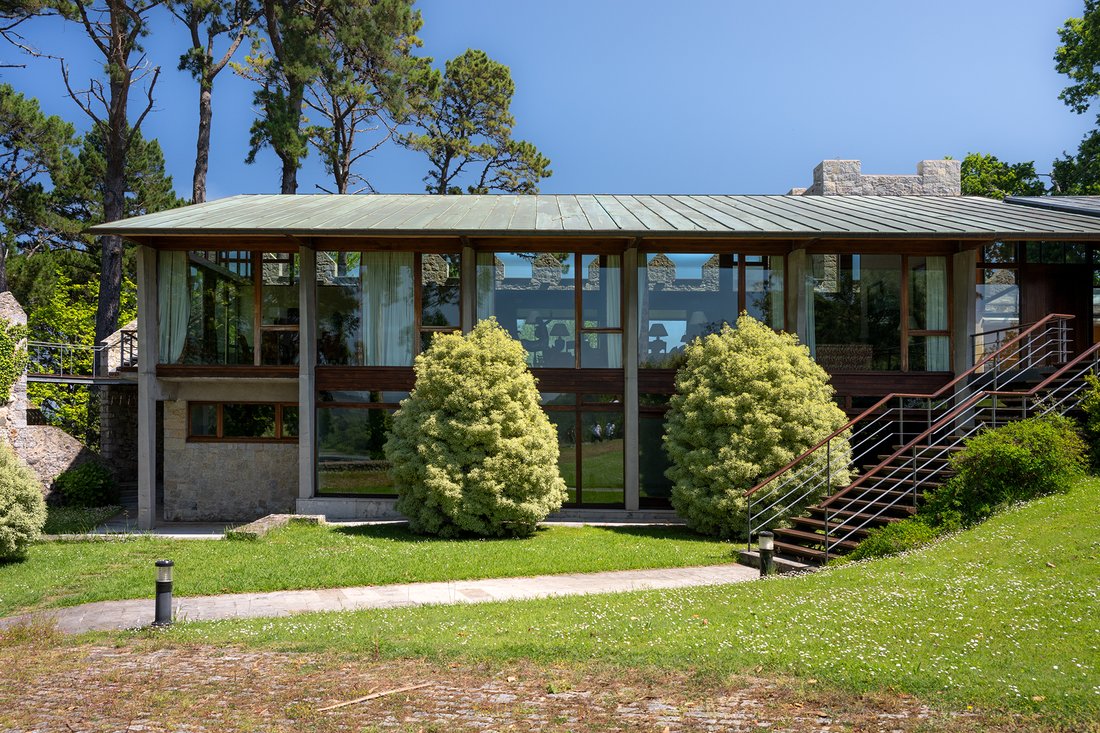
Das neue Gebäude ist ein moderner zweistöckiger Pavillon mit 767 m², gebaut mit Materialien, die sich harmonisch in die Umgebung einfügen. Das Haupthaus erstreckt sich linear auf einer einzigen Etage, mit Ausnahmen wie dem Pool, der Küche und den Serviceräumen, die auf einer unteren Ebene liegen. Im Hauptgeschoss befinden sich das große Wohn- und Esszimmer und drei wunderbare Suiten mit Badezimmer. Auf der unteren Ebene, neben der Küche, befindet sich ein Innenpool und der Serviceteil.
Der Turm ist eine mittelalterliche Steinstruktur, die intern modernisiert wurde, um eine effiziente Raumnutzung zu ermöglichen, ohne die ursprünglichen Materialien zu beeinträchtigen, einschließlich eines Aufzugs und Treppen, um auf jede Ebene zuzugreifen. Ein verglaster Aussichtspunkt bietet spektakuläre Ausblicke auf die umliegende Naturlandschaft.
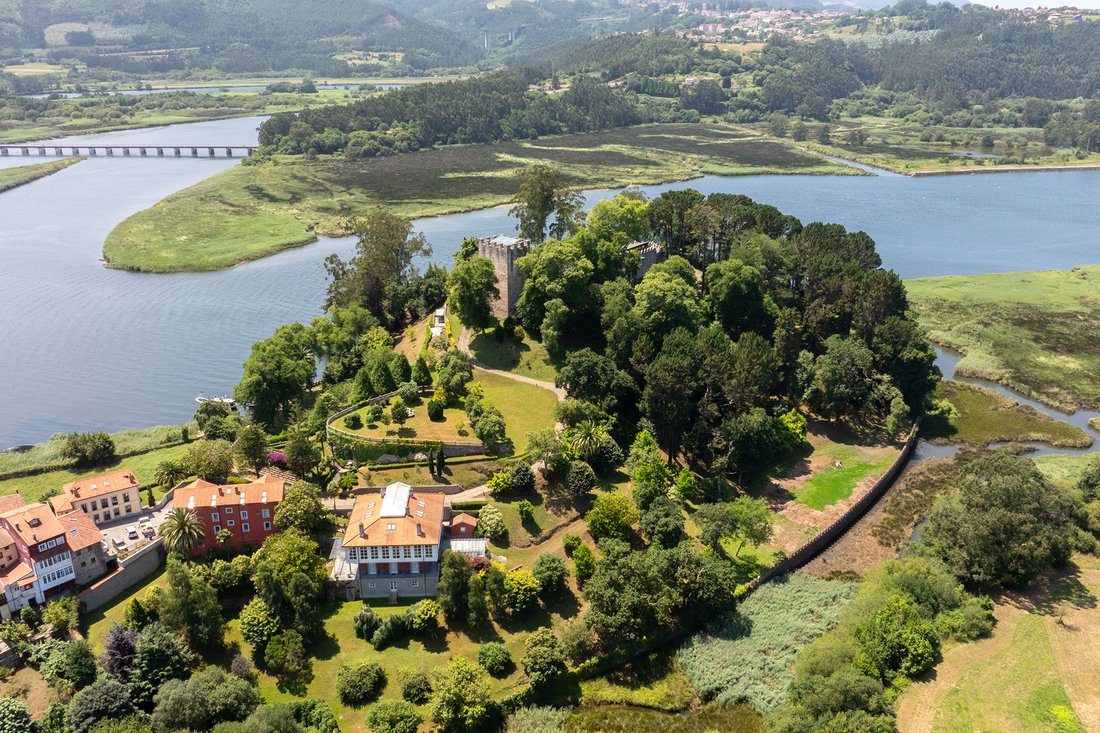
Im unteren Teil des Anwesens steht La Casona, ein dreistöckiges Wohnhaus mit 767 m². Dieses Haus, von bemerkenswertem architektonischen Interesse und kürzlich renoviert, ist bezugsfertig. Erbaut zu Beginn des 20. Jahrhunderts, spiegelt es den asturischen Volksstil wider und verfügt über Dachfenster und Außengalerien, die als Loggien dienen. Über den mittleren Stock gelangt man zu einem zentralen Flur, der durch das Gebäude führt und in einen von einer Glasgalerie geschützten Gang mündet. Es verfügt über vier Haupt-Schlafzimmer, ein Wohnzimmer, drei Bäder, sowie ein zusätzliches Wohn- und Esszimmer im Erdgeschoss und drei zusätzliche Schlafzimmer im Dachgeschoss.
Der Garten ahmt italienische Landschaftsdesigns mit abgegrenzten Terrassen nach, wobei Obstbäume und Sträucher vorherrschen, darunter auch Hundertjährige Exemplare.
Im Süden des Anwesens, gegenüber dem Haupteingang, befindet sich ein weiteres Haus mit 530 m², strukturiert auf drei Etagen und aufgeteilt in vier komplett möblierte und dekorierte Apartments, jeweils mit eigener Garage und Lagerräumen.
Diese Burg genießt eine privilegierte Lage, nur 7 Kilometer vom Flughafen Asturien entfernt und mit hervorragenden Verkehrsverbindungen.
Das Anwesen des Castillo umfasst 43.485 m², die vollständig von einer hohen Mauer mit Zinnen umgeben sind. An seiner Spitze erhebt sich ein beeindruckender Turm oder ein viereckiger Turm von 120 m², begleitet von einem zeitgenössischen Bau von 1.220 m², der an die Mauer angebaut ist und äußerlich in Form eines Balkons neben dem Turm hervorragt.
Das neue Gebäude ist ein moderner zweistöckiger Pavillon mit 767 m², gebaut mit Materialien, die sich harmonisch in die Umgebung einfügen. Das Haupthaus erstreckt sich linear auf einer einzigen Etage, mit Ausnahmen wie dem Pool, der Küche und den Serviceräumen, die auf einer unteren Ebene liegen. Im Hauptgeschoss befinden sich das große Wohn- und Esszimmer und drei wunderbare Suiten mit Badezimmer. Auf der unteren Ebene, neben der Küche, befindet sich ein Innenpool und der Serviceteil.
Der Turm ist eine mittelalterliche Steinstruktur, die intern modernisiert wurde, um eine effiziente Raumnutzung zu ermöglichen, ohne die ursprünglichen Materialien zu beeinträchtigen, einschließlich eines Aufzugs und Treppen, um auf jede Ebene zuzugreifen. Ein verglaster Aussichtspunkt bietet spektakuläre Ausblicke auf die umliegende Naturlandschaft.
Im unteren Teil des Anwesens steht La Casona, ein dreistöckiges Wohnhaus mit 767 m². Dieses Haus, von bemerkenswertem architektonischen Interesse und kürzlich renoviert, ist bezugsfertig. Erbaut zu Beginn des 20. Jahrhunderts, spiegelt es den asturischen Volksstil wider und verfügt über Dachfenster und Außengalerien, die als Loggien dienen. Über den mittleren Stock gelangt man zu einem zentralen Flur, der durch das Gebäude führt und in einen von einer Glasgalerie geschützten Gang mündet. Es verfügt über vier Haupt-Schlafzimmer, ein Wohnzimmer, drei Bäder, sowie ein zusätzliches Wohn- und Esszimmer im Erdgeschoss und drei zusätzliche Schlafzimmer im Dachgeschoss.
Der Garten ahmt italienische Landschaftsdesigns mit abgegrenzten Terrassen nach, wobei Obstbäume und Sträucher vorherrschen, darunter auch Hundertjährige Exemplare.
Im Süden des Anwesens, gegenüber dem Haupteingang, befindet sich ein weiteres Haus mit 530 m², strukturiert auf drei Etagen und aufgeteilt in vier komplett möblierte und dekorierte Apartments, jeweils mit eigener Garage und Lagerräumen.
San Martín Castle, located in Soto del Barco, Asturias, is situated at the mouth of the Nalón River. It is believed that Alfonso III promoted the construction of this fortress on the remains of a previous settlement. During the Middle Ages, it played a crucial role in various noble conflicts and was restored in the nineties.
This castle enjoys a privileged position, being only 7 kilometers from the Asturias airport and with excellent transport connections.
The property of El Castillo covers 43,485 m², completely enclosed by a high wall with battlements. At its peak stands an impressive tower or square tower of 120 m², accompanied by a contemporary construction of 1,220 m² that is attached to the wall and externally protrudes in the form of a balcony adjacent to the tower.
The new building is a modern two-storey pavilion of 767 m², built with materials that harmonize with the environment. The main house extends linearly on a single floor, with exceptions such as the pool, the kitchen, and the service rooms, located on a lower level. On the main floor are the large living room and dining room and three wonderful suites with bathrooms. On the lower level, there is also the kitchen, an indoor pool, and the service area.
The tower is a medieval stone structure that has been internally modernized to allow efficient use of space without compromising the original materials, including an elevator and stairs to access each level. A glassed-in viewpoint offers spectacular views of the surrounding natural area.
In the lower area of the estate is La Casona, a three-storey house with 767 m² built. This house, of notable architectural interest and recently renovated, is ready to move in. Erected at the beginning of the 20th century, it reflects the Asturian vernacular style and features skylights and exterior galleries that function as loggias. Accessed from the middle level, there is a central corridor that crosses the building and leads to a corridor sheltered by a glass gallery. It has four main bedrooms, a living room, three bathrooms, plus another living room and dining room on the ground floor and three additional bedrooms in the attic.
The garden emulates Italian landscape designs with delimited terraces, predominating fruit trees and shrubs including centennial specimens.
To the south of the property, in front of the main entrance, there is another 530 m² house, structured in three floors and divided into four completely furnished and decorated apartments, each with its own garage and storage areas.
This castle enjoys a privileged position, being only 7 kilometers from the Asturias airport and with excellent transport connections.
The property of El Castillo covers 43,485 m², completely enclosed by a high wall with battlements. At its peak stands an impressive tower or square tower of 120 m², accompanied by a contemporary construction of 1,220 m² that is attached to the wall and externally protrudes in the form of a balcony adjacent to the tower.
The new building is a modern two-storey pavilion of 767 m², built with materials that harmonize with the environment. The main house extends linearly on a single floor, with exceptions such as the pool, the kitchen, and the service rooms, located on a lower level. On the main floor are the large living room and dining room and three wonderful suites with bathrooms. On the lower level, there is also the kitchen, an indoor pool, and the service area.
The tower is a medieval stone structure that has been internally modernized to allow efficient use of space without compromising the original materials, including an elevator and stairs to access each level. A glassed-in viewpoint offers spectacular views of the surrounding natural area.
In the lower area of the estate is La Casona, a three-storey house with 767 m² built. This house, of notable architectural interest and recently renovated, is ready to move in. Erected at the beginning of the 20th century, it reflects the Asturian vernacular style and features skylights and exterior galleries that function as loggias. Accessed from the middle level, there is a central corridor that crosses the building and leads to a corridor sheltered by a glass gallery. It has four main bedrooms, a living room, three bathrooms, plus another living room and dining room on the ground floor and three additional bedrooms in the attic.
The garden emulates Italian landscape designs with delimited terraces, predominating fruit trees and shrubs including centennial specimens.
To the south of the property, in front of the main entrance, there is another 530 m² house, structured in three floors and divided into four completely furnished and decorated apartments, each with its own garage and storage areas.
-
Art der Immobilie
Andere
-
Baujahr
1800
Funktionen
Erkunden Sie die Gegend
Oviedo, O 33126, Centro y casco historico, Spanien
Auf Google Maps anzeigen
Preis pro sqft
Niedrig
Hoch
Vor 2 Jahren beigetreten
Sie haben sich nach diesem Objekt erkundigt
Der Agent wird sich in Kürze mit Ihnen in Verbindung setzen
Gelistet von
17
Angebote
2024
Beigetreten
Besichtigung mit Livia Ballestero buchen
Wählen Sie ein Datum und ob Sie eine virtuelle oder persönliche Besichtigung mit dem Makler wünschen.
Bevorzugtes Datum
Art der Tour

Spain Sotheby's International Realty
Calle Lagasca 28, 28001, Madrid, Madrid, Spain
Agenturprofil anzeigen
Offering high-end properties in the city, villas and equestrian farms on the
outskirts of the city. Madrid, the
outskirts of the city. Madrid, the
Offering high-end properties in the city, villas and equestrian farms on the
outskirts of the city. Madrid, the capital of Spain, is located in the centre of
the Iberian Peninsula. It is a very active city, with a lively nightlife and
scores of daytime allures. It is home to famous museums such as El Prado,
Thyssen-Bornemisza and Reina Sofia, great historic architecture, shopping
boulevards and excellent cuisine. It has a great diversity of districts that
merit visiting.
outskirts of the city. Madrid, the capital of Spain, is located in the centre of
the Iberian Peninsula. It is a very active city, with a lively nightlife and
scores of daytime allures. It is home to famous museums such as El Prado,
Thyssen-Bornemisza and Reina Sofia, great historic architecture, shopping
boulevards and excellent cuisine. It has a great diversity of districts that
merit visiting.
Zuletzt aktualisiert
April 22
Erstmalig gelistet
Mai 14, 2025
Angebotslink
Angebotsreferenz
9WT9EJ
Das Vertrauen der führenden Makler der Welt
Die Makler hinter den außergewöhnlichsten Immobilien der Welt inserieren bei JamesEdition.
- Angebote von Sotheby's, Christie's, BARNES und Engel & Völkers
- Jedes Angebot wird vor der Veröffentlichung geprüft
- Verbinden Sie sich direkt mit verifizierten Maklern
Indem Sie fortfahren, akzeptieren Sie unsere Nutzungsbedingungen und Datenschutzrichtlinie.