$3,245,129
Landgut Garbayuela
- 9 Schlafz.
- 3 Bäder
- 864.87 Ac lot
- Aktualisiert: Gestern
- 2
Über die Immobilie
Beschreibung wurde automatisch übersetzt.
Die Beschreibung wird in der Originalsprache angezeigt.
1) Overview
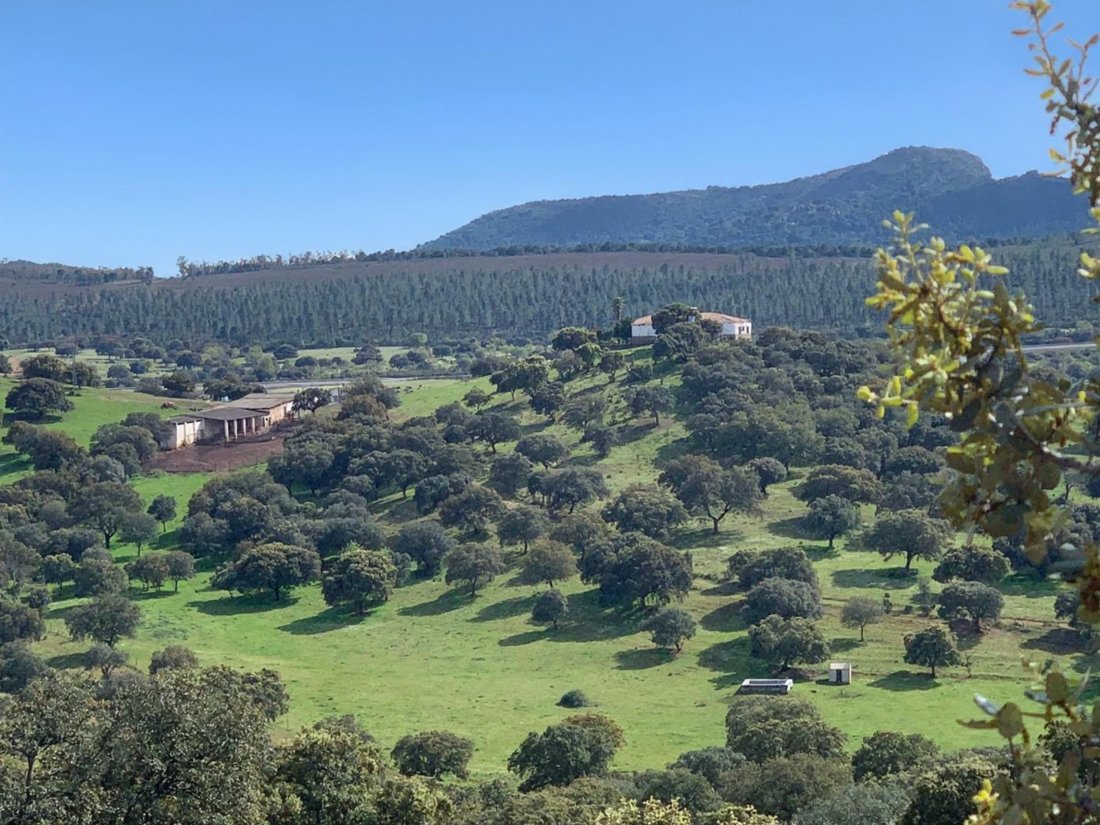
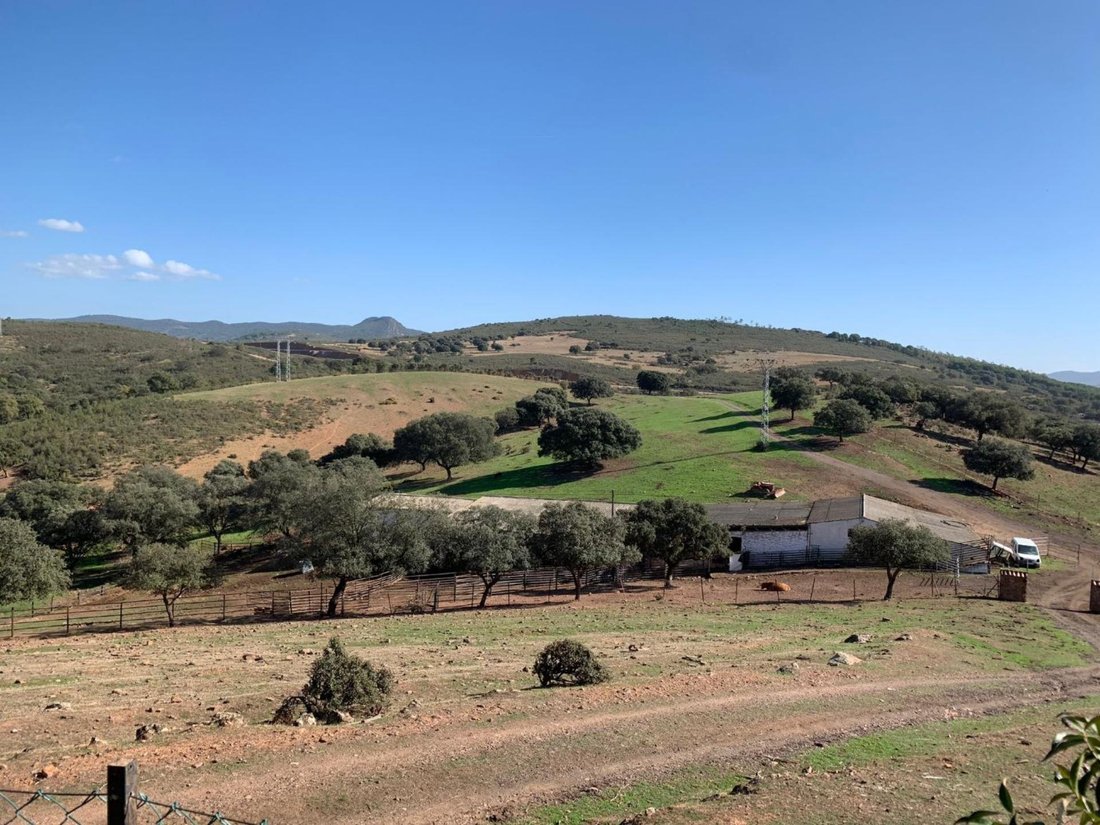
The estate is a dehesa located in Badajoz, within the Siberia Extremeña Biosphere Reserve, recognized by UNESCO. It has excellent access via the national road N-430 and its branch N-430a.
The land combines permanent pastures with oak and cork oak trees, as well as reforested areas with oaks, cork oaks, and gall oaks. It is currently used for agricultural and livestock farm
The estate is a dehesa located in Badajoz, within the Siberia Extremeña Biosphere Reserve, recognized by UNESCO. It has excellent access via the national road N-430 and its branch N-430a.
The land combines permanent pastures with oak and cork oak trees, as well as reforested areas with oaks, cork oaks, and gall oaks. It is currently used for agricultural and livestock farm
1) Overview
The estate is a dehesa located in Badajoz, within the Siberia Extremeña Biosphere Reserve, recognized by UNESCO. It has excellent access via the national road N-430 and its branch N-430a.
The land combines permanent pastures with oak and cork oak trees, as well as reforested areas with oaks, cork oaks, and gall oaks. It is currently used for agricultural and livestock farming, focused on cattle, and includes suitable buildings, facilities, and machinery.
A stream crosses the estate from east to west, and another stream originates in the eastern sector. Its flow is seasonal, but the estate has abundant water resources thanks to springs, ponds, and wells. The wildlife is diverse, highlighting wild boars, along with roe deer, foxes, rabbits, and birds. The estate is classified as a ”hunting-free zone.”
2) Area and Plots
The total area, according to the cadastral certificate and SIGPAC, is 350 hectares, a more precise measurement than the notarial deed. It is divided into enclosures with metal mesh fences, facilitating livestock management.
3) Reforestation
Forty hectares have been replanted with about 20,000 oaks, cork oaks, and gall oaks, providing sustainability and improving the landscape.
4) Water Resources
The main system starts from a well with a submersible pump that raises water to a tank next to the main house. From there, it is distributed to buildings, orchard, garden, and drinking troughs.
Additionally, there are several springs with ponds:
- M1 and M2: to the south, near the N-430.
- M3: on the western boundary, with a large pond.
- M4: in the east, pond frequented by ducks.
- M5: near the buildings, with a watering trough.
- M6: on the hillside of the Cerro, with two ponds.
- M7: to the southeast, with a large pond.
The well water has been analyzed and is potable; the spring water is not, although it is presumed to be of good quality.
5) Buildings
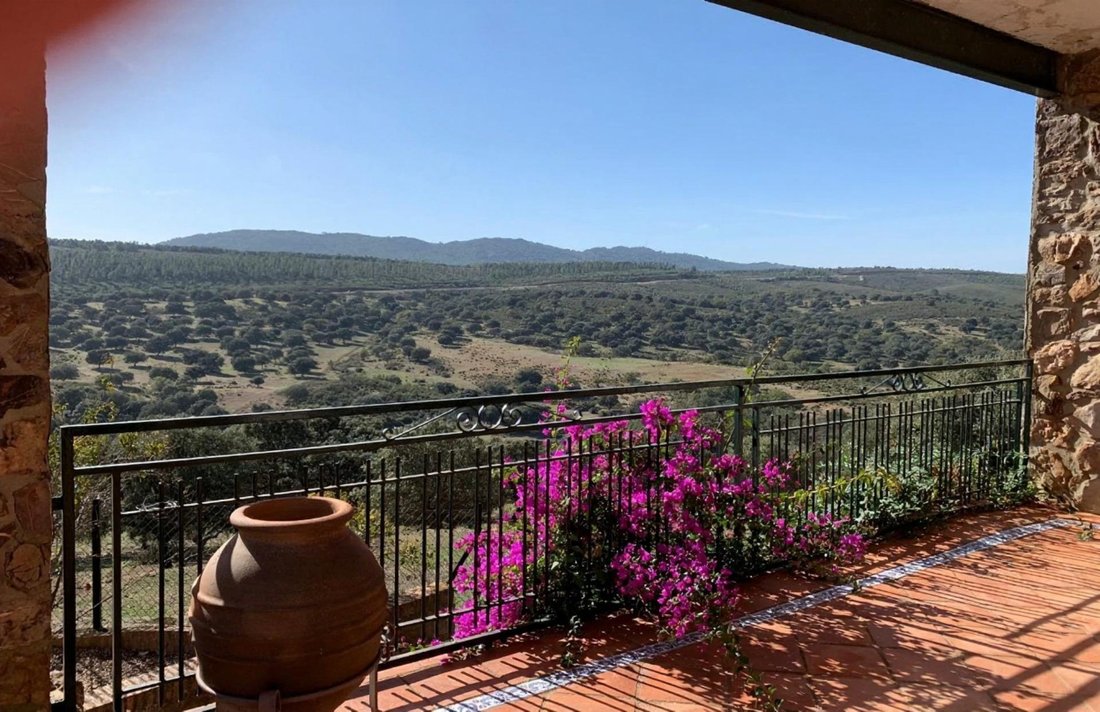
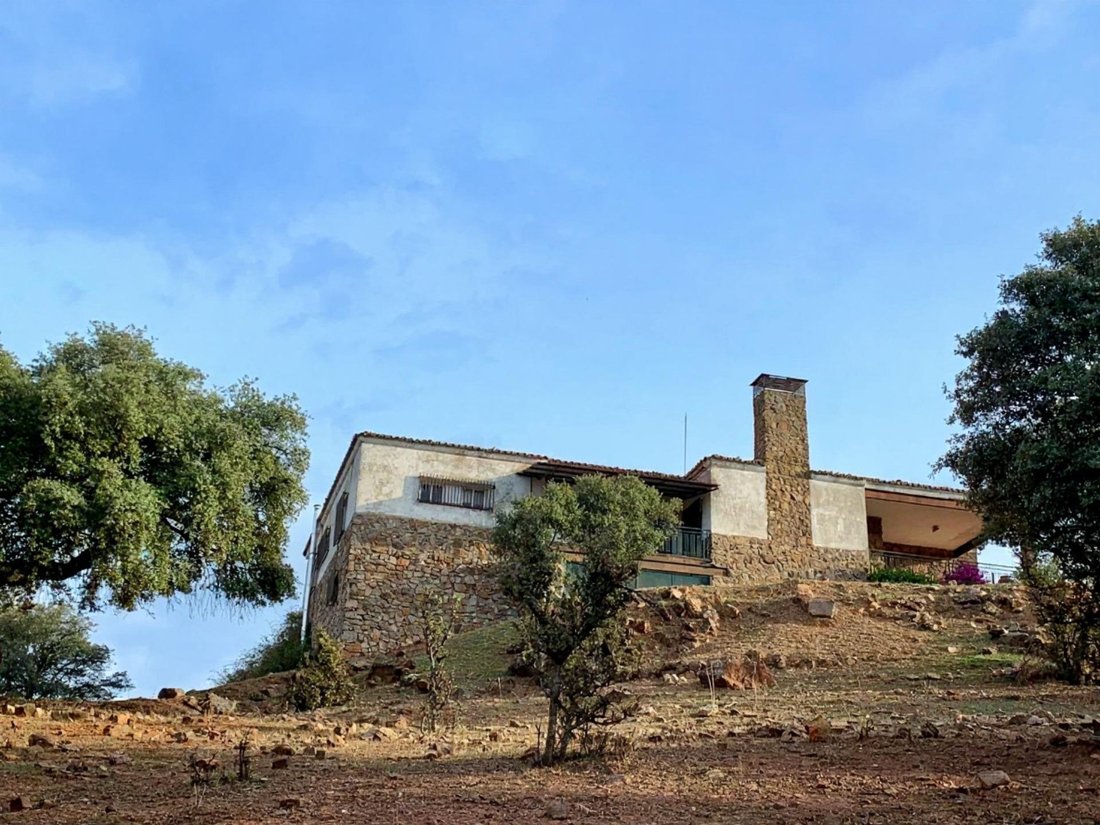
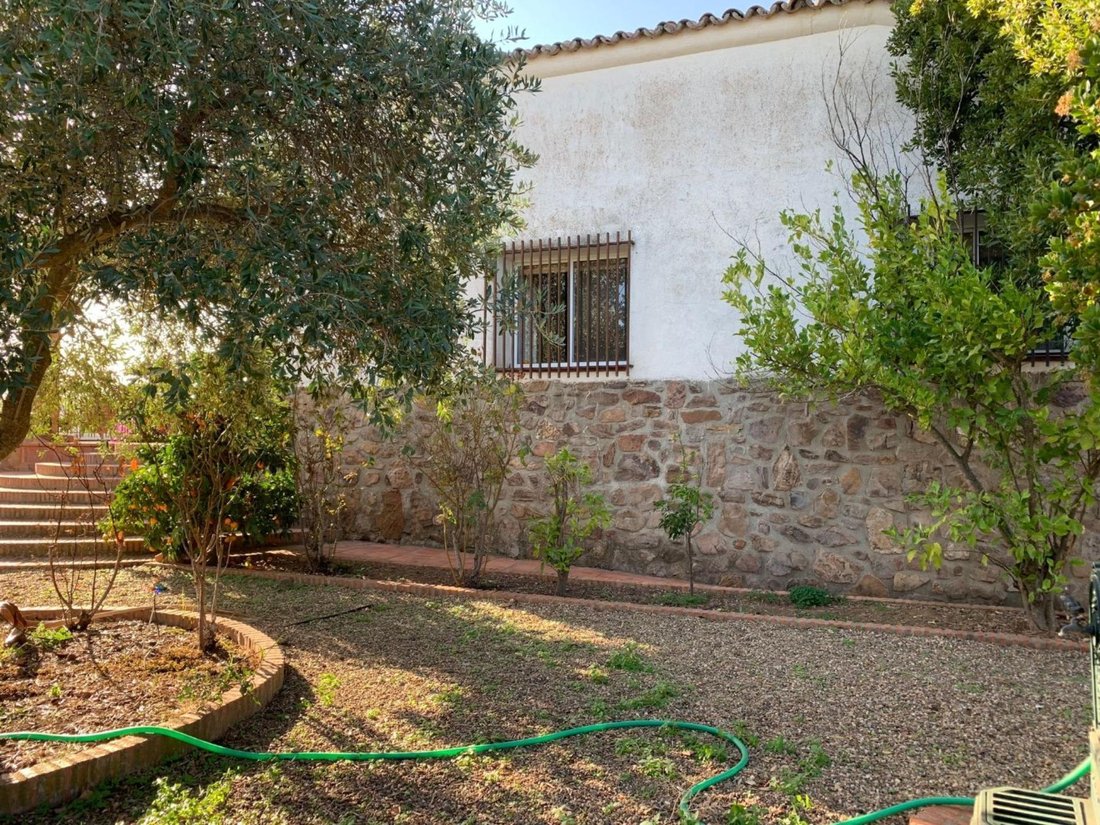
- Main house: two-story chalet made of local stone. The ground floor (semi-basement) houses a garage, storage rooms, cellar, and game room. The upper floor has 7 bedrooms (3 en suite), living room with fireplace, dining room, kitchen, and terraces. Garden with fruit trees and flower beds; nearby fenced masonry swimming pool.
- Caretaker’s house: small chalet with 2 bedrooms, bathroom, and kitchen-dining room, next to a self-consumption orchard.
- Multipurpose barn: 1,000 m2 building used as a feeding area, with storage, pigsty, chicken coop, outdoor pens, cattle chute, and scale.
6) Livestock
Herd of 200 to 250 cattle, crosses of Retinta and Limousine breeds, with some pure specimens of both breeds.
7) Machinery
Agricultural and livestock equipment:
- New Holland T100 (4WD) and Fiat 88.85M tractors.
- SANZ MORALES implements (chisel, harrows, mower, angled plow).
- Tenias loader, Solá fertilizer spreader, Castillejo Castro forestry brush cutter.
- Honda tiller, Stihl chainsaw, and auxiliary tools.
8) Possible Improvements
a) Farming: expand reforestation (e.g., olive grove on the Cerro), improve pastures with artificial meadows, build a new feeding area, silos or auxiliary barn, and install solar panels to reduce energy costs.
b) Rural tourism: the estate offers great future potential. Possible expansions of the main house, construction of chalets or tourist apartments, paving of access roads, and creation of sports facilities could be considered.
c) Hydraulics: the construction of a dam on the stream has been studied; it is feasible but unnecessary due to the current water supply.
The estate is a dehesa located in Badajoz, within the Siberia Extremeña Biosphere Reserve, recognized by UNESCO. It has excellent access via the national road N-430 and its branch N-430a.
The land combines permanent pastures with oak and cork oak trees, as well as reforested areas with oaks, cork oaks, and gall oaks. It is currently used for agricultural and livestock farming, focused on cattle, and includes suitable buildings, facilities, and machinery.
A stream crosses the estate from east to west, and another stream originates in the eastern sector. Its flow is seasonal, but the estate has abundant water resources thanks to springs, ponds, and wells. The wildlife is diverse, highlighting wild boars, along with roe deer, foxes, rabbits, and birds. The estate is classified as a ”hunting-free zone.”
2) Area and Plots
The total area, according to the cadastral certificate and SIGPAC, is 350 hectares, a more precise measurement than the notarial deed. It is divided into enclosures with metal mesh fences, facilitating livestock management.
3) Reforestation
Forty hectares have been replanted with about 20,000 oaks, cork oaks, and gall oaks, providing sustainability and improving the landscape.
4) Water Resources
The main system starts from a well with a submersible pump that raises water to a tank next to the main house. From there, it is distributed to buildings, orchard, garden, and drinking troughs.
Additionally, there are several springs with ponds:
- M1 and M2: to the south, near the N-430.
- M3: on the western boundary, with a large pond.
- M4: in the east, pond frequented by ducks.
- M5: near the buildings, with a watering trough.
- M6: on the hillside of the Cerro, with two ponds.
- M7: to the southeast, with a large pond.
The well water has been analyzed and is potable; the spring water is not, although it is presumed to be of good quality.
5) Buildings
- Main house: two-story chalet made of local stone. The ground floor (semi-basement) houses a garage, storage rooms, cellar, and game room. The upper floor has 7 bedrooms (3 en suite), living room with fireplace, dining room, kitchen, and terraces. Garden with fruit trees and flower beds; nearby fenced masonry swimming pool.
- Caretaker’s house: small chalet with 2 bedrooms, bathroom, and kitchen-dining room, next to a self-consumption orchard.
- Multipurpose barn: 1,000 m2 building used as a feeding area, with storage, pigsty, chicken coop, outdoor pens, cattle chute, and scale.
6) Livestock
Herd of 200 to 250 cattle, crosses of Retinta and Limousine breeds, with some pure specimens of both breeds.
7) Machinery
Agricultural and livestock equipment:
- New Holland T100 (4WD) and Fiat 88.85M tractors.
- SANZ MORALES implements (chisel, harrows, mower, angled plow).
- Tenias loader, Solá fertilizer spreader, Castillejo Castro forestry brush cutter.
- Honda tiller, Stihl chainsaw, and auxiliary tools.
8) Possible Improvements
a) Farming: expand reforestation (e.g., olive grove on the Cerro), improve pastures with artificial meadows, build a new feeding area, silos or auxiliary barn, and install solar panels to reduce energy costs.
b) Rural tourism: the estate offers great future potential. Possible expansions of the main house, construction of chalets or tourist apartments, paving of access roads, and creation of sports facilities could be considered.
c) Hydraulics: the construction of a dam on the stream has been studied; it is feasible but unnecessary due to the current water supply.
-
Art der Immobilie
Land
Erkunden Sie die Gegend
Vor 2 Jahren beigetreten
Sie haben sich nach diesem Objekt erkundigt
Der Agent wird sich in Kürze mit Ihnen in Verbindung setzen
Gelistet von
16
Angebote
2025
Beigetreten
Besichtigung mit the agent buchen
Wählen Sie ein Datum und ob Sie eine virtuelle oder persönliche Besichtigung mit dem Makler wünschen.
Bevorzugtes Datum
Art der Tour
Zuletzt aktualisiert
Gestern
Erstmalig gelistet
August 28, 2025
Angebotsreferenz
BA-2025-61/12527
Das Vertrauen der führenden Makler der Welt
Die Makler hinter den außergewöhnlichsten Immobilien der Welt inserieren bei JamesEdition.
- Angebote von Sotheby's, Christie's, BARNES und Engel & Völkers
- Jedes Angebot wird vor der Veröffentlichung geprüft
- Verbinden Sie sich direkt mit verifizierten Maklern
Indem Sie fortfahren, akzeptieren Sie unsere Nutzungsbedingungen und Datenschutzrichtlinie.