



$5,446,760
Preis erhöht um $860,014 am Sep 18, 2026
Schloss Cardenal In Der Ría De Corcubión.
- 6 Schlafz.
- 3 Bäder
- 3,908 Sqft
- 44
Über die Immobilie
Beschreibung wurde automatisch übersetzt.
Die Beschreibung wird in der Originalsprache angezeigt.
Diese einzigartige Küstenburg aus dem 18. Jahrhundert, genannt Castillo del Cardenal, wurde zu Ehren des Infanten von Spanien D. Luis de Borbón y Farnesio erbaut, des Bruders von König Carlos III. und des sechsten Sohnes von König Felipe V. von Spanien und Isabel de Farnesio, Herzogin von Parma.
Er war Kardinal, Erzbischof von Toledo im Jahr 1735, Primas von Spanien, Erzbischof von Sevill
Er war Kardinal, Erzbischof von Toledo im Jahr 1735, Primas von Spanien, Erzbischof von Sevill
This unique 18th-century coastal castle, called del Cardenal, was built in honor of the Spanish Infante D. Luis de Borbón y Farnesio, brother of King Carlos III and sixth son of King Felipe V of Spain and Isabel de Farnesio, Duchess of Parma.
He was appointed Cardinal Archbishop of Toledo in 1735, Primate of Spain, Archbishop of Seville in 1741, and when he left the ecclesiastical state,
He was appointed Cardinal Archbishop of Toledo in 1735, Primate of Spain, Archbishop of Seville in 1741, and when he left the ecclesiastical state,
Diese einzigartige Küstenburg aus dem 18. Jahrhundert, genannt Castillo del Cardenal, wurde zu Ehren des Infanten von Spanien D. Luis de Borbón y Farnesio erbaut, des Bruders von König Carlos III. und des sechsten Sohnes von König Felipe V. von Spanien und Isabel de Farnesio, Herzogin von Parma.
Er war Kardinal, Erzbischof von Toledo im Jahr 1735, Primas von Spanien, Erzbischof von Sevilla im Jahr 1741 und als er den geistlichen Stand verließ, wurde er zum Grafen von Chinchón ernannt. Er war ein wichtiger Mäzen, der Künstler wie Francisco de Goya und Luis Paret unterstützte.
Diese Festung, zusammen mit der Burg des Prinzen in CEE, wurde zwischen 1755 und 1757 zum Schutz des Hafens an der Ría de Corcubión errichtet.
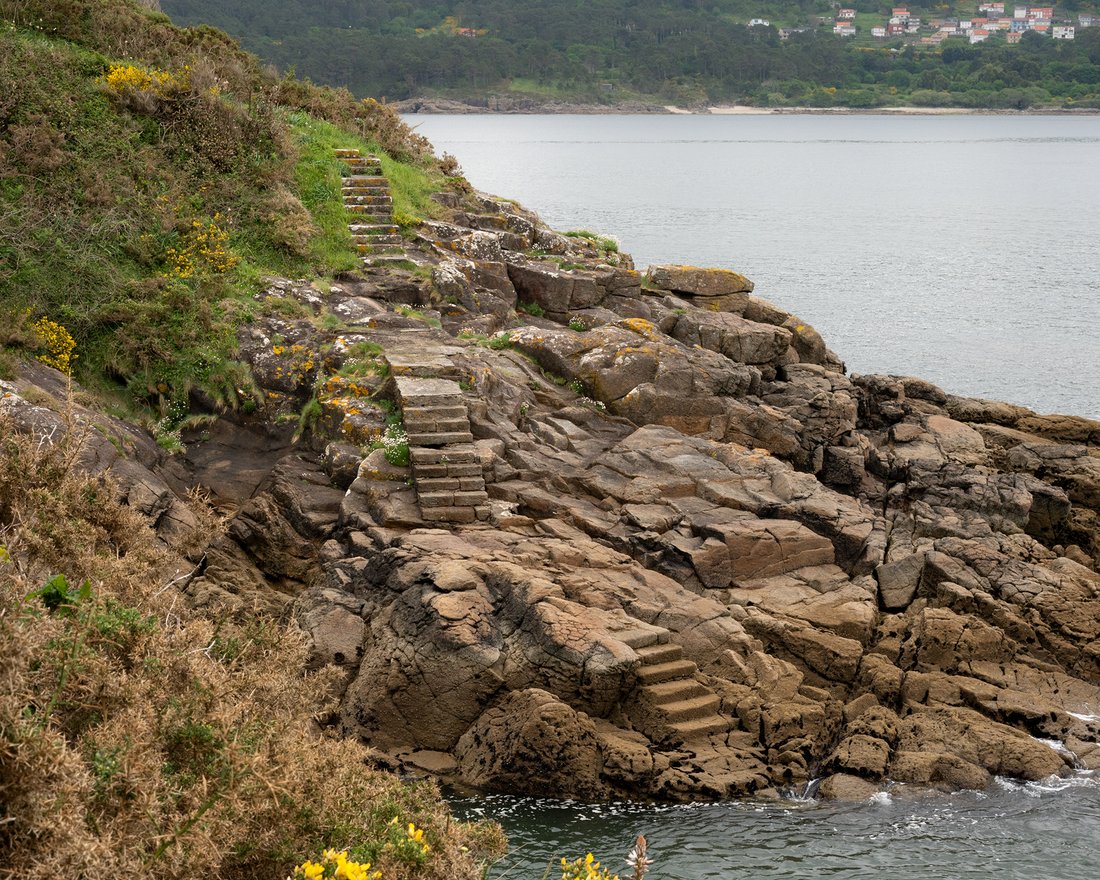
Die Befestigung ist eine sternförmige Halbinsel aus Stein, erbaut mit Materialien aus örtlichen Steinbrüchen. Diese Bauarbeiten bedeuteten eine zusätzliche Belastung für die Bewohner, die mit Wagen und Ochsen die Steine von den Steinbrüchen zur Burg transportieren mussten.
Mit diesen Bauweisen sollte das Gebäude mit der Umgebung verschmelzen und Angreifer überraschen, um die Sicherheit von Expeditionen nach Nordeuropa oder ins Mittelmeer zu gewährleisten sowie Plünderungen in den Städten im Landesinneren zu verhindern.
Die Festung verfügt über 17 Kanonen und belegt eine Fläche von ca. 2.800 m2. Im Inneren des Geländes, rund um den Paradeplatz, befindet sich ein Gebäude in Form eines offenen U, das heute als Wohnhaus dient, aber ursprünglich als Kaserne für die Truppen, Lagerhäuser, Pulvermagazine und andere Räume eines Schlosses genutzt wurde. Es hatte Platz für 96 Männer.
Das Innere des Gebäudes besteht aus einem einzigen Stockwerk und 3 steinernen Körpern, einer Küche, einem Zimmer für Offiziere und Lager für Ausrüstung und Pulver. Alle Räumlichkeiten sind mit Tonnengewölbedecken versehen, die Wände waren gekalkt, um sich vor Krankheiten zu schützen (heute noch in dem, was heute der Weinkeller ist zu sehen) und das Dach war mit Landesziegeln bedeckt.
Außerdem gab es Innenhöfe und einen Brunnen mit Süßwasser für die Versorgung im Falle eines Belagerungszustands.
Die Festung ist in einem ausgezeichneten Erhaltungszustand und respektiert treu ihre ursprüngliche Struktur.
Er war Kardinal, Erzbischof von Toledo im Jahr 1735, Primas von Spanien, Erzbischof von Sevilla im Jahr 1741 und als er den geistlichen Stand verließ, wurde er zum Grafen von Chinchón ernannt. Er war ein wichtiger Mäzen, der Künstler wie Francisco de Goya und Luis Paret unterstützte.
Diese Festung, zusammen mit der Burg des Prinzen in CEE, wurde zwischen 1755 und 1757 zum Schutz des Hafens an der Ría de Corcubión errichtet.
Die Befestigung ist eine sternförmige Halbinsel aus Stein, erbaut mit Materialien aus örtlichen Steinbrüchen. Diese Bauarbeiten bedeuteten eine zusätzliche Belastung für die Bewohner, die mit Wagen und Ochsen die Steine von den Steinbrüchen zur Burg transportieren mussten.
Mit diesen Bauweisen sollte das Gebäude mit der Umgebung verschmelzen und Angreifer überraschen, um die Sicherheit von Expeditionen nach Nordeuropa oder ins Mittelmeer zu gewährleisten sowie Plünderungen in den Städten im Landesinneren zu verhindern.
Die Festung verfügt über 17 Kanonen und belegt eine Fläche von ca. 2.800 m2. Im Inneren des Geländes, rund um den Paradeplatz, befindet sich ein Gebäude in Form eines offenen U, das heute als Wohnhaus dient, aber ursprünglich als Kaserne für die Truppen, Lagerhäuser, Pulvermagazine und andere Räume eines Schlosses genutzt wurde. Es hatte Platz für 96 Männer.
Das Innere des Gebäudes besteht aus einem einzigen Stockwerk und 3 steinernen Körpern, einer Küche, einem Zimmer für Offiziere und Lager für Ausrüstung und Pulver. Alle Räumlichkeiten sind mit Tonnengewölbedecken versehen, die Wände waren gekalkt, um sich vor Krankheiten zu schützen (heute noch in dem, was heute der Weinkeller ist zu sehen) und das Dach war mit Landesziegeln bedeckt.
Außerdem gab es Innenhöfe und einen Brunnen mit Süßwasser für die Versorgung im Falle eines Belagerungszustands.
Die Festung ist in einem ausgezeichneten Erhaltungszustand und respektiert treu ihre ursprüngliche Struktur.
This unique 18th-century coastal castle, called del Cardenal, was built in honor of the Spanish Infante D. Luis de Borbón y Farnesio, brother of King Carlos III and sixth son of King Felipe V of Spain and Isabel de Farnesio, Duchess of Parma.
He was appointed Cardinal Archbishop of Toledo in 1735, Primate of Spain, Archbishop of Seville in 1741, and when he left the ecclesiastical state, he was appointed Count of Chinchón. He was an important patron who supported painters like Francisco Goya and Luis Paret.
This fort, along with the Prince’s castle in CEE, was built between 1755-1757 to defend the port in the Ria de Corcubión.
The building is a fortified star-shaped peninsula built in stone from local quarries, which was a burden for the villagers who had to use carts and oxen to transport the stone to the castle.
With these construction features, the intention was for the piece to blend in with the surroundings and surprise attackers to protect expeditions heading to northern Europe or the Mediterranean, and to prevent looting of inland cities.
It has 17 gun ports and occupies an area of approximately 2,800 m2. Inside the enclosure, surrounding the courtyard, there is a U-shaped building that now serves as a residence but originally housed troops, warehouses, a gunpowder magazine, and other castle facilities. It had capacity for 96 men.
The interior is one floor with 3 stone bodies, including a kitchen, officers’ quarters, weapon and gunpowder storage, all with barrel-vaulted ceilings and whitewashed walls. It also had vegetable gardens and a freshwater well for sustenance during a siege.
The fortress is in excellent conservation and faithfully respects its original structure.
He was appointed Cardinal Archbishop of Toledo in 1735, Primate of Spain, Archbishop of Seville in 1741, and when he left the ecclesiastical state, he was appointed Count of Chinchón. He was an important patron who supported painters like Francisco Goya and Luis Paret.
This fort, along with the Prince’s castle in CEE, was built between 1755-1757 to defend the port in the Ria de Corcubión.
The building is a fortified star-shaped peninsula built in stone from local quarries, which was a burden for the villagers who had to use carts and oxen to transport the stone to the castle.
With these construction features, the intention was for the piece to blend in with the surroundings and surprise attackers to protect expeditions heading to northern Europe or the Mediterranean, and to prevent looting of inland cities.
It has 17 gun ports and occupies an area of approximately 2,800 m2. Inside the enclosure, surrounding the courtyard, there is a U-shaped building that now serves as a residence but originally housed troops, warehouses, a gunpowder magazine, and other castle facilities. It had capacity for 96 men.
The interior is one floor with 3 stone bodies, including a kitchen, officers’ quarters, weapon and gunpowder storage, all with barrel-vaulted ceilings and whitewashed walls. It also had vegetable gardens and a freshwater well for sustenance during a siege.
The fortress is in excellent conservation and faithfully respects its original structure.
-
Art der Immobilie
Andere
-
Baujahr
1800
-
Preis/Quadratfuß
$1,394
Funktionen
- Garten
- Terrasse
- Wasserblick
- Bergblick
- Weinkeller
- Küste
- Office
- Hohe Decke
Erkunden Sie die Gegend
Prado Do Castillo, Corcubion, GA 15130, Corcubión, Galicien, Spanien
Auf Google Maps anzeigen
Preis pro sqft
Niedrig
Hoch
Vor 2 Jahren beigetreten
Sie haben sich nach diesem Objekt erkundigt
Der Agent wird sich in Kürze mit Ihnen in Verbindung setzen
Gelistet von
10
Angebote
2025
Beigetreten
Besichtigung mit Fernanda Viñas Cue buchen
Wählen Sie ein Datum und ob Sie eine virtuelle oder persönliche Besichtigung mit dem Makler wünschen.
Bevorzugtes Datum
Art der Tour

Spain Sotheby's International Realty
Calle Lagasca 28, 28001, Madrid, Madrid, Spain
Agenturprofil anzeigen
Offering high-end properties in the city, villas and equestrian farms on the
outskirts of the city. Madrid, the
outskirts of the city. Madrid, the
Offering high-end properties in the city, villas and equestrian farms on the
outskirts of the city. Madrid, the capital of Spain, is located in the centre of
the Iberian Peninsula. It is a very active city, with a lively nightlife and
scores of daytime allures. It is home to famous museums such as El Prado,
Thyssen-Bornemisza and Reina Sofia, great historic architecture, shopping
boulevards and excellent cuisine. It has a great diversity of districts that
merit visiting.
outskirts of the city. Madrid, the capital of Spain, is located in the centre of
the Iberian Peninsula. It is a very active city, with a lively nightlife and
scores of daytime allures. It is home to famous museums such as El Prado,
Thyssen-Bornemisza and Reina Sofia, great historic architecture, shopping
boulevards and excellent cuisine. It has a great diversity of districts that
merit visiting.
Zuletzt aktualisiert
September 18
Erstmalig gelistet
May 10, 2025
Angebotslink
Angebotsreferenz
8TP6YC
Das Vertrauen der führenden Makler der Welt
Die Makler hinter den außergewöhnlichsten Immobilien der Welt inserieren bei JamesEdition.
- Angebote von Sotheby's, Christie's, BARNES und Engel & Völkers
- Jedes Angebot wird vor der Veröffentlichung geprüft
- Verbinden Sie sich direkt mit verifizierten Maklern
Indem Sie fortfahren, akzeptieren Sie unsere Nutzungsbedingungen und Datenschutzrichtlinie.