Key Highlights
- Two Decades of Growth: Tulum, Playa del Carmen, and Cancún have transformed from small towns into thriving cities, with new areas like Bacalar now emerging as the next growth frontier.
- International Investment: Americans remain the top buyers, with Canadians, Europeans, and rising Chinese investment reflecting Mexico’s expanding global appeal.
- The Ecosystem Model: In-house legal services, rental management, and a Christie’s affiliation have strengthened credibility and enabled geographic expansion.
- Lifestyle-Driven Marketing: Social media content emphasizing the coastal lifestyle drives interest, especially as remote work allows buyers greater location freedom.
- Buyer Protection: Escrow services and trusted legal representation are essential safeguards, particularly for pre-construction purchases.
 Jason WallerCEO of Christie's International Real Estate Mexico Luxury Properties“We're not really salespeople, we are tour guides. Most people, if they decide they're going to come and look at property in Mexico, they've already pretty much made their decision. You don't need to pressure them. Take them out, spend a day, have a great time. What they're going to remember is these special things—that's why they want to buy something in a place like this.”
Listen on Spotify and Apple Podcasts
Transcript:
Eric:
Today, I’m happy to welcome Jason Waller. He’s a Canadian real estate broker and corporate executive who serves as the CEO of Christie’s International Real Estate Mexico Luxury Properties. With over two decades of localized market experience in Mexico, Waller has built a premier luxury brokerage ecosystem bridging international buyers with premium coastal, urban, and ecological real estate across the whole country. Welcome, Jason. So what I was thinking is that we can start with a brief introduction of your background and how you ended up in Mexico.
Jason:
Sounds great. I am now the CEO of Christie’s International Real Estate Mexico Luxury Properties, located on the east coast of Mexico, in the Cancún to Tulum area. I moved out here from Canada 21 years ago, in 2005. I was done with winter — I couldn’t handle the cold anymore and I had to make a change. So we loaded up the truck and drove seven days from Winnipeg, all through the States and into Mexico, arriving just after a hurricane and just before another hurricane. It was a learning lesson. I got to experience the craziest one ever when I first moved here, and then it’s been pretty chill since. I set everything up and started as a sales manager at another real estate company.
After that first year, I decided it was time to do my own thing. When we started, it was just me — I was the realtor and I handled everything, and I did that for years. It was really hard to let go and expand, because you build your reputation and work hard on it, so once you allow other people to come in, it starts to get scary. You don’t want someone else to hurt your reputation. But once I got going, I realized I can only do so much, and if we want to grow, we have to keep doing things. So we expanded. I partnered with Matt Matheson, my business partner, who runs a lot of the day-to-day. My wife Leah and I handle a lot of the bigger deals and the expansion. Once you bring in good people, it makes such a difference, and the company’s exploded ever since.
We’ve got 19 agents now and cover a lot of different areas throughout Mexico. We opened a law firm called Guardian so we have our own in-house counsel, with three full-time lawyers, and we also work with outside brokers. We had our own brand for 19 years or so, and then we recently rebranded with Christie’s, and it’s been amazing — a lot more opportunities. We just took over a rental management company, so we’re doing rentals now, which ties in well for marketing with real estate. We love life. Two boys born here in Mexico, and my daughter born in Canada. This is our life here, and we love it.
Eric:
You mentioned that as an agency you took the decision to become a Christie’s affiliate. What was the reason behind that?
Jason:
We were originally called Playa Real Estate Group, then Riviera Maya Real Estate Group as we expanded, and then Mexico Real Estate Group. But we noticed so many companies calling themselves “something real estate group” — so many very similar to ours. It was getting too confusing. We never thought we would rebrand; I always wanted to keep our own brand because we worked hard on our reputation, did a lot of TV shows, different things to draw attention to it. But we were given the opportunity through a friend, Elizabeth Greig, who knew the owner of Christie’s. She had her own small boutique company, and she said we were the only company she would work with to become Christie’s. If we were interested in absorbing her and becoming Christie’s, we could do it. So we met with the presidents, figured things out, and made the switch.
It’s opened up so many more opportunities and doors. It gives us more credibility — it’s a name that people recognize and trust. When we were just Mexico Real Estate Group, no one really knew exactly who we were. It’s hard to spend a million dollars with somebody you don’t know if you trust. So it’s been a lot better for us, and we get a lot more luxury leads, luxury listings, and more notoriety.
Eric:
How do you find talent — people moving in, or people already living there?
Jason:
We get constant requests. Weekly, someone sends us their resume wanting to work with us. We just can’t take on any more people at the moment — you need leads for more agents, so we’re always working on how to get more leads. A lot of our agents were friends first. We’ve got a bunch of families that work together; our team is very family oriented and very close, so we don’t really lose people to other companies. We try to keep everybody as happy as possible.
One of our top sellers, Tracy, I met when our daughters were extremely young and in some kind of class — gymnastics or ballet. This was the first year or two after I’d moved out here, so there wasn’t a lot of English spoken at that time. I was sitting in the class and suddenly heard a woman speaking English. I went to introduce myself, and it turned out she was from Canada too. I grew up in Winnipeg — so did she. What part of town? Charleswood — the same area I grew up in. We actually went to the same school, Charleswood Junior High, though she’s a couple of years older, so she was leaving as I was coming in. There were so many connections to this person from the same area that I never knew growing up. She ended up becoming one of our agents, and she’s one of our top agents.
It’s so important for us to have our team be family and to truly care about each other. It’s not just a business, and that shows through when we work with clients, because our people actually care. It’s not just about making a buck — it’s about making people’s dreams come true. This is their dream; they’ve saved up, this is their retirement, they’re dreaming about having a place in the Caribbean, and we’re helping them with that. So it feels special. We’ve got a lot of stories like that.
Eric:
It shows that you can make all the different decisions in life, but in the end, very big changes happen completely out of chance — you meet someone by coincidence.
Jason:
Life is crazy. You look back at every moment and every decision, and where it can take you. I never thought I’d be living in Mexico running a real estate company. Growing up, I worked for a company for years in Winnipeg and I just wasn’t happy — I didn’t love my job and I hated winters. So I made the decision and drove out here. I moved here with my ex-wife at the time, but my current wife and I have known each other for 18 years. She was my neighbor, worked with a different real estate company, and then ended up working for our company—that’s when I poached her.
Eric:
Looking at the market then versus now, what are the biggest changes?
Jason:
When I first moved out here, there was only me and two or three other real estate companies. There was no competition. We all knew each other, it was easy, and people were just coming out with bags of money saying, “I want to buy a property, I don’t care what it is.” Things have changed, as everything does — technology changes, now we’re having to learn how to work with SEO for AI, not just Google. There’s a lot more competition and everything’s grown. Tulum was really not much of anything when I moved out here; now it’s a city. Playa del Carmen was very small; now it’s a city. Cancún was the main place, and nobody really knew anything else.
I’d say I live in Playa del Carmen, and people would say, “What? Where? By Cancún?” “Oh, okay — we know Cancún, we went there for spring break 20 years ago.” It’s a little more difficult to make sales than it used to be, and that was one of the reasons we rebranded to Christie’s. I figured if we’re one of the top luxury real estate companies in the world, it’s going to help us a lot — and it has.
Eric:
So Cancún, Playa del Carmen, and Tulum are the three biggest or most popular?
Jason:
Yeah, those are the top three. Then you’ve got areas in between along the coast, like Puerto Aventuras, Akumal, and Puerto Morelos — smaller areas that haven’t boomed like the rest, which is good because we can’t have that much craziness. Everything’s starting to grow together. As you head south, you’ve got Bacalar, just before the Belize border, and it’s incredibly beautiful. They call it the Lake of Seven Colors because you see seven colors of blue in the water. It’s a sand-bottom freshwater lake, even nicer than the ocean, and I think that’s the next area that’s really starting to boom. We’re seeing a lot of growth out there.
Then three and a half to four hours’ drive from here we have Mérida, another big city that used to be one of the wealthiest cities in the world many years ago. The history there is incredible. We’ve got so many places nearby that it’s never boring — always lots to do, to see, and to explore.
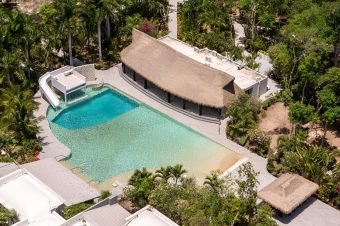
Featured Listing: Rancho Paraiso Oasis
Eric:
I guess the main buyer is American?
Jason:
Americans are still our number one. Canadians are catching up a little, and Europeans too. We’re seeing a lot more investment coming in from China these days as well — that’s been huge in Mexico, mainly industrial and manufacturing. But we’re seeing a big change with that, a lot of money coming in. Mexico’s doing really well, so we’re seeing people from all over the world investing in real estate or in businesses. We’re seeing so much growth over the 20 years I’ve been here — it’s been crazy.
Eric:
And a typical buyer — are they buying to invest as pure rental properties, seasonal vacation, or what’s the typical use?
Jason:
We call it the five-year plan. Everybody’s on the five-year plan: they want to buy a place, rent it out in the meantime, come out when they can to avoid winters as much as possible, and then retire down here in five years. That’s a very common goal. Or we have investors who just buy some properties to see how the market grows. Tulum went really high and came back down, but the government’s going to be putting a ton of money into the Tulum area, marketing for tourism and everything. So over the next couple of years, with the infrastructure going in, we’re going to see Tulum go back up. There’s so much going on all the time here.
Eric:
What was the reason Tulum dropped?
Jason:
Infrastructure, and just too much too fast. It exploded — it was the Instagram place. All these influencers wanted to be in Tulum, so everywhere you went, any beach club, there was a throne or an Instagram spot. That drove so many people to come in and buy. But the roads weren’t finished. You’d be buying a multimillion-dollar property with a really bumpy dirt-and-gravel road out front. The infrastructure for water and sewage didn’t catch up as quickly as they were building.
Eric:
And the people on the five-year plan—what are they typically looking to buy?
Jason:
A two-bedroom condo or a large villa. There are a lot of luxury villas — 5, 6, 7, 8, 9, 10, 12 bedrooms — in the millions, and those rent incredibly well. They get used for TV shows, and people rent them for big events and families. The two-bedroom is always the way to go for condos because it’s the easiest to get into, and it rents a lot better than a one-bedroom or a studio. The more spaces you have for people to sleep, the easier it is to rent a property out.
Eric:
In terms of scaling, what are the usual channels you use today for generating leads?
Jason:
The usual — ads on Google and social media, really focusing on social media nowadays, getting our agents out there making their own content, videos, and photos, going to events and highlighting lifestyle. It’s not hard to get information on real estate; everybody’s doing real estate videos. It’s more important to show the lifestyle we have here, because it’s incredible. If we wanted to this afternoon, we could just have a yacht pick us up in our backyard. We can drive a short way to Mérida and all these different incredible little towns — there’s a lot to explore.
We want to show that lifestyle to people sitting in an office building, especially in the winter, looking outside at gray, dark, miserable weather. They see a short video of how incredible the lifestyle can be here and they realize, “I want that.” And now, with the way the world’s changing, people can work from anywhere. You don’t have to be in an office in downtown New York — you could be working out of your condo in Playa del Carmen and just head back for meetings every now and then. So we see a lot more people moving up to this area and working remotely.
Eric:
For other buyers—European, international—is it also coming through social and Google Ads?
Jason:
Yeah, we’re seeing a lot more of that. We target it with our ads, trying to bring in more people from Europe. It’s slowed down a little with US clients these days, though we still get a decent amount. We’re seeing a lot less in the mid-range, but the higher-end stuff — the million-dollar-plus properties — is actually getting more interest. And a lot of investment funds and private equity banks are looking for investments, finding that Mexico is a very good and safe place to invest. They’re looking at buying hotels, resorts, things like that. So we’re seeing a lot more of the higher-end activity these days.
Eric:
How does the market function—are listings non-exclusive?
Jason:
You get both. We have a lot of exclusive listings — again, Christie’s has helped us a lot with the luxury listings, so we’ve got many multimillion-dollar homes, condos, and hotels, and I attribute that mainly to rebranding with Christie’s. In the past we’d focus on anything from $100,000 and up; now we try to stay $400,000-plus and remain in the luxury market, because that’s what the brand is. It’s a luxury international brand, so that’s what we focus on now.
Eric:
And you collaborate with different buyer agents, locally and globally, who bring buyers to these listings?
Jason:
For sure. We get a lot of referrals from Christie’s and Compass, and we work as much as possible with all the local brokers. We try to figure out the easiest way to share information, because I’d rather sell 10 places and get half of it than sell one place and get all of it. It’s good to share with everybody and get them to bring their clients to help sell our properties. It takes a lot of work and money to reach out, advertise, and bring in clients, so if we can get clients from other brokerages, it just helps everything for us.
Eric:
Over these two decades, what are some interesting anecdotes of buyers that are representative of who comes down there?
Jason:
One interesting one — they actually became very good friends of ours — their names are Roger and Sue. I took them out and showed them properties for years and years. Every year they’d come back, and their daughter was super small when they started. Every year they’d say, “We’re going to buy something,” and we’d always go out looking, but it was great because we became lifelong friends. Then they were the ones who got me on my first House Hunters International show. They applied, got on it, and got me on as their agent. And they did buy something eventually.
So we made lifelong friends, made a sale, and I got to start doing House Hunters, which is huge — there are 40 million viewers worldwide who watch that show, so for advertising it’s amazing. I ended up doing nine or ten episodes. I’ve slowed down over the last several years because I just don’t take clients out myself anymore, but now some of our team want to start doing episodes, so we’re reaching out to get that going. That all happened because I didn’t decide to stop taking them out. After years went by and they didn’t buy, I kept working, and through that I got the publicity, the friendship, and the sale. It was really important to stick with it, and I learned a lot from that. As I was taking out clients throughout the years, I always kept it no-pressure. You’re not going to pressure somebody into buying a second home in a foreign country —i t’s going to scare them. So you’ve got to be easygoing. I always tell our team the best thing you can do is make friends.
Eric:
That’s a great tip. One very big challenge in international luxury real estate marketing is the quality of buyer inquiries. At JamesEdition, we deal with buyers from all around the world, and thanks to the amount of data we have, we can give agents what we call lead enrichment — telling agents the readiness of the buyer and where they are in the journey to purchase. For you, what do you think are the main traits to become a successful real estate agent?
Jason:
Honest, hard-working, and no pressure. I tell our team regularly that we’re not really salespeople — we are tour guides. Because most people, if they decide to come and look at property in Mexico, they’ve already pretty much made their decision that they’re going to buy something. That’s their goal, and we don’t need to pressure them. If you pressure somebody, it’s going to make them scared — they’re already a little nervous about investing in a foreign country. So take them out, spend a day, have a great time. Show them where your favorite taco restaurant is, where you get the best margarita in town, show them what a cenote is if they don’t know. You can always look at real estate — show them three, four, five properties — but what they’re going to remember is these special things. That’s why they want to buy something in a place like this: they want to create memories for themselves. They want to know where they can go to experience life differently than back home. Sharing this information really helps them feel comfortable and excited rather than pressured.
Featured Listing: Grand Cenote Jungle Resort

Eric:
What are the biggest challenges now to grow the market?
Jason:
Just knowledge — people understanding what the area is like, what Mexico is like as a whole. We get a lot of bad press with the seaweed, with crime, things like that. The problem is that something happens here and it makes international news, whereas anything that happens in the States or Canada on a regular basis doesn’t make international news. We’re constantly fighting that, and people thinking it’s not a safe place or that there’s going to be seaweed all year long, which we don’t have. I’ve been here 21 years, never felt unsafe, never had an issue, raised kids here — it’s extremely safe. But the press, especially in the US, is “don’t go to Mexico, it’s extremely unsafe.” Especially during spring break, the US is guaranteed to come up with things saying, “don’t let your kids go to Cancún for spring break.” They want to keep people in Florida, keep the money in the country. So we’re constantly battling that, and that’s again why we try, with social media, to show lifestyle and how wonderful it is—that you can raise a family here. Mexican culture and Mexican people are very family oriented, very friendly, wonderful people. That’s one of the main reasons I moved here, to raise my family, because it’s such a great place.
Eric:
When you mention it being a great place to live, what does the infrastructure look like for families with kids—international schools, everything?
Jason:
When I first moved here 21 years ago, you had a choice of maybe two schools and one grocery store. Christmas was tough — you had to go to Cancún, usually to the mall there. Nowadays we’ve got everything. There are schools from all over the world opening up — private schools, pod schools, which are really popular. Our kids are in a pod school with only 20 or 30 kids in the whole school, so they get more attention and learn better. We have options with everything. Our 16-year-old, we’re probably going to switch over to an online program. But with kids, any sport they want to play — basketball, even hockey. They have an ice rink between Playa del Carmen and Cancún now, so you can actually go play hockey, which is crazy to me.
Eric:
Looking forward to the future — where do you think the market is heading, and what are the drivers behind that?
Jason:
Like I said, Tulum is going to start going up over the next couple of years with the infrastructure going in. But Mexico as a whole — the way things are being run and done, there’s so much investment coming into the country from around the world. There’s not a ton of debt like you get in other countries. I really see us doing well over the next several years, and things will change with technology and the way things are done. Tokenization of real-world assets is starting to happen — I believe that’s going to be a $30 trillion industry in real estate in less than 10 years. There’s so much happening because we have such a diverse area. Within Mexico you have jungle, desert, ocean, cenotes, mountains. You can go into Chiapas and up into the mountains where you need a fireplace and there are pine trees everywhere. We’ve got everything here.
So our goal is to expand throughout Mexico into different areas, because there are incredible spots — ones I didn’t even know about — that are the next up-and-coming places. Especially on the west coast outside of Puerto Vallarta, there are some incredible places, and big money is going into these areas. You’re seeing all these brand names — Armani is building out there, and all these hotel groups are coming and putting a lot of money into the area. I think the next 10 years are going to be really exciting to see how things go here.
Eric:
In that purchase journey — you say tour guide in one sense, but you’re also guiding them through the purchase process. What are the biggest challenges of buying in Mexico? You mentioned you now have a law firm, which I guess is an important component.
Jason:
Buying in a foreign country — having the law firm made things a lot easier. Having control over who is handling the closings means you know 100% that you can trust everything that’s happening. We put our name on it, so it’s important again for reputation that we make sure they do the right things. There are horror stories over the years where buyers get scammed. We actually just did an interview with CBC in Canada about a couple that got scammed out here — they contacted me to be the voice of reason about how you don’t get scammed. You can get scammed anywhere in the world; it’s just going to happen. You can get scammed by picking up your phone.
Eric:
What are the typical things that should raise warning signs?
Jason:
Always use escrow services. The escrow service holds your money, and you sign an escrow contract that says exactly where the money is going to go upon closing. With this couple from Canada, they sent $200,000 directly to someone’s bank account — and once you do that, whether or not you get a property, you’re screwed. It’s gone. Always work with a good lawyer and with escrow services. That way, once the closing happens, the money goes where it needs to go — to the real estate agents, to the seller, to pay any fees. If you just blindly send money to someone’s bank account, you’re not protected at all. That’s the most important thing.
I’m in contact with this couple from Canada. It doesn’t monetize anything for us, but we don’t want people having bad experiences, so we reach out to anybody who needs help and try to fix the situation. If someone has a bad time here, they’re going to tell their friends and family, and it gets around. We want people to have good experiences and tell everybody how great it is.
Eric:
You mentioned you’re thinking about opening up more locations in Mexico. What would those be?
Jason:
We’re working now in multiple different areas. We’ve got agents in Mérida and Acapulco, in Mexico City, and we’re working with a company in Huatulco. The goal is to hit all these different spots and expand by merging with existing companies that are already operating and doing well but can do even better with our support and our brand. We’re looking at merging with companies in different areas we choose to be part of, because there are so many places that are up-and-coming and going to be incredible over the years. The goal is to expand the rental company as well as the different areas, and our law firm is able to handle things in many of the different states of Mexico, so we can expand that as we go too.
Eric:
So you believe that building this ecosystem is key to enabling this geographical expansion?
Jason:
Exactly. Being able to handle everything in house means we don’t have to go outside and work with somebody we don’t know or trust. It all comes down to reputation. When someone works with us, we want them taken care of every step of the way, and we don’t want to outsource to something that could hurt us in the future. So it’s best to have everything in place, and as the years have gone by, we’ve slowly done that. The only next thing I’d like to do is start getting into building at some point — condos, homes — doing it with all the funding in place, working with investors. A lot of builders here have been trying to build with the sales of the property, and that’s a losing battle, because if anything happens in the market and you don’t finish the building, you’re going to prison. You’ve got to make sure you’re covered if something happens. As long as the property gets finished, that’s the most important thing, and you can make sales later.
That segues into pre-construction. It’s one of the things where you can get yourself into trouble. Over the years, a lot of properties were being built and then just stopped — they didn’t have enough sales and couldn’t finish the project, so people lose their money, it turns into a legal battle, people go to prison. You’ve got to be very careful. We only work with companies that we know have the funds and the track record. A lot of our agents won’t touch pre-construction at all because they figure it’s not worth the risk. You can get a better deal, but it can be scary. So we really recommend being careful and having somebody to represent you and hold your hand to make sure it’s a safe investment. There are great pre-construction properties and you can save a lot of money buying that way, but you have to make sure it’s a safe investment.
Eric:
If you could choose any place along the coast to invest, what would you choose—what type of property and where?
Jason:
You can’t go wrong with beachfront, because they’re not building more of it — or a property with a cenote. All these little areas between Playa del Carmen and Tulum: Tankah Bay, Soliman Bay, all these little spots, because they’re quiet little inlets, one road in and one road out, with luxury homes all along the beach, condos, hotels, restaurants. I’m not a big-city guy — and I say big city, meaning to me Playa del Carmen and Cancún are huge now. I really like these quieter little places, Puerto Aventuras, Puerto Morelos. You get to be in a beautiful area, you can walk everywhere, and you don’t have a ton of people around. That’s more my style. Other people want to be downtown Playa del Carmen or right in Cancún, near the action and the parties. That was me when I first moved here — I don’t need the parties anymore, though. Now I sit in my rocking chair and relax.
Eric:
Thanks a lot, Jason. It was a really interesting discussion. There are a lot of great takeaways here for anybody going into real estate, becoming their own brokerage, joining Christie’s, or just wanting to learn more about the east coast of Mexico.
Jason:
I really appreciate you guys reaching out and allowing me to talk a little bit about myself and this company.
Explore luxury listings across Mexico