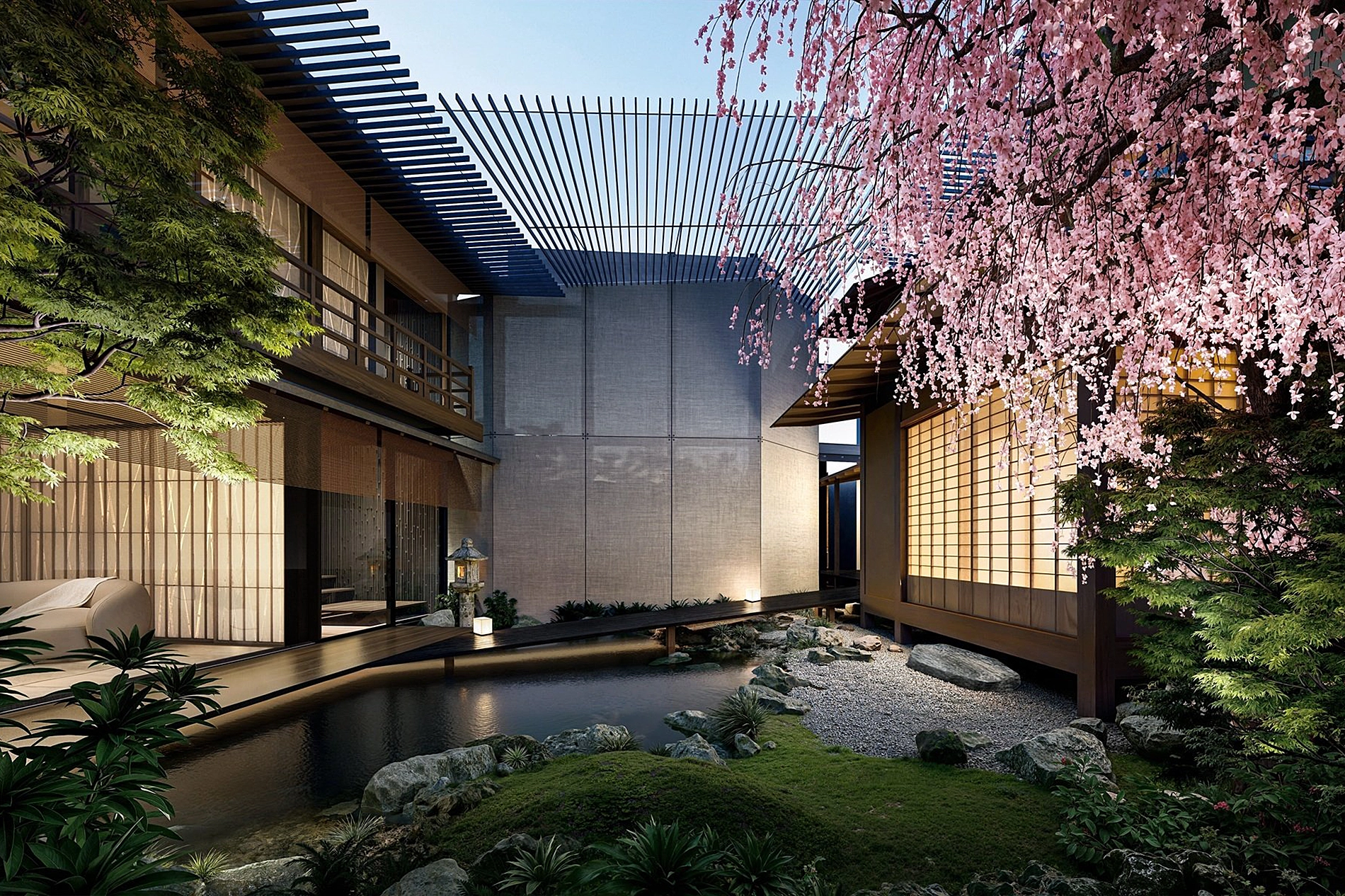
In the heart of Kamishichiken, Kyoto’s oldest and most prestigious geisha district, sits the former Hasegawa Residence, now known as The Silence. Originally rebuilt in 1828 during the late Edo period, the 200-year-old estate has been meticulously revitalized into a liveable work of art, blending two centuries of heritage with the refinements of modern global elegance. Spanning approximately 285 square meters across a 257 square meter site, the property is designated for use as a villa and hotel condominium, conceived as a premier venue for cultural diplomacy and private hospitality.
The sale is handled by TonTon Forbes Global Properties, Japan’s exclusive partner of Forbes Global Properties. Operating at the intersection of deep local knowledge and a global network, the agency works with a deliberately small number of clients, providing access to the finest listed properties alongside opportunities that never reach the open market.
A Convergence of Masters and Modern Craft
The residence brings together a rare synchronization of Japan’s foremost contemporary minds and most revered traditional artisans, creating a property that functions as both heritage and art.
Architecture and Design by Kengo Kuma
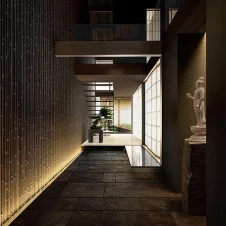
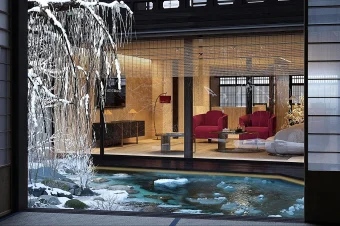
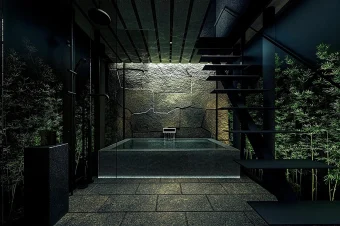
Kengo Kuma provided architectural supervision, dissolving the boundaries between the 200-year-old timber structure and the natural world to create a spatial clarity in which light and shadow perform in quiet dialogue. Construction was entrusted to Kongo Gumi, the world’s oldest company, established in 578 AD, whose 1,400 years of temple-building expertise ensured the structural integrity of the project. Nakamura Sotoji Komuten, masters of Sukiya architecture, infused the home with the spirit of authentic Japanese hospitality, while the garden was conceived by Oniwa Ueji, heirs to the lineage of landscape master Ogawa Jihei, where a private waterfall and carefully placed stones create a space designed for contemplation.
Interiors and Amenities by Armani/Casa
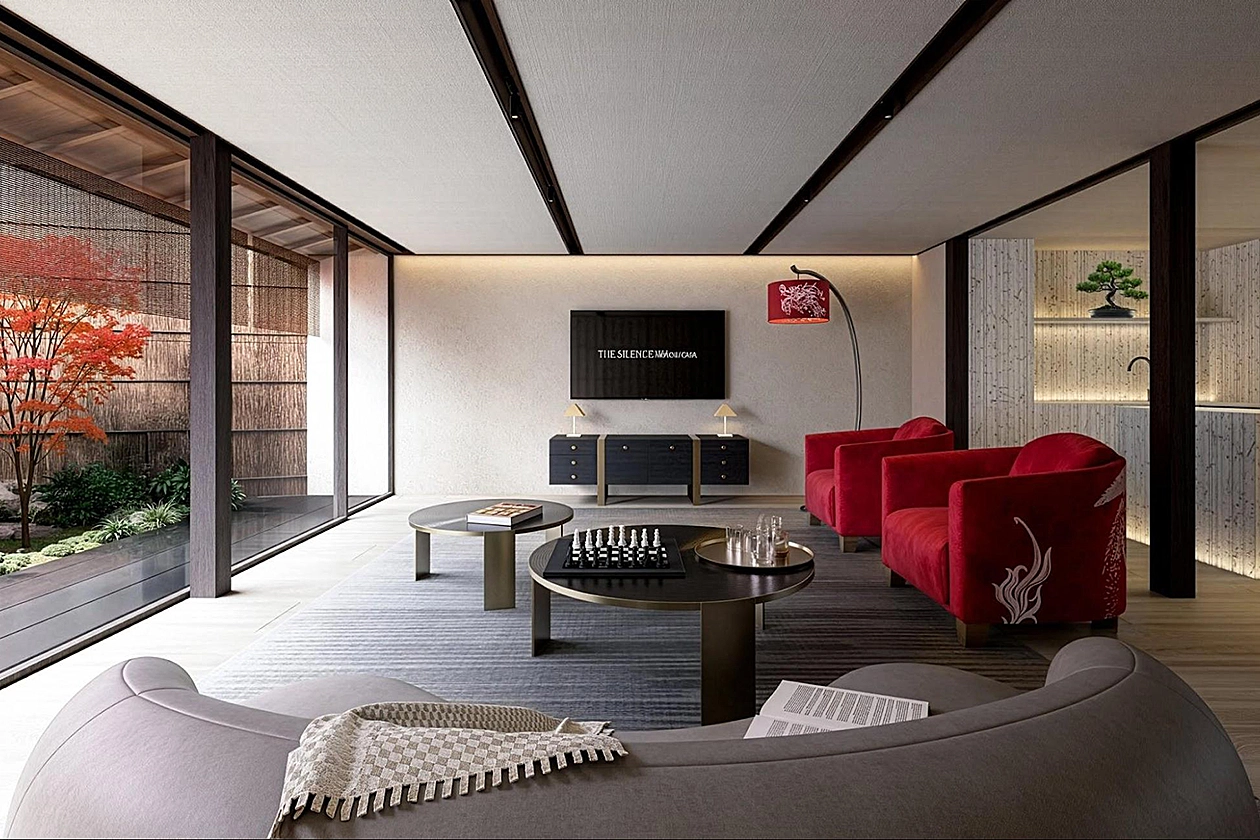
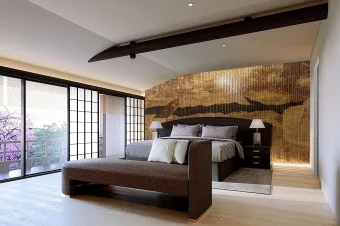
In a fusion of East and West, the interiors have been furnished by Armani/Casa. Drawing inspiration from the serene bamboo groves of Kyoto, the design employs natural materials and a philosophy of understated luxury, creating a refined interior where Italian elegance meets Kyoto’s quiet simplicity.
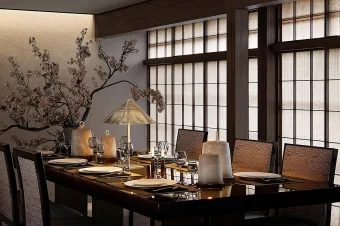
The estate comprises a main residence, a detached guest wing, and a traditional kura storehouse converted into a sauna and spa, alongside two bedrooms, a grand reception hall for private banquets, a Sukiya tea room, and a designer water garden. Sculptural works by Buddhist artist Koukei Eri and gold foil paintings by Hiroto Rakusho anchor the residence with spiritual depth and artistic distinction.
A Sacred Setting in Kyoto’s Ancient Capital
The Silence occupies one of the most culturally resonant locations in Japan, where the boundary between private sanctuary and ancient spiritual tradition dissolves into a single living experience.
A Boundary Shared With Kitano Tenmangu Shrine
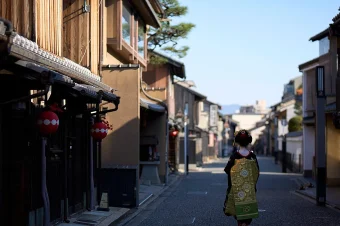
The estate shares its physical boundary with Kitano Tenmangu Shrine, the head of approximately 12,000 shrines across Japan. Established around 947 AD, the millennium-old sanctuary serves as the spiritual anchor of the neighborhood and is celebrated as a birthplace of Japan’s performing arts, the site where Izumo no Okuni gave rise to kabuki. From within the residence, the resonance of Japanese festivals and the rhythmic chanting of those carrying the divine mikoshi can be felt rather than merely heard. The surrounding district of Kamishichiken, Kyoto’s oldest geisha quarter, traces its origins to seven teahouses established before the shrine gates and remains a living tradition where the sight of Geiko and Maiko passing the estate frontage is a daily reality.
Market Standing in Kyoto’s Heritage Property Sector
Kyoto has recently seen a rise in standard luxury apartment developments and hotel investments, yet The Silence stands apart as a model for cultural preservation and architectural revitalization rather than a conventional market comparable. Its value rests on absolute rarity and prestige, an unrepeatable convergence of historical legacy and elite artisanship. Heritage properties of this caliber, combining a 200-year teahouse lineage with internationally recognized design, occupy a distinct tier of the market, where scarcity and provenance drive long-term appreciation and enduring cultural value.
A Legacy Asset Beyond Conventional Metrics
Valued at ¥6,000,000,000, The Silence operates in the highly exclusive realm of global luxury assets, akin to acquiring a museum-quality masterpiece or a piece of national heritage. Few opportunities unite two centuries of teahouse heritage, the vision of Kengo Kuma, and interiors by Armani/Casa within a single residence bordering one of Japan’s most sacred shrines. For discerning buyers, the appeal lies not in conventional ownership but in the privilege of stewarding a monumental cultural narrative intended to be cherished across generations.
To learn more about this extraordinary opportunity, contact TonTon Forbes Global Properties via the form below: