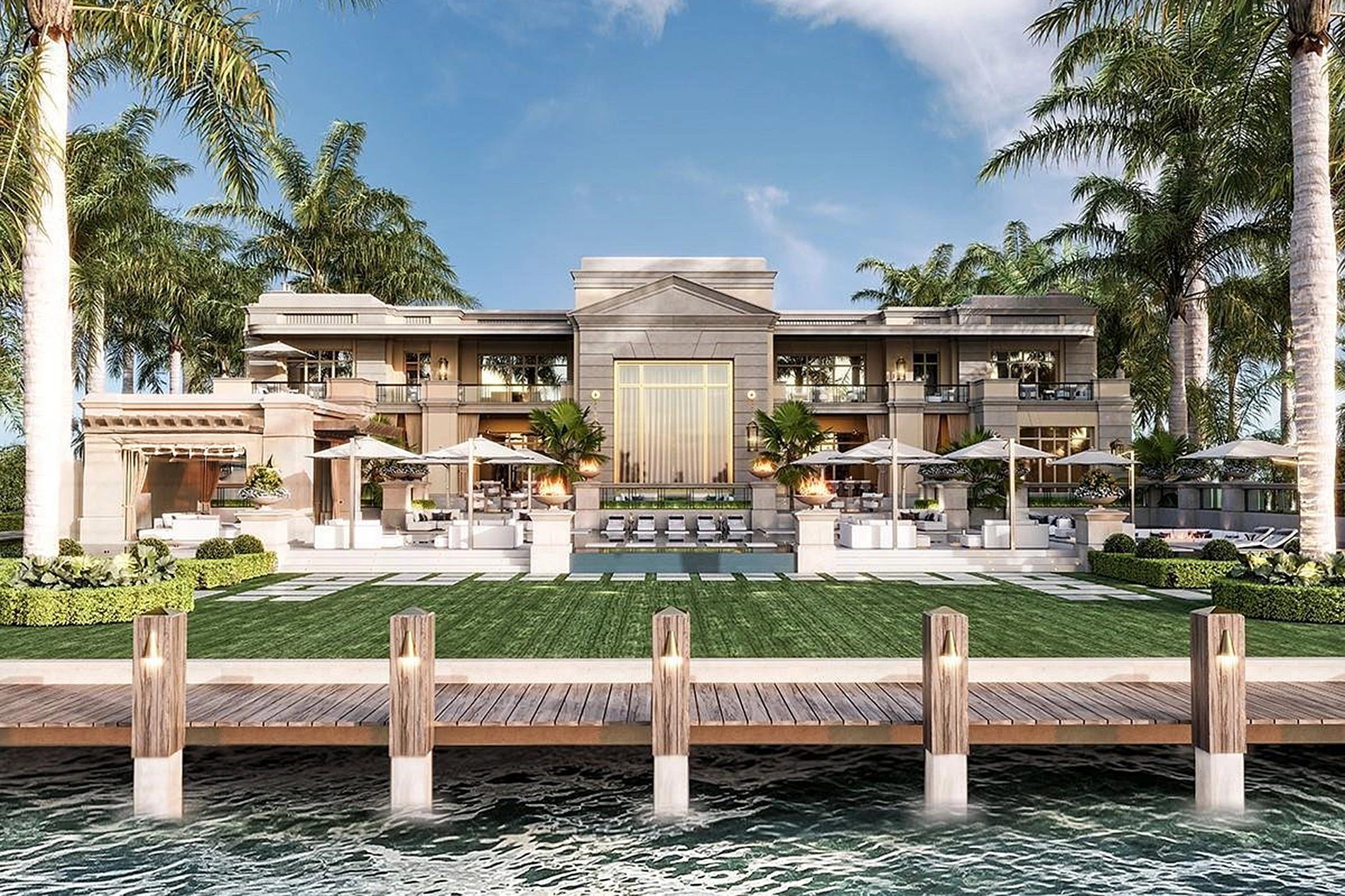
Indian Creek Island, the 300-acre private enclave in Biscayne Bay, comprises just 41 waterfront residences, a structural supply constraint that has long defined its pricing power and seldom surfaces in public listings. Now, Meta CEO Mark Zuckerberg and his wife, Priscilla Chan, are reportedly purchasing a newly completed waterfront mansion on nearly two acres for between $150 million and $200 million. While details of that transaction remain undisclosed, another estate currently on the market offers a revealing point of reference for pricing thresholds and architectural expectations at this level.
A $200 million Ferris Rafauli-designed estate listed through Coldwell Banker Realty – Miami Beach offers a rare window into the architectural standards, capital requirements, and design expectations defining this ultra-prime market.
Rafauli’s Architectural Statement
The residence occupies an 80,000-square-foot lot and represents one of Rafauli’s rare publicly available works. The designer, whose clientele includes Drake, members of the Kardashian family, and international royalty, is known for contemporary architecture grounded in classical proportion rather than passing trends.
Spanning 27,889 square feet, the estate offers 200 feet of pristine waterfront, nine bedrooms, and 15 bathrooms. Expansive entertaining spaces are articulated through custom millwork, rare stone selections, hand-finished plaster, and bespoke metalwork, signatures of Rafauli’s European atelier-driven approach.


A limestone façade establishes a composed, architectural presence. Inside, a sweeping staircase positioned beneath a 38-foot skylight anchors the residence, introducing vertical drama through controlled natural light.
Throughout, craftsmanship takes precedence over spectacle. The detailing, from artisanal plasterwork to tailored metal finishes, reflects a standard aligned with generational ownership rather than speculative construction.
Indian Creek’s Evolution
According to the official Indian Creek Village website, the man-made barrier island spans approximately 0.46 square miles (294 acres) along Biscayne Bay and consists of 41 platted waterfront home sites.
Developed in the 1930s around a private country club, Indian Creek was envisioned as a discreet island retreat for affluent homeowners—long before today’s nine-figure valuations. Early estates reflected classic Florida grandeur, not the contemporary mega-mansions that now define the enclave.
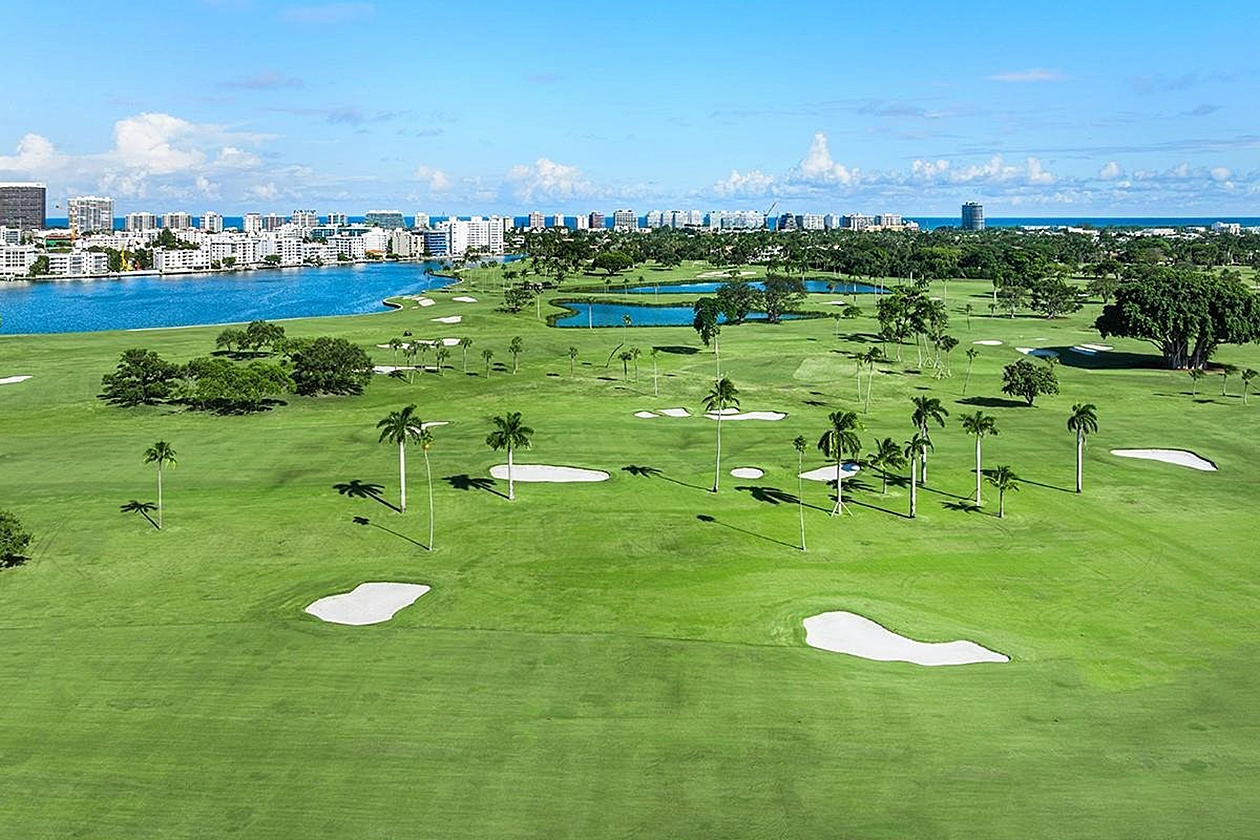
By the 2010s, tech founders, hedge fund leaders, and global billionaires began establishing primary residences here. Buyers have included Jeff Bezos, Jared Kushner and Ivanka Trump, Tom Brady, and reportedly Mark Zuckerberg. With just 84 residents recorded in 2020 and access controlled by a single guarded bridge and marine patrol, Indian Creek remains one of America’s most tightly secured addresses.
Beyond Indian Creek: Coconut Grove’s Emerging Ultra-Prime Market
While Indian Creek represents Miami’s most restricted luxury enclave, Coconut Grove’s waterfront has emerged as an alternative for billionaires seeking comparable amenities with greater lifestyle flexibility. Recent acquisitions by Google co-founder Larry Page ($35 million in 2021) and hedge fund billionaire Ken Griffin (over $100 million) signal the neighborhood’s evolution into what the Wall Street Journal termed “the next playground for billionaires.”
Coconut Grove offers similar deep-water dockage for 100-foot-plus yachts, larger waterfront parcels averaging two to five acres, and proximity to Coral Reef Yacht Club and Biscayne Bay Yacht Club.
Unlike Indian Creek’s centralized country club and 13-person police force, Coconut Grove provides walkable village amenities and sailing culture access, appealing to principals prioritizing lifestyle integration over fortress-level security.
Luxury Homes for Sale in Coconut Grove
Market Context
The timing aligns with broader wealth-migration dynamics. California is advancing legislation proposing a 5% billionaire tax with potential retroactive implementation beginning January 1, 2026. Against that backdrop, Florida’s zero state income tax continues to attract technology executives and ultra-high-net-worth individuals evaluating strategic residency shifts.
Miami real estate attorneys report heightened transaction activity through year-end 2025, as buyers seek to close acquisitions ahead of potential tax exposure.
View 2,500+ New Listings in Miami