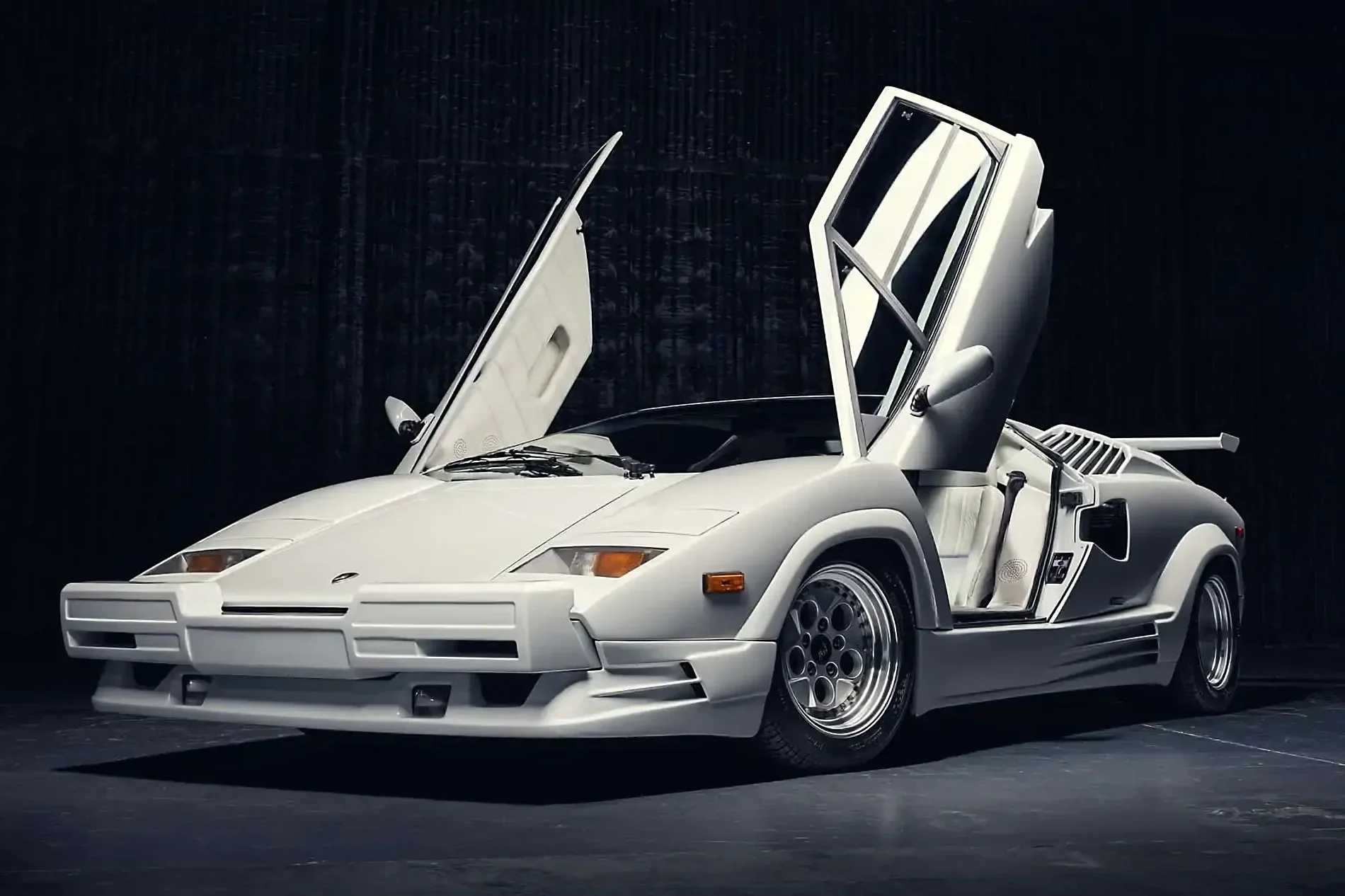
The Lamborghini Countach was the dream car for the generations that grew up in the 80s and 90s. Out of many versions of this legendary supercar, the 25th Anniversary Edition is most highly esteemed, with the greatest power, performance, and refinement. Not to forget the unique body kit, limited production, and bespoke details that make this iteration of Santa Agata’s finest model an irresistible proposition for any serious car collector.
This December, one of the most famous wedge-shaped wonders, the 1989 Countach 25th Anniversary Edition used in Martin Scorsese’s movie “The Wolf of Wall Street”, will be sold at RM Sotheby’s New York auction.
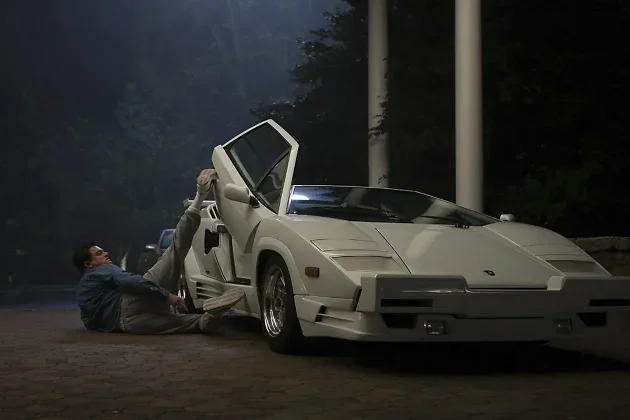
1989 Lamborghini Countach 25th Anniversary Edition in “The Wolf of Wall Street”
Driven by Leonardo di Caprio, the white supercar was the star of one of the most memorable scenes in movie history. Also, of the 667 cars produced, it is one of only 12 delivered to America, with a special body kit and US-spec details.
However, this irreplaceable collector’s car isn’t just a movie prop. This is a massively powerful machine that will mesmerize its next owner with a powerful V12 engine, impressive performance, and unique driving dynamics.
The 25th Anniversary Edition is widely regarded as the most interesting to drive and one of the fastest vehicles of its era. The producers of the movie used two real Lamborginis. One was unfortunately wrecked, but the other survived the shooting intact. This is the second car, and its famous origins are fully documented.
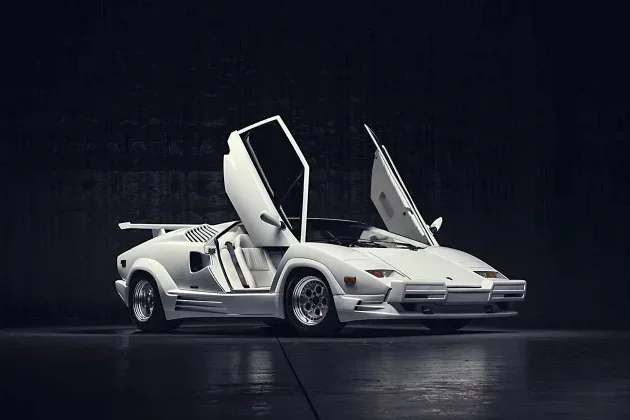
Jeremy Cliff, 2023 Courtesy of
At the moment, the most expensive Countach ever sold was the 1975 LP 400 Periscopico, which achieved $1.21 million at auction in 2014. This early model featured an unusual periscope rearview mirror installed in the first 150 cars.
The “Wolf of the Wall Street” Countach is expected to break the price record, with an estimated value of $2 million. The car is on top of the collectors’ list not just for its celebrity connection and worldwide fame, but also for being the last of the breed and in immaculate condition.
In 16 years of production, Lamborghini produced just under 2000 examples of the Countach. With such a colorful history, there are several exciting and scarce car models that collectors lust after.
The Heritage of Lamborghini Countach: From LP 400 to Evoluzione
The successor to the legendary Miura, the world’s first proper supercar, Countach, was first released as a 1971 concept car at the Geneve Motor Show. The public expected something outlandish and extreme from Lamborghini and was amazed by sharp lines and wedge shape, starkly contrasting the curvaceous and flowing Miura.
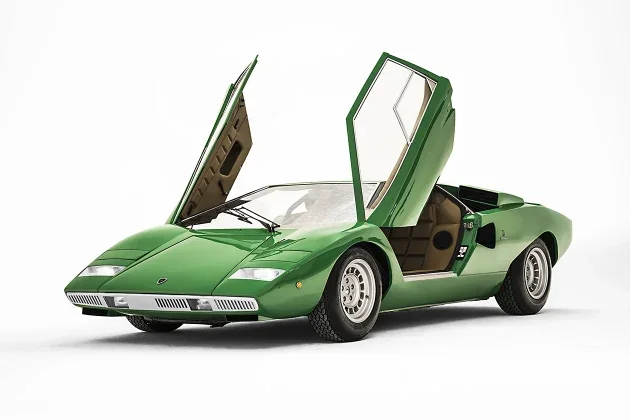
Lamborghini Countach LP 400 prototype
Three years later, in 1974, the first Countach models were delivered to clients, starting the legend that continues to inspire supercar fans globally.
The model name “Countach” wasn’t a reference to the bull-fighting world as other Lamborghini models. It was simply derived from a local Piedmontese term used when describing something exciting. And exciting the 1974 Lamborghini Countach was, with its mid-mounted V12 engine, vertically-opening doors (later dubbed Lambo doors), fantastic performance, and aggressive soundtrack. It’s predecessor, the Lamborghini Miura, might have started the supercar segment, but Countach defined and became synonymous with this type of sports car.
Lamborghini Countach LP400, 1974 to 1978
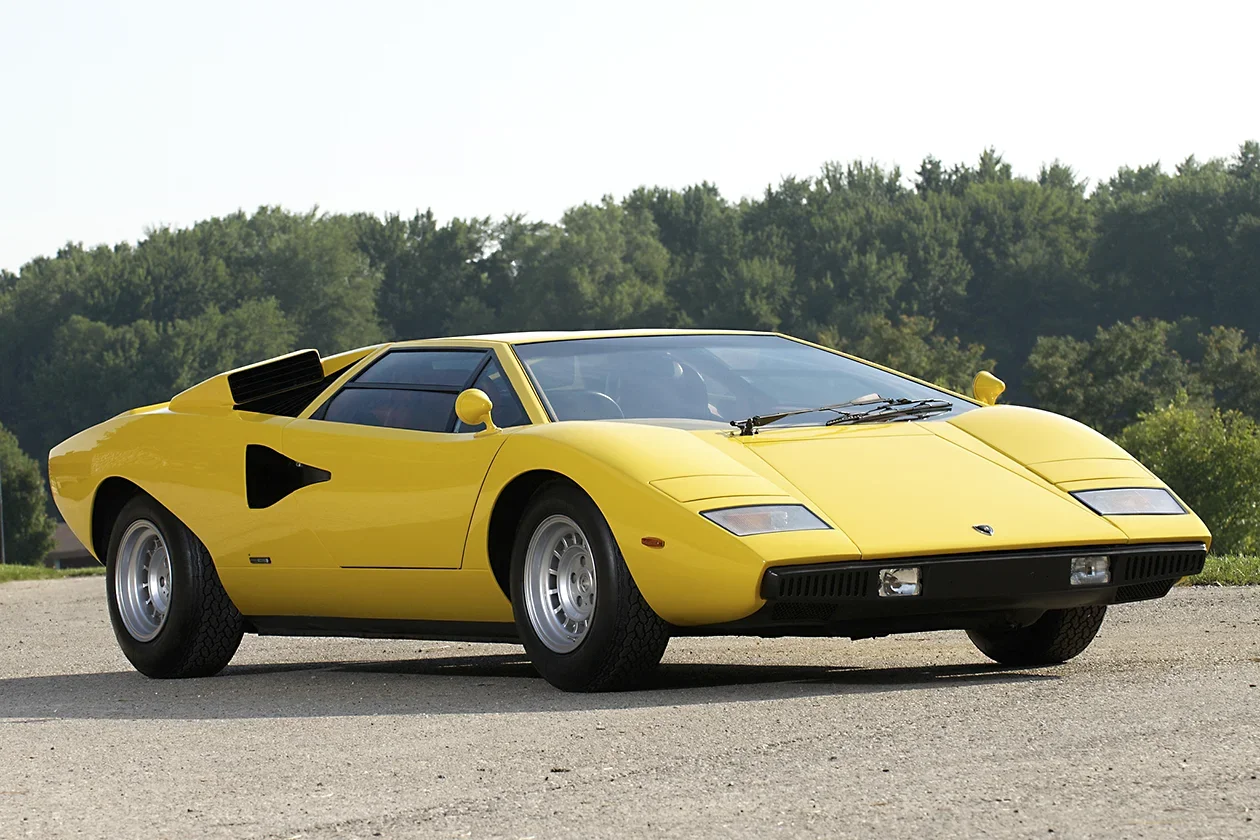
The LP400 was the first iteration of the Countach series and, for some fans, the model with the cleanest lines. It was powered by a 3.9-liter V12 engine and delivered 375 hp, but it didn’t have any spoilers, scoops, and aggressive details. A pioneer, it combined clean form and massive performance for the time.
1975 Lamborghini Countach Walter Wolf
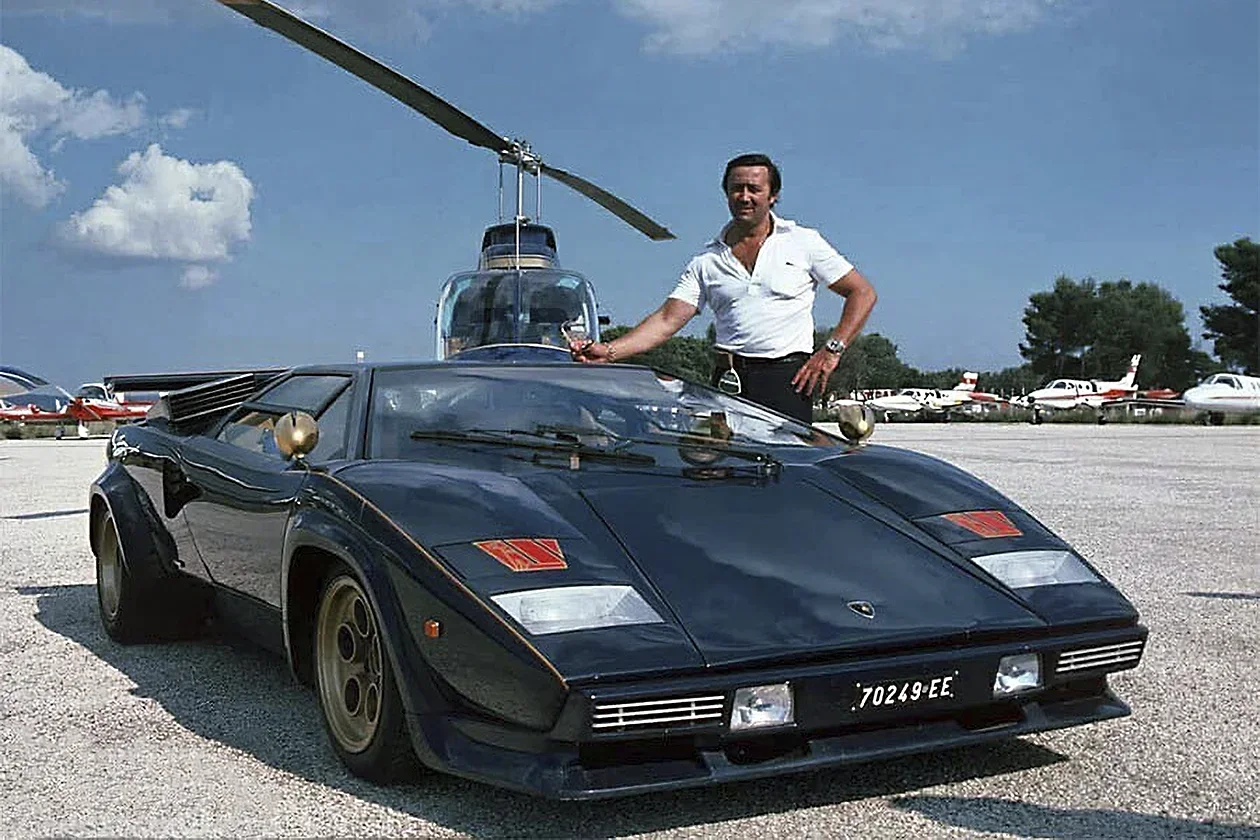
Commissioned by the Canadian businessman and race team owner, Lamborghini produced two cars in Walter Wolf specification. Both vehicles had bigger and more powerful 5.0-litre engines, reached over 450 hp, and had their chassis modified by Gianpaolo Dallara, the famous Italian sports car constructor.
Lamborghini Countach LP400 S, 1978 to 1982
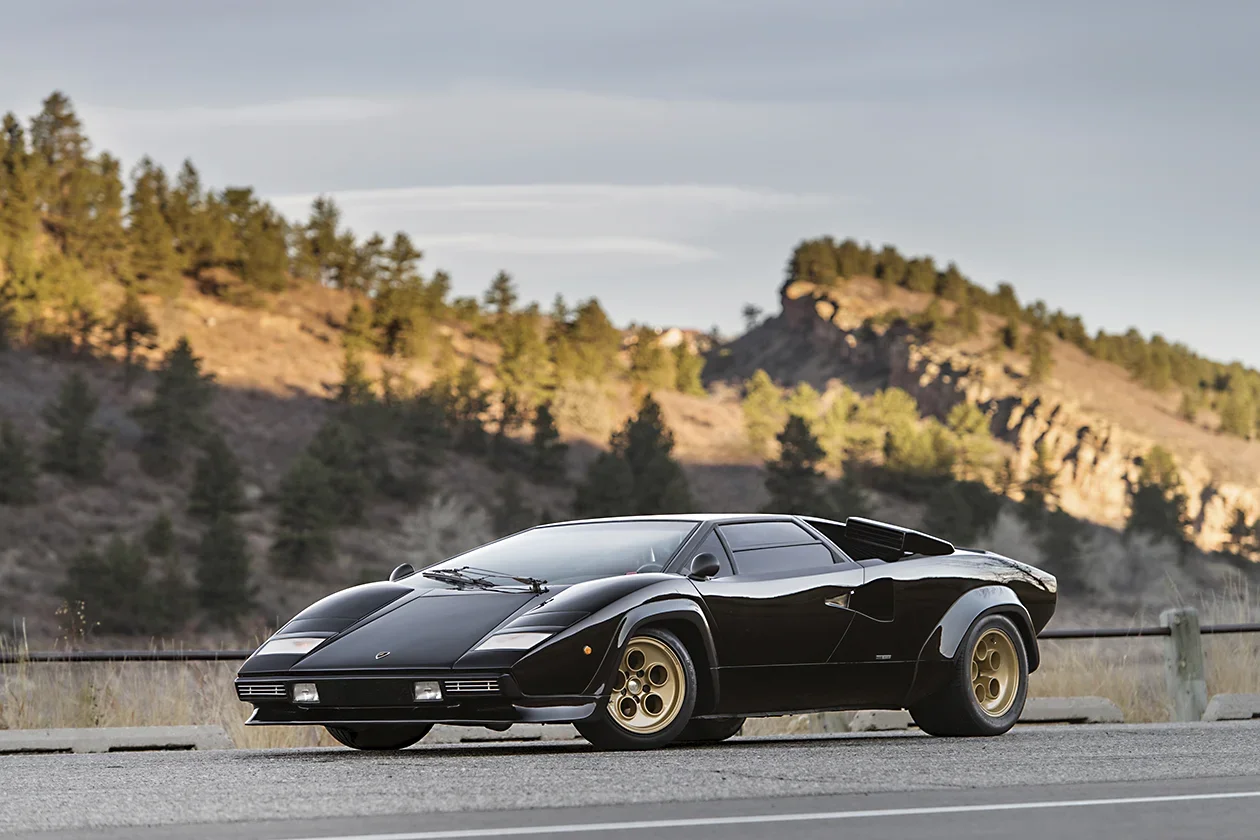
This version introduced the design details that proved to be synonymous with the Countach – massive rear spoiler, wide arches, and scoops. Countach became even more aggressive-looking, despite its decreased speed due to the engine power being downgraded to 355 hp, which slightly affected performance.
Lamborghini Countach Turbo S, 1980 to 1982
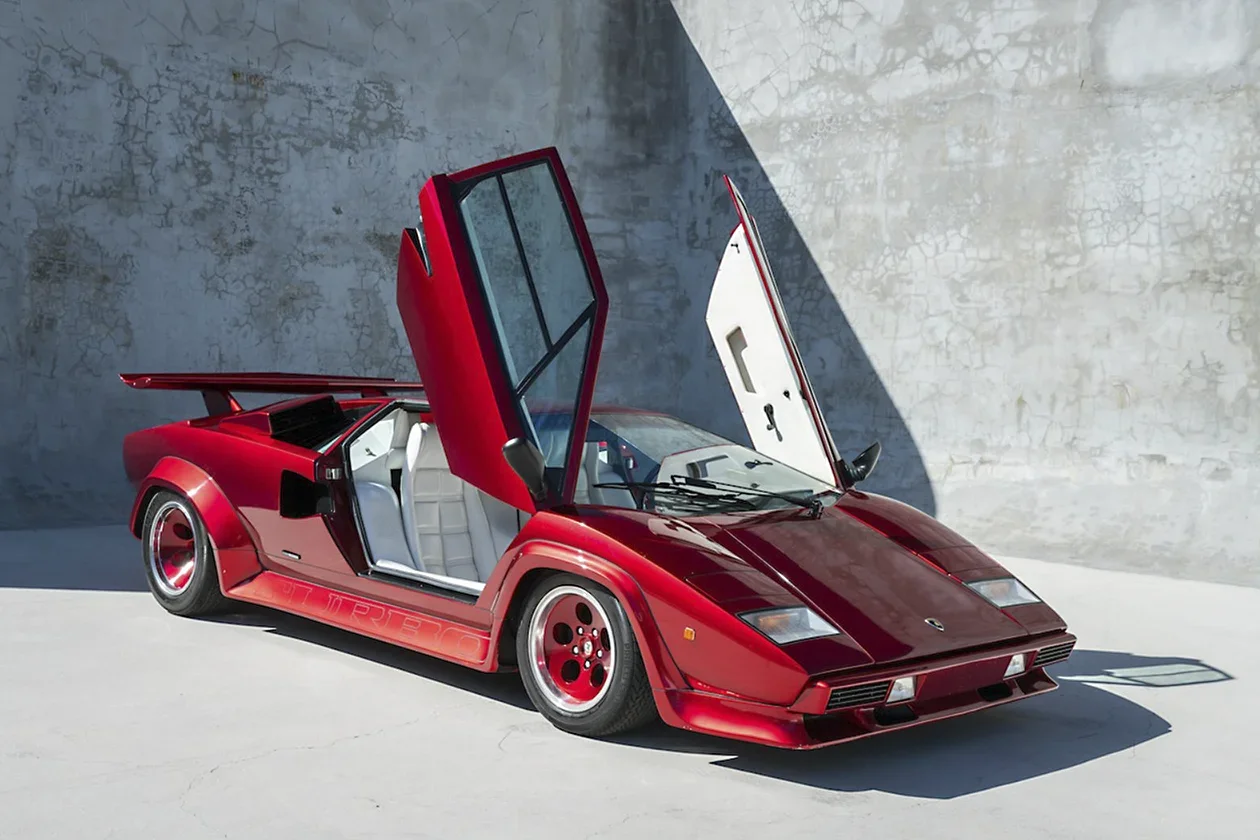
Even though this wasn’t an official model but rather a very limited run of cars commissioned by a Swiss importer, Turbo S is an integral part of the Countach legend. Based on LP400 S but with twin turbochargers and a host of other modifications, this version delivered a massive 750 hp and an allegedly insane performance. A creature of legend, it’s a shame it never entered full-scale production.
Lamborghini Countach LP500 S, 1982 to 1985
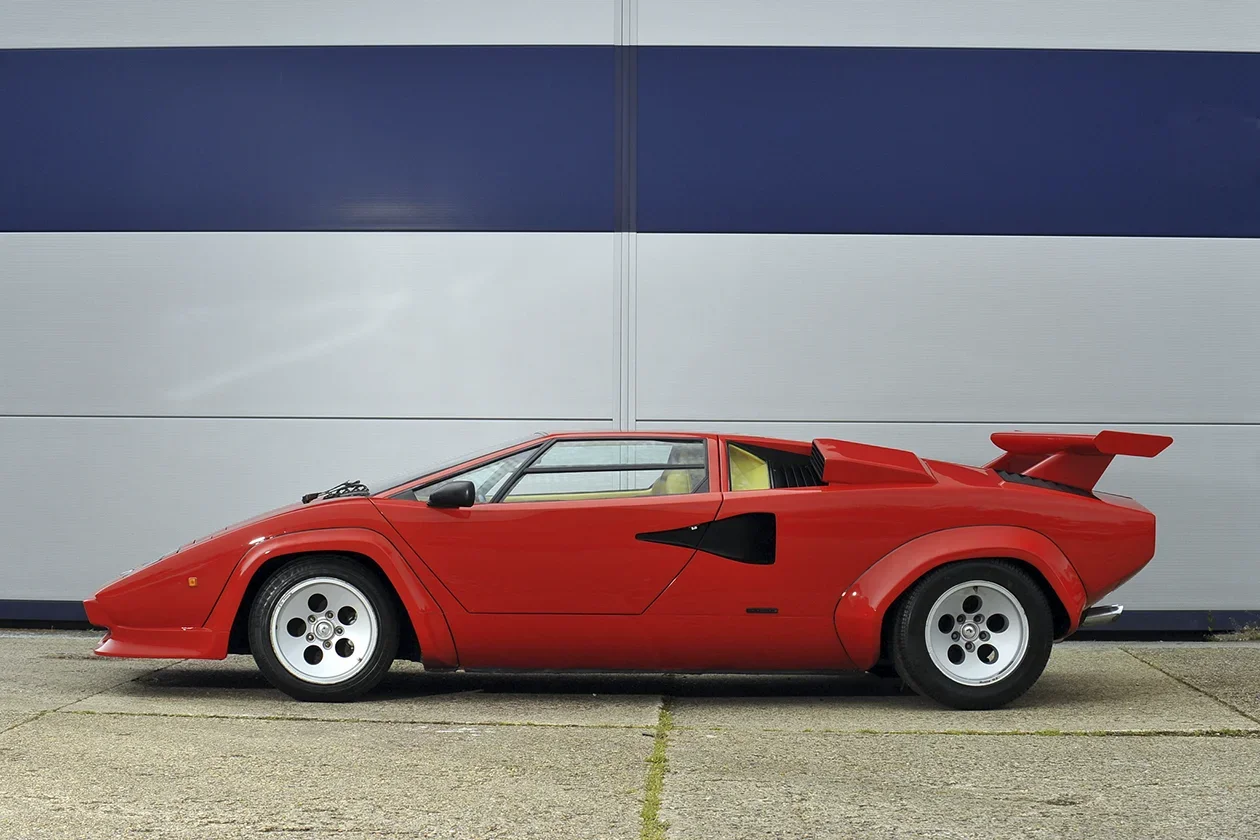
Even though this version looks the same as the LP400 S, the key difference is found under the sheet metal, in the form of a larger and more powerful 4.75-liter V12 engine. With 380 hp on tap, the Countach was once again one of the fastest cars of the era, which secured the place on the walls of millions of young, aspiring car enthusiasts.
1984 Lamborghini Countach L150 Prototype
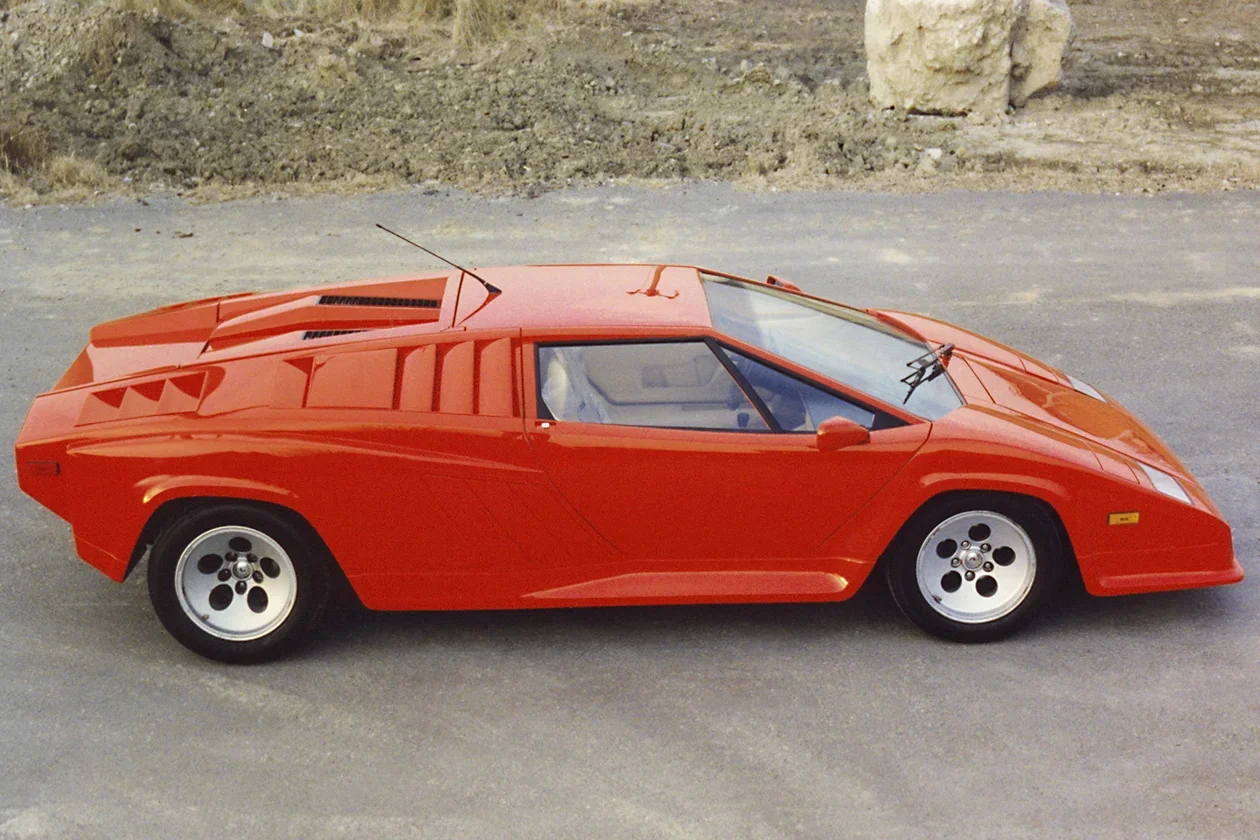
Knowing not just the Countach’s popularity in the sports car world, but also how expensive the car is, Lamborghini designed a one-off car with slightly smaller dimensions, developing the idea of a sub-model. However, the project was not viable and subsequently abandoned.
Lamborghini Countach 5000 QV, 1985 to 1988
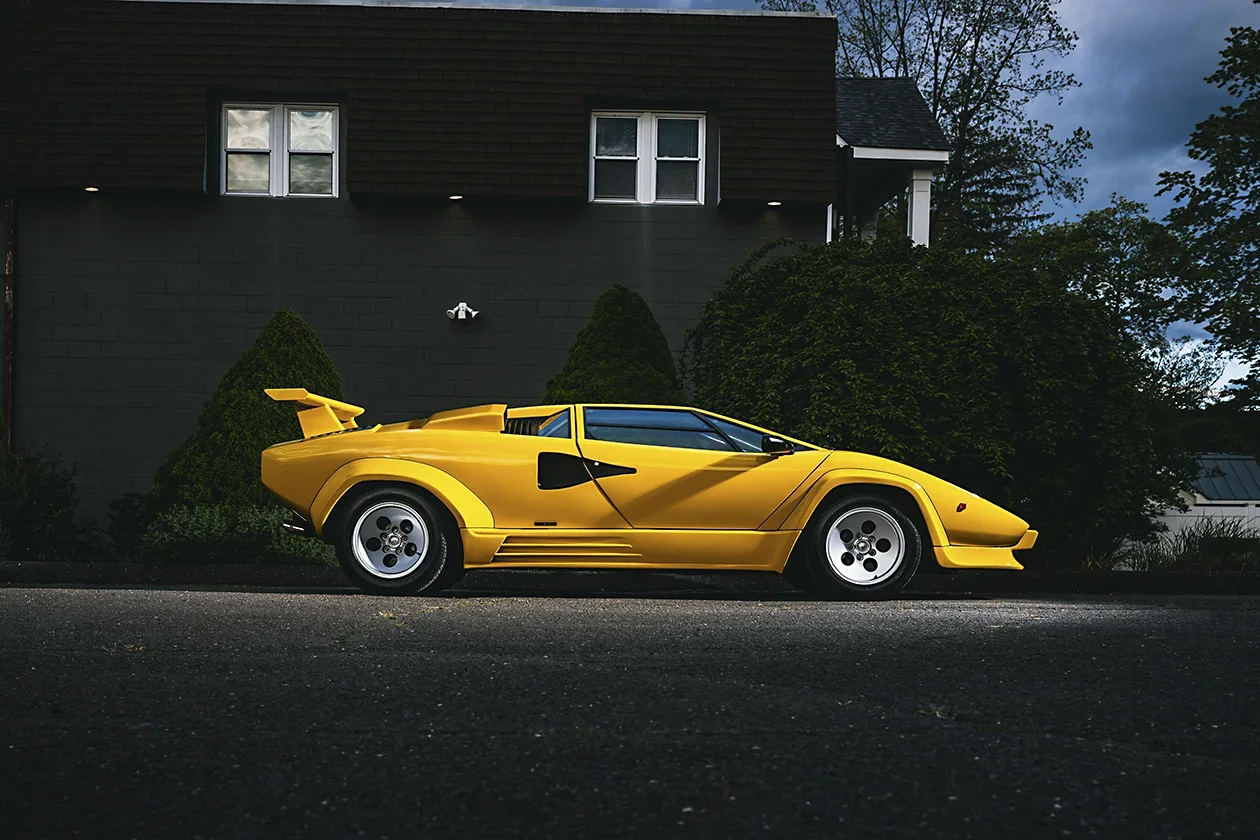
Well aware of its legendary status as a design icon, Lamborghini did very little in terms of aesthetic improvements for the 5000 QV version but modified the engine significantly. The massive V12 grew to 5.2 liters and gained four-valve cylinder heads – hence the name Quattovalvole (QV for sort). With 420 hp, it had even better performance, but Lamborghini additionally offered fuel injection as an option for the first time. Interestingly, the version with six carburetors was more powerful at 455 hp.
1987 Lamborghini Countach Evoluzione
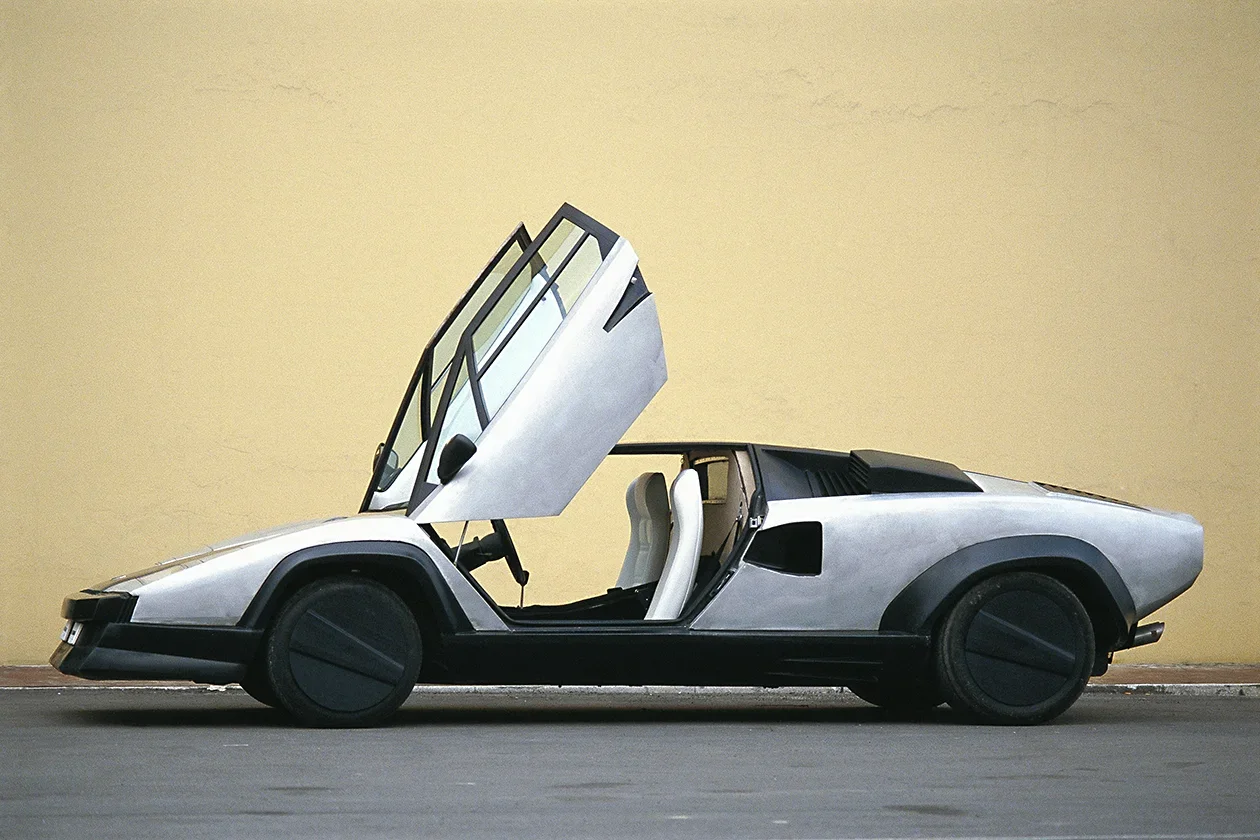
Lamborghini knew that Countach was nearing the end of its lifecycle, so in 1987, he started working on the Evoluzione model. This was an advanced prototype that used the same design but featured numerous chassis tweaks; new components, a body made of Kevlar, and other innovative materials. Behind the driver was an updated engine delivering 500 hp and capable of 320 km/h (200 mph) top speed.
Lamborghini Countach 25th Anniversary Edition, 1988 to 1990
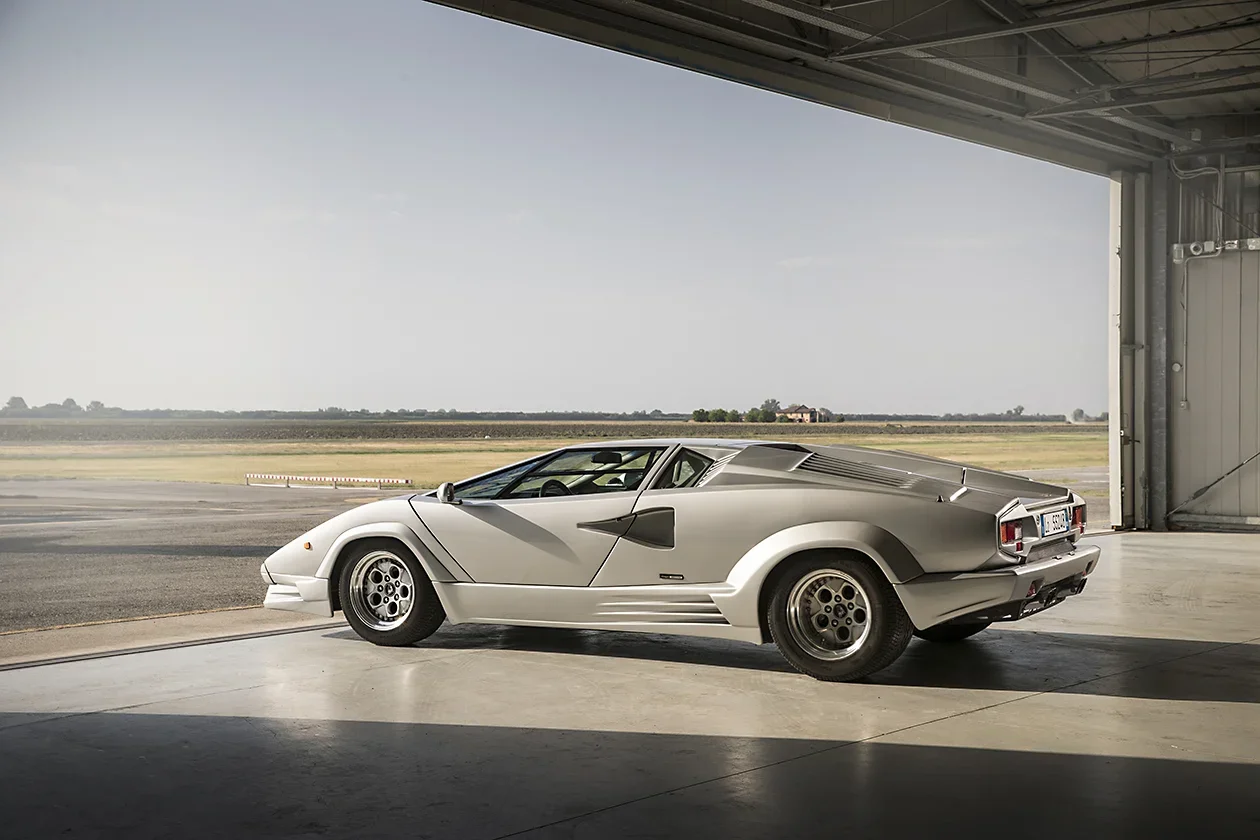
By 1989, the Countach was considered outdated despite potential differences in appearance and performance primarily because it’s original version was introduced back in 1974. Wanting to commemorate the 25th Anniversary of the company’s history and evolve the Countach form even further, Lamborghini decided to introduce a commemorative model that would be better, faster and more advanced than the rest. Equipped with a number of design modifications, a drive train from Countach 5000 QV, and a unique body kit, the 25th Anniversary edition was the ultimate spec model and an instant collectible. The man responsible for this version was Horacio Pagani of Pagani Automobile fame, who worked for Lamborghini at the time.
Determining the Market Value of a Standard Countach
The standard models like the 1981 Countach LP 400 S are worth north of $750,000 on today’s market. Of course, the market prefers cars with known history, fewer miles and desirable color combinations, but buying or restoring a Countach is a sound investment since the prices are expected to continue rising steadily.
Countach is sure to keep its market value, thanks to its reputation as a supercar with everlasting appeal. Its design, high-revving V12 engine, and the allure of proper Italian exotic and thunderous exhaust rumble are all automotive pleasures of the highest order.