Key Insights
- Lake Como leads all Italian micro-markets with 14.8% of US buyer interest, surpassing even Florence’s 8.7% share
- Sardinia posts explosive 36% year-over-year growth in US inquiries, the highest among Italy’s major regions
- Waterfront locations dominate the top 10 hotspots, with 6 of 10 locations offering coastal or lakeside access
American buyers continued to influence Europe’s luxury real estate market in 2025, and Italy stood among the top destinations capturing this demand. dynamic extends into 2026, as Forbes reports that more U.S. citizens are actively navigating Europe’s tightening residency rules, using ancestry, naturalization, and investment pathways as interest in emigration accelerates.
While Tuscany and Lombardy remained Italy’s most sought-after regions, the specific micro-markets attracting U.S. investment told a more nuanced story. JamesEdition’s 2025 data revealed that properties with lakeside and coastal views commanded the majority of American buyer interest, as traditional inland estates yielded ground to scenic waterfront alternatives.
To contextualize these shifts, JamesEdition spoke with key players across Italy’s luxury real estate markets, combining on-the-ground expert commentary with proprietary platform data to identify where demand was moving, and why.
 Daniela CiboddoFounder & License Partner at Engel & Völkers Costa SmeraldaA common misconception is that luxury value is purely about size or finishes. In reality, what truly drives long-term performance is location, sea proximity and international liquidity — elements that make Costa Smeralda’s prime waterfront market uniquely resilient. International and U.S. buyers are increasingly focused on true waterfront assets, where privacy, direct sea access and long-term scarcity drive value. In destinations like Costa Smeralda, prime sea-view and beachfront properties consistently outperform inland homes in both resilience and appreciation.
 Christian WeissensteinerLicence Partner & Real Estate Agent, VON POLL REAL ESTATE Bozen/BolzanoU.S. buyers in Italy are increasingly focused on long-term value rather than short-term trends. Waterfront properties remain highly sought-after, but we also see growing interest in well-connected inland areas where authenticity, quality of life, and scarcity drive sustainable appreciation.
 Julia BraccoHead of Office at Immobilsarda Srl Christie's International Real Estate - Costa Smeralda - Porto CervoAmong international buyers, true value is often associated exclusively with waterfront properties. Today, priorities are evolving toward wellbeing, privacy, unspoilt nature, and air quality. Sardinia, internationally recognised as a Blue Zone, offers a rare combination of longevity, Mediterranean climate, near-zero crime rates, and vast natural landscapes, where long-term value is increasingly defined by quality of life rather than proximity to the sea.
Tuscany and Lombardy Command 60% of American Interest
The regional data confirms Italy’s luxury market remains concentrated in two powerhouse regions. Tuscany captures 29.1% of US buyer inquiries while Lombardy follows closely at 28.7%, together accounting for nearly six in ten American property searches.
Sardinia emerges as the clear third player at 15.5%, more than doubling the interest of any other Italian region. This trio creates a dominant cluster that attracts over 70% of all US buyer activity in Italy’s luxury market.
The remaining 17 regions compete for just 30% of American interest, with coastal Campania (8.6%) and Liguria (14.6%) rounding out the top five.
Beyond the Big Two: Mapping Italy’s Luxury Micro-Markets
While Tuscany and Lombardy command nearly 60% of US buyer interest, American buyers target specific micro-destinations rather than entire regions. Lake Como alone captures 14.8% of national interest despite representing a tiny fraction of Lombardy’s territory.
Florence ranks second at 8.7%, maintaining its appeal through Renaissance architecture and cultural significance. However, the gap between Lake Como and Florence underscores a broader shift toward lifestyle-driven purchases over purely cultural investments.
The concentration creates distinct luxury corridors across Italy. Northern lakes form one axis, Mediterranean coastal towns create another, while select Tuscan hill towns maintain traditional appeal. This pattern reveals Italy has a collection of distinct lifestyle destinations.
The top 10 micro-markets account for nearly 50% of all American interest, with waterfront locations claiming 6 of these 10 positions. This hyper-concentration reveals how US buyers approach Italy through curated lifestyle destinations rather than broad geographic searches.
Sardinia Emerges as Italy’s Fastest-Growing Luxury Market
Sardinia has posted an extraordinary 36% year-over-year increase in US buyer inquiries, the highest growth rate among Italy’s major regions. This surge positions the island as Italy’s most dynamic luxury market, driven primarily by Costa Smeralda’s exclusive resort communities.
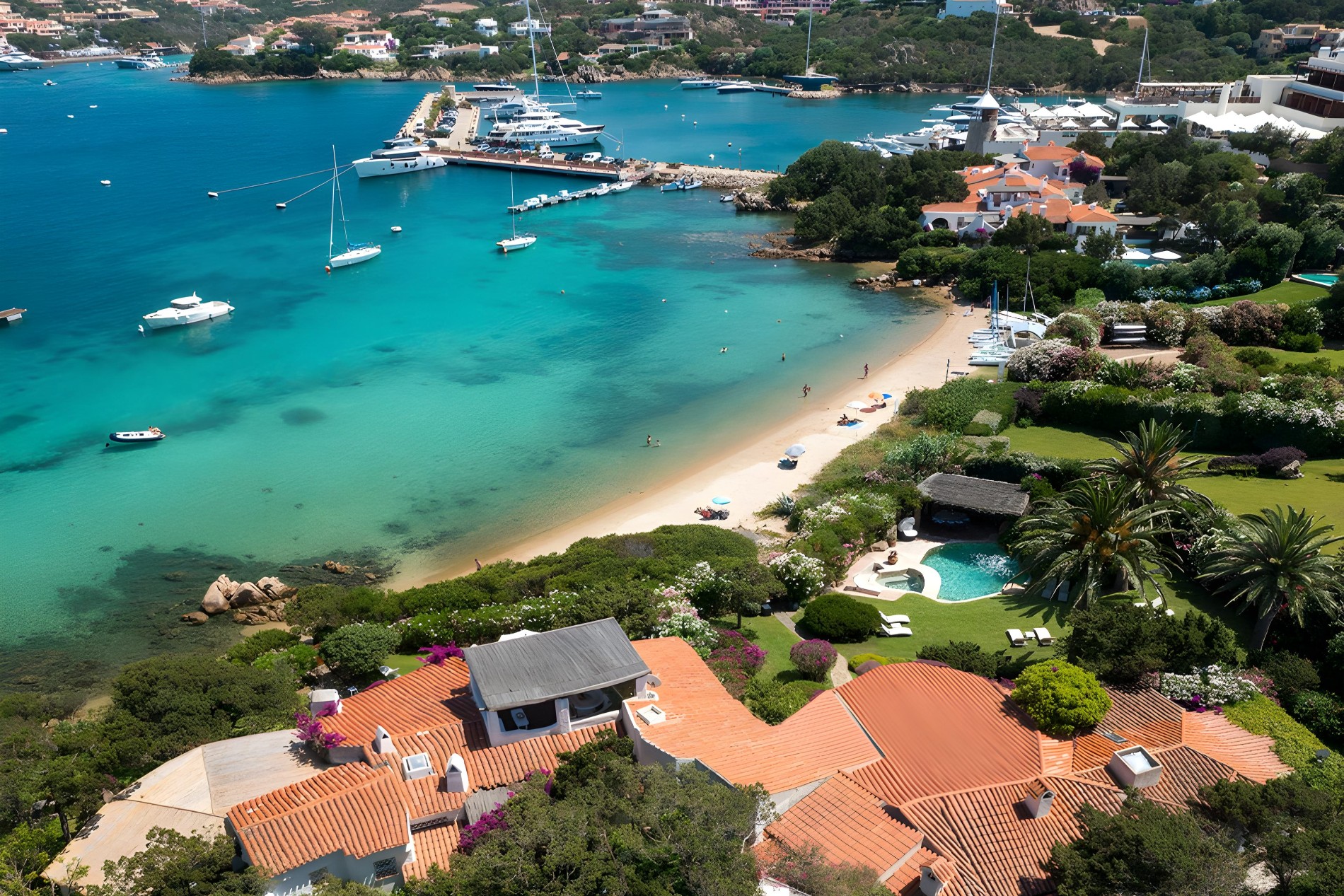
Porto Rotondo and Porto Cervo together capture 5.2% of total US interest, establishing Costa Smeralda as a major destination. The region’s appeal stems from pristine beaches, yacht culture, and newly developed luxury infrastructure that rivals the French Riviera.
Sardinia’s growth complements strong performance in Lombardy, which posted a robust 21% year-over-year increase. This dual momentum in both northern lakes and Mediterranean islands demonstrates the breadth of American interest across Italy’s diverse luxury markets.
Water Views Could Define Italy’s Luxury Future
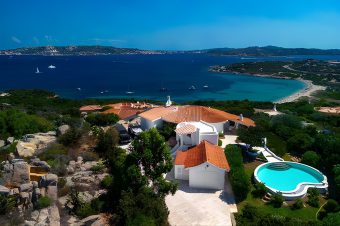
The data reveals American buyers increasingly value waterfront access alongside Italy’s cultural heritage. Sardinia’s 36% growth and Lake Como’s market dominance suggest lifestyle amenities now compete directly with traditional attractions in driving purchase decisions.
For strategic buyers, the concentration in top micro-markets presents opportunities. With 50% of interest focused on just 10 locations, lesser-known coastal destinations such as Apulia may offer similar appeal at more accessible entry points.
Explore waterfront properties across Italy
Data methodology
This analysis is based on proprietary data from JamesEdition, covering US buyer inquiry activity on Italian luxury residential listings in 2024 and 2025. Buyer origin is determined using IP-based geolocation, user profile data, and inquiry metadata.
Regional classifications follow standard Italian administrative boundaries, with micro-market analysis based on city-level inquiry data. “Lake Como hub” represents an aggregation of 16 lakeside municipalities. Market share figures reflect the proportion of total US inquiries by destination.
While this analysis reflects user activity on the JamesEdition platform, the directional trends align with broader market reporting from Italian real estate agencies and tourism boards.