$1,360,442
Villa For Sale In Tradate, Abbiate Guazzone
- 14 Beds
- 5 Baths
- 18,622 Sqft
- Updated: April 6
- 13
About the Property
VILLA ABRAMI Abbiate Guazzone
On site where the property is located in the old town, it already appears as a settlement of the County of Seprio on the maps at the end of the 9th century AD.
At La Pieve di Abbiate Guazzone, on the same hill as Villa Abrami, a castle was built (destroyed by the Milanese almost two centuries later).
In 1140, the entire County of Seprio came under the cont
On site where the property is located in the old town, it already appears as a settlement of the County of Seprio on the maps at the end of the 9th century AD.
At La Pieve di Abbiate Guazzone, on the same hill as Villa Abrami, a castle was built (destroyed by the Milanese almost two centuries later).
In 1140, the entire County of Seprio came under the cont
VILLA ABRAMI Abbiate Guazzone
On site where the property is located in the old town, it already appears as a settlement of the County of Seprio on the maps at the end of the 9th century AD.
At La Pieve di Abbiate Guazzone, on the same hill as Villa Abrami, a castle was built (destroyed by the Milanese almost two centuries later).
In 1140, the entire County of Seprio came under the control of the Duchy of Milan, and the parish became part of the Archdiocese of the city.
In 1173, the Provost of Seprio, Guiscardo, chose the site of the villa as a place to build a home for travelers and pilgrims of the parish church of San Giovanni Evangelista.
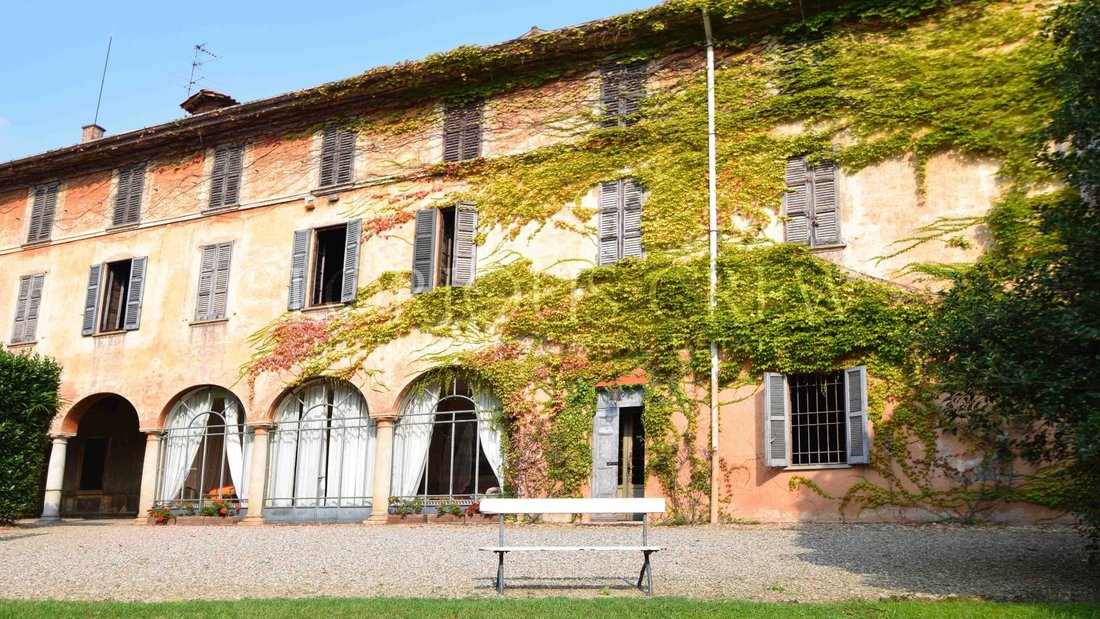
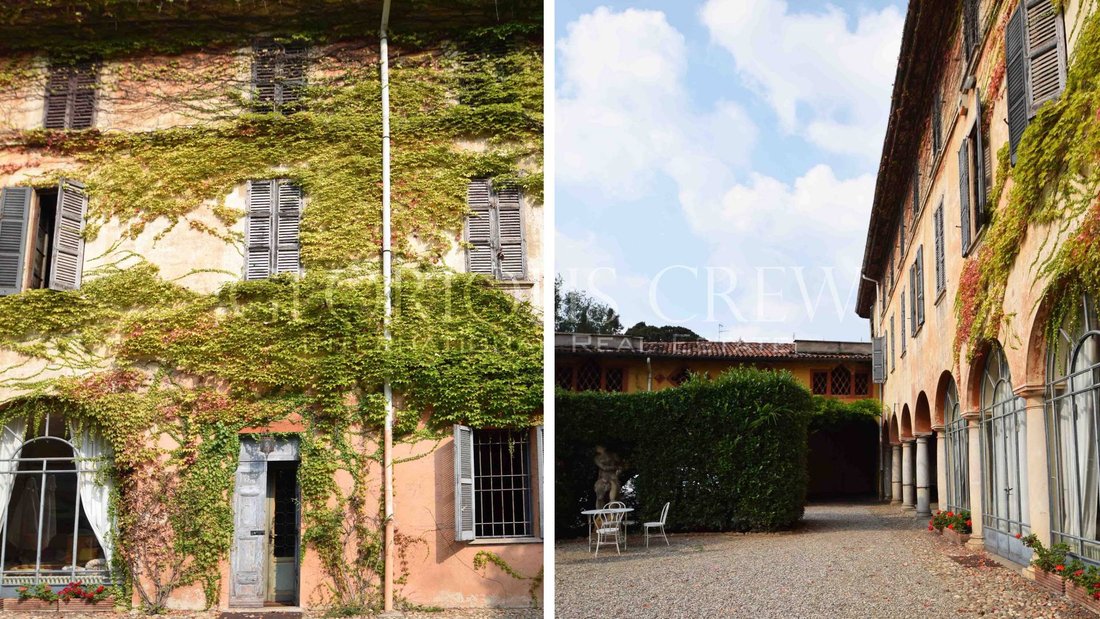
During this period, the buildings on the site acquired a shape very similar to the current one, with the characteristic ’elle’ formed by the central body of the villa and the so-called ’rustico,’ originally used as a barn and stable.
Documents from the time identify the site as a religious house, which adjoined the coppice still relevant to the property, even if now included in the natural park.
Gian Galeazzo Visconti annexed the entire County to the Duchy of Milan after 1520.
What remains is the particular ’elle’ shape, definitely different from the typical horseshoe plan of villas in Lombardy in the same area.
Since the first half of the nineteenth century, it became the property of the Galimberti family, important textile entrepreneurs from Osnago.
The neoclassical villa, which still bears slight damage, is characterized by Galimberti; the porch on the side of the courtyard is identical to the two lateral structures, delineating Villa Galimberti in Bradford, now owned by the FAI.
In 1902, Maria Galimberti, from a bourgeois family, married into the Milanese patrician family of Happy Abrami, inheriting the Villa of Abbiate Guazzone.
The groom, a young and established landscape painter who attended the Brera Academy of Fine Arts under Filippo Carcano, and who, after exposure at the Milan Triennale in 1900, made the Villa his privileged residence during his stays in Italy, alternating with work in his studio in Paris.
The teacher was happy to make the changes that shape the Abrami Villa as we see it today, deeply intervening especially on internal structures, furnishings, and wall decorations, using some curious stylistic choices.
For example, the dining room, with its ceiling shape, fireplace model, decorations, floor mosaics, and furniture, is an exact copy of one from Palazzo Bozzi Portinari in Florence, which was the only original evidence, as the original was destroyed in a fire.
The veranda, created by enclosing part of the long porch, is completely covered with colored plasters with geometric and floral motifs, forming two impressive works by the same painter of roses, ’Veduta del Porto Canale di Chioggia’ and ’View of Mount Bracket Rosa.’
All the majesty and the doorposts are painted and decorated, and in some cases feature 19th-century style embellishments.
An important fresco of San Giovanni, torn in the hallway from a nearby chapel that was destroyed, is preserved, as well as a ’Sacrifice of Isaac’ by the school of Mantegna and other 17th-century works.
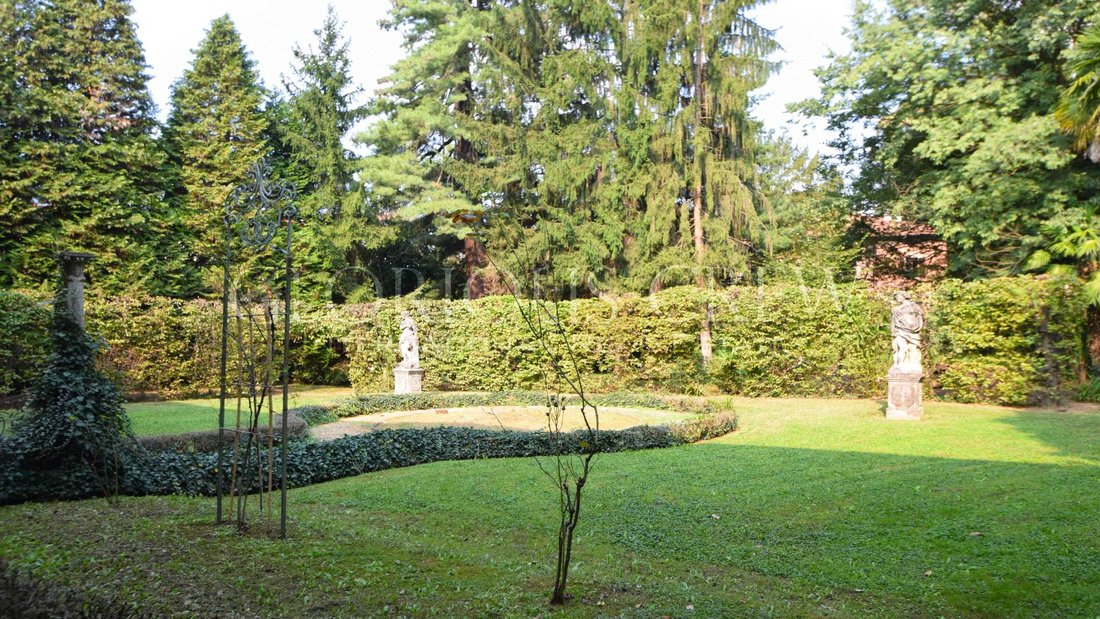
In addition to the project and planting of the garden by Happy Abrami, the outer walls and the impressive French-style gate at the main entrance facing the Piazza del Comune were also designed, along with the construction of the building adjacent to the villa, where the master incorporated his practice as a painter.
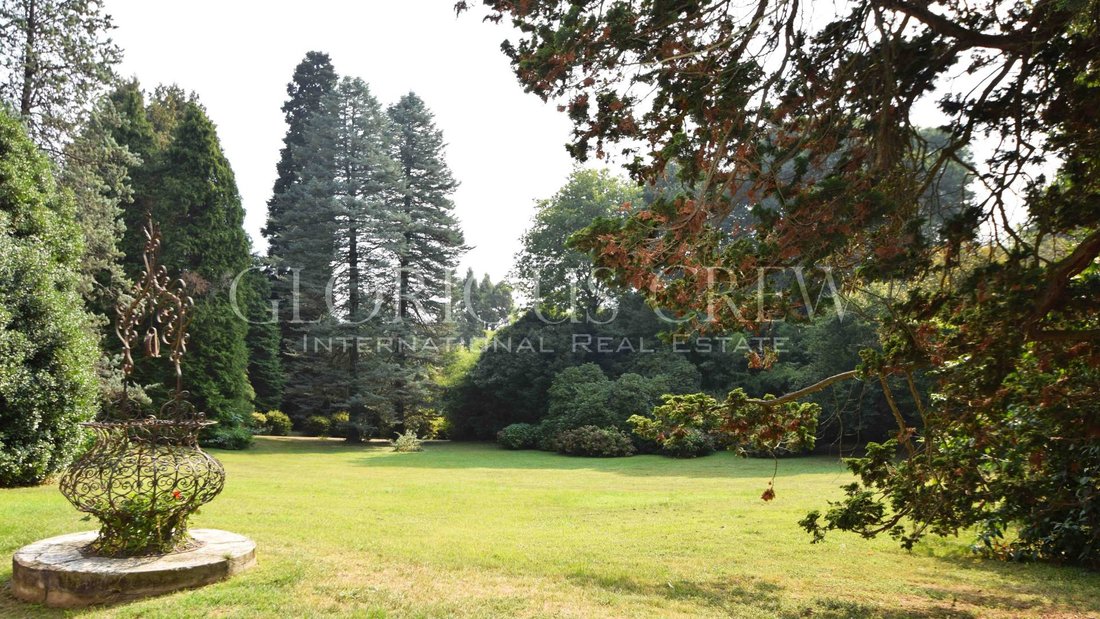
Further work involved the coppice and the external surroundings of Villa Chestnut.
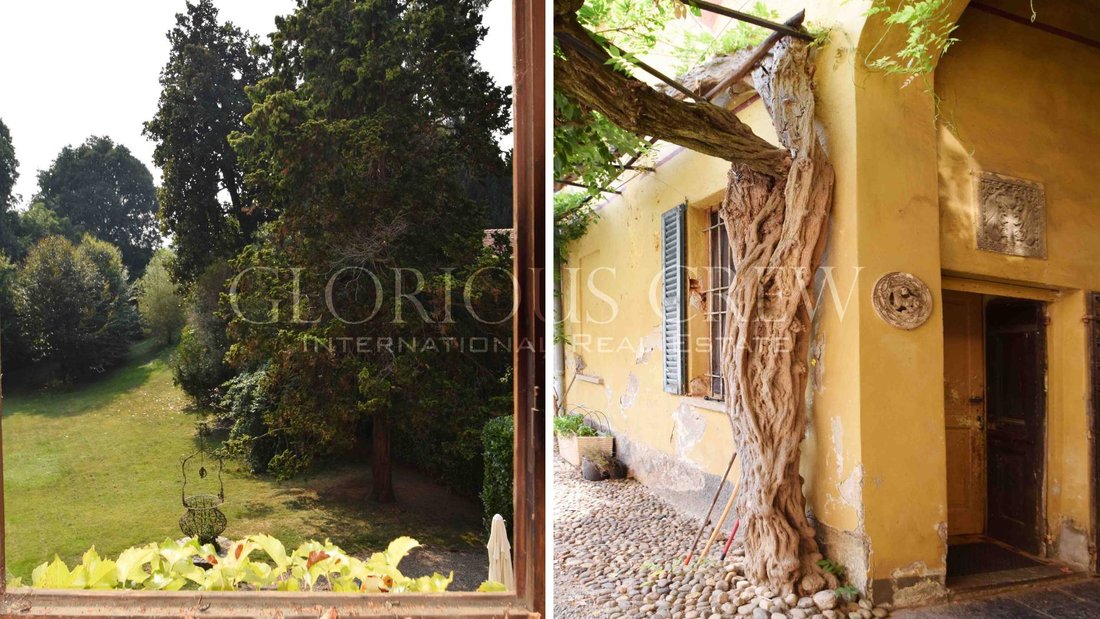
The municipal toponymy of the time, the streets around the villa, are identified as the site of Abrami, still marked by granite paving stones, as indicated by Ariosto.
The premature death of the teacher occurred in 1919, and the villa was passed on to his heirs, who continued to use it as a country house, following the most common Milanese tradition.
On site where the property is located in the old town, it already appears as a settlement of the County of Seprio on the maps at the end of the 9th century AD.
At La Pieve di Abbiate Guazzone, on the same hill as Villa Abrami, a castle was built (destroyed by the Milanese almost two centuries later).
In 1140, the entire County of Seprio came under the control of the Duchy of Milan, and the parish became part of the Archdiocese of the city.
In 1173, the Provost of Seprio, Guiscardo, chose the site of the villa as a place to build a home for travelers and pilgrims of the parish church of San Giovanni Evangelista.
During this period, the buildings on the site acquired a shape very similar to the current one, with the characteristic ’elle’ formed by the central body of the villa and the so-called ’rustico,’ originally used as a barn and stable.
Documents from the time identify the site as a religious house, which adjoined the coppice still relevant to the property, even if now included in the natural park.
Gian Galeazzo Visconti annexed the entire County to the Duchy of Milan after 1520.
What remains is the particular ’elle’ shape, definitely different from the typical horseshoe plan of villas in Lombardy in the same area.
Since the first half of the nineteenth century, it became the property of the Galimberti family, important textile entrepreneurs from Osnago.
The neoclassical villa, which still bears slight damage, is characterized by Galimberti; the porch on the side of the courtyard is identical to the two lateral structures, delineating Villa Galimberti in Bradford, now owned by the FAI.
In 1902, Maria Galimberti, from a bourgeois family, married into the Milanese patrician family of Happy Abrami, inheriting the Villa of Abbiate Guazzone.
The groom, a young and established landscape painter who attended the Brera Academy of Fine Arts under Filippo Carcano, and who, after exposure at the Milan Triennale in 1900, made the Villa his privileged residence during his stays in Italy, alternating with work in his studio in Paris.
The teacher was happy to make the changes that shape the Abrami Villa as we see it today, deeply intervening especially on internal structures, furnishings, and wall decorations, using some curious stylistic choices.
For example, the dining room, with its ceiling shape, fireplace model, decorations, floor mosaics, and furniture, is an exact copy of one from Palazzo Bozzi Portinari in Florence, which was the only original evidence, as the original was destroyed in a fire.
The veranda, created by enclosing part of the long porch, is completely covered with colored plasters with geometric and floral motifs, forming two impressive works by the same painter of roses, ’Veduta del Porto Canale di Chioggia’ and ’View of Mount Bracket Rosa.’
All the majesty and the doorposts are painted and decorated, and in some cases feature 19th-century style embellishments.
An important fresco of San Giovanni, torn in the hallway from a nearby chapel that was destroyed, is preserved, as well as a ’Sacrifice of Isaac’ by the school of Mantegna and other 17th-century works.
In addition to the project and planting of the garden by Happy Abrami, the outer walls and the impressive French-style gate at the main entrance facing the Piazza del Comune were also designed, along with the construction of the building adjacent to the villa, where the master incorporated his practice as a painter.
Further work involved the coppice and the external surroundings of Villa Chestnut.
The municipal toponymy of the time, the streets around the villa, are identified as the site of Abrami, still marked by granite paving stones, as indicated by Ariosto.
The premature death of the teacher occurred in 1919, and the villa was passed on to his heirs, who continued to use it as a country house, following the most common Milanese tradition.
-
Property type
Villa
-
Year built
1900
-
Price/sqft
$73
-
Emissions
F
-
Consumption
F
Features
- Garden
- Terrace
- Garage
- Fireplace
- Equestrian
- Gate
- Balcony
Explore the Area
Via Gioacchino Rossini, Tradate, Lombardy, Italy
View on Google Maps
Price per sqft
Low
High
This stunning listing in Tradate offers a perfect blend of tranquility and connectivity. Nestled between lush nature and vibrant culture, residents enjoy proximity to the serene Parco Pineta and swift access to Milan via train. Indulge in exquisite dining options, leisure at Golf Club Le Robinie, and cultural visits in nearby Varese. The area is well-versed with excellent schools and modern amenities, making it ideal for a luxurious lifestyle.
Get nearby
Attractions
Schools
Milan Malpensa Airport
Airport
29 min
Tradate Station
Train Station
5 min
Parco Pineta di Appiano Gentile e Tradate
Outdoor & Nature
8 min
Golf Club Le Robinie
Golf & Country Clubs
22 min
Liceo Scientifico Galileo Galilei
Public School
6 min
ICS Don Milani
Public School
4 min
Joined 7 years ago
You have inquired about this property
The agent will contact you soon by
Listed by
54
Listings
2020
Joined
Book home tour with the agent
Choose a date and whether you'd like a virtual or in-person tour with the agent.
Preferred date
Tour type
Last updated
April 6
First listed
August 14, 2023
Listing reference
2512
Similar Properties Nearby
New Listings in Tradate



Explore More Homes for Sale
Related Guides & Stories
Trusted by the World's Leading Brokers
The agents behind the world's most exceptional properties list with JamesEdition.
- Listings from Sotheby's, Christie's, BARNES, and Engel & Völkers
- Every listing reviewed before it goes live
- Connect directly with verified listing agents
By continuing you agree to our Terms and Privacy Policy.