$1,910,436
Cortijo With Olive Groves For Sale In The Guadalcobacín River Valley
- 10 Beds
- 3 Baths
- 3,757 Sqft
-
32
Views for last 30 days
- 14
About the Property
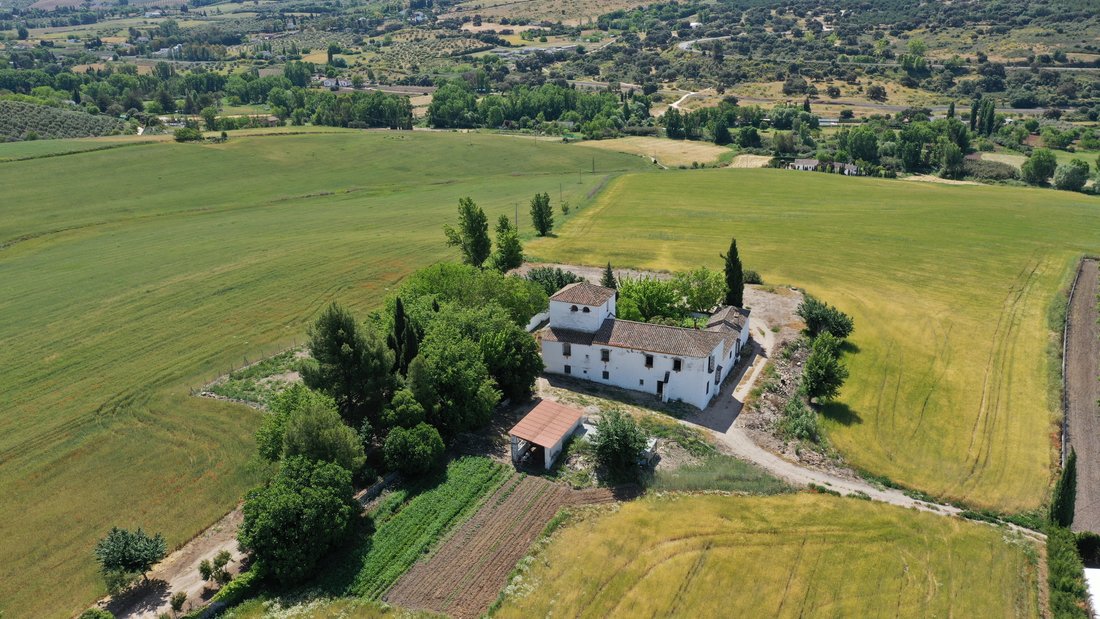
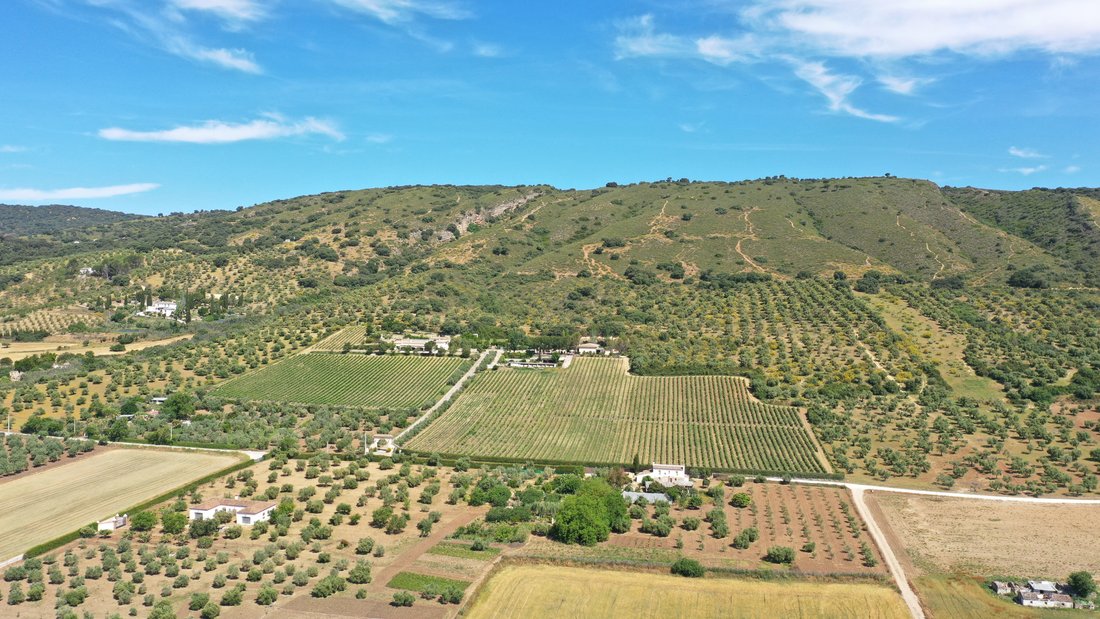
8km from Ronda, amidst farmland and olive groves in the valley of the Guadalcobacín River, we find a farmhouse with tradition and history, the so-called Cortijo de La Vizcondesa. Its name derives from the former owners, the Viscounts of Torres de Luzón, a title granted by Carlos II in the year 1674 to Don Juan Bernardino de Ahumada y Céspedes.
The farmhouse, located on a plot of almost 62
The farmhouse, located on a plot of almost 62
8km from Ronda, amidst farmland and olive groves in the valley of the Guadalcobacín River, we find a farmhouse with tradition and history, the so-called Cortijo de La Vizcondesa. Its name derives from the former owners, the Viscounts of Torres de Luzón, a title granted by Carlos II in the year 1674 to Don Juan Bernardino de Ahumada y Céspedes.
The farmhouse, located on a plot of almost 62 hectares, with 46 hectares of farmland and the rest olive groves, with the possibility of being sold separately, is in perfect working order. It has very good quality land for farming, with a vegetation cover of over 2 meters thick, abundant water, and drainage systems, bordering to the south with the Guadalcobacín River.
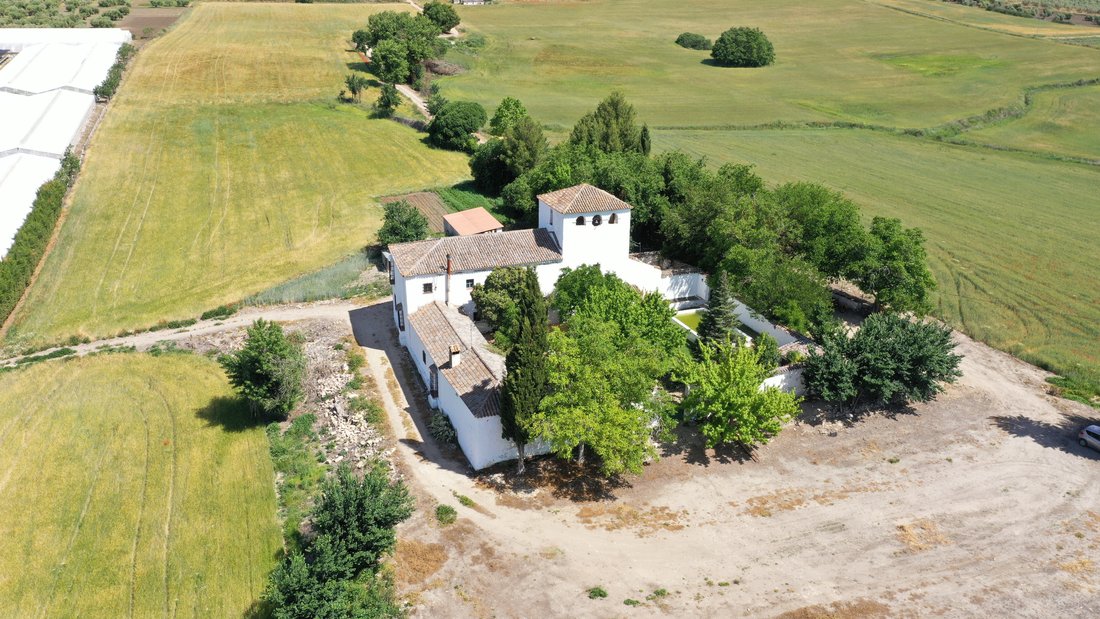
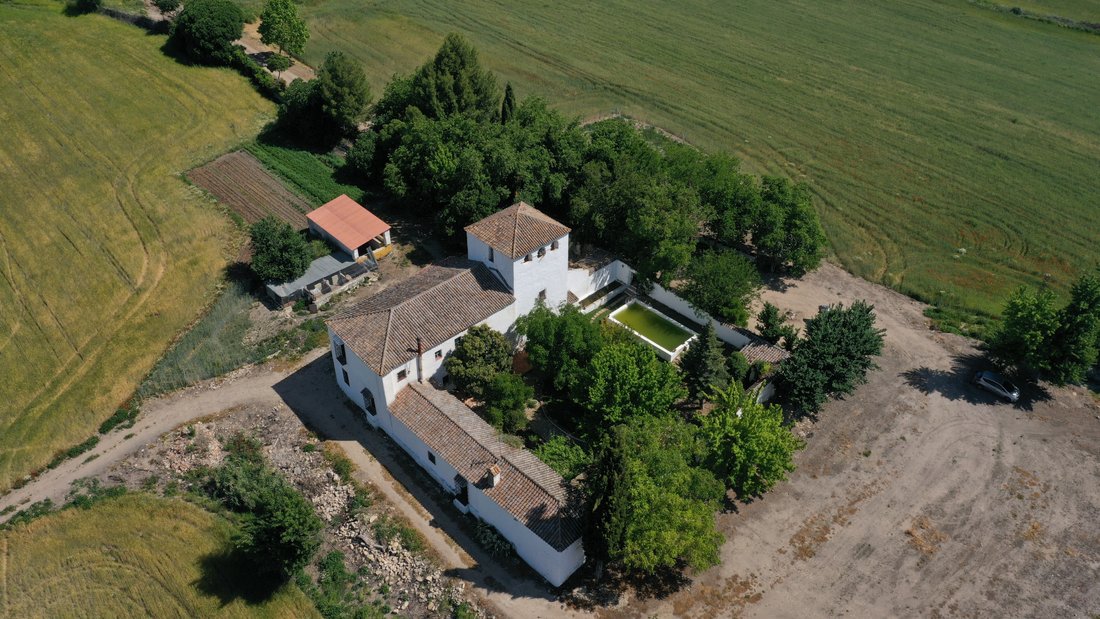
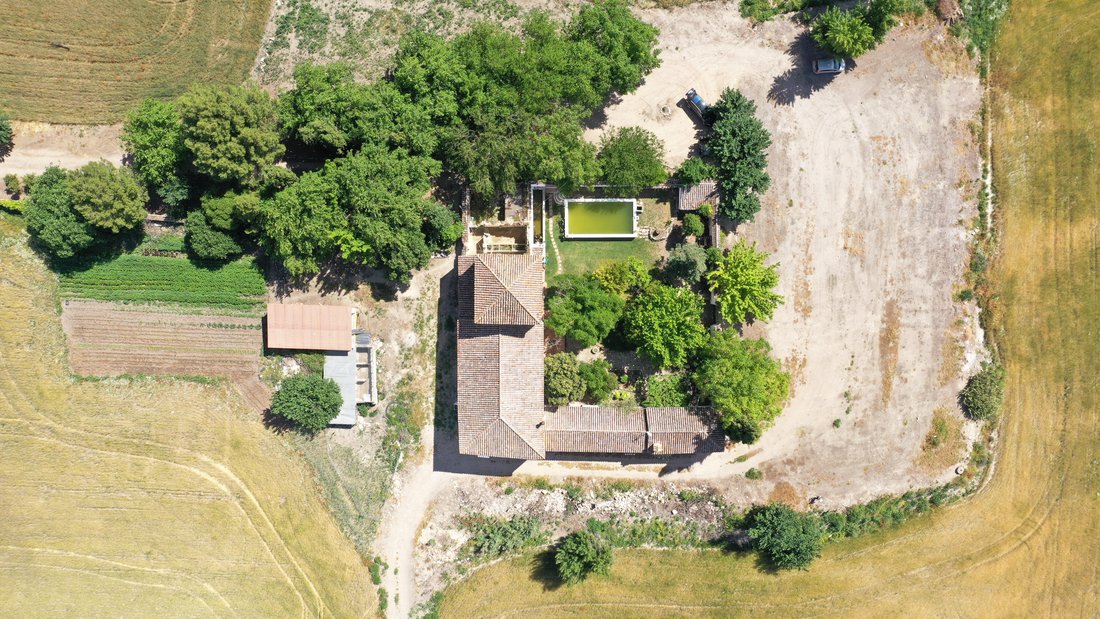
The farmhouse itself consists of the main house and a caretaker’s house, a chapel, an emblematic tower with a belfry and a viewpoint overlooking the Ronda mountain range, a livestock shed, two utility rooms, and a garden with a swimming pool.
The entrance to the farmhouse is preceded by a large square, partly paved and partly not, which leads through a simple entrance, flanked by two pillars, to a central courtyard with a round pond, pots and palm trees. At the back of the courtyard, we can see the building, consisting of a tower with a solid, sturdy appearance topped by a lookout with a gallery of lowered round arches, where a bell is housed.
Attached to the tower is a mansion, the owners’ residence on two floors. On the main floor, there is a living room with a fireplace, dining room, bedroom, sitting room, kitchen, and bathroom. Upstairs, there are 7 bedrooms and a bathroom. Behind this building, there are stables and some agricultural outbuildings. Linked to this building is another rectangular one-story structure, the caretaker’s residence, with two bedrooms, a living room with a fireplace, kitchen, and bathroom.
The closed-off appearance of the buildings of this farmhouse, as well as the tower with its galleries, lead us to believe that the original structure of the building was constructed in the late 17th or early 18th century, with subsequent expansions and renovations carried out over the years.
This farmhouse is fully functional with its farmland and olive groves, making it ideal for both agricultural and recreational exploitation.
The farmhouse, located on a plot of almost 62 hectares, with 46 hectares of farmland and the rest olive groves, with the possibility of being sold separately, is in perfect working order. It has very good quality land for farming, with a vegetation cover of over 2 meters thick, abundant water, and drainage systems, bordering to the south with the Guadalcobacín River.
The farmhouse itself consists of the main house and a caretaker’s house, a chapel, an emblematic tower with a belfry and a viewpoint overlooking the Ronda mountain range, a livestock shed, two utility rooms, and a garden with a swimming pool.
The entrance to the farmhouse is preceded by a large square, partly paved and partly not, which leads through a simple entrance, flanked by two pillars, to a central courtyard with a round pond, pots and palm trees. At the back of the courtyard, we can see the building, consisting of a tower with a solid, sturdy appearance topped by a lookout with a gallery of lowered round arches, where a bell is housed.
Attached to the tower is a mansion, the owners’ residence on two floors. On the main floor, there is a living room with a fireplace, dining room, bedroom, sitting room, kitchen, and bathroom. Upstairs, there are 7 bedrooms and a bathroom. Behind this building, there are stables and some agricultural outbuildings. Linked to this building is another rectangular one-story structure, the caretaker’s residence, with two bedrooms, a living room with a fireplace, kitchen, and bathroom.
The closed-off appearance of the buildings of this farmhouse, as well as the tower with its galleries, lead us to believe that the original structure of the building was constructed in the late 17th or early 18th century, with subsequent expansions and renovations carried out over the years.
This farmhouse is fully functional with its farmland and olive groves, making it ideal for both agricultural and recreational exploitation.
-
Property type
Finca
-
Price/sqft
$508
Features
- Garden
- Pool
- Terrace
- Garage
- Equestrian
- Mountain View
- Fireplace
- Mansion
- Gas Stovetop
Features
Lot
- Mountain View
- Equestrian
- Mansion
Indoor
- Fireplace
- Air Conditioning
- Gas Stovetop
Outdoor
- Terrace
- Pool
- Garage
- Garden
Explore the Area
Ronda, 29400, Andalusia, Spain
View on Google Maps
Price per sqft
Low
High
Ronda is one of the most historically significant cities in Andalusia, set dramatically on a plateau divided by the El Tajo gorge, with sheer cliffs dropping nearly 100 metres to the Guadalevín River below. The city’s old town, La Ciudad, retains its Moorish street plan and is home to one of Spain’s oldest bullrings, the Plaza de Toros de Ronda, built in 1785. The surrounding Serranía de Ronda provides a landscape of exceptional scale and character that defines life here.
Daily life in Ronda centres on the Alameda del Tajo gardens, the market on Calle Virgen de la Paz, and restaurants such as Bardal, which holds two Michelin stars, and Tragatá, its more casual sibling. The Puente Nuevo bridge and the Arab Baths are within the city itself. The surrounding countryside offers direct access to the Sierra de las Nieves National Park.
Ronda is served by its own train station with direct connections to Málaga, a journey of approximately two hours, and to Algeciras. By road, Málaga is roughly 100 kilometres via the A-367, taking around one hour and fifteen minutes. Málaga-Costa del Sol Airport is the primary international gateway, handling routes across Europe and beyond, and is reachable in under ninety minutes by car.
Daily life in Ronda centres on the Alameda del Tajo gardens, the market on Calle Virgen de la Paz, and restaurants such as Bardal, which holds two Michelin stars, and Tragatá, its more casual sibling. The Puente Nuevo bridge and the Arab Baths are within the city itself. The surrounding countryside offers direct access to the Sierra de las Nieves National Park.
Ronda is served by its own train station with direct connections to Málaga, a journey of approximately two hours, and to Algeciras. By road, Málaga is roughly 100 kilometres via the A-367, taking around one hour and fifteen minutes. Málaga-Costa del Sol Airport is the primary international gateway, handling routes across Europe and beyond, and is reachable in under ninety minutes by car.
Get nearby
Attractions
Schools
Málaga-Costa del Sol Airport
Airport
94 min
Ronda Train Station
Train Station
5 min
Puente Nuevo
Culture & Heritage
3 min
Restaurante Bardal
Dining & Wine
3 min
La Casa del Rey Moro
Culture & Heritage
4 min
Colegio Juan de la Rosa
Public School
6 min
Sagrado Corazón de Jesús
Private School
7 min
Joined 2 years ago
You have inquired about this property
The agent will contact you soon by
Listed by
6
Listings
2024
Joined
Book home tour with Marta Amann
Choose a date and whether you'd like a virtual or in-person tour with the agent.
Preferred date
Tour type

Spain Sotheby's International Realty
Plaza Nueva, 3, 41001, Sevilla, Sevilla, Spain
View agency profile
Last updated
August 7
First listed
Jun 13, 2024
Listing link
Listing reference
FE2HX3
Similar Properties Nearby
New Listings in Ronda

Explore More Homes for Sale
Ronda, Spain property types
Ronda, Spain popular searches
Related Guides & Stories
Trusted by the World's Leading Brokers
The agents behind the world's most exceptional properties list with JamesEdition.
- Listings from Sotheby's, Christie's, BARNES, and Engel & Völkers
- Every listing reviewed before it goes live
- Connect directly with verified listing agents
By continuing you agree to our Terms and Privacy Policy.