$4,431,853
Cas Nét San Jordi – Ibiza Town / South East
- 7 Beds
- 6 Baths
- 7,212 Sqft
- 2.18 Ac lot
- Updated: March 26
- 12
About the Property
Main House
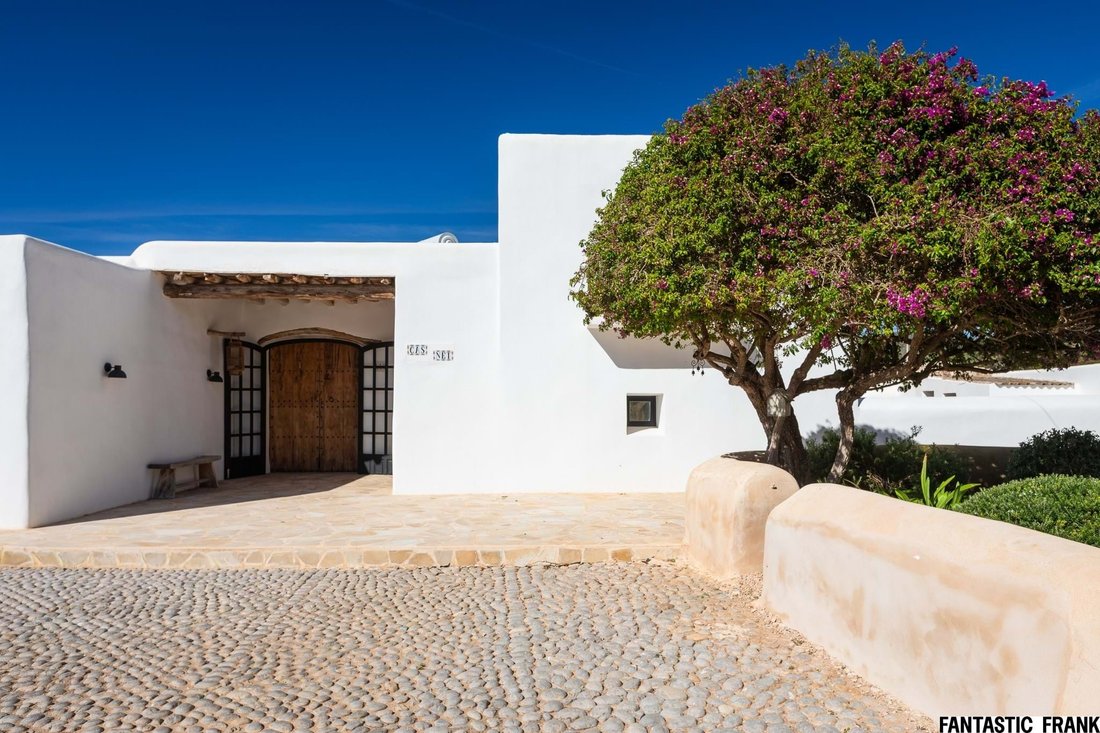
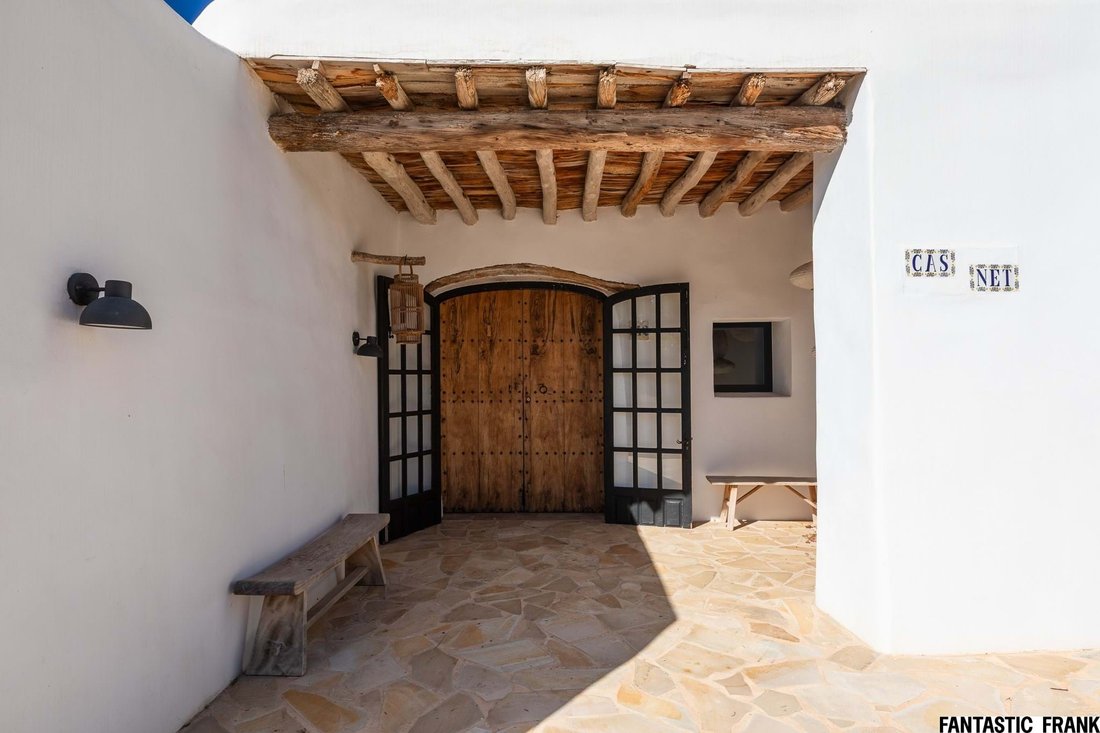
The 320 m² main house unfolds as you enter.. Traditional flagstone floors and exposed wood ceilings link perfectly with clean architectural lines. Light filters through thick white Ibicenco built walls, illuminating spaces defined by texture and proportion.
Five bedrooms, each with its own en-suite bathroom, create their own private retreats. Underfloor heating, contemporary
The 320 m² main house unfolds as you enter.. Traditional flagstone floors and exposed wood ceilings link perfectly with clean architectural lines. Light filters through thick white Ibicenco built walls, illuminating spaces defined by texture and proportion.
Five bedrooms, each with its own en-suite bathroom, create their own private retreats. Underfloor heating, contemporary
Main House
The 320 m² main house unfolds as you enter.. Traditional flagstone floors and exposed wood ceilings link perfectly with clean architectural lines. Light filters through thick white Ibicenco built walls, illuminating spaces defined by texture and proportion.
Five bedrooms, each with its own en-suite bathroom, create their own private retreats. Underfloor heating, contemporary fittings, and bespoke joinery enhance the experience of effortless comfort, and that “yes I´m here” warm feeling.
Casita
Set within the gardens, the 118 m² casita mirrors the language of the main house while offering independence and light. Two double bedrooms share a generous bathroom; the open-plan living space and kitchen provide a getaway from the main house, for guests or independent teenagers.
So.. A perfect guest house, studio, or private retreat — complete with underfloor heating as well, and views back across the gardens to the main finca.
The Tower
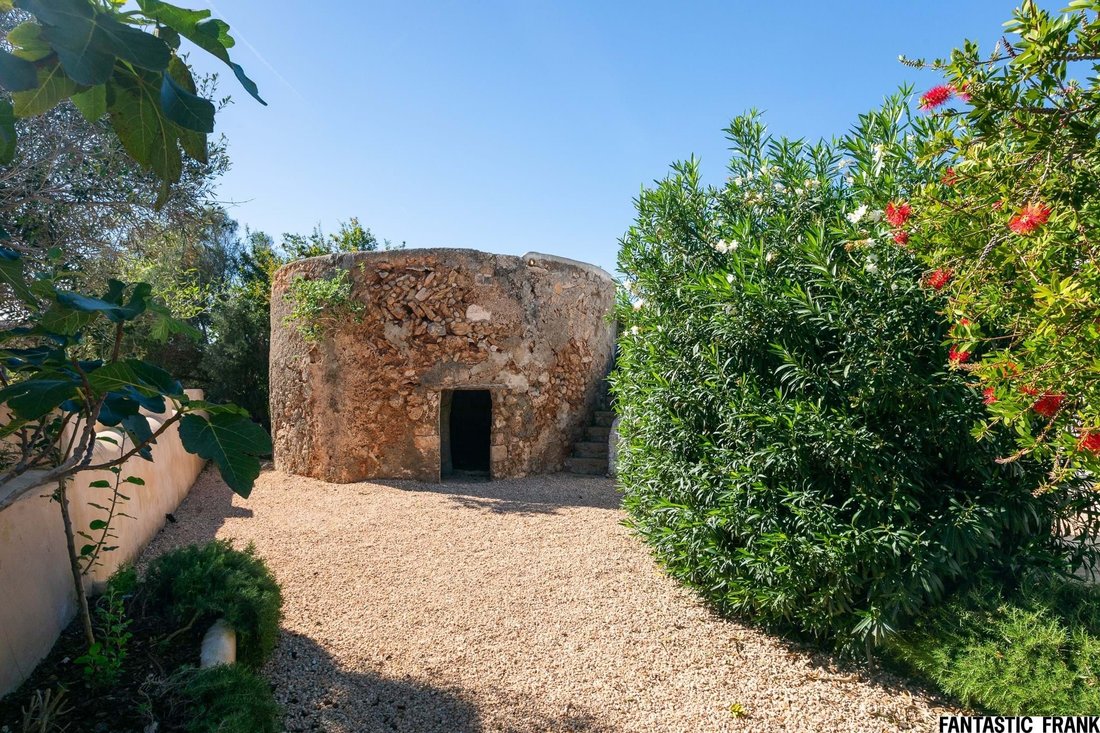
Anchoring the estate is the original historic Cas Nét tower, a cylindrical stone structure dating from the 16th–17th centuries. Once a refuge against pirate incursions, it stands as a physical memory of Ibiza’s earliest rural architecture — its herringbone masonry and vaulted dome preserved under Cultural Heritage protection.
Today, the tower offers new possibilities: a sculptural wine cellar, contemplative library, or secret children’s den — a timeless, untouchable fragment, sitting humbly within it´s renovated surrounding landscape.
Outdoor Areas
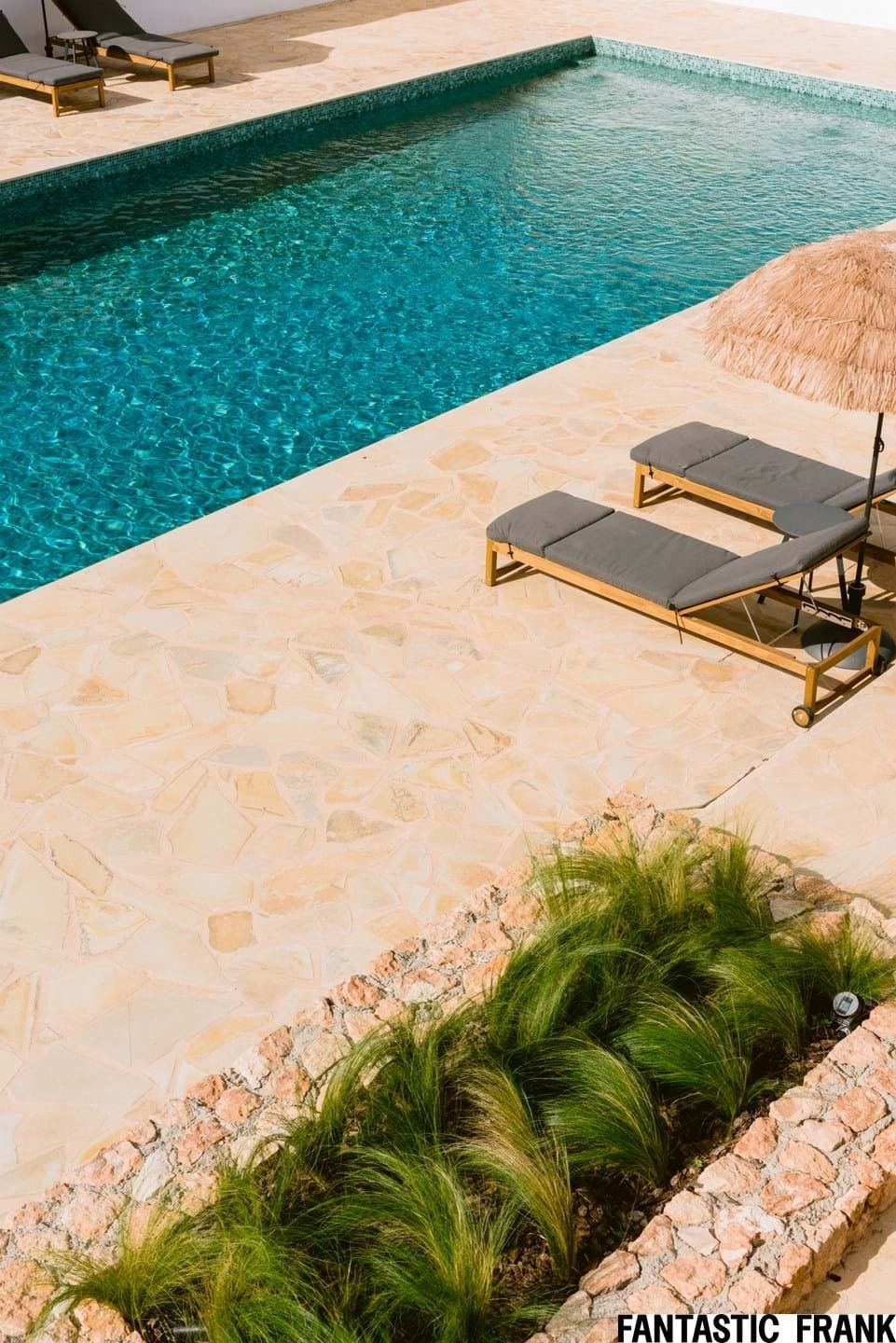
A long gravel driveway leads to the estate’s calm heart. The geometry of the architecture opens onto wide terraces and a huge 90 m² swimming pool framed by pale stone and Mediterranean sky.
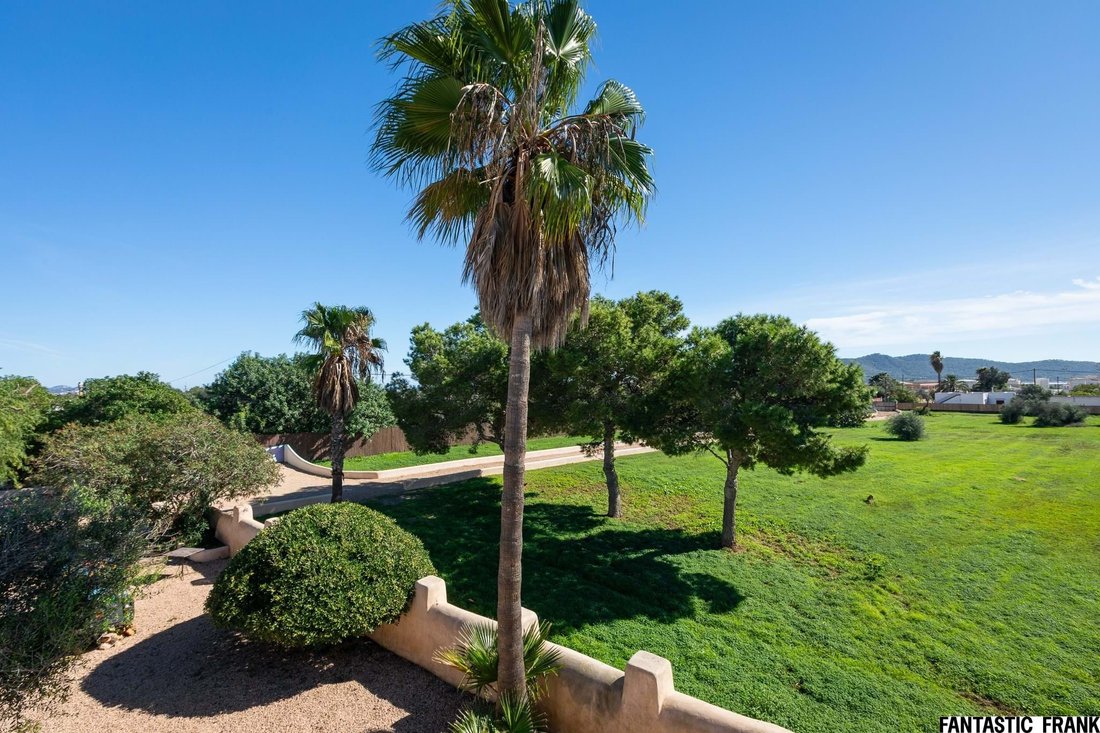
Olive trees, wild grasses, and native planting define the 8 800 m² of land, while shaded pergolas and courtyards extend the living space outdoors. The traditional corrales and restored well preserve the finca’s rural identity, linking centuries of Ibicenco life.
Features
Large 90 m² pool with natural stone terrace
Cultural Heritage protected 17th-century tower
Traditional corrales courtyard and original well
Two independent entrances for privacy
8 800 m² usable land with landscaped gardens
Location – Ibiza Town & South East
San Jordi sits moments from Ibiza Town and the island’s best restaurants — Cova Santa, Cas Costas, and the hidden countryside grills along the San José road. From here, the airport is five minutes away, the port ten minutes, and the beaches of Salinas and Es Cavallet within fifteen.
The 320 m² main house unfolds as you enter.. Traditional flagstone floors and exposed wood ceilings link perfectly with clean architectural lines. Light filters through thick white Ibicenco built walls, illuminating spaces defined by texture and proportion.
Five bedrooms, each with its own en-suite bathroom, create their own private retreats. Underfloor heating, contemporary fittings, and bespoke joinery enhance the experience of effortless comfort, and that “yes I´m here” warm feeling.
Casita
Set within the gardens, the 118 m² casita mirrors the language of the main house while offering independence and light. Two double bedrooms share a generous bathroom; the open-plan living space and kitchen provide a getaway from the main house, for guests or independent teenagers.
So.. A perfect guest house, studio, or private retreat — complete with underfloor heating as well, and views back across the gardens to the main finca.
The Tower
Anchoring the estate is the original historic Cas Nét tower, a cylindrical stone structure dating from the 16th–17th centuries. Once a refuge against pirate incursions, it stands as a physical memory of Ibiza’s earliest rural architecture — its herringbone masonry and vaulted dome preserved under Cultural Heritage protection.
Today, the tower offers new possibilities: a sculptural wine cellar, contemplative library, or secret children’s den — a timeless, untouchable fragment, sitting humbly within it´s renovated surrounding landscape.
Outdoor Areas
A long gravel driveway leads to the estate’s calm heart. The geometry of the architecture opens onto wide terraces and a huge 90 m² swimming pool framed by pale stone and Mediterranean sky.
Olive trees, wild grasses, and native planting define the 8 800 m² of land, while shaded pergolas and courtyards extend the living space outdoors. The traditional corrales and restored well preserve the finca’s rural identity, linking centuries of Ibicenco life.
Features
Large 90 m² pool with natural stone terrace
Cultural Heritage protected 17th-century tower
Traditional corrales courtyard and original well
Two independent entrances for privacy
8 800 m² usable land with landscaped gardens
Location – Ibiza Town & South East
San Jordi sits moments from Ibiza Town and the island’s best restaurants — Cova Santa, Cas Costas, and the hidden countryside grills along the San José road. From here, the airport is five minutes away, the port ten minutes, and the beaches of Salinas and Es Cavallet within fifteen.
-
Property type
Villa
-
Price/sqft
$614
Features
Explore the Area
Sant Jordi, Ibiza, 07817, Spain
View on Google Maps
Price per sqft
Low
High
Sant Jordi de ses Salines is one of the few remaining villages in Ibiza that retains a genuinely local character. Positioned in the island’s south, between Ibiza Town and the Ses Salines natural park, it sits at the intersection of rural Ibicenco tradition and easy access to the island’s most desirable destinations. The surrounding landscape is flat agricultural land punctuated by old fincas, dry-stone walls, and almond groves, giving the area a grounded, unhurried quality that contrasts sharply with the busier coastal zones.
The weekly Sunday market in Sant Jordi draws locals year-round and is one of the island’s most authentic. Cova Santa and Cas Costas are within a short drive, as are the beaches of Ses Salines and Es Cavallet. Ibiza Town’s port, restaurants, and old quarter are roughly ten minutes by car.
Ibiza Airport is approximately five minutes from Sant Jordi, making this one of the most practically connected locations on the island without being affected by airport noise. Ibiza Town is reachable in under ten minutes by car. The port offers ferry connections to Formentera in around 30 minutes and regular services to Barcelona, Valencia, and Palma de Mallorca, with crossing times ranging from two to eight hours depending on the route and vessel.
The weekly Sunday market in Sant Jordi draws locals year-round and is one of the island’s most authentic. Cova Santa and Cas Costas are within a short drive, as are the beaches of Ses Salines and Es Cavallet. Ibiza Town’s port, restaurants, and old quarter are roughly ten minutes by car.
Ibiza Airport is approximately five minutes from Sant Jordi, making this one of the most practically connected locations on the island without being affected by airport noise. Ibiza Town is reachable in under ten minutes by car. The port offers ferry connections to Formentera in around 30 minutes and regular services to Barcelona, Valencia, and Palma de Mallorca, with crossing times ranging from two to eight hours depending on the route and vessel.
Get nearby
Attractions
Schools
Ibiza Airport
Airport
6 min
Ibiza Town Marina
Port / Marina
12 min
Pacha Ibiza
Culture & Heritage
14 min
Blue Marlin Ibiza
Dining & Wine
16 min
Cala Jondal Beach
Outdoor & Nature
14 min
Las Salinas
Outdoor & Nature
10 min
Morna International College
International School
20 min
Listed by
26
Listings
2024
Joined
Book home tour with Fantastic Frank Ibiza
Choose a date and whether you'd like a virtual or in-person tour with the agent.
Preferred date
Tour type

Fantastic Frank Ibiza
Venda des Poble 6, 07814, Santa Gertrudis de Fruitera, Spain
View agency profile
OUR PROPERTY SALES ARE DRIVEN BY OUR MOTTO ’INSPIRE TO BUY’. FLAWLESS SERVICE, CURATED PROPERTIES AND A PASSION FOR AESTHETICS SETS US APART.
Last updated
March 26
First listed
November 7, 2024
Agent licence
#E16636615
Listing reference
FF/314 Cas Net
Similar Properties Nearby
New Listings in Sant Jordi de ses Salines







Explore More Homes for Sale
Sant Jordi de ses Salines, Spain property types
Sant Jordi de ses Salines, Spain popular searches
- City View properties in Sant Jordi de ses Salines, Spain
- Duplex properties in Sant Jordi de ses Salines, Spain
- Properties with Sauna in Sant Jordi de ses Salines, Spain
- Properties with Library in Sant Jordi de ses Salines, Spain
- Properties with Tennis Court in Sant Jordi de ses Salines, Spain
- Seafront properties in Sant Jordi de ses Salines, Spain
- Mansion properties in Sant Jordi de ses Salines, Spain
- Ocean View properties in Sant Jordi de ses Salines, Spain
Related Guides & Stories
Trusted by the World's Leading Brokers
The agents behind the world's most exceptional properties list with JamesEdition.
- Listings from Sotheby's, Christie's, BARNES, and Engel & Völkers
- Every listing reviewed before it goes live
- Connect directly with verified listing agents
By continuing you agree to our Terms and Privacy Policy.