


The Midland Ranch
- 5,880.0 Ac lot
- Updated: November 12
- 34
About the Property
Water, Wildlife, and a Working Wyoming Legacy
From the timbered country below the Wind River Mountains to the open reaches
of the Red Desert, Midland Ranch follows the defining elements of western
Wyoming: water, grass, and the seasonal movement of animals across a vast
landscape.
The offering combines approximately 5,880 deeded acres with associ
Water, Wildlife, and a Working Wyoming Legacy
From the timbered country below the Wind River Mountains to the open reaches
of the Red Desert, Midland Ranch follows the defining elements of western
Wyoming: water, grass, and the seasonal movement of animals across a vast
landscape.
The offering combines approximately 5,880 deeded acres with associated state
leases, federal grazing allotments, and trailing allotments across an
operating footprint exceeding one million acres. Five distinct ranch units
bring together irrigated meadows, private river frontage, mountain pasture,
sagebrush range, and winter grazing country. Much of the deeded land has
remained in the same family for more than 120 years, including original
patented homesteads that have never previously traded.
Water is central to the ranch’s agricultural strength and its conservation
significance. The Big Sandy and Little Sandy Rivers, Grass Creek, perennial
desert streams, natural springs, reservoirs, and developed stock water sustain
a working livestock enterprise while supporting fisheries, migratory wildlife,
and resident game. Historic water rights, including priorities dating to the
early 1900s, are among the offering’s defining assets.
The accompanying wildlife maps place Midland within a broader network of mule
deer and Sublette pronghorn migration corridors and sage grouse core areas.
These connections give the ranch a significance that extends beyond its
individual boundaries. Its river bottoms, wet meadows, and open rangelands
form part of the country through which wildlife feeds, winters, and moves with
the seasons.
Available in its entirety or as individual units, Midland offers the
opportunity to carry forward an established ranching operation while helping
shape the future of a substantial Wyoming landscape.
Water at the Ranch
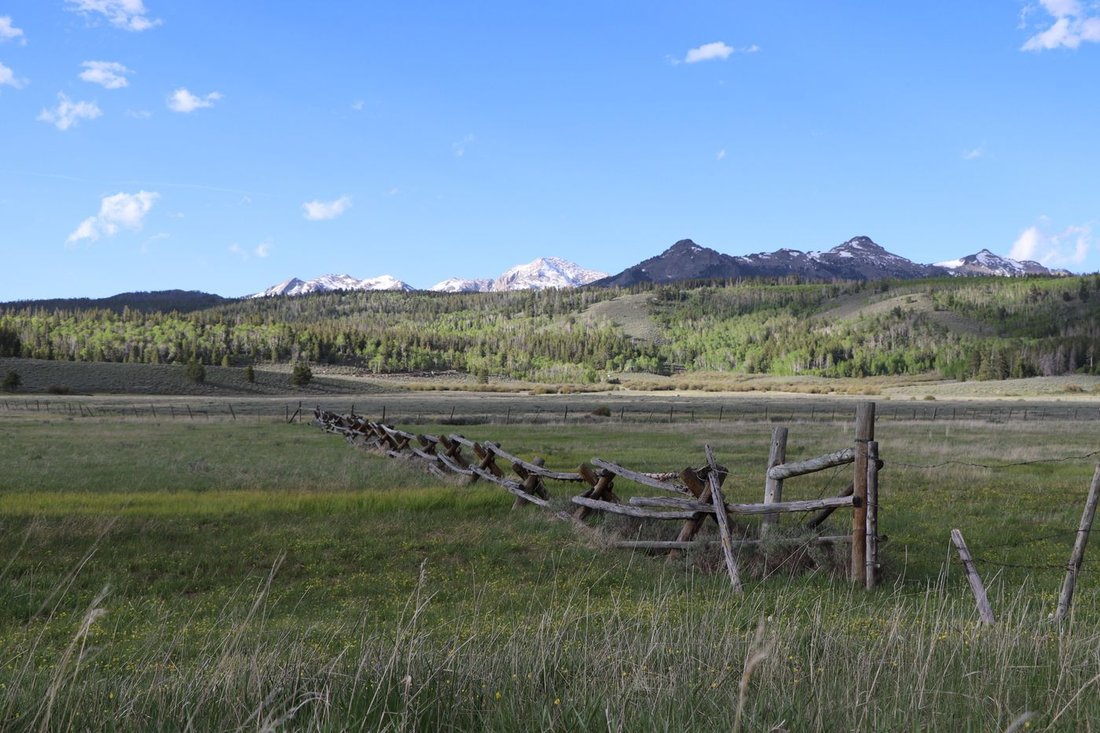
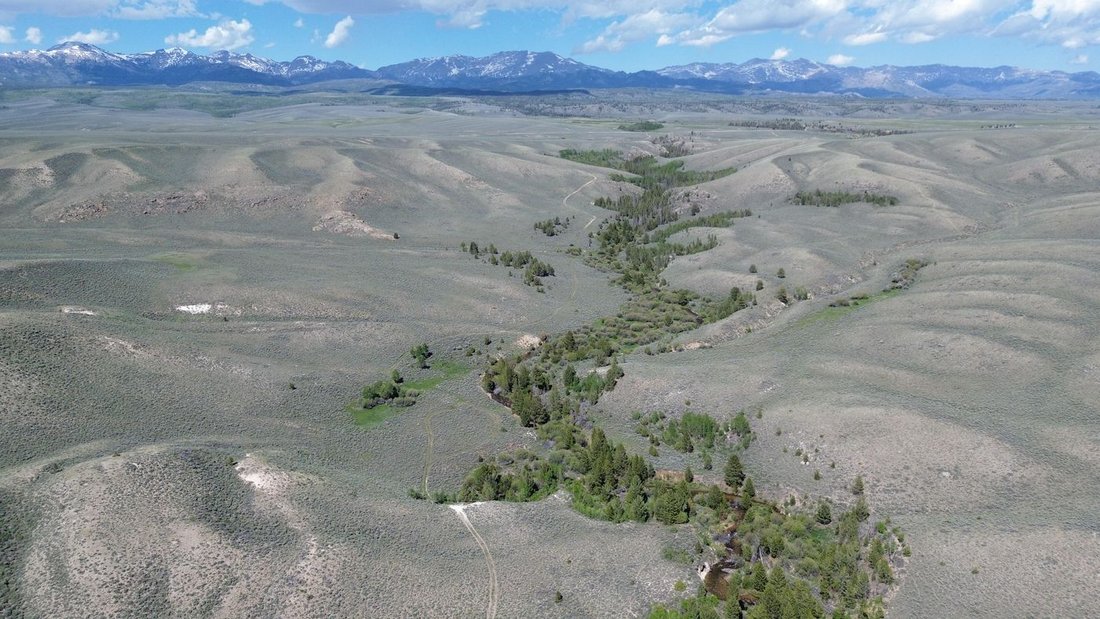
Across Midland, the presence of water is visible in the land itself: green
meadows beneath the mountains, willow-lined streams winding through sagebrush,
broad river bends, and wetland pockets set against the dry expanse of the high
desert.
The ranch’s water resources serve several complementary purposes. Irrigation
supports hay production and pasture. Springs, wells, and reservoirs distribute
livestock water across extensive grazing country. Rivers and their adjoining
vegetation provide fisheries, wildlife cover, and habitat for waterfowl and
other birds. Together, these resources underpin both the ranch’s productive
use and its appeal to an owner interested in conservation and recreation.
At Grass Creek, water rights with priority dates of 1903, 1904, and 1905
accompany control of the diversion and ditch at the highest diversion point on
the Little Sandy River. Approximately five miles of Grass Creek flow through
the deeded land, augmented by diverted river water and supported by eight
natural springs.
Prospect Mountain adds extensive frontage along the Big Sandy and Little Sandy
Rivers, irrigated hay fields and pasture, and surface water rights with
priorities dating to 1905, 1908, and 1911. Reservoir storage, artesian and
pump wells, and springs across the associated grazing lands broaden the unit’s
water resources.
Farther south, the Reservoir & Sublette Flat unit combines river frontage
and an extensive Big Sandy Reservoir shoreline setting with developed wells,
springs, and storage. Vermillion Creek brings perennial stream access and a
network of reservoirs to the ranch’s desert winter range.
This distribution of water across different elevations and seasons is
fundamental to Midland’s character. It supports the livestock operation and
helps sustain the variety of habitats that make the ranch consequential as a
conservation holding.
Conservation Across Working Landscape
Midland’s conservation value begins with the relationship between its parts.
Mountain pasture, irrigated meadow, river bottom, sagebrush range, and desert
winter country each serve a different purpose. Their continued connection
matters to both the agricultural operation and the wildlife that uses the
surrounding landscape.
The regional wildlife maps illustrate the relationship of the northern ranch
units to mapped mule deer migration corridors and the Sublette pronghorn
corridor. Sage grouse core areas overlap portions of the wider operating
footprint, including country associated with the southern holdings. Viewed
together, the maps show how Midland fits into a much larger system of seasonal
ranges and wildlife movement across western Wyoming.
Within that setting, the deeded river corridors and irrigated lands have
particular importance. Water, forage, and cover are concentrated along these
comparatively narrow ribbons of habitat. Keeping them intact can help maintain
the ecological connections between surrounding uplands and public grazing
lands.
The ranch supports mule deer, pronghorn, elk, and a diverse assemblage of
other wildlife. Moose, black bear, beaver, raptors, waterfowl, and sage grouse
add to that diversity. The owners report substantial seasonal movements of
pronghorn and mule deer, alongside resident elk herds. Wildlife is a recurring
presence throughout the working year.
For a conservation-minded buyer, Midland offers a substantial foundation for
stewardship: protecting river corridors, maintaining open range, managing
grazing and streamside vegetation, and improving the compatibility of ranch
infrastructure with wildlife movement. A new owner could also explore
voluntary conservation arrangements on suitable deeded lands, shaped around
the property’s agricultural use and the owner’s objectives.
The opportunity is to sustain a working ranch whose water resources, habitat,
and open country contribute to the surrounding region.
A Ranch Built Around the Seasons
For generations, Midland’s owners have practiced transhumance, moving
livestock with the seasons between desert winter range and higher spring and
summer country. Historic livestock movements extend more than 100 miles,
reflecting the breadth of the ranch’s grazing resources and the complementary
roles of its five units.
That seasonal structure remains central to the offering. Irrigated fields,
mountain grazing, lower-elevation pasture, and winter sheep range support an
operation developed around the capabilities of the land. Headquarters
facilities, corrals, barns, fencing, and water improvements provide the
working infrastructure behind this extensive land base.
The deeded properties anchor an operation that also depends on associated
public-land grazing and trailing authorizations. Together, these holdings
offer the scale to combine livestock production, recreation, and sustained
habitat management across a varied landscape.
The Next Chapter
Midland Ranch brings together the elements that give a western ranch lasting
substance: productive land, historic water rights, working infrastructure,
wildlife, and continuity of ownership.
Its five units offer distinct opportunities, from private fisheries and
mountain pasture to extensive grazing country and desert winter range.
Acquired together, they provide the foundation for a seasonal livestock
operation and a broader approach to conservation across connected working
lands.
For the next owner, the opportunity is tangible: keep the rivers and meadows
productive, maintain room for wildlife to move, and carry a Wyoming ranching
legacy into its next generation.
Buyers have the opportunity to buy the ranch as a whole, or acquire individual
units.
Unit Name
Price
Deeded Acres (Approx)
Primary Function
Unit 1: Grass Creek Ranch
$6,280,000
1,000±
Summer Pasture & Private Fishery
Unit 2: Little Sandy River Ranch
$2,000,000
320±
Recreational Retreat & Historic Parcel
Unit 3: Prospect Mountain Ranch
$8,500,000
2,380±
Operational Headquarters & Summer Range
Unit 4: The Reservoir & Sublette Flat Ranch
$9,900,000
1,980±
Large-Scale Grazing & Historic Hub
Unit 5: Vermillion Creek Ranch
$1,000,000
200±
Winter Sheep Range & Mineral Income
Total Individual Units: $29,680,000
Value Advantage for whole: $22,000,000
-
Property type
House
Features
Explore the Area

The agent will contact you soon by
Listed by
Book home tour with the agent
Choose a date and whether you'd like a virtual or in-person tour with the agent.

LandVest started as a Boston-based company, even though our reach is fully national and, in some practice areas,
LandVest started as a Boston-based company, even though our reach is fully national and, in some practice areas, international. We have moved our headquarters only twice in 55 years — once from Kilby Street to Post Office Square, and most recently to Newbury Street in the heart of the Back Bay. Our tradition of displaying remarkable properties in our windows continues, just in a new and even more vibrant location. Like the city itself, LandVest continues to innovate and set new standards for luxury brokerage and client service across New England.
Founded in 1968, LandVest | Christie’s International Real Estate is one of New England’s largest and longest-operating independent real estate firms, dedicated exclusively to marketing the most distinctive properties in the most iconic communities across New England and the Adirondacks.
LandVest offers a unique range of services that no other brokerage firm can bring to the table: a collaborative brokerage team supported by the Christie’s International Real Estate network, a highly credentialed appraisal and valuation team, unmatched land planning and consulting, and even GIS mapping and forestry services — all in-house at your disposal. We have the knowledge and expertise to navigate even the most complex real estate requests.
Our team members have an unparalleled reputation for expert knowledge and personal service, and have spent decades in their communities helping clients, neighbors organizations, family, and friends make their homes and dreams come to life across New England. It’s why we say we have sold more homes to people we know than to strangers.
Similar Properties Nearby
New Listings in Boulder

Explore More Homes for Sale
Boulder, WY, United States popular searches
Related Guides & Stories
Trusted by the World's Leading Brokers
The agents behind the world's most exceptional properties list with JamesEdition.
- Listings from Sotheby's, Christie's, BARNES, and Engel & Völkers
- Every listing reviewed before it goes live
- Connect directly with verified listing agents
By continuing you agree to our Terms and Privacy Policy.
partnered with