Dassault Falcon 100 - Luxury Private Jet Charter
Price On Request
Dassault
BrandAbout
Directly check the price by starting a conversation with us in the chat box at:
http://bit.ly/VilliersPJ
(The chat box is at the bottom right conner of your sceen)
Or just book a flight with the Dassault Falcon 100 and other private jets at the top of our website (Chose your destination - chose your requirements and aircraft - fill in your contact email - tick on get q
http://bit.ly/VilliersPJ
(The chat box is at the bottom right conner of your sceen)
Or just book a flight with the Dassault Falcon 100 and other private jets at the top of our website (Chose your destination - chose your requirements and aircraft - fill in your contact email - tick on get q
Directly check the price by starting a conversation with us in the chat box at:
http://bit.ly/VilliersPJ
(The chat box is at the bottom right conner of your sceen)
Or just book a flight with the Dassault Falcon 100 and other private jets at the top of our website (Chose your destination - chose your requirements and aircraft - fill in your contact email - tick on get quote on the right side of our prices and our agent will get in touch immidiately )
Here you can select among our 9000+ luxurious Jets available with 24/7 live quote & personal assistants.
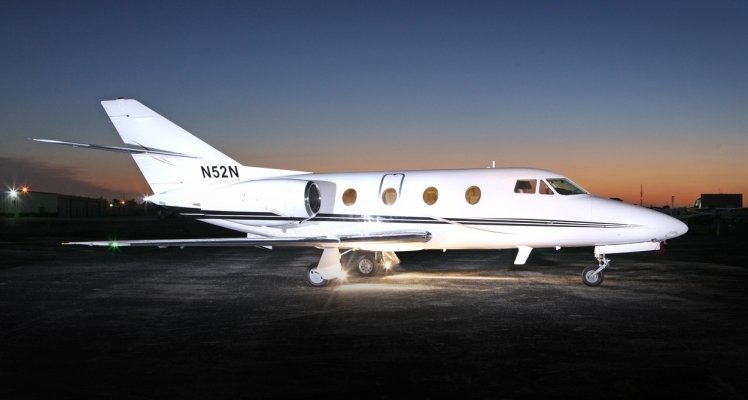
The Dassault Family crafts jets with high standards of engineering, structural quality, and technological advancement. Although Dassault’s models have evolved and improved over time, the Falcon 100, a light, twin-turbo fan business jet, remains popular in the used aircraft market, and for good reasons. It was introduced for the first time in 1983 as the redesigned continuation of the Falcon 10. Following the redesign period, 37 Falcon 100s were built before production halted in 1989.
Some of the redesigned elements that distinguish the Falcon 100 from the 10 include an optional Electronic Flight Instrument System (EFIS) glass cockpit; a larger, unpressurized rear baggage compartment; an increased maximum takeoff weight; and an additional cabin window, totaling four.
The Falcon 100 is powered by two Honeywell TFE 731-2-1C engines, rated at 3,230 lbs of thrust each. They have an inspection interval of 4,200 hours (on the core-engine).
Although the Falcon 100’s maximum payload of 1,547 lbs is a considerable decrease from its predecessor (2,360 lbs), the aircraft still excels in performance. With a certified flight ceiling of 45,000 feet, the Falcon boasts a high speed cruise of 476 knots (true airspeed) and a long range cruise of 431 knots. The 100’s maximum takeoff weight, a result of Falcon’s refinements, is 18,740 lbs. These numbers make the Falcon highly competitive with similar aircraft.
The Falcon 100 is the first certified private aircraft to use EFIS-technology and color screens in its cockpit. A typical avionics system in the Falcon 100 consists of: dual Collins VHF20A coms; dual VIR30A navs; dual Collins FCS 85 flight directors; dual Collins DME 42; dual Collins ADF 60A automatic direction finder; Collins ALT 55 radar altimeter; Collins APS 80 autopilot; Collins ADS 80 air data computer; Global GNS-XLS FMS; and a Sperry Primus 400 color weather radar. Owners/operators often comment on the intuitiveness and simplistic layout of Falcon’s cockpits.
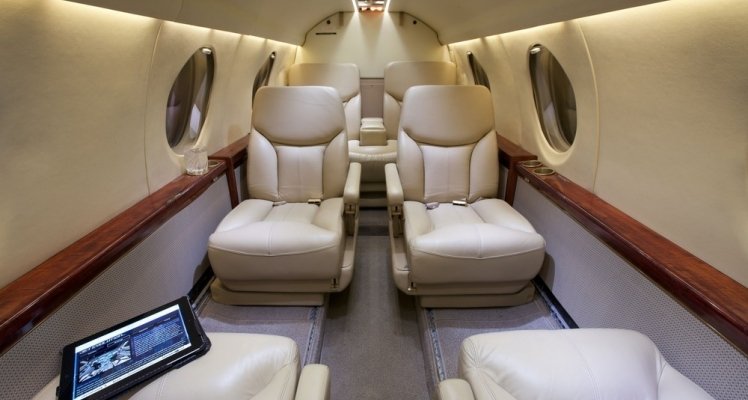
Taking a look inside the aircraft, the cabin is able to seat six passengers in an executive-club configuration (nine in a high-density arrangement). Its dimensions, identical to the 10, are on the large side of the small cabin, light jet category: 12.9 ft in length, 4.8 ft in height, and 5 ft in width. A lavatory is located toward the front of the cabin. Dassault always brings the best-of-the-best aircraft to the market. Designed from the already successful Falcon 10, the 100 boasts many of the same attributes with a few, key upgrades. Even as an older model, the Falcon 10/100 is a good, medium-range aircraft for executive use and continues to be sought-after by many.
http://bit.ly/VilliersPJ
(The chat box is at the bottom right conner of your sceen)
Or just book a flight with the Dassault Falcon 100 and other private jets at the top of our website (Chose your destination - chose your requirements and aircraft - fill in your contact email - tick on get quote on the right side of our prices and our agent will get in touch immidiately )
Here you can select among our 9000+ luxurious Jets available with 24/7 live quote & personal assistants.
The Dassault Family crafts jets with high standards of engineering, structural quality, and technological advancement. Although Dassault’s models have evolved and improved over time, the Falcon 100, a light, twin-turbo fan business jet, remains popular in the used aircraft market, and for good reasons. It was introduced for the first time in 1983 as the redesigned continuation of the Falcon 10. Following the redesign period, 37 Falcon 100s were built before production halted in 1989.
Some of the redesigned elements that distinguish the Falcon 100 from the 10 include an optional Electronic Flight Instrument System (EFIS) glass cockpit; a larger, unpressurized rear baggage compartment; an increased maximum takeoff weight; and an additional cabin window, totaling four.
The Falcon 100 is powered by two Honeywell TFE 731-2-1C engines, rated at 3,230 lbs of thrust each. They have an inspection interval of 4,200 hours (on the core-engine).
Although the Falcon 100’s maximum payload of 1,547 lbs is a considerable decrease from its predecessor (2,360 lbs), the aircraft still excels in performance. With a certified flight ceiling of 45,000 feet, the Falcon boasts a high speed cruise of 476 knots (true airspeed) and a long range cruise of 431 knots. The 100’s maximum takeoff weight, a result of Falcon’s refinements, is 18,740 lbs. These numbers make the Falcon highly competitive with similar aircraft.
The Falcon 100 is the first certified private aircraft to use EFIS-technology and color screens in its cockpit. A typical avionics system in the Falcon 100 consists of: dual Collins VHF20A coms; dual VIR30A navs; dual Collins FCS 85 flight directors; dual Collins DME 42; dual Collins ADF 60A automatic direction finder; Collins ALT 55 radar altimeter; Collins APS 80 autopilot; Collins ADS 80 air data computer; Global GNS-XLS FMS; and a Sperry Primus 400 color weather radar. Owners/operators often comment on the intuitiveness and simplistic layout of Falcon’s cockpits.
Taking a look inside the aircraft, the cabin is able to seat six passengers in an executive-club configuration (nine in a high-density arrangement). Its dimensions, identical to the 10, are on the large side of the small cabin, light jet category: 12.9 ft in length, 4.8 ft in height, and 5 ft in width. A lavatory is located toward the front of the cabin. Dassault always brings the best-of-the-best aircraft to the market. Designed from the already successful Falcon 10, the 100 boasts many of the same attributes with a few, key upgrades. Even as an older model, the Falcon 10/100 is a good, medium-range aircraft for executive use and continues to be sought-after by many.
Jet Details
VAT Type
VAT Excluded
Location Crusing speed837 kmh
Cabin length13 ft (4 m)
Cabin height5 ft (2 m)
Cabin width5 ft (2 m)
Exterior height15 ft (5 m)
Exterior length42 m (138 ft)
Wing span42 ft (13 m)
Other services on boardLavatory Gourmet catering on request
Ask a Question
Joined 7 years ago
Contact Agent
Joined 7 years ago
You have inquired about this listing
The seller will contact you soon by
For Sale by
Registered on JamesEdition
2019
Address
London, United Kingdom
Phone number
Listed
August 22, 2019