
$23,834,714
The Mount, Londra
- 6 Camere
- 4 Bagni
- 6,559 Sqft
- Aggiornato: Settembre 15
- 191
Informazioni sulla proprietà
La descrizione è stata tradotta automaticamente.
La descrizione viene visualizzata nella lingua originale.
UNA MAGNIFICA CASA DELLA REGINA ANNA, CLASSIFICATA DI GRADO II*, IN UNA POSIZIONE ELEVATA IMMERSA IN ECCEZIONALI GIARDINI RECINTATI NEL CUORE DEL VILLAGGIO DI HAMPSTEAD
Cloth Hill risale alla fine del XVII secolo ed è considerata la seconda residenza più antica di Hampstead, dopo la vicina Fenton House (National Trust). Nel 1694 il signor William Beech, un mercante di stoffe quacchero di
Cloth Hill risale alla fine del XVII secolo ed è considerata la seconda residenza più antica di Hampstead, dopo la vicina Fenton House (National Trust). Nel 1694 il signor William Beech, un mercante di stoffe quacchero di
A MAGNIFICENT QUEEN ANNE HOUSE, LISTED GRADE II*, IN AN ELEVATED POSITION SET IN EXCEPTIONAL WALLED GARDENS WITHIN THE HEART OF HAMPSTEAD VILLAGE.
Cloth Hill dates from the late 17th century and is thought to be the second oldest residence in Hampstead, after nearby Fenton House (National Trust). In 1694 Mr William Beech, a Quaker cloth merchant of London, bought a house and some land ’at
Cloth Hill dates from the late 17th century and is thought to be the second oldest residence in Hampstead, after nearby Fenton House (National Trust). In 1694 Mr William Beech, a Quaker cloth merchant of London, bought a house and some land ’at
UNA MAGNIFICA CASA DELLA REGINA ANNA, CLASSIFICATA DI GRADO II*, IN UNA POSIZIONE ELEVATA IMMERSA IN ECCEZIONALI GIARDINI RECINTATI NEL CUORE DEL VILLAGGIO DI HAMPSTEAD
Cloth Hill risale alla fine del XVII secolo ed è considerata la seconda residenza più antica di Hampstead, dopo la vicina Fenton House (National Trust). Nel 1694 il signor William Beech, un mercante di stoffe quacchero di Londra, acquistò una casa e del terreno «in un luogo chiamato Cloth Hill» (così si dice, perché ai tempi dei Tudor le lavandaie di Hampstead, che si lavavano usando l’acqua pulita di sorgente disponibile nella zona, stendevano i panni ad asciugare lì) e nel 1699 acquistò un’altra casa e un terreno nelle vicinanze. Poco dopo incorporò parti delle due case più antiche nel
casa che ora esiste.
Cloth Hill è elencato II* ed è di costruzione tradizionale in mattoni. La casa è disposta su un piano seminterrato, un piano terra e due piani superiori con annessi accessori e un doppio garage di fronte al Monte. La proprietà è composta da una famiglia spaziosa
sistemazione in camere ben proporzionate. Offre viste uniformemente incantevoli dalle sue numerose finestre sui suoi ampi giardini, sull’Hampstead Village e sul centro di Londra, dalla sua posizione elevata, molto vicino al punto più alto della città. La casa ha avuto solo tre proprietari negli ultimi 140 anni ed è stata quindi fortunata a conservare molte caratteristiche originali d’epoca, tra cui le due scale, i pannelli e i camini originali, oltre a beneficiare di una sostanziale estensione della cucina al piano terra sul retro della casa a metà degli anni ’90. I giardini recintati e sicuri, splendidamente curati, circondano quasi la casa con prati, passeggiate, un patio, una casa estiva e una fontana storica, molti alberi e arbusti maturi.
La casa ha molte associazioni interessanti. Fu qui che Voltaire arrivò nel 1728 per le sue conversazioni con il quacchero Andrew Pitt (che aveva sposato la figlia di William Beech). Nel 1796, la casa fu acquistata da George
Romney, il pittore, che verso la fine della sua residenza demolì le scuderie e la rimessa per le carrozze e costruì al loro posto una casa con sala di pittura e galleria, ora conosciuta come «Casa di Romney». Dopo la morte di Romney nel 1802, la proprietà fu occupata dai membri della famiglia Rundell di Rundell and Bridge, gli orafi di corte. Fu allora che Maria Rundell pubblicò nel 1806 «A New System of Domestic Cookery», un best seller precursore del famoso libro di cucina scritto da Mrs Beeton (che prese molto in prestito da Mrs Rundell), che arrivò a contare 67 edizioni e che la portò a essere definita «la dea domestica originale». Nel periodo 1852-1865, Ford Madox Brown dipinse uno dei capolavori dell’arte vittoriana, «Work», la cui ambientazione è chiaramente riconoscibile come The Mount con il cancello di Cloth Hill sulla sinistra. L’immagine include un cartello sul muro del giardino di Cloth Hill che pubblicizza l’affitto di «una residenza familiare signorile».
Cloth Hill risale alla fine del XVII secolo ed è considerata la seconda residenza più antica di Hampstead, dopo la vicina Fenton House (National Trust). Nel 1694 il signor William Beech, un mercante di stoffe quacchero di Londra, acquistò una casa e del terreno «in un luogo chiamato Cloth Hill» (così si dice, perché ai tempi dei Tudor le lavandaie di Hampstead, che si lavavano usando l’acqua pulita di sorgente disponibile nella zona, stendevano i panni ad asciugare lì) e nel 1699 acquistò un’altra casa e un terreno nelle vicinanze. Poco dopo incorporò parti delle due case più antiche nel
casa che ora esiste.
Cloth Hill è elencato II* ed è di costruzione tradizionale in mattoni. La casa è disposta su un piano seminterrato, un piano terra e due piani superiori con annessi accessori e un doppio garage di fronte al Monte. La proprietà è composta da una famiglia spaziosa
sistemazione in camere ben proporzionate. Offre viste uniformemente incantevoli dalle sue numerose finestre sui suoi ampi giardini, sull’Hampstead Village e sul centro di Londra, dalla sua posizione elevata, molto vicino al punto più alto della città. La casa ha avuto solo tre proprietari negli ultimi 140 anni ed è stata quindi fortunata a conservare molte caratteristiche originali d’epoca, tra cui le due scale, i pannelli e i camini originali, oltre a beneficiare di una sostanziale estensione della cucina al piano terra sul retro della casa a metà degli anni ’90. I giardini recintati e sicuri, splendidamente curati, circondano quasi la casa con prati, passeggiate, un patio, una casa estiva e una fontana storica, molti alberi e arbusti maturi.
La casa ha molte associazioni interessanti. Fu qui che Voltaire arrivò nel 1728 per le sue conversazioni con il quacchero Andrew Pitt (che aveva sposato la figlia di William Beech). Nel 1796, la casa fu acquistata da George
Romney, il pittore, che verso la fine della sua residenza demolì le scuderie e la rimessa per le carrozze e costruì al loro posto una casa con sala di pittura e galleria, ora conosciuta come «Casa di Romney». Dopo la morte di Romney nel 1802, la proprietà fu occupata dai membri della famiglia Rundell di Rundell and Bridge, gli orafi di corte. Fu allora che Maria Rundell pubblicò nel 1806 «A New System of Domestic Cookery», un best seller precursore del famoso libro di cucina scritto da Mrs Beeton (che prese molto in prestito da Mrs Rundell), che arrivò a contare 67 edizioni e che la portò a essere definita «la dea domestica originale». Nel periodo 1852-1865, Ford Madox Brown dipinse uno dei capolavori dell’arte vittoriana, «Work», la cui ambientazione è chiaramente riconoscibile come The Mount con il cancello di Cloth Hill sulla sinistra. L’immagine include un cartello sul muro del giardino di Cloth Hill che pubblicizza l’affitto di «una residenza familiare signorile».
A MAGNIFICENT QUEEN ANNE HOUSE, LISTED GRADE II*, IN AN ELEVATED POSITION SET IN EXCEPTIONAL WALLED GARDENS WITHIN THE HEART OF HAMPSTEAD VILLAGE.
Cloth Hill dates from the late 17th century and is thought to be the second oldest residence in Hampstead, after nearby Fenton House (National Trust). In 1694 Mr William Beech, a Quaker cloth merchant of London, bought a house and some land ’at a place called Cloth Hill’ (so called, it is said, because in Tudor times Hampstead laundresses, who washed using the clean, spring-fed water available in the area, spread out their washing to dry there) and in 1699 bought another house and land close by. Very soon after this he incorporated parts of the two older houses into the house which now stands.
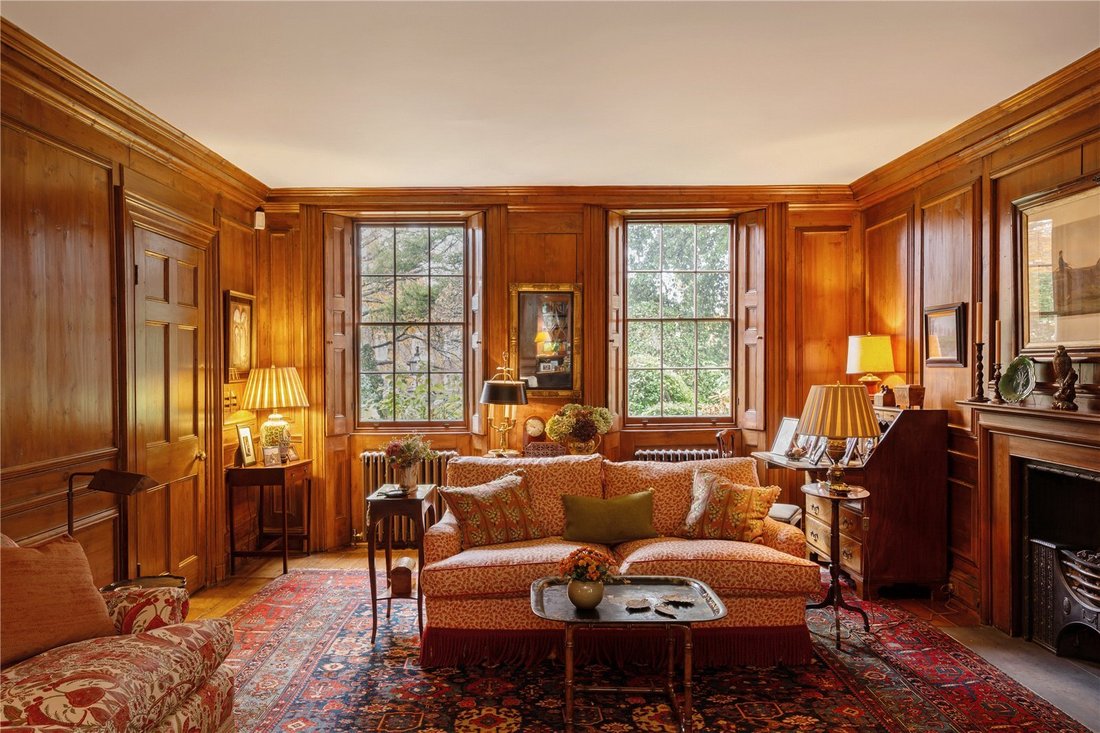
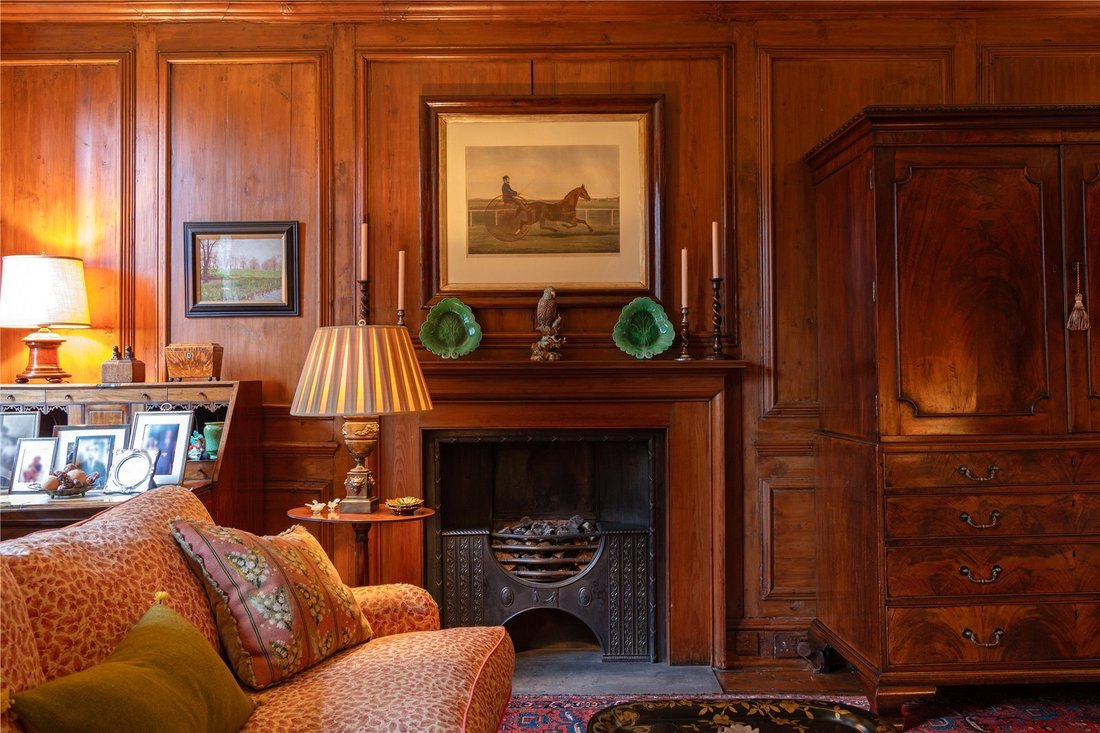
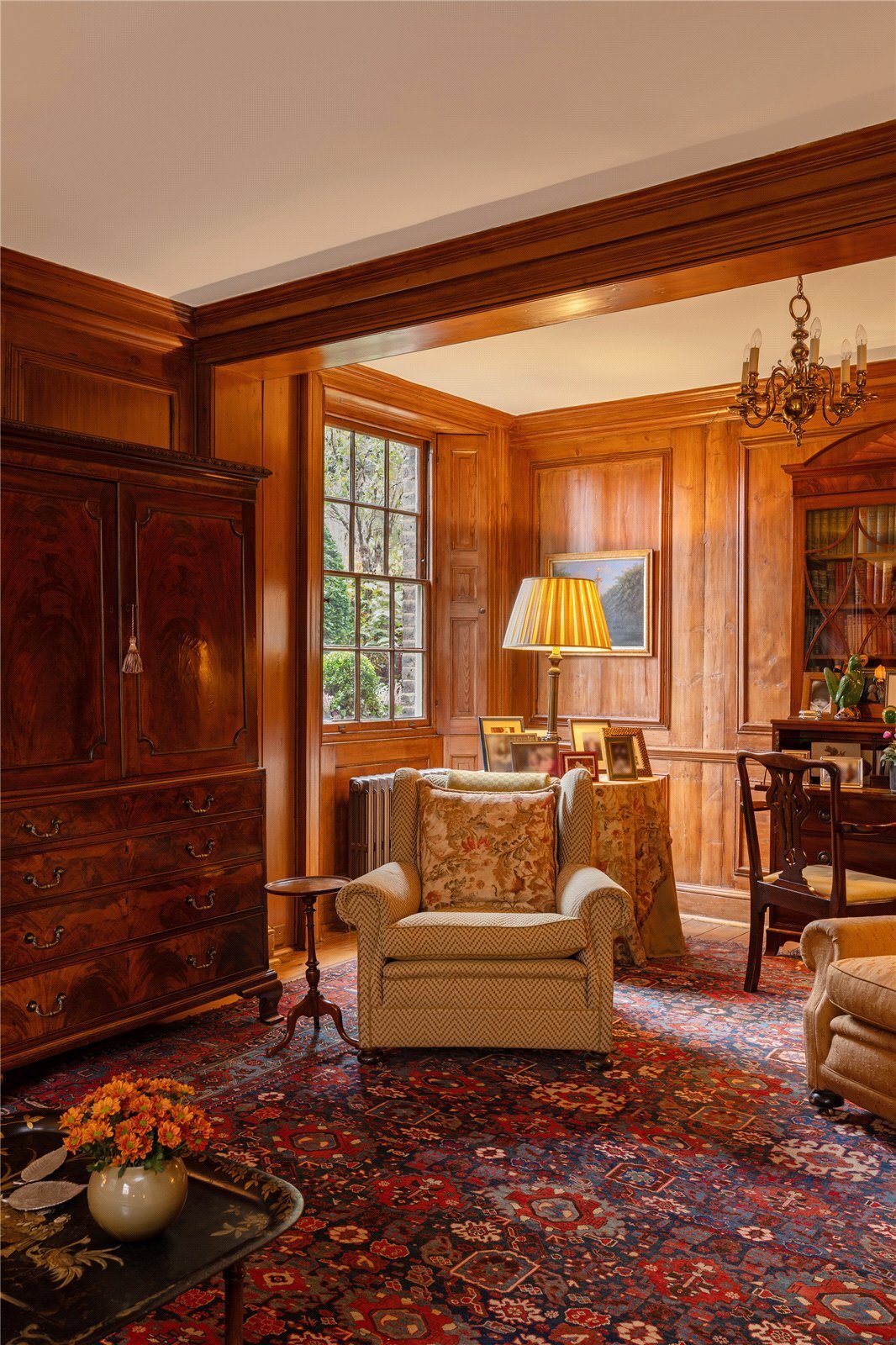
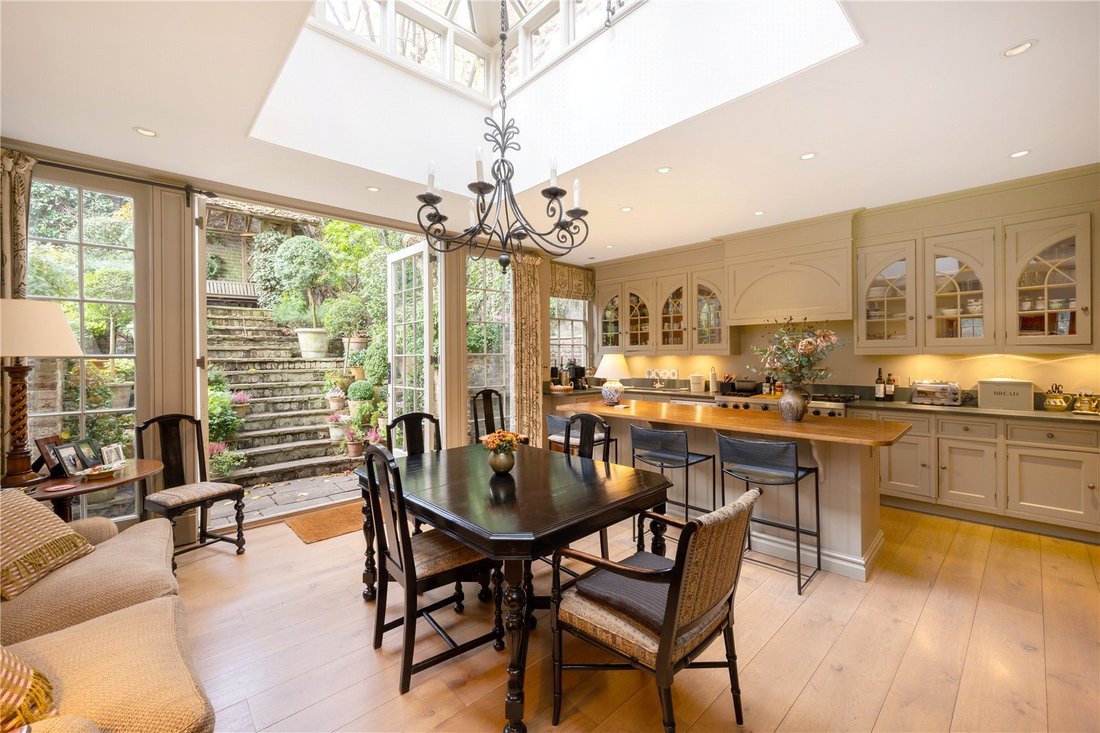
Cloth Hill is listed II* and is of traditional brick construction. The house is arranged over lower ground, ground and two upper storeys with ancillary outbuildings and a double garage fronting The Mount. The property comprises spacious family accommodation in beautifully proportioned rooms. It features uniformly lovely views from its many windows over its extensive gardens, Hampstead Village and central London, from its elevated position very near to the highest point in the city. The house has only had three owners in the last 140 years and has thus been fortunate in retaining many original period features including the two original staircases, panelling and fireplaces as well as benefiting from a substantial ground floor kitchen extension at the rear of the house in the mid 1990s. The beautifully maintained walled, secure gardens almost surround the house with lawns, walks, a patio, summer house and historic fountain, many mature trees and shrubs.
The house has many interesting associations. It was here that Voltaire came in 1728 for his conversations with the Quaker Andrew Pitt (who had married the daughter of William Beech). In 1796, the house was bought by George Romney, the painter, who near the end of his residency, took down the stables and coach-house and built in their place a house with painting room and gallery, now known as ’Romney’s House’. After Romney’s death in 1802, the property was occupied by members of the Rundell family of Rundell and Bridge, the court goldsmiths. It was then that Maria Rundell published in 1806 ’A New System of Domestic Cookery’, a best-selling precursor to the famous cookbook written by Mrs Beeton (who borrowed heavily from Mrs Rundell), which ran to 67 editions and led to her being referred to as ’the original domestic goddess.’ Over the period 1852-1865, Ford Madox Brown painted one of the masterpieces of Victorian art, ’Work’, the setting of which is clearly recognisable as The Mount with the gate of Cloth Hill on the left. The picture includes a sign on the garden wall of Cloth Hill advertising the letting of ’a genteel family residence.
Cloth Hill is located in the centre of Hampstead Village, on The Mount, a narrow single track road which runs at an incline from Heath Street to The Mount Square and ultimately Hampstead Grove.
The excellent shopping facilities of Hampstead Village are immediately to hand, as is Hampstead underground station (Northern Line). Hampstead Heath, with its open parkland of 800 acres and the Iveagh Bequest Kenwood House (English Heritage) are within easy walking distance of the property.
Kitchen with breakfast Room and Pantry
Guest Cloakroom
Principle Bedroom With En-Suite Dressing Room and Toilet
4 additional Bedrooms, one with an En-Suite
A Family Bathroom
Kids Play Room on the second floor
A Lower Ground Self Contained Guest / Staff Flat Comprising of a Double Bedroom, Bathroom, Kitchenette, Living / Games Room, Utility / Laundry Room, Wine Cellar, Garden Access, Secluded Patio and Double Garage
Cloth Hill dates from the late 17th century and is thought to be the second oldest residence in Hampstead, after nearby Fenton House (National Trust). In 1694 Mr William Beech, a Quaker cloth merchant of London, bought a house and some land ’at a place called Cloth Hill’ (so called, it is said, because in Tudor times Hampstead laundresses, who washed using the clean, spring-fed water available in the area, spread out their washing to dry there) and in 1699 bought another house and land close by. Very soon after this he incorporated parts of the two older houses into the house which now stands.
Cloth Hill is listed II* and is of traditional brick construction. The house is arranged over lower ground, ground and two upper storeys with ancillary outbuildings and a double garage fronting The Mount. The property comprises spacious family accommodation in beautifully proportioned rooms. It features uniformly lovely views from its many windows over its extensive gardens, Hampstead Village and central London, from its elevated position very near to the highest point in the city. The house has only had three owners in the last 140 years and has thus been fortunate in retaining many original period features including the two original staircases, panelling and fireplaces as well as benefiting from a substantial ground floor kitchen extension at the rear of the house in the mid 1990s. The beautifully maintained walled, secure gardens almost surround the house with lawns, walks, a patio, summer house and historic fountain, many mature trees and shrubs.
The house has many interesting associations. It was here that Voltaire came in 1728 for his conversations with the Quaker Andrew Pitt (who had married the daughter of William Beech). In 1796, the house was bought by George Romney, the painter, who near the end of his residency, took down the stables and coach-house and built in their place a house with painting room and gallery, now known as ’Romney’s House’. After Romney’s death in 1802, the property was occupied by members of the Rundell family of Rundell and Bridge, the court goldsmiths. It was then that Maria Rundell published in 1806 ’A New System of Domestic Cookery’, a best-selling precursor to the famous cookbook written by Mrs Beeton (who borrowed heavily from Mrs Rundell), which ran to 67 editions and led to her being referred to as ’the original domestic goddess.’ Over the period 1852-1865, Ford Madox Brown painted one of the masterpieces of Victorian art, ’Work’, the setting of which is clearly recognisable as The Mount with the gate of Cloth Hill on the left. The picture includes a sign on the garden wall of Cloth Hill advertising the letting of ’a genteel family residence.
Cloth Hill is located in the centre of Hampstead Village, on The Mount, a narrow single track road which runs at an incline from Heath Street to The Mount Square and ultimately Hampstead Grove.
The excellent shopping facilities of Hampstead Village are immediately to hand, as is Hampstead underground station (Northern Line). Hampstead Heath, with its open parkland of 800 acres and the Iveagh Bequest Kenwood House (English Heritage) are within easy walking distance of the property.
Kitchen with breakfast Room and Pantry
Guest Cloakroom
Principle Bedroom With En-Suite Dressing Room and Toilet
4 additional Bedrooms, one with an En-Suite
A Family Bathroom
Kids Play Room on the second floor
A Lower Ground Self Contained Guest / Staff Flat Comprising of a Double Bedroom, Bathroom, Kitchenette, Living / Games Room, Utility / Laundry Room, Wine Cellar, Garden Access, Secluded Patio and Double Garage
-
Tipo di proprietà
Casa
-
Prezzo/piede²
$3,633
-
Consumo
E
Esplora la zona
The Mount, London, Hampstead, Camden, Inghilterra
Visualizza su Google Maps
Prezzo per sqft
Basso
Alto

Iscritto da 2 anni
Hai chiesto informazioni su questa proprietà
L'agente La contatterà al più presto
Pubblicato da
31
Annunci
2024
Iscritto
Prenota una visita con Neir Gigi
Scegli una data e indica se preferisci un tour virtuale o di persona con l’agente.
Data preferita
Tipo di tour

Savills - Hampstead
7 Perrin's Court, Hampstead, London, NW3 1QS, United Kingdom
Visualizza profilo agenzia
Ultimo aggiornamento
Settembre 15
Prima pubblicazione
Gennaio 25, 2025
Riferimento annuncio
HAH240303
Proprietà simili nelle vicinanze
Nuovi annunci a Hampstead


Esplora più immobili in vendita
tipi di proprietà Hampstead, Camden, Inghilterra
Hampstead, Camden, Inghilterra ricerche popolari
- Proprietà immobiliari Vista panoramica / Scenica a Hampstead, Camden, Inghilterra
- Proprietà immobiliari con Terrazza a Hampstead, Camden, Inghilterra
- Proprietà immobiliari con Bar a Hampstead, Camden, Inghilterra
- Proprietà immobiliari con Sala giochi a Hampstead, Camden, Inghilterra
- Proprietà immobiliari con Ufficio a Hampstead, Camden, Inghilterra
- Proprietà immobiliari con Ascensore a Hampstead, Camden, Inghilterra
- Proprietà immobiliari Vista Città a Hampstead, Camden, Inghilterra
- Proprietà immobiliari Vista sulle montagne a Hampstead, Camden, Inghilterra
- Proprietà immobiliari con Giardino a Hampstead, Camden, Inghilterra
- Proprietà immobiliari con Cucina esterna a Hampstead, Camden, Inghilterra
- Proprietà immobiliari Duplex a Hampstead, Camden, Inghilterra
- Proprietà immobiliari Comunità recintata a Hampstead, Camden, Inghilterra
- Proprietà immobiliari Privacy a Hampstead, Camden, Inghilterra
- Proprietà immobiliari Collina a Hampstead, Camden, Inghilterra
- Proprietà immobiliari Investimento immobiliare a Hampstead, Camden, Inghilterra
- Proprietà immobiliari Moderno a Hampstead, Camden, Inghilterra
- Proprietà immobiliari Equestre a Hampstead, Camden, Inghilterra
- Proprietà immobiliari Nuove costruzioni a Hampstead, Camden, Inghilterra
- Proprietà immobiliari con Centro Fitness / Palestra a Hampstead, Camden, Inghilterra
- Proprietà immobiliari con Sauna a Hampstead, Camden, Inghilterra
- Proprietà immobiliari con Bagno turco a Hampstead, Camden, Inghilterra
- Proprietà immobiliari con Libreria a Hampstead, Camden, Inghilterra
- Proprietà immobiliari con Aria condizionata a Hampstead, Camden, Inghilterra
- Proprietà immobiliari con Cantina a Hampstead, Camden, Inghilterra
- Proprietà immobiliari con Idromassaggio a Hampstead, Camden, Inghilterra
- Proprietà immobiliari con Camino a Hampstead, Camden, Inghilterra
- Proprietà immobiliari con Piscina a Hampstead, Camden, Inghilterra
- Proprietà immobiliari con Garage a Hampstead, Camden, Inghilterra
- Proprietà immobiliari con Balcone a Hampstead, Camden, Inghilterra
- Proprietà immobiliari Residenza a Hampstead, Camden, Inghilterra
- Proprietà immobiliari con Cucina aperta a Hampstead, Camden, Inghilterra
- Proprietà immobiliari Rinnovato a Hampstead, Camden, Inghilterra
- Proprietà immobiliari con Cinema a Hampstead, Camden, Inghilterra
- Proprietà immobiliari con Piscina coperta a Hampstead, Camden, Inghilterra
- Proprietà immobiliari Vista sull'acqua a Hampstead, Camden, Inghilterra
Guide e storie correlate
La fiducia dei migliori broker del mondo
Gli agenti dietro le proprietà più straordinarie del mondo pubblicano su JamesEdition.
- Annunci di Sotheby's, Christie's, BARNES ed Engel & Völkers
- Ogni annuncio è verificato prima della pubblicazione
- Si metta in contatto diretto con agenti verificati
Continuando, accetta i nostri Termini e la nostra Informativa sulla privacy.