$7,278,484
Ca'n Martorellet: Tenuta Storica Del XIII Secolo Con 244 Ettari A Pollença
- 9 Camere
- 6 Bagni
- 8,945 Sqft
- 603.97 Ac lot
- Aggiornato: Luglio 8
- 3
Informazioni sulla proprietà
La descrizione è stata tradotta automaticamente.
La descrizione viene visualizzata nella lingua originale.
There are properties, and then there are legacies. This historical estate with over 800 years of documented history for sale in the Vall de Sant Vicenç, next to Pollença, undoubtedly belongs to the second category. It is not a house, nor a farm, nor even a large rural property: it is Ca’n Martorellet, a Mallorcan manor in the deepest sense of the term. 831 square meters of main building, a propert
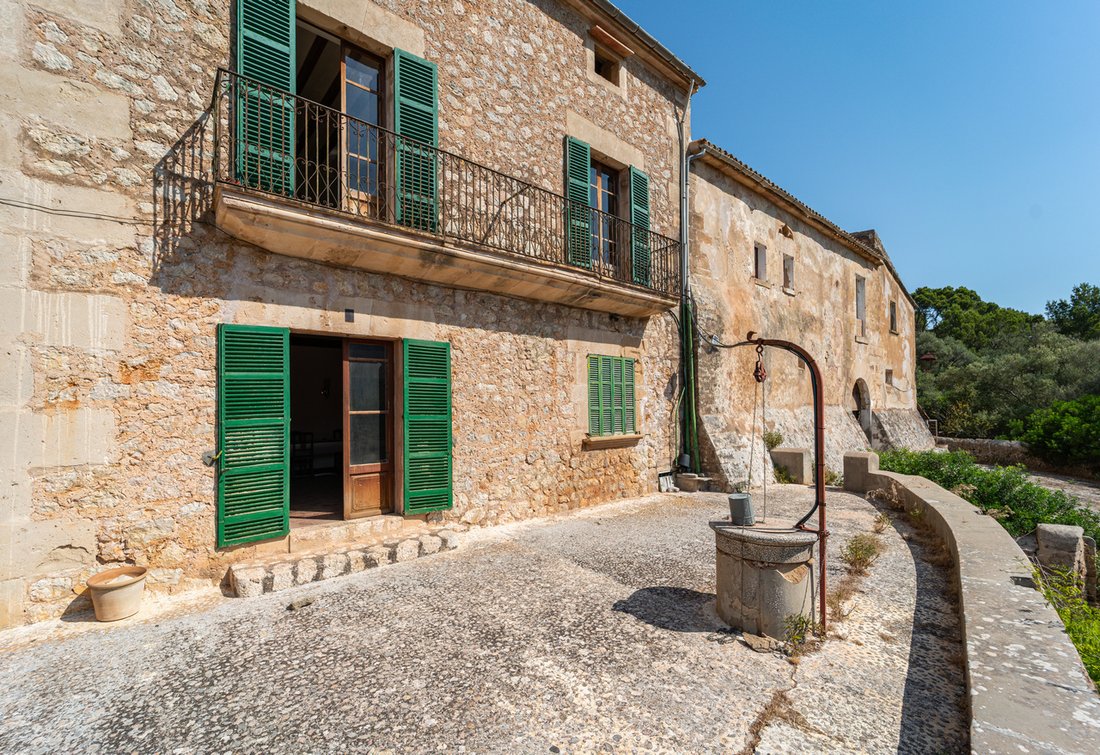
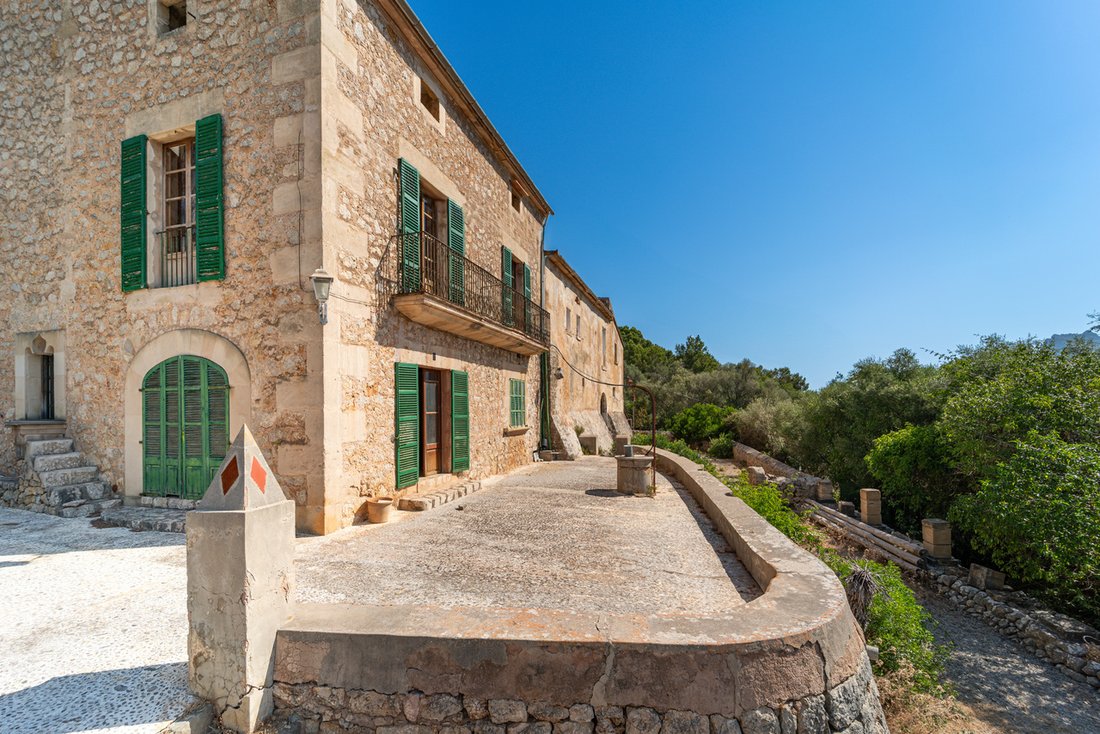
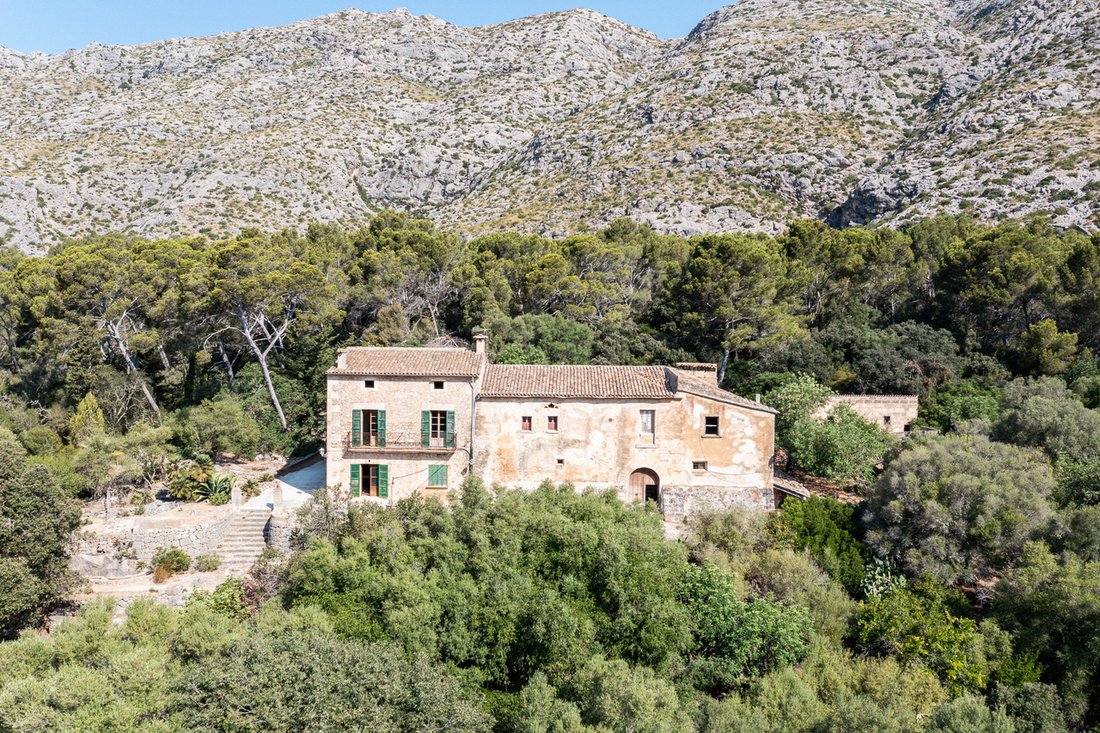
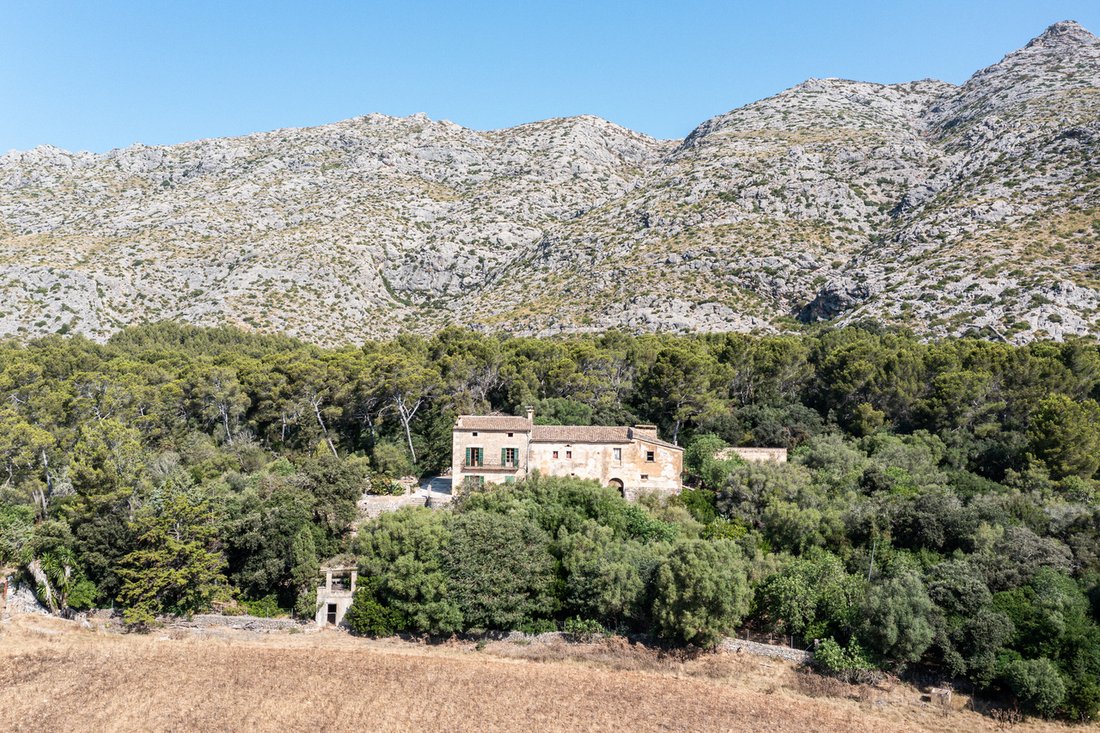
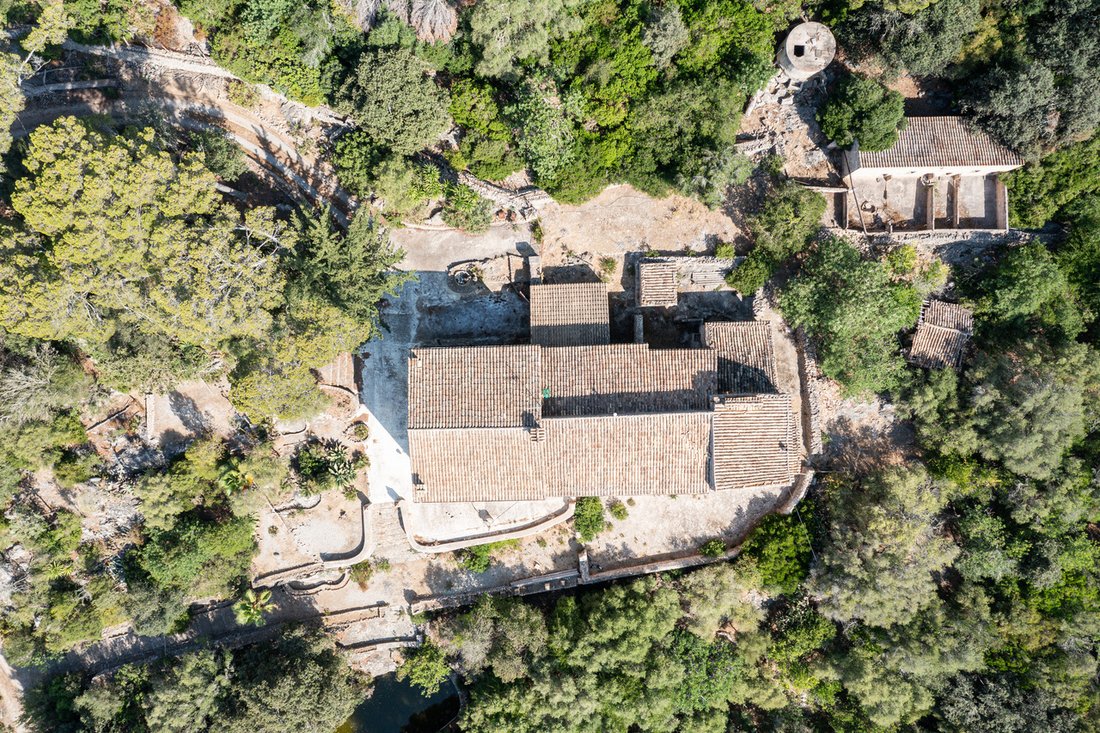
There are properties, and then there are legacies. This historical estate with over 800 years of documented history for sale in the Vall de Sant Vicenç, next to Pollença, undoubtedly belongs to the second category. It is not a house, nor a farm, nor even a large rural property: it is Ca’n Martorellet, a Mallorcan manor in the deepest sense of the term. 831 square meters of main building, a property of more than 244 hectares (2,444,142 square meters) in the UNESCO protected Cultural Landscape, medieval remnants dating back to the 13th century that are already documented in the historic Llibre del Repartiment, original conical windows, remains of an ancient defense tower, a century-old traditional hydraulic system that still feeds the property today, two natural springs, a pool with waterfalls integrated into the landscape, olive groves, Mediterranean forests, vernacular agricultural buildings, and even a prehistoric necropolis that certifies that this place has been chosen as a home by different civilizations throughout the millennia. It is simply one of the most unique properties available today in Mallorca.
Less than a hundred authentic possessions remain in private hands across the island. Most are historical properties with recognized heritage value, estates that have belonged to the same Mallorcan families for generations and only change hands under truly exceptional circumstances. When one of them comes to market — and it comes to market in an area like the Vall de Sant Vicenç, in the heart of northern Mallorca — it is not real estate news: it is an event. Ca’n Martorellet is exactly that. A piece of living heritage, waiting for the buyer who knows how to understand what they have in their hands.
Eight centuries of documented history
Few properties in the Mediterranean can present such a rich and well-documented historical trajectory as Ca’n Martorellet. Its origins date back to the 13th century and are recorded in the Llibre del Repartiment, the historical document through which King Jaume I distributed the lands of Mallorca after the conquest of 1229. This detail is not anecdotal: it means that this estate has been a human settlement with its own identity for over eight centuries, a point on the map of Mallorca’s history that has survived wars, dynasties, regime changes, and social transformations without ever losing its function as a home and agricultural production center.
The walls retain vestiges of that long history with a moving eloquence. The conical windows — an architectural detail characteristic of the Mallorcan rural nobility of the 13th and 14th centuries — are authentic pieces that no contemporary project can invent. The remains of the ancient defense tower speak of the times when the northern coast of Mallorca lived under the constant threat of pirate incursions, and each important possession had to provide its own system of surveillance and protection. It is that type of detail that a buyer with historical sensitivity immediately recognizes as irreplaceable.
The architecture: the nobility of Mallorcan stone
The main building, with 831 square meters built, is structured around the ancient manor house and the traditional pagès dwelling (the caretakers who managed the agricultural exploitation of the estate for centuries). This architectural duality is typical of the great Mallorcan possessions: a noble residential core for the owning family, connected but differentiated from the domestic core of the caretakers, both integrated into the same built complex. It is an organization that offers extraordinary potential for contemporary reinterpretation — because it allows for, for example, a high-category main residence with a completely independent guest area, or a family residence with clearly separated service areas.
The current distribution includes nine double bedrooms and six bathrooms, as well as several living rooms and kitchens that were once the beating heart of the domestic and agricultural life of the estate. The structure is solid — those load-bearing walls have proven their capacity to support whatever is asked of them for centuries — and the interior volume is generous enough to accommodate any program that the future owner wishes to propose: spacious living areas, professional kitchens, main suites in stately proportions, bedrooms for family and guests, library, wine cellar, gym, wellness area, rooms dedicated to art or collecting. Everything is possible — it just takes vision.
A blank canvas for a comprehensive restoration
This property is sold as a comprehensive rehabilitation project. For the right buyer, this is not a drawback — it is precisely the greatest virtue of the asset. It means absolute freedom to reinterpret the spaces, endow the home with 21st-century amenities (home automation, energy efficiency, state-of-the-art climate control, security systems, connectivity, wellness and spa areas) and do it all without sacrificing an ounce of the historical soul of the building. The best restorations of Mallorcan possessions are precisely those that maintain a respectful dialogue between the century-old stone and contemporary language, preserving the essentials — the walls, beams, arches, original details — and introducing everything necessary to live today with maximum comfort.
It is easy to imagine the result: double-height living rooms with restored original wooden beams, libraries with mountain views, main suites where luxury is understood as space and serenity, professional kitchens open to informal dining rooms for everyday life and formal dining rooms for grand occasions, designer bathrooms that respect the materiality of the original stone, wellness areas designed as small private spas, climate-controlled cellars for wine collectors. The existing structure is generous enough to accommodate all this without forcing a single square meter.
Water, land, and the magic of Ca’n Martorellet
One of the most fascinating aspects of this property is its intrinsic connection to water and land. The exterior is a potential garden watered by history: an ancient traditional hydraulic system, a gem of Mallorcan rural engineering and a testament to centuries of intelligent water management on the island, feeds a unique pool designed with natural waterfalls that integrate into the landscape as if they had always been there. The constant sound of water, coming from two natural springs on the estate, creates an atmosphere of natural wellness that envelops the gardens and terraces — a sensory luxury that no artificial system can replicate.
Having natural springs on a 21st-century Mallorcan property is, in itself, an asset of incalculable value. In an island where water management is one of the great challenges of the future, having its own springs means water autonomy for irrigating gardens, orchards, olive groves, and green areas — and opens the door to ambitious landscaping projects without the limitations that usually constrain inland estates.
The estate is also a true open-air ethnographic museum. Walking through its grounds is to discover vernacular agricultural buildings that tell the millennia-old story of the Mallorcan countryside: sestadors (the ancient shelters for livestock), palleres (the stables where straw was stored), solls (the traditional corrals), and even a prehistoric necropolis that demonstrates that this place has been chosen as a home by different civilizations throughout the millennia. For those who know how to read these details, they are living pages of the rich agricultural, livestock, and oil-producing past of the estate — a past that any serious restoration project will know how to preserve and integrate into the new life of the place.
244 hectares in the Vall de Sant Vicenç
If the building is exceptional, the land multiplies that exceptionalism. The property sits on 2,444,142 square meters — just over 244 hectares — of UNESCO protected land in the heart of the Vall de Sant Vicenç. It is an area that is hard to visualize until you walk through it: centenary olive groves, forests of pines and oaks, natural springs, ancient paths, traditional terraces, and corners waiting to be rediscovered. It is an entire fragment of the most protected cultural landscape in the Mediterranean, in private ownership.
The magnitude of the land opens a range of possibilities that are hard to match for the lifestyle of future owners. From creating Mediterranean gardens designed with low water consumption landscaping criteria to the possibility of having private equestrian facilities for horse lovers; from recovering the traditional production of organic olive oil under the estate’s own historical denomination to developing personal organic gardens; from private hiking trails through the own forests to meditation areas at dawn among centenary olive groves. The space allows for big dreams — and it allows for them in absolute privacy, because when you have 244 hectares around, the word privacy takes on a meaning that few properties in Europe can offer.
The orientation and arrangement of the volumes ensure natural light throughout the day and unobstructed views that change with the seasons — the intense green of the pines in spring, the silver of the olive trees in the summer wind, the ochres and golds of autumn, the crystalline stillness of winter days. It is a continuous visual spectacle that renews itself every day and every season, and constitutes one of the purest privileges of living in a property of these dimensions.
Functionality for a large residence
Despite the historical and heritage character of the ensemble, the property includes functional elements designed for a large contemporary residence. It has a large-capacity garage — ideal for vehicle collectors or simply for families with several cars — multiple storage areas, and laundry areas that facilitate the logistics of a residence of this size. These details, which may seem secondary next to the heritage value of the ensemble, are actually fundamental for the property to function comfortably as a real home, not just as a museum piece.
The Vall de Sant Vicenç and Pollença: living in the most authentic north
Living in the Vall de Sant Vicenç is synonymous with belonging to a select circle of residents who value authenticity over ostentation. Although the feeling inside the estate is one of absolute isolation and monastic peace, the logistical reality is surprisingly comfortable. Just a few minutes by car is the town of Pollença, the cultural epicenter of the north of the island, famous for its international classical music festival, its art galleries, its Sunday market in the Plaza Mayor, and a gastronomic offer that fuses author cuisine with local Mallorcan tradition. The ritual of walking up the 365 steps of the Calvari at dawn or dusk is one of those gestures that are part of the area’s DNA and that only those who live there year-round understand.
For sea lovers, the crystal-clear waters of Cala Sant Vicenç — one of the most spectacular corners of the northern coast of Mallorca, with its hidden coves among cliffs — and the long white sandy beaches of Puerto de Pollença are a short drive away, allowing for immediate enjoyment of sailing, water sports, and Mediterranean bathing. Connectivity is excellent for an international profile: the estate offers a safe and discreet refuge, but with quick access to the highway that connects to Palma and its international airport in less than an hour. Additionally, proximity to the exclusive golf course of Pollença and the best hiking and cycling routes in Europe makes this location a paradise for elite athletes or demanding enthusiasts.
Here, luxury is not just the quality of materials — it is the quality of time enjoyed: sunsets over the Serra de Tramuntana, silence only broken by nature, the security of owning a truly eternal asset.
An unrepeatable heritage investment
Acquiring a possession like Ca’n Martorellet is not simply a real estate transaction. It is an act of cultural preservation — because restoring such a heritage is contributing to keeping alive a fundamental part of Mallorcan identity — and it is an investment in a truly unrepeatable asset. In an island where rustic land is a limited resource, where new construction on protected land is practically unfeasible, and where authentic historical properties are increasingly scarce on the market, a possession of these dimensions, with this history and this land, represents an opportunity that is unlikely to present itself again in the same generation.
We are not talking about just another home, nor a conventional investment project. We are talking about the possibility of becoming the custodian of Ca’n Martorellet, of restoring the splendor of one of the most significant architectural assets in northern Mallorca, and of creating, with vision and sensitivity, a family residence of a category that only a few families in the world can aspire to.
Ca’n Martorellet is not simply looking for a buyer, but a custodian with the vision and sensitivity necessary to restore its splendor. We are facing one of the last great possessions available on the market, a heritage investment opportunity that combines documented history since the 13th century, virtually unlimited land, and an absolutely prime location in the protected north of Mallorca. If your life project includes creating a residence that is a legacy for future generations, this historical estate offers the perfect foundation to make it a reality.
This historical possession with over 800 years of history is for those who know what they are looking at. For the buyer with the sensitivity to understand that buying here is not buying square meters — it is buying centuries.
Less than a hundred authentic possessions remain in private hands across the island. Most are historical properties with recognized heritage value, estates that have belonged to the same Mallorcan families for generations and only change hands under truly exceptional circumstances. When one of them comes to market — and it comes to market in an area like the Vall de Sant Vicenç, in the heart of northern Mallorca — it is not real estate news: it is an event. Ca’n Martorellet is exactly that. A piece of living heritage, waiting for the buyer who knows how to understand what they have in their hands.
Eight centuries of documented history
Few properties in the Mediterranean can present such a rich and well-documented historical trajectory as Ca’n Martorellet. Its origins date back to the 13th century and are recorded in the Llibre del Repartiment, the historical document through which King Jaume I distributed the lands of Mallorca after the conquest of 1229. This detail is not anecdotal: it means that this estate has been a human settlement with its own identity for over eight centuries, a point on the map of Mallorca’s history that has survived wars, dynasties, regime changes, and social transformations without ever losing its function as a home and agricultural production center.
The walls retain vestiges of that long history with a moving eloquence. The conical windows — an architectural detail characteristic of the Mallorcan rural nobility of the 13th and 14th centuries — are authentic pieces that no contemporary project can invent. The remains of the ancient defense tower speak of the times when the northern coast of Mallorca lived under the constant threat of pirate incursions, and each important possession had to provide its own system of surveillance and protection. It is that type of detail that a buyer with historical sensitivity immediately recognizes as irreplaceable.
The architecture: the nobility of Mallorcan stone
The main building, with 831 square meters built, is structured around the ancient manor house and the traditional pagès dwelling (the caretakers who managed the agricultural exploitation of the estate for centuries). This architectural duality is typical of the great Mallorcan possessions: a noble residential core for the owning family, connected but differentiated from the domestic core of the caretakers, both integrated into the same built complex. It is an organization that offers extraordinary potential for contemporary reinterpretation — because it allows for, for example, a high-category main residence with a completely independent guest area, or a family residence with clearly separated service areas.
The current distribution includes nine double bedrooms and six bathrooms, as well as several living rooms and kitchens that were once the beating heart of the domestic and agricultural life of the estate. The structure is solid — those load-bearing walls have proven their capacity to support whatever is asked of them for centuries — and the interior volume is generous enough to accommodate any program that the future owner wishes to propose: spacious living areas, professional kitchens, main suites in stately proportions, bedrooms for family and guests, library, wine cellar, gym, wellness area, rooms dedicated to art or collecting. Everything is possible — it just takes vision.
A blank canvas for a comprehensive restoration
This property is sold as a comprehensive rehabilitation project. For the right buyer, this is not a drawback — it is precisely the greatest virtue of the asset. It means absolute freedom to reinterpret the spaces, endow the home with 21st-century amenities (home automation, energy efficiency, state-of-the-art climate control, security systems, connectivity, wellness and spa areas) and do it all without sacrificing an ounce of the historical soul of the building. The best restorations of Mallorcan possessions are precisely those that maintain a respectful dialogue between the century-old stone and contemporary language, preserving the essentials — the walls, beams, arches, original details — and introducing everything necessary to live today with maximum comfort.
It is easy to imagine the result: double-height living rooms with restored original wooden beams, libraries with mountain views, main suites where luxury is understood as space and serenity, professional kitchens open to informal dining rooms for everyday life and formal dining rooms for grand occasions, designer bathrooms that respect the materiality of the original stone, wellness areas designed as small private spas, climate-controlled cellars for wine collectors. The existing structure is generous enough to accommodate all this without forcing a single square meter.
Water, land, and the magic of Ca’n Martorellet
One of the most fascinating aspects of this property is its intrinsic connection to water and land. The exterior is a potential garden watered by history: an ancient traditional hydraulic system, a gem of Mallorcan rural engineering and a testament to centuries of intelligent water management on the island, feeds a unique pool designed with natural waterfalls that integrate into the landscape as if they had always been there. The constant sound of water, coming from two natural springs on the estate, creates an atmosphere of natural wellness that envelops the gardens and terraces — a sensory luxury that no artificial system can replicate.
Having natural springs on a 21st-century Mallorcan property is, in itself, an asset of incalculable value. In an island where water management is one of the great challenges of the future, having its own springs means water autonomy for irrigating gardens, orchards, olive groves, and green areas — and opens the door to ambitious landscaping projects without the limitations that usually constrain inland estates.
The estate is also a true open-air ethnographic museum. Walking through its grounds is to discover vernacular agricultural buildings that tell the millennia-old story of the Mallorcan countryside: sestadors (the ancient shelters for livestock), palleres (the stables where straw was stored), solls (the traditional corrals), and even a prehistoric necropolis that demonstrates that this place has been chosen as a home by different civilizations throughout the millennia. For those who know how to read these details, they are living pages of the rich agricultural, livestock, and oil-producing past of the estate — a past that any serious restoration project will know how to preserve and integrate into the new life of the place.
244 hectares in the Vall de Sant Vicenç
If the building is exceptional, the land multiplies that exceptionalism. The property sits on 2,444,142 square meters — just over 244 hectares — of UNESCO protected land in the heart of the Vall de Sant Vicenç. It is an area that is hard to visualize until you walk through it: centenary olive groves, forests of pines and oaks, natural springs, ancient paths, traditional terraces, and corners waiting to be rediscovered. It is an entire fragment of the most protected cultural landscape in the Mediterranean, in private ownership.
The magnitude of the land opens a range of possibilities that are hard to match for the lifestyle of future owners. From creating Mediterranean gardens designed with low water consumption landscaping criteria to the possibility of having private equestrian facilities for horse lovers; from recovering the traditional production of organic olive oil under the estate’s own historical denomination to developing personal organic gardens; from private hiking trails through the own forests to meditation areas at dawn among centenary olive groves. The space allows for big dreams — and it allows for them in absolute privacy, because when you have 244 hectares around, the word privacy takes on a meaning that few properties in Europe can offer.
The orientation and arrangement of the volumes ensure natural light throughout the day and unobstructed views that change with the seasons — the intense green of the pines in spring, the silver of the olive trees in the summer wind, the ochres and golds of autumn, the crystalline stillness of winter days. It is a continuous visual spectacle that renews itself every day and every season, and constitutes one of the purest privileges of living in a property of these dimensions.
Functionality for a large residence
Despite the historical and heritage character of the ensemble, the property includes functional elements designed for a large contemporary residence. It has a large-capacity garage — ideal for vehicle collectors or simply for families with several cars — multiple storage areas, and laundry areas that facilitate the logistics of a residence of this size. These details, which may seem secondary next to the heritage value of the ensemble, are actually fundamental for the property to function comfortably as a real home, not just as a museum piece.
The Vall de Sant Vicenç and Pollença: living in the most authentic north
Living in the Vall de Sant Vicenç is synonymous with belonging to a select circle of residents who value authenticity over ostentation. Although the feeling inside the estate is one of absolute isolation and monastic peace, the logistical reality is surprisingly comfortable. Just a few minutes by car is the town of Pollença, the cultural epicenter of the north of the island, famous for its international classical music festival, its art galleries, its Sunday market in the Plaza Mayor, and a gastronomic offer that fuses author cuisine with local Mallorcan tradition. The ritual of walking up the 365 steps of the Calvari at dawn or dusk is one of those gestures that are part of the area’s DNA and that only those who live there year-round understand.
For sea lovers, the crystal-clear waters of Cala Sant Vicenç — one of the most spectacular corners of the northern coast of Mallorca, with its hidden coves among cliffs — and the long white sandy beaches of Puerto de Pollença are a short drive away, allowing for immediate enjoyment of sailing, water sports, and Mediterranean bathing. Connectivity is excellent for an international profile: the estate offers a safe and discreet refuge, but with quick access to the highway that connects to Palma and its international airport in less than an hour. Additionally, proximity to the exclusive golf course of Pollença and the best hiking and cycling routes in Europe makes this location a paradise for elite athletes or demanding enthusiasts.
Here, luxury is not just the quality of materials — it is the quality of time enjoyed: sunsets over the Serra de Tramuntana, silence only broken by nature, the security of owning a truly eternal asset.
An unrepeatable heritage investment
Acquiring a possession like Ca’n Martorellet is not simply a real estate transaction. It is an act of cultural preservation — because restoring such a heritage is contributing to keeping alive a fundamental part of Mallorcan identity — and it is an investment in a truly unrepeatable asset. In an island where rustic land is a limited resource, where new construction on protected land is practically unfeasible, and where authentic historical properties are increasingly scarce on the market, a possession of these dimensions, with this history and this land, represents an opportunity that is unlikely to present itself again in the same generation.
We are not talking about just another home, nor a conventional investment project. We are talking about the possibility of becoming the custodian of Ca’n Martorellet, of restoring the splendor of one of the most significant architectural assets in northern Mallorca, and of creating, with vision and sensitivity, a family residence of a category that only a few families in the world can aspire to.
Ca’n Martorellet is not simply looking for a buyer, but a custodian with the vision and sensitivity necessary to restore its splendor. We are facing one of the last great possessions available on the market, a heritage investment opportunity that combines documented history since the 13th century, virtually unlimited land, and an absolutely prime location in the protected north of Mallorca. If your life project includes creating a residence that is a legacy for future generations, this historical estate offers the perfect foundation to make it a reality.
This historical possession with over 800 years of history is for those who know what they are looking at. For the buyer with the sensitivity to understand that buying here is not buying square meters — it is buying centuries.
-
Tipo di proprietà
Finca
-
Prezzo/piede²
$813
Caratteristiche
- Giardino
- Piscina
- Terrazza
- Garage
- Vista sulle montagne
- Vista sull'acqua
- Camino
- Investimento immobiliare
- Privacy
Caratteristiche
Lot
- Vista sulle montagne
- Vista sull'acqua
- Privacy
- Investimento immobiliare
Interni
- Soffitto alto
- Camino
Outdoor
- Terrazza
- Balcone
- Piscina
- Garage
- Giardino
Esplora la zona
Vall de Sant Vicenç, Pollença, 07460, Spain
Visualizza su Google Maps
Prezzo per sqft
Basso
Alto
Located in Pollença, this luxury property offers close access to Palma de Mallorca Airport (40 min) and the Port de Pollença marina (5 min). The area features renowned golf clubs and Michelin-starred dining. Nearby cultural sites offer a glimpse into local heritage. Well-served by international and private schools, this tranquil Mediterranean location combines lifestyle, accessibility, and natural beauty for discerning buyers.
Ottieni luoghi vicini
Attrazioni
Scuole
Palma de Mallorca Airport
Airport
40 min
Port de Pollença
Port / Marina
5 min
Golf Alcanada
Golf & Country Clubs
15 min
Cap de Formentor
Outdoor & Nature
20 min
Es Molí de Foc
Dining & Wine
7 min
Museu de Pollença
Culture & Heritage
6 min
Llaut Palace Spa
Luxury Wellness & Spas
5 min
American School of Mallorca
International School
38 min
Escola Pública de Pollença
Public School
6 min
Col·legi Sant Vicenç Ferrer
Private School
15 min
Iscritto da 4 mesi
Hai chiesto informazioni su questa proprietà
L'agente La contatterà al più presto
Pubblicato da
39
Annunci
2026
Iscritto
Prenota una visita con the agent
Scegli una data e indica se preferisci un tour virtuale o di persona con l’agente.
Data preferita
Tipo di tour
Ultimo aggiornamento
Luglio 8
Prima pubblicazione
Giugno 17
Riferimento annuncio
1486
Proprietà simili nelle vicinanze
Nuovi annunci a Pollença



Esplora più immobili in vendita
tipi di proprietà Pollença, Isole Baleari, Spagna
Guide e storie correlate
La fiducia dei migliori broker del mondo
Gli agenti dietro le proprietà più straordinarie del mondo pubblicano su JamesEdition.
- Annunci di Sotheby's, Christie's, BARNES ed Engel & Völkers
- Ogni annuncio è verificato prima della pubblicazione
- Si metta in contatto diretto con agenti verificati
Continuando, accetta i nostri Termini e la nostra Informativa sulla privacy.