$6,602,883
Maestosa Dimora Storica Sulle Colline DI Pistoia
- 10 Camere
- 10 Bagni
- 16,146 Sqft
- 12.36 Ac lot
- 67
Informazioni sulla proprietà
La descrizione è stata tradotta automaticamente.
La descrizione viene visualizzata nella lingua originale.
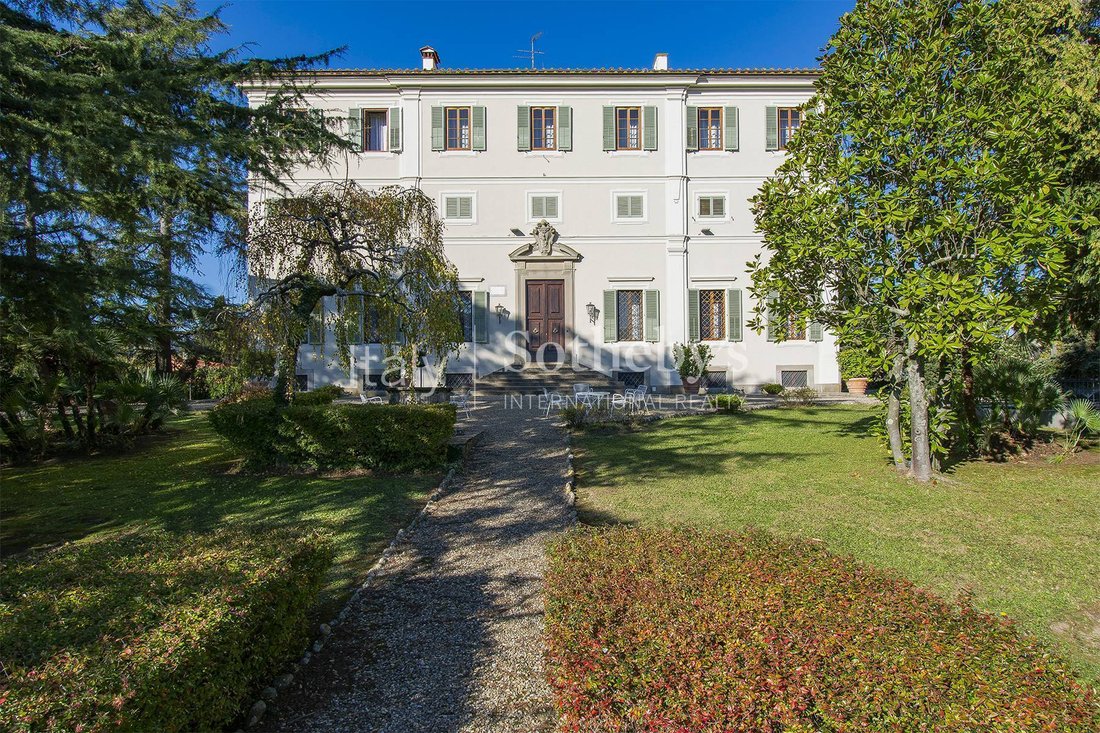
Villa il Merlo è una dimora storica la cui costruzione fu completata intorno al 1750, adagiata sui colli pistoiesi e contornata da 5 ha di bosco, file di cipressi e oliveti.
La facciata chiara, il fastigio in pietra serena e la riquadratura dei marcapiani lasciano percepire un gusto raffinato, armonioso e quasi austero. La villa, con i suoi giardini panoramici domina un bellissimo panoram
La facciata chiara, il fastigio in pietra serena e la riquadratura dei marcapiani lasciano percepire un gusto raffinato, armonioso e quasi austero. La villa, con i suoi giardini panoramici domina un bellissimo panoram
Villa il Merlo is a historic residence whose construction was completed around 1750. It lies nestled among the hills of Pistoia, surrounded by 5 hectares of woodland, rows of cypress trees, and olive groves.
The light-colored façade, the pietra serena pediment, and the framed stringcourses convey a refined, harmonious, and almost austere taste. With its panoramic gardens, the villa overlo
The light-colored façade, the pietra serena pediment, and the framed stringcourses convey a refined, harmonious, and almost austere taste. With its panoramic gardens, the villa overlo
Villa il Merlo è una dimora storica la cui costruzione fu completata intorno al 1750, adagiata sui colli pistoiesi e contornata da 5 ha di bosco, file di cipressi e oliveti.
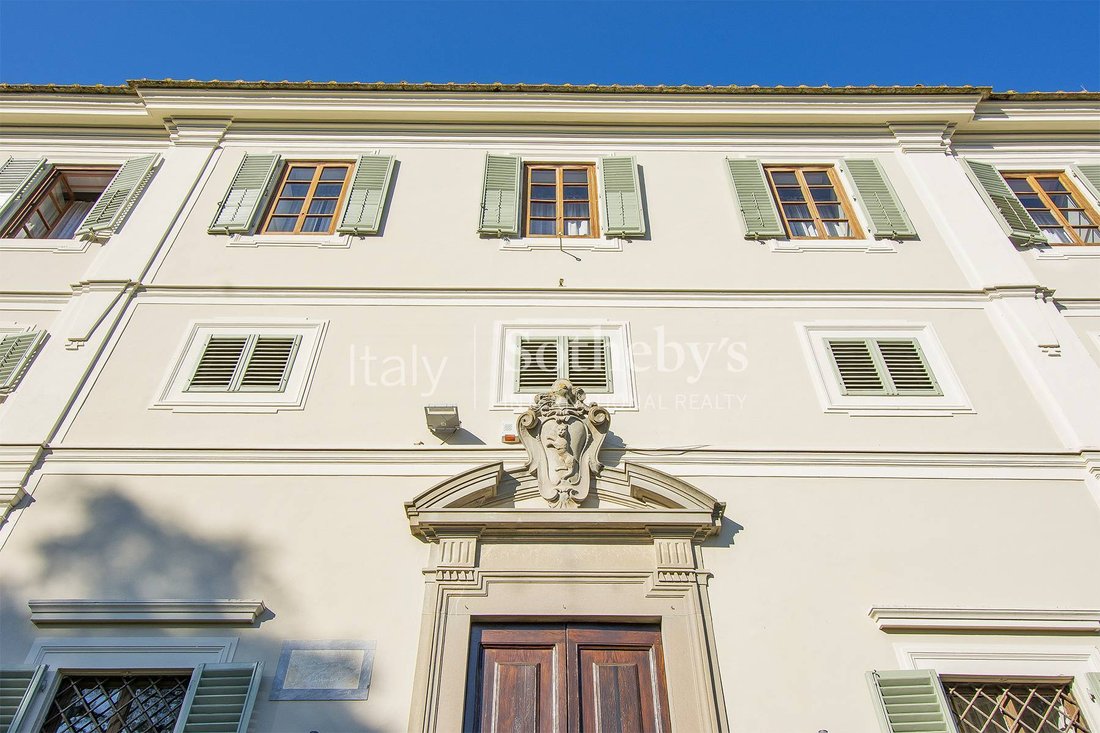
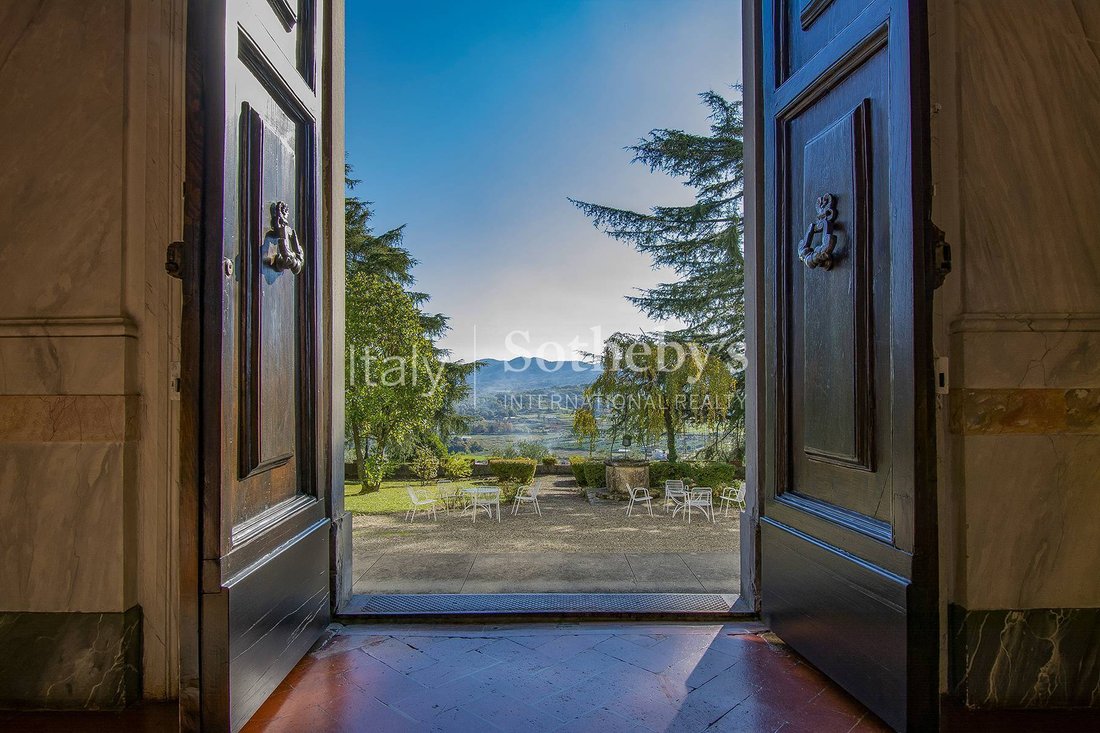
La facciata chiara, il fastigio in pietra serena e la riquadratura dei marcapiani lasciano percepire un gusto raffinato, armonioso e quasi austero. La villa, con i suoi giardini panoramici domina un bellissimo panorama che lascia vedere la cupola del Duomo di Firenze e tutta la piana che si chiude a ovest con le torri di Serravalle.
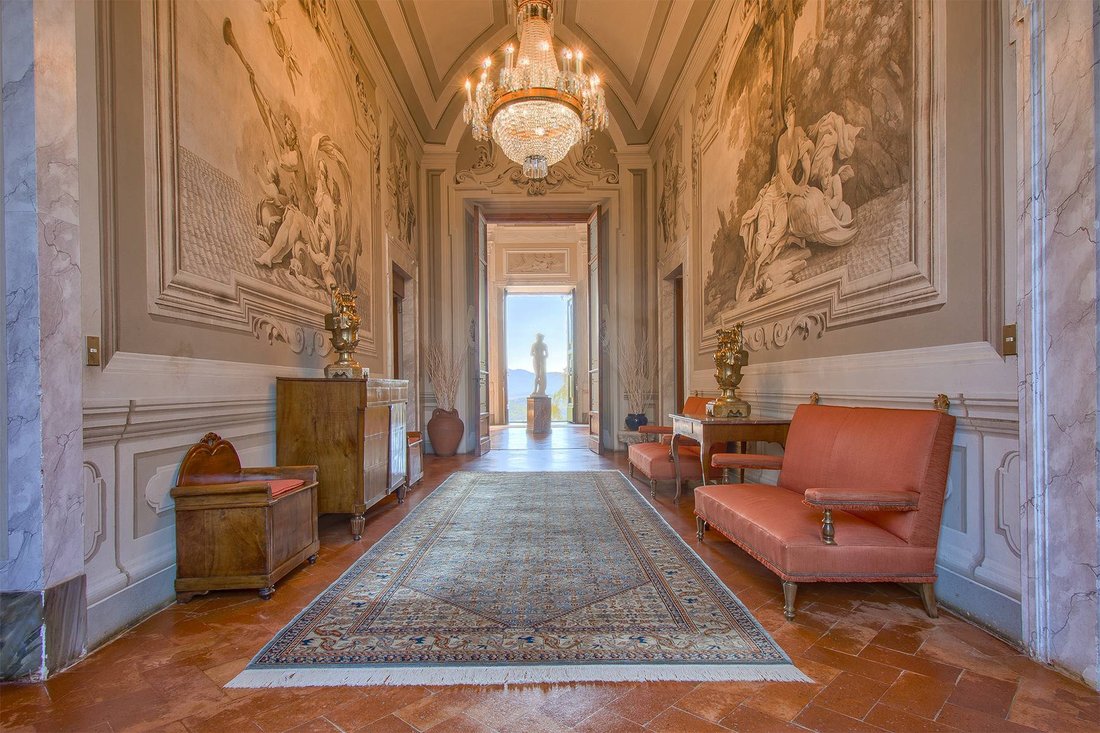
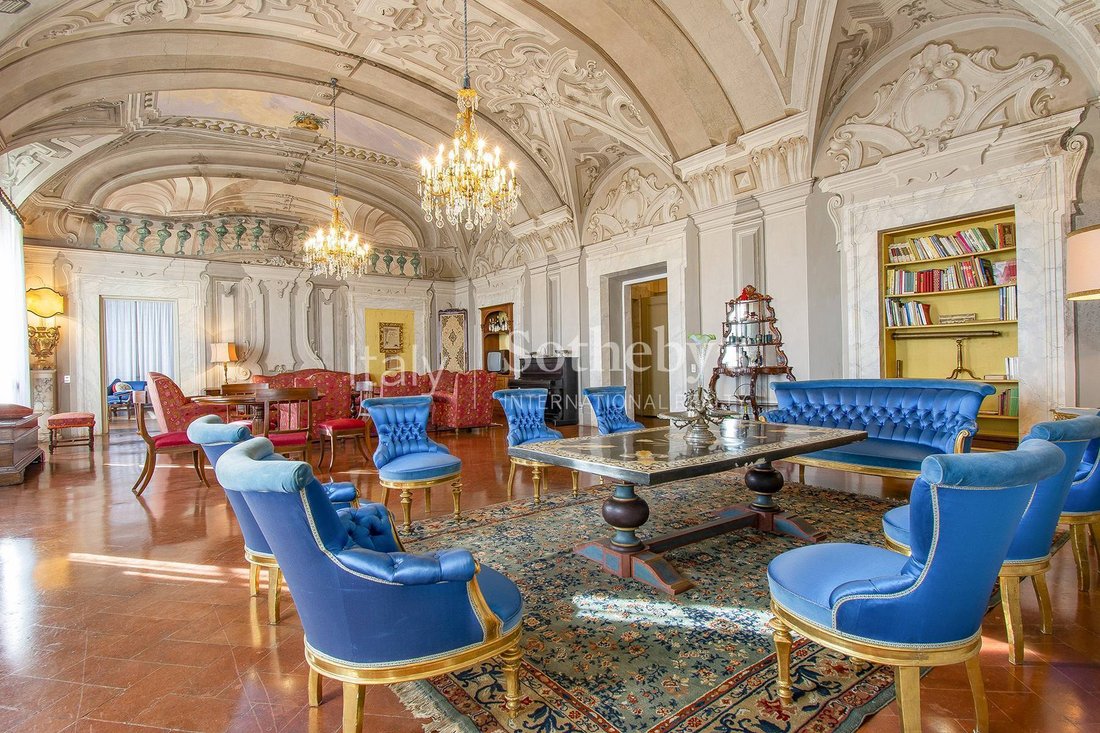
La villa ha una superficie interna di circa 1500 mq, per un insieme di 25 stanze più servizi e disimpegni. Al suo interno, è completamente affrescata con scene mitologiche e paesaggi, intervallati da decori architettonici, sempre ad affresco, che danno rilievo alle strutture. La villa si eleva su tre piani, due piani nobili e uno ammezzato, più un piano seminterrato che ospita le cucine e le cantine. I quattro piani sono collegati da un grande scalone e da un ascensore. Accanto alla villa, a circa 100 metri di distanza, si trova un grande rustico restaurato che da sempre fa da supporto all’edificio principale.
Una piccola cappella ricorda i voti di Giuseppe Ippoliti, promotore della costruzione della villa, che fu nominato vescovo di Cortona ed in seguito di Prato e Pistoia. La villa è successivamente passata alla famiglia Settimanni per eredità e poi venduta, nel secolo scorso, alla famiglia Bini. A metà degli anni ’60 del Novecento l’attuale famiglia proprietaria operò un totale restauro nel rispetto dei suoi valori architettonici e decorativi, arredandola con raffinati mobili d’epoca.
La facciata chiara, il fastigio in pietra serena e la riquadratura dei marcapiani lasciano percepire un gusto raffinato, armonioso e quasi austero. La villa, con i suoi giardini panoramici domina un bellissimo panorama che lascia vedere la cupola del Duomo di Firenze e tutta la piana che si chiude a ovest con le torri di Serravalle.
La villa ha una superficie interna di circa 1500 mq, per un insieme di 25 stanze più servizi e disimpegni. Al suo interno, è completamente affrescata con scene mitologiche e paesaggi, intervallati da decori architettonici, sempre ad affresco, che danno rilievo alle strutture. La villa si eleva su tre piani, due piani nobili e uno ammezzato, più un piano seminterrato che ospita le cucine e le cantine. I quattro piani sono collegati da un grande scalone e da un ascensore. Accanto alla villa, a circa 100 metri di distanza, si trova un grande rustico restaurato che da sempre fa da supporto all’edificio principale.
Una piccola cappella ricorda i voti di Giuseppe Ippoliti, promotore della costruzione della villa, che fu nominato vescovo di Cortona ed in seguito di Prato e Pistoia. La villa è successivamente passata alla famiglia Settimanni per eredità e poi venduta, nel secolo scorso, alla famiglia Bini. A metà degli anni ’60 del Novecento l’attuale famiglia proprietaria operò un totale restauro nel rispetto dei suoi valori architettonici e decorativi, arredandola con raffinati mobili d’epoca.
Villa il Merlo is a historic residence whose construction was completed around 1750. It lies nestled among the hills of Pistoia, surrounded by 5 hectares of woodland, rows of cypress trees, and olive groves.
The light-colored façade, the pietra serena pediment, and the framed stringcourses convey a refined, harmonious, and almost austere taste. With its panoramic gardens, the villa overlooks a stunning landscape that offers views of the dome of Florence Cathedral and the entire plain stretching westward to the towers of Serravalle Pistoiese.
The villa has an internal surface area of approximately 1,500 square meters, comprising 25 rooms plus service areas and hallways. Inside, it is entirely frescoed with mythological scenes and landscapes, interspersed with architectural decorative elements, also in fresco, which enhance the structural features. The villa rises over three levels, two principal floors and one mezzanine plus a semi-basement level housing the kitchens and cellars. The four floors are connected by a grand staircase and an elevator. Adjacent to the villa, about 100 meters away, stands a large restored farmhouse that has always served as a support building to the main residence.
A small chapel commemorates the vows of Giuseppe Ippoliti, promoter of the villa’s construction, who was appointed Bishop of Cortona and later of Prato and Pistoia. The villa subsequently passed by inheritance to the Settimanni family and was later sold, in the last century, to the Bini family. In the mid-1960s, the current owning family carried out a complete restoration, respecting its architectural and decorative values, and furnished it with refined period antiques.
The light-colored façade, the pietra serena pediment, and the framed stringcourses convey a refined, harmonious, and almost austere taste. With its panoramic gardens, the villa overlooks a stunning landscape that offers views of the dome of Florence Cathedral and the entire plain stretching westward to the towers of Serravalle Pistoiese.
The villa has an internal surface area of approximately 1,500 square meters, comprising 25 rooms plus service areas and hallways. Inside, it is entirely frescoed with mythological scenes and landscapes, interspersed with architectural decorative elements, also in fresco, which enhance the structural features. The villa rises over three levels, two principal floors and one mezzanine plus a semi-basement level housing the kitchens and cellars. The four floors are connected by a grand staircase and an elevator. Adjacent to the villa, about 100 meters away, stands a large restored farmhouse that has always served as a support building to the main residence.
A small chapel commemorates the vows of Giuseppe Ippoliti, promoter of the villa’s construction, who was appointed Bishop of Cortona and later of Prato and Pistoia. The villa subsequently passed by inheritance to the Settimanni family and was later sold, in the last century, to the Bini family. In the mid-1960s, the current owning family carried out a complete restoration, respecting its architectural and decorative values, and furnished it with refined period antiques.
-
Tipo di proprietà
Casa
-
Anno di costruzione
1700
-
Prezzo/piede²
$408
Caratteristiche
Esplora la zona
Viale Macallè, Pistoia, PT 55100, Centro, Toscana
Visualizza su Google Maps
Prezzo per sqft
Basso
Alto
Immersa nella città di Pistoia, questa location offre un accesso semplice alle meraviglie della Toscana. Godetevi uno stile di vita sofisticato con la vicinanza a cucina raffinata, attrazioni storiche e natura abbondante. La proprietà è ben collegata con gli aeroporti di Firenze e Pisa, ideale per viaggi internazionali, e invita a esplorazioni tranquille verso vigneti rinomati e vedute campestri. Pistoia incarna lo spirito sereno ma vibrante della Toscana.
Ottieni luoghi vicini
Attrazioni
Scuole
Aeroporto di Firenze
Aeroporto
47 min
Aeroporto di Pisa
Aeroporto
54 min
Zoo di Pistoia
All'aperto e natura
10 min
Cattedrale di Pistoia
Cultura e patrimonio
6 min
Scuola Internazionale di Firenze
Scuola internazionale
49 min
Liceo Scientifico Amedeo Di Savoia
Scuola pubblica
8 min

Iscritto da 7 anni
Hai chiesto informazioni su questa proprietà
L'agente La contatterà al più presto
Pubblicato da
47
Annunci
2019
Iscritto
Prenota una visita con Francesco Assennato
Scegli una data e indica se preferisci un tour virtuale o di persona con l’agente.
Data preferita
Tipo di tour

Italy Sotheby's International Realty
Via Vittorio Emanuele II, 14, 55100, Lucca, Lucca, Italy
Visualizza profilo agenzia
Lucca, a fortified town rising amidst vineyards and olive trees in the hills of Tuscany, is one of the main art cit
Lucca, a fortified town rising amidst vineyards and olive trees in the hills of Tuscany, is one of the main art cities in Italy. The most important European textile center since the Middle Ages, it keeps track of a rich history in the elegant and majestic villas with magnificent parks outside the walls, that once were the residences of the wealthy families active in the silk trade. What amazes most the visitors, however, are the Renaissance walls of the XV century surrounding the historic core of the city. The works promoted in the XIX century by Elisa Bonaparte Baciocchi, in honor of her brother Napoleon, led to the current structure of the central square Piazza Napoleone. The city also boasts many medieval churches of great architectural impact which make it gain the nickname of “the City of 100 Churches”. Lucca is one of the prides of Tuscany for its beauty and enchanting atmosphere and, thanks to this, many foreign visitors, after visiting the city and admiring its culture, choose it as a place to establish their second residence.
Ultimo aggiornamento
Febbraio 26
Prima pubblicazione
Dicembre 15, 2021
Link annuncio
Riferimento annuncio
37G5B8
Proprietà simili nelle vicinanze
Nuovi annunci a Centro



Esplora più immobili in vendita
tipi di proprietà Centro, Pistoia, Toscana
Centro, Pistoia, Toscana ricerche popolari
- Proprietà immobiliari Vista panoramica / Scenica a Centro, Pistoia, Toscana
- Proprietà immobiliari con Terrazza a Centro, Pistoia, Toscana
- Proprietà immobiliari con Sala giochi a Centro, Pistoia, Toscana
- Proprietà immobiliari con Ufficio a Centro, Pistoia, Toscana
- Proprietà immobiliari con Ascensore a Centro, Pistoia, Toscana
- Proprietà immobiliari Vista sulle montagne a Centro, Pistoia, Toscana
- Proprietà immobiliari con Giardino a Centro, Pistoia, Toscana
- Proprietà immobiliari Privacy a Centro, Pistoia, Toscana
- Proprietà immobiliari Collina a Centro, Pistoia, Toscana
- Proprietà immobiliari Investimento immobiliare a Centro, Pistoia, Toscana
- Proprietà immobiliari Moderno a Centro, Pistoia, Toscana
- Proprietà immobiliari con Libreria a Centro, Pistoia, Toscana
- Proprietà immobiliari con Aria condizionata a Centro, Pistoia, Toscana
- Proprietà immobiliari con Cantina a Centro, Pistoia, Toscana
- Proprietà immobiliari con Camino a Centro, Pistoia, Toscana
- Proprietà immobiliari con Piscina a Centro, Pistoia, Toscana
- Proprietà immobiliari con Campo da tennis a Centro, Pistoia, Toscana
- Proprietà immobiliari con Vigneto / Azienda vinicola a Centro, Pistoia, Toscana
- Proprietà immobiliari Residenza a Centro, Pistoia, Toscana
- Proprietà immobiliari con Cucina aperta a Centro, Pistoia, Toscana
- Proprietà immobiliari Rinnovato a Centro, Pistoia, Toscana
Guide e storie correlate
La fiducia dei migliori broker del mondo
Gli agenti dietro le proprietà più straordinarie del mondo pubblicano su JamesEdition.
- Annunci di Sotheby's, Christie's, BARNES ed Engel & Völkers
- Ogni annuncio è verificato prima della pubblicazione
- Si metta in contatto diretto con agenti verificati
Continuando, accetta i nostri Termini e la nostra Informativa sulla privacy.