$87,151,811
Havilland Hall, Le Vauquiedor, Sant'andrea
- 6 Camere
- 7 Bagni
- 15,729 Sqft
- 80.0 Ac lot
- Aggiornato: Oggi
Informazioni sulla proprietà
La descrizione è stata tradotta automaticamente.
La descrizione viene visualizzata nella lingua originale.
HISTORY
Set within the secluded Vauquiedor valley, Havilland Hall is a house of exceptional provenance, its history entwined with some of Guernsey’s most prominent families and figures. The Hall was designed and built in 1829-30 by Lieutenant-Colonel Thomas Fiott de Havilland, a military engineer and architect. He subsequently played an influential role in island life, serving in the States, b
Set within the secluded Vauquiedor valley, Havilland Hall is a house of exceptional provenance, its history entwined with some of Guernsey’s most prominent families and figures. The Hall was designed and built in 1829-30 by Lieutenant-Colonel Thomas Fiott de Havilland, a military engineer and architect. He subsequently played an influential role in island life, serving in the States, b
HISTORY
Set within the secluded Vauquiedor valley, Havilland Hall is a house of exceptional provenance, its history entwined with some of Guernsey’s most prominent families and figures. The Hall was designed and built in 1829-30 by Lieutenant-Colonel Thomas Fiott de Havilland, a military engineer and architect. He subsequently played an influential role in island life, serving in the States, becoming a Jurat of the Royal Court and presiding over an important enquiry into the future of Elizabeth College. The wider de Havilland dynasty would later achieve international renown through two branches of the family. Sir Geoffrey de Havilland became one of Britain’s foremost aviation pioneers, while his cousins, Olivia de Havilland and Joan Fontaine became celebrated Hollywood actresses and Academy Award winners.
From 1842, Havilland Hall served as the official residence of Guernsey’s Lieutenant-Governors, most notably Major-General Sir William Francis Patrick Napier. It later became home to William Keiller, manager of the celebrated Guernsey operation of the Dundee marmalade makers, before returning to John Thomas Ross de Havilland, grandson of its creator. In 1922, the estate was acquired by Count Lothair Blücher von Wahlstatt, descendant of Field Marshal Blücher, whose Prussian forces provided support to the Duke of Wellington at Waterloo. Requisitioned during the German Occupation and restored to the family in 1945, Havilland Hall subsequently passed to custodians who undertook substantial restoration and modernisation, preserving its architectural dignity and enduring status as one of Guernsey’s most distinguished country houses.
DESCRIPTION
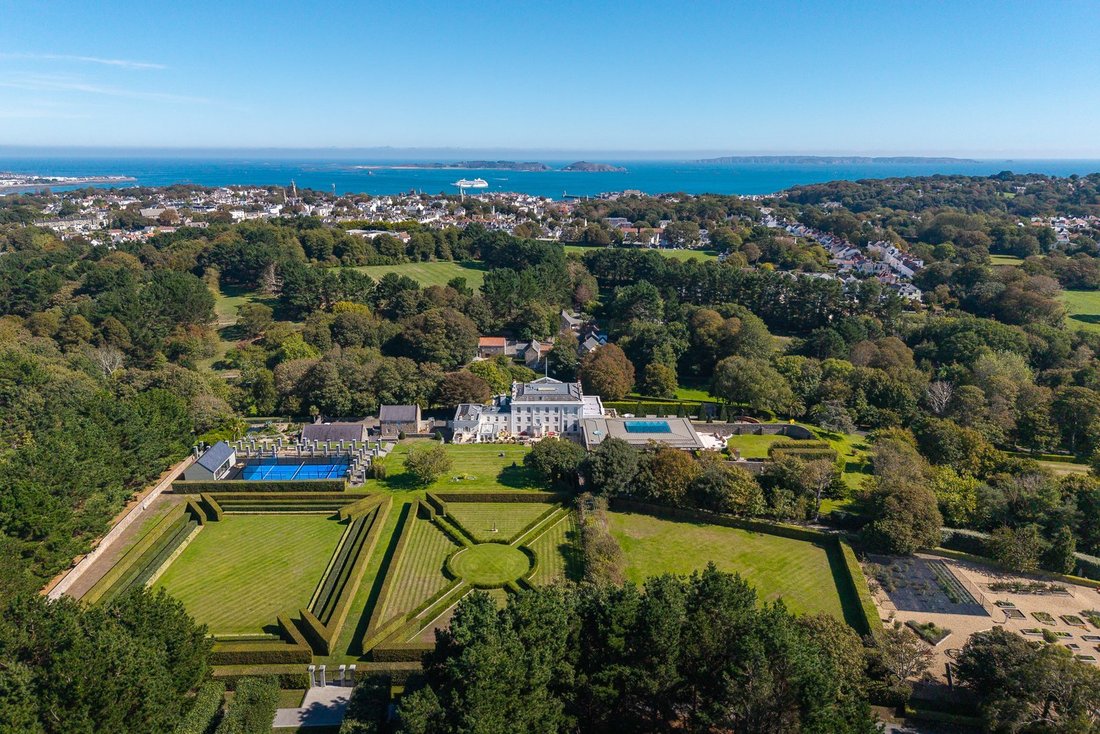
Havilland Hall is reportedly the largest, privately owned estate on the island of Guernsey, extending to approximately 80 acres, comprising extensive formal gardens, parkland, undulating land and a picturesque valley. The property lies just outside the historic capital of the island, St Peter Port.
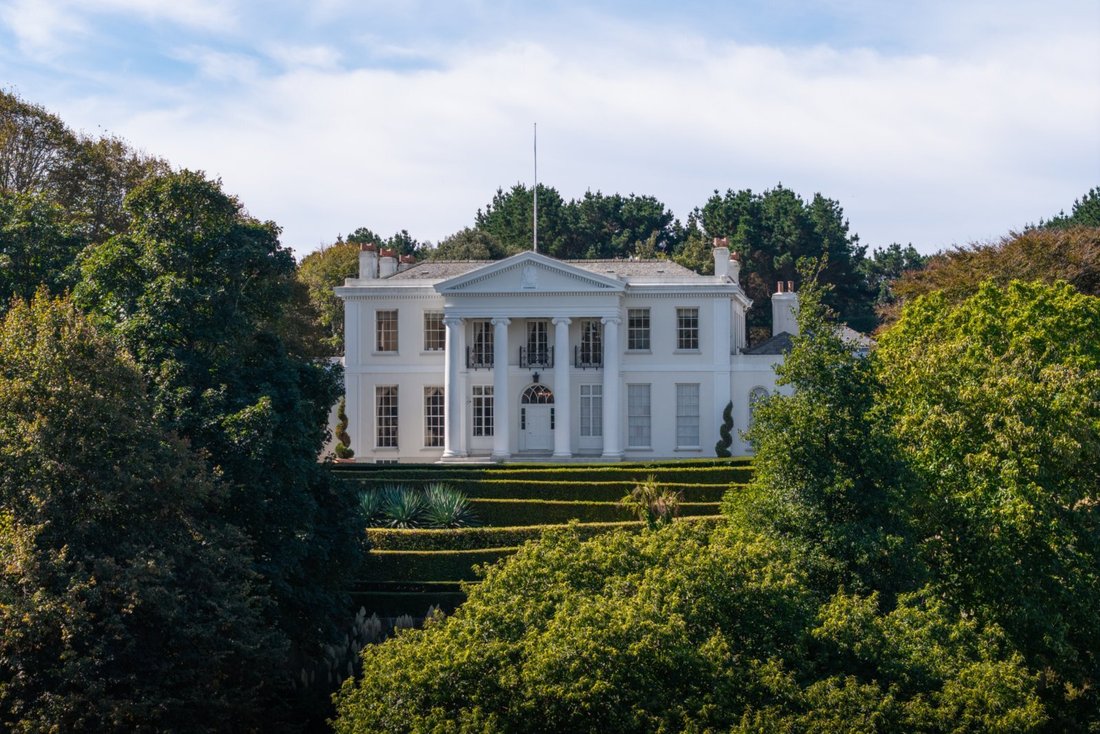
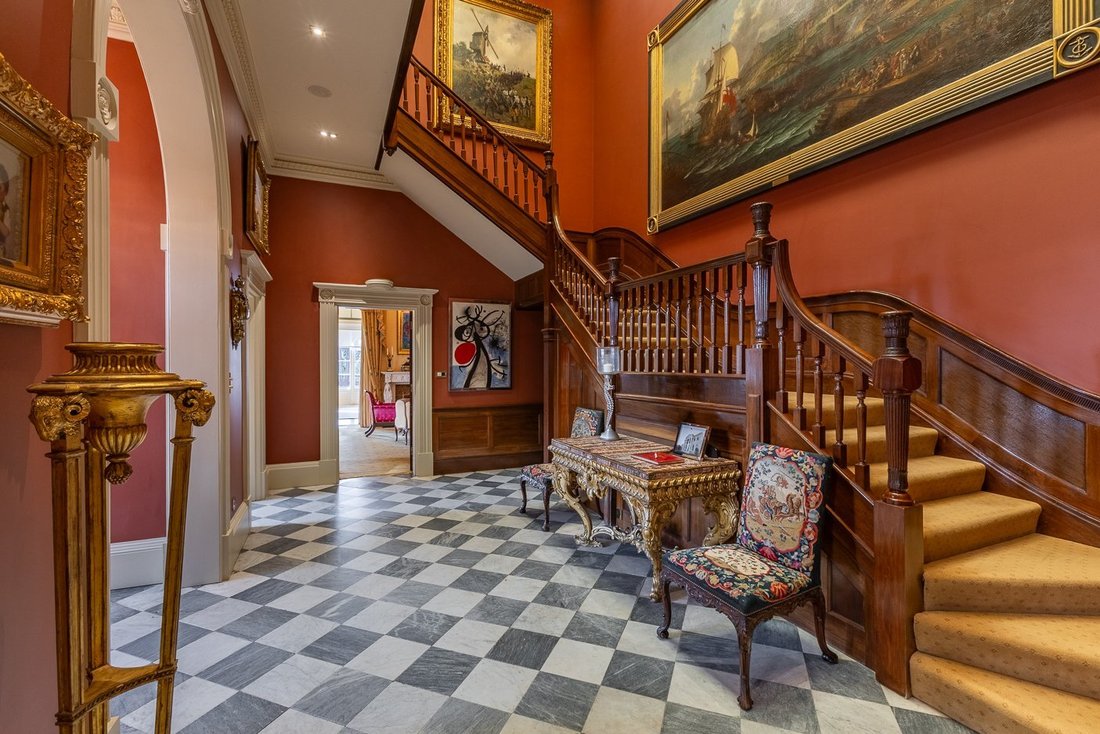
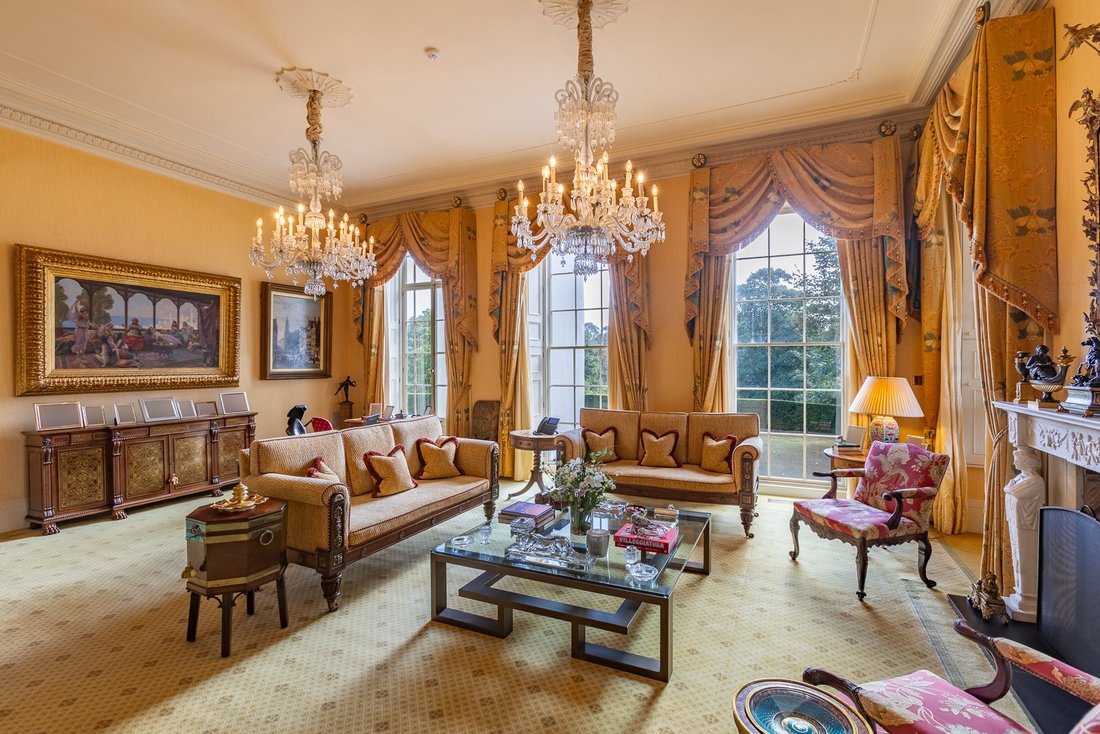
At the heart of the estate lies the splendid Regency villa, typifying neo-classical design with its four Ionic pillars, loft pediment, emblature and ornate ironwork that decorates the first-floor balconies across the 3 bay central section of the front façade. The Hall is principally set over 4 floors with impressive formal reception rooms, 6 bedrooms and a substantial basement with a series of functional rooms and stores. The magnificent reception hall features a dramatic, cantilevered staircase and provides a fitting first impression for a house that will have received a myriad of important guests over centuries. Throughout the property, the principal rooms are of generous proportion with considerable ceiling height and possess numerous fine features, such as beautiful historic fireplaces, intricate plasterwork and floor to ceiling fenestration. Accessed from the orangery, is a south-facing stone terrace with views down the formal, ornamental garden. In 2006 the current owners commissioned the addition of a considerable ground floor extension, which houses a leisure suite of commercial scale, comprising 8m by 15m indoor swimming pool, sauna, steam room, gymnasium and changing facilities. This underwent refurbishments in 2013 and 2014. Complimenting the interior leisure facilities is a padel court situated within the formal gardens.
THE WIDER ESTATE
Attached to the house but accessed externally, is an estate office. There is a parking area beyond and a 4 bay open fronted garage. Havilland Cottage, a detached, 2 bedroom property close to the Hall, provides comfortable ancillary accommodation for guests.
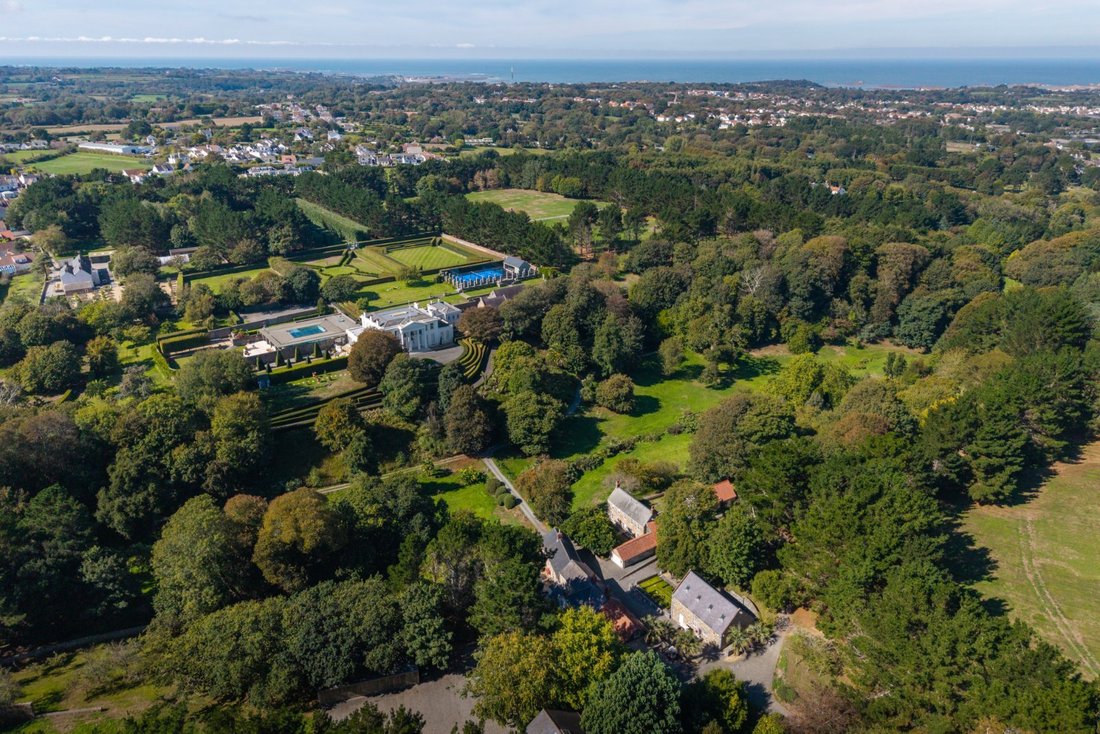
Set away from the main house, on the other side of the valley that runs through the estate, and with the benefit of two separate entrances from Rue a l’Or and Le Vauquiedor, lies a complex of traditional, converted farm buildings. Connected by granite cobbled pathways, this charming enclave comprises extensive guest accommodation across 4 additional buildings, a 2 storey office, a wine cellar, a purpose-built games room and a secondary 2 storey office, providing a comprehensive range of leisure and business spaces.
On the south side of the estate is a pair of semi-detached staff cottages, adjacent to the estate’s vegetable garden.
Beyond the formal gardens of the estate, the land undulates, encompassing areas of pasture, woodland and delightful valleys affording interesting topography, incredible privacy and wonderful views.
Guernsey is a self-governing British Crown Dependency extending to approximately 24 square miles, with around 30 miles of coastline. The second largest of the Channel Islands, it lies approximately 30 miles from the Normandy coast and 70 miles from the south coast of England. Its capital and principal port is the picturesque harbour town of St Peter Port.
Regular flights connect the island to the UK in approximately 60 minutes, while seasonal routes also operate to destinations including the Republic of Ireland, Switzerland and the Netherlands. Guernsey Airport welcomes both general and business aviation.
The island is internationally recognised as a leading offshore financial centre, complementing its long-established tourism and agricultural industries. Guernsey’s distinctive position, both geographically and economically, attracts a diverse and cosmopolitan resident population from around the world.
-
Tipo di proprietà
Casa
-
Prezzo/piede²
$5,540
Caratteristiche
- Giardino
- Terrazza
- Camino
- Garage
- Bagno turco
- Piscina coperta
- Cantina
- Sauna
- Sala giochi
Caratteristiche
Lot
- Vista panoramica / Scenica
- Privacy
Interni
- Soffitto alto
- Ufficio
- Camino
- Sauna
- Sala giochi
- Cantina
- Seminterrato
- Piscina coperta
- Bagno turco
- Centro Fitness / Palestra
Outdoor
Esplora la zona
Havilland Hall, Le Vauquiedor, St Andrew, Guernsey, Guernsey
Visualizza su Google Maps
Prezzo per sqft
Basso
Alto
Iscritto da 1 mese
Hai chiesto informazioni su questa proprietà
L'agente La contatterà al più presto
Pubblicato da
1
Annunci
2026
Iscritto
Prenota una visita con Nick Paluch
Scegli una data e indica se preferisci un tour virtuale o di persona con l’agente.
Data preferita
Tipo di tour

Savills - Country Department
33 Margaret Street, London, W1G 0JD, United Kingdom
Visualizza profilo agenzia
Ultimo aggiornamento
Oggi
Prima pubblicazione
Novembre 6
Riferimento annuncio
GUE240284
Proprietà simili nelle vicinanze
Nuovi annunci a Guernsey


Esplora più immobili in vendita
tipi di proprietà Guernsey, Guernsey
Guernsey, Guernsey ricerche popolari
- Proprietà immobiliari con Giardino a Guernsey, Guernsey
- Proprietà immobiliari con Camino a Guernsey, Guernsey
- Proprietà immobiliari con Idromassaggio a Guernsey, Guernsey
- Proprietà immobiliari Vista mare a Guernsey, Guernsey
- Proprietà immobiliari Costiera a Guernsey, Guernsey
- Proprietà immobiliari Vista panoramica / Scenica a Guernsey, Guernsey
- Proprietà immobiliari Lungomare a Guernsey, Guernsey
- Proprietà immobiliari Fronte mare a Guernsey, Guernsey
- Proprietà immobiliari Rinnovato a Guernsey, Guernsey
- Proprietà immobiliari Moderno a Guernsey, Guernsey
- Proprietà immobiliari con Sala giochi a Guernsey, Guernsey
- Proprietà immobiliari Residenza a Guernsey, Guernsey
- Proprietà immobiliari Vista sulle montagne a Guernsey, Guernsey
- Proprietà immobiliari con Aria condizionata a Guernsey, Guernsey
- Proprietà immobiliari con Sauna a Guernsey, Guernsey
- Proprietà immobiliari Lungomare a Guernsey, Guernsey
- Proprietà immobiliari Fronte oceano a Guernsey, Guernsey
- Proprietà immobiliari Equestre a Guernsey, Guernsey
- Proprietà immobiliari Collina a Guernsey, Guernsey
- Proprietà immobiliari con Cucina aperta a Guernsey, Guernsey
Guide e storie correlate
La fiducia dei migliori broker del mondo
Gli agenti dietro le proprietà più straordinarie del mondo pubblicano su JamesEdition.
- Annunci di Sotheby's, Christie's, BARNES ed Engel & Völkers
- Ogni annuncio è verificato prima della pubblicazione
- Si metta in contatto diretto con agenti verificati
Continuando, accetta i nostri Termini e la nostra Informativa sulla privacy.