



$5,455,907
Prezzo aumentato di $861,459 il Sep 18, 2026
Castello Cardenale Nella Ría De Corcubión.
- 6 Camere
- 3 Bagni
- 3,908 Sqft
- 44
Informazioni sulla proprietà
La descrizione è stata tradotta automaticamente.
La descrizione viene visualizzata nella lingua originale.
Questo castello costiero unico del XVIII secolo, chiamato del Cardenal, fu costruito in onore dello spagnolo Infante D. Luis de Borbón y Farnesio, fratello del re Carlos III e sesto figlio del re Felipe V di Spagna e di Isabel de Farnesio, duchessa di Parma.
Fu nominato cardinale arcivescovo di Toledo nel 1735, Primate di Spagna, arcivescovo di Siviglia nel 1741, e quando lasciò lo stato
Fu nominato cardinale arcivescovo di Toledo nel 1735, Primate di Spagna, arcivescovo di Siviglia nel 1741, e quando lasciò lo stato
This unique 18th-century coastal castle, called del Cardenal, was built in honor of the Spanish Infante D. Luis de Borbón y Farnesio, brother of King Carlos III and sixth son of King Felipe V of Spain and Isabel de Farnesio, Duchess of Parma.
He was appointed Cardinal Archbishop of Toledo in 1735, Primate of Spain, Archbishop of Seville in 1741, and when he left the ecclesiastical state,
He was appointed Cardinal Archbishop of Toledo in 1735, Primate of Spain, Archbishop of Seville in 1741, and when he left the ecclesiastical state,
Questo castello costiero unico del XVIII secolo, chiamato del Cardenal, fu costruito in onore dello spagnolo Infante D. Luis de Borbón y Farnesio, fratello del re Carlos III e sesto figlio del re Felipe V di Spagna e di Isabel de Farnesio, duchessa di Parma.
Fu nominato cardinale arcivescovo di Toledo nel 1735, Primate di Spagna, arcivescovo di Siviglia nel 1741, e quando lasciò lo stato ecclesiastico, fu nominato conte di Chinchón. Fu un importante mecenate che sostenne pittori come Francisco Goya e Luis Paret.
Questo forte, insieme al castello del principe in CEE, fu costruito tra il 1755 e il 1757 per difendere il porto nella Ria de Corcubión.
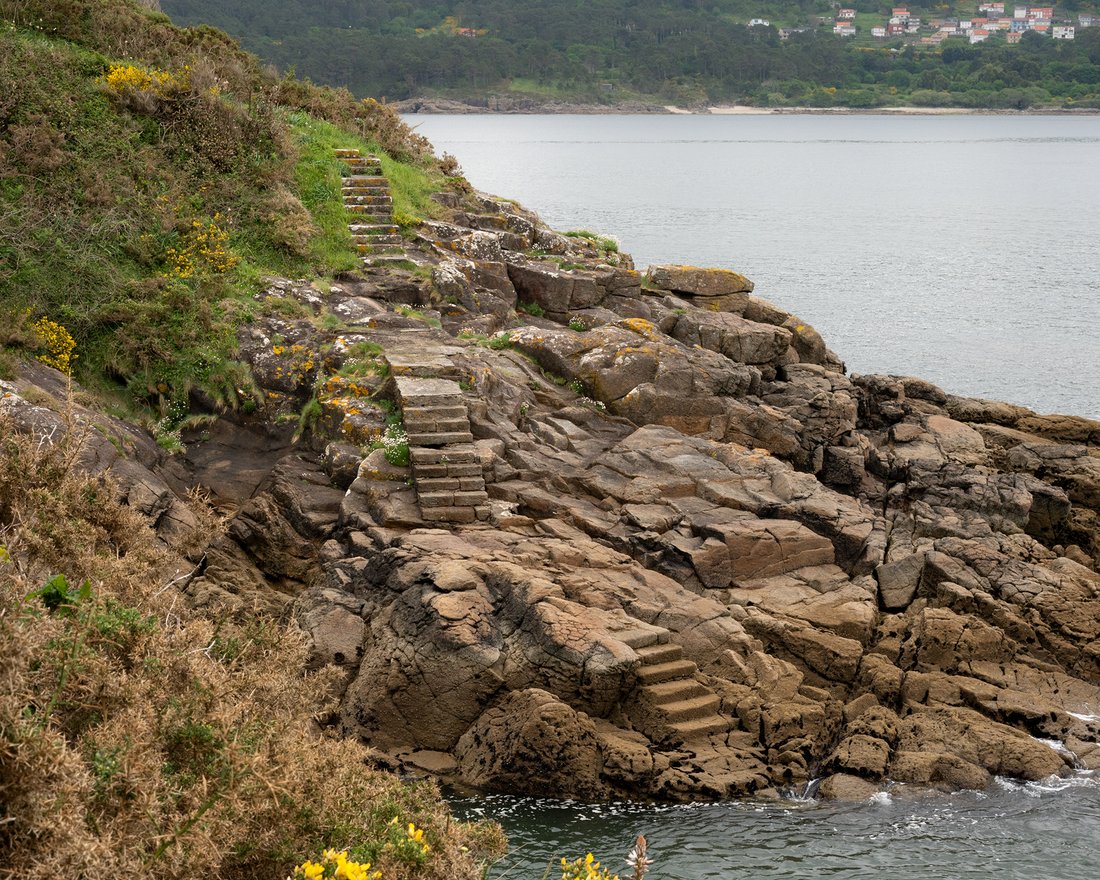
L’edificio è una penisola fortificata a forma di stella costruita in pietra proveniente da cave locali, che fu un peso per gli abitanti del luogo che dovevano usare carri e buoi per trasportare la pietra al castello.
Con queste caratteristiche costruttive, l’intenzione era quella che il pezzo si mescolasse con l’ambiente circostante e sorprendesse gli attaccanti per proteggere le spedizioni dirette verso il nord Europa o il Mediterraneo, e per prevenire il saccheggio delle città interne.
Ha 17 aperture per cannoni e occupa una superficie di circa 2.800 m2. All’interno dell’area, attorno al cortile, c’è un edificio a forma di U che ora funge da residenza ma in origine ospitava truppe, magazzini, un deposito di polvere da sparo e altre strutture del castello. Aveva una capacità per 96 uomini.
L’interno è su un unico piano con 3 corpi in pietra, tra cui una cucina, alloggi per ufficiali, deposito di armi e polvere da sparo, tutto con soffitti a volta a botte e pareti imbiancate. C’era anche un orto e un pozzo d’acqua dolce per il sostentamento durante un assedio.
La fortezza è in eccellente stato di conservazione e rispetta fedelmente la sua struttura originale.
Fu nominato cardinale arcivescovo di Toledo nel 1735, Primate di Spagna, arcivescovo di Siviglia nel 1741, e quando lasciò lo stato ecclesiastico, fu nominato conte di Chinchón. Fu un importante mecenate che sostenne pittori come Francisco Goya e Luis Paret.
Questo forte, insieme al castello del principe in CEE, fu costruito tra il 1755 e il 1757 per difendere il porto nella Ria de Corcubión.
L’edificio è una penisola fortificata a forma di stella costruita in pietra proveniente da cave locali, che fu un peso per gli abitanti del luogo che dovevano usare carri e buoi per trasportare la pietra al castello.
Con queste caratteristiche costruttive, l’intenzione era quella che il pezzo si mescolasse con l’ambiente circostante e sorprendesse gli attaccanti per proteggere le spedizioni dirette verso il nord Europa o il Mediterraneo, e per prevenire il saccheggio delle città interne.
Ha 17 aperture per cannoni e occupa una superficie di circa 2.800 m2. All’interno dell’area, attorno al cortile, c’è un edificio a forma di U che ora funge da residenza ma in origine ospitava truppe, magazzini, un deposito di polvere da sparo e altre strutture del castello. Aveva una capacità per 96 uomini.
L’interno è su un unico piano con 3 corpi in pietra, tra cui una cucina, alloggi per ufficiali, deposito di armi e polvere da sparo, tutto con soffitti a volta a botte e pareti imbiancate. C’era anche un orto e un pozzo d’acqua dolce per il sostentamento durante un assedio.
La fortezza è in eccellente stato di conservazione e rispetta fedelmente la sua struttura originale.
This unique 18th-century coastal castle, called del Cardenal, was built in honor of the Spanish Infante D. Luis de Borbón y Farnesio, brother of King Carlos III and sixth son of King Felipe V of Spain and Isabel de Farnesio, Duchess of Parma.
He was appointed Cardinal Archbishop of Toledo in 1735, Primate of Spain, Archbishop of Seville in 1741, and when he left the ecclesiastical state, he was appointed Count of Chinchón. He was an important patron who supported painters like Francisco Goya and Luis Paret.
This fort, along with the Prince’s castle in CEE, was built between 1755-1757 to defend the port in the Ria de Corcubión.
The building is a fortified star-shaped peninsula built in stone from local quarries, which was a burden for the villagers who had to use carts and oxen to transport the stone to the castle.
With these construction features, the intention was for the piece to blend in with the surroundings and surprise attackers to protect expeditions heading to northern Europe or the Mediterranean, and to prevent looting of inland cities.
It has 17 gun ports and occupies an area of approximately 2,800 m2. Inside the enclosure, surrounding the courtyard, there is a U-shaped building that now serves as a residence but originally housed troops, warehouses, a gunpowder magazine, and other castle facilities. It had capacity for 96 men.
The interior is one floor with 3 stone bodies, including a kitchen, officers’ quarters, weapon and gunpowder storage, all with barrel-vaulted ceilings and whitewashed walls. It also had vegetable gardens and a freshwater well for sustenance during a siege.
The fortress is in excellent conservation and faithfully respects its original structure.
He was appointed Cardinal Archbishop of Toledo in 1735, Primate of Spain, Archbishop of Seville in 1741, and when he left the ecclesiastical state, he was appointed Count of Chinchón. He was an important patron who supported painters like Francisco Goya and Luis Paret.
This fort, along with the Prince’s castle in CEE, was built between 1755-1757 to defend the port in the Ria de Corcubión.
The building is a fortified star-shaped peninsula built in stone from local quarries, which was a burden for the villagers who had to use carts and oxen to transport the stone to the castle.
With these construction features, the intention was for the piece to blend in with the surroundings and surprise attackers to protect expeditions heading to northern Europe or the Mediterranean, and to prevent looting of inland cities.
It has 17 gun ports and occupies an area of approximately 2,800 m2. Inside the enclosure, surrounding the courtyard, there is a U-shaped building that now serves as a residence but originally housed troops, warehouses, a gunpowder magazine, and other castle facilities. It had capacity for 96 men.
The interior is one floor with 3 stone bodies, including a kitchen, officers’ quarters, weapon and gunpowder storage, all with barrel-vaulted ceilings and whitewashed walls. It also had vegetable gardens and a freshwater well for sustenance during a siege.
The fortress is in excellent conservation and faithfully respects its original structure.
-
Tipo di proprietà
Altro
-
Anno di costruzione
1800
-
Prezzo/piede²
$1,396
Caratteristiche
- Giardino
- Terrazza
- Vista sull'acqua
- Vista sulle montagne
- Cantina
- Costiera
- Ufficio
- Soffitto alto
Esplora la zona
Prado Do Castillo, Corcubion, GA 15130, Corcubión, Galizia, Spagna
Visualizza su Google Maps
Prezzo per sqft
Basso
Alto
Iscritto da 2 anni
Hai chiesto informazioni su questa proprietà
L'agente La contatterà al più presto
Pubblicato da
10
Annunci
2025
Iscritto
Prenota una visita con Fernanda Viñas Cue
Scegli una data e indica se preferisci un tour virtuale o di persona con l’agente.
Data preferita
Tipo di tour

Spain Sotheby's International Realty
Calle Lagasca 28, 28001, Madrid, Madrid, Spain
Visualizza profilo agenzia
Offering high-end properties in the city, villas and equestrian farms on the
outskirts of the city. Madrid, the
outskirts of the city. Madrid, the
Offering high-end properties in the city, villas and equestrian farms on the
outskirts of the city. Madrid, the capital of Spain, is located in the centre of
the Iberian Peninsula. It is a very active city, with a lively nightlife and
scores of daytime allures. It is home to famous museums such as El Prado,
Thyssen-Bornemisza and Reina Sofia, great historic architecture, shopping
boulevards and excellent cuisine. It has a great diversity of districts that
merit visiting.
outskirts of the city. Madrid, the capital of Spain, is located in the centre of
the Iberian Peninsula. It is a very active city, with a lively nightlife and
scores of daytime allures. It is home to famous museums such as El Prado,
Thyssen-Bornemisza and Reina Sofia, great historic architecture, shopping
boulevards and excellent cuisine. It has a great diversity of districts that
merit visiting.
Ultimo aggiornamento
Settembre 18
Prima pubblicazione
May 10, 2025
Link annuncio
Riferimento annuncio
8TP6YC
La fiducia dei migliori broker del mondo
Gli agenti dietro le proprietà più straordinarie del mondo pubblicano su JamesEdition.
- Annunci di Sotheby's, Christie's, BARNES ed Engel & Völkers
- Ogni annuncio è verificato prima della pubblicazione
- Si metta in contatto diretto con agenti verificati
Continuando, accetta i nostri Termini e la nostra Informativa sulla privacy.