$3,101,267
Prezzo Ridotto 120 Km Da Parigi Castello Da Favola Costruito Dal XV Al XX Secolo
- 18 Camere
- 4 Bagni
- 26,910 Sqft
- 101.32 Ac lot
- Aggiornato: Aprile 22
- 220
Informazioni sulla proprietà
La descrizione è stata tradotta automaticamente.
La descrizione viene visualizzata nella lingua originale.
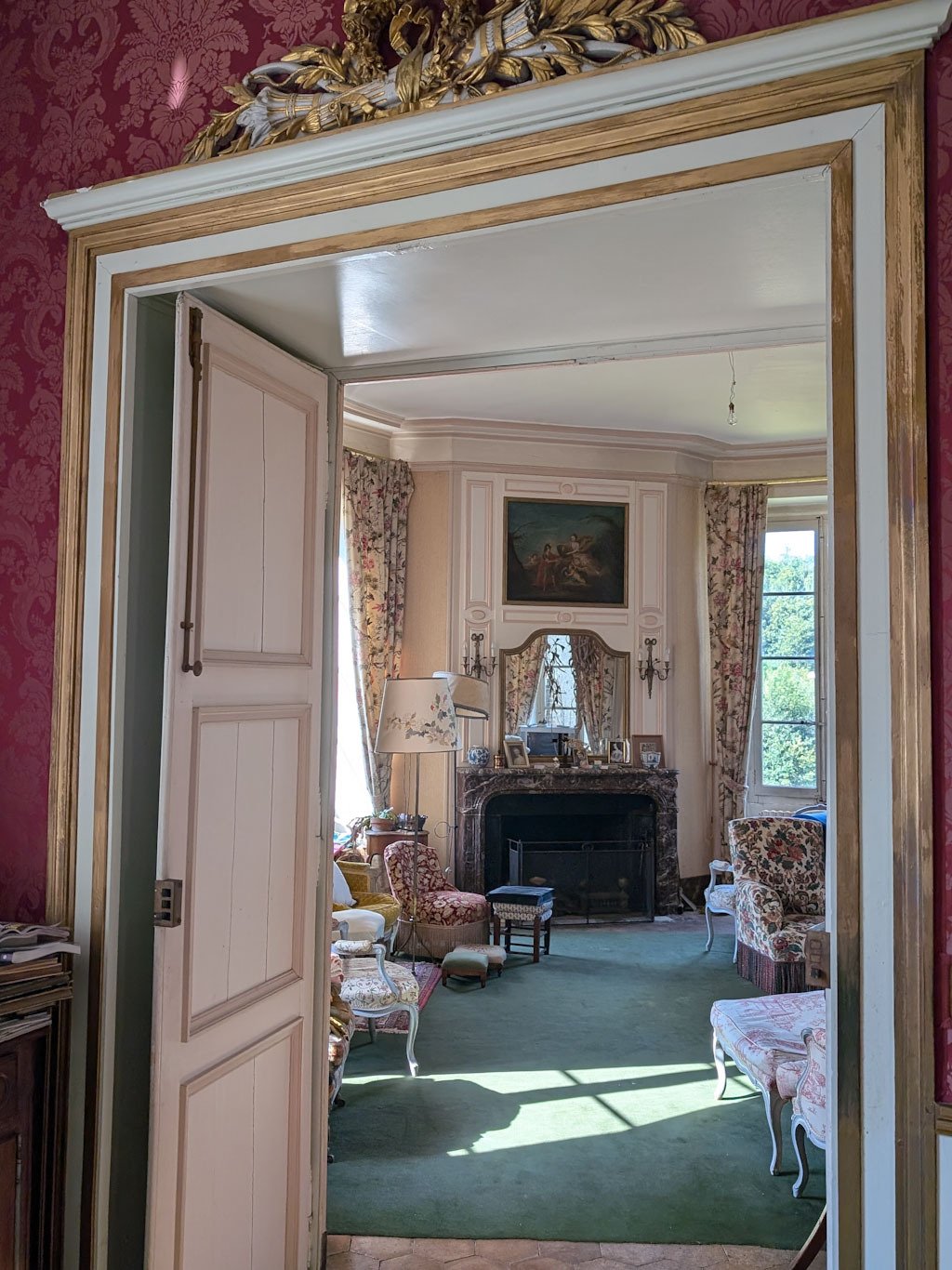
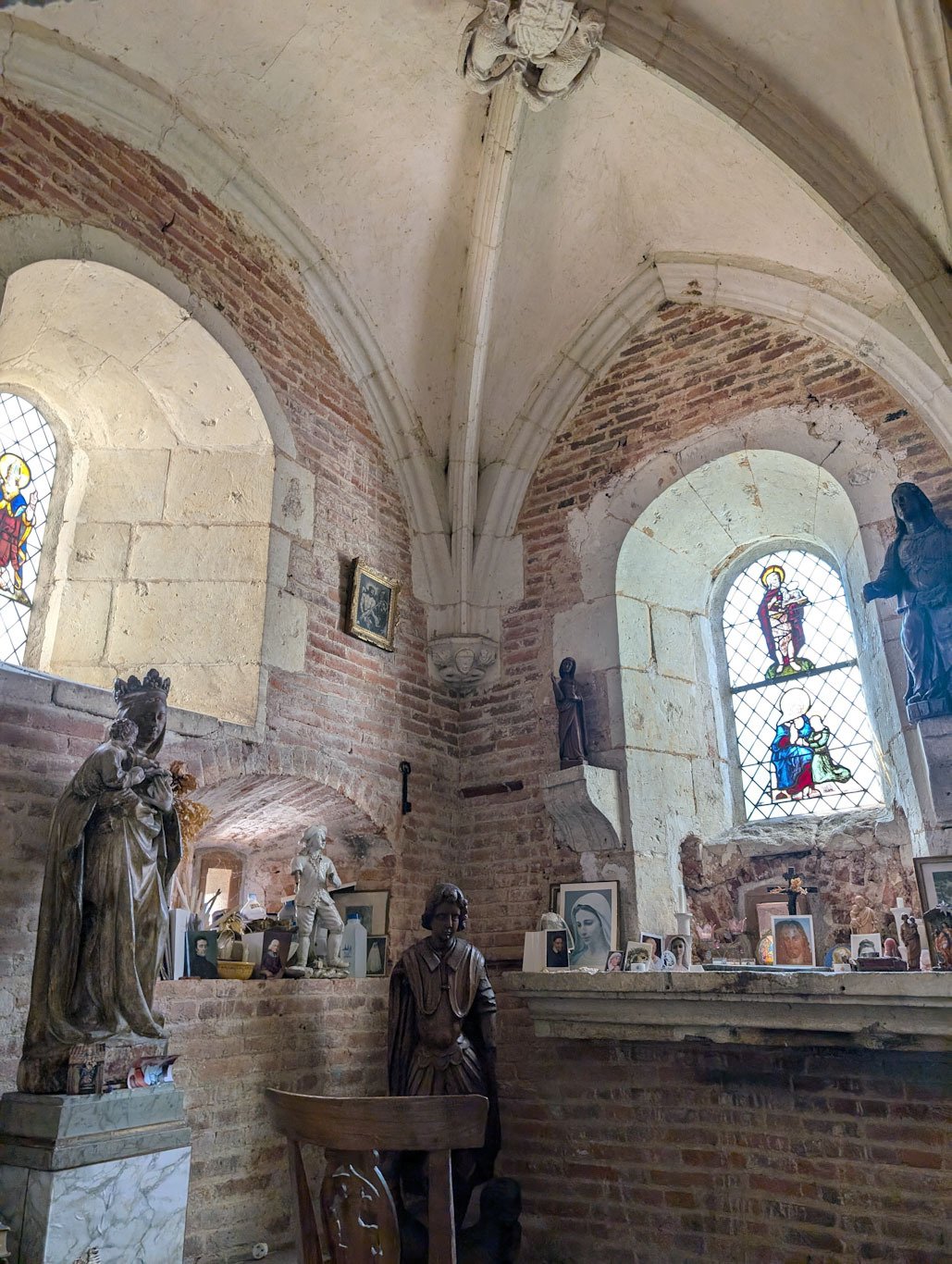
120 km da Parigi - Perche - castello costruito dal XV al XX secolo - fascino e fascino eccezionali - 5 edifici principali - 18 camere - 2500 m2 costruiti - a sud di Perche - 8 km dallo svincolo autostradale A10 - 41 ettari - buone condizioni dell’involucro, da ristrutturare completamente internamente. Elencato come monumento storico nella sua interezza.
Ai margini di un piccolo villaggio di Pe
Ai margini di un piccolo villaggio di Pe
PRICE DROP - 120km from Paris - Perche - castle built from the 15th to the 20th century - exceptional charm and allure - 5 main buildings - 18 rooms - 2500m2 built - south of Perche - 8km from the A10 motorway junction - 20 hectares - good condition of the shell, to be completely restored internally. Listed as a historic monument in its entirety.
On the edge of a small village in Perche, 120km
On the edge of a small village in Perche, 120km
120 km da Parigi - Perche - castello costruito dal XV al XX secolo - fascino e fascino eccezionali - 5 edifici principali - 18 camere - 2500 m2 costruiti - a sud di Perche - 8 km dallo svincolo autostradale A10 - 41 ettari - buone condizioni dell’involucro, da ristrutturare completamente internamente. Elencato come monumento storico nella sua interezza.
Ai margini di un piccolo villaggio di Perche, a 120 km da Parigi, a 8 km dall’autostrada, questo castello dal fascino eccezionale è composto da 5 edifici principali risalenti al XV e XX secolo sul sito di un castello bruciato durante la Guerra dei Cent’anni.
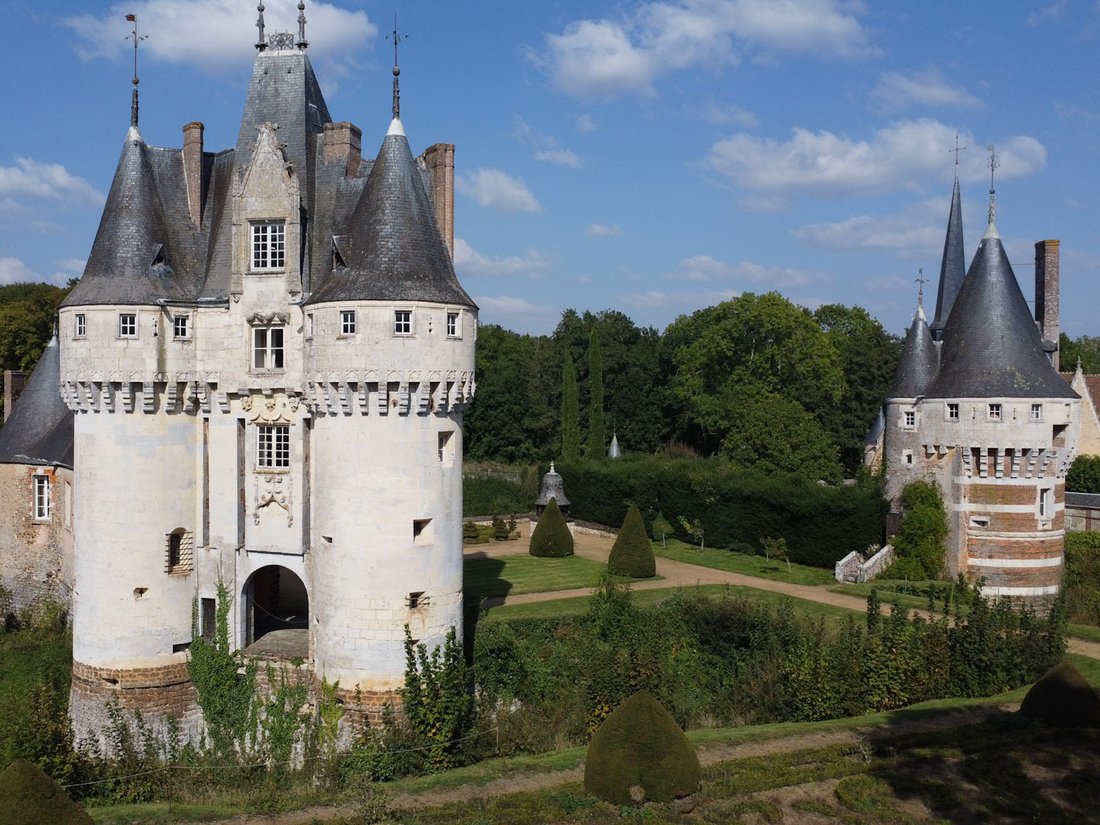
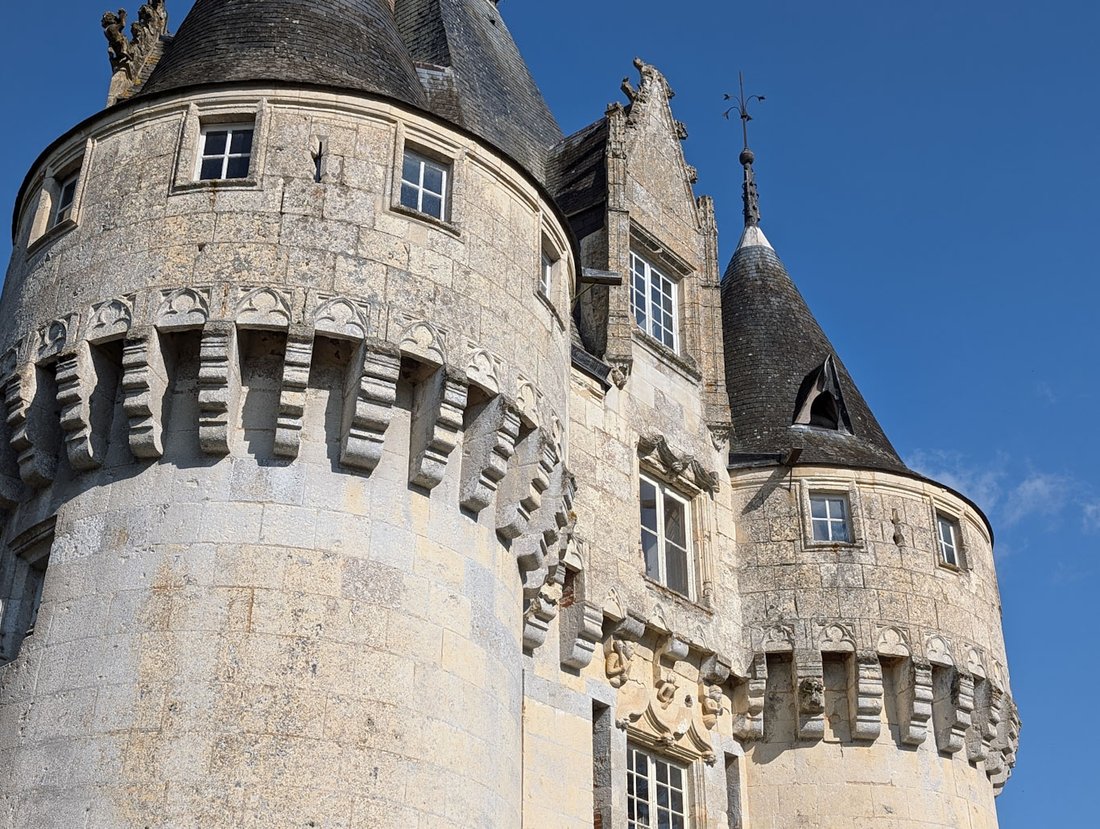
Due accessi, il primo, sul lato del villaggio, avviene attraverso un alto e lungo cancello in ferro battuto e si apre sulla vecchia casa porticata ora trasformata in un ampio soggiorno. Il secondo accesso, lato parco, avviene attraverso un alto portico merlato dominato dall’imponente torre della «torre dell’acqua». L’imponente castello medievale riccamente decorato appare subito dopo aver attraversato il ponte che attraversa il canale, e poi gli altri edifici che formano un cortile.
L’eterogeneità di questo complesso riflette la lunga storia di questo luogo.
L’originario castello medievale a pianta quadrata circondato da fossati fu bruciato nella prima metà del XV secolo dal conte di Salisbury, comandante in capo delle truppe inglesi, allora diretto a guidare l’assedio di Orléans. Ricostruito alla fine del XV e all’inizio del XVI secolo, lo chatelet noto come «il Donjon» e la torre Saint-François rimangono di questo castello medievale.
Questo castello medievale fu integrato nel XIX secolo nell’insieme formato dagli altri edifici mediante la distruzione di uno dei suoi lati e il riempimento di parte dei fossati, collegandolo al «nuovo» castello.
Il corpo principale dell’attuale castello è un edificio del XVI, XVII e XVIII secolo. Un primo padiglione che forma un portico-alloggio adiacente a una galleria fu costruito alla fine del XVI secolo e fu riqualificato nella seconda metà del XVII secolo con l’aggiunta di due piccoli padiglioni. Questo complesso fu sopraelevato di un pavimento nel XVIII secolo. La chiusura del portico-alloggio per trasformarlo in un grande ufficio gli ha conferito l’aspetto definitivo.
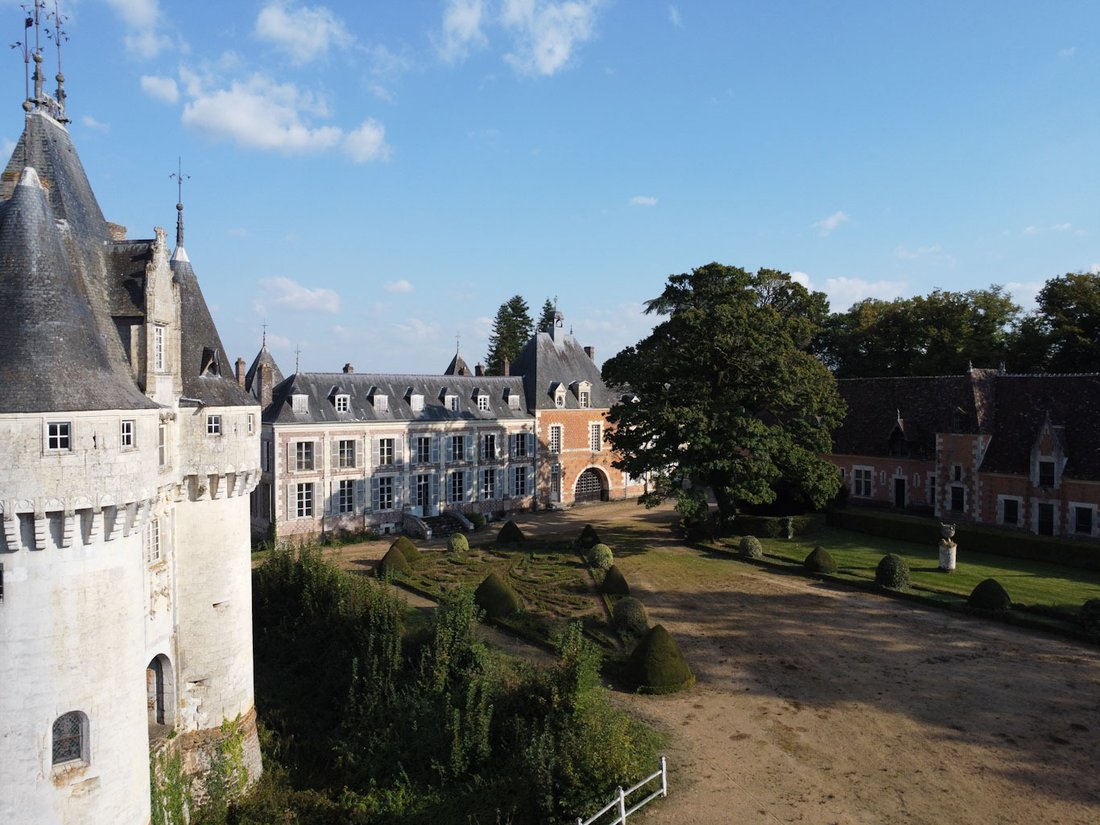
Questi edifici con il padiglione Luigi XVI e gli altri annessi formano un cortile a forma di U con vista libera su uno splendido parco di 41 ettari composto in particolare da una grande terrazza lunga 200 metri che si affaccia su un vasto prato da un lato e separata da un bosco di bellissime latifoglie sull’altro lato da un canale.
Il parco comprende anche sontuosi ricami in legno di bosso e tasso rifiniti in arte topiaria, oltre a un ampio vicolo e un orto di un ettaro.
5 edifici principali:
1 - Il «castello» più vicino alla piazza del paese, chiamato «Le Pavillon du Bourg», del XVI, XVII e XVIII secolo.
2 - Il piccolo castello chiamato «il Donjon», XV, XVIII e XX secolo. Una galleria del XV secolo, una zona residenziale costruita nel 1980 collegata a una torre del XVIII secolo.
3 - La torre Saint-François, XV secolo.
4 - Il padiglione Luigi XVI chiamato «casa rinascimentale» e la sua torre chiamata «la campana», XVI secolo, modificata nei secoli XVII e XVIII.
5 - Gli annessi, secoli XVI-XIX-XX. Splendide cornici del XVI secolo.
Ubicazione:
120 km da Parigi, 16 km dal raccordo autostradale per Parigi, 8 km da Le Mans.
A 8 km da Brou, negozi e servizi.
Rete idrica pubblica, senza fognature, da allacciare.
Protezione dei monumenti storici:
Il castello, i suoi annessi e il suo parco: classificati con decreto del 24 novembre 1948
Prezzo: 3.180.000 euro tasse incluse (incluse le commissioni del 5,67% a carico dell’acquirente).
Le informazioni sui rischi associati a questa proprietà sono disponibili sul sito web di Géorisques: [informazioni nascoste]
Le informazioni sui rischi a cui è esposta questa proprietà sono disponibili sul sito web di Géorisques: https://www.georisques.gouv.fr/
Ai margini di un piccolo villaggio di Perche, a 120 km da Parigi, a 8 km dall’autostrada, questo castello dal fascino eccezionale è composto da 5 edifici principali risalenti al XV e XX secolo sul sito di un castello bruciato durante la Guerra dei Cent’anni.
Due accessi, il primo, sul lato del villaggio, avviene attraverso un alto e lungo cancello in ferro battuto e si apre sulla vecchia casa porticata ora trasformata in un ampio soggiorno. Il secondo accesso, lato parco, avviene attraverso un alto portico merlato dominato dall’imponente torre della «torre dell’acqua». L’imponente castello medievale riccamente decorato appare subito dopo aver attraversato il ponte che attraversa il canale, e poi gli altri edifici che formano un cortile.
L’eterogeneità di questo complesso riflette la lunga storia di questo luogo.
L’originario castello medievale a pianta quadrata circondato da fossati fu bruciato nella prima metà del XV secolo dal conte di Salisbury, comandante in capo delle truppe inglesi, allora diretto a guidare l’assedio di Orléans. Ricostruito alla fine del XV e all’inizio del XVI secolo, lo chatelet noto come «il Donjon» e la torre Saint-François rimangono di questo castello medievale.
Questo castello medievale fu integrato nel XIX secolo nell’insieme formato dagli altri edifici mediante la distruzione di uno dei suoi lati e il riempimento di parte dei fossati, collegandolo al «nuovo» castello.
Il corpo principale dell’attuale castello è un edificio del XVI, XVII e XVIII secolo. Un primo padiglione che forma un portico-alloggio adiacente a una galleria fu costruito alla fine del XVI secolo e fu riqualificato nella seconda metà del XVII secolo con l’aggiunta di due piccoli padiglioni. Questo complesso fu sopraelevato di un pavimento nel XVIII secolo. La chiusura del portico-alloggio per trasformarlo in un grande ufficio gli ha conferito l’aspetto definitivo.
Questi edifici con il padiglione Luigi XVI e gli altri annessi formano un cortile a forma di U con vista libera su uno splendido parco di 41 ettari composto in particolare da una grande terrazza lunga 200 metri che si affaccia su un vasto prato da un lato e separata da un bosco di bellissime latifoglie sull’altro lato da un canale.
Il parco comprende anche sontuosi ricami in legno di bosso e tasso rifiniti in arte topiaria, oltre a un ampio vicolo e un orto di un ettaro.
5 edifici principali:
1 - Il «castello» più vicino alla piazza del paese, chiamato «Le Pavillon du Bourg», del XVI, XVII e XVIII secolo.
2 - Il piccolo castello chiamato «il Donjon», XV, XVIII e XX secolo. Una galleria del XV secolo, una zona residenziale costruita nel 1980 collegata a una torre del XVIII secolo.
3 - La torre Saint-François, XV secolo.
4 - Il padiglione Luigi XVI chiamato «casa rinascimentale» e la sua torre chiamata «la campana», XVI secolo, modificata nei secoli XVII e XVIII.
5 - Gli annessi, secoli XVI-XIX-XX. Splendide cornici del XVI secolo.
Ubicazione:
120 km da Parigi, 16 km dal raccordo autostradale per Parigi, 8 km da Le Mans.
A 8 km da Brou, negozi e servizi.
Rete idrica pubblica, senza fognature, da allacciare.
Protezione dei monumenti storici:
Il castello, i suoi annessi e il suo parco: classificati con decreto del 24 novembre 1948
Prezzo: 3.180.000 euro tasse incluse (incluse le commissioni del 5,67% a carico dell’acquirente).
Le informazioni sui rischi associati a questa proprietà sono disponibili sul sito web di Géorisques: [informazioni nascoste]
Le informazioni sui rischi a cui è esposta questa proprietà sono disponibili sul sito web di Géorisques: https://www.georisques.gouv.fr/
PRICE DROP - 120km from Paris - Perche - castle built from the 15th to the 20th century - exceptional charm and allure - 5 main buildings - 18 rooms - 2500m2 built - south of Perche - 8km from the A10 motorway junction - 20 hectares - good condition of the shell, to be completely restored internally. Listed as a historic monument in its entirety.
On the edge of a small village in Perche, 120km from Paris, 8km from the motorway, this castle with exceptional charm is made up of 5 main buildings dating from the 15th to the 20th century on the site of a castle burned during the Hundred Years’ War.
Two accesses, the first, on the village side, is through a high and long wrought iron gate and opens onto the old porch-house now converted into a large living room. The second access, on the park side, is through a high crenellated porch dominated by the imposing tower of the ”water tower”. The impressive, richly decorated medieval chatelet appears quickly after crossing the bridge spanning the canal, then the other buildings forming a courtyard.
The heterogeneity of this ensemble reflects the long history of this place.
The original medieval castle with a square plan surrounded by moats was burned in the first half of the 15th century by the Earl of Salisbury, commander-in-chief of the English troops, then on his way to lead the siege of Orléans. Rebuilt at the end of the 15th and the beginning of the 16th century, the chatelet known as ”the Donjon” and the Saint-François tower remain of this medieval castle.
This medieval castle was integrated in the 19th century into the ensemble formed by the other buildings by the destruction of one of its sides and the filling in of part of the moats, attaching it to the ”new” castle.
The main body of the current castle is a 16th, 17th and 18th century building. A first pavilion forming a porch-lodging adjoining a gallery was built at the end of the 16th century and was redeveloped in the second half of the 17th century with the addition of two small pavilions. This complex was raised by a floor in the 18th century. The closing of the porch-lodging to make it a large office gave it its definitive appearance.
These buildings with the Louis XVI pavilion and the other outbuildings form a U-shaped courtyard with an unobstructed view of a splendid 20-hectare park composed in particular of a large 200-meter-long terrace overlooking a vast meadow on one side and separated from a wood of beautiful deciduous trees on the other side by a canal.
The park also includes sumptuous boxwood and yew embroidery trimmed into topiary, as well as a large alley and a one-hectare vegetable garden.
5 main buildings:
1 - The ”castle” closest to the village square, called ”Le Pavillon du Bourg”, 16th, 17th, and 18th centuries.
2 - The small castle called ”the Donjon”, 15th, 18th, and 20th centuries. A 15th century gallery, a residential area built in 1980 connected to an 18th century tower.
3 - The Saint-François tower, 15th century.
4 - The Louis XVI pavilion called ”Renaissance house” and its tower called ”the bell”, 16th century, modified in the 17th and 18th centuries.
5 - The outbuildings, 16th-19th-20th centuries. Superb 16th century frames.
Location:
120km from Paris, 16km slip road to Paris, 8km to Le Mans.
8km from Brou, shops and services.
Mains water, no sanitation, to be connected.
Historic Monument Protection:
The castle as well as its outbuildings and its park: classified by decree of November 24, 1948
Price: 2,756,000 Euros including fees (including [hidden information]% fees payable by the purchaser).
Information on the risks associated with this property is available on the Géorisques website: [hidden information]
Le informazioni sui rischi a cui è esposta questa proprietà sono disponibili sul sito web di Géorisques: https://www.georisques.gouv.fr/
On the edge of a small village in Perche, 120km from Paris, 8km from the motorway, this castle with exceptional charm is made up of 5 main buildings dating from the 15th to the 20th century on the site of a castle burned during the Hundred Years’ War.
Two accesses, the first, on the village side, is through a high and long wrought iron gate and opens onto the old porch-house now converted into a large living room. The second access, on the park side, is through a high crenellated porch dominated by the imposing tower of the ”water tower”. The impressive, richly decorated medieval chatelet appears quickly after crossing the bridge spanning the canal, then the other buildings forming a courtyard.
The heterogeneity of this ensemble reflects the long history of this place.
The original medieval castle with a square plan surrounded by moats was burned in the first half of the 15th century by the Earl of Salisbury, commander-in-chief of the English troops, then on his way to lead the siege of Orléans. Rebuilt at the end of the 15th and the beginning of the 16th century, the chatelet known as ”the Donjon” and the Saint-François tower remain of this medieval castle.
This medieval castle was integrated in the 19th century into the ensemble formed by the other buildings by the destruction of one of its sides and the filling in of part of the moats, attaching it to the ”new” castle.
The main body of the current castle is a 16th, 17th and 18th century building. A first pavilion forming a porch-lodging adjoining a gallery was built at the end of the 16th century and was redeveloped in the second half of the 17th century with the addition of two small pavilions. This complex was raised by a floor in the 18th century. The closing of the porch-lodging to make it a large office gave it its definitive appearance.
These buildings with the Louis XVI pavilion and the other outbuildings form a U-shaped courtyard with an unobstructed view of a splendid 20-hectare park composed in particular of a large 200-meter-long terrace overlooking a vast meadow on one side and separated from a wood of beautiful deciduous trees on the other side by a canal.
The park also includes sumptuous boxwood and yew embroidery trimmed into topiary, as well as a large alley and a one-hectare vegetable garden.
5 main buildings:
1 - The ”castle” closest to the village square, called ”Le Pavillon du Bourg”, 16th, 17th, and 18th centuries.
2 - The small castle called ”the Donjon”, 15th, 18th, and 20th centuries. A 15th century gallery, a residential area built in 1980 connected to an 18th century tower.
3 - The Saint-François tower, 15th century.
4 - The Louis XVI pavilion called ”Renaissance house” and its tower called ”the bell”, 16th century, modified in the 17th and 18th centuries.
5 - The outbuildings, 16th-19th-20th centuries. Superb 16th century frames.
Location:
120km from Paris, 16km slip road to Paris, 8km to Le Mans.
8km from Brou, shops and services.
Mains water, no sanitation, to be connected.
Historic Monument Protection:
The castle as well as its outbuildings and its park: classified by decree of November 24, 1948
Price: 2,756,000 Euros including fees (including [hidden information]% fees payable by the purchaser).
Information on the risks associated with this property is available on the Géorisques website: [hidden information]
Le informazioni sui rischi a cui è esposta questa proprietà sono disponibili sul sito web di Géorisques: https://www.georisques.gouv.fr/
-
Tipo di proprietà
Castello
-
Piani
3
-
Prezzo/piede²
$115
Caratteristiche
Esplora la zona
28000 Chartres, France, Haute Ville-Basse Ville, Francia
Visualizza su Google Maps
Prezzo per sqft
Basso
Alto

Iscritto da 2 anni
Hai chiesto informazioni su questa proprietà
L'agente La contatterà al più presto
Pubblicato da
14
Annunci
2024
Iscritto
Prenota una visita con Alexandre Denniel
Scegli una data e indica se preferisci un tour virtuale o di persona con l’agente.
Data preferita
Tipo di tour

Denniel Immobilier - Antiquaires en Immeubles
38 Rue du Château, 77300, Fontainebleau, France
Visualizza profilo agenzia
Guillaume and Alexandre Denniel, two passionate brothers at the head of this 100% family agency, personally suppor
Guillaume and Alexandre Denniel, two passionate brothers at the head of this 100% family agency, personally support and advise buyers and sellers of historic properties. Our skills, experience and expertise allow us to offer a complete and tailor-made service to buyers and sellers of the most beautiful heritage buildings. As heritage artisans, we carry out some of the most beautiful heritage sales in France each year. Today, no property is too beautiful for people looking to acquire a property through us, nor too complex for our expertise.
Ultimo aggiornamento
Aprile 22
Prima pubblicazione
Febbraio 4, 2025
Licenza agente
Riferimento annuncio
305
La fiducia dei migliori broker del mondo
Gli agenti dietro le proprietà più straordinarie del mondo pubblicano su JamesEdition.
- Annunci di Sotheby's, Christie's, BARNES ed Engel & Völkers
- Ogni annuncio è verificato prima della pubblicazione
- Si metta in contatto diretto con agenti verificati
Continuando, accetta i nostri Termini e la nostra Informativa sulla privacy.