$8,160,025
Il «Mas De La Brune», Un Gioiello Classificato In Stile Rinascimentale, I Suoi 4 Ettari DI Parchi E I Suoi
- 17 Camere
- 6 Bagni
- 12,917 Sqft
- 10.08 Ac lot
- Aggiornato: Maggio 3
-
43
Visualizzazioni degli ultimi 30 giorni
- 65
Informazioni sulla proprietà
La descrizione è stata tradotta automaticamente.
La descrizione viene visualizzata nella lingua originale.
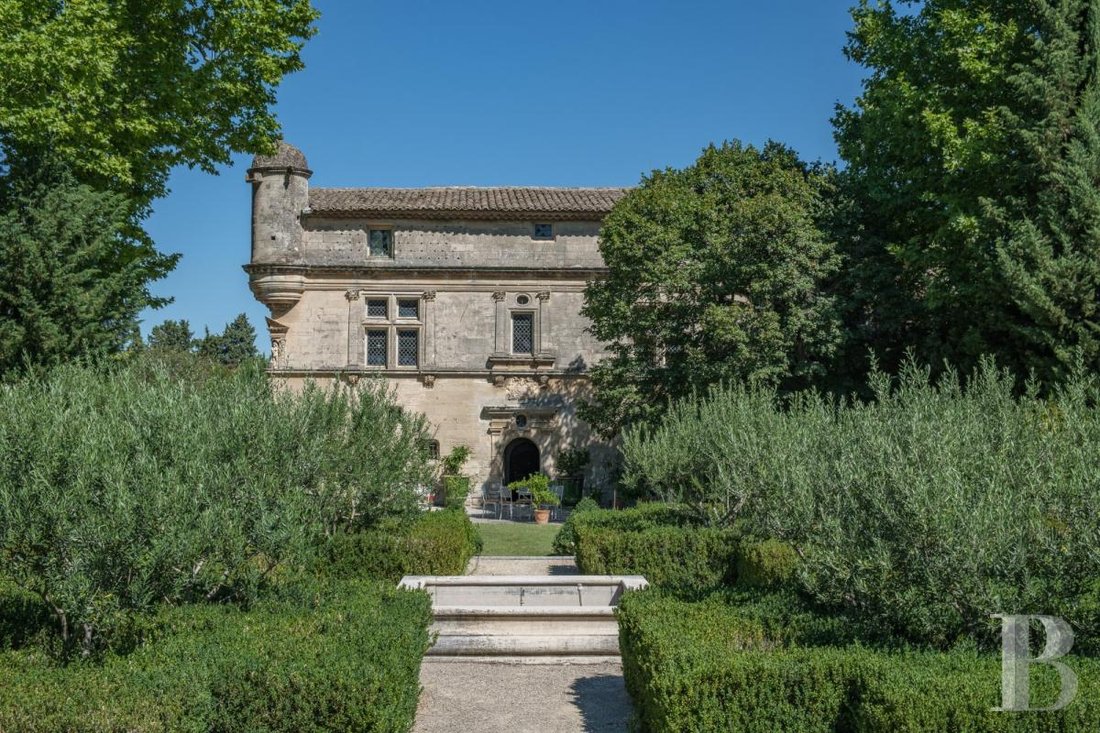
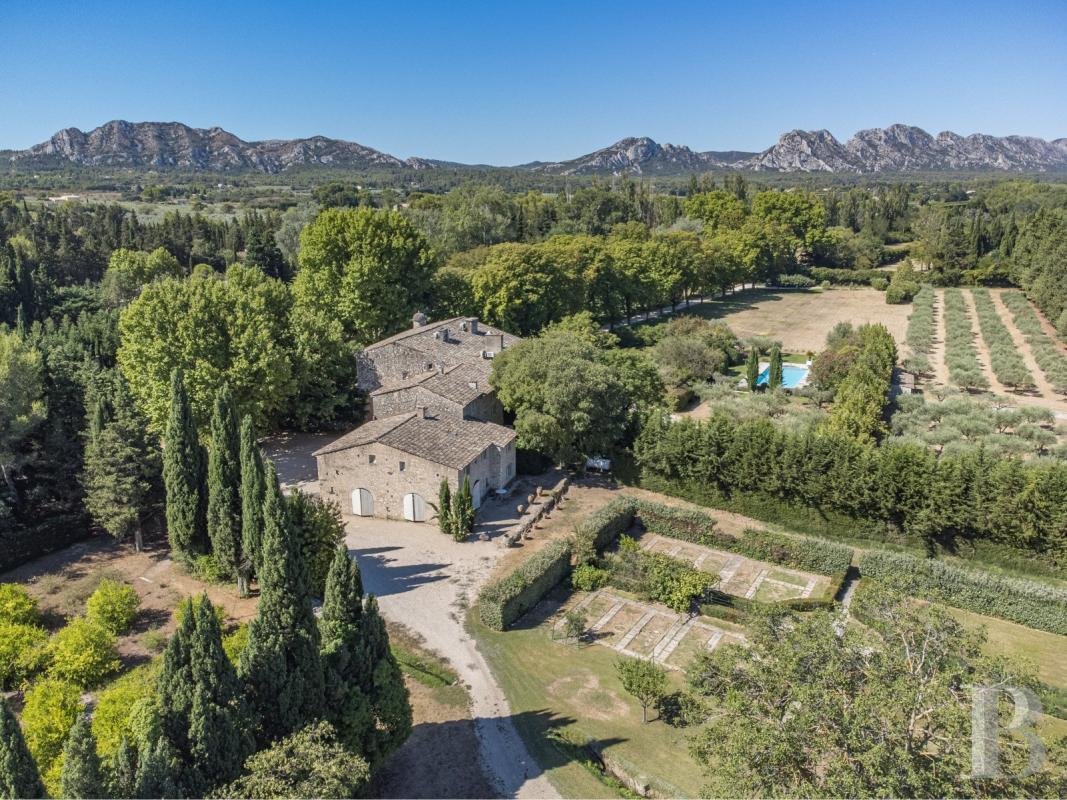
Il «Mas de la Brune», un gioiello classificato in stile rinascimentale, i suoi 4 ettari di parchi e giardini ai piedi delle Alpilles a Eygalières. Alla fine di una fila di ippocastani di duecento anni, tre costruzioni interconnesse compongono gli edifici di questa proprietà di 4 ettari prevalentemente boscosa.
La prima è la casa padronale in stile rinascimentale, nota come «Mas de la Brun
La prima è la casa padronale in stile rinascimentale, nota come «Mas de la Brun
The “Mas de la Brune”, a listed, Renaissance-style gem, its 4 ha of parklands and its gardens at the foot of the Alpilles mountains in Eygalières. At the end of a row of two-hundred-year-old horse chestnut trees, three interconnected constructions comprise the buildings on this predominantly wooded, 4-ha property.
The first is the Renaissance-style manor house, known as the “Mas de la Bru
The first is the Renaissance-style manor house, known as the “Mas de la Bru
Il «Mas de la Brune», un gioiello classificato in stile rinascimentale, i suoi 4 ettari di parchi e giardini ai piedi delle Alpilles a Eygalières. Alla fine di una fila di ippocastani di duecento anni, tre costruzioni interconnesse compongono gli edifici di questa proprietà di 4 ettari prevalentemente boscosa.
La prima è la casa padronale in stile rinascimentale, nota come «Mas de la Brune», costruita nel 1572; l’unico edificio di questo tipo, situato in mezzo al terreno, che si eleva come una navata, mostra con orgoglio ai visitatori la prua della sua torretta di guardia.
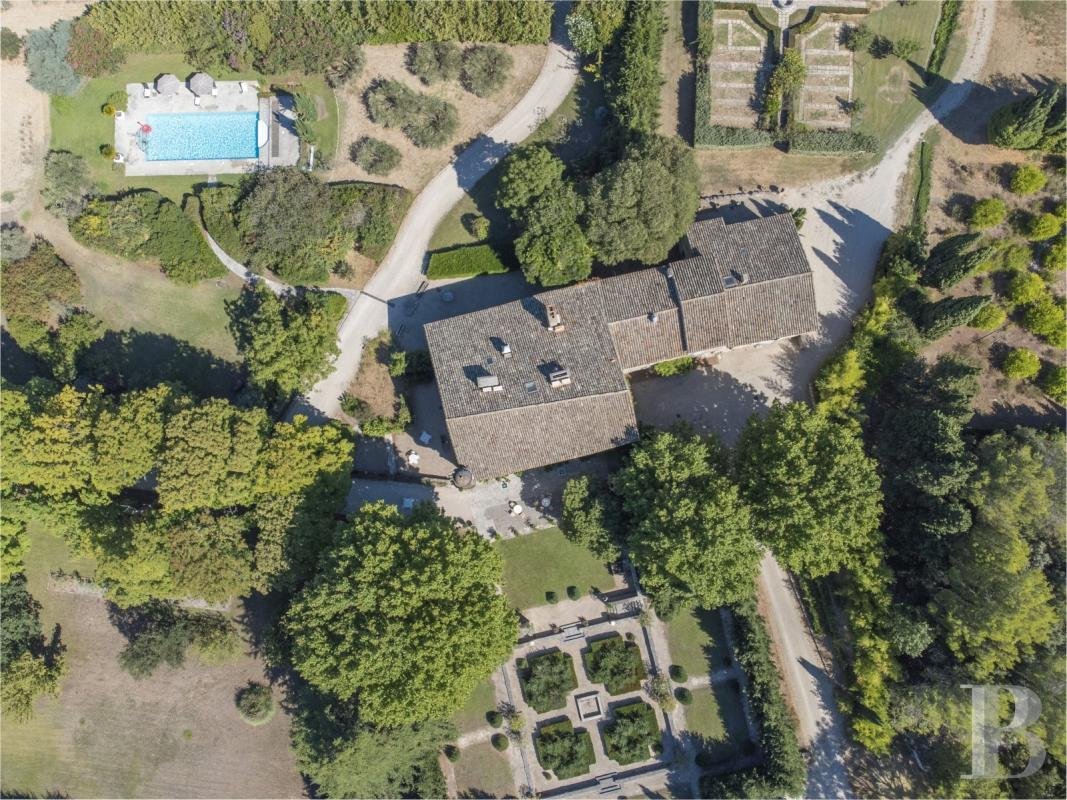
Direttamente adiacente al maniero, una costruzione più recente risalente al XVIII secolo si trova all’ombra di un tiglio di trecento anni. Questo edificio un tempo ospitava gli alloggi del personale.
Infine, sul lato est, dove sicuramente esisteva un muro perimetrale, una casa colonica ristrutturata è separata dal maniero da una fila di cipressi. Affacciato su un vasto cortile che si estende dietro il giardino alla francese, funge da collegamento con il resto del parco, dove si sente il canto permanente della preziosa acqua, che scende dalle Alpilles attraverso il canale omonimo.
L’elenco dei monumenti storici francesi, risalente al 9 agosto 1924, si applica esclusivamente al «Mas de la Brune», già presente sulla mappa del XVIII secolo di Cassini con il nome di «Grand Mas». Alcuni dicono che sia stato costruito per il console Pierre-Bruno-Isnard, che gli diede la versione femminile del suo cognome, mentre altri sostengono che fosse per un alchimista, il cui nome è stato a lungo dimenticato. In entrambi i casi, questo straordinario edificio, interamente costruito in pietra di Baux, è stato probabilmente costruito dal capomastro Gaston-Flayelle, originario della regione del Vivarais, che progettò anche l’ ”Hôtel de Manville» a Les-Baux-de-Provence.
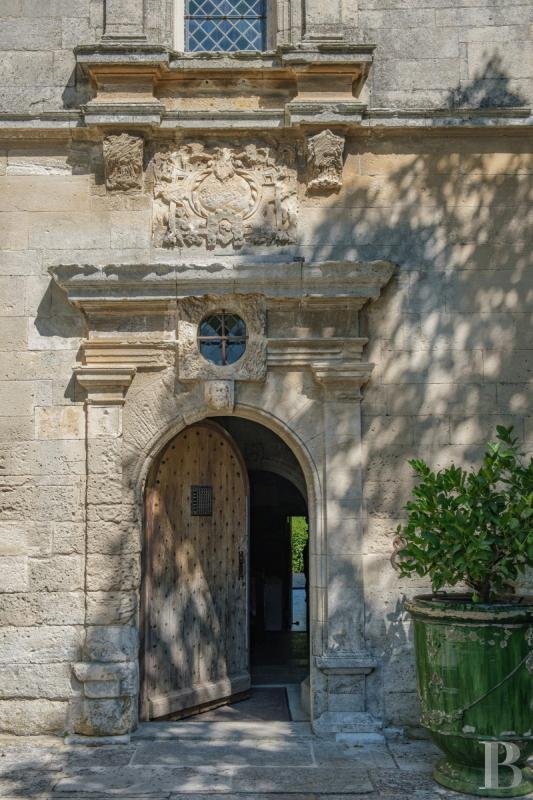
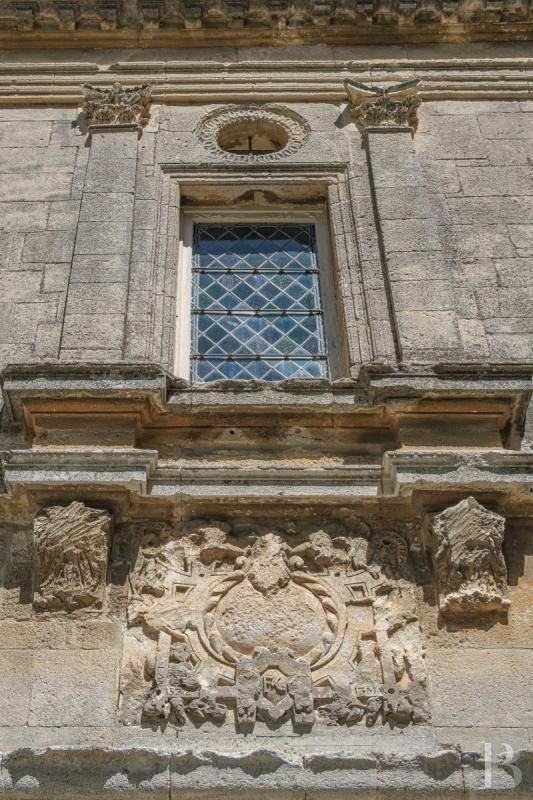
Le dimensioni della casa padronale, le sue parafrasi bibliche scolpite sulla facciata, come un grande libro aperto, e il numero segreto di gradini della sua scala a chiocciola tendono a rafforzare l’ipotesi di una casa di alchimisti.
A buona distanza dalla casa principale è stata installata una spaziosa piscina piastrellata, sapientemente nascosta agli astanti da un boschetto di alloro.
Infine, all’ombra dei platani di gelso è stato allestito un parcheggio, fuori dalla vista del maniero ma in grado di ospitare una decina di auto.
Le informazioni sui rischi a cui è esposta questa proprietà sono disponibili sul sito web di Géorisques: https://www.georisques.gouv.fr/
La prima è la casa padronale in stile rinascimentale, nota come «Mas de la Brune», costruita nel 1572; l’unico edificio di questo tipo, situato in mezzo al terreno, che si eleva come una navata, mostra con orgoglio ai visitatori la prua della sua torretta di guardia.
Direttamente adiacente al maniero, una costruzione più recente risalente al XVIII secolo si trova all’ombra di un tiglio di trecento anni. Questo edificio un tempo ospitava gli alloggi del personale.
Infine, sul lato est, dove sicuramente esisteva un muro perimetrale, una casa colonica ristrutturata è separata dal maniero da una fila di cipressi. Affacciato su un vasto cortile che si estende dietro il giardino alla francese, funge da collegamento con il resto del parco, dove si sente il canto permanente della preziosa acqua, che scende dalle Alpilles attraverso il canale omonimo.
L’elenco dei monumenti storici francesi, risalente al 9 agosto 1924, si applica esclusivamente al «Mas de la Brune», già presente sulla mappa del XVIII secolo di Cassini con il nome di «Grand Mas». Alcuni dicono che sia stato costruito per il console Pierre-Bruno-Isnard, che gli diede la versione femminile del suo cognome, mentre altri sostengono che fosse per un alchimista, il cui nome è stato a lungo dimenticato. In entrambi i casi, questo straordinario edificio, interamente costruito in pietra di Baux, è stato probabilmente costruito dal capomastro Gaston-Flayelle, originario della regione del Vivarais, che progettò anche l’ ”Hôtel de Manville» a Les-Baux-de-Provence.
Le dimensioni della casa padronale, le sue parafrasi bibliche scolpite sulla facciata, come un grande libro aperto, e il numero segreto di gradini della sua scala a chiocciola tendono a rafforzare l’ipotesi di una casa di alchimisti.
A buona distanza dalla casa principale è stata installata una spaziosa piscina piastrellata, sapientemente nascosta agli astanti da un boschetto di alloro.
Infine, all’ombra dei platani di gelso è stato allestito un parcheggio, fuori dalla vista del maniero ma in grado di ospitare una decina di auto.
Le informazioni sui rischi a cui è esposta questa proprietà sono disponibili sul sito web di Géorisques: https://www.georisques.gouv.fr/
The “Mas de la Brune”, a listed, Renaissance-style gem, its 4 ha of parklands and its gardens at the foot of the Alpilles mountains in Eygalières. At the end of a row of two-hundred-year-old horse chestnut trees, three interconnected constructions comprise the buildings on this predominantly wooded, 4-ha property.
The first is the Renaissance-style manor house, known as the “Mas de la Brune”, constructed in 1572; the only building of this type, standing in the middle of the land, rising up like a nave, proudly showing visitors the prow of its watch-turret.
Directly adjoining the manor, a more recent construction dating from the 18th century stands in the shade of a three-hundred-year-old lime tree. This building once housed the staff accommodation.
And lastly, on the east side, where a perimeter wall no doubt once existed, a rehabilitated farmhouse is separated from the manor by a row of cypress trees. Opening on to a vast courtyard that extends behind the French formal garden, it acts as a link with the rest of the parklands, where the permanent singing of the precious water, coming down from the Alpilles Mountains via the canal of the same name, can be heard.
The French Historic Monument listing, dating from the 9 August 1924, applies solely to the “Mas de la Brune”, already showing on Cassini’s 18th century map under the name of “Grand Mas”. Some say it was constructed for the consul Pierre-Bruno-Isnard, who gave it the feminine version of his surname, whilst others maintain it was for an alchemist, whose name is long forgotten. In both cases, this outstanding building, entirely constructed from Baux stone, was probably built by master mason, Gaston-Flayelle, native of the Vivarais region, who also designed the “Hôtel de Manville” in Les-Baux-de-Provence.
The size of the manor house, its biblical paraphrases sculpted on the façade, like a big open book, and including the secret number of steps of its spiral stairway tend to reinforce the hypothesis of an alchemist’s home.
A spacious tiled swimming pool, cleverly concealed from onlookers in a copse of laurel bushes, has been installed a good distance from the main house.
And lastly, a carpark, out of sight of the manor but able to take ten or so cars, has been laid out in the shade of mulberry plane trees.
Le informazioni sui rischi a cui è esposta questa proprietà sono disponibili sul sito web di Géorisques: https://www.georisques.gouv.fr/
The first is the Renaissance-style manor house, known as the “Mas de la Brune”, constructed in 1572; the only building of this type, standing in the middle of the land, rising up like a nave, proudly showing visitors the prow of its watch-turret.
Directly adjoining the manor, a more recent construction dating from the 18th century stands in the shade of a three-hundred-year-old lime tree. This building once housed the staff accommodation.
And lastly, on the east side, where a perimeter wall no doubt once existed, a rehabilitated farmhouse is separated from the manor by a row of cypress trees. Opening on to a vast courtyard that extends behind the French formal garden, it acts as a link with the rest of the parklands, where the permanent singing of the precious water, coming down from the Alpilles Mountains via the canal of the same name, can be heard.
The French Historic Monument listing, dating from the 9 August 1924, applies solely to the “Mas de la Brune”, already showing on Cassini’s 18th century map under the name of “Grand Mas”. Some say it was constructed for the consul Pierre-Bruno-Isnard, who gave it the feminine version of his surname, whilst others maintain it was for an alchemist, whose name is long forgotten. In both cases, this outstanding building, entirely constructed from Baux stone, was probably built by master mason, Gaston-Flayelle, native of the Vivarais region, who also designed the “Hôtel de Manville” in Les-Baux-de-Provence.
The size of the manor house, its biblical paraphrases sculpted on the façade, like a big open book, and including the secret number of steps of its spiral stairway tend to reinforce the hypothesis of an alchemist’s home.
A spacious tiled swimming pool, cleverly concealed from onlookers in a copse of laurel bushes, has been installed a good distance from the main house.
And lastly, a carpark, out of sight of the manor but able to take ten or so cars, has been laid out in the shade of mulberry plane trees.
Le informazioni sui rischi a cui è esposta questa proprietà sono disponibili sul sito web di Géorisques: https://www.georisques.gouv.fr/
-
Tipo di proprietà
Castello
-
Prezzo/piede²
$631
Caratteristiche
Esplora la zona
Eygalières, 13810, France
Visualizza su Google Maps
Prezzo per sqft
Basso
Alto
Located in the heart of Provence, Avignon offers an exquisite blend of culture and history, with convenient access to transport and attractions. Enjoy proximity to the Avignon TGV station (16 min) for high-speed trains to Paris and beyond, while Marseille Provence Airport is reachable in about an hour. Discover the UNESCO-listed Palais des Papes, explore local vineyards, or enjoy fine dining and shopping within a short drive for a sophisticated and vibrant lifestyle.
Ottieni luoghi vicini
Attrazioni
Scuole
Avignon TGV Station
Train Station
16 min
Marseille Provence Airport
Airport
60 min
Palais des Papes
Culture & Heritage
8 min
Pont d'Avignon
Cultural & Heritage
10 min
Château La Nerthe
Dining & Wine
25 min
Le Prieuré - Michelin Restaurant
Dining & Wine
13 min
Golf Grand Avignon
Golf & Country Clubs
15 min
International Bilingual School of Provence
International School
90 min
Lycée Mistral Avignon
Public School
10 min
Université d'Avignon
University / Higher Education
12 min
Iscritto da 3 anni
Hai chiesto informazioni su questa proprietà
L'agente La contatterà al più presto
Pubblicato da
666
Annunci
2023
Iscritto
Prenota una visita con the agent
Scegli una data e indica se preferisci un tour virtuale o di persona con l’agente.
Data preferita
Tipo di tour
Ultimo aggiornamento
Maggio 3
Prima pubblicazione
Jun 2, 2024
Riferimento annuncio
276562_JE
Proprietà simili nelle vicinanze
Nuovi annunci a La Balance-Palais des Papes

Esplora più immobili in vendita
tipi di proprietà La Balance-Palais des Papes, Avignone, Francia
- Appartamenti in vendita in La Balance-Palais des Papes, Avignone, Francia
- Case in vendita in La Balance-Palais des Papes, Avignone, Francia
- Proprietà in vendita in La Balance-Palais des Papes, Avignone, Francia
- Castelli in vendita in La Balance-Palais des Papes, Avignone, Francia
- Ville in vendita in La Balance-Palais des Papes, Avignone, Francia
La Balance-Palais des Papes, Avignone, Francia ricerche popolari
- Proprietà immobiliari Vista panoramica / Scenica a La Balance-Palais des Papes, Avignone, Francia
- Proprietà immobiliari con Terrazza a La Balance-Palais des Papes, Avignone, Francia
- Proprietà immobiliari con Bar a La Balance-Palais des Papes, Avignone, Francia
- Proprietà immobiliari con Sala giochi a La Balance-Palais des Papes, Avignone, Francia
- Proprietà immobiliari con Ufficio a La Balance-Palais des Papes, Avignone, Francia
- Proprietà immobiliari con Ascensore a La Balance-Palais des Papes, Avignone, Francia
- Proprietà immobiliari Vista sulle montagne a La Balance-Palais des Papes, Avignone, Francia
- Proprietà immobiliari con Giardino a La Balance-Palais des Papes, Avignone, Francia
- Proprietà immobiliari con Cucina esterna a La Balance-Palais des Papes, Avignone, Francia
- Proprietà immobiliari Duplex a La Balance-Palais des Papes, Avignone, Francia
- Proprietà immobiliari Privacy a La Balance-Palais des Papes, Avignone, Francia
- Proprietà immobiliari Moderno a La Balance-Palais des Papes, Avignone, Francia
- Proprietà immobiliari Equestre a La Balance-Palais des Papes, Avignone, Francia
- Proprietà immobiliari con Libreria a La Balance-Palais des Papes, Avignone, Francia
- Proprietà immobiliari con Aria condizionata a La Balance-Palais des Papes, Avignone, Francia
- Proprietà immobiliari con Cantina a La Balance-Palais des Papes, Avignone, Francia
- Proprietà immobiliari con Idromassaggio a La Balance-Palais des Papes, Avignone, Francia
- Proprietà immobiliari con Camino a La Balance-Palais des Papes, Avignone, Francia
- Proprietà immobiliari con Piscina a La Balance-Palais des Papes, Avignone, Francia
- Proprietà immobiliari con Garage a La Balance-Palais des Papes, Avignone, Francia
- Proprietà immobiliari con Balcone a La Balance-Palais des Papes, Avignone, Francia
- Proprietà immobiliari Residenza a La Balance-Palais des Papes, Avignone, Francia
- Proprietà immobiliari Rinnovato a La Balance-Palais des Papes, Avignone, Francia
- Proprietà immobiliari Vista sull'acqua a La Balance-Palais des Papes, Avignone, Francia
Guide e storie correlate
La fiducia dei migliori broker del mondo
Gli agenti dietro le proprietà più straordinarie del mondo pubblicano su JamesEdition.
- Annunci di Sotheby's, Christie's, BARNES ed Engel & Völkers
- Ogni annuncio è verificato prima della pubblicazione
- Si metta in contatto diretto con agenti verificati
Continuando, accetta i nostri Termini e la nostra Informativa sulla privacy.