Prix sur demande
par semaine
An Iconic Liberty Villa On Lake Maggiore
- 4 Chambres
- 4 SdB
- 9,688 Sqft
À propos de la propriété
La description a été traduite automatiquement.
La description est affichée dans la langue d'origine.
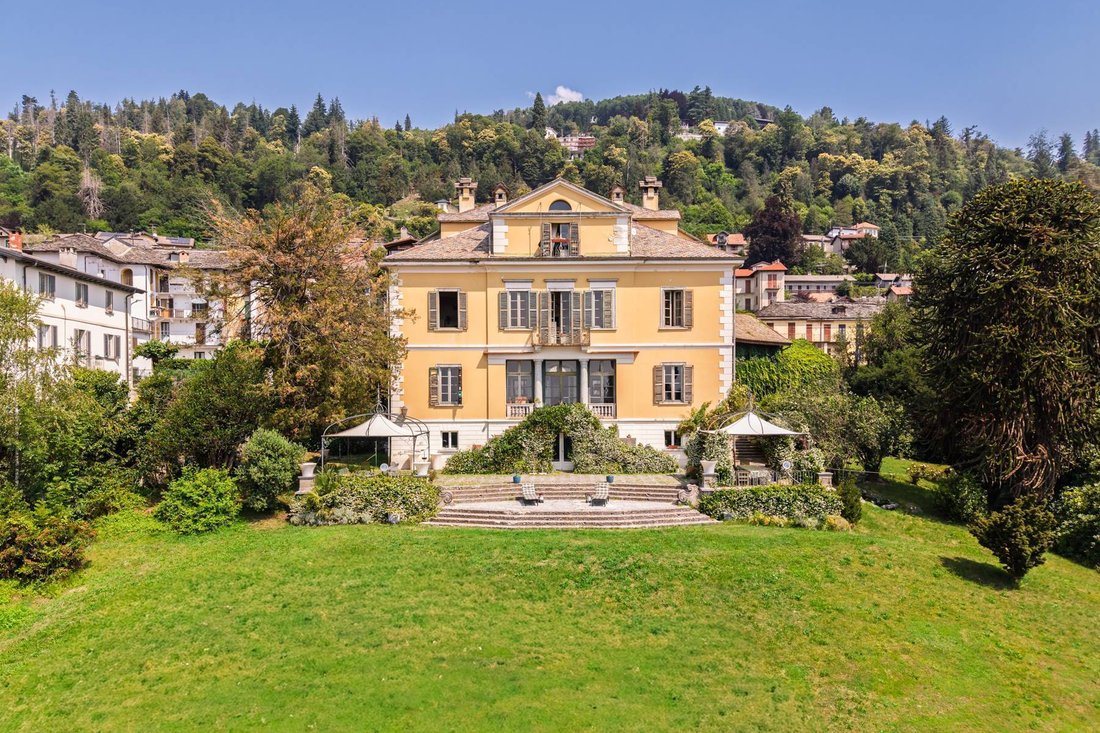
Construite au début du XXᵉ siècle et attribuée à Piero Portaluppi, cette villa constitue un rare exemple de l’architecture résidentielle lombarde de son époque, où équilibre des proportions, élégance décorative et qualité exceptionnelle des espaces s’unissent dans une remarquable harmonie.
Nichée dans un écrin de verdure, la propriété bénéficie d’une position dominante offrant une vue pan
Nichée dans un écrin de verdure, la propriété bénéficie d’une position dominante offrant une vue pan
Built in the early 20th century and attributed to Piero Portaluppi, this villa is a rare example of Lombard residential architecture of its time, where compositional balance, decorative elegance, and exceptional spatial quality come together in a remarkably harmonious whole.
Nestled in lush greenery, the property enjoys a commanding position overlooking the entire village of Premeno. The
Nestled in lush greenery, the property enjoys a commanding position overlooking the entire village of Premeno. The
Construite au début du XXᵉ siècle et attribuée à Piero Portaluppi, cette villa constitue un rare exemple de l’architecture résidentielle lombarde de son époque, où équilibre des proportions, élégance décorative et qualité exceptionnelle des espaces s’unissent dans une remarquable harmonie.
Nichée dans un écrin de verdure, la propriété bénéficie d’une position dominante offrant une vue panoramique sur l’ensemble du village de Premeno. Le parc centenaire qui entoure la villa est un véritable jardin paysager, traversé par un ruisseau naturel et agrémenté de charmants petits ponts au caractère romantique.
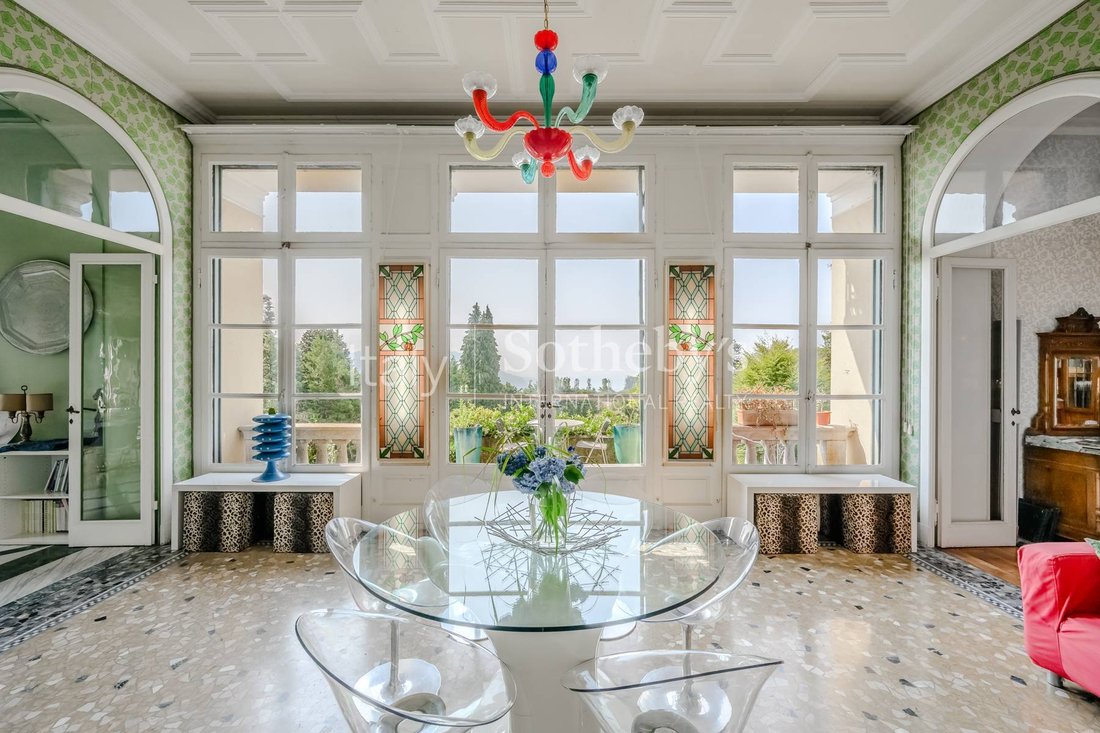
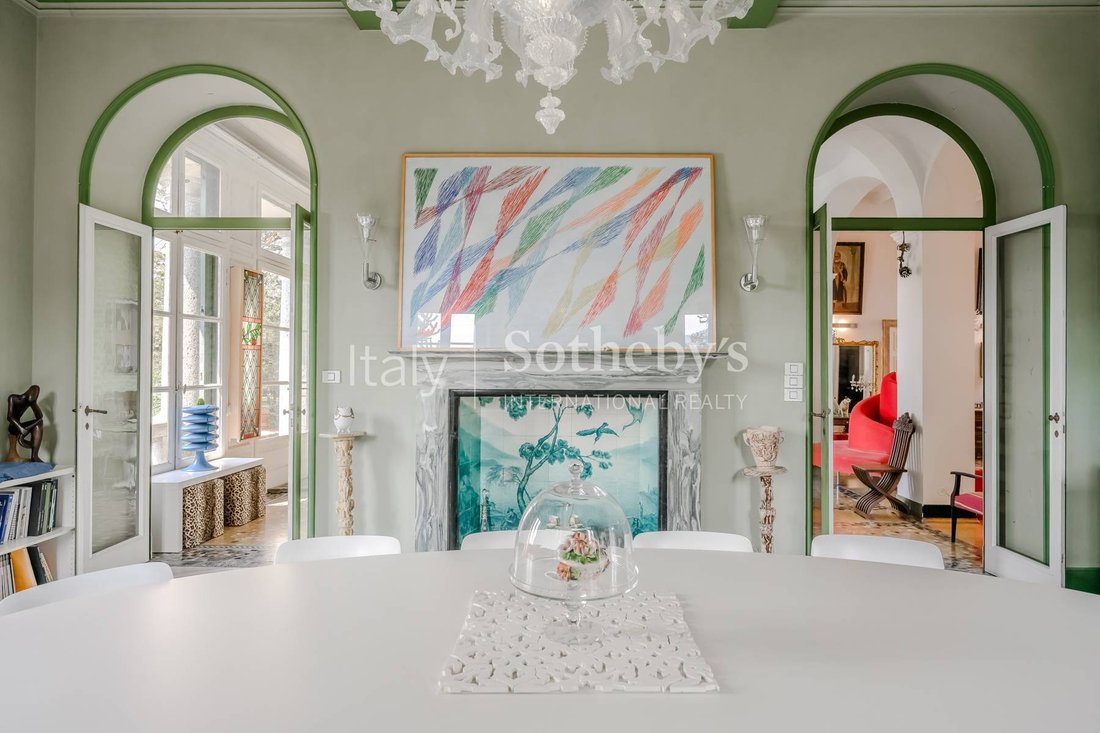
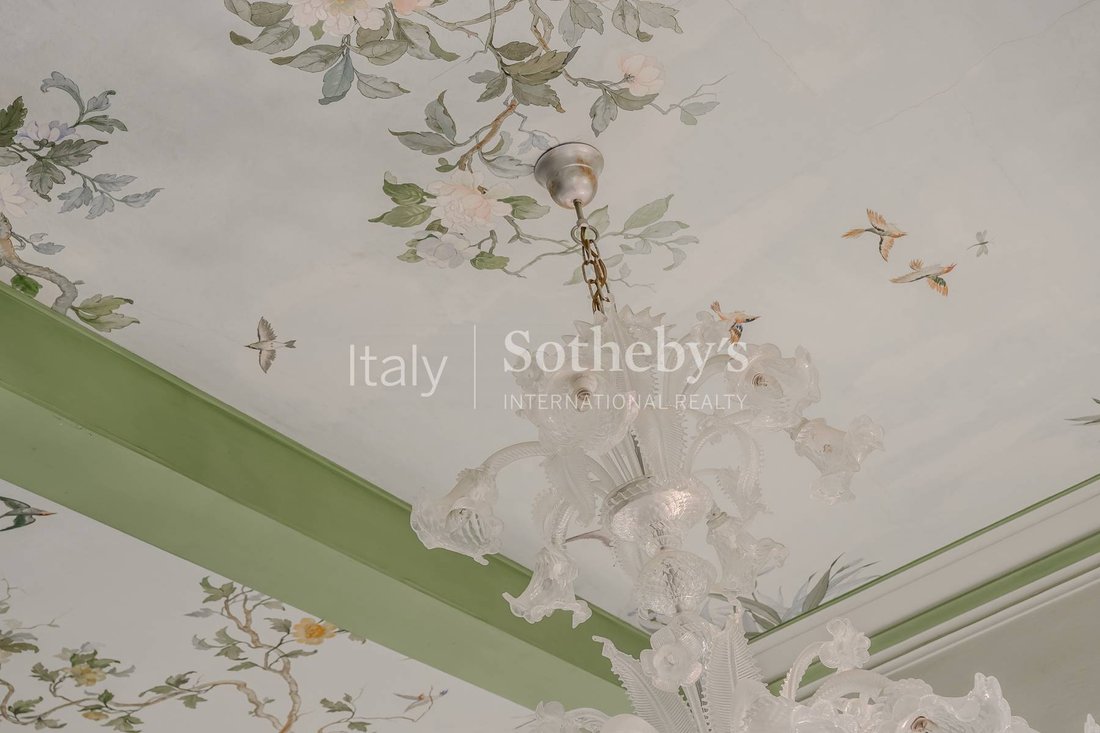
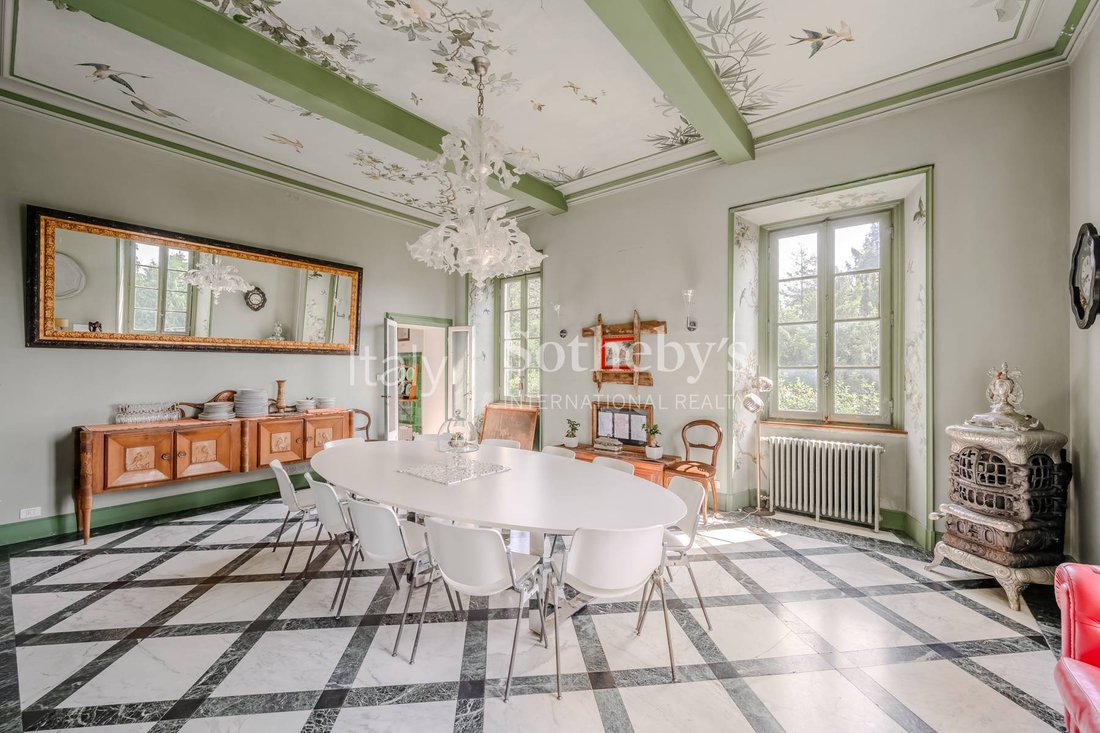
L’entrée ouvre sur d’impressionnantes pièces de réception, articulées autour de deux magnifiques salons. Chaque espace a conservé tout le charme originel de la demeure, avec de remarquables détails architecturaux et d’élégantes fenêtres donnant sur le parc. La salle à manger de réception constitue l’un des espaces les plus prestigieux de la résidence, où les plafonds ornés de fresques s’harmonisent parfaitement avec les raffinées finitions d’origine. Les fresques, d’une remarquable valeur artistique et exceptionnellement bien conservées, ornent de nombreuses pièces de la villa. La lumière naturelle met en valeur les surfaces décorées et les éléments architecturaux, créant un dialogue raffiné entre l’art, l’histoire et l’architecture. La cuisine, spacieuse et fonctionnelle, allie parfaitement praticité et élégance tout en respectant le caractère historique de la demeure.
L’espace nuit comprend quatre vastes chambres doubles, toutes baignées de lumière naturelle et offrant une vue sur le parc. L’une d’entre elles revêt une importance historique particulière : selon la tradition, elle aurait accueilli Giuseppe Garibaldi lors de l’un de ses séjours. La propriété est complétée par un élégant espace bien-être ainsi qu’une raffinée salle de billard.
Cette villa est une demeure d’une valeur historique et architecturale reconnue, où patrimoine artistique, excellence artisanale et beauté du paysage environnant se conjuguent dans un cadre d’une rare authenticité, offrant l’opportunité unique de posséder et de vivre l’une des plus prestigieuses résidences historiques de la région.
Nichée dans un écrin de verdure, la propriété bénéficie d’une position dominante offrant une vue panoramique sur l’ensemble du village de Premeno. Le parc centenaire qui entoure la villa est un véritable jardin paysager, traversé par un ruisseau naturel et agrémenté de charmants petits ponts au caractère romantique.
L’entrée ouvre sur d’impressionnantes pièces de réception, articulées autour de deux magnifiques salons. Chaque espace a conservé tout le charme originel de la demeure, avec de remarquables détails architecturaux et d’élégantes fenêtres donnant sur le parc. La salle à manger de réception constitue l’un des espaces les plus prestigieux de la résidence, où les plafonds ornés de fresques s’harmonisent parfaitement avec les raffinées finitions d’origine. Les fresques, d’une remarquable valeur artistique et exceptionnellement bien conservées, ornent de nombreuses pièces de la villa. La lumière naturelle met en valeur les surfaces décorées et les éléments architecturaux, créant un dialogue raffiné entre l’art, l’histoire et l’architecture. La cuisine, spacieuse et fonctionnelle, allie parfaitement praticité et élégance tout en respectant le caractère historique de la demeure.
L’espace nuit comprend quatre vastes chambres doubles, toutes baignées de lumière naturelle et offrant une vue sur le parc. L’une d’entre elles revêt une importance historique particulière : selon la tradition, elle aurait accueilli Giuseppe Garibaldi lors de l’un de ses séjours. La propriété est complétée par un élégant espace bien-être ainsi qu’une raffinée salle de billard.
Cette villa est une demeure d’une valeur historique et architecturale reconnue, où patrimoine artistique, excellence artisanale et beauté du paysage environnant se conjuguent dans un cadre d’une rare authenticité, offrant l’opportunité unique de posséder et de vivre l’une des plus prestigieuses résidences historiques de la région.
Built in the early 20th century and attributed to Piero Portaluppi, this villa is a rare example of Lombard residential architecture of its time, where compositional balance, decorative elegance, and exceptional spatial quality come together in a remarkably harmonious whole.
Nestled in lush greenery, the property enjoys a commanding position overlooking the entire village of Premeno. The centuries-old park surrounding the villa is a true landscaped garden, crossed by a natural stream and enhanced by charming romantic footbridges.
The entrance leads into the impressive reception rooms, which unfold through two magnificent living salons. Every space preserves the villa’s original charm, featuring outstanding architectural details and elegant windows overlooking the park. The formal dining room is one of the residence’s most distinguished spaces, where frescoed ceilings blend seamlessly with the refined original finishes. The frescoes, of remarkable artistic value and exceptionally well preserved, adorn many of the villa’s rooms. Natural light enhances the decorated surfaces and architectural details, creating a refined dialogue between art, history, and architecture. The spacious and functional kitchen perfectly combines practicality with atmosphere, remaining in complete harmony with the character of the residence.
The sleeping quarters comprise four spacious double bedrooms, all filled with natural light and overlooking the park. One of these rooms holds particular historical significance: according to tradition, it was the bedroom that welcomed Giuseppe Garibaldi during one of his stays. Completing the property are an exclusive wellness area and an elegant billiard room.
This villa is a residence of recognised historical and architectural significance, a place where artistic heritage, outstanding craftsmanship, and the beauty of the surrounding landscape come together in a setting of rare authenticity, offering the opportunity to own and experience one of the area’s most distinguished historic homes.
Nestled in lush greenery, the property enjoys a commanding position overlooking the entire village of Premeno. The centuries-old park surrounding the villa is a true landscaped garden, crossed by a natural stream and enhanced by charming romantic footbridges.
The entrance leads into the impressive reception rooms, which unfold through two magnificent living salons. Every space preserves the villa’s original charm, featuring outstanding architectural details and elegant windows overlooking the park. The formal dining room is one of the residence’s most distinguished spaces, where frescoed ceilings blend seamlessly with the refined original finishes. The frescoes, of remarkable artistic value and exceptionally well preserved, adorn many of the villa’s rooms. Natural light enhances the decorated surfaces and architectural details, creating a refined dialogue between art, history, and architecture. The spacious and functional kitchen perfectly combines practicality with atmosphere, remaining in complete harmony with the character of the residence.
The sleeping quarters comprise four spacious double bedrooms, all filled with natural light and overlooking the park. One of these rooms holds particular historical significance: according to tradition, it was the bedroom that welcomed Giuseppe Garibaldi during one of his stays. Completing the property are an exclusive wellness area and an elegant billiard room.
This villa is a residence of recognised historical and architectural significance, a place where artistic heritage, outstanding craftsmanship, and the beauty of the surrounding landscape come together in a setting of rare authenticity, offering the opportunity to own and experience one of the area’s most distinguished historic homes.
-
Type de propriété
Maison
-
Année de construction
1823
Caractéristiques
Caractéristiques
Lot
Intérieur
Outdoor
Explorez le secteur
Via Perelli Paradisi Luigi, Premeno, VB 28818, Piémont, Italie
Voir sur Google Maps
Prix par sqft
Faible
Élevé

Inscrit il y a 1 an
Vous vous êtes renseigné sur ce bien
L'agent vous contactera bientôt par
Publié par
15
Annonces
2025
Inscrit
Réserver une visite avec Jessica Capuano
Choisissez une date et si vous souhaitez une visite virtuelle ou en personne avec l’agent.
Date préférée
Type de visite

Italy Sotheby's International Realty
Piazza San Graziano 24, 28041, Arona, Novara, Italy
Voir le profil de l’agence
Lake Maggiore has always been one of the most popular and visited lakes in
Italy, a short distance from Milan a
Italy, a short distance from Milan a
Lake Maggiore has always been one of the most popular and visited lakes in
Italy, a short distance from Milan and some of the most important cities in
northern Italy. Our office overlooking the street is located in Arona, in one of
the main pedestrian streets. Arona is located along the Piedmont side of the
lake and is one of the main tourist and commercial centers of Lake Maggiore,
full of companies, shops and restaurants that make it livable 12 months a year.
Our team knows very well the different locations of this big territory and
assists customers from all over the world to promote the most beautiful
historical and modern properties. Starting from the most popular towns such as
Stresa, which overlooks Lake Maggiore near the Gulf where the scenic Borromean
Islands - Isola Bella, Isola Madre and Isola dei Pescatori - are located, in a
very suggestive position, passing through Verbania, surrounded by mountains,
Lesa, on the Piedmont side, Luino and Meina, from where in Roman times the via
Severiana Augusta passed, the consular road that led to Mediolanum - that today
is called Milan.
Italy, a short distance from Milan and some of the most important cities in
northern Italy. Our office overlooking the street is located in Arona, in one of
the main pedestrian streets. Arona is located along the Piedmont side of the
lake and is one of the main tourist and commercial centers of Lake Maggiore,
full of companies, shops and restaurants that make it livable 12 months a year.
Our team knows very well the different locations of this big territory and
assists customers from all over the world to promote the most beautiful
historical and modern properties. Starting from the most popular towns such as
Stresa, which overlooks Lake Maggiore near the Gulf where the scenic Borromean
Islands - Isola Bella, Isola Madre and Isola dei Pescatori - are located, in a
very suggestive position, passing through Verbania, surrounded by mountains,
Lesa, on the Piedmont side, Luino and Meina, from where in Roman times the via
Severiana Augusta passed, the consular road that led to Mediolanum - that today
is called Milan.
Dernière mise à jour
Juillet 18
Première mise en ligne
Juillet 18
Lien de l’annonce
Référence de l’annonce
Y7KDWR
La confiance des plus grands courtiers du monde
Les agents des propriétés les plus exceptionnelles du monde publient sur JamesEdition.
- Des annonces de Sotheby's, Christie's, BARNES et Engel & Völkers
- Chaque annonce est vérifiée avant sa mise en ligne
- Contactez directement des agents vérifiés
En continuant, vous acceptez nos Conditions et notre Politique de confidentialité.