Stunning White Villa At Gagliano Del Capo, Apulia
- 5 Chambres
- 5 SdB
- 2,691 Sqft
- 1
À propos de la propriété
Le White Cube est situé à Gagliano del Capo, un village tranquille au cœur du Salento, la région la plus méridionale des Pouilles qui atteint le « talon de la botte italienne » dans le sud-est de l’Italie. La maison est située dans le parc régional entre la côte rocheuse de l’Adriatique et les plages blanches de la mer Ionienne. La maison a été conçue par un architecte italien avec un portefeui
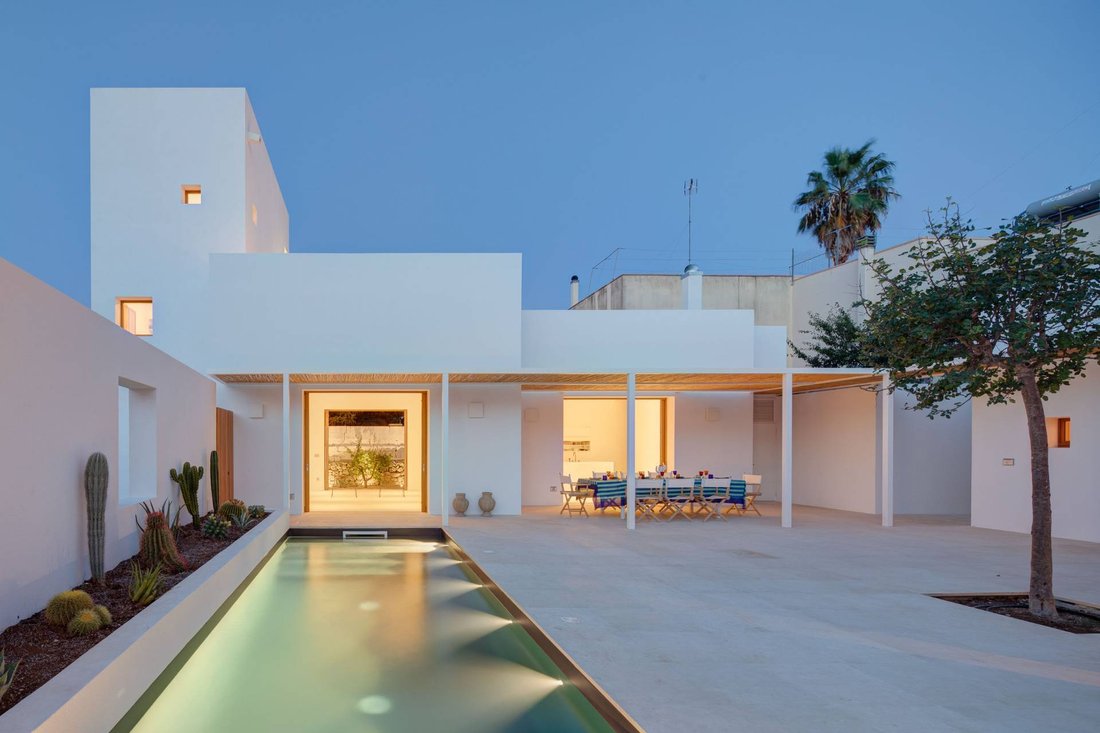
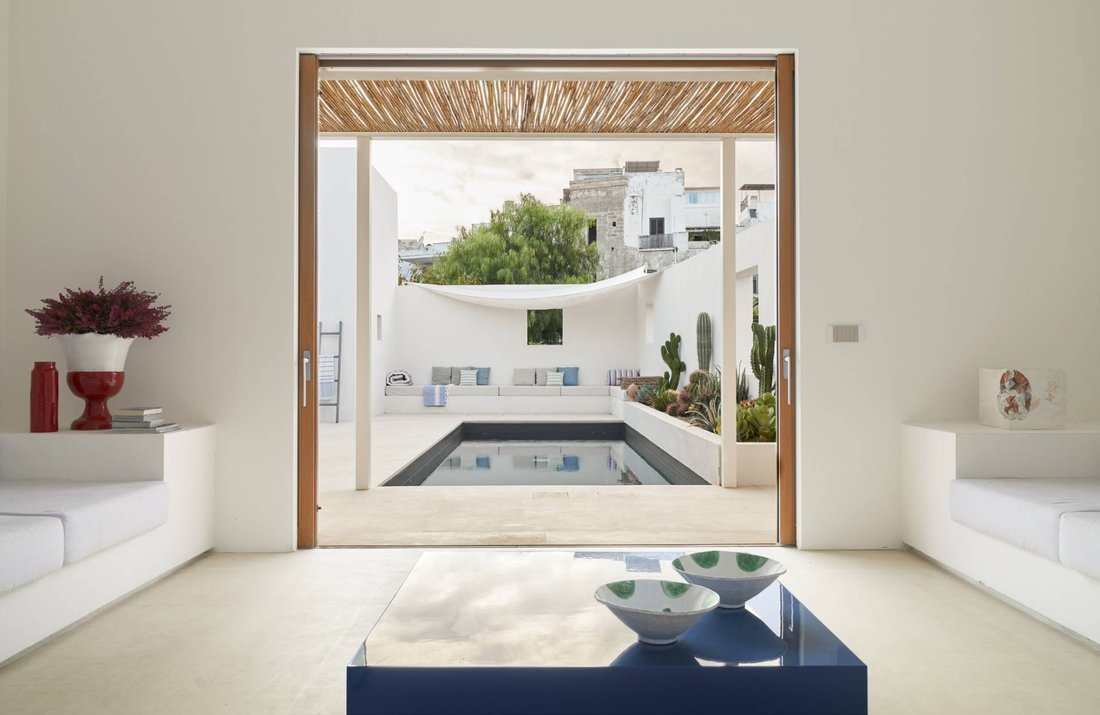
The White Cube is located in Gagliano del Capo, a quiet village in the heart of Salento, the southernmost region of Apulia that reaches the ’heel of the Italian boot’ in south-eastern Italy. The house is located in the regional park stretched between the rocky Adriatic coast and the white beaches of the Ionian Sea. The house was designed by an Italian architect with an international portfolio.
Le White Cube est situé à Gagliano del Capo, un village tranquille au cœur du Salento, la région la plus méridionale des Pouilles qui atteint le « talon de la botte italienne » dans le sud-est de l’Italie. La maison est située dans le parc régional entre la côte rocheuse de l’Adriatique et les plages blanches de la mer Ionienne. La maison a été conçue par un architecte italien avec un portefeuille international. Son projet a obtenu la plus haute distinction décernée par l’institut d’architecture italien récompensé comme meilleur bâtiment construit en Italie.
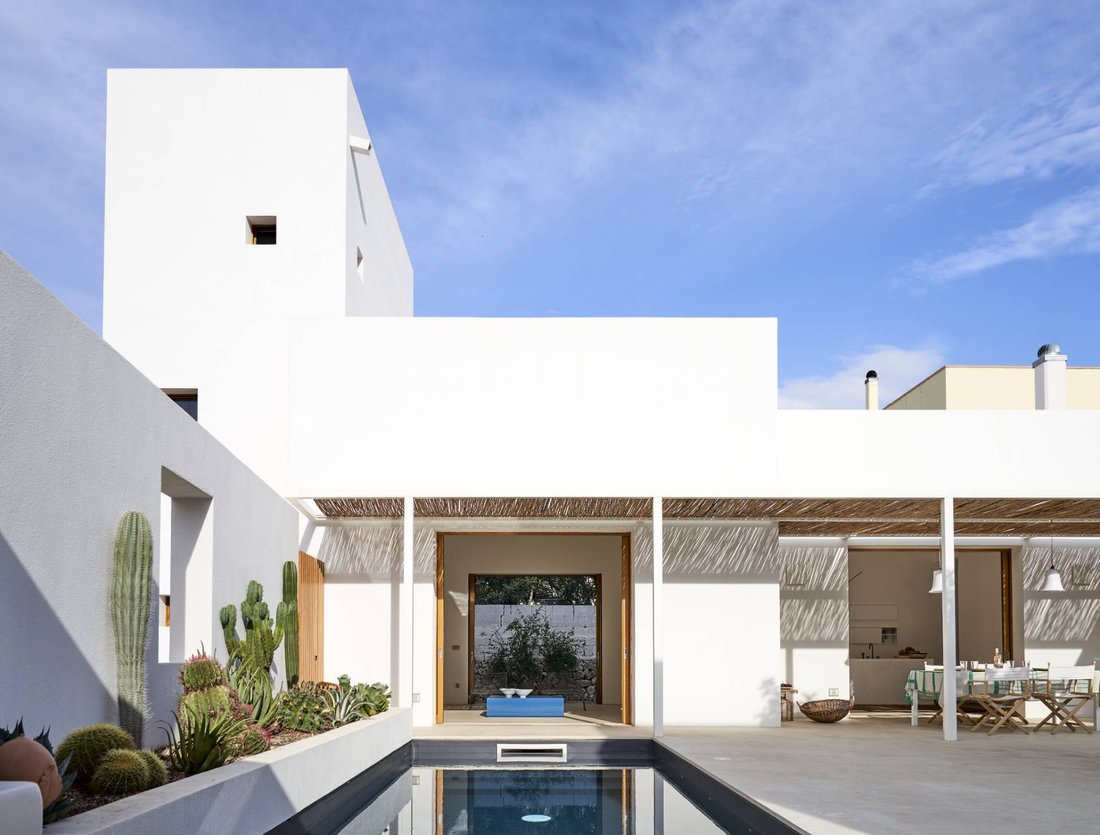
La maison est située dans un contexte urbain dense à proximité d’un centre historique qui relie Gagliano à la mer. La maison se présente comme un bâtiment harmonieux entre espaces intérieurs et extérieurs et suis la tradition des domus romains, avec sa cour intérieure centrale, et ses patios annexes. La cour est le véritable cœur battant de la maison, lieu de convivialité et de jeu, où la piscine et la végétation soigneusement sélectionnées reproduisent la présence des éléments naturels.
Surplombant le patio, il y a une tour de 12 mètres de haut où se trouvent toutes les chambres principales. La tour est en ligne avec le clocher de l’église de San Rocco et offre un vue suggestive sur le paysage côtier de Salento. Les espaces entourant le patio sont reliés par de grandes fenêtres coulissantes qui établissent un flux continu de l’intérieur vers l’extérieur, créant une multitude d’espaces de vies. Un auvent extérieur en fer galvanisé et revêtu de bambou, relie tous les volumes de la maison en un seul élément architectural. Cet échange ludique entre les éléments naturels et l’architecture, l’intérieur et l’extérieur participe au bien-être spirituel des habitants.
CIN IT075028C200063079
The White Cube is located in Gagliano del Capo, a quiet village in the heart of Salento, the southernmost region of Apulia that reaches the ’heel of the Italian boot’ in south-eastern Italy. The house is located in the regional park stretched between the rocky Adriatic coast and the white beaches of the Ionian Sea. The house was designed by an Italian architect with an international portfolio. His project won the highest recognition given by the Italian architectural institution awarded as the best building built in Italy.
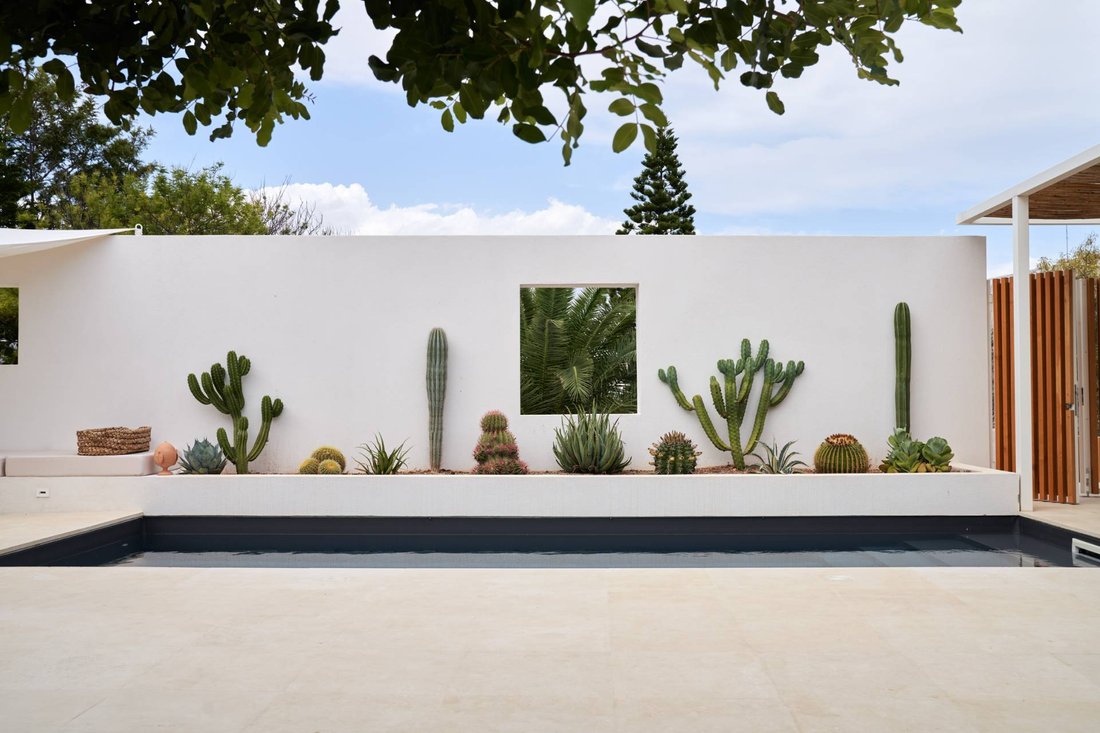
The home is located within a dense urban context in the proximity of a historic town centre that links Gagliano to the sea. The home has a balanced equilibrium between the interior spaces and the exterior patio. Following the tradition of the Roman domus, the aggregated volumes of the property overlook an internal courtyard. The interplay of solid and voids also produce a network of smaller patios that intimately connected single rooms to the exterior. The central courtyard, however, is the real heart of the house, a place of conviviality and play, where the swimming pool and the carefully selected vegetation reproduce the presence of natural elements.
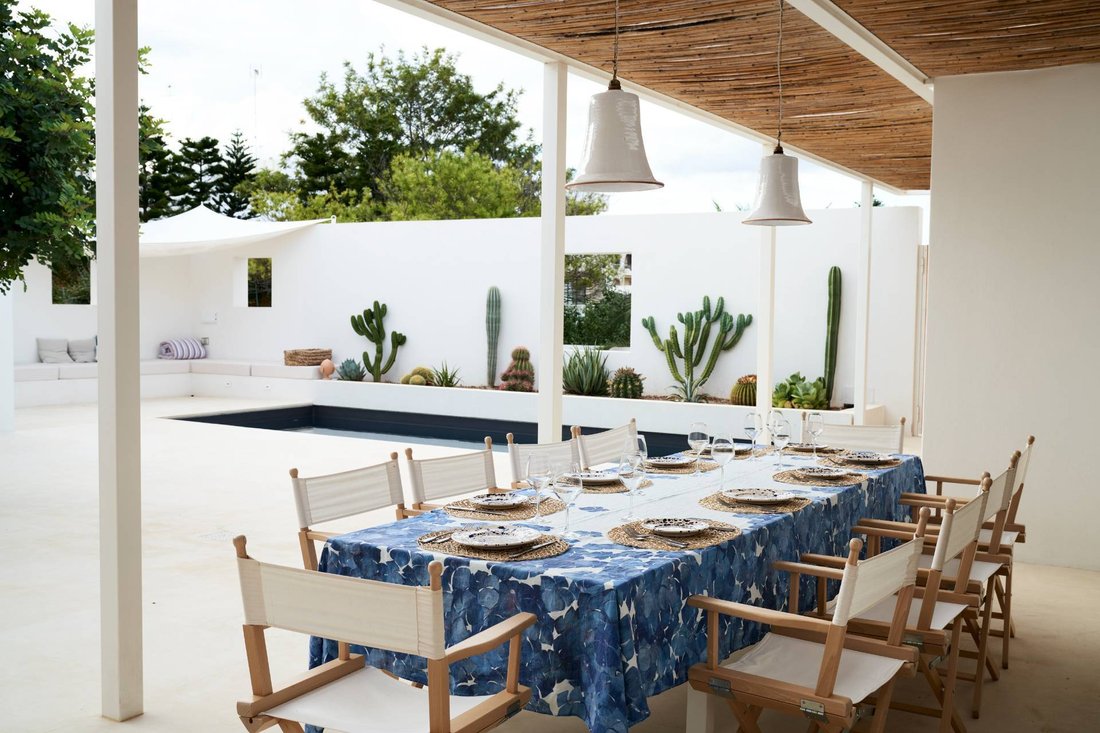
Overlooking the patio, is a 12m high tower where all the main bedrooms are located. The tower is in line with the bell tower of the church of San Rocco and, while hosting all the bedrooms, it offers a suggestive visual access to the sea. This element is reminiscent of the Norman watchtowers, a typical and fascinating element of the coastal landscape of Salento. The spaces surrounding the patio are connected to the exterior through large double-glazed sliding windows establishing a continuous flow of the interior into the exterior and, vice versa, rendering the exterior as part of the most intimate rooms of the house. The threshold between interior and exterior is marked by the presence of an external canopy made of galvanised iron and covered with bamboo, that connects all the volumes of the house in a single architectural element. This playful exchange between the natural elements and the architecture, the inside and the outside enhances the spiritual well-being of the inhabitants.
CIN IT075028C200063079
-
Type de propriété
Maison
Caractéristiques
- Piscine
- Terrasse
- Cheminée
- Côtières
- Haut plafond
- Climatisation
Explorez le secteur

L'agent vous contactera bientôt par
Publié par
Réserver une visite avec Italy Sir Retreats
Choisissez une date et si vous souhaitez une visite virtuelle ou en personne avec l’agent.

La confiance des plus grands courtiers du monde
Les agents des propriétés les plus exceptionnelles du monde publient sur JamesEdition.
- Des annonces de Sotheby's, Christie's, BARNES et Engel & Völkers
- Chaque annonce est vérifiée avant sa mise en ligne
- Contactez directement des agents vérifiés
En continuant, vous acceptez nos Conditions et notre Politique de confidentialité.