

Prix sur demande
Palais À Haz Zebbug
- Mis à jour: Août 7
- 17
À propos de la propriété
La description a été traduite automatiquement.
La description est affichée dans la langue d'origine.
Situé à la périphérie de Haz-Zebbug, ce palais est un magnifique exemple de la typologie baroque tardive des grandes résidences appartenant à la noblesse maltaise. Construit au milieu du XVIIIe siècle, il a continué à servir de résidence patricienne jusqu’à la fin du XXe siècle. Le complexe complexe comprend le grand palais et ses jardins imposants d’un côté.
Le palais est articulé selon une g
Le palais est articulé selon une g
Set in the outskirts of Haz-Zebbug, this Palazzo is a magnificent example of the late Baroque typology of grand residences owned by the Maltese nobility. Built in the mid 18th Century it continued to serve as a patrician residence right-up to the end of the 20th Century. The elaborate complex consists of the grand Palazzo and its imposing gardens on one side.
The Palace is articulated in an ar
The Palace is articulated in an ar
Situé à la périphérie de Haz-Zebbug, ce palais est un magnifique exemple de la typologie baroque tardive des grandes résidences appartenant à la noblesse maltaise. Construit au milieu du XVIIIe siècle, il a continué à servir de résidence patricienne jusqu’à la fin du XXe siècle. Le complexe complexe comprend le grand palais et ses jardins imposants d’un côté.
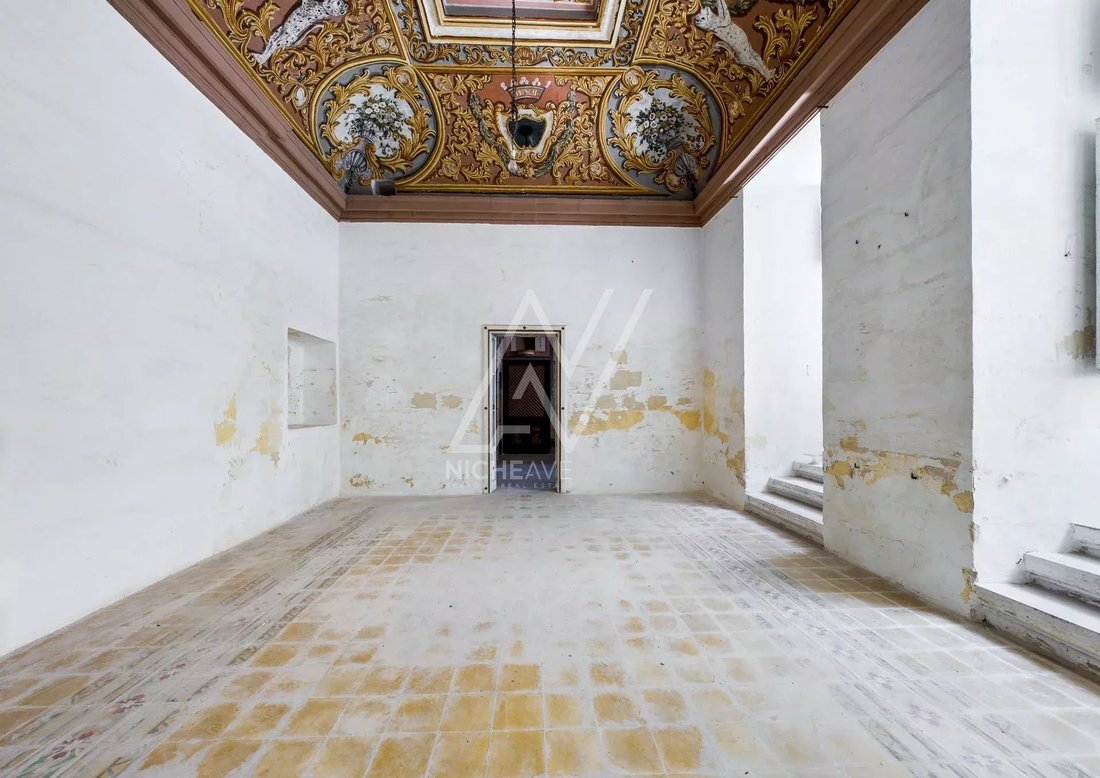
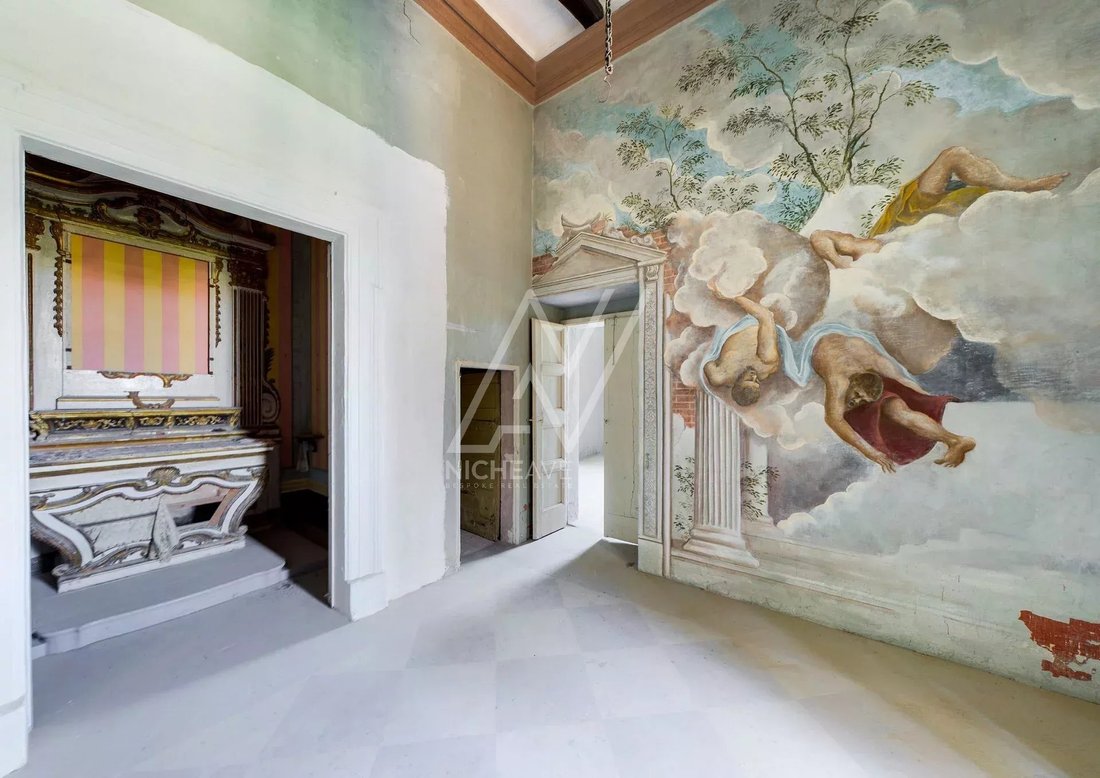
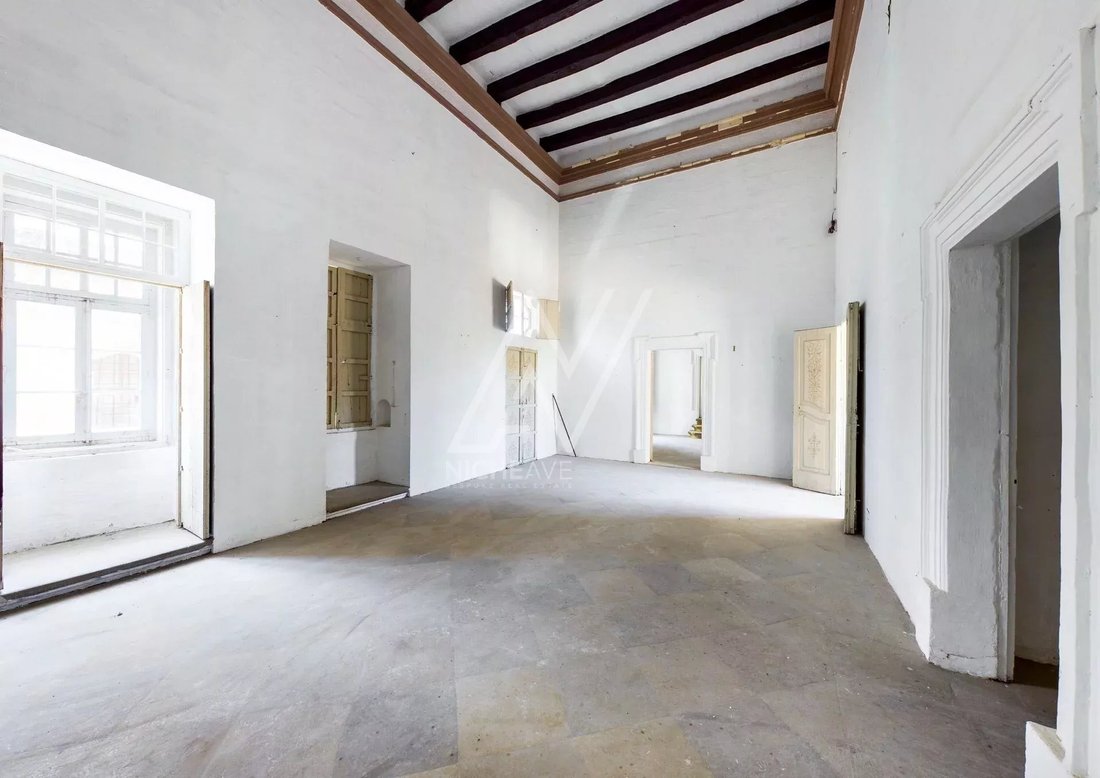
Le palais est articulé selon une grammaire architecturale typique de l’époque. Il est construit sur deux étages et possède une imposante porte centrale flanquée de pièces de service de chaque côté du rez-de-chaussée. La résidence principale de la famille se trouvait dans les vastes salles à haut plafond du piano nobile au premier étage. La particularité du palais était l’intégration au rez-de-chaussée d’un théâtre privé pour le divertissement littéraire et musical des résidents et de leurs invités. Il s’agit d’une caractéristique extraordinaire qui contient encore la plupart de ses peintures murales et éléments décoratifs d’origine.
La finesse et la sophistication de l’ensemble du complexe se retrouvent également dans les détails, tels que les sculptures décoratives sur pierre et les travaux en fer forgé. Certaines salles ont leurs voûtes ornées en trompe-l’œil de motifs architecturaux fictifs qui donnent l’illusion d’un espace décoratif mis en perspective. Ces ensembles décoratifs appartenaient à la période baroque tardive et étaient souvent utilisés dans de grandes résidences. L’échelle du piano nobile, avec ses rapports entre hauteur et largeur, contredit l’intention de faire de cette résidence l’une des plus belles de l’île.
L’accès au jardin se fait par une large entrée fermée, qui desservait à l’origine les calèches. Le jardin est aménagé en sections qui ont des allées reliant une partie à l’autre. Ses éléments formels se combinent à des éléments rustiques qui façonnent la splendeur de ce qui était à l’origine l’un des plus beaux jardins de cette partie de l’île. Dans sa splendeur et sa grandeur, le Palazzo témoigne de l’élégance de l’héritage et du patrimoine culturel maltais.
Le palais est articulé selon une grammaire architecturale typique de l’époque. Il est construit sur deux étages et possède une imposante porte centrale flanquée de pièces de service de chaque côté du rez-de-chaussée. La résidence principale de la famille se trouvait dans les vastes salles à haut plafond du piano nobile au premier étage. La particularité du palais était l’intégration au rez-de-chaussée d’un théâtre privé pour le divertissement littéraire et musical des résidents et de leurs invités. Il s’agit d’une caractéristique extraordinaire qui contient encore la plupart de ses peintures murales et éléments décoratifs d’origine.
La finesse et la sophistication de l’ensemble du complexe se retrouvent également dans les détails, tels que les sculptures décoratives sur pierre et les travaux en fer forgé. Certaines salles ont leurs voûtes ornées en trompe-l’œil de motifs architecturaux fictifs qui donnent l’illusion d’un espace décoratif mis en perspective. Ces ensembles décoratifs appartenaient à la période baroque tardive et étaient souvent utilisés dans de grandes résidences. L’échelle du piano nobile, avec ses rapports entre hauteur et largeur, contredit l’intention de faire de cette résidence l’une des plus belles de l’île.
L’accès au jardin se fait par une large entrée fermée, qui desservait à l’origine les calèches. Le jardin est aménagé en sections qui ont des allées reliant une partie à l’autre. Ses éléments formels se combinent à des éléments rustiques qui façonnent la splendeur de ce qui était à l’origine l’un des plus beaux jardins de cette partie de l’île. Dans sa splendeur et sa grandeur, le Palazzo témoigne de l’élégance de l’héritage et du patrimoine culturel maltais.
Set in the outskirts of Haz-Zebbug, this Palazzo is a magnificent example of the late Baroque typology of grand residences owned by the Maltese nobility. Built in the mid 18th Century it continued to serve as a patrician residence right-up to the end of the 20th Century. The elaborate complex consists of the grand Palazzo and its imposing gardens on one side.
The Palace is articulated in an architectural grammar, typical of the period. It is built on two floors, has an imposing central doorway flanked by service rooms on either side of the ground floor. The main residence of the family was in the expansive high-ceiling halls of the piano nobile on the first floor. Unique to the palace, was the incorporation in its ground floor of a private theatre for the literary and musical entertainment of the residents and their guests. This is an extraordinary feature that still contains much of its original wall paintings and decorative elements.
The finesse and sophistication of the entire complex is also found in the detailing, such as the decorative stone carvings and wrought iron work. Some of the halls have their vaults depicted with Trompe-l’oeil decoration of fictive architectural motives that serve to give the illusion of decorative space placed in perspective. Such decorative ensembles belonged to the late baroque period and were often used in grand residences. The scale of the piano nobile with its height to width relationships belies the intent to make the residence one of the finest on the island.
Access to the garden is from a wide gated entrance, that originally served the carriages. The garden is laid out in sections that have paths joining one part to the other. Its formal elements combine with rustic features that shape the splendour of what originally was one of the finest garden in this part of the island. The Palazzo stands in its magnificence and grandeur as testimony of the elegance of Maltese heritage and cultural patrimony.
The Palace is articulated in an architectural grammar, typical of the period. It is built on two floors, has an imposing central doorway flanked by service rooms on either side of the ground floor. The main residence of the family was in the expansive high-ceiling halls of the piano nobile on the first floor. Unique to the palace, was the incorporation in its ground floor of a private theatre for the literary and musical entertainment of the residents and their guests. This is an extraordinary feature that still contains much of its original wall paintings and decorative elements.
The finesse and sophistication of the entire complex is also found in the detailing, such as the decorative stone carvings and wrought iron work. Some of the halls have their vaults depicted with Trompe-l’oeil decoration of fictive architectural motives that serve to give the illusion of decorative space placed in perspective. Such decorative ensembles belonged to the late baroque period and were often used in grand residences. The scale of the piano nobile with its height to width relationships belies the intent to make the residence one of the finest on the island.
Access to the garden is from a wide gated entrance, that originally served the carriages. The garden is laid out in sections that have paths joining one part to the other. Its formal elements combine with rustic features that shape the splendour of what originally was one of the finest garden in this part of the island. The Palazzo stands in its magnificence and grandeur as testimony of the elegance of Maltese heritage and cultural patrimony.
-
Type de propriété
Maison
-
Étages
2
Caractéristiques
- Jardin
- Cheminée
- Haut plafond
- Balcon
Explorez le secteur
Ħaż-Żebbuġ, Malte
Voir sur Google Maps
Prix par sqft
Faible
Élevé
Inscrit il y a 4 ans
Vous vous êtes renseigné sur ce bien
L'agent vous contactera bientôt par
Publié par
56
Annonces
2022
Inscrit
Réserver une visite avec the agent
Choisissez une date et si vous souhaitez une visite virtuelle ou en personne avec l’agent.
Date préférée
Type de visite
Dernière mise à jour
Août 7
Première mise en ligne
Mars 17, 2023
Référence de l’annonce
82265809
La confiance des plus grands courtiers du monde
Les agents des propriétés les plus exceptionnelles du monde publient sur JamesEdition.
- Des annonces de Sotheby's, Christie's, BARNES et Engel & Völkers
- Chaque annonce est vérifiée avant sa mise en ligne
- Contactez directement des agents vérifiés
En continuant, vous acceptez nos Conditions et notre Politique de confidentialité.