$1,910,436
Cortijo Avec Oliveraies à Vendre Dans La Vallée De La Rivière Guadalcobacín
- 10 Chambres
- 3 SdB
- 3,757 Sqft
-
32
Vues des 30 derniers jours
- 14
À propos de la propriété
La description a été traduite automatiquement.
La description est affichée dans la langue d'origine.
À 8km de Ronda, entre les champs de labour et les Olivares de la vallée de la rivière Guadalcobacín, nous trouvons un Cortijo plein de charme et d’histoire, appelé Cortijo de La Vizcondesa, son nom vient des anciens propriétaires, les vice-comtes de Torres de Luzón, titre accordé par Carlos II en 1674 à don Juan Bernardino de Ahumada y Céspedes.
Le Cortijo, situé sur une parcelle de près
Le Cortijo, situé sur une parcelle de près
8km from Ronda, amidst farmland and olive groves in the valley of the Guadalcobacín River, we find a farmhouse with tradition and history, the so-called Cortijo de La Vizcondesa. Its name derives from the former owners, the Viscounts of Torres de Luzón, a title granted by Carlos II in the year 1674 to Don Juan Bernardino de Ahumada y Céspedes.
The farmhouse, located on a plot of almost 62
The farmhouse, located on a plot of almost 62
À 8km de Ronda, entre les champs de labour et les Olivares de la vallée de la rivière Guadalcobacín, nous trouvons un Cortijo plein de charme et d’histoire, appelé Cortijo de La Vizcondesa, son nom vient des anciens propriétaires, les vice-comtes de Torres de Luzón, titre accordé par Carlos II en 1674 à don Juan Bernardino de Ahumada y Céspedes.
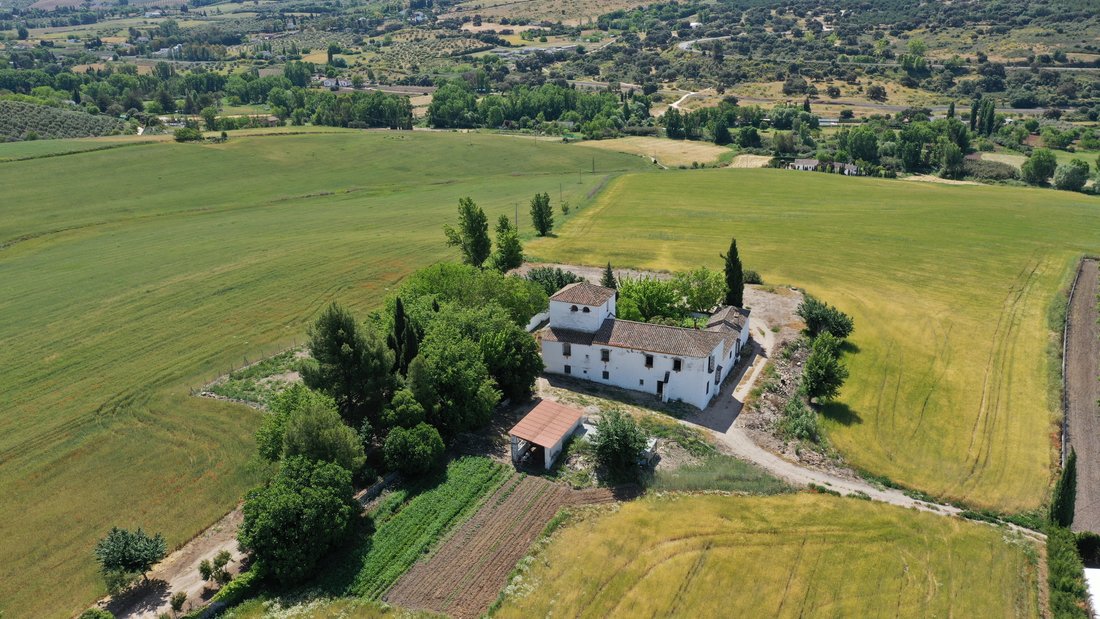
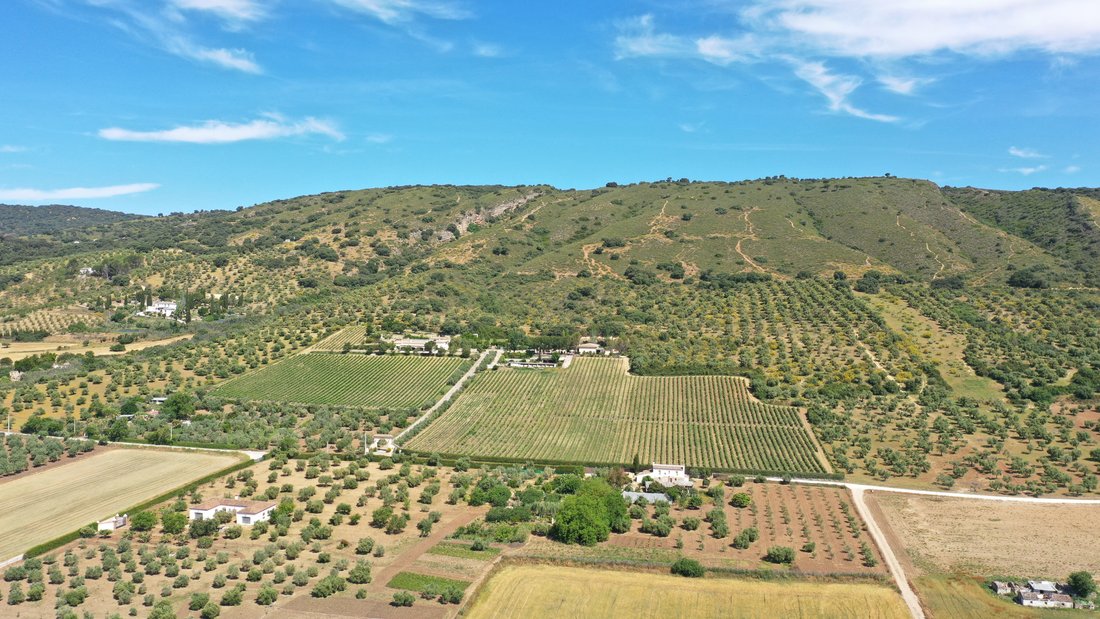
Le Cortijo, situé sur une parcelle de près de 62 hectares, avec 46 hectares de terres arables et le reste en Olivares, et avec la possibilité de vente séparée, est en parfait état de fonctionnement. Il dispose d’une terre de très bonne qualité pour l’agriculture, avec une couverture végétale de plus de 2 mètres d’épaisseur, beaucoup d’eau et des systèmes de drainage, bordant au sud la rivière Guadalcobacín.
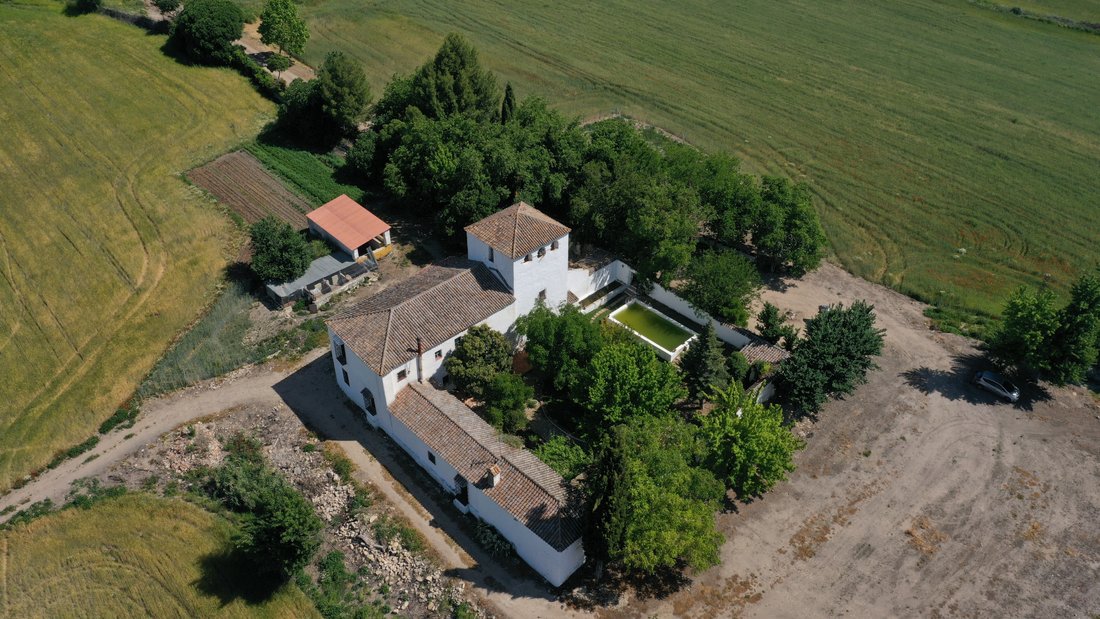
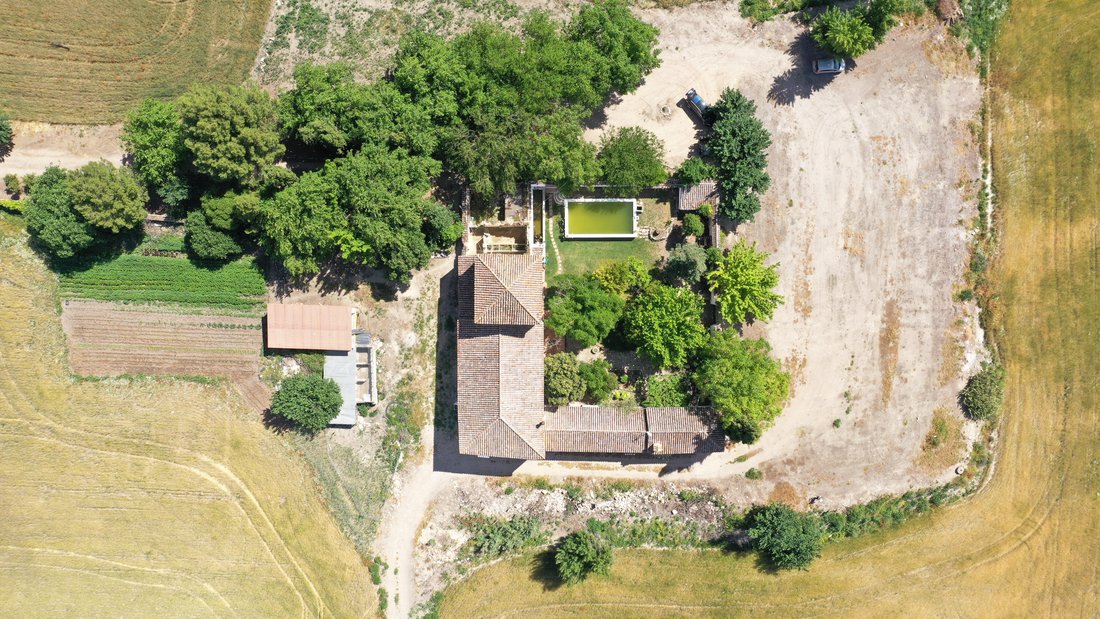
Le Cortijo lui-même se compose de la maison principale et de la maison du gardien, d’une chapelle, d’une tour emblématique avec clocher et belvédère offrant une vue sur la chaîne de montagnes de Ronda, d’une étable, de deux remises et d’un jardin avec piscine.
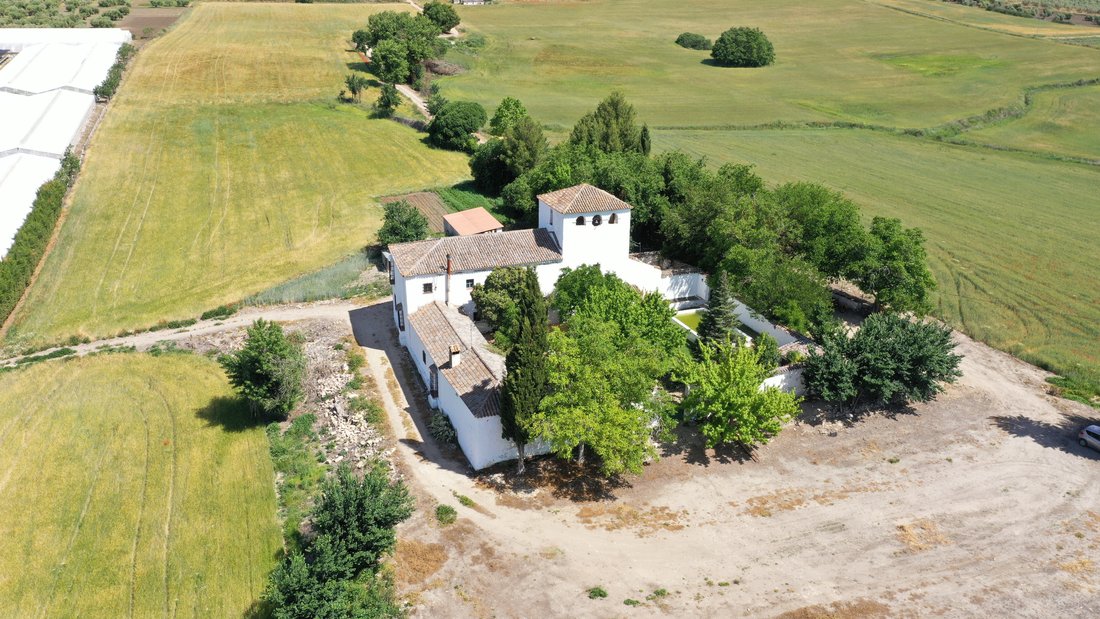
L’entrée du cortijo est précédée par une vaste place, en partie pavée et en partie non, qui mène à travers une entrée sobre, flanquée de deux piliers, à une cour centrale avec un étang rond, des pots de fleurs et des palmiers. Au fond de la cour, nous apercevons le bâtiment, constitué d’une tour apparemment massive et solide surmontée d’un belvédère avec une galerie d’arcades en plein cintre où se trouve une cloche.
Adjacente à la tour se trouve une grande maison, résidence des propriétaires sur deux étages. Au premier étage, il y a un salon avec une cheminée, une salle à manger, une chambre à coucher, un salon, une cuisine et une salle de bain, tandis qu’à l’étage supérieur se trouvent 7 chambres et une salle de bain. Derrière ce bâtiment, il y a des écuries et d’autres dépendances agricoles. À côté de cet édifice se trouve une autre structure rectangulaire d’un seul étage, abritant la maison du gardien, avec deux chambres, un salon avec cheminée, une cuisine et une salle de bain.
Le caractère fermé des bâtiments de ce cortijo, ainsi que la tour avec ses galeries, laissent penser que le corps principal du bâtiment a été construit à la fin du XVIIe siècle ou au début du XVIIIe siècle, sur lequel ont été réalisées des extensions et des rénovations ultérieures au fil des ans.
Ce cortijo est en parfait état de fonctionnement avec ses terres agricoles et ses Olivares, étant également idéal pour une exploitation ludique.
Le Cortijo, situé sur une parcelle de près de 62 hectares, avec 46 hectares de terres arables et le reste en Olivares, et avec la possibilité de vente séparée, est en parfait état de fonctionnement. Il dispose d’une terre de très bonne qualité pour l’agriculture, avec une couverture végétale de plus de 2 mètres d’épaisseur, beaucoup d’eau et des systèmes de drainage, bordant au sud la rivière Guadalcobacín.
Le Cortijo lui-même se compose de la maison principale et de la maison du gardien, d’une chapelle, d’une tour emblématique avec clocher et belvédère offrant une vue sur la chaîne de montagnes de Ronda, d’une étable, de deux remises et d’un jardin avec piscine.
L’entrée du cortijo est précédée par une vaste place, en partie pavée et en partie non, qui mène à travers une entrée sobre, flanquée de deux piliers, à une cour centrale avec un étang rond, des pots de fleurs et des palmiers. Au fond de la cour, nous apercevons le bâtiment, constitué d’une tour apparemment massive et solide surmontée d’un belvédère avec une galerie d’arcades en plein cintre où se trouve une cloche.
Adjacente à la tour se trouve une grande maison, résidence des propriétaires sur deux étages. Au premier étage, il y a un salon avec une cheminée, une salle à manger, une chambre à coucher, un salon, une cuisine et une salle de bain, tandis qu’à l’étage supérieur se trouvent 7 chambres et une salle de bain. Derrière ce bâtiment, il y a des écuries et d’autres dépendances agricoles. À côté de cet édifice se trouve une autre structure rectangulaire d’un seul étage, abritant la maison du gardien, avec deux chambres, un salon avec cheminée, une cuisine et une salle de bain.
Le caractère fermé des bâtiments de ce cortijo, ainsi que la tour avec ses galeries, laissent penser que le corps principal du bâtiment a été construit à la fin du XVIIe siècle ou au début du XVIIIe siècle, sur lequel ont été réalisées des extensions et des rénovations ultérieures au fil des ans.
Ce cortijo est en parfait état de fonctionnement avec ses terres agricoles et ses Olivares, étant également idéal pour une exploitation ludique.
8km from Ronda, amidst farmland and olive groves in the valley of the Guadalcobacín River, we find a farmhouse with tradition and history, the so-called Cortijo de La Vizcondesa. Its name derives from the former owners, the Viscounts of Torres de Luzón, a title granted by Carlos II in the year 1674 to Don Juan Bernardino de Ahumada y Céspedes.
The farmhouse, located on a plot of almost 62 hectares, with 46 hectares of farmland and the rest olive groves, with the possibility of being sold separately, is in perfect working order. It has very good quality land for farming, with a vegetation cover of over 2 meters thick, abundant water, and drainage systems, bordering to the south with the Guadalcobacín River.
The farmhouse itself consists of the main house and a caretaker’s house, a chapel, an emblematic tower with a belfry and a viewpoint overlooking the Ronda mountain range, a livestock shed, two utility rooms, and a garden with a swimming pool.
The entrance to the farmhouse is preceded by a large square, partly paved and partly not, which leads through a simple entrance, flanked by two pillars, to a central courtyard with a round pond, pots and palm trees. At the back of the courtyard, we can see the building, consisting of a tower with a solid, sturdy appearance topped by a lookout with a gallery of lowered round arches, where a bell is housed.
Attached to the tower is a mansion, the owners’ residence on two floors. On the main floor, there is a living room with a fireplace, dining room, bedroom, sitting room, kitchen, and bathroom. Upstairs, there are 7 bedrooms and a bathroom. Behind this building, there are stables and some agricultural outbuildings. Linked to this building is another rectangular one-story structure, the caretaker’s residence, with two bedrooms, a living room with a fireplace, kitchen, and bathroom.
The closed-off appearance of the buildings of this farmhouse, as well as the tower with its galleries, lead us to believe that the original structure of the building was constructed in the late 17th or early 18th century, with subsequent expansions and renovations carried out over the years.
This farmhouse is fully functional with its farmland and olive groves, making it ideal for both agricultural and recreational exploitation.
The farmhouse, located on a plot of almost 62 hectares, with 46 hectares of farmland and the rest olive groves, with the possibility of being sold separately, is in perfect working order. It has very good quality land for farming, with a vegetation cover of over 2 meters thick, abundant water, and drainage systems, bordering to the south with the Guadalcobacín River.
The farmhouse itself consists of the main house and a caretaker’s house, a chapel, an emblematic tower with a belfry and a viewpoint overlooking the Ronda mountain range, a livestock shed, two utility rooms, and a garden with a swimming pool.
The entrance to the farmhouse is preceded by a large square, partly paved and partly not, which leads through a simple entrance, flanked by two pillars, to a central courtyard with a round pond, pots and palm trees. At the back of the courtyard, we can see the building, consisting of a tower with a solid, sturdy appearance topped by a lookout with a gallery of lowered round arches, where a bell is housed.
Attached to the tower is a mansion, the owners’ residence on two floors. On the main floor, there is a living room with a fireplace, dining room, bedroom, sitting room, kitchen, and bathroom. Upstairs, there are 7 bedrooms and a bathroom. Behind this building, there are stables and some agricultural outbuildings. Linked to this building is another rectangular one-story structure, the caretaker’s residence, with two bedrooms, a living room with a fireplace, kitchen, and bathroom.
The closed-off appearance of the buildings of this farmhouse, as well as the tower with its galleries, lead us to believe that the original structure of the building was constructed in the late 17th or early 18th century, with subsequent expansions and renovations carried out over the years.
This farmhouse is fully functional with its farmland and olive groves, making it ideal for both agricultural and recreational exploitation.
-
Type de propriété
Finca
-
Prix/pied²
$508
Caractéristiques
- Jardin
- Piscine
- Terrasse
- Garage
- Équestre
- Vue sur la montagne
- Cheminée
- Manoir
- Cuisinière à gaz
Caractéristiques
Lot
- Vue sur la montagne
- Équestre
- Manoir
Intérieur
- Cheminée
- Climatisation
- Cuisinière à gaz
Outdoor
- Terrasse
- Piscine
- Garage
- Jardin
Explorez le secteur
Ronda, 29400, Andalousie, Espagne
Voir sur Google Maps
Prix par sqft
Faible
Élevé
Ronda is one of the most historically significant cities in Andalusia, set dramatically on a plateau divided by the El Tajo gorge, with sheer cliffs dropping nearly 100 metres to the Guadalevín River below. The city’s old town, La Ciudad, retains its Moorish street plan and is home to one of Spain’s oldest bullrings, the Plaza de Toros de Ronda, built in 1785. The surrounding Serranía de Ronda provides a landscape of exceptional scale and character that defines life here.
Daily life in Ronda centres on the Alameda del Tajo gardens, the market on Calle Virgen de la Paz, and restaurants such as Bardal, which holds two Michelin stars, and Tragatá, its more casual sibling. The Puente Nuevo bridge and the Arab Baths are within the city itself. The surrounding countryside offers direct access to the Sierra de las Nieves National Park.
Ronda is served by its own train station with direct connections to Málaga, a journey of approximately two hours, and to Algeciras. By road, Málaga is roughly 100 kilometres via the A-367, taking around one hour and fifteen minutes. Málaga-Costa del Sol Airport is the primary international gateway, handling routes across Europe and beyond, and is reachable in under ninety minutes by car.
Daily life in Ronda centres on the Alameda del Tajo gardens, the market on Calle Virgen de la Paz, and restaurants such as Bardal, which holds two Michelin stars, and Tragatá, its more casual sibling. The Puente Nuevo bridge and the Arab Baths are within the city itself. The surrounding countryside offers direct access to the Sierra de las Nieves National Park.
Ronda is served by its own train station with direct connections to Málaga, a journey of approximately two hours, and to Algeciras. By road, Málaga is roughly 100 kilometres via the A-367, taking around one hour and fifteen minutes. Málaga-Costa del Sol Airport is the primary international gateway, handling routes across Europe and beyond, and is reachable in under ninety minutes by car.
Voir à proximité
Attractions
Écoles
Málaga-Costa del Sol Airport
Airport
94 min
Ronda Train Station
Train Station
5 min
Puente Nuevo
Culture & Heritage
3 min
Restaurante Bardal
Dining & Wine
3 min
La Casa del Rey Moro
Culture & Heritage
4 min
Colegio Juan de la Rosa
Public School
6 min
Sagrado Corazón de Jesús
Private School
7 min
Inscrit il y a 2 ans
Vous vous êtes renseigné sur ce bien
L'agent vous contactera bientôt par
Publié par
6
Annonces
2024
Inscrit
Réserver une visite avec Marta Amann
Choisissez une date et si vous souhaitez une visite virtuelle ou en personne avec l’agent.
Date préférée
Type de visite

Spain Sotheby's International Realty
Plaza Nueva, 3, 41001, Sevilla, Sevilla, Spain
Voir le profil de l’agence
Dernière mise à jour
Août 7
Première mise en ligne
Jun 13, 2024
Lien de l’annonce
Référence de l’annonce
FE2HX3
Propriétés similaires à proximité
Nouvelles annonces à Ronda

Explorez plus de biens à vendre
Ronda, Andalousie, Espagne types de propriétés
- Corps de ferme à vendre à Ronda, Andalousie, Espagne
- Villas à vendre à Ronda, Andalousie, Espagne
- Maisons de campagne à vendre à Ronda, Andalousie, Espagne
- Fincas à vendre à Ronda, Andalousie, Espagne
- Maisons à vendre à Ronda, Andalousie, Espagne
- Campagne à vendre à Ronda, Andalousie, Espagne
- Chalets à vendre à Ronda, Andalousie, Espagne
Ronda, Andalousie, Espagne Recherches populaires
- Vue sur la rivière propriétés à Ronda, Andalousie, Espagne
- Propriétés avec Ascenseur à Ronda, Andalousie, Espagne
- Équestre propriétés à Ronda, Andalousie, Espagne
- Propriétés avec Piscine à Ronda, Andalousie, Espagne
- Propriétés avec Vignoble / Cave à Ronda, Andalousie, Espagne
- Au bord du lac propriétés à Ronda, Andalousie, Espagne
- Front de rivière propriétés à Ronda, Andalousie, Espagne
Guides et histoires connexes
La confiance des plus grands courtiers du monde
Les agents des propriétés les plus exceptionnelles du monde publient sur JamesEdition.
- Des annonces de Sotheby's, Christie's, BARNES et Engel & Völkers
- Chaque annonce est vérifiée avant sa mise en ligne
- Contactez directement des agents vérifiés
En continuant, vous acceptez nos Conditions et notre Politique de confidentialité.