$885,037
Ancien Moulin À Huile De 1500
- 5 Chambres
- 4 SdB
- 3,294 Sqft
- 2,153 Sqft lot
- Mis à jour: Mars 10, 2025
- 3
À propos de la propriété
La description a été traduite automatiquement.
La description est affichée dans la langue d'origine.
A Rural Complex Through the Centuries: From Medieval Mill to Renovated Oil Mill
The history of this site begins way back in 1410, when it is described as a ”walled mill with a slab roof and two pairs of millstones and with a hut and aqueduct”. This description takes us back to a medieval era, where the mill was a central element of rural life, a place of transformation of grain into flour
The history of this site begins way back in 1410, when it is described as a ”walled mill with a slab roof and two pairs of millstones and with a hut and aqueduct”. This description takes us back to a medieval era, where the mill was a central element of rural life, a place of transformation of grain into flour
A Rural Complex Through the Centuries: From Medieval Mill to Renovated Oil Mill
The history of this site begins way back in 1410, when it is described as a ”walled mill with a slab roof and two pairs of millstones and with a hut and aqueduct”. This description takes us back to a medieval era, where the mill was a central element of rural life, a place of transformation of grain into flour, essential for the subsistence of the community. The presence of two millstones suggests already then a considerable productive activity.
In the following centuries, the mill remained linked to important noble families of the area. In 1660 it belonged to the nobleman Tommaso Montecatini, known as the Visconte, and in 1771 it was still owned by the same family, with a structure that had evolved: now it was called a ”two-palmenti mill with a house and oven for the miller”, indicating the presence of a home for those who worked at the mill and an oven for baking bread, further evidence of the importance of the site for the community.
A significant element that was added over time was the presence of the oil mill adjacent to the mill, with a wash house for the pomace (the residue from the processing of olives), owned by the nobleman Nicolao Orsucci. This coexistence of mill and oil mill testifies to the diversification of agricultural activities in the area, with the production of both flour and oil.
The ownership of the two structures became intertwined over time: in 1808, Nicolao Montecatini owned the mill, while the widow Orsucci owned the oil mill. In 1850, Count Michelangelo Orsucci brought the two properties together under one management.
A significant change of ownership occurred in 1867, when both the mill and the oil mill passed to the Giannini family. From this moment on, the history of the site took a new direction.
The Renovation of the Oil Mill: A Bridge Between Past and Present
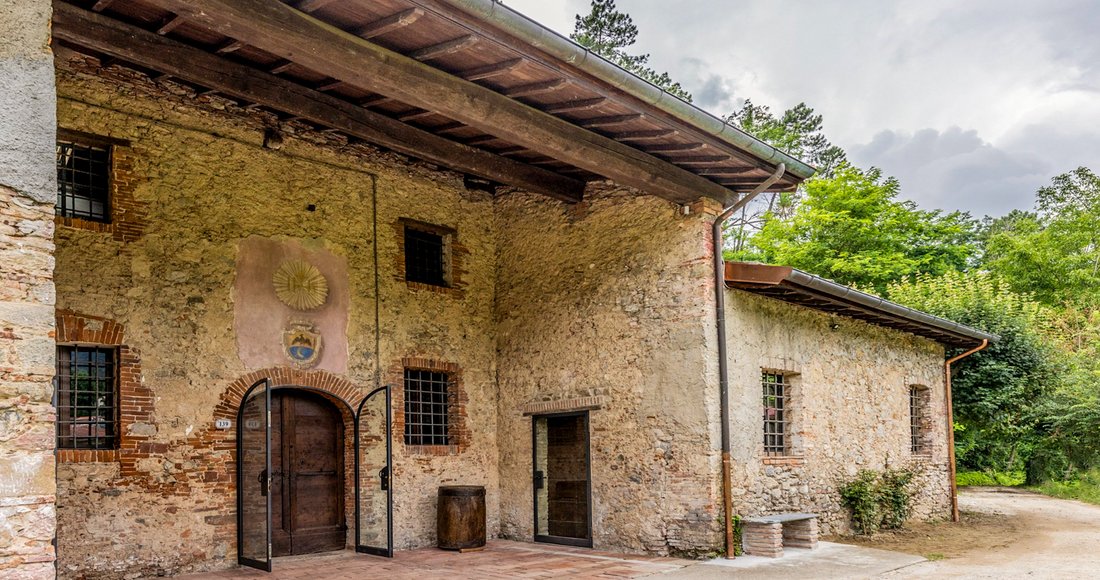
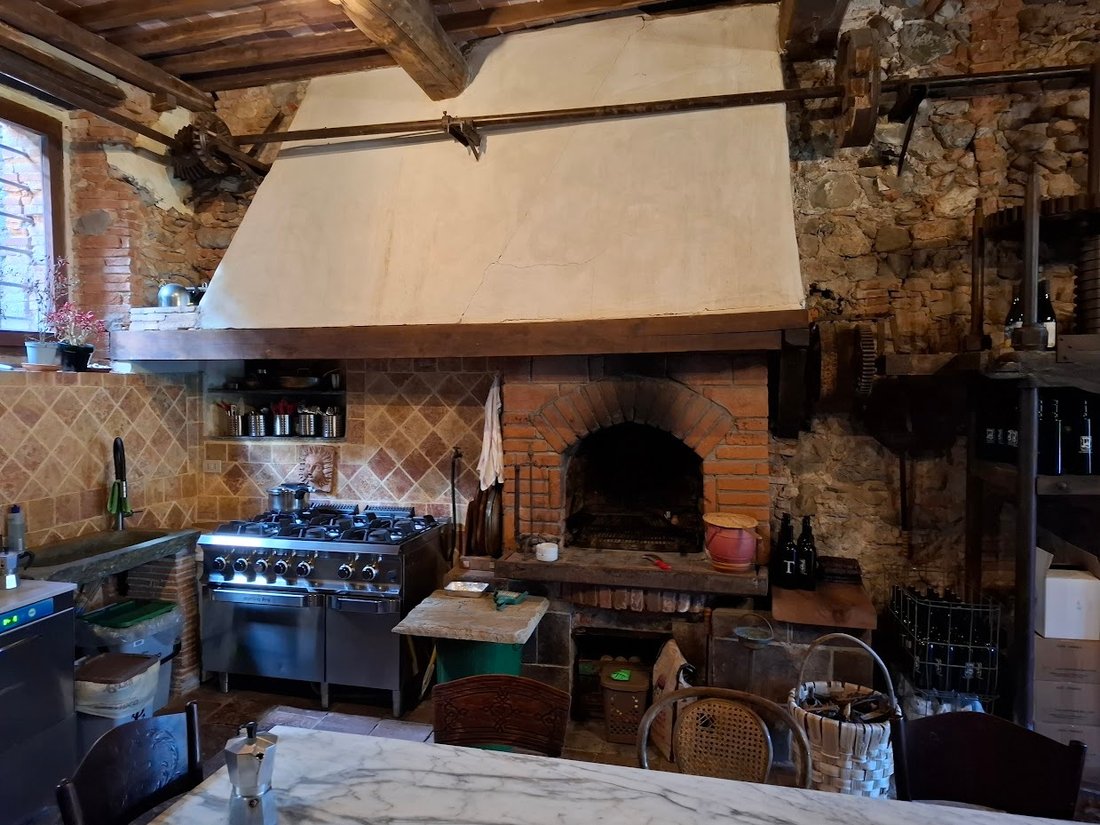
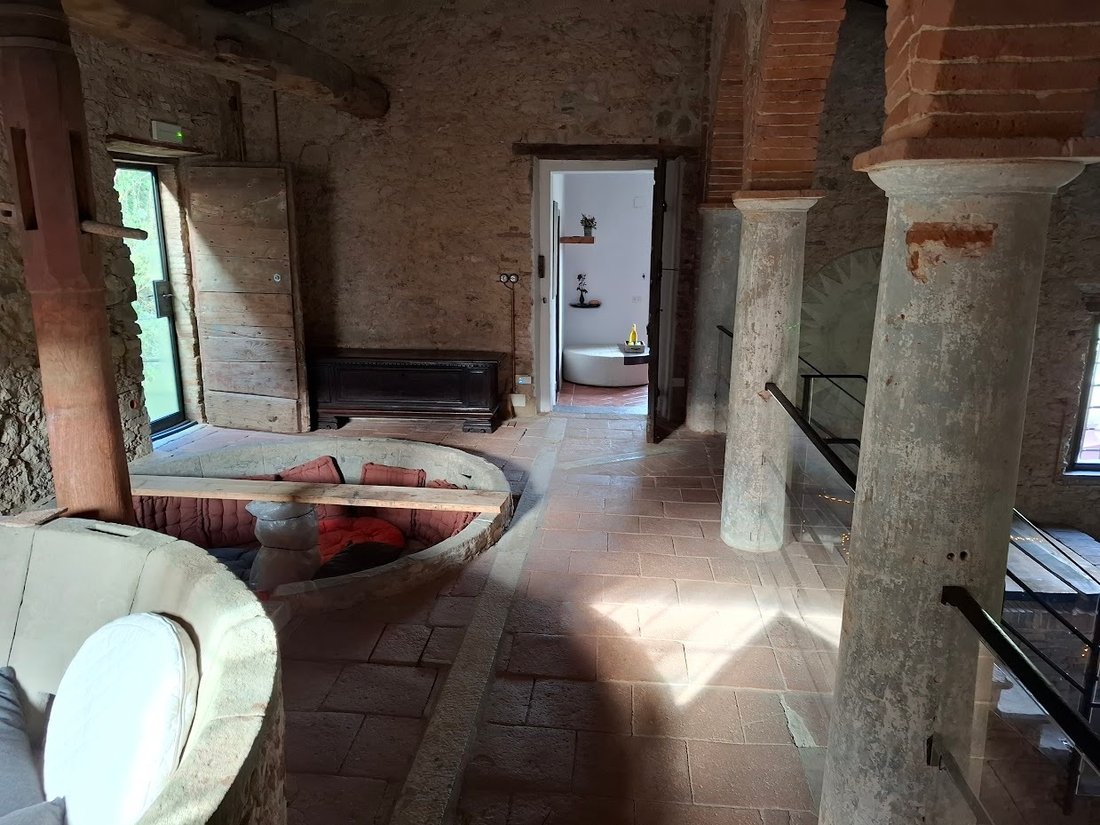
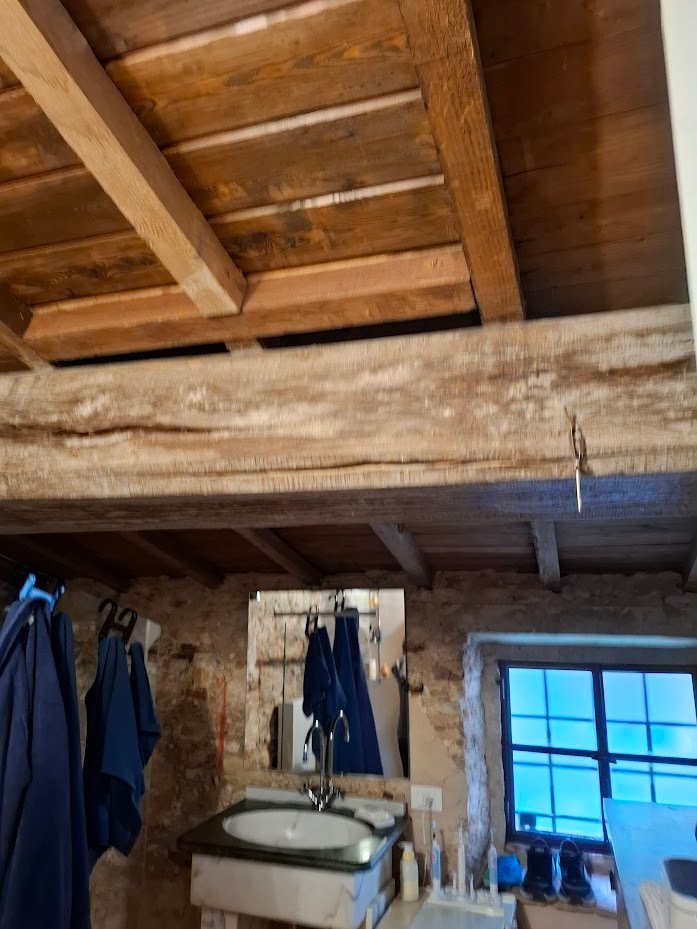
The most recent part of the story is marked by the complete renovation of the oil mill in 2023. This intervention had the merit of preserving the period materials, creating a fascinating combination of past and present. The oil mill was transformed into a tourist accommodation facility, with modern living spaces created within the ancient structure. On the ground floor there are three bedrooms and two bathrooms, while the first floor houses two bedrooms with bathrooms.
An element that inextricably links the oil mill to its past is the stream that flows adjacent, the same one that once provided energy for the mill. This detail not only adds a touch of charm to the place, but also underlines its continuity with its history.
In short, this place represents a precious example of rural architecture that has spanned the centuries, adapting to the needs and changes of time. From its origins as a simple medieval mill, it has evolved into an agricultural complex with a mill and an oil mill, and then transformed, thanks to careful renovation, into a place that combines history with modern comfort.
The history of this site begins way back in 1410, when it is described as a ”walled mill with a slab roof and two pairs of millstones and with a hut and aqueduct”. This description takes us back to a medieval era, where the mill was a central element of rural life, a place of transformation of grain into flour, essential for the subsistence of the community. The presence of two millstones suggests already then a considerable productive activity.
In the following centuries, the mill remained linked to important noble families of the area. In 1660 it belonged to the nobleman Tommaso Montecatini, known as the Visconte, and in 1771 it was still owned by the same family, with a structure that had evolved: now it was called a ”two-palmenti mill with a house and oven for the miller”, indicating the presence of a home for those who worked at the mill and an oven for baking bread, further evidence of the importance of the site for the community.
A significant element that was added over time was the presence of the oil mill adjacent to the mill, with a wash house for the pomace (the residue from the processing of olives), owned by the nobleman Nicolao Orsucci. This coexistence of mill and oil mill testifies to the diversification of agricultural activities in the area, with the production of both flour and oil.
The ownership of the two structures became intertwined over time: in 1808, Nicolao Montecatini owned the mill, while the widow Orsucci owned the oil mill. In 1850, Count Michelangelo Orsucci brought the two properties together under one management.
A significant change of ownership occurred in 1867, when both the mill and the oil mill passed to the Giannini family. From this moment on, the history of the site took a new direction.
The Renovation of the Oil Mill: A Bridge Between Past and Present
The most recent part of the story is marked by the complete renovation of the oil mill in 2023. This intervention had the merit of preserving the period materials, creating a fascinating combination of past and present. The oil mill was transformed into a tourist accommodation facility, with modern living spaces created within the ancient structure. On the ground floor there are three bedrooms and two bathrooms, while the first floor houses two bedrooms with bathrooms.
An element that inextricably links the oil mill to its past is the stream that flows adjacent, the same one that once provided energy for the mill. This detail not only adds a touch of charm to the place, but also underlines its continuity with its history.
In short, this place represents a precious example of rural architecture that has spanned the centuries, adapting to the needs and changes of time. From its origins as a simple medieval mill, it has evolved into an agricultural complex with a mill and an oil mill, and then transformed, thanks to careful renovation, into a place that combines history with modern comfort.
-
Type de propriété
Villa
-
Étages
2
-
Année de construction
1406
-
Prix/pied²
$268
-
Émissions
G
-
Consommation
G
Caractéristiques
- Cheminée
- Vue sur la montagne
- Cuisine ouverte
- Haut plafond
- Stationnement
Explorez le secteur
Via del Mulino, 79, 55041 Nocchi LU, Italy, Toscane, Italie
Voir sur Google Maps
Prix par sqft
Faible
Élevé
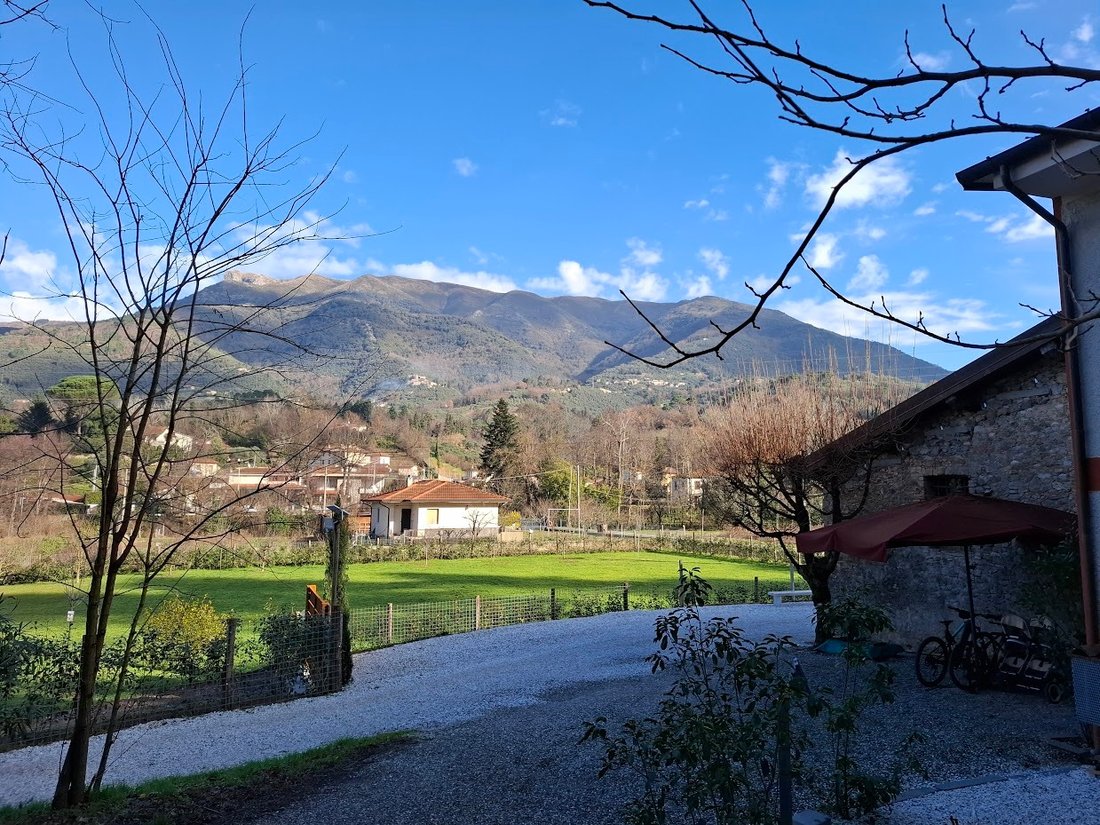
Nichée dans les collines pittoresques de la Toscane, cette propriété à Nocchi offre un cadre de vie raffiné avec un accès à des paysages époustouflants et aux richesses culturelles de la région. À seulement quelques minutes en voiture des villes emblématiques de Lucques et de Pise, profitez de la gastronomie, du shopping et des attractions historiques. Idéal pour ceux qui recherchent la tranquillité avec des conforts modernes, il offre également un accès facile à de belles plages et à des terrains de golf prisés, en faisant une base parfaite pour explorer la campagne italienne.
Voir à proximité
Attractions
Écoles
Aéroport de Pise
Aéroport
38 min
Gare de Viareggio
Gare
28 min
Gare de Lucca
Gare
23 min
Tour de Pise
Culture & Patrimoine
50 min
Musée Puccini
Culture & Patrimoine
30 min
Plage de Viareggio
Plein air & Nature
30 min
École Internationale de Florence
École Internationale
70 min
Collège Cesare Batisti
École publique
15 min
Lycée Scientifique A Vallisneri
École publique
25 min
Inscrit il y a 6 ans
Vous vous êtes renseigné sur ce bien
L'agent vous contactera bientôt par
Publié par
8
Annonces
2020
Inscrit
Réserver une visite avec the agent
Choisissez une date et si vous souhaitez une visite virtuelle ou en personne avec l’agent.
Date préférée
Type de visite
Dernière mise à jour
Mars 10, 2025
Première mise en ligne
Janvier 21, 2025
La confiance des plus grands courtiers du monde
Les agents des propriétés les plus exceptionnelles du monde publient sur JamesEdition.
- Des annonces de Sotheby's, Christie's, BARNES et Engel & Völkers
- Chaque annonce est vérifiée avant sa mise en ligne
- Contactez directement des agents vérifiés
En continuant, vous acceptez nos Conditions et notre Politique de confidentialité.