Prix sur demande
Manoir Historique Monumental Au Cœur De Naples
- 15 Chambres
- 22 SdB
- 21,528 Sqft
- 217
À propos de la propriété
La description a été traduite automatiquement.
La description est affichée dans la langue d'origine.
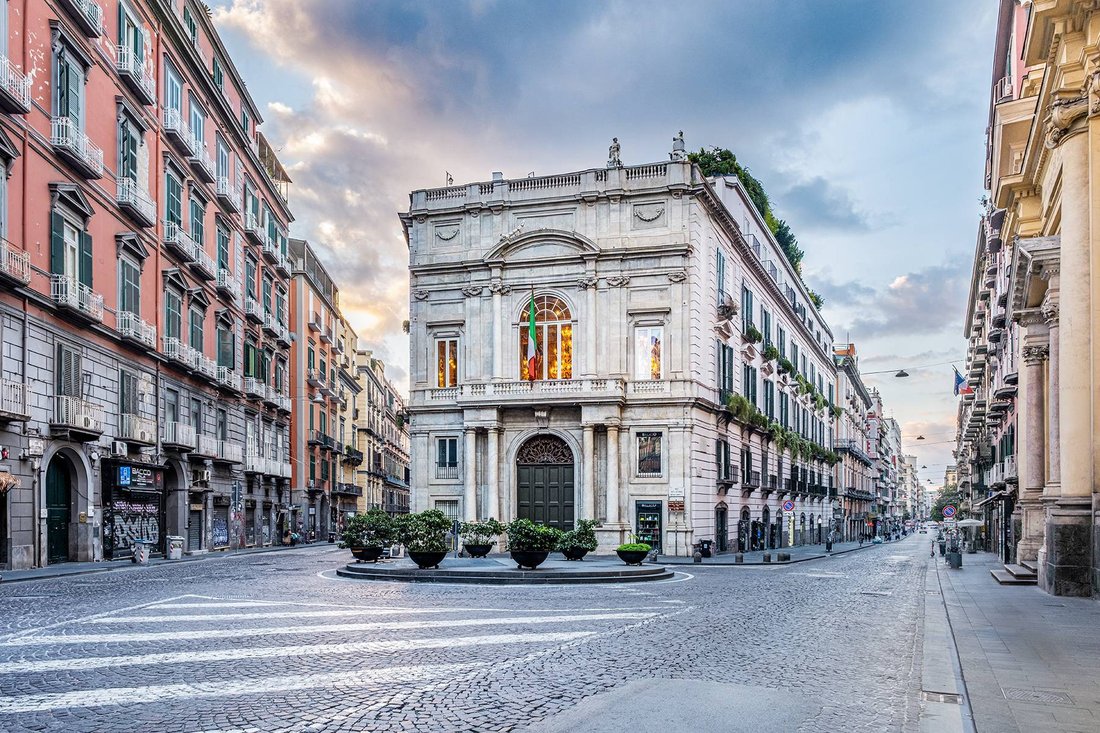
Le Palais Doria D’Angri s’élève imposamment dans le centre historique de Naples, avec sa façade majestueuse faisant face à la colline, comme l’avait commandé Marcantonio Doria à la fin des années 1700, lorsqu’il en confia la reconstruction à Luigi Vanvitelli.
Cette façade devait être un spectacle grandiose pour les monarques qui, depuis le Palais Royal de Capodimonte, descendaient en carrosse j
Cette façade devait être un spectacle grandiose pour les monarques qui, depuis le Palais Royal de Capodimonte, descendaient en carrosse j
Palazzo Doria D’Angri rises imposingly in the historical center of Naples, with its majestic front facing the hill, just as commissioned by Marcantonio Doria who, in the late 1700s, ordered its reconstruction at the hands of Luigi Vanvitelli. That front was to be seen as a sight to behold by the monarchs who, from the Royal Palace of Capodimonte, descended in carriages to the Royal Palace. Palazzo
Le Palais Doria D’Angri s’élève imposamment dans le centre historique de Naples, avec sa façade majestueuse faisant face à la colline, comme l’avait commandé Marcantonio Doria à la fin des années 1700, lorsqu’il en confia la reconstruction à Luigi Vanvitelli.
Cette façade devait être un spectacle grandiose pour les monarques qui, depuis le Palais Royal de Capodimonte, descendaient en carrosse jusqu’au Palais Royal. Le Palais Doria devint célèbre un siècle plus tard lorsque, le 7 septembre 1860, Giuseppe Garibaldi annonça depuis son balcon l’annexion du Royaume des Deux-Siciles à l’Italie.
Ce palais en forme de trapèze possède deux cours intérieures, la première hexagonale et la seconde rectangulaire, parfaitement alignées grâce à un jeu habile de perspectives, créant un télescope optique qui permet d’apercevoir Spaccanapoli tout en conférant une luminosité remarquable.
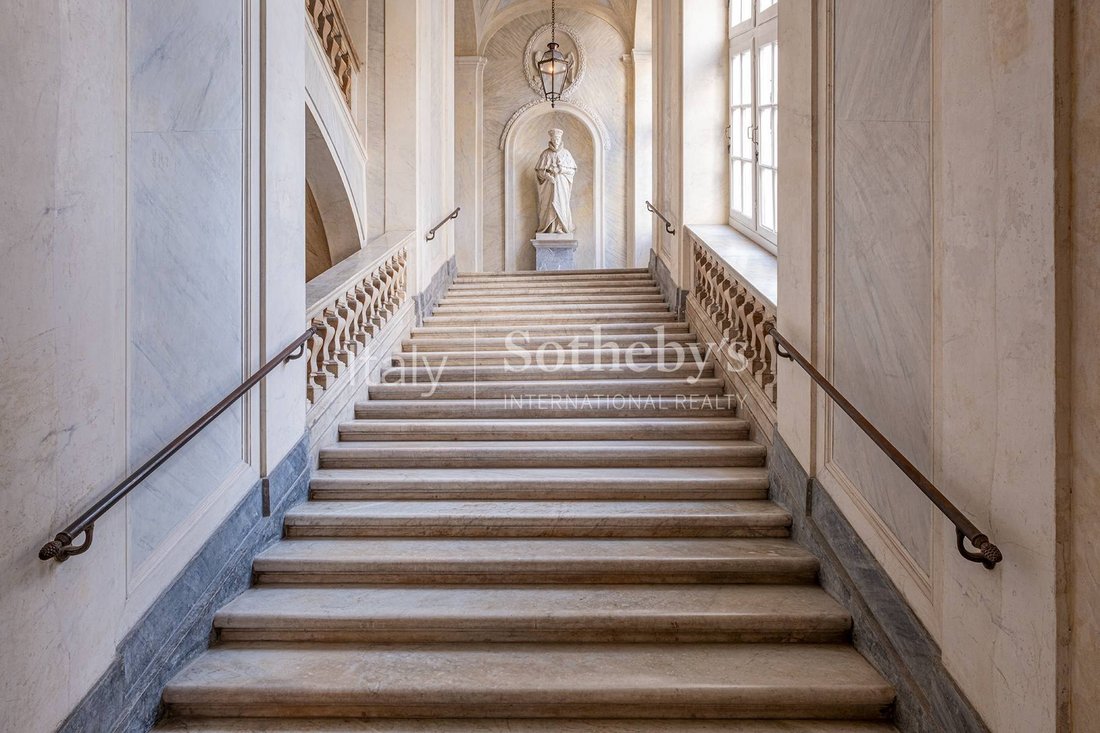
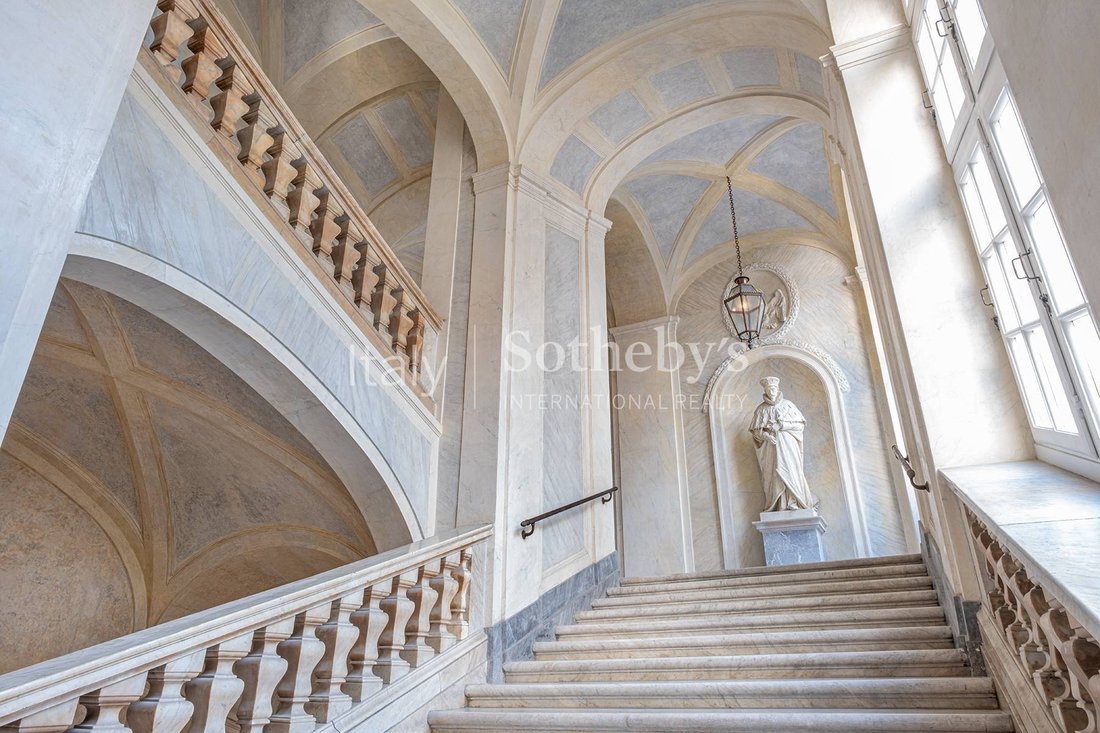
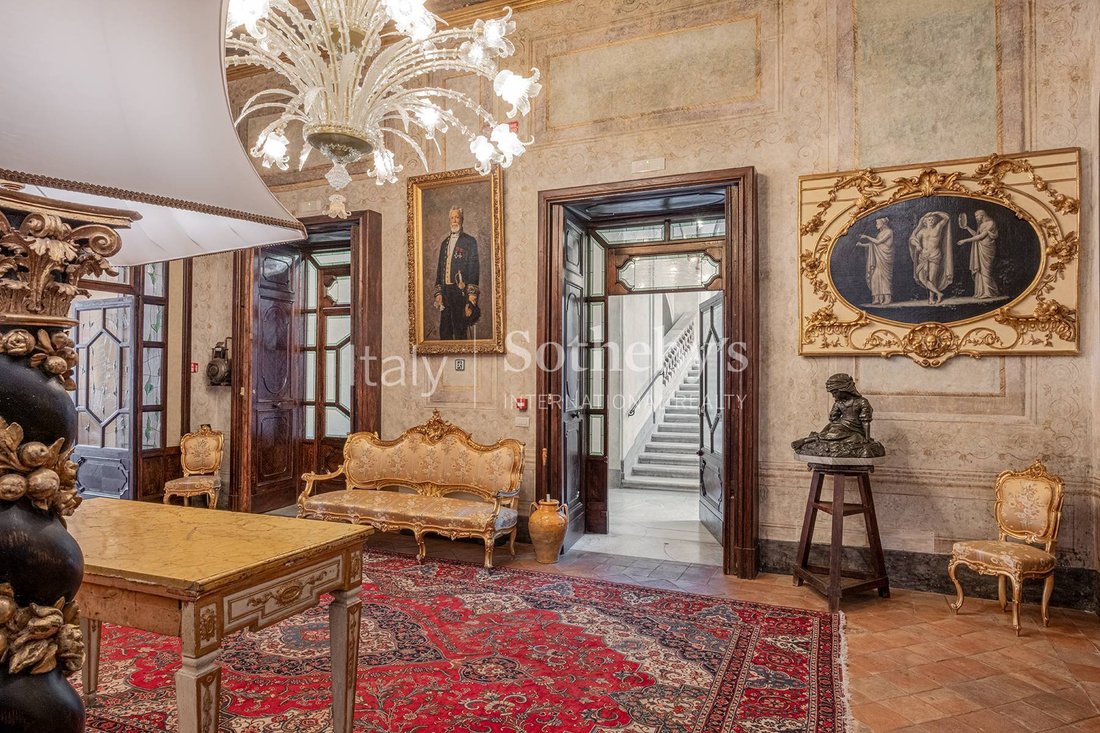
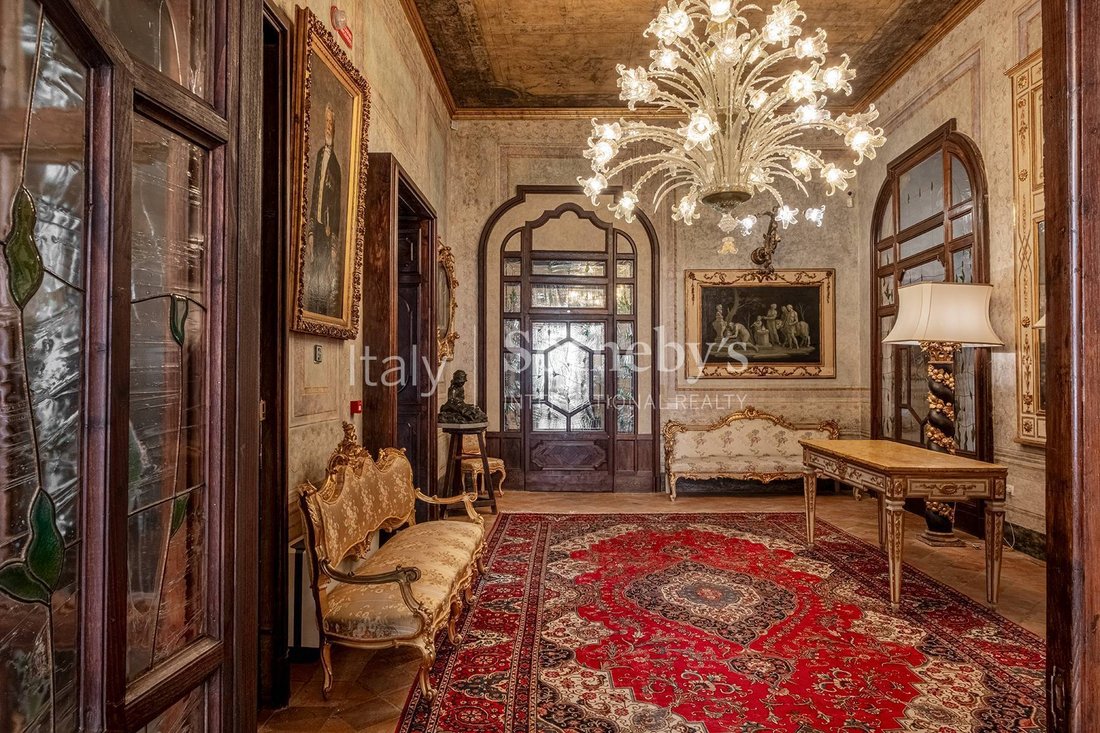
Passant le grand portail, l’escalier monumental de Vanvitelli nous mène directement aux deux étages nobles qui s’étendent sur 2 000 mètres carrés de salles ornées de fresques avec des plafonds peints à la main : 43 lustres en Murano, une collection de 110 oeuvres d’art et plus de 500 gravures, 21 consoles et 32 miroirs, 12 colonnes, 29 statues, dont le demi-buste de Garibaldi qui se reflète dans le grand vitrail de la salle principale, plus de 50 lampes et enfin 6 tapisseries font de cette demeure un ”unicum” sans égal parmi les palais nobles napolitains.
La demeure a fait l’objet d’une restauration experte et d’une rénovation impressionnante. Aujourd’hui, en plus du charme et de la beauté des éléments artistiques et architecturaux qui ont traversé les siècles, s’ajoutent des installations de dernière génération, faisant du Palais Doria un lieu enchanteur de confort, d’histoire et d’élégance.
Cette façade devait être un spectacle grandiose pour les monarques qui, depuis le Palais Royal de Capodimonte, descendaient en carrosse jusqu’au Palais Royal. Le Palais Doria devint célèbre un siècle plus tard lorsque, le 7 septembre 1860, Giuseppe Garibaldi annonça depuis son balcon l’annexion du Royaume des Deux-Siciles à l’Italie.
Ce palais en forme de trapèze possède deux cours intérieures, la première hexagonale et la seconde rectangulaire, parfaitement alignées grâce à un jeu habile de perspectives, créant un télescope optique qui permet d’apercevoir Spaccanapoli tout en conférant une luminosité remarquable.
Passant le grand portail, l’escalier monumental de Vanvitelli nous mène directement aux deux étages nobles qui s’étendent sur 2 000 mètres carrés de salles ornées de fresques avec des plafonds peints à la main : 43 lustres en Murano, une collection de 110 oeuvres d’art et plus de 500 gravures, 21 consoles et 32 miroirs, 12 colonnes, 29 statues, dont le demi-buste de Garibaldi qui se reflète dans le grand vitrail de la salle principale, plus de 50 lampes et enfin 6 tapisseries font de cette demeure un ”unicum” sans égal parmi les palais nobles napolitains.
La demeure a fait l’objet d’une restauration experte et d’une rénovation impressionnante. Aujourd’hui, en plus du charme et de la beauté des éléments artistiques et architecturaux qui ont traversé les siècles, s’ajoutent des installations de dernière génération, faisant du Palais Doria un lieu enchanteur de confort, d’histoire et d’élégance.
Palazzo Doria D’Angri rises imposingly in the historical center of Naples, with its majestic front facing the hill, just as commissioned by Marcantonio Doria who, in the late 1700s, ordered its reconstruction at the hands of Luigi Vanvitelli. That front was to be seen as a sight to behold by the monarchs who, from the Royal Palace of Capodimonte, descended in carriages to the Royal Palace. Palazzo Doria became famous a century later when, on September 7, 1860, Giuseppe Garibaldi announced from its balcony the annexation of the Kingdom of the Two Sicilies to Italy. The trapezoidal-shaped palace has two inner courtyards, the first hexagonal and the second rectangular, which are perfectly in axis with each other thanks to a skillful play of perspectives, an optical telescope that allows a glimpse of Spaccanapoli and at the same time confers an enormous luminosity. Once through the grand doorway, the monumental Vanvitellian staircase leads us directly to the two noble floors that spread over 2,000 square meters of frescoed rooms with hand-painted ceilings: 43 Murano chandeliers, a collection of 110 artworks and more than 500 prints, 21 consoles and 32 mirrors, 12 columns, 29 statues, including the half-bust of Garibaldi, which echoes from the large stained-glass window in the main hall, more than 50 lamps, and finally 6 tapestries make this mansion an ’ unicum ’ that has no equal among Neapolitan noble palaces. The mansion has undergone expert restoration and impressive renovation. Today, in addition to the charm and beauty of the artistic and architectural elements that have persisted for centuries, there is the addition of the latest generation of facilities that make Palazzo Doria an enchanted place of comfort, history and elegance.
-
Type de propriété
Appartement
-
Année de construction
1700
Caractéristiques
- Garage
- Cheminée
- Ascenseur
- Jacuzzi
- Salle de jeux
- Manoir
- Vie privée
- Haut plafond
- Climatisation
Caractéristiques
Lot
- Vie privée
- Manoir
Intérieur
- Haut plafond
- Cheminée
- Climatisation
- Jacuzzi
- Salle de jeux
- Ascenseur
Outdoor
- Balcon
- Garage
Explorez le secteur
Piazza VII Settembre, Napoli, NA 80134, Naples, Campanie, Italie
Voir sur Google Maps
Prix par sqft
Faible
Élevé
Située au cœur de Naples, la Piazza VII Settembre offre une vie urbaine vibrante avec une proximité immédiate de trésors culturels tels que le Palais Royal et le Teatro San Carlo. À quelques minutes en voiture des restaurants chics, boutiques de luxe et espaces extérieurs exquis. L’aéroport international de Naples est facilement accessible, facilitant la connectivité mondiale. Le quartier dispose d’écoles réputées garantissant des options éducatives de premier ordre.
Voir à proximité
Attractions
Écoles
Aéroport international de Naples
Aéroport
16 min
Naples-Centrale
Gare
5 min
Port de Naples
Port / Marina
8 min
Théâtre San Carlo
Culture & Patrimoine
4 min
Palais Royal de Naples
Culturel & Patrimoine
4 min
Via Toledo
Shopping & Mode de vie
1 min
École internationale de Naples
École Internationale
21 min
Inscrit il y a 3 ans
Vous vous êtes renseigné sur ce bien
L'agent vous contactera bientôt par
Publié par
54
Annonces
2023
Inscrit
Réserver une visite avec Sabrina Majello
Choisissez une date et si vous souhaitez une visite virtuelle ou en personne avec l’agent.
Date préférée
Type de visite

Italy Sotheby's International Realty
Palazzo Partanna, Piazza dei Martiri 58, 80121, Naples, Napoli, Italy
Voir le profil de l’agence
A vibrant city, famous for its good food and theater, Naples is one of the most beautiful places in southern Italy.
A vibrant city, famous for its good food and theater, Naples is one of the most beautiful places in southern Italy. Its location reveals a unique landscape: dominated by the imposing Vesuvius, the island of Capri and the Amalfi Coast. In this spectacular natural setting, we opened our 11th office within Palazzo Partanna in Piazza dei Martiri, in the heart of the city, to strengthen our presence in these one-of-a-kind areas of Italy.
Dernière mise à jour
Juillet 13
Première mise en ligne
Décembre 11, 2024
Lien de l’annonce
Référence de l’annonce
SBM435
Propriétés similaires à proximité
Nouvelles annonces à Naples



Explorez plus de biens à vendre
Naples, Campanie, Italie types de propriétés
Naples, Campanie, Italie Recherches populaires
- Vue sur la mer propriétés à Naples, Campanie, Italie
- Vue sur la montagne propriétés à Naples, Campanie, Italie
- Propriétés avec Jardin à Naples, Campanie, Italie
- Duplex propriétés à Naples, Campanie, Italie
- Lotissement sécurisé propriétés à Naples, Campanie, Italie
- Au bord de l’eau propriétés à Naples, Campanie, Italie
- Immobilier d’investissement propriétés à Naples, Campanie, Italie
- Moderne propriétés à Naples, Campanie, Italie
- Équestre propriétés à Naples, Campanie, Italie
- Constructions neuves propriétés à Naples, Campanie, Italie
- Propriétés avec Hammam à Naples, Campanie, Italie
- Le front de mer propriétés à Naples, Campanie, Italie
- Propriétés avec Piscine à Naples, Campanie, Italie
- Propriétés avec Garage à Naples, Campanie, Italie
- Propriétés avec Terrain de tennis à Naples, Campanie, Italie
- Manoir propriétés à Naples, Campanie, Italie
- Vue sur l’océan propriétés à Naples, Campanie, Italie
Naples, Campanie, Italie Quartiers
- Maisons à vendre à Posillipo, Naples, Campanie
- Maisons à vendre à Chiaia, Naples, Campanie
- Maisons à vendre à Vomero, Naples, Campanie
- Maisons à vendre à Nueva Pizzofalcone, Naples, Campanie
- Maisons à vendre à Arenella, Naples, Campanie
- Maisons à vendre à Mergellina, Naples, Campanie
- Maisons à vendre à Santa Lucia, Naples, Campanie
Guides et histoires connexes
La confiance des plus grands courtiers du monde
Les agents des propriétés les plus exceptionnelles du monde publient sur JamesEdition.
- Des annonces de Sotheby's, Christie's, BARNES et Engel & Völkers
- Chaque annonce est vérifiée avant sa mise en ligne
- Contactez directement des agents vérifiés
En continuant, vous acceptez nos Conditions et notre Politique de confidentialité.