$1,846,569
Isola Delle Femmine, Île Privée À Vendre En Sicile, Mer Méditerranée
- 5,318 Sqft
- 32.13 Ac lot
- Mis à jour: Août 7
- 14
À propos de la propriété
La description a été traduite automatiquement.
La description est affichée dans la langue d'origine.
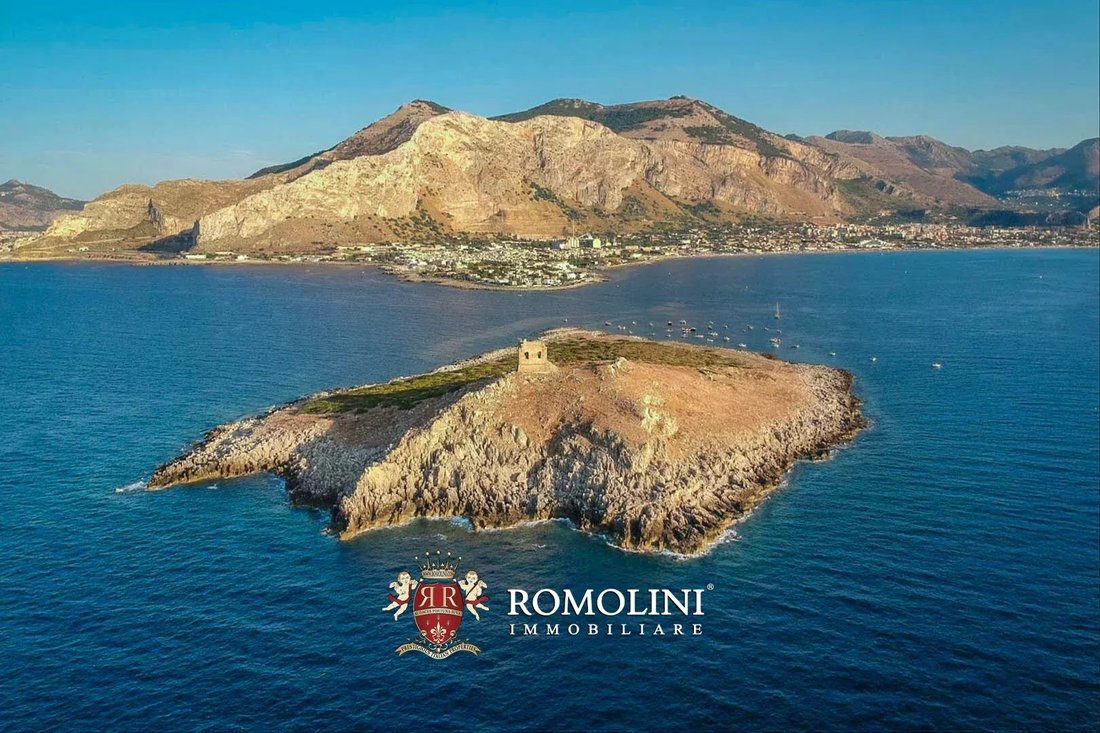
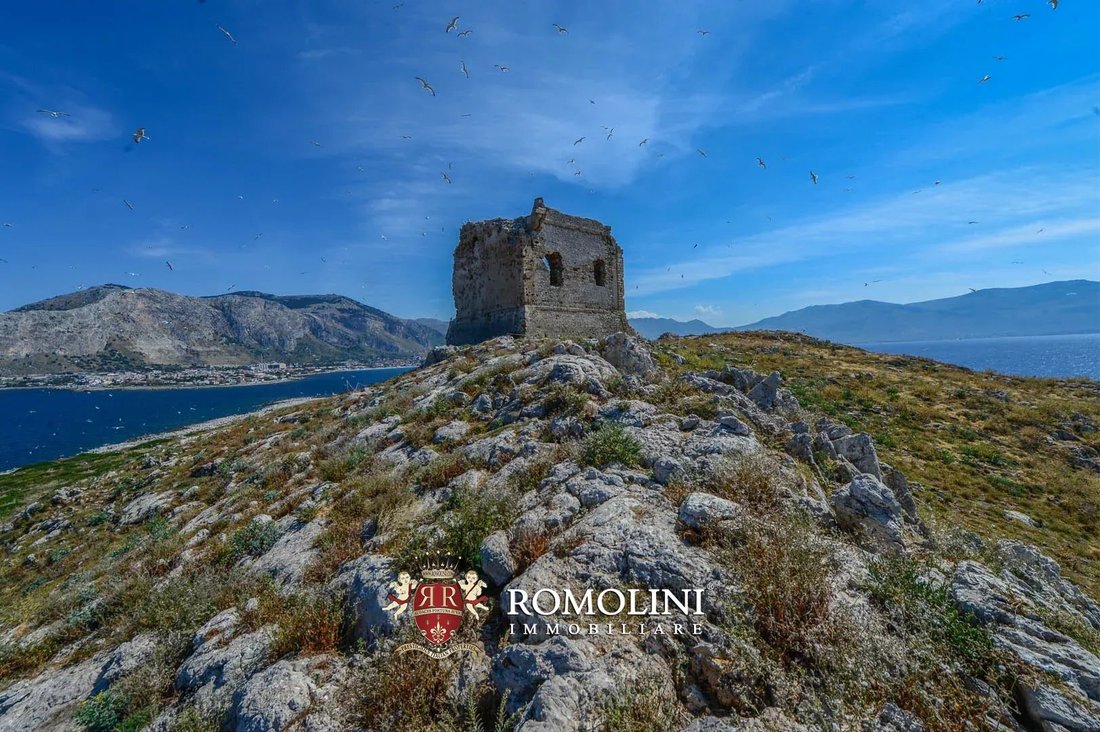
Située à une courte distance de Palerme et du continent (300 m), l’Isola delle Femmine (littéralement, l’île des femmes) a une superficie de 13,9 hectares et une hauteur maximale de 35 m au-dessus du niveau de la mer, où l’on peut apercevoir les vestiges d’une ancienne tour de guet.
Une fois débarquées sur le continent, plusieurs villes de Sicile sont facilement accessibles : Palerme (19
Une fois débarquées sur le continent, plusieurs villes de Sicile sont facilement accessibles : Palerme (19
Located a short distance from Palermo and the mainland (300 m), the Isola delle Femmine (literally, Island of the Women) is 13.9 hectares in surface with a maximum height of 35 m above sea level, where we can spot the remains of an ancient watchtower.
Once landed on the mainland, various cities in Sicily are easily reached: Palermo (19km; 40’), Monreale (21km; 40’), Trapani (92km; 1h 5’), Mars
Once landed on the mainland, various cities in Sicily are easily reached: Palermo (19km; 40’), Monreale (21km; 40’), Trapani (92km; 1h 5’), Mars
Située à une courte distance de Palerme et du continent (300 m), l’Isola delle Femmine (littéralement, l’île des femmes) a une superficie de 13,9 hectares et une hauteur maximale de 35 m au-dessus du niveau de la mer, où l’on peut apercevoir les vestiges d’une ancienne tour de guet.
Une fois débarquées sur le continent, plusieurs villes de Sicile sont facilement accessibles : Palerme (19 km ; 40 minutes), Monreale (21 km ; 40 minutes), Trapani (92 km ; 1h 5 minutes), Marsala (110 km ; 1h 25 minutes) et Agrigente (189 km ; 2h 25 minutes). Les aéroports les plus proches sont Palermo Falcone-Borsellino (16 km ; 15 minutes), Palermo Boccadifalco (16 km ; 15 minutes), Trapani Birgi (97 km ; 1h 5’) et Catane-Fontanarossa (223 km ; 1h 30).
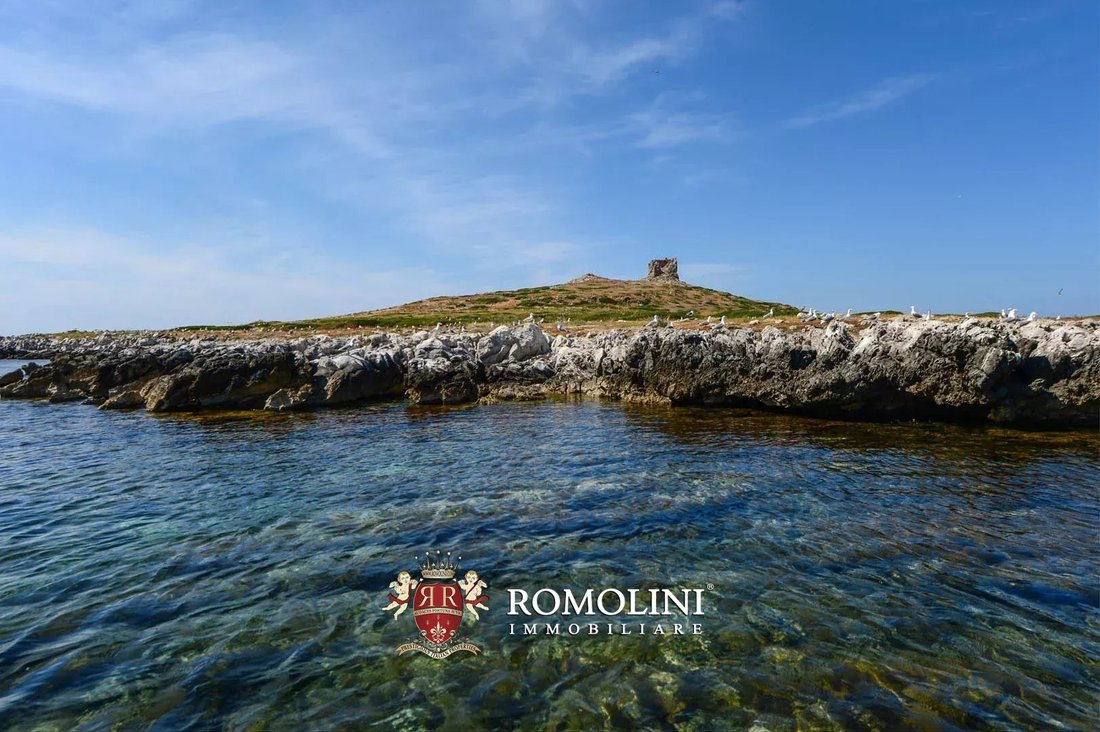
Les fonds marins autour de l’île sont facilement accessibles, même pour les plongeurs non professionnels, notamment grâce à l’incroyable limpidité de l’eau. Et c’est grâce à cette clarté que l’on peut admirer les belles formes de vie typiques de l’île et plusieurs vestiges de l’époque grecque et romaine.
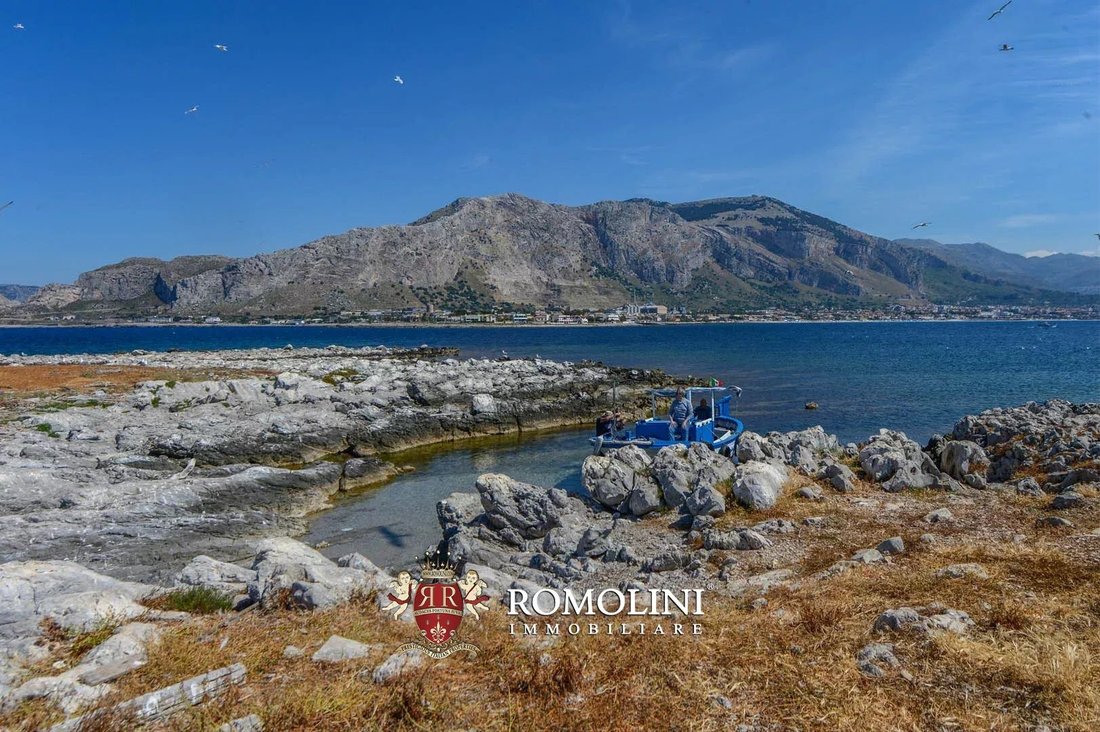
L’île se caractérise par sa steppe méditerranéenne typique, principalement recouverte de mauve, de mandragore et d’erba stella sur les hauteurs, laissant de la place à la salicorne et au trèfle à pattes d’oiseau sur les falaises en direction de la côte. Pour enrichir encore le paysage, nous trouvons de magnifiques fleurs d’iris et de romules. La faune est principalement composée de lézards, mais il existe également de belles et rares espèces de papillons.
ORIGINE DU NOM : LÉGENDES ET PHILOLOGIE
Les histoires légendaires de treize jeunes filles turques qui, condamnées pour des crimes graves, ont été embarquées par leurs proches sur un navire et laissées à la dérive au milieu de la mer. Une tempête a détruit le navire sur une petite île rocheuse, où les filles ont vécu seules pendant sept longues années. Lorsque leurs familles, ayant pris conscience de leurs actes horribles, ont réussi à les retrouver, les filles ont décidé de ne pas retourner dans leur pays d’origine mais de fonder une nouvelle ville sur le continent. Ils l’ont baptisée Capaci (CCA-Paci, littéralement ici la paix) tandis que l’île a été rebaptisée Isola delle Femmine (littéralement l’île des femmes).
Si l’on met de côté la légende et que l’on ne considère que l’histoire, l’origine du nom est très incertaine. Ce qui est certain, c’est que c’est le résultat d’un long processus d’italianisation. La tradition populaire utilise le toponyme Insula Fimi, probablement une faute d’orthographe d’une ancienne Insula Euphemi (où Euphemius est le nom du gouverneur byzantin de Sicile au IXe siècle de notre ère). Une autre origine possible est le terme Fimis, latinisation du mot arabe fim (littéralement baie, détroit) désignant l’étendue de mer séparant l’île du continent.
HISTOIRE DE L’ÎLE : BASSINS ROMAINS ET TOUR DE CAMILLIANI
Sur l’île, nous pouvons trouver des traces datant de l’époque romaine, probablement après la seconde guerre punique, sous la forme de bassins en pierre et en béton utilisés autrefois pour la préparation d’une assiette à poisson typique.
Le puits et les autres bassins d’eau de pluie datent plutôt du Moyen Âge.
La tour au sommet de l’île a été construite au XVIe siècle dans le cadre d’un vaste système de défense entourant la Sicile contre les attaques des navires corsaires (ce projet défensif remonte au XIVe siècle et a été poursuivi par nécessité pendant plusieurs années). Comme de nombreuses autres tours du même âge, le projet est fortement influencé par l’architecte florentin Camillo Camilliani, mieux connu pour ses travaux sur la Fontana Pretoria à Palerme. Camilliani lui-même, dans son livre des tours maritimes, explique l’emplacement et souligne l’importance de la tour : « [...] là où la tour dont nous avons parlé devrait être construite, et ce serait une bonne chose ; cette (tour) assure la sécurité des marins et des vagabonds qui traversent cette étendue de mer ».
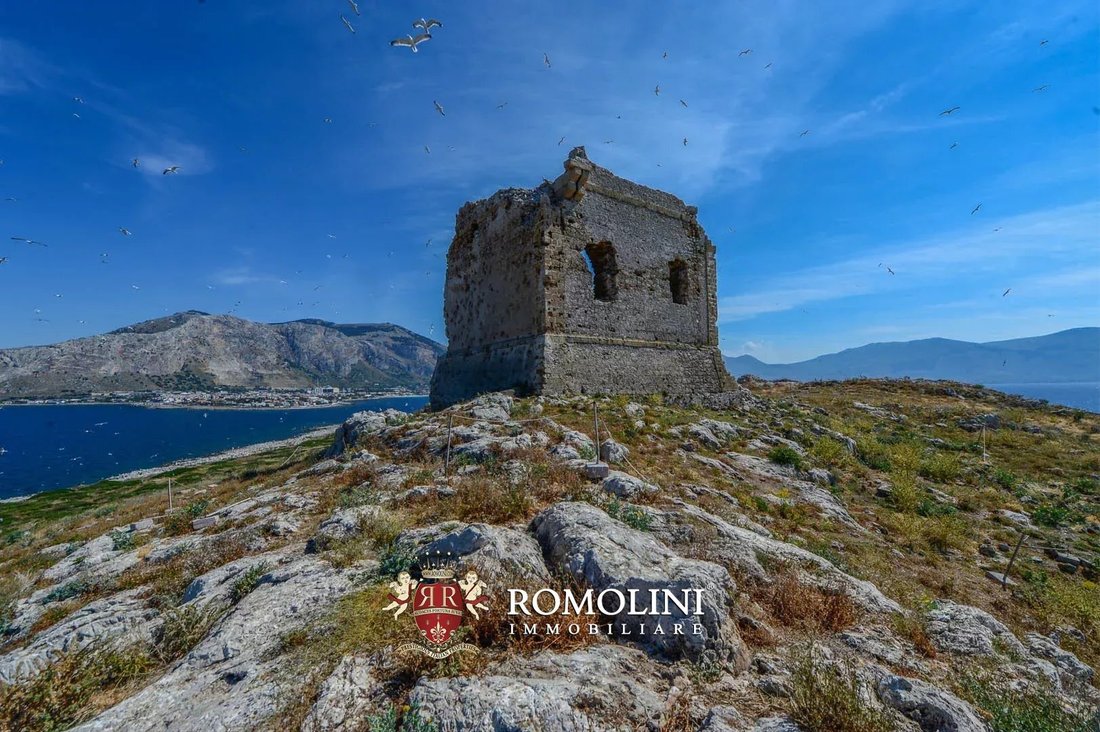
Structurée à l’origine sur deux étages et maintenant sur un seul étage, la tour a une base carrée (247 m² — 2 658 pieds carrés). Le rez-de-chaussée était divisé en trois pièces couvertes de voûtes en berceau et réservées à la citerne d’eau (deux sur trois) et à l’armurerie. De ce dernier local, il était possible de monter jusqu’au quartier des gardes par un trou dans le toit, et depuis les quartiers, il était facile d’atteindre le toit par une échelle en bois. Ici, il y avait les pièces d’artillerie pour abattre les navires ennemis.
La tour est actuellement en très mauvais état, principalement en raison des lourds dommages qu’elle a subis lors du débarquement allié en Sicile dans le cadre de l’opération Husky en 1943. Après la Seconde Guerre mondiale, la tour n’a été ni reconstruite ni entretenue et cet abandon a contribué à sa décadence finale.
Le bâtiment peut être entièrement reconstruit, en respectant le volume original de la structure, et il est possible d’obtenir un financement de l’Union européenne ou du ministère du Patrimoine culturel et des Activités et du Tourisme pour un éventuel programme de développement culturel et touristique de l’île, le tout dans le respect des contraintes naturalistes.
En fait, depuis 1997, l’île est incluse dans la réserve naturelle d’Isola delle Femmine, dont la Ligue italienne pour la protection des oiseaux (LIPU) est l’autorité de gestion. L’Union européenne a reconnu l’importance de l’emplacement, qui était d’abord c.classé en tant que SCI (site d’importance communautaire) puis en tant que SAC (zone spéciale de conservation).
UTILISATION ET UTILISATIONS POTENTIELLES
L’achat de l’île est une opportunité unique pour ceux qui recherchent un « atout » : un usage privé ou simplement une activité de préservation de quelque chose de vraiment unique.
La restauration conservatrice de la tour permettrait de rendre le bâtiment utilisable comme résidence privée, bâtiment représentatif, image de marque ou réalisation d’un musée permettant aux touristes d’apprécier non seulement la valeur naturaliste de l’île mais également ses caractéristiques historiques, artistiques et archéologiques.
VILLES ET VILLAGES LES PLUS PROCHES
Toutes les distances sont calculées depuis la ville continentale d’Isola delle Femmine : Palerme (19 km ; 40’), Monreale (21 km ; 40’), Trapani (92 km ; 1h 5’), Marsala (110 km ; 1h 25’), Agrigente (189 km ; 2h 25’)
AÉROPORTS LES PLUS PROCHES
Palerme Falcone-Borsellino (16 km ; 15 minutes), Palerme Boccadifalco (16 km ; 15 minutes), Trapani Birgi (97 km ; 1 h 5), Catane Fontanarossa (223 km ; 1 h 30)
Une fois débarquées sur le continent, plusieurs villes de Sicile sont facilement accessibles : Palerme (19 km ; 40 minutes), Monreale (21 km ; 40 minutes), Trapani (92 km ; 1h 5 minutes), Marsala (110 km ; 1h 25 minutes) et Agrigente (189 km ; 2h 25 minutes). Les aéroports les plus proches sont Palermo Falcone-Borsellino (16 km ; 15 minutes), Palermo Boccadifalco (16 km ; 15 minutes), Trapani Birgi (97 km ; 1h 5’) et Catane-Fontanarossa (223 km ; 1h 30).
Les fonds marins autour de l’île sont facilement accessibles, même pour les plongeurs non professionnels, notamment grâce à l’incroyable limpidité de l’eau. Et c’est grâce à cette clarté que l’on peut admirer les belles formes de vie typiques de l’île et plusieurs vestiges de l’époque grecque et romaine.
L’île se caractérise par sa steppe méditerranéenne typique, principalement recouverte de mauve, de mandragore et d’erba stella sur les hauteurs, laissant de la place à la salicorne et au trèfle à pattes d’oiseau sur les falaises en direction de la côte. Pour enrichir encore le paysage, nous trouvons de magnifiques fleurs d’iris et de romules. La faune est principalement composée de lézards, mais il existe également de belles et rares espèces de papillons.
ORIGINE DU NOM : LÉGENDES ET PHILOLOGIE
Les histoires légendaires de treize jeunes filles turques qui, condamnées pour des crimes graves, ont été embarquées par leurs proches sur un navire et laissées à la dérive au milieu de la mer. Une tempête a détruit le navire sur une petite île rocheuse, où les filles ont vécu seules pendant sept longues années. Lorsque leurs familles, ayant pris conscience de leurs actes horribles, ont réussi à les retrouver, les filles ont décidé de ne pas retourner dans leur pays d’origine mais de fonder une nouvelle ville sur le continent. Ils l’ont baptisée Capaci (CCA-Paci, littéralement ici la paix) tandis que l’île a été rebaptisée Isola delle Femmine (littéralement l’île des femmes).
Si l’on met de côté la légende et que l’on ne considère que l’histoire, l’origine du nom est très incertaine. Ce qui est certain, c’est que c’est le résultat d’un long processus d’italianisation. La tradition populaire utilise le toponyme Insula Fimi, probablement une faute d’orthographe d’une ancienne Insula Euphemi (où Euphemius est le nom du gouverneur byzantin de Sicile au IXe siècle de notre ère). Une autre origine possible est le terme Fimis, latinisation du mot arabe fim (littéralement baie, détroit) désignant l’étendue de mer séparant l’île du continent.
HISTOIRE DE L’ÎLE : BASSINS ROMAINS ET TOUR DE CAMILLIANI
Sur l’île, nous pouvons trouver des traces datant de l’époque romaine, probablement après la seconde guerre punique, sous la forme de bassins en pierre et en béton utilisés autrefois pour la préparation d’une assiette à poisson typique.
Le puits et les autres bassins d’eau de pluie datent plutôt du Moyen Âge.
La tour au sommet de l’île a été construite au XVIe siècle dans le cadre d’un vaste système de défense entourant la Sicile contre les attaques des navires corsaires (ce projet défensif remonte au XIVe siècle et a été poursuivi par nécessité pendant plusieurs années). Comme de nombreuses autres tours du même âge, le projet est fortement influencé par l’architecte florentin Camillo Camilliani, mieux connu pour ses travaux sur la Fontana Pretoria à Palerme. Camilliani lui-même, dans son livre des tours maritimes, explique l’emplacement et souligne l’importance de la tour : « [...] là où la tour dont nous avons parlé devrait être construite, et ce serait une bonne chose ; cette (tour) assure la sécurité des marins et des vagabonds qui traversent cette étendue de mer ».
Structurée à l’origine sur deux étages et maintenant sur un seul étage, la tour a une base carrée (247 m² — 2 658 pieds carrés). Le rez-de-chaussée était divisé en trois pièces couvertes de voûtes en berceau et réservées à la citerne d’eau (deux sur trois) et à l’armurerie. De ce dernier local, il était possible de monter jusqu’au quartier des gardes par un trou dans le toit, et depuis les quartiers, il était facile d’atteindre le toit par une échelle en bois. Ici, il y avait les pièces d’artillerie pour abattre les navires ennemis.
La tour est actuellement en très mauvais état, principalement en raison des lourds dommages qu’elle a subis lors du débarquement allié en Sicile dans le cadre de l’opération Husky en 1943. Après la Seconde Guerre mondiale, la tour n’a été ni reconstruite ni entretenue et cet abandon a contribué à sa décadence finale.
Le bâtiment peut être entièrement reconstruit, en respectant le volume original de la structure, et il est possible d’obtenir un financement de l’Union européenne ou du ministère du Patrimoine culturel et des Activités et du Tourisme pour un éventuel programme de développement culturel et touristique de l’île, le tout dans le respect des contraintes naturalistes.
En fait, depuis 1997, l’île est incluse dans la réserve naturelle d’Isola delle Femmine, dont la Ligue italienne pour la protection des oiseaux (LIPU) est l’autorité de gestion. L’Union européenne a reconnu l’importance de l’emplacement, qui était d’abord c.classé en tant que SCI (site d’importance communautaire) puis en tant que SAC (zone spéciale de conservation).
UTILISATION ET UTILISATIONS POTENTIELLES
L’achat de l’île est une opportunité unique pour ceux qui recherchent un « atout » : un usage privé ou simplement une activité de préservation de quelque chose de vraiment unique.
La restauration conservatrice de la tour permettrait de rendre le bâtiment utilisable comme résidence privée, bâtiment représentatif, image de marque ou réalisation d’un musée permettant aux touristes d’apprécier non seulement la valeur naturaliste de l’île mais également ses caractéristiques historiques, artistiques et archéologiques.
VILLES ET VILLAGES LES PLUS PROCHES
Toutes les distances sont calculées depuis la ville continentale d’Isola delle Femmine : Palerme (19 km ; 40’), Monreale (21 km ; 40’), Trapani (92 km ; 1h 5’), Marsala (110 km ; 1h 25’), Agrigente (189 km ; 2h 25’)
AÉROPORTS LES PLUS PROCHES
Palerme Falcone-Borsellino (16 km ; 15 minutes), Palerme Boccadifalco (16 km ; 15 minutes), Trapani Birgi (97 km ; 1 h 5), Catane Fontanarossa (223 km ; 1 h 30)
Located a short distance from Palermo and the mainland (300 m), the Isola delle Femmine (literally, Island of the Women) is 13.9 hectares in surface with a maximum height of 35 m above sea level, where we can spot the remains of an ancient watchtower.
Once landed on the mainland, various cities in Sicily are easily reached: Palermo (19km; 40’), Monreale (21km; 40’), Trapani (92km; 1h 5’), Marsala (110km; 1h 25’) and Agrigento (189km; 2h 25’). Closest airports are Palermo Falcone-Borsellino (16km; 15’), Palermo Boccadifalco (16km; 15’), Trapani Birgi (97km; 1h 5’) and Catania Fontanarossa (223km; 1h 30’).
The seabed around the island is easily reachable, even by non-professional scuba-divers, thanks mainly to the incredible clearness of the water. And it is thanks to this clearness that one can admire the beautiful life forms typical of the island and several remaining of Greek and Roman age.
The island is characterized by the typical Mediterranean steppe, mainly covered in mallow, mandrake and erba stella on the higher ground which leave space to glasswort and bird’s-foot trefoil on the cliffs going toward the coastline. Further enriching the landscape we find beautiful Iris and Romulea flowers. Fauna is mainly composed of lizards, but there are also some beautiful and uncommon species of butterflies.
ORIGIN OF THE NAME: LEGENDS AND PHILOLOGY
The legend tales of thirteen Turkish maidens who, condemned for serious crimes, were embarked by their relatives on a ship and left adrift in the middle of the sea. A storm wrecked the ship on a small rocky island, where the girls lived alone for seven long years. When their families, having realized their horrible doings, managed to find the girls decided not to return to their homeland but to found a new town on the mainland. They named it Capaci (Cca-paci, literally here the peace) while the island was renamed Isola delle Femmine (literally Island of the Women).
If we take aside the legend and only consider history, the origin of the name is highly uncertain. What’s sure is that it is the result of a long process of Italianization. Popular tradition uses the toponym Insula Fimi, probably a misspelling of an older Insula Euphemi (where Euphemius is the name of the Byzantine governor of Sicily in the 9th century AD). Other possible origin is the term Fimis, latinization of the Arab word fim (literally bay, strait) indicating the stretch of sea dividing the island from the mainland.
HISTORY OF THE ISLAND: ROMAN BASINS AND CAMILLIANI’S TOWER
On the island we can find some traces dating back to the Roman age, probably after the second Punic War, in the form of stone and concrete basins once used in the preparation of a typical fish plate.
The well and other rainwater basins date back to the Middle Age instead.
The tower at the top of the island was built in the 16th century as part of a huge defense system entouring Sicily against the attacks of Corsair ships (this defensive project dated back to the 14th century and was continued based on necessity for several years). As for many other towers of the same age, the project is highly influenced by the Florentine architect Camillo Camilliani, who is better known for its work on the Fontana Pretoria in Palermo. Camilliani himself, in its Book of Maritime Towers, explains the location and underline the importance of the tower: “[…] where the tower we discussed should be built, and that would be a great thing; this (tower) grants security to sailors and wanderers crossing that stretch of sea”.
Originally structured onto two floors and now on a single floor, the tower has a squared base (247 sqm – 2,658 sqft). The ground floor was split into three rooms covered with barrel vaults and earmarked to water cistern (two out of three) and armory. From this last local it was possible to climb up to the guardsmen quarter through a hole in the roof, and from the quarters it was in turn easy to reach the rooftop through a wooden ladder. Here there were the artillery pieces to gun down enemy ships.
The tower is currently in a very bad shape, mainly because of the heavy damage it suffered during the Allied landing in Sicily as part of the Operation Husky in 1943. After World War II, the tower was neither rebuilt nor maintained and this abandonment contributed to its final decadence.
The building can be fully rebuilt, respecting the original volume of the structure, and it is possible to obtain a financing from the European Union or the Ministry of Cultural Heritage and Activities and Tourism for a possible cultural and touristic development program for the isle, all complying with the naturalistic constraint.
As a matter of fact, since 1997 the island has been included in the Natural reserve of Isola delle Femmine for which the Italian League for Bird Protection (LIPU) is managing authority. The European Union recognized the importance of the location which was first classified as SCI (Site of Community Importance) and then as SAC (Special Area of Conservation).
USE AND POTENTIAL USES
The purchase of the island is a unique opportunity for some looking for a “trophy asset”: a private use or simply an activity of preservation of something really unique.
The conservative restoration of the tower would allow making the building usable as a private residence, representative building, corporate image or the realization of a museum allowing tourists to appreciate not just the naturalistic value of the island but also the historical, artistic and archaeological ones.
CLOSEST CITIES AND TOWNS
All the distances are calculated from the mainland town of Isola delle Femmine: Palermo (19km; 40’), Monreale (21km; 40’), Trapani (92km; 1h 5’), Marsala (110km; 1h 25’), Agrigento (189km; 2h 25’)
CLOSEST AIRPORTS
Palermo Falcone-Borsellino (16km; 15’), Palermo Boccadifalco (16km; 15’), Trapani Birgi (97km; 1h 5’), Catania Fontanarossa (223km; 1h 30’)
Once landed on the mainland, various cities in Sicily are easily reached: Palermo (19km; 40’), Monreale (21km; 40’), Trapani (92km; 1h 5’), Marsala (110km; 1h 25’) and Agrigento (189km; 2h 25’). Closest airports are Palermo Falcone-Borsellino (16km; 15’), Palermo Boccadifalco (16km; 15’), Trapani Birgi (97km; 1h 5’) and Catania Fontanarossa (223km; 1h 30’).
The seabed around the island is easily reachable, even by non-professional scuba-divers, thanks mainly to the incredible clearness of the water. And it is thanks to this clearness that one can admire the beautiful life forms typical of the island and several remaining of Greek and Roman age.
The island is characterized by the typical Mediterranean steppe, mainly covered in mallow, mandrake and erba stella on the higher ground which leave space to glasswort and bird’s-foot trefoil on the cliffs going toward the coastline. Further enriching the landscape we find beautiful Iris and Romulea flowers. Fauna is mainly composed of lizards, but there are also some beautiful and uncommon species of butterflies.
ORIGIN OF THE NAME: LEGENDS AND PHILOLOGY
The legend tales of thirteen Turkish maidens who, condemned for serious crimes, were embarked by their relatives on a ship and left adrift in the middle of the sea. A storm wrecked the ship on a small rocky island, where the girls lived alone for seven long years. When their families, having realized their horrible doings, managed to find the girls decided not to return to their homeland but to found a new town on the mainland. They named it Capaci (Cca-paci, literally here the peace) while the island was renamed Isola delle Femmine (literally Island of the Women).
If we take aside the legend and only consider history, the origin of the name is highly uncertain. What’s sure is that it is the result of a long process of Italianization. Popular tradition uses the toponym Insula Fimi, probably a misspelling of an older Insula Euphemi (where Euphemius is the name of the Byzantine governor of Sicily in the 9th century AD). Other possible origin is the term Fimis, latinization of the Arab word fim (literally bay, strait) indicating the stretch of sea dividing the island from the mainland.
HISTORY OF THE ISLAND: ROMAN BASINS AND CAMILLIANI’S TOWER
On the island we can find some traces dating back to the Roman age, probably after the second Punic War, in the form of stone and concrete basins once used in the preparation of a typical fish plate.
The well and other rainwater basins date back to the Middle Age instead.
The tower at the top of the island was built in the 16th century as part of a huge defense system entouring Sicily against the attacks of Corsair ships (this defensive project dated back to the 14th century and was continued based on necessity for several years). As for many other towers of the same age, the project is highly influenced by the Florentine architect Camillo Camilliani, who is better known for its work on the Fontana Pretoria in Palermo. Camilliani himself, in its Book of Maritime Towers, explains the location and underline the importance of the tower: “[…] where the tower we discussed should be built, and that would be a great thing; this (tower) grants security to sailors and wanderers crossing that stretch of sea”.
Originally structured onto two floors and now on a single floor, the tower has a squared base (247 sqm – 2,658 sqft). The ground floor was split into three rooms covered with barrel vaults and earmarked to water cistern (two out of three) and armory. From this last local it was possible to climb up to the guardsmen quarter through a hole in the roof, and from the quarters it was in turn easy to reach the rooftop through a wooden ladder. Here there were the artillery pieces to gun down enemy ships.
The tower is currently in a very bad shape, mainly because of the heavy damage it suffered during the Allied landing in Sicily as part of the Operation Husky in 1943. After World War II, the tower was neither rebuilt nor maintained and this abandonment contributed to its final decadence.
The building can be fully rebuilt, respecting the original volume of the structure, and it is possible to obtain a financing from the European Union or the Ministry of Cultural Heritage and Activities and Tourism for a possible cultural and touristic development program for the isle, all complying with the naturalistic constraint.
As a matter of fact, since 1997 the island has been included in the Natural reserve of Isola delle Femmine for which the Italian League for Bird Protection (LIPU) is managing authority. The European Union recognized the importance of the location which was first classified as SCI (Site of Community Importance) and then as SAC (Special Area of Conservation).
USE AND POTENTIAL USES
The purchase of the island is a unique opportunity for some looking for a “trophy asset”: a private use or simply an activity of preservation of something really unique.
The conservative restoration of the tower would allow making the building usable as a private residence, representative building, corporate image or the realization of a museum allowing tourists to appreciate not just the naturalistic value of the island but also the historical, artistic and archaeological ones.
CLOSEST CITIES AND TOWNS
All the distances are calculated from the mainland town of Isola delle Femmine: Palermo (19km; 40’), Monreale (21km; 40’), Trapani (92km; 1h 5’), Marsala (110km; 1h 25’), Agrigento (189km; 2h 25’)
CLOSEST AIRPORTS
Palermo Falcone-Borsellino (16km; 15’), Palermo Boccadifalco (16km; 15’), Trapani Birgi (97km; 1h 5’), Catania Fontanarossa (223km; 1h 30’)
-
Type de propriété
Domaine
-
Prix/pied²
$347
Caractéristiques
Explorez le secteur
Isola delle Femmine, Sicile, Italie
Voir sur Google Maps
Prix par sqft
Faible
Élevé
Située dans la charmante ville côtière d’Isola delle Femmine, cette propriété offre un accès facile à l’aéroport de Palerme (23 min) et au centre-ville de Palerme (28 min). Connue pour ses plages et sa marina, la région offre un style de vie tranquille mais connecté. Profitez à proximité d’un éventail de restaurants, d’attractions culturelles et d’activités de plein air telles que la natation, la voile et la randonnée.
Voir à proximité
Attractions
Écoles
Aéroport Falcone Borsellino
Aéroport
23 min
Plage de Capaci
Plein air & Nature
5 min
Port de plaisance d'Isola delle Femmine
Port / Marina
3 min
École internationale de Palerme
École internationale
20 min
Inscrit il y a 4 ans
Vous vous êtes renseigné sur ce bien
L'agent vous contactera bientôt par
Publié par
223
Annonces
2022
Inscrit
Réserver une visite avec Danilo Romolini
Choisissez une date et si vous souhaitez une visite virtuelle ou en personne avec l’agent.
Date préférée
Type de visite

Romolini Immobiliare
Piazza Torre di Berta 4, Tuscany, 52037, Sansepolcro, Italy
Voir le profil de l’agence
Riccardo and Marta met during their high school years. Since then, their paths have never parted. United by shared
Riccardo and Marta met during their high school years. Since then, their paths have never parted. United by shared dreams and aspirations, they married in 1999 and are today parents of three children. In 2004, driven by their passion for their native land, art, and beauty, they chose the historic heart of Tuscany – the charming village of Anghiari – as the birthplace of a project that already carried the warmth of home: Romolini Immobiliare. A story founded on courage, dedication, and profound values that, paired with their vision, quickly earned them recognition within both the national and international real estate markets. In 2008, an important achievement further strengthened their reputation: Romolini Immobiliare was appointed exclusive affiliate of Christie’s International Real Estate, the world’s most prestigious name in luxury real estate – a testament to their authenticity and unwavering commitment. Romolini, however, is more than a business: it is a family. Those who have joined Riccardo and Marta in this endeavor were welcomed for their human qualities, integrity, and outstanding professionalism, becoming not just exceptional team members, but part of a greater family. Each brings a unique approach, a personal style, and a shared dedication to the values that have always defined Romolini. In 2020, Danilo, their eldest son, chose to join the company. Having grown up amid the dreams and challenges of the family business, he brought a visionary spirit and a profound love for beauty. Danilo pioneered a new way of presenting properties in Italy, creating emotional and engaging video narratives that captivate and inspire. With his contribution, Romolini Immobiliare embraced a new chapter. A refined approach to communication, an even greater attention to detail, and a client-centered philosophy have established the company as a leading figure in the luxury real estate sector. Romolini is not just a name. It is a legacy. It is a family dream brought to life. It is a journey that moves forward with passion and purpose.
Dernière mise à jour
Août 7
Première mise en ligne
Mai 21, 2025
Référence de l’annonce
1523
La confiance des plus grands courtiers du monde
Les agents des propriétés les plus exceptionnelles du monde publient sur JamesEdition.
- Des annonces de Sotheby's, Christie's, BARNES et Engel & Völkers
- Chaque annonce est vérifiée avant sa mise en ligne
- Contactez directement des agents vérifiés
En continuant, vous acceptez nos Conditions et notre Politique de confidentialité.