Fårhagevagen 5
- 6 Chambres
- 10 SdB
- 2 400 pi²
- 35
À propos de la propriété
Situated directly on the shores of the Öresund, beside Sofiero Palace, Hovmarskalksvillan is far more than an exceptional waterfront residence. It is a rare piece of Swedish royal history, combining documented provenance, distinguished architecture and a setting of remarkable beauty.
The villa was built in 1897 as the summer residence of Consul August Wingårdh, one of Helsingbo
Situated directly on the shores of the Öresund, beside Sofiero Palace, Hovmarskalksvillan is far more than an exceptional waterfront residence. It is a rare piece of Swedish royal history, combining documented provenance, distinguished architecture and a setting of remarkable beauty.
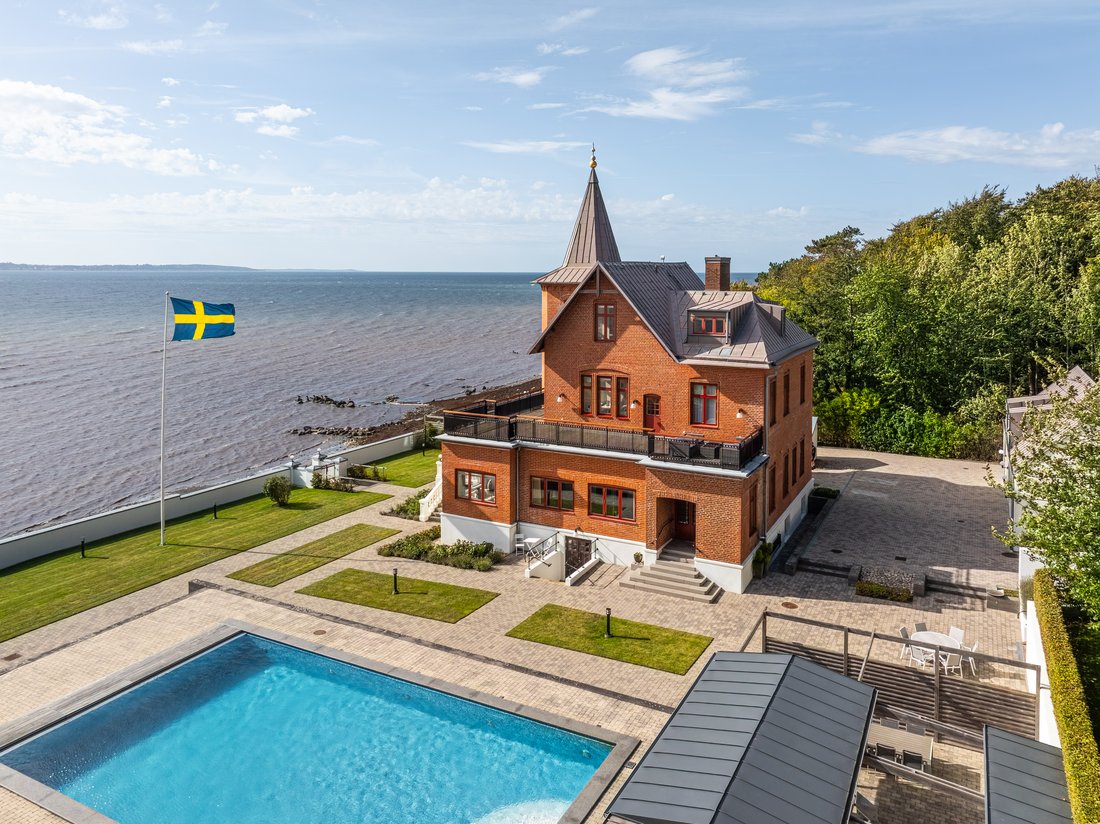
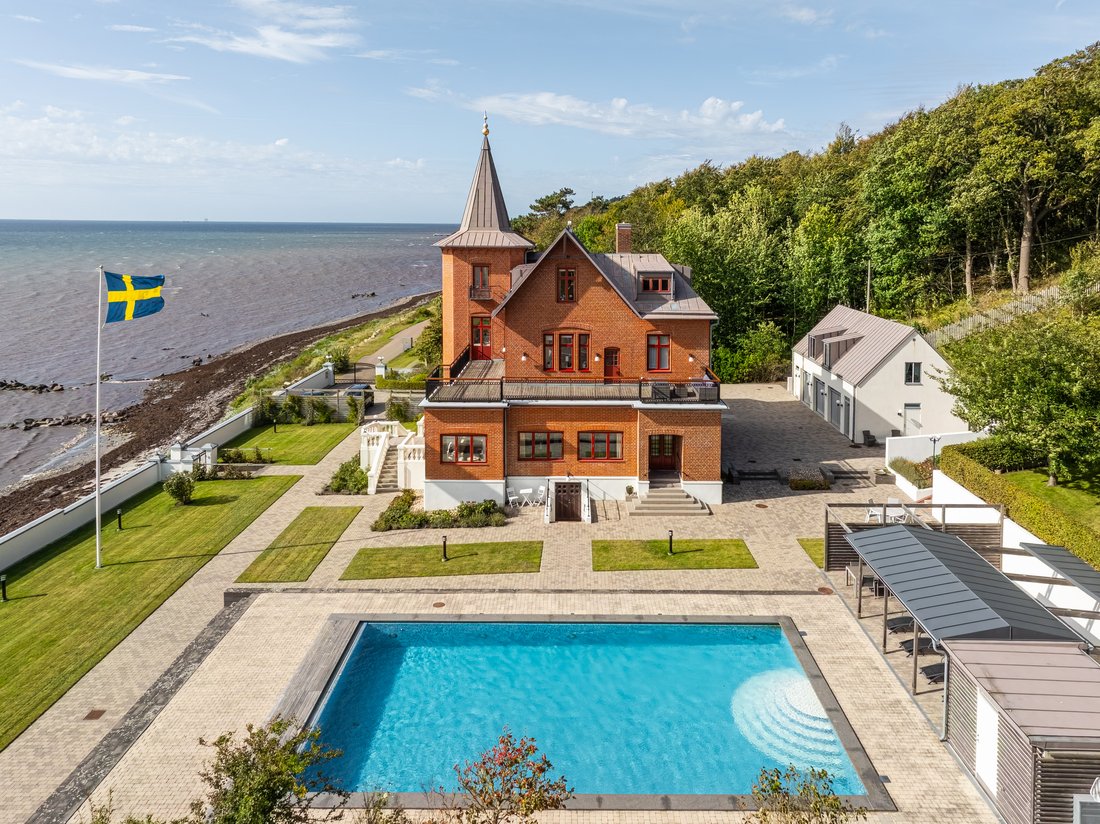
The villa was built in 1897 as the summer residence of Consul August Wingårdh, one of Helsingborg’s leading industrialists, and designed by renowned architect Ola Anderson. Originally named Villa Ekeliden, the red-brick, turreted residence was crowned by a tall tower and elegant spire, forming a distinctive silhouette along the Sound.
In 1905, Crown Prince Gustaf Adolf, later King Gustaf VI Adolf, and Crown Princess Margaret acquired the property and incorporated it into the Sofiero estate. The upper section of the tower was subsequently removed, reportedly because it interrupted the view from Sofiero towards Kronborg Castle on the Danish coast. In the decades that followed, the villa served as a residence for the Marshal of the Court and other senior members of the Royal Household, giving rise to its present name, Hovmarskalksvillan – “The Court Marshal’s Villa”.
After King Gustaf VI Adolf’s death in 1973, Sofiero was donated to the City of Helsingborg, while Hovmarskalksvillan remained in private ownership. The present owner acquired the estate in 2005 and has since used it exclusively for corporate representation, executive education and board meetings, rather than as a conventional family home.
Between 2005 and 2008, the estate underwent an exceptionally comprehensive and sensitive restoration. The original floor plan and architectural character were preserved, while materials, details and craftsmanship were restored or recreated to the highest standard. The tower and its distinctive spire were reconstructed according to the original drawings, returning the villa to its historic silhouette for the first time in almost a century.
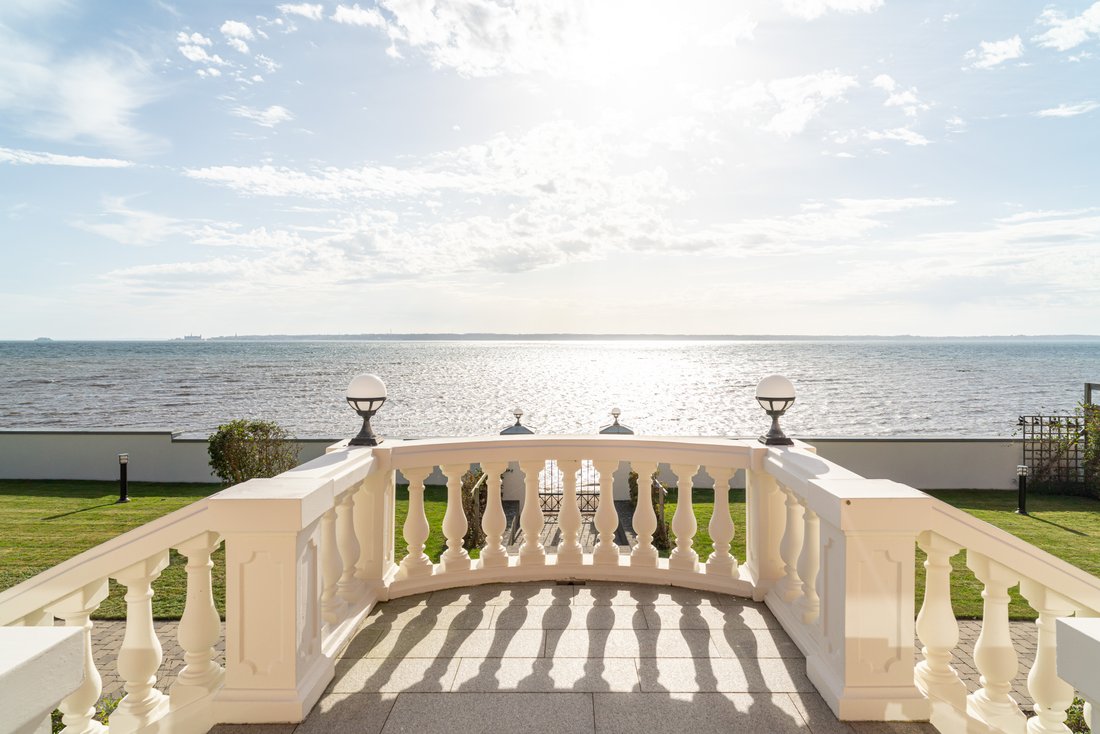
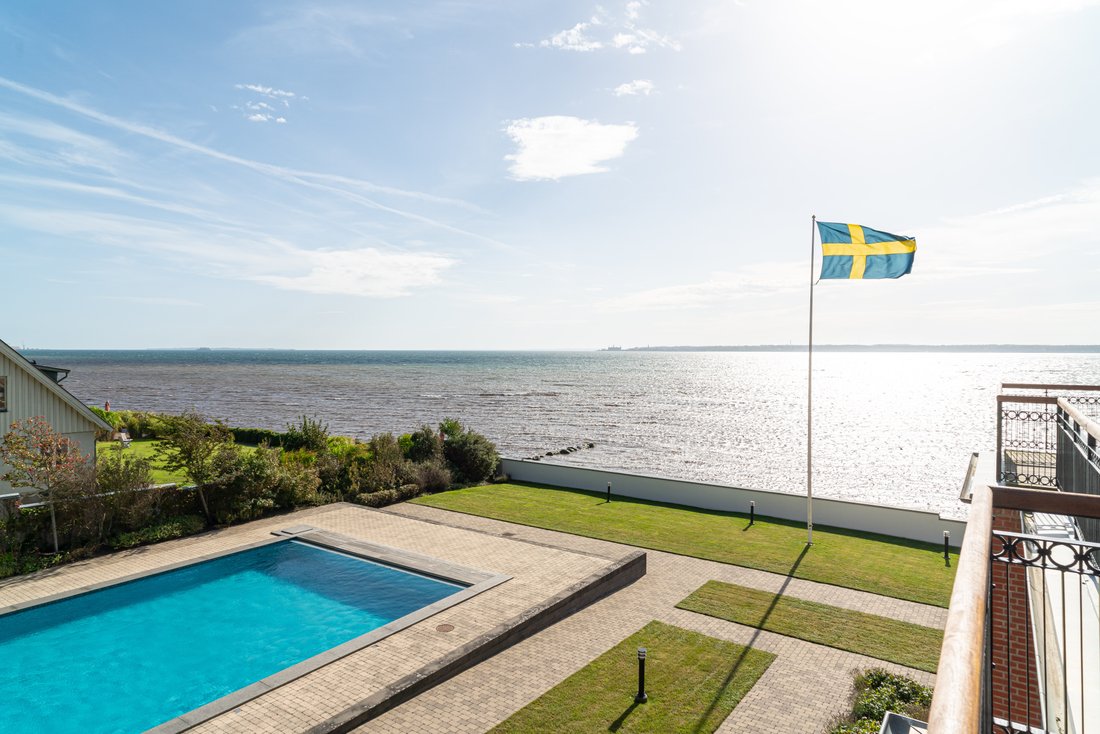
Arranged over four floors, the main residence offers six generously proportioned bedrooms with adjoining bathrooms, together with elegant reception rooms, dining room, drawing room and office. The basement includes storage, laundry and technical facilities, a sauna and wine cellar. Expansive terraces and the upper floors enjoy uninterrupted views across the Öresund.
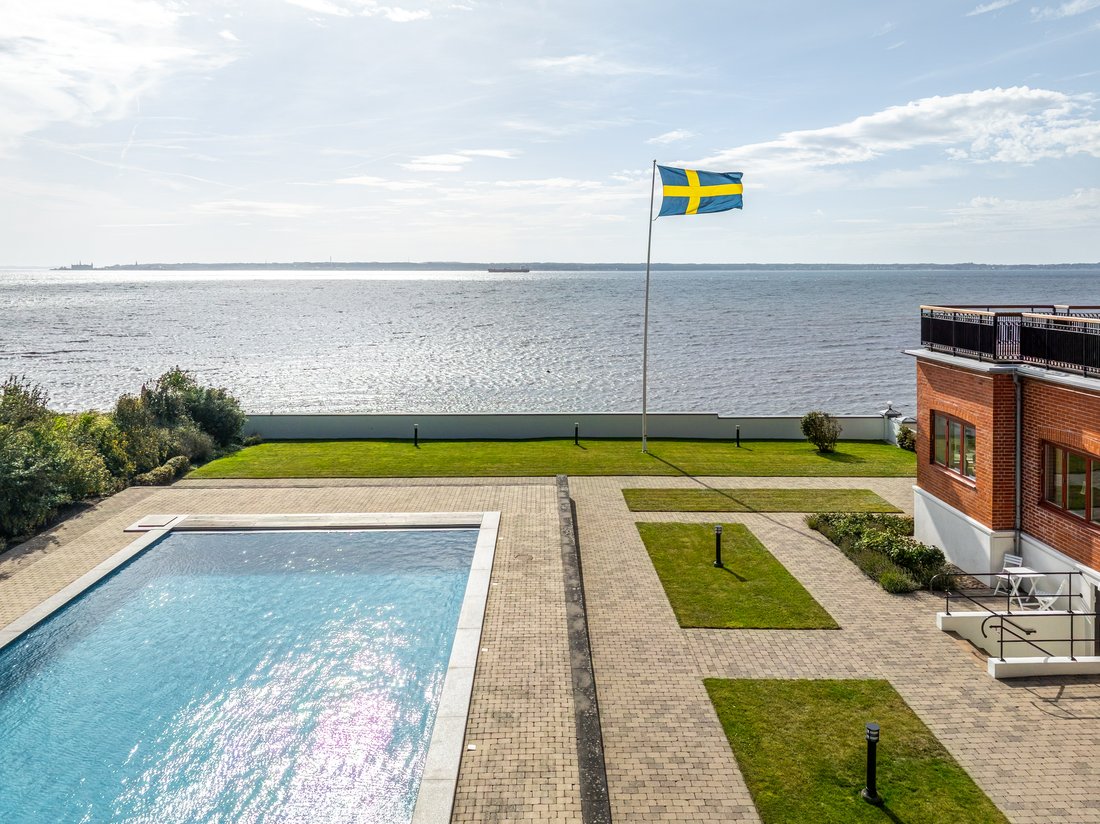
The estate also includes a heated 8 × 14 metre swimming pool with pool house and a separate annex comprising a triple garage, basement storage and a fully equipped guest apartment. The approximately 3,900-square-metre grounds extend to a newly constructed seawall and wave-breaking quay, preserving both the gardens and the immediate connection to the water.
With Sofiero Palace as its neighbour and views towards Kronborg Castle, the location is among the most distinguished on the Swedish side of the Öresund. Central Helsingborg and the ferry connection to Denmark are approximately 6 kilometres away, Copenhagen and its international airport about one hour by car, and Ängelholm Airport around 25 minutes – offering exceptional accessibility, including for owners arriving by private aircraft.
Properties with documented royal connections rarely reach the open market. Hovmarskalksvillan brings together historic provenance, architectural distinction, meticulous restoration, waterfront living and outstanding international accessibility in one singular estate.
-
Type de propriété
Maison
-
Prix/pied²
$4,454
Caractéristiques
- Jardin
- Terrasse
- Vue sur la mer
- Cheminée
- Au bord du lac
- Vue sur le lac
- Vue sur l’océan
- Bibliothèque
- Cave à vins
Lot
- Vue panoramique / panoramique
- Vue sur la mer
- Vue sur l’océan
- Au bord de l’eau
- Au bord du lac
- Vie privée
- Vue sur le lac
- Le front de mer
- Rénové
Intérieur
- Haut plafond
- Cheminée
- Laveuse sécheuse
- Buanderie
- Sauna
- Cave à vins
- Bibliothèque
- Sous-sol
Outdoor
- Terrasse
- Balcon
- Piscine
- Garage
- Porte
- Pergola
- Jardin
Explorez le secteur
L'agent vous contactera bientôt par
Publié par
Réserver une visite avec the agent
Choisissez une date et si vous souhaitez une visite virtuelle ou en personne avec l’agent.

Propriétés similaires à proximité
Nouvelles annonces à Helsingborg


Explorez plus de biens à vendre
Helsingborg, Suède types de propriétés
Helsingborg, Suède Recherches populaires
- Propriétés avec Jardin à Helsingborg, Suède
- Vue sur la mer propriétés à Helsingborg, Suède
- Rénové propriétés à Helsingborg, Suède
- Vue sur la mer propriétés à Helsingborg, Suède
- Propriétés avec Cuisine ouverte à Helsingborg, Suède
- Propriétés avec Garage à Helsingborg, Suède
- Au bord de l’eau propriétés à Helsingborg, Suède
- Vie privée propriétés à Helsingborg, Suède
- Propriétés avec Centre de remise en forme / Fitness à Helsingborg, Suède
- Le front de mer propriétés à Helsingborg, Suède
- Propriétés avec Bibliothèque à Helsingborg, Suède
- Propriétés avec Cave à vins à Helsingborg, Suède
- Propriétés avec Jacuzzi à Helsingborg, Suède
- Propriétés avec Bar à Helsingborg, Suède
- Vue sur l’océan propriétés à Helsingborg, Suède
- Côtières propriétés à Helsingborg, Suède
- Plage propriétés à Helsingborg, Suède
- Bord de Mer propriétés à Helsingborg, Suède
- Duplex propriétés à Helsingborg, Suède
- Au bord du lac propriétés à Helsingborg, Suède
- Moderne propriétés à Helsingborg, Suède
- Propriétés avec Ascenseur à Helsingborg, Suède
- Constructions neuves propriétés à Helsingborg, Suède
- Propriétés avec Climatisation à Helsingborg, Suède
- Front de rivière propriétés à Helsingborg, Suède
- Immobilier d’investissement propriétés à Helsingborg, Suède
- Vue sur le lac propriétés à Helsingborg, Suède
- Propriétés avec Salle de jeux à Helsingborg, Suède
Guides et histoires connexes
La confiance des plus grands courtiers du monde
Les agents des propriétés les plus exceptionnelles du monde publient sur JamesEdition.
- Des annonces de Sotheby's, Christie's, BARNES et Engel & Völkers
- Chaque annonce est vérifiée avant sa mise en ligne
- Contactez directement des agents vérifiés
En continuant, vous acceptez nos Conditions et notre Politique de confidentialité.