$3,248,870
Terrains De Campagne De Garbayuela
- 9 Chambres
- 3 SdB
- 864.87 Ac lot
- Mis à jour: Aujourd'hui
- 2
À propos de la propriété
La description a été traduite automatiquement.
La description est affichée dans la langue d'origine.
1) Description générale
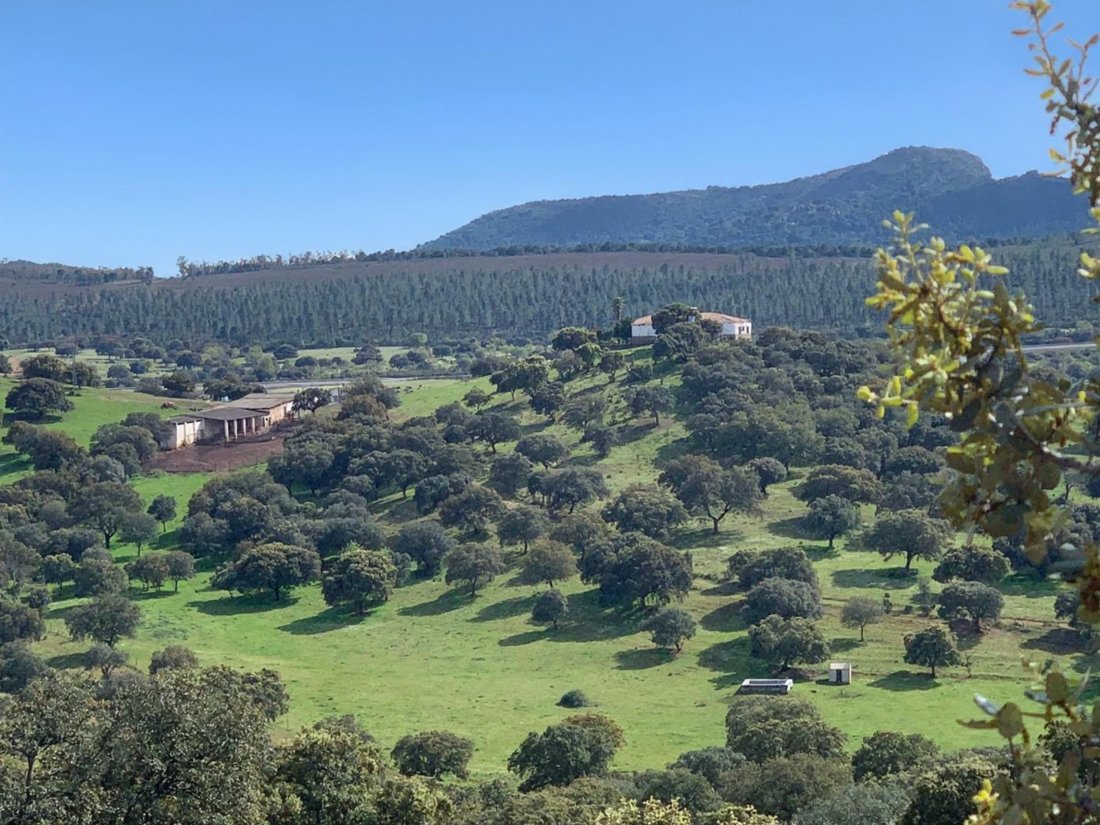
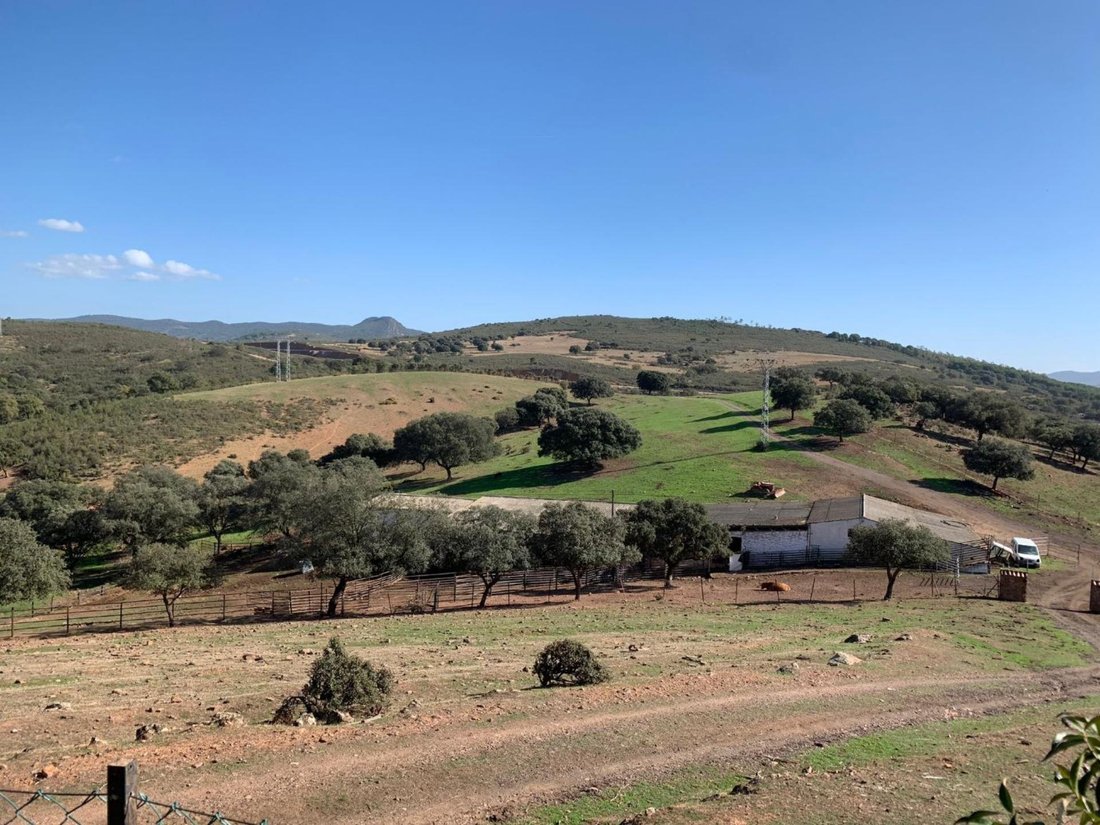
La finca est une propriété située à Badajoz, au cœur de la Réserve de biosphère de Sibérie extrême, reconnue par l’UNESCO. L’accès est excellent grâce à la route nationale N-430 et à la voie ferrée N-430a.
Le terrain combine des pâturages permanents avec de l’arbolado de encinas et des alcornoques, ainsi que des zones reforestées avec des encinas, des alcornoqu
La finca est une propriété située à Badajoz, au cœur de la Réserve de biosphère de Sibérie extrême, reconnue par l’UNESCO. L’accès est excellent grâce à la route nationale N-430 et à la voie ferrée N-430a.
Le terrain combine des pâturages permanents avec de l’arbolado de encinas et des alcornoques, ainsi que des zones reforestées avec des encinas, des alcornoqu
1) Overview
The estate is a dehesa located in Badajoz, within the Siberia Extremeña Biosphere Reserve, recognized by UNESCO. It has excellent access via the national road N-430 and its branch N-430a.
The land combines permanent pastures with oak and cork oak trees, as well as reforested areas with oaks, cork oaks, and gall oaks. It is currently used for agricultural and livestock farm
The estate is a dehesa located in Badajoz, within the Siberia Extremeña Biosphere Reserve, recognized by UNESCO. It has excellent access via the national road N-430 and its branch N-430a.
The land combines permanent pastures with oak and cork oak trees, as well as reforested areas with oaks, cork oaks, and gall oaks. It is currently used for agricultural and livestock farm
1) Description générale
La finca est une propriété située à Badajoz, au cœur de la Réserve de biosphère de Sibérie extrême, reconnue par l’UNESCO. L’accès est excellent grâce à la route nationale N-430 et à la voie ferrée N-430a.
Le terrain combine des pâturages permanents avec de l’arbolado de encinas et des alcornoques, ainsi que des zones reforestées avec des encinas, des alcornoques et des quejigos. Actualmente se destina a explotación agrícola-ganadera, centrada en el vacuno, y cuenta avec edificaciones, instalaciones y maquinaria adecuadas.
El Arroyo croise la finca de este a oeste, en el sector oriental nace otro arroyo. Su caudal es estacional, pero la finca dispone de abundantes recursos hídricos gracias a manantiales, charcas y pozos. La faune est variée, détacando jabalíes, junto a corzos, zorros, conejos y aves. La finca est classée « zone libre de chasse ».
2) Surface et colis
La superficie totale, selon le certificat cadastral et SIGPAC, est de 350 ha, selon les critères les plus précis de l’écriture notariale. Está dividida en recintos mediante cercados de malla metálica, lo que facilita el manejo del ganado.
3) Reforestation
Il a été rénové sur 40 ha avec 20 000 encinas, alcornoques et quejigos, dans un souci de durabilité et d’amélioration du paysage.
4) Ressources hydriques
El sistema principal parte de un pozo avec bomba sumergida que eleva agua a un depósito junto a la vivienda principal. Desde allí se distribuye a edificios, huerto, jardín y bebederos.
De plus, il existe plusieurs sources avec des caractères :
M1 et M2 : au sud, à proximité de la N-430.
M3 : dans le lindero ouest, avec une charge importante.
M4 : à l’est, route fréquentée par patos.
M5 : à proximité des bâtiments, avec abrevadero.
M6 : sur l’échelle du Cerro, avec deux charbons.
M7 : au sud-est, avec une flèche de grande taille.
El agua del pozo ha sido analizada y es potable ; la de los manantiales no, aunque se presume de buena calidad.
5) Bâtiments
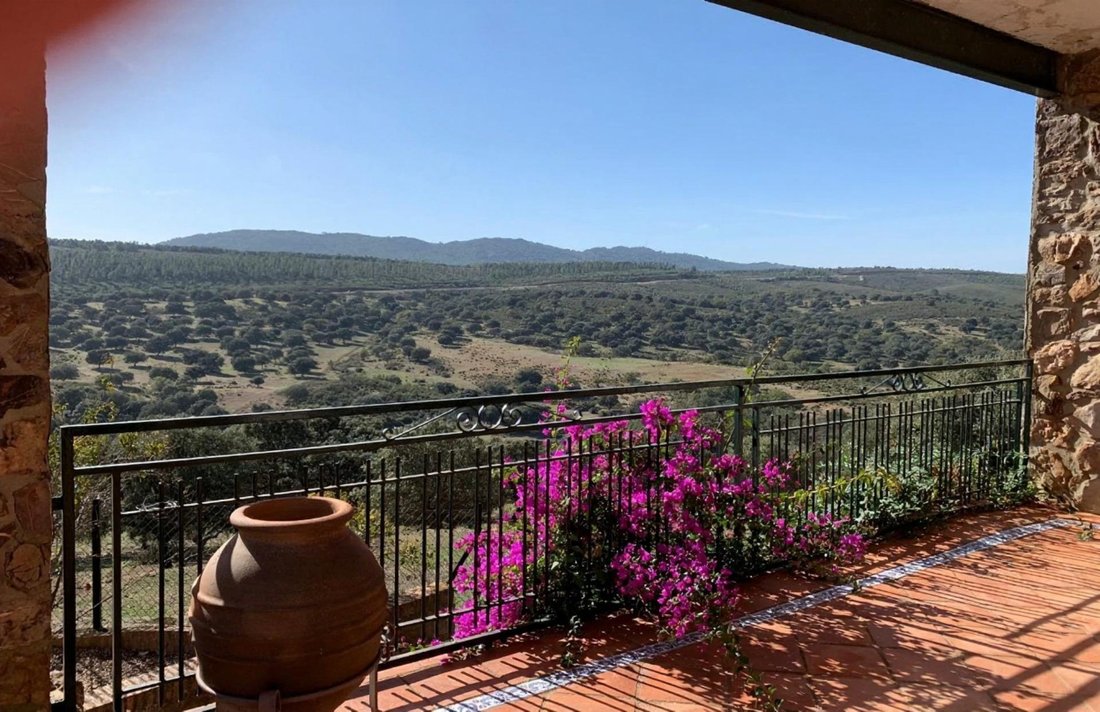
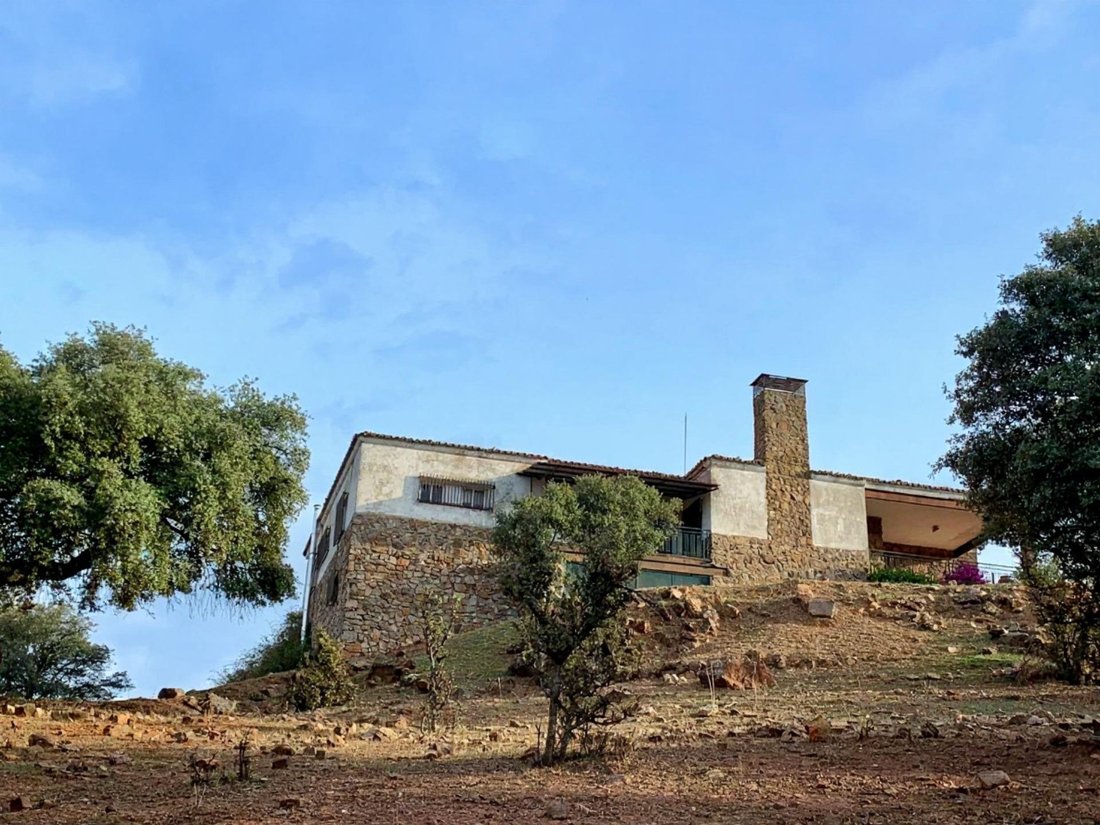
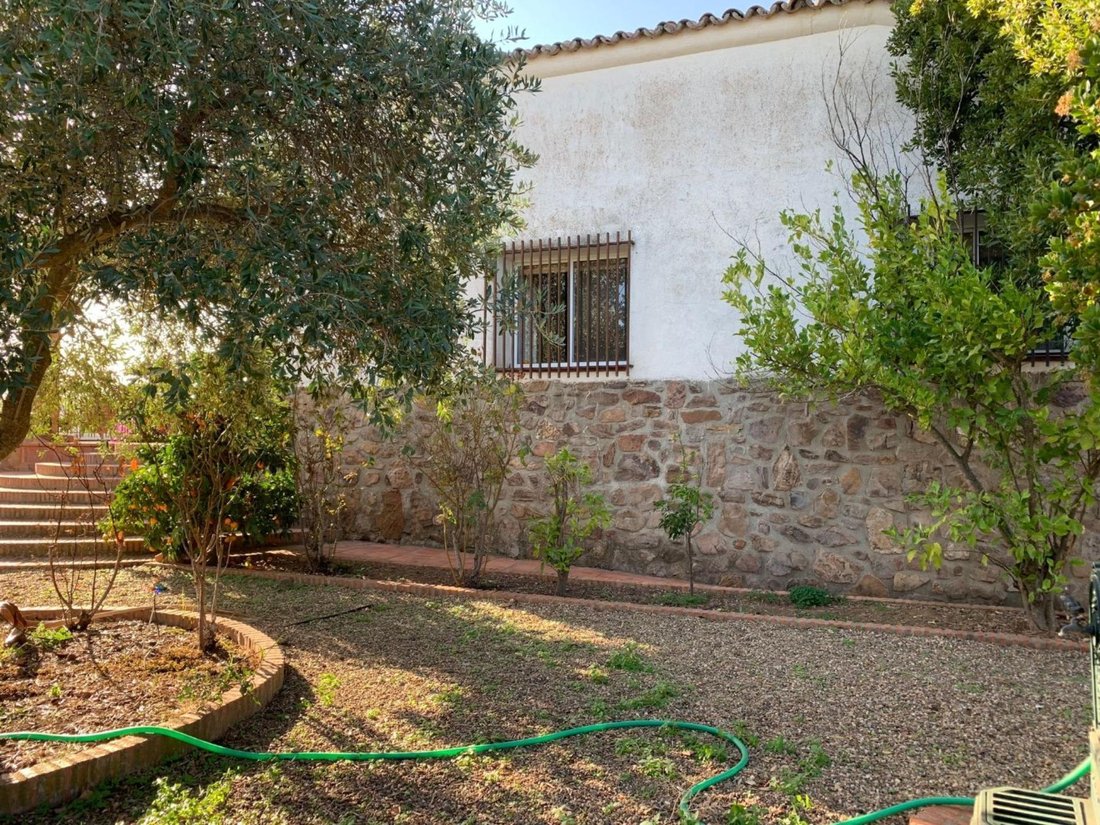
Maison principale : chalet de deux étages en pierre locale. La planta baja (semisótano) abrite un garage, des entrepôts, une cave et une salle de jeux. La chambre supérieure dispose de 7 chambres (3 avec salle de bains privative), d’un salon avec cheminée, d’une cuisine et d’une terrasse. Jardin avec fruits et parterres ; piscine à proximité de la ferme.
Vivienda del encargado : petit chalet avec 2 chambres, un étage et un coin cuisine-salle à manger, à côté d’une usine de consommation de voitures.
Navire à usages multiples : construction de 1 000 m2 utilisée comme cebadero, avec almacén, cochiquera, gallinero, corrales exteriores, mangas y bascula.
6) Ganaderie
Cabane de 200 à 250 cabines de vacuno, croisières en ligne et limousine, avec quelques exemples de chambres à coucher.
7) Machinerie
Dotation agricole et agricole :
Tracteurs New Holland T100 (4WD) et Fiat 88.85M.
Aperos SANZ MORALES (burin, gradas, segadora, angledoce).
Pala Tenias, abonnadora Solá, exploratrice forestière Castillejo Castro.
Motoculteur Honda, motosierra Stihl, et accessoires auxiliaires.
8) Améliorations possibles
a) Exploitation : amplifier la reforestation (par exemple, olivar en el Cerro), améliorer les pâturages avec des prairies artificielles, construire un nouveau cebadero, des silos ou une nef auxiliaire, et installer des panneaux solaires pour réduire les coûts énergétiques.
b) Tourisme rural : la propriété offre un grand potentiel d’avenir. Podrían contemplarse ampliaciones de la vivienda principal, construcción de chalets o apartamentos turísticos, asfaltado de accesos y creación de instalaciones deportivas.
c) Hydráulica : se ha estudiado la construcción de una presa en el arroyo ; viable, aunque innecesaria por el abastecimiento actual.
La finca est une propriété située à Badajoz, au cœur de la Réserve de biosphère de Sibérie extrême, reconnue par l’UNESCO. L’accès est excellent grâce à la route nationale N-430 et à la voie ferrée N-430a.
Le terrain combine des pâturages permanents avec de l’arbolado de encinas et des alcornoques, ainsi que des zones reforestées avec des encinas, des alcornoques et des quejigos. Actualmente se destina a explotación agrícola-ganadera, centrada en el vacuno, y cuenta avec edificaciones, instalaciones y maquinaria adecuadas.
El Arroyo croise la finca de este a oeste, en el sector oriental nace otro arroyo. Su caudal es estacional, pero la finca dispone de abundantes recursos hídricos gracias a manantiales, charcas y pozos. La faune est variée, détacando jabalíes, junto a corzos, zorros, conejos y aves. La finca est classée « zone libre de chasse ».
2) Surface et colis
La superficie totale, selon le certificat cadastral et SIGPAC, est de 350 ha, selon les critères les plus précis de l’écriture notariale. Está dividida en recintos mediante cercados de malla metálica, lo que facilita el manejo del ganado.
3) Reforestation
Il a été rénové sur 40 ha avec 20 000 encinas, alcornoques et quejigos, dans un souci de durabilité et d’amélioration du paysage.
4) Ressources hydriques
El sistema principal parte de un pozo avec bomba sumergida que eleva agua a un depósito junto a la vivienda principal. Desde allí se distribuye a edificios, huerto, jardín y bebederos.
De plus, il existe plusieurs sources avec des caractères :
M1 et M2 : au sud, à proximité de la N-430.
M3 : dans le lindero ouest, avec une charge importante.
M4 : à l’est, route fréquentée par patos.
M5 : à proximité des bâtiments, avec abrevadero.
M6 : sur l’échelle du Cerro, avec deux charbons.
M7 : au sud-est, avec une flèche de grande taille.
El agua del pozo ha sido analizada y es potable ; la de los manantiales no, aunque se presume de buena calidad.
5) Bâtiments
Maison principale : chalet de deux étages en pierre locale. La planta baja (semisótano) abrite un garage, des entrepôts, une cave et une salle de jeux. La chambre supérieure dispose de 7 chambres (3 avec salle de bains privative), d’un salon avec cheminée, d’une cuisine et d’une terrasse. Jardin avec fruits et parterres ; piscine à proximité de la ferme.
Vivienda del encargado : petit chalet avec 2 chambres, un étage et un coin cuisine-salle à manger, à côté d’une usine de consommation de voitures.
Navire à usages multiples : construction de 1 000 m2 utilisée comme cebadero, avec almacén, cochiquera, gallinero, corrales exteriores, mangas y bascula.
6) Ganaderie
Cabane de 200 à 250 cabines de vacuno, croisières en ligne et limousine, avec quelques exemples de chambres à coucher.
7) Machinerie
Dotation agricole et agricole :
Tracteurs New Holland T100 (4WD) et Fiat 88.85M.
Aperos SANZ MORALES (burin, gradas, segadora, angledoce).
Pala Tenias, abonnadora Solá, exploratrice forestière Castillejo Castro.
Motoculteur Honda, motosierra Stihl, et accessoires auxiliaires.
8) Améliorations possibles
a) Exploitation : amplifier la reforestation (par exemple, olivar en el Cerro), améliorer les pâturages avec des prairies artificielles, construire un nouveau cebadero, des silos ou une nef auxiliaire, et installer des panneaux solaires pour réduire les coûts énergétiques.
b) Tourisme rural : la propriété offre un grand potentiel d’avenir. Podrían contemplarse ampliaciones de la vivienda principal, construcción de chalets o apartamentos turísticos, asfaltado de accesos y creación de instalaciones deportivas.
c) Hydráulica : se ha estudiado la construcción de una presa en el arroyo ; viable, aunque innecesaria por el abastecimiento actual.
1) Overview
The estate is a dehesa located in Badajoz, within the Siberia Extremeña Biosphere Reserve, recognized by UNESCO. It has excellent access via the national road N-430 and its branch N-430a.
The land combines permanent pastures with oak and cork oak trees, as well as reforested areas with oaks, cork oaks, and gall oaks. It is currently used for agricultural and livestock farming, focused on cattle, and includes suitable buildings, facilities, and machinery.
A stream crosses the estate from east to west, and another stream originates in the eastern sector. Its flow is seasonal, but the estate has abundant water resources thanks to springs, ponds, and wells. The wildlife is diverse, highlighting wild boars, along with roe deer, foxes, rabbits, and birds. The estate is classified as a ”hunting-free zone.”
2) Area and Plots
The total area, according to the cadastral certificate and SIGPAC, is 350 hectares, a more precise measurement than the notarial deed. It is divided into enclosures with metal mesh fences, facilitating livestock management.
3) Reforestation
Forty hectares have been replanted with about 20,000 oaks, cork oaks, and gall oaks, providing sustainability and improving the landscape.
4) Water Resources
The main system starts from a well with a submersible pump that raises water to a tank next to the main house. From there, it is distributed to buildings, orchard, garden, and drinking troughs.
Additionally, there are several springs with ponds:
- M1 and M2: to the south, near the N-430.
- M3: on the western boundary, with a large pond.
- M4: in the east, pond frequented by ducks.
- M5: near the buildings, with a watering trough.
- M6: on the hillside of the Cerro, with two ponds.
- M7: to the southeast, with a large pond.
The well water has been analyzed and is potable; the spring water is not, although it is presumed to be of good quality.
5) Buildings
- Main house: two-story chalet made of local stone. The ground floor (semi-basement) houses a garage, storage rooms, cellar, and game room. The upper floor has 7 bedrooms (3 en suite), living room with fireplace, dining room, kitchen, and terraces. Garden with fruit trees and flower beds; nearby fenced masonry swimming pool.
- Caretaker’s house: small chalet with 2 bedrooms, bathroom, and kitchen-dining room, next to a self-consumption orchard.
- Multipurpose barn: 1,000 m2 building used as a feeding area, with storage, pigsty, chicken coop, outdoor pens, cattle chute, and scale.
6) Livestock
Herd of 200 to 250 cattle, crosses of Retinta and Limousine breeds, with some pure specimens of both breeds.
7) Machinery
Agricultural and livestock equipment:
- New Holland T100 (4WD) and Fiat 88.85M tractors.
- SANZ MORALES implements (chisel, harrows, mower, angled plow).
- Tenias loader, Solá fertilizer spreader, Castillejo Castro forestry brush cutter.
- Honda tiller, Stihl chainsaw, and auxiliary tools.
8) Possible Improvements
a) Farming: expand reforestation (e.g., olive grove on the Cerro), improve pastures with artificial meadows, build a new feeding area, silos or auxiliary barn, and install solar panels to reduce energy costs.
b) Rural tourism: the estate offers great future potential. Possible expansions of the main house, construction of chalets or tourist apartments, paving of access roads, and creation of sports facilities could be considered.
c) Hydraulics: the construction of a dam on the stream has been studied; it is feasible but unnecessary due to the current water supply.
The estate is a dehesa located in Badajoz, within the Siberia Extremeña Biosphere Reserve, recognized by UNESCO. It has excellent access via the national road N-430 and its branch N-430a.
The land combines permanent pastures with oak and cork oak trees, as well as reforested areas with oaks, cork oaks, and gall oaks. It is currently used for agricultural and livestock farming, focused on cattle, and includes suitable buildings, facilities, and machinery.
A stream crosses the estate from east to west, and another stream originates in the eastern sector. Its flow is seasonal, but the estate has abundant water resources thanks to springs, ponds, and wells. The wildlife is diverse, highlighting wild boars, along with roe deer, foxes, rabbits, and birds. The estate is classified as a ”hunting-free zone.”
2) Area and Plots
The total area, according to the cadastral certificate and SIGPAC, is 350 hectares, a more precise measurement than the notarial deed. It is divided into enclosures with metal mesh fences, facilitating livestock management.
3) Reforestation
Forty hectares have been replanted with about 20,000 oaks, cork oaks, and gall oaks, providing sustainability and improving the landscape.
4) Water Resources
The main system starts from a well with a submersible pump that raises water to a tank next to the main house. From there, it is distributed to buildings, orchard, garden, and drinking troughs.
Additionally, there are several springs with ponds:
- M1 and M2: to the south, near the N-430.
- M3: on the western boundary, with a large pond.
- M4: in the east, pond frequented by ducks.
- M5: near the buildings, with a watering trough.
- M6: on the hillside of the Cerro, with two ponds.
- M7: to the southeast, with a large pond.
The well water has been analyzed and is potable; the spring water is not, although it is presumed to be of good quality.
5) Buildings
- Main house: two-story chalet made of local stone. The ground floor (semi-basement) houses a garage, storage rooms, cellar, and game room. The upper floor has 7 bedrooms (3 en suite), living room with fireplace, dining room, kitchen, and terraces. Garden with fruit trees and flower beds; nearby fenced masonry swimming pool.
- Caretaker’s house: small chalet with 2 bedrooms, bathroom, and kitchen-dining room, next to a self-consumption orchard.
- Multipurpose barn: 1,000 m2 building used as a feeding area, with storage, pigsty, chicken coop, outdoor pens, cattle chute, and scale.
6) Livestock
Herd of 200 to 250 cattle, crosses of Retinta and Limousine breeds, with some pure specimens of both breeds.
7) Machinery
Agricultural and livestock equipment:
- New Holland T100 (4WD) and Fiat 88.85M tractors.
- SANZ MORALES implements (chisel, harrows, mower, angled plow).
- Tenias loader, Solá fertilizer spreader, Castillejo Castro forestry brush cutter.
- Honda tiller, Stihl chainsaw, and auxiliary tools.
8) Possible Improvements
a) Farming: expand reforestation (e.g., olive grove on the Cerro), improve pastures with artificial meadows, build a new feeding area, silos or auxiliary barn, and install solar panels to reduce energy costs.
b) Rural tourism: the estate offers great future potential. Possible expansions of the main house, construction of chalets or tourist apartments, paving of access roads, and creation of sports facilities could be considered.
c) Hydraulics: the construction of a dam on the stream has been studied; it is feasible but unnecessary due to the current water supply.
-
Type de propriété
Terrain
Explorez le secteur
Inscrit il y a 2 ans
Vous vous êtes renseigné sur ce bien
L'agent vous contactera bientôt par
Publié par
16
Annonces
2025
Inscrit
Réserver une visite avec the agent
Choisissez une date et si vous souhaitez une visite virtuelle ou en personne avec l’agent.
Date préférée
Type de visite
Dernière mise à jour
Aujourd'hui
Première mise en ligne
Août 28, 2025
Référence de l’annonce
BA-2025-61/12527
La confiance des plus grands courtiers du monde
Les agents des propriétés les plus exceptionnelles du monde publient sur JamesEdition.
- Des annonces de Sotheby's, Christie's, BARNES et Engel & Völkers
- Chaque annonce est vérifiée avant sa mise en ligne
- Contactez directement des agents vérifiés
En continuant, vous acceptez nos Conditions et notre Politique de confidentialité.