$9,930,763
Château Fontainebleau 1200,0 M² 15 Chambres
- 15 Chambres
- 6 SdB
- 12,917 Sqft
- Mis à jour: Juillet 20
- 85
À propos de la propriété
La description a été traduite automatiquement.
La description est affichée dans la langue d'origine.
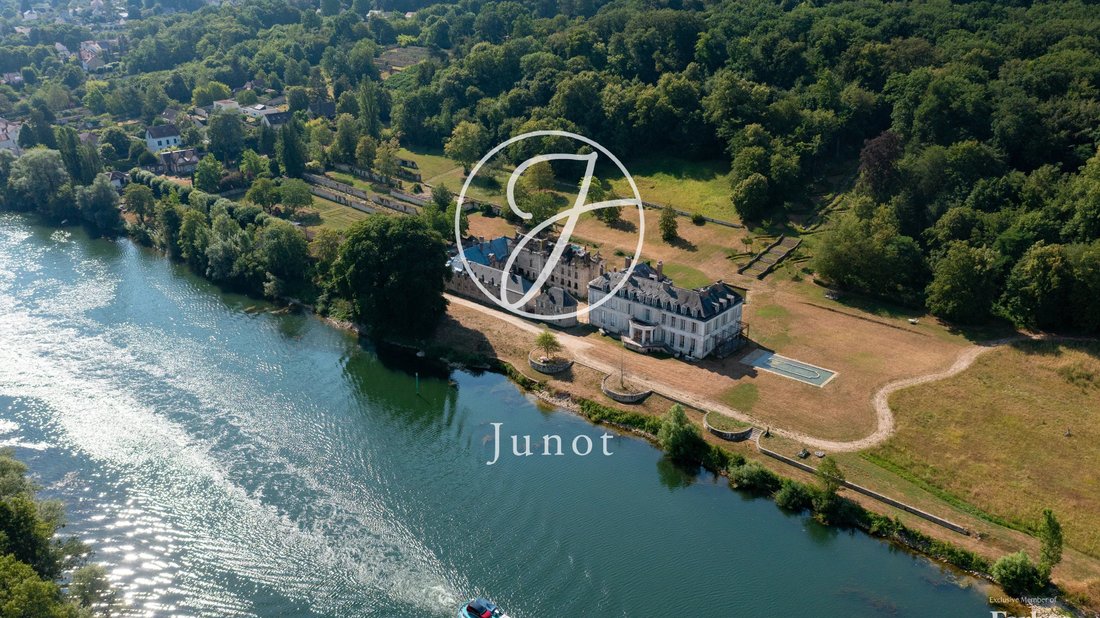
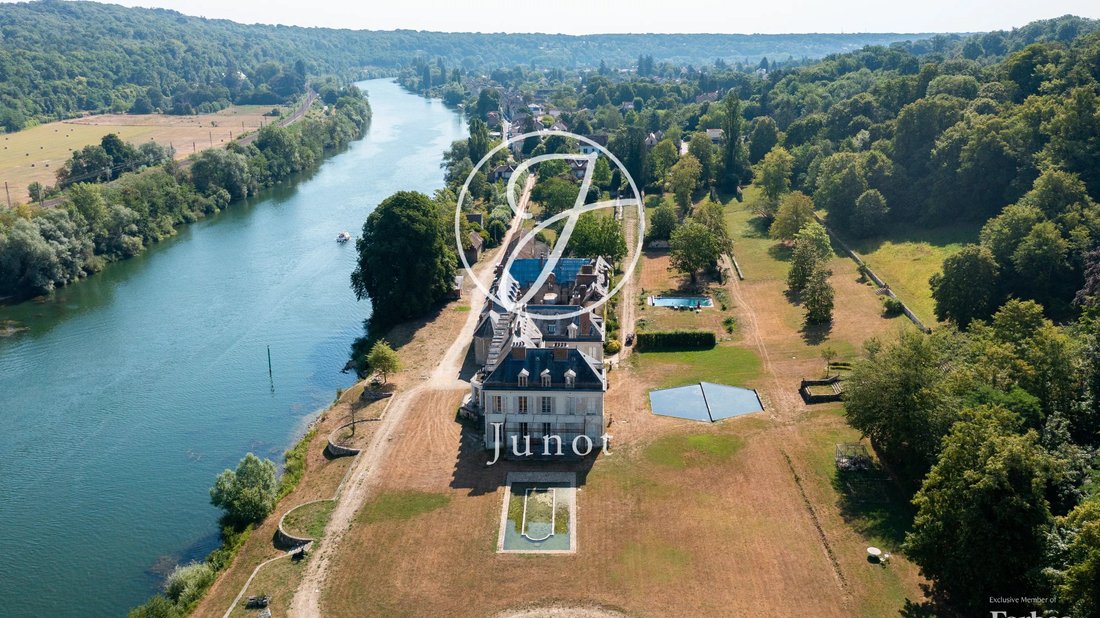
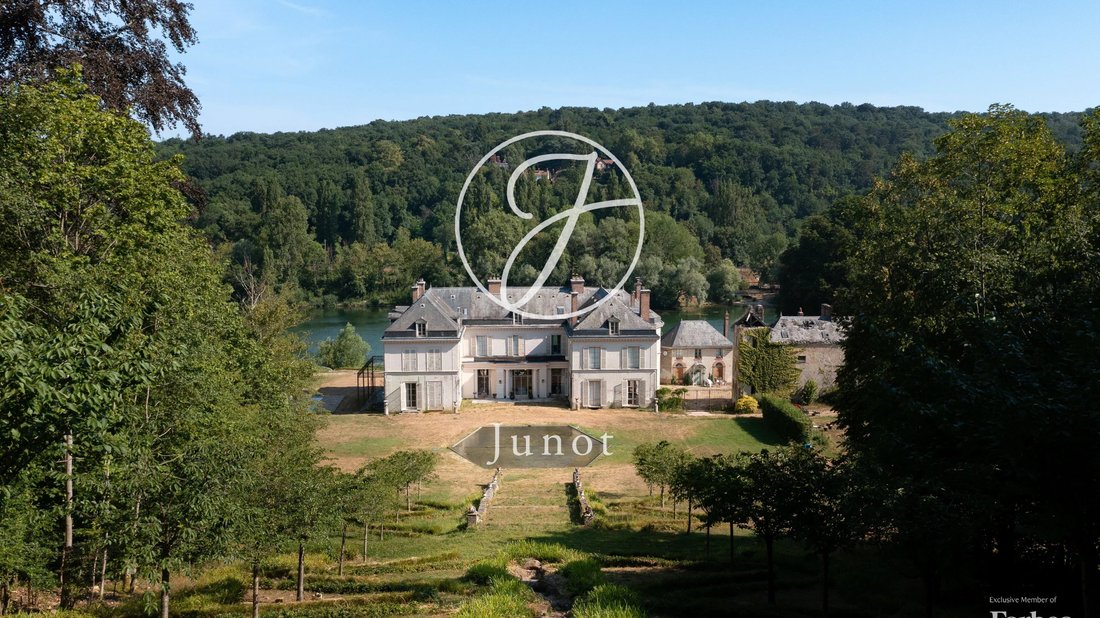
À 90 minutes de Paris, aux portes de Fontainebleau, ce château occupe un site que la cour de François Ier appréciait déjà pour sa tranquillité : un méandre de la Seine, à l’orée de la forêt royale.
À une époque où le fleuve reliait Paris à Fontainebleau de manière plus fiable que les routes, on arrivait ici par bateau. Les vastes prairies qui bordent les berges, les terrasses naturel
À une époque où le fleuve reliait Paris à Fontainebleau de manière plus fiable que les routes, on arrivait ici par bateau. Les vastes prairies qui bordent les berges, les terrasses naturel
At 90 minutes from Paris, at the gates of Fontainebleau, this château occupies a site that the Court of François I already prized for its tranquillity: a bend in the Seine, on the edge of the royal forest.
At a time when the river connected Paris to Fontainebleau more reliably than the roads, one arrived here by boat. The vast meadows lining the banks, the natural terraces and the stone s
At a time when the river connected Paris to Fontainebleau more reliably than the roads, one arrived here by boat. The vast meadows lining the banks, the natural terraces and the stone s
À 90 minutes de Paris, aux portes de Fontainebleau, ce château occupe un site que la cour de François Ier appréciait déjà pour sa tranquillité : un méandre de la Seine, à l’orée de la forêt royale.
À une époque où le fleuve reliait Paris à Fontainebleau de manière plus fiable que les routes, on arrivait ici par bateau. Les vastes prairies qui bordent les berges, les terrasses naturelles et les marches en pierre menant à l’eau en témoignent encore aujourd’hui.
Construit au début du XVIIe siècle par un médecin proche d’Henri IV, le château est passé en 1710 au comte de Toulouse, fils légitime de Louis XIV et de Madame de Montespan.
Une avenue reliant le domaine au château de Fontainebleau a été pavée en 1726 pour faciliter les visites de Louis XV, qui venait y voir son grand-oncle le comte de Toulouse et partager sa passion pour la chasse.
Le château est ensuite passé au petit-fils de Louis XIV, le duc de Penthièvre, qui possédait plusieurs résidences dans les environs de Fontainebleau et aimait particulièrement se divertir et chasser ici.
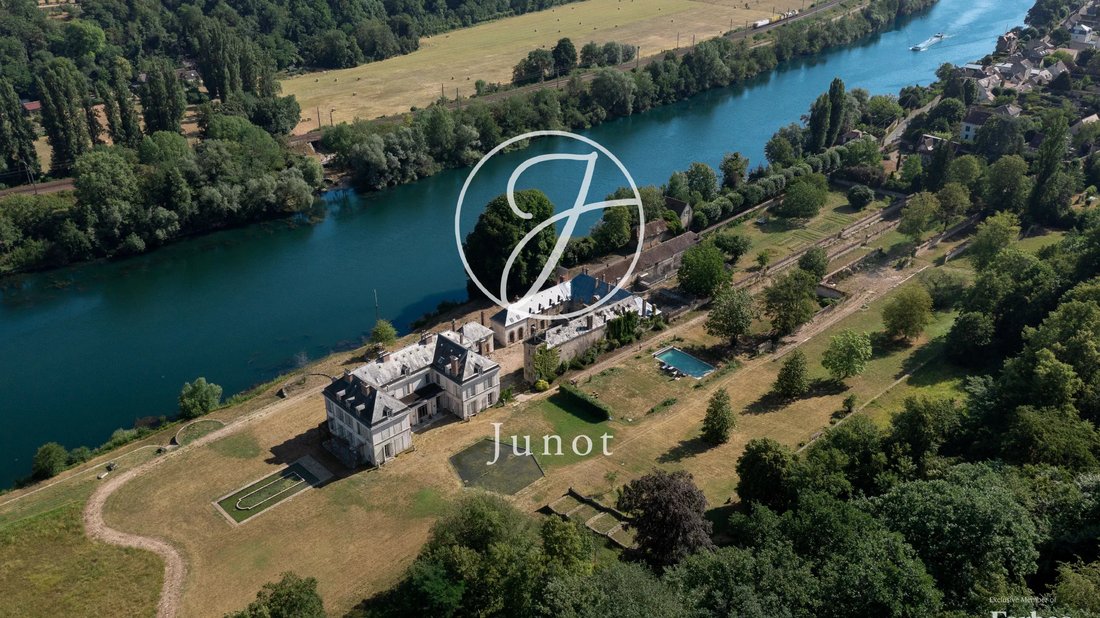
Le domaine comprend trente hectares de bois et de prairies, avec des dépendances, un potager, un verger et des murs en pierre autrefois consacrés à la culture du chasselas, le raisin de table doré né des treillis royaux de vigne en 1730 et cultivé le long de kilomètres de murs jusqu’au siècle dernier.
La propriété bénéficie également de deux kilomètres de berges privées, où la baignade et l’amarrage sont possibles, à l’abri des regards.
La forêt de Fontainebleau qui entoure le domaine — ses 25 000 hectares classés réserve de biosphère par l’UNESCO et site Natura 2000 — étend naturellement ce parc et sa faune protégée.
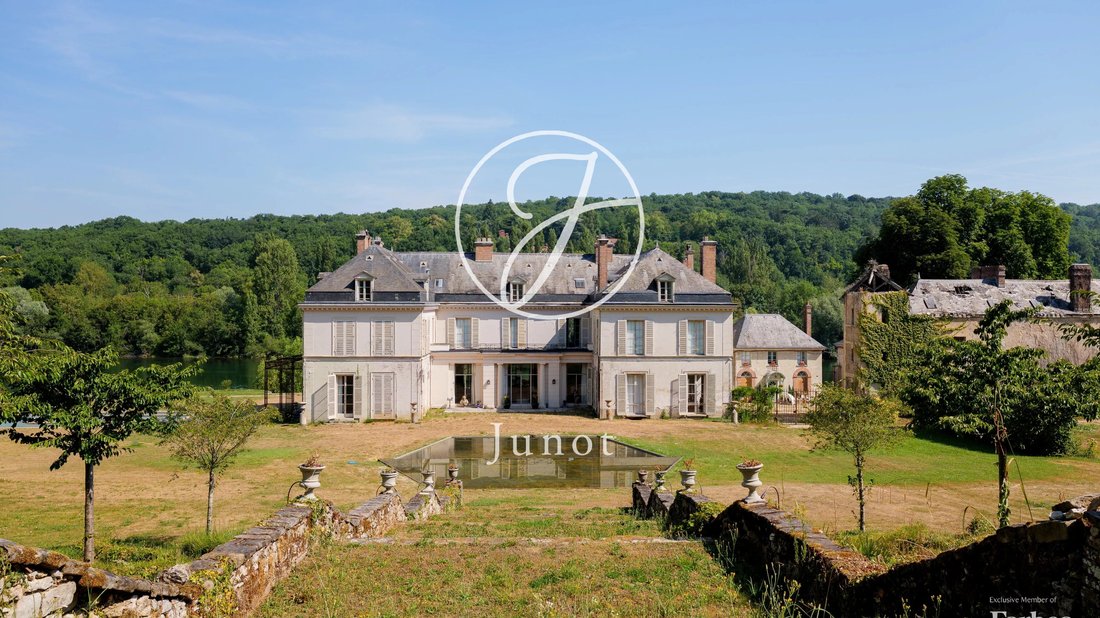
Rénové au XIXe siècle, le château a conservé ses volumes d’origine, avec de belles hauteurs de plafond et une disposition en enfilade du XVIIIe siècle. Ses grandes et nombreuses fenêtres inondent chaque pièce d’une lumière naturelle exceptionnelle. Le parquet de Versailles, le carrelage en terre cuite, les cheminées d’époque et les quincailleries de fenêtres lui confèrent le charme authentique d’une demeure historique.
D’une surface habitable de 900 m² sur trois niveaux, le château comprend dix-sept chambres, douze salles de bains, deux salons, une bibliothèque, une salle à manger et une grande cuisine équipée. Ayant récemment fait l’objet d’une rénovation intérieure complète, elle offre désormais tout le confort d’une maison contemporaine.
La propriété comprend également une grande maison de 200 m², un pavillon, une maison de gardien et de nombreuses dépendances, offrant un fort potentiel de développement futur, à quarante-cinq minutes de la gare de Lyon.
Les caractéristiques du domaine, sa taille, son cadre privilégié, la proximité de Fontainebleau et la facilité d’accès à Paris, constituent des atouts qui ouvrent de nombreuses possibilités. Qu’il s’agisse d’une résidence principale ou secondaire, le domaine se prête tout aussi bien à un projet d’investissement : la restauration des dépendances et des dépendances ouvre la voie à une entreprise hôtelière, touristique ou événementielle.
Des informations sur les risques auxquels est exposé ce bien sont disponibles sur le site Géorisques : https://www.georisques.gouv.fr/
At 90 minutes from Paris, at the gates of Fontainebleau, this château occupies a site that the Court of François I already prized for its tranquillity: a bend in the Seine, on the edge of the royal forest.
At a time when the river connected Paris to Fontainebleau more reliably than the roads, one arrived here by boat. The vast meadows lining the banks, the natural terraces and the stone steps leading down to the water still bear witness to this today.
Built in the early seventeenth century by a physician close to Henri IV, the château passed in 1710 to the Comte de Toulouse, the legitimised son of Louis XIV and Madame de Montespan.
An avenue linking the estate to the Palace of Fontainebleau was paved in 1726 to facilitate the visits of Louis XV, who would come here to see his great-uncle the Comte de Toulouse and share his passion for hunting.
The château then passed to Louis XIV’s grandson, the Duc de Penthièvre, who owned several residences in the vicinity of Fontainebleau and was especially fond of entertaining and hunting here.
The estate comprises thirty hectares of woodland and meadows, with outbuildings, a kitchen garden, an orchard, and stone walls once devoted to the cultivation of chasselas, the golden table grape born of royal vine trellises in 1730 and grown along miles of walls until the last century.
The property also benefits from two kilometres of private riverbank, where swimming and mooring are possible, entirely sheltered from view.
The Forest of Fontainebleau enclosing the estate — its 25,000 hectares designated a UNESCO Biosphere Reserve and a Natura 2000 site — naturally extends this parkland and its protected wildlife.
Remodelled in the nineteenth century, the château has preserved its original volumes, with fine ceiling heights and an eighteenth-century enfilade layout. Its large, numerous windows flood every room with exceptional natural light. Versailles parquet, terracotta floor tiles, period fireplaces and window fittings lend it the authentic charm of a historic residence.
Spanning 900 m² of living space across three levels, the château comprises seventeen bedrooms, twelve bathrooms, two drawing rooms, a library, a dining room and a large fitted kitchen. Having recently undergone a complete interior renovation, it now offers all the comforts of a contemporary home.
The property also includes a large 200 m² house, a pavilion, a caretaker’s cottage and an extensive range of outbuildings, offering strong potential for further development, forty-five minutes from Gare de Lyon.
The estate’s characteristics — its size, privileged setting, proximity to Fontainebleau and easy access to Paris — are assets that open up a range of possibilities. Whether as a primary or secondary residence, the estate lends itself equally well to an investment project: the restoration of the outbuildings and dependencies paves the way for a hotel, tourism or event-hosting venture.
Des informations sur les risques auxquels est exposé ce bien sont disponibles sur le site Géorisques : https://www.georisques.gouv.fr/
-
Type de propriété
Château
-
Étages
2
-
Année de construction
1650
-
Prix/pied²
$768
Caractéristiques
Explorez le secteur
Samoreau, Île-de-France, France
Voir sur Google Maps
Prix par sqft
Faible
Élevé

Inscrit il y a 10 mois
Vous vous êtes renseigné sur ce bien
L'agent vous contactera bientôt par
Publié par
5
Annonces
2026
Inscrit
Réserver une visite avec Sabine Brault Donnadieu
Choisissez une date et si vous souhaitez une visite virtuelle ou en personne avec l’agent.
Date préférée
Type de visite

A family-owned company since 1984, Junot was born in Paris from our passion for real estate and our commitment to
A family-owned company since 1984, Junot was born in Paris from our passion for real estate and our commitment to delivering high-end, high-performance services for selling, buying, renting, and managing your properties. Established in the Alpilles for more than 25 years, our four agencies are located in the heart of Saint-Rémy-de-Provence, Maussane-les-Alpilles, and Goult, in the Luberon. Farmhouses and bastides, nestled among vineyards and olive groves, Junot – Agences des Alpilles et du Luberon offers a selection of properties for sale and seasonal rental, whether you are looking to settle year-round or enjoy a dream holiday. As the exclusive representative of Forbes Global Properties in France and Belgium, and a member of Leading Real Estate Companies of the World®, Junot provides international exposure for the properties entrusted to it and supports clients seeking exceptional properties around the world. Every address has a story. Let us write yours.
Dernière mise à jour
Juillet 20
Première mise en ligne
Juillet 16
Référence de l’annonce
170JCPBRA
Propriétés similaires à proximité
Nouvelles annonces à Samoreau


Explorez plus de biens à vendre
Samoreau, Île-de-France, France types de propriétés
Samoreau, Île-de-France, France Recherches populaires
- Propriétés avec Terrasse à Samoreau, Île-de-France, France
- Immobilier d’investissement propriétés à Samoreau, Île-de-France, France
- Moderne propriétés à Samoreau, Île-de-France, France
- Propriétés avec Bibliothèque à Samoreau, Île-de-France, France
- Propriétés avec Piscine à Samoreau, Île-de-France, France
- Propriétés avec Balcon à Samoreau, Île-de-France, France
- Propriétés avec Terrain de tennis à Samoreau, Île-de-France, France
- Vue sur la mer propriétés à Samoreau, Île-de-France, France
Guides et histoires connexes
La confiance des plus grands courtiers du monde
Les agents des propriétés les plus exceptionnelles du monde publient sur JamesEdition.
- Des annonces de Sotheby's, Christie's, BARNES et Engel & Völkers
- Chaque annonce est vérifiée avant sa mise en ligne
- Contactez directement des agents vérifiés
En continuant, vous acceptez nos Conditions et notre Politique de confidentialité.