



$5,448,316
Prix augmenté de $860,260 le Sep 18, 2026
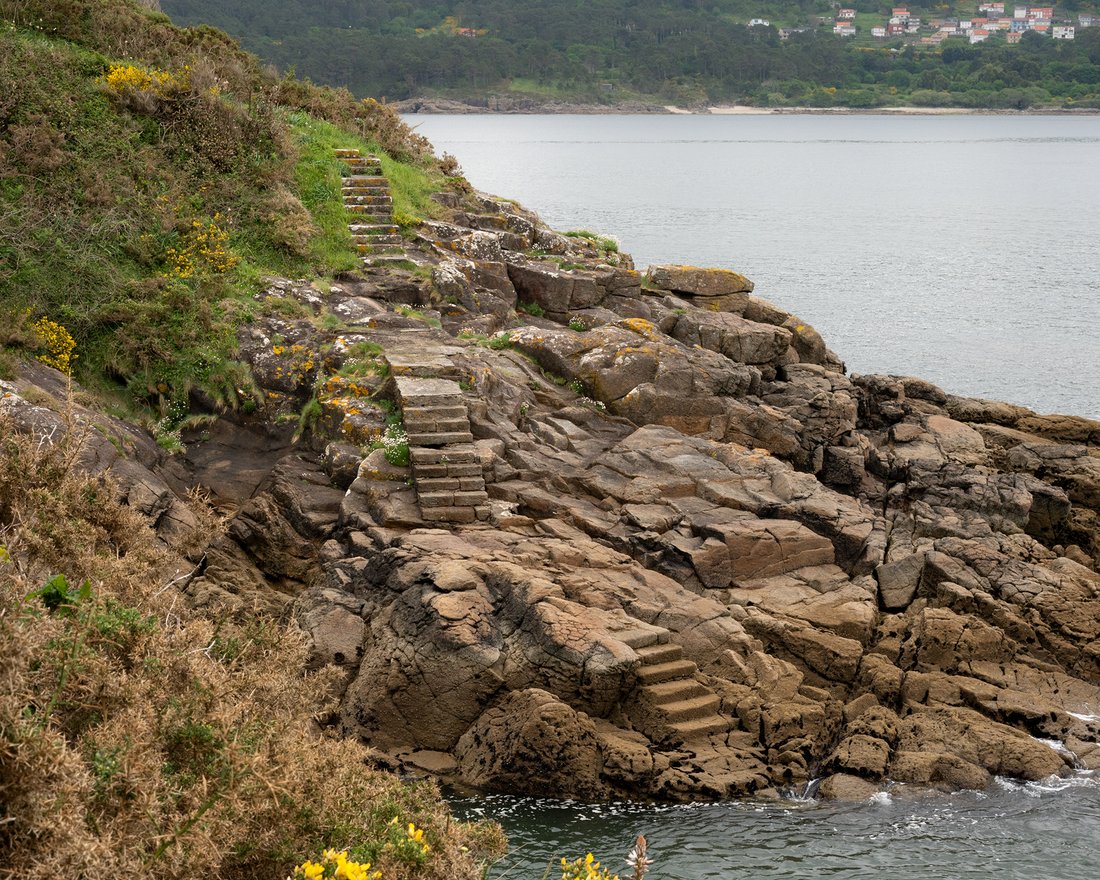
Château De Cardenal Dans La Ría De Corcubión.
- 6 Chambres
- 3 SdB
- 3,908 Sqft
- 44
À propos de la propriété
La description a été traduite automatiquement.
La description est affichée dans la langue d'origine.
Ce château côtier unique du 18ème siècle, appelé del Cardenal, a été construit en l’honneur de l’Infante espagnol D. Luis de Borbón y Farnesio, frère du roi Carlos III et sixième fils du roi Felipe V d’Espagne et d’Isabel de Farnesio, duchesse de Parme.
This unique 18th-century coastal castle, called del Cardenal, was built in honor of the Spanish Infante D. Luis de Borbón y Farnesio, brother of King Carlos III and sixth son of King Felipe V of Spain and Isabel de Farnesio, Duchess of Parma.
He was appointed Cardinal Archbishop of Toledo in 1735, Primate of Spain, Archbishop of Seville in 1741, and when he left the ecclesiastical state,
He was appointed Cardinal Archbishop of Toledo in 1735, Primate of Spain, Archbishop of Seville in 1741, and when he left the ecclesiastical state,
Ce château côtier unique du 18ème siècle, appelé del Cardenal, a été construit en l’honneur de l’Infante espagnol D. Luis de Borbón y Farnesio, frère du roi Carlos III et sixième fils du roi Felipe V d’Espagne et d’Isabel de Farnesio, duchesse de Parme.
This unique 18th-century coastal castle, called del Cardenal, was built in honor of the Spanish Infante D. Luis de Borbón y Farnesio, brother of King Carlos III and sixth son of King Felipe V of Spain and Isabel de Farnesio, Duchess of Parma.
He was appointed Cardinal Archbishop of Toledo in 1735, Primate of Spain, Archbishop of Seville in 1741, and when he left the ecclesiastical state, he was appointed Count of Chinchón. He was an important patron who supported painters like Francisco Goya and Luis Paret.
This fort, along with the Prince’s castle in CEE, was built between 1755-1757 to defend the port in the Ria de Corcubión.
The building is a fortified star-shaped peninsula built in stone from local quarries, which was a burden for the villagers who had to use carts and oxen to transport the stone to the castle.
With these construction features, the intention was for the piece to blend in with the surroundings and surprise attackers to protect expeditions heading to northern Europe or the Mediterranean, and to prevent looting of inland cities.
It has 17 gun ports and occupies an area of approximately 2,800 m2. Inside the enclosure, surrounding the courtyard, there is a U-shaped building that now serves as a residence but originally housed troops, warehouses, a gunpowder magazine, and other castle facilities. It had capacity for 96 men.
The interior is one floor with 3 stone bodies, including a kitchen, officers’ quarters, weapon and gunpowder storage, all with barrel-vaulted ceilings and whitewashed walls. It also had vegetable gardens and a freshwater well for sustenance during a siege.
The fortress is in excellent conservation and faithfully respects its original structure.
He was appointed Cardinal Archbishop of Toledo in 1735, Primate of Spain, Archbishop of Seville in 1741, and when he left the ecclesiastical state, he was appointed Count of Chinchón. He was an important patron who supported painters like Francisco Goya and Luis Paret.
This fort, along with the Prince’s castle in CEE, was built between 1755-1757 to defend the port in the Ria de Corcubión.
The building is a fortified star-shaped peninsula built in stone from local quarries, which was a burden for the villagers who had to use carts and oxen to transport the stone to the castle.
With these construction features, the intention was for the piece to blend in with the surroundings and surprise attackers to protect expeditions heading to northern Europe or the Mediterranean, and to prevent looting of inland cities.
It has 17 gun ports and occupies an area of approximately 2,800 m2. Inside the enclosure, surrounding the courtyard, there is a U-shaped building that now serves as a residence but originally housed troops, warehouses, a gunpowder magazine, and other castle facilities. It had capacity for 96 men.
The interior is one floor with 3 stone bodies, including a kitchen, officers’ quarters, weapon and gunpowder storage, all with barrel-vaulted ceilings and whitewashed walls. It also had vegetable gardens and a freshwater well for sustenance during a siege.
The fortress is in excellent conservation and faithfully respects its original structure.
-
Type de propriété
Autres
-
Année de construction
1800
-
Prix/pied²
$1,394
Caractéristiques
- Jardin
- Terrasse
- Vue sur la mer
- Vue sur la montagne
- Cave à vins
- Côtières
- Bureau
- Haut plafond
Explorez le secteur
Prado Do Castillo, Corcubion, GA 15130, Corcubión, Galice, Espagne
Voir sur Google Maps
Prix par sqft
Faible
Élevé
Inscrit il y a 2 ans
Vous vous êtes renseigné sur ce bien
L'agent vous contactera bientôt par
Publié par
10
Annonces
2025
Inscrit
Réserver une visite avec Fernanda Viñas Cue
Choisissez une date et si vous souhaitez une visite virtuelle ou en personne avec l’agent.
Date préférée
Type de visite

Spain Sotheby's International Realty
Calle Lagasca 28, 28001, Madrid, Madrid, Spain
Voir le profil de l’agence
Offering high-end properties in the city, villas and equestrian farms on the
outskirts of the city. Madrid, the
outskirts of the city. Madrid, the
Offering high-end properties in the city, villas and equestrian farms on the
outskirts of the city. Madrid, the capital of Spain, is located in the centre of
the Iberian Peninsula. It is a very active city, with a lively nightlife and
scores of daytime allures. It is home to famous museums such as El Prado,
Thyssen-Bornemisza and Reina Sofia, great historic architecture, shopping
boulevards and excellent cuisine. It has a great diversity of districts that
merit visiting.
outskirts of the city. Madrid, the capital of Spain, is located in the centre of
the Iberian Peninsula. It is a very active city, with a lively nightlife and
scores of daytime allures. It is home to famous museums such as El Prado,
Thyssen-Bornemisza and Reina Sofia, great historic architecture, shopping
boulevards and excellent cuisine. It has a great diversity of districts that
merit visiting.
Dernière mise à jour
Septembre 18
Première mise en ligne
May 10, 2025
Lien de l’annonce
Référence de l’annonce
8TP6YC
La confiance des plus grands courtiers du monde
Les agents des propriétés les plus exceptionnelles du monde publient sur JamesEdition.
- Des annonces de Sotheby's, Christie's, BARNES et Engel & Völkers
- Chaque annonce est vérifiée avant sa mise en ligne
- Contactez directement des agents vérifiés
En continuant, vous acceptez nos Conditions et notre Politique de confidentialité.